
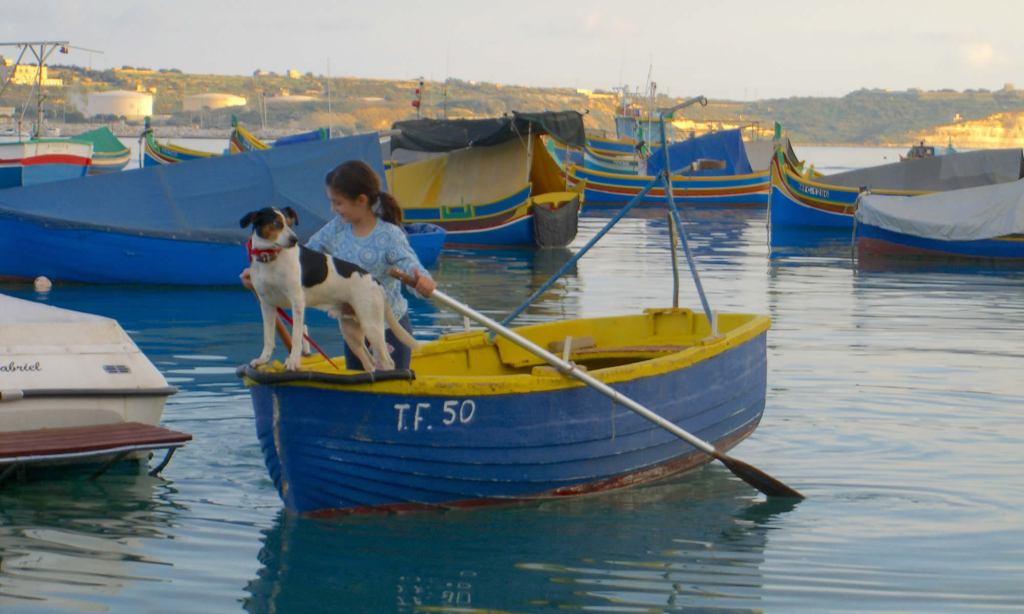
Malta is an enchanting island nation. It’s a tranquil place where residents christen their homes with titles meshing a couple’s first names. Its harbors are studded with elegant white yachts, as well as humble and colorful fishing boats called luzzus. Despite its diminutive size, Malta has heaps of history and culture, marvelous architecture, and a dramatic landscape that Mother Nature painted from a vibrant palette.
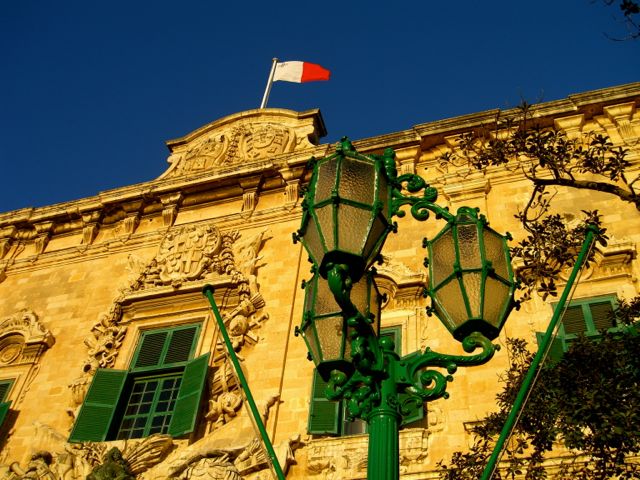
Malta is located in the Mediterranean, close to Tunisia and just south of Sicily. Given its stepping-stone locale between Europe and Africa, the territory has been ruled by many different people — including the Phoenicians, Romans, Arabs, Sicilians, Knights of St. John, French, and the British. Over the millennia, Malta’s unique culture and language developed.
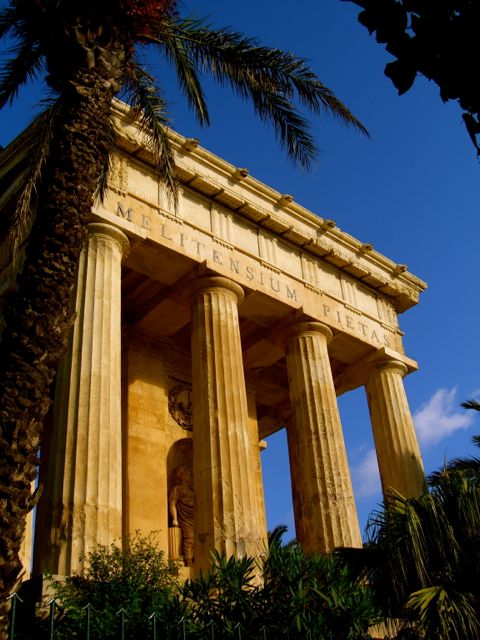
Traveling there solo several autumns ago, I snuck peeks of almost-forgotten lanes whenever I turned corners in the capital city, Valletta. Symbols of the famed Knights of St. John were everywhere — in Malta’s fortresses, its churches and on souvenir items. (The Knights of St. John operated out of Malta from the sixteenth to eighteenth centuries and are considered to be the oldest surviving knight fellowship.)
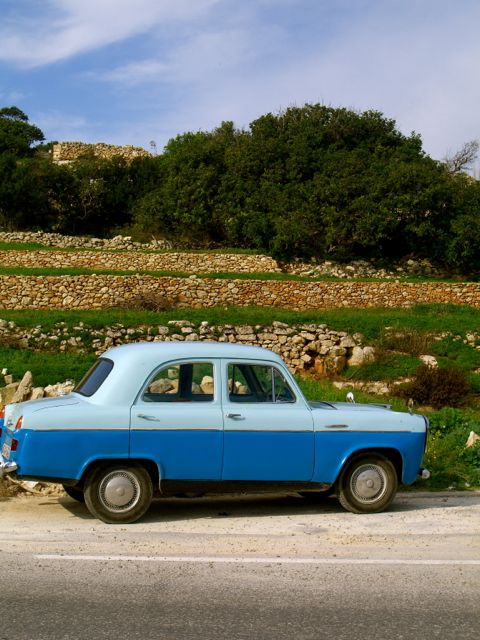
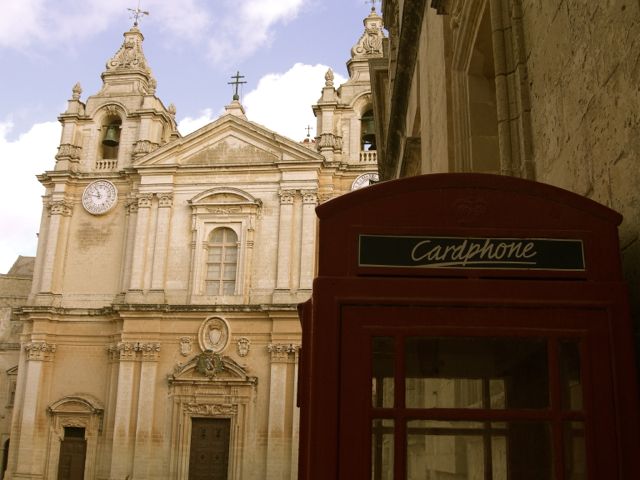
I quickly discovered that the preferred mode of transport were classic British buses —remnants of Malta’s 160 years of British colonization. Other traces of British culture could be seen in the cherry-red telephone booths in most cities, the vintage Mini Coopers that chugged along on roadways, and the left side of the street on which Maltese motorists still drive today. I used those shiny buses as my sole source of transportation — taking jaunts to the well-preserved walled city of Mdina and to a traditional cemetery.
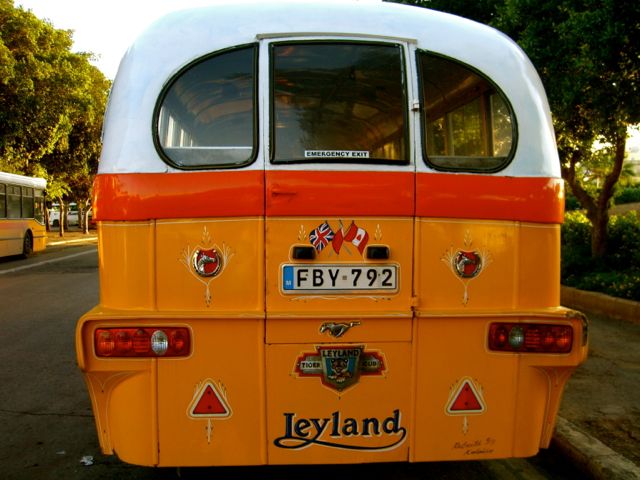

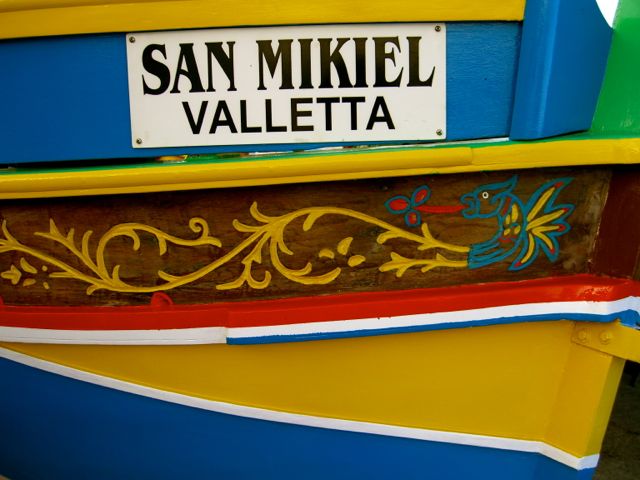
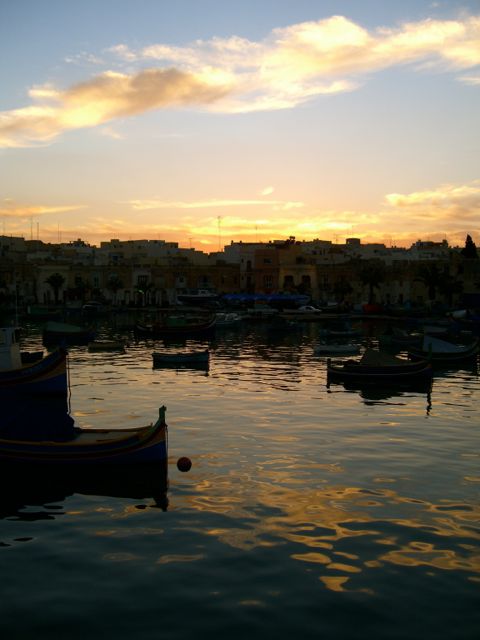
One late afternoon, I had hopped onto a shiny, orange-colored vintage bus in Valletta’s transportation hub bound for a little place I had a hard time spelling and saying —Marsaxlokk. I had read that Marsaxlokk was a charming fishing village, a mecca for anyone with an interest in photography. When I arrived there, I could see why! The tiny harbor was embellished with a fleet of fishing boats painted in an array of primary colors ranging from cherry-red, to mustard-yellow to royal blue. How the colorful tones contrasted sharply with the emerald-colored water and the buildings fronted in limestone hues.
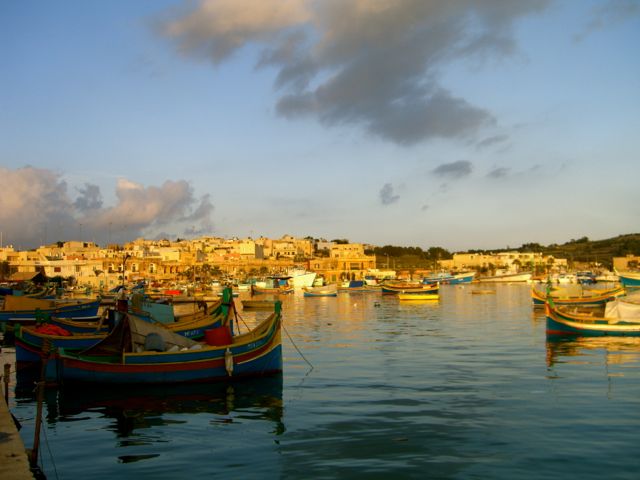
At the water’s edge, I was delighted to see fishermen at work. They were busily sewing cobwebs of fishing nets and touching up the paint on their colorful vessels.
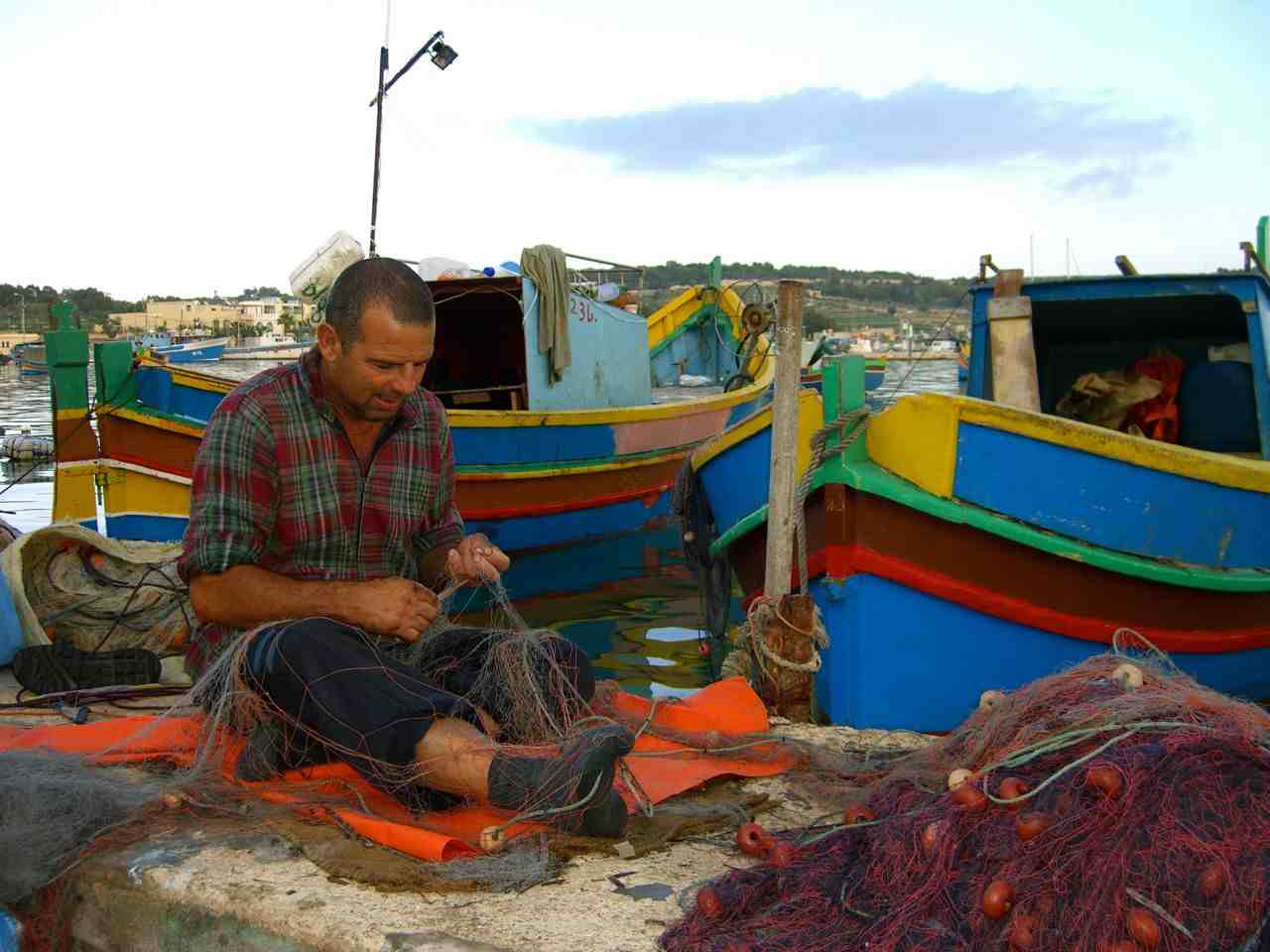
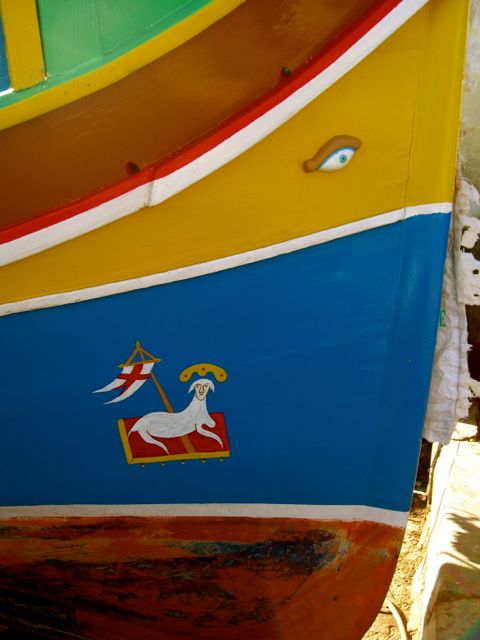
Suddenly, a young girl rowing a boat with a dog at the helm caught my eye. I was amazed that the child was navigating through the sea of boats so skillfully! The girl saw that I was snapping pictures of the harbor and rowed the boat ashore so she could introduce herself. She spoke impressive English, and introduced herself as Yasmine. The white, brown, and black dog looked a bit like the pup featured in RCA’s vintage phonograph ads.
“What is your name?” she asked.
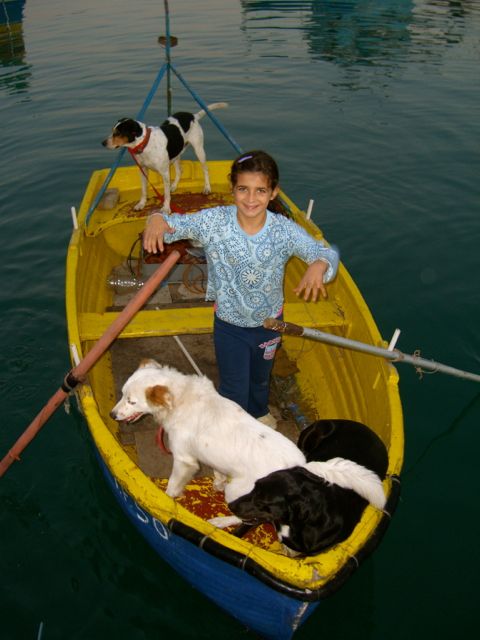
Within minutes, much of Yasmine’s family had arrived on the scene, including her mother and sister, aunt, uncle, and cousin. Almost immediately, the family proclaimed that I must ride out into the harbor on the grandfather’s boat, which would be steered by Uncle Joseph. So Yasmine and I hopped aboard, also accompanied by three canine companions.
It was a magical sunset ride. As the sun approached its slumber, the buildings were illuminated in remarkable shrimp tones. The sun’s glow reflecting on the water was breathtaking and the boat’s Maltese flag flitted in the breeze. Yasmine and I shared girlish giggles. Yasmine’s uncle remarked “Red sky at night, fisherman’s delight.”
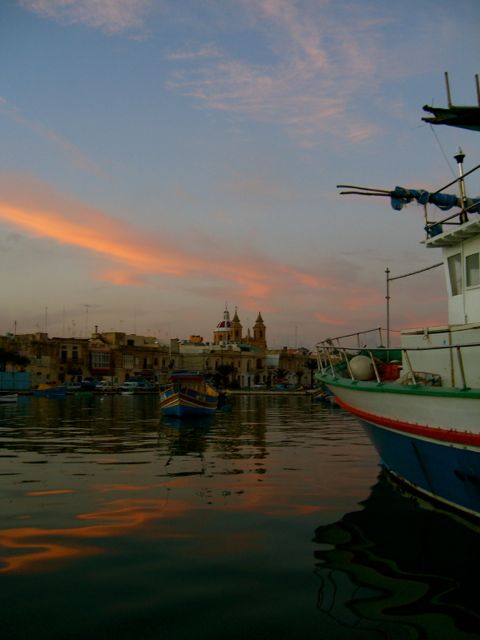

Once the sky had darkened, the family again welcomed us to shore and invited me to come into their home for dinner. On the menu was fish caught just hours earlier. The fish was seasoned deliciously with olive oil, pepper and homemade sea salt crystals. The family must have eaten while the three of us had been out in the harbor, because now, I was eating solo, with six pairs of eyes anxiously gazing at me. My audience was trying to ascertain my thoughts about the dinner. I felt badly that we could not share the meal together but hoped that they experienced just as much pleasure by hearing my reaction, as by tasting the food.
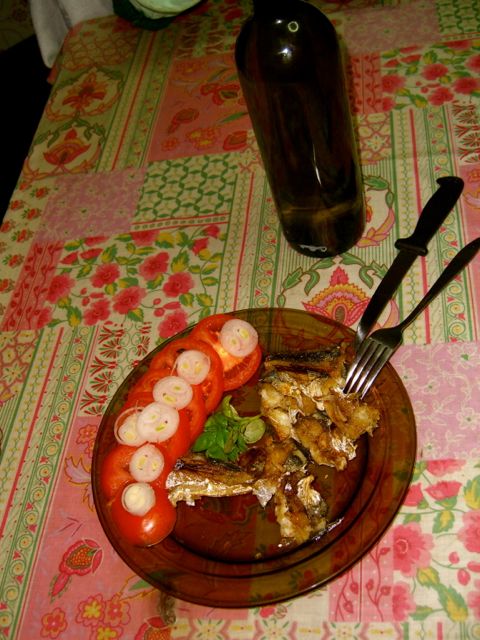
Following dinner, the family crowded around the kitchen table and boisterously sang Maltese folk songs. I was struck how the Maltese language featured a variety of linguistic sounds — everything from Italian, Spanish and French, to even Arabic. After the laughter and singing had subsided, the family asked me if I wished to meet the patriarch of their family, who was bed-ridden with cancer and resting in an adjacent room.
The family led me into the hall and then the adult family members closely crowded around his bed. The girls showed me pictures of their grandfather in past decades. They explained that Grandfather had been a fine fisherman and that he had descended from a long-line of famous Marsaxlokk fishermen and women.
On the wall, a black and white photograph of his grandmother was framed. She had a prized catch in hand. Also within Grandpa’s line of sight was an image of his beloved fishing boat – the one we had just ridden that evening. The girls walked me to Grandfather’s bedside. I exchanged niceties and then debated whether or not to tell him about my excursion on his boat earlier that evening. I questioned if it would make him sad or long for days bygone when he regularly navigated his special boat on the water.
Finally, I told him what an extraordinary ride it had been: feeling the light breeze on my skin, watching the sky turn from hues of blue to rose and peach, until there was no more light in the sky and it was time to disembark and return to the village. I told him that the special opportunity would never have presented itself had it not been for his children and grandchildren. I secretly hoped that my account could mentally transport him back to days when he was at the helm of his boat, in the prime of his life.
Grandpa had a twinkle in his eye when he heard this. He faintly smiled and gently clasped my hand in his. I was reminded of the fragility of life that evening. Following my introduction to Grandfather, one of the mothers asked me what I was doing the next day and if I was traveling alone. When I replied that I was hoping to visit the Blue Grotto, Ħaġar Qim and Mnajdra Temples, the ladies asked if they could join me. Of course, I said yes.
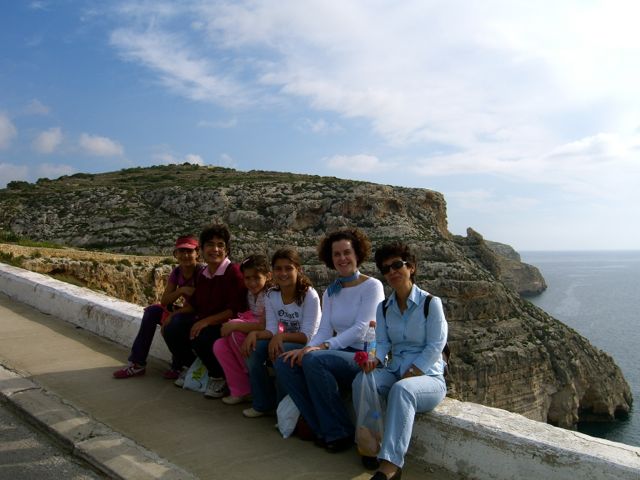
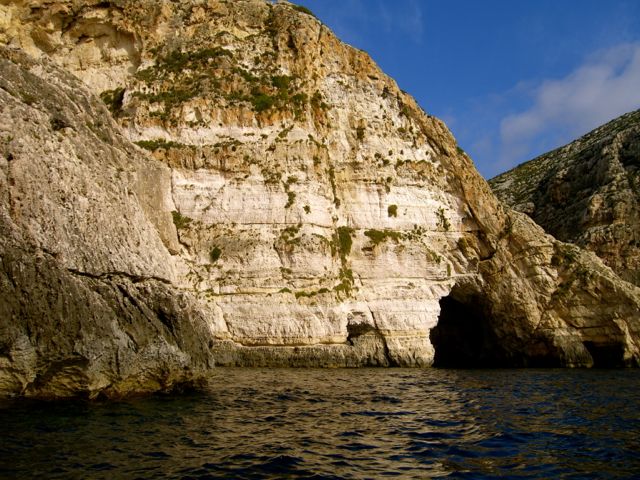
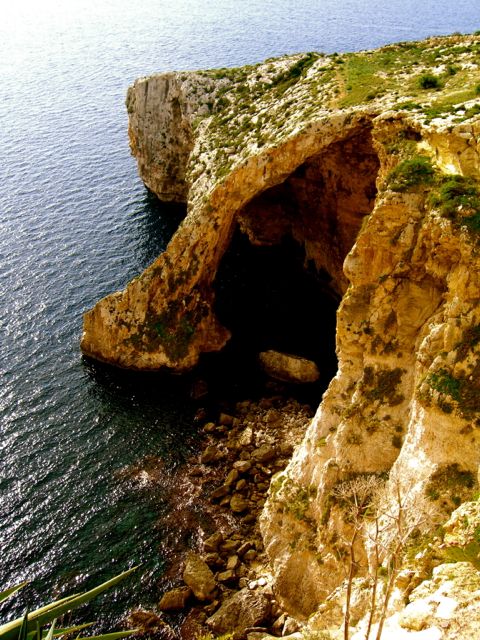
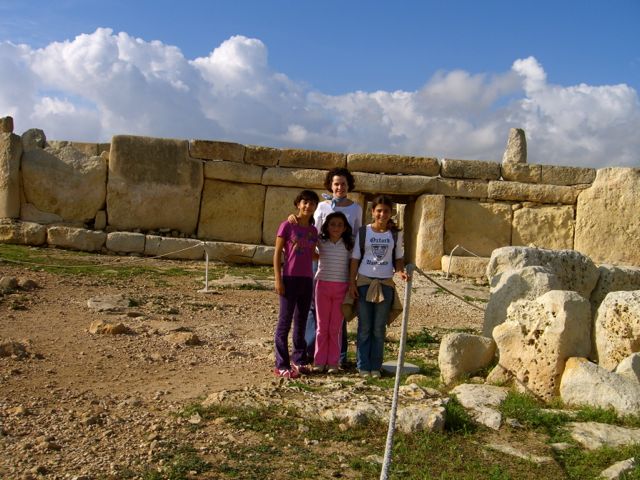
Having accepted the family’s kind invitation to spend the next day together, we six embarked on a girls’ day trip that took us deep into the Blue Grotto’s sparkling core by boat. Next, we boarded a vintage bus to visit Ħaġar Qim and Mnajdra Temples — some of the oldest freestanding monuments in the world. (Yes, they are estimated to be one thousand years older than Stonehenge!) There, the three girls wowed me with their grasp of English as well as Maltese and world history.
When I returned to Marsaxlokk hours before my scheduled flight to Frankfurt, the girls ran off, bound for the bustling stands of the fish market I’d explored earlier in the day. It seemed that they were on a covert mission. I didn’t get a chance to say a proper goodbye to them.
About a week later, a little box arrived to my home in Germany. When I tore open the brown packing paper, I was delighted to see a box that the girls had decorated themselves in bright collage fashion. Inside, were a mug and small plaque bearing images of Marsaxlokk’s colorful harbor. Now I knew why the girls had secretly run off the last afternoon I was visiting their families. In the letter, they wrote that they were saddened to have not gotten back in time to say goodbye.
Malta is a diminutive country, geographically-speaking, but as they say, good things do come in small packages…
Where in the World?
Planning Pointers:
- Heading to Malta? Visit the country’s official tourist site for more details.
Photography & text © Tricia A. Mitchell. All Rights Reserved.


Join the conversation.