
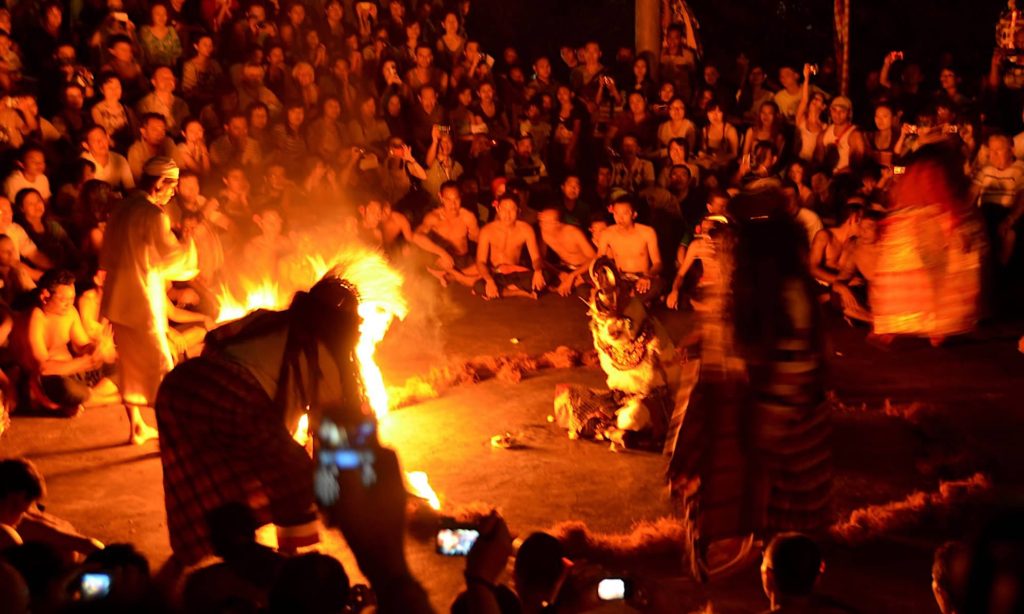
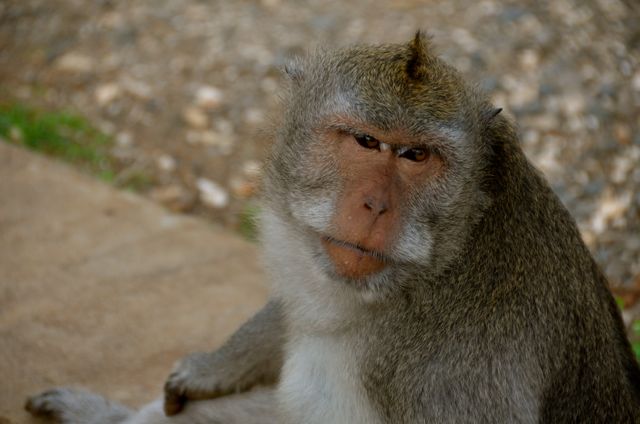
The setting for the Balinese Kecak Fire Dance was dramatic. First, we passed a swarm of mischievous macaque monkeys that spiriting away visitors’ sunglasses, water bottles, and sandals before our very eyes. We’d read warnings about these cheeky monkeys prior to arriving at the Uluwatu Temple, and the guidebooks advised visitors to stow away any removable accessories before entering the monkey zone.


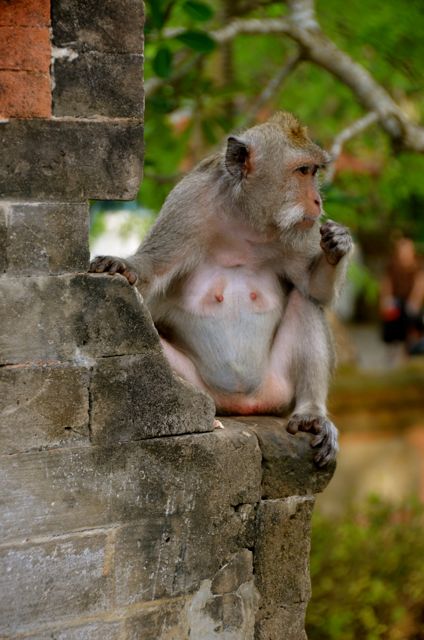


(Conspiracy theorists maintain that some of the locals actually train the monkey to steal visitors’ belongings so that the robbed individuals will then pay the banana-toting locals to coax the monkeys into returning the items.)


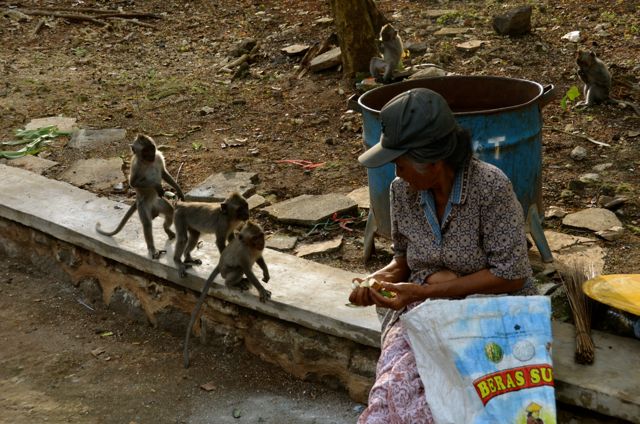

The baby monkeys were particularly cuddly. One tourist allowed a baby monkey to hop on her lap. The little macaque played with the laces of the woman’a dress. The woman giggled as her husband snapped pictures and tourists looked on.
Mama monkey, who was not far from her little one, became concerned that her baby was in danger. She latched her teeth into the woman’s tricep, causing the woman to shriek in pain and panic. The little monkey then returned to its mother. Since show time was quickly approaching, we bid farewell to the monkeys and headed to our seats.
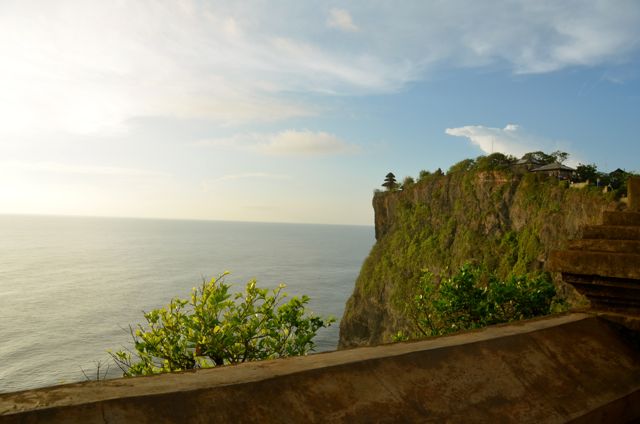
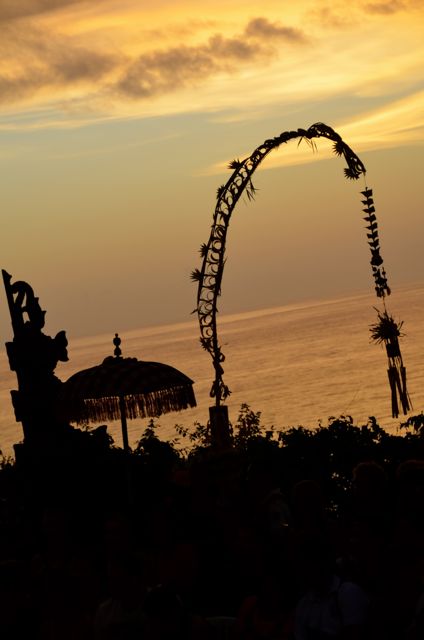
The seats and stage were perched at the end of a cliff, nearly 200 feet above the Indian Ocean. The water shimmered dramatically as the sun’s slumber approached. Overlooking the performance area was one of Bali’s most sacred temples, the Pura Luhur Uluwatu. Situated on Bali’s southwest tip, the temple is said to protect the island from evil spirits.


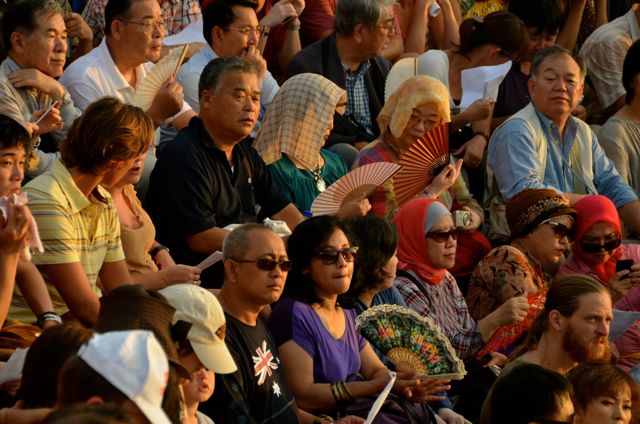
Hundreds of visitors crammed into the circular seating area. Shawn and I, along with the attendees, wore sarongs of various colors. Most were the grape-colored versions loaned out by the temple.

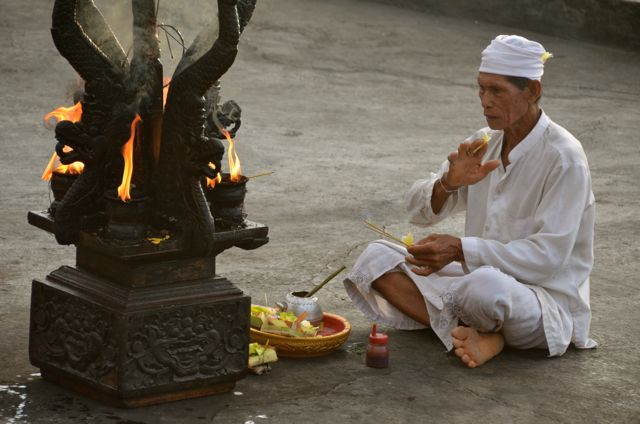

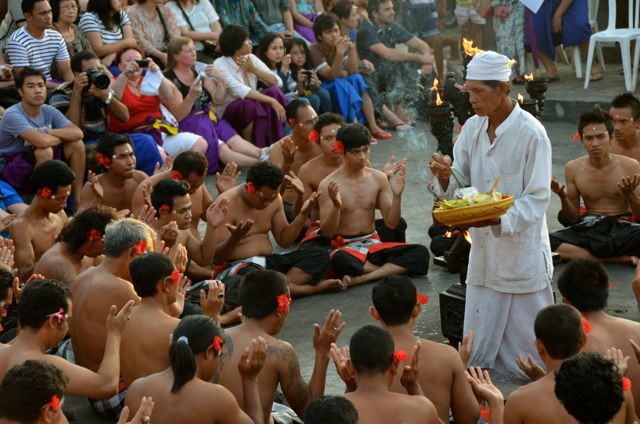
Not long after we sat down, approximately 40 bare-chested men, donning black and white sarongs, red sashes and crimson flowers tucked behind their right ears, began the trance-inducing chak, chak, chak chanting that would continue for almost the entire duration of the Hindu Ramayana performance. The men’s choir would be the performance’s sole soundtrack. No instruments were played.


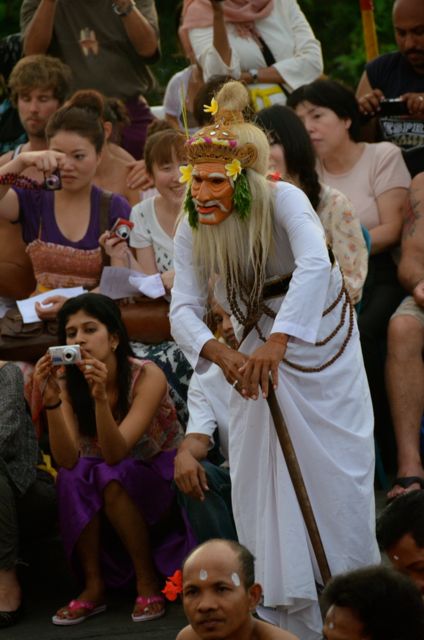
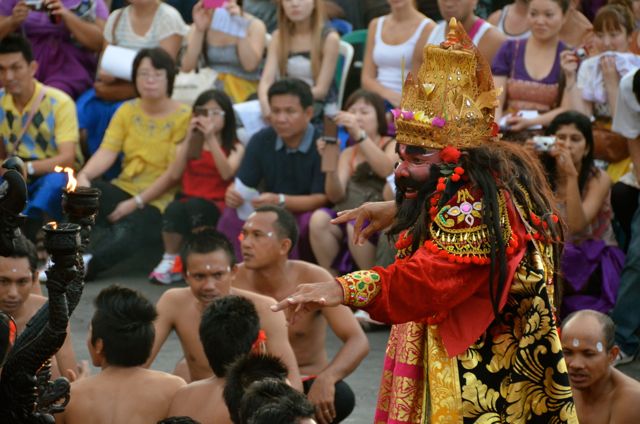
Ramayana’s plot features various characters:
- a wise prince named Rama
- Rama’s beautiful wife, Sita, who is coveted and soon taken away by an evil king, Rahwana
- and the monkey king, Hanoman, whose assistance is sought in retrieving Sita. Hanoman is eventually captured.
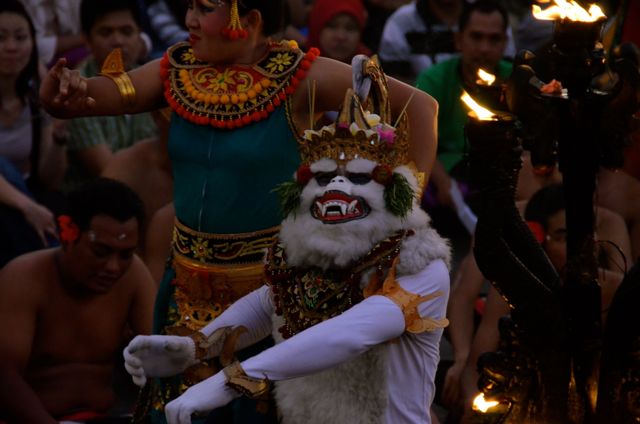

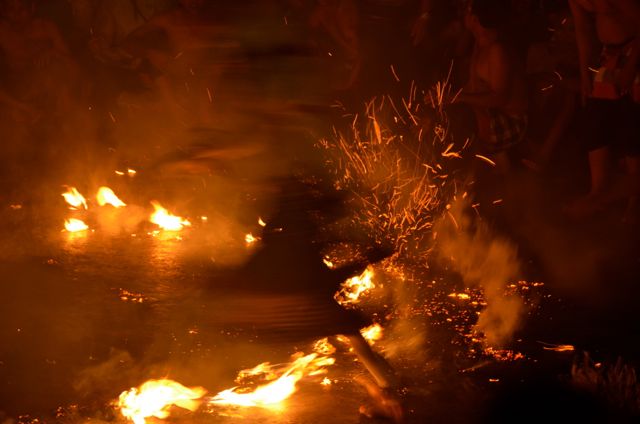
The performance culminates in Hanoman’s dramatic escape from the evil forces, as Hanoman dances and kicks through the fiery circle. It’s incredible that those dancing feet were able to withstand the flames!




Where in the World?
Photography & text © Tricia A. Mitchell. All rights reserved.


Join the conversation.