
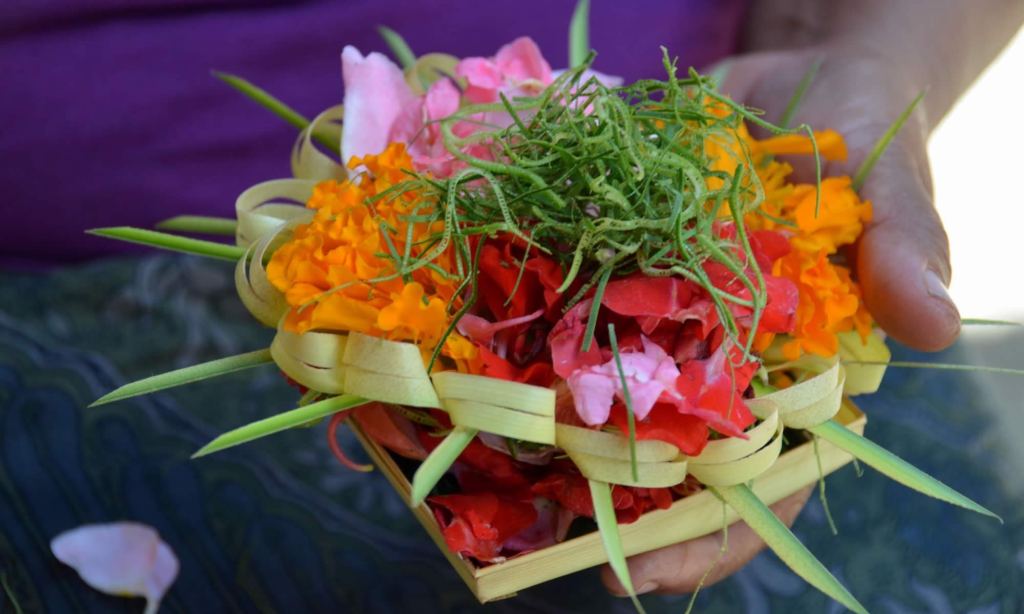
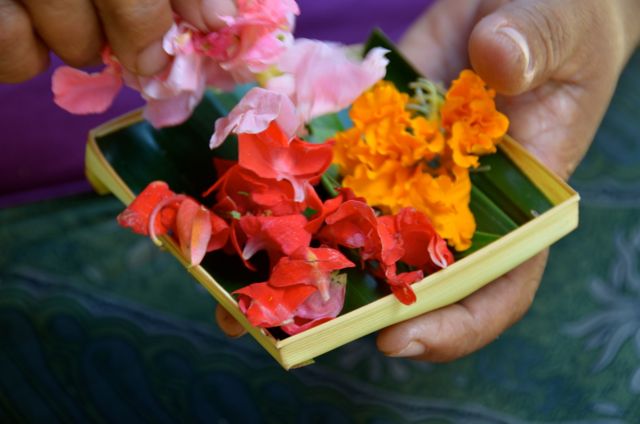
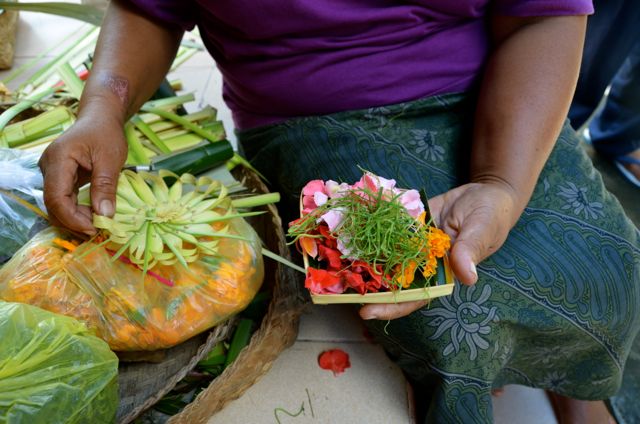
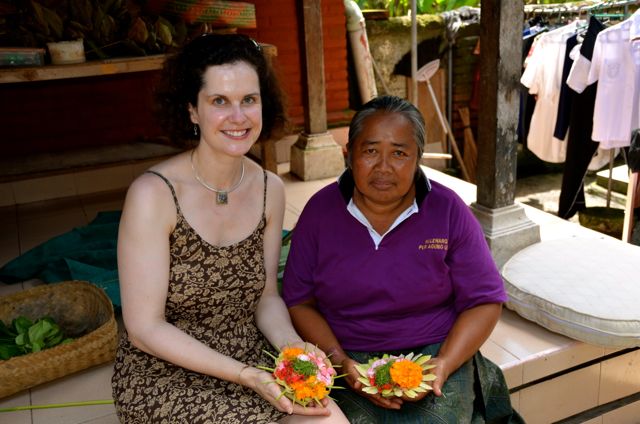
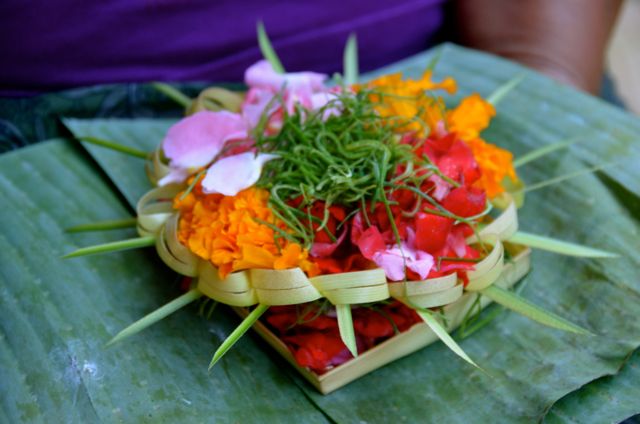
On a quiet and serene morning in Ubud, I was invited to learn how to make beautiful Balinese canang sari. These floral spiritual offerings adorn Bali’s temples, streets, home entrances, and any place that the Balinese people believe to be sacred. You might even spot some on trees and statues.
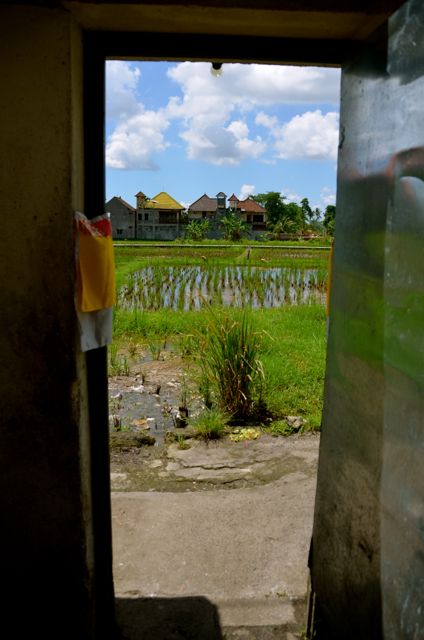
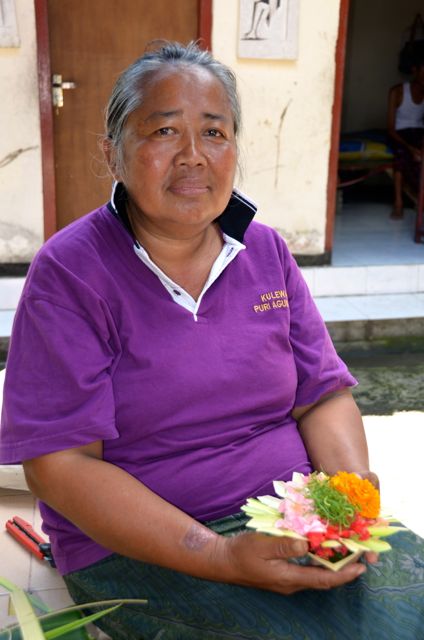
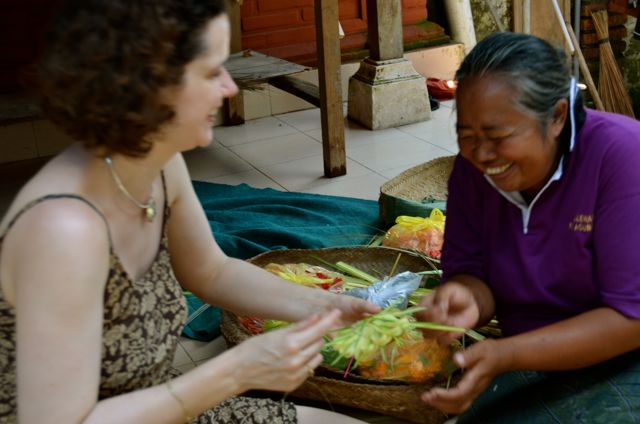
The setting for my lesson was the rice paddy-encircled home of a gentle woman named Nyoman.
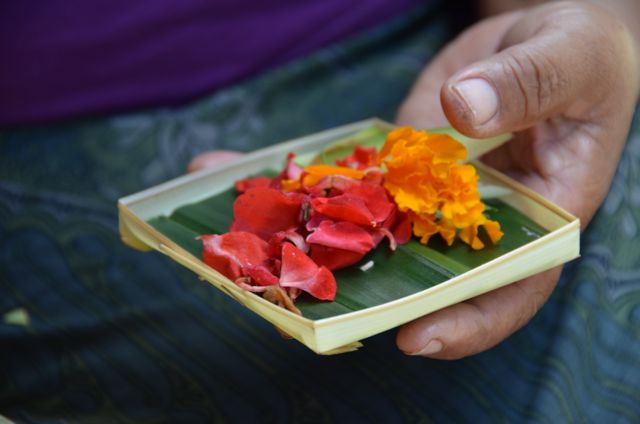
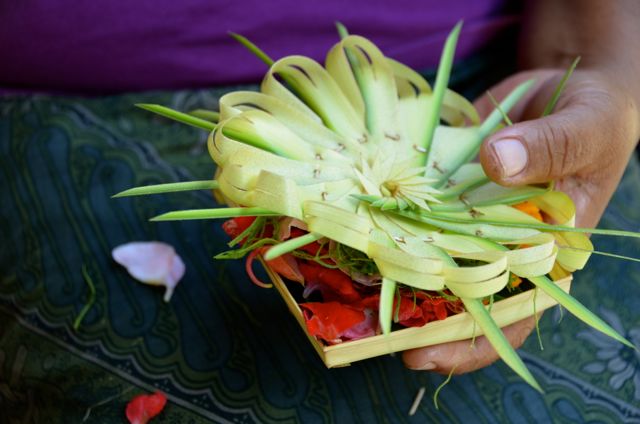
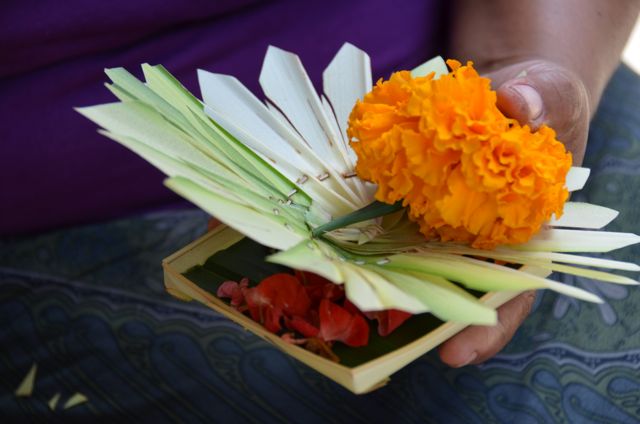
Canang is a small and square-shaped coconut-leaf basket that can overflow with a variety of brilliant flowers.
Sari means ‘essence.’ For example, a modest amount of money could make up the essence of a Balinese offering known as kepeng. One night while walking along the beach in southern Bali, we saw a canang sari waiting to be carried out to sea, along with a modest kepeng inside.
Many Balinese people make canang sari offerings on a daily basis. Nyoman crafts 100-150 per day, using all organic materials. This labor of love and devotion takes her approximately two hours.
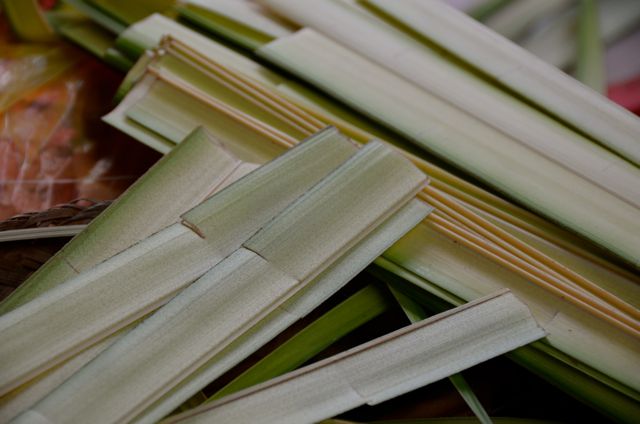
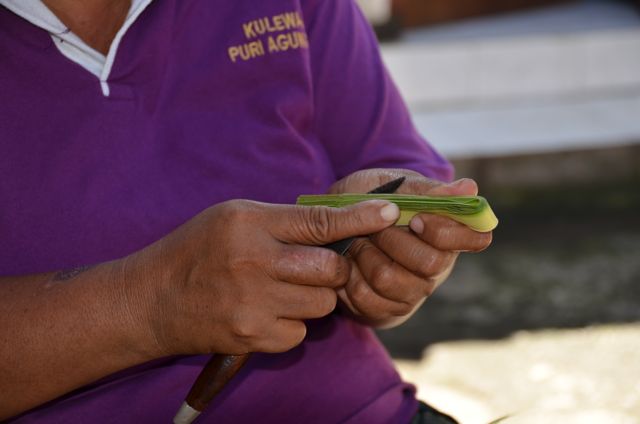
In order to make the canang sari, Nyoman uses mounds of vibrant flower petals. She also incorporates coconut leaves and bamboo, which is shaved in a toothpick-like thread.
When I tried weaving this ‘thread’ through the many loops of the frilly basket, the session concluded with multiple snaps of the thread and giggles on my and Nyoman’s part.

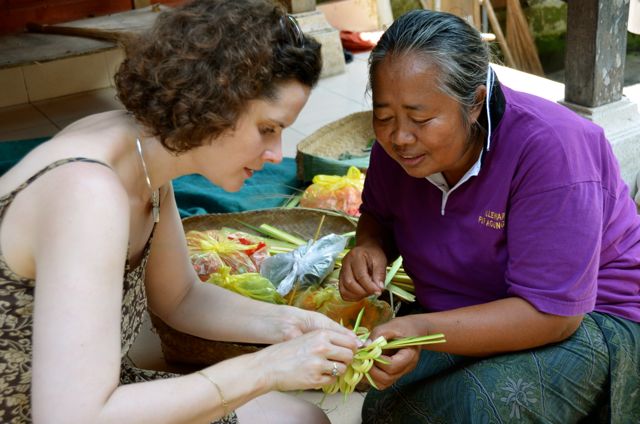
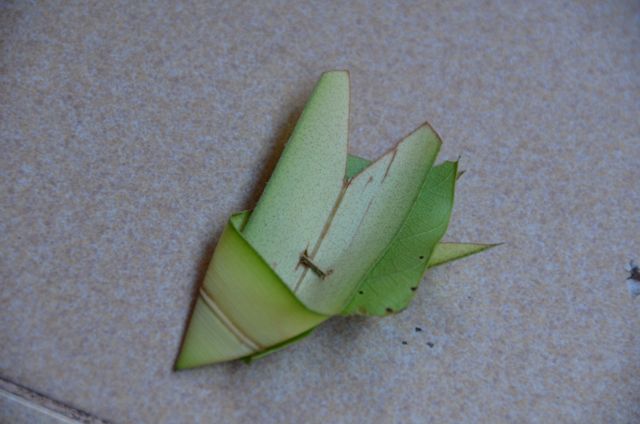
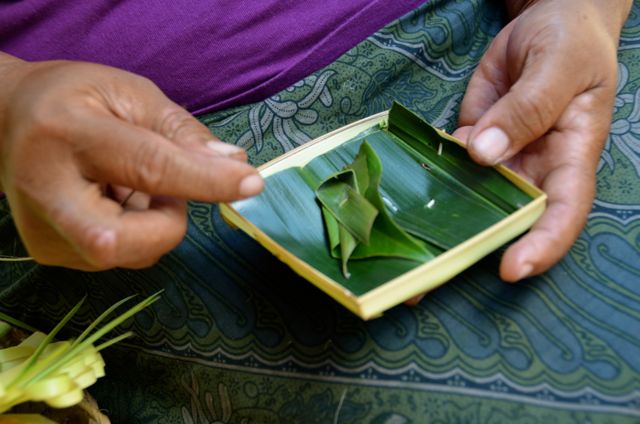
Canang sari embody Balinese Hinduism and the religion’s aim to make the world balanced through Tri Hita Karana. Parahyangan means ‘God’, Pawongan means ‘human’ and Palemahan means ‘nature.’ Tri Hita Karana is represented with a special three-piece component that is included in every canang sari. Nyoman instructed me to place this at the bottom, underneath the flowers.


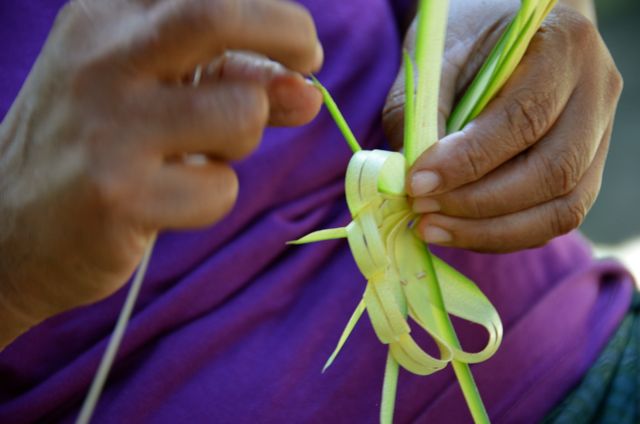
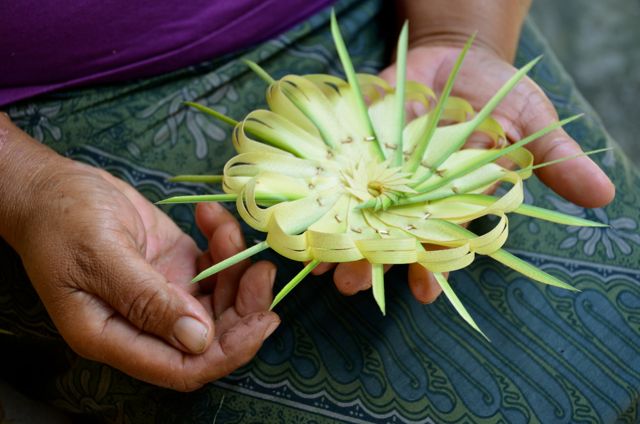
The philosophy behind the offering is self sacrifice. Indeed, it takes an extraordinary amount of time and effort to prepare canang sari. As Nyoman attested — by showing her calloused and cut fingers — the offerings can also take a toll on the crafter’s hands.
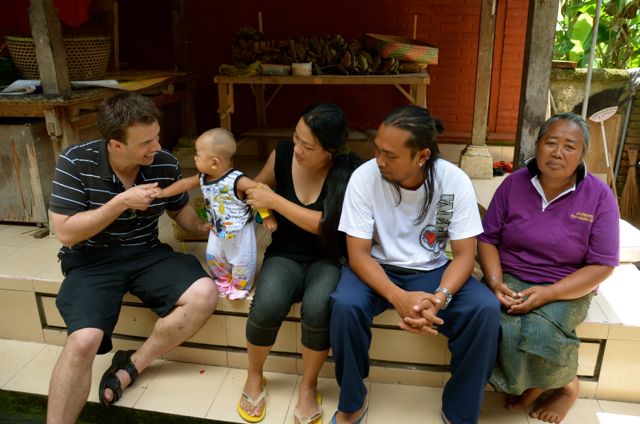
After my lesson, as well as a playful interaction with Nyoman’s grandson (who loved the bear finger puppet we left him), we returned to our home away from home, Nirwa Homestay. There, we left the banana leaf-wrapped offerings at the entry way to our room. It was a fitting way to say thanks for the wonderful people we have met in the Bali, as well as our special family and friends from around the world.
The Balinese believe that offerings should be created with a thankful spirit, and so it was fitting that I made my visit on the American Thanksgiving holiday. What a gift it was to have a master teacher show me the ropes.
Where in the World?
Planning Pointers:
- Ayu, our homestay host in Ubud, kindly introduced me to Nyoman and her family so that I could have this experience.
- For two weeks, we stayed at the pretty and tranquil Nirwa Homestay, run by Madde and Ayu. The family-run guest house was surrounded by a panorama of rice paddies, and our soundtrack was that of nature: crickets, confident roosters and babbling canals. When you go, be sure to order Ayu’s legendary green banana pancakes for breakfast. If she has time, Ayu might even show you how to make them!
- Need more inspiration? See all my posts from Bali, Indonesia.
Photography & text © Tricia A. Mitchell. All Rights Reserved.


Leave a reply to El “Día de muertos” en Bali – Los sellos del pasaporte Cancel reply