

After escaping the hustle and bustle of Kuala Lumpur we were delighted to arrive in sleepy Melaka, a UNESCO World Heritage Site two hours south from Malaysia’s hectic capital city. Melaka was colonized for centuries. Even today, the remnants of Portuguese, Dutch, and British occupation are evident in the architecture — most notably the Dutch Stadhuys town hall building, the Portuguese fort, and Chinese merchant homes and businesses.


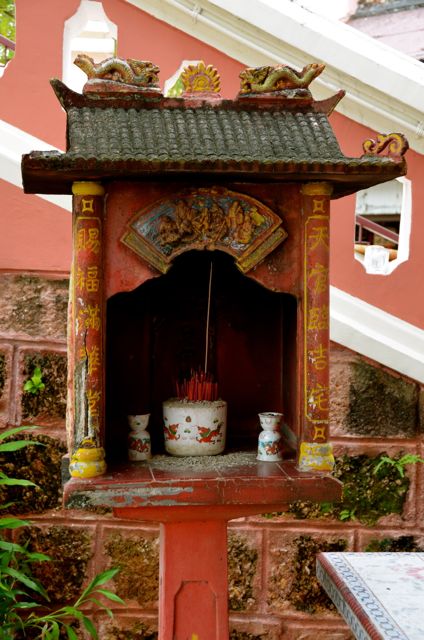


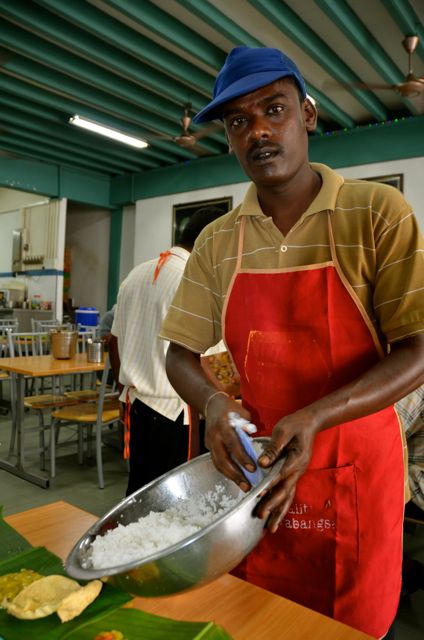
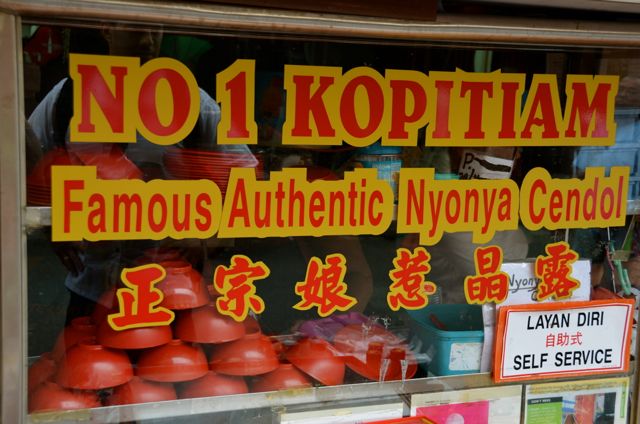
Melaka, like Malaysia, encompasses a hodgepodge of cultures even today. During a mere 36 hours there, we journeyed ‘round the culinary world. First, there came Malay spicy noodles, then southern Indian fare served on banana leaf plates, and finally Nyonya Cendol, a Chinese shaved ice dessert with coconut milk, kidney beans, palm sugar syrup, and jade-green Cendol.




As we strolled down Jalan Tukang Emas Street, also known as Harmony Street, we were amazed by the diverse places of worship. First, there came an elaborate Chinese Buddhist, Taoist, and Confucionist Temple. Next, there was a white-washed mosque with a rich green roof, and finally a colorful Hindu temple.
As the sky turned a deeper grey and the sounding thunder of an approaching storm reached a mighty crescendo, we happened upon the Cheng Hoon Teng Temple ( 青云亭 ), which literally means ‘Temple of Green Cloud.’ The name was fitting given the thick clouds overhead, and the deluge of rain that soon fell from the heavens. It was a lovely place to seek refuge during the storm.


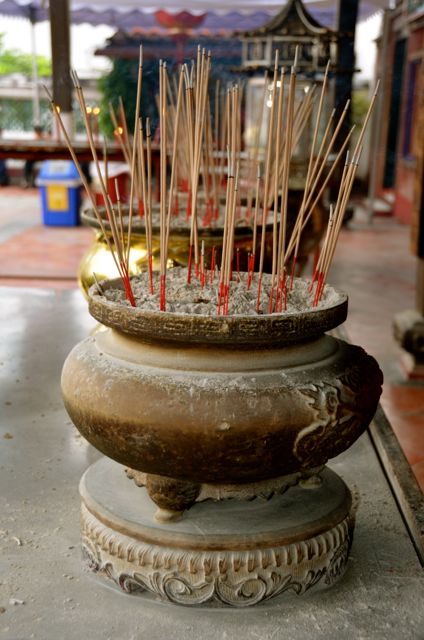
A caretaker inside was eager to share the history of the temple with us – pointing out that having been built in 1645, it was the oldest temple in Malaysia. We were astounded to learn that its elaborate wooden interior was constructed without the use of a single nail. Its materials were imported from China. As the rain danced on the rooftops and poured through the dragon-adorned downspouts, we watched as a mother taught her little girl how to pray at a shrine. Other faithful followers lit incense sticks and performed ritual kneeling. I imagined merchants and explorers from days bygone approaching the deity of sailors to pray for a safe and fruitful journey.

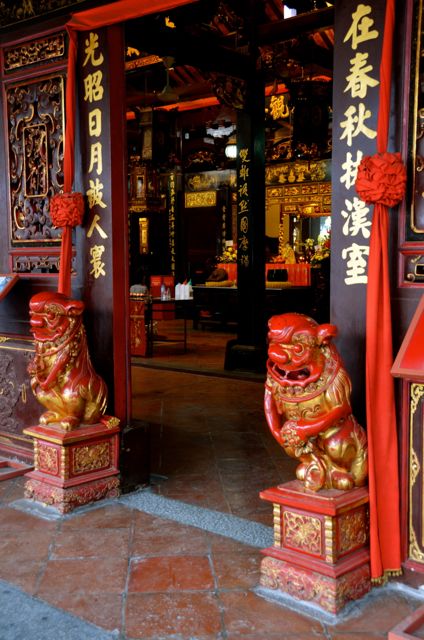
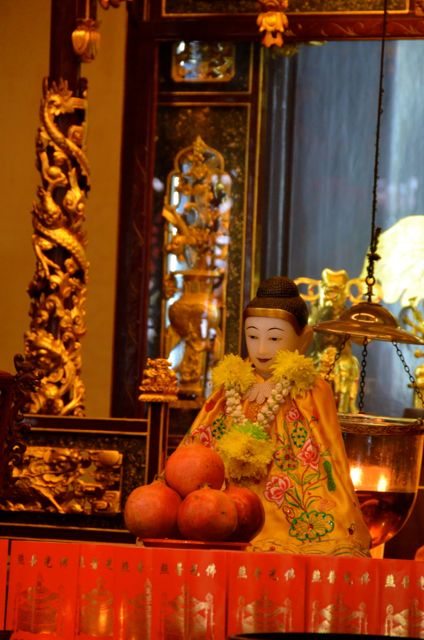
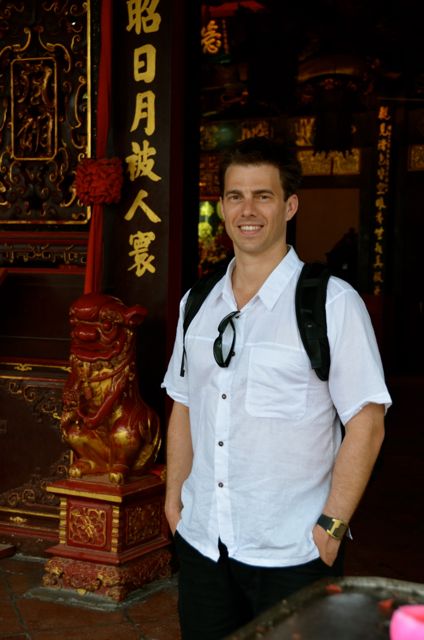

Once the rain departed Melaka’s skies, we ventured back onto Harmony Street, passing by the stark, white-washed Kampung Kling Mosque, which had a closed gate, and finally the Sri Poyatha Moorthi Hindu Temple, which is the oldest Hindu temple in Malaysia.


The Hindu priest sitting outside Sri Poyatha Moorthi was shirtless. He wore a sarong-like garment and vibrant crystal beads. He ushered us inside. Our timing couldn’t have been better, for just as we walked through the temple’s front door, a drummer started tapping away, as did a horn player. The music was riveting, and the service that followed felt festive (especially if contrasted with the sedate Catholic services I attended as a child).


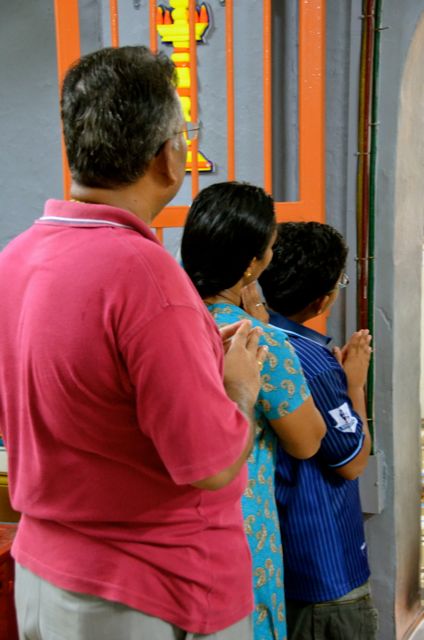
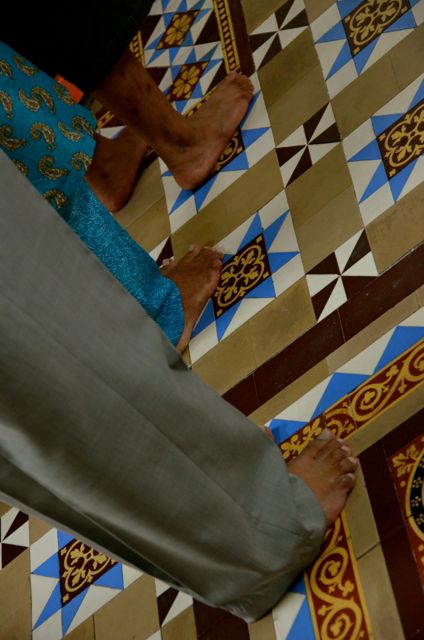

For the next thirty or so minutes, followers, as well as the priest’s assistant, ushered us from deity station to station, until we had revolved around the temple’s perimeter twice. The ceremony was circus-like, with flickering flames, flower garlands, and followers kneeling to statues of ganesh, a sacred cow, and other deities.

As we returned to our temporary home away from home – a small hotel in Melaka’s China Town – we digested the day’s culinary and spiritual journey around the world. Georgetown, Penang, would be our next destination.


Where in the World?
Photography & text © Tricia A. Mitchell. All Rights Reserved.


Leave a reply to Pheebz Cancel reply