

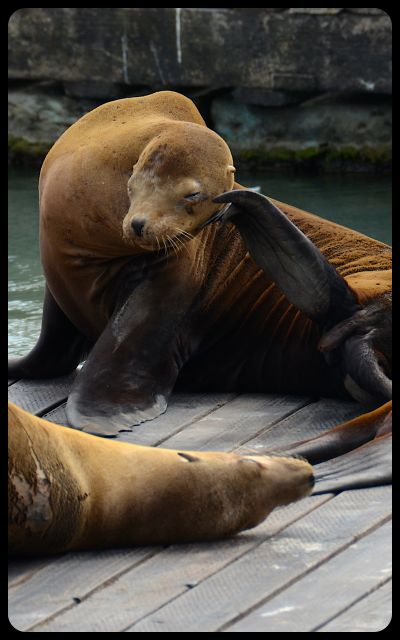
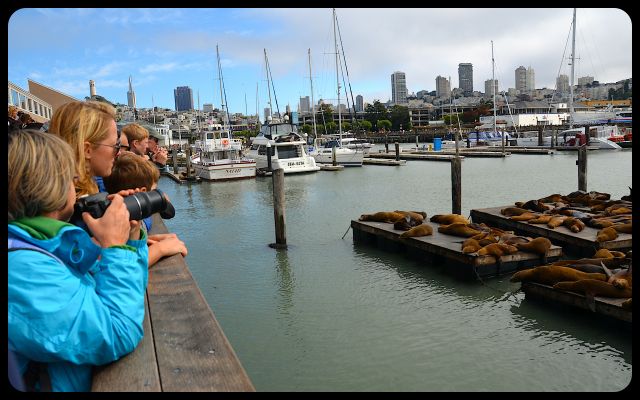
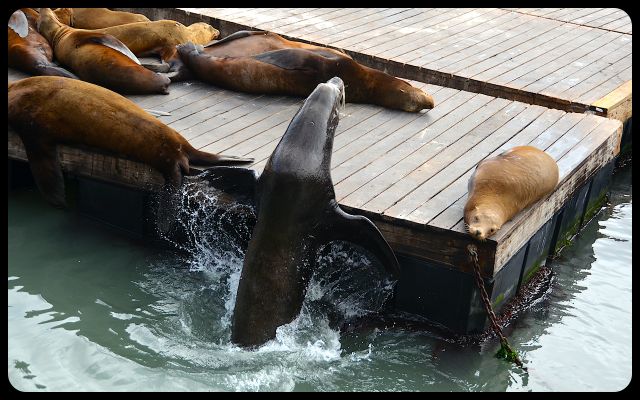
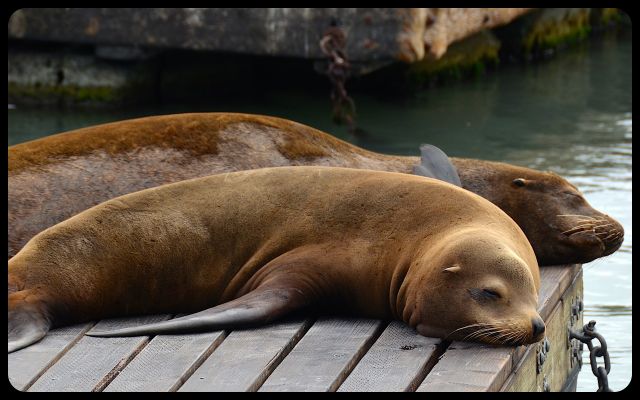
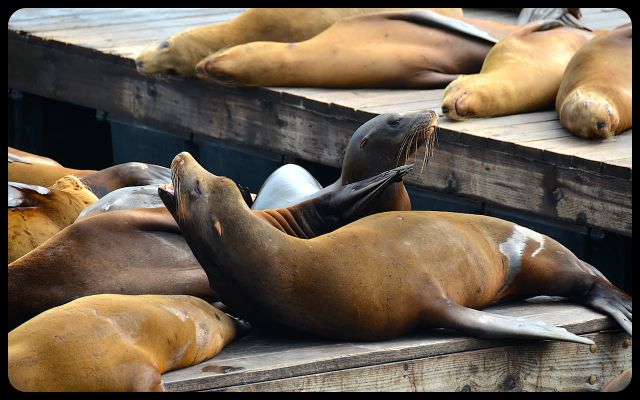
They occupy prime San Francisco real estate overlooking Alcatraz and the Golden Gate and Bay Bridges. But the lackadaisical California sea lions of Pier 39 don’t seem to be entranced by the sweeping vistas in their neighborhood. Instead, the boisterous mammals pass their days by barking, pushing their neighbors off the dock (to maximize lounging space), and doing upward-dog like yoga poses for the mob of tourists that come to watch them each day at Fisherman’s Wharf.
During our first trip to the lovely ‘city by the bay’ in the summer of 2010, we did not have enough time to make the mammals’ acquaintance. So earlier this summer, when we road-tripped to San Francisco to renew our passports, we made it a priority to do so.
Pushing through a cluster of human bodies similar to the colony resting on the docks across from us, we had our first sighting of the animals. The leaders of the pack soon introduced themselves to their human audience. One grandfather-like character barked loudly, contorting his rotund body into poses that drew laughs from the crowd.
Shortly thereafter, a sea lion bully bumped a neighbor lion off his plot of land, plunging the slumbering fellow into the chilly water. The crowd giggled, capturing the disappearing fin, and the kerplunk caused by the dunked sea lion.
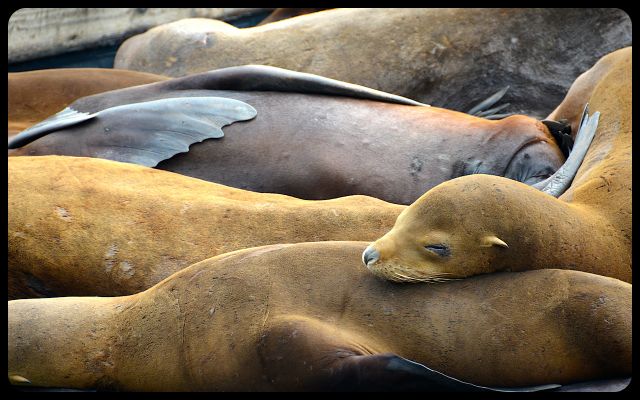
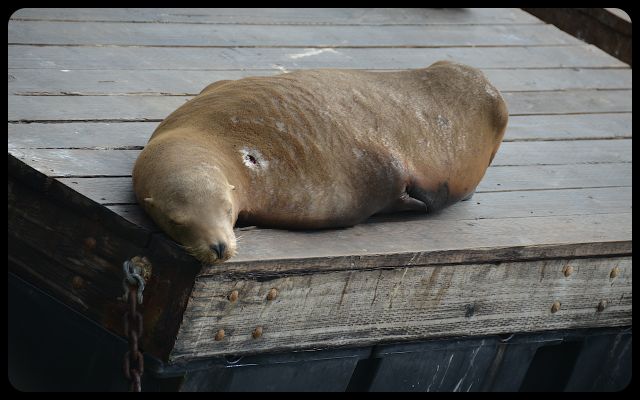
With one mammal overboard, the crowd became fixated on another docile sea lion lounging on the same dock as a sea lion that had just returned from a dip in the water.
The bully approached the animal, but instead of booting it off the dock, he gave it a kiss-like nudge. The crowd oohed and aahed. The scene had a sweet ending.
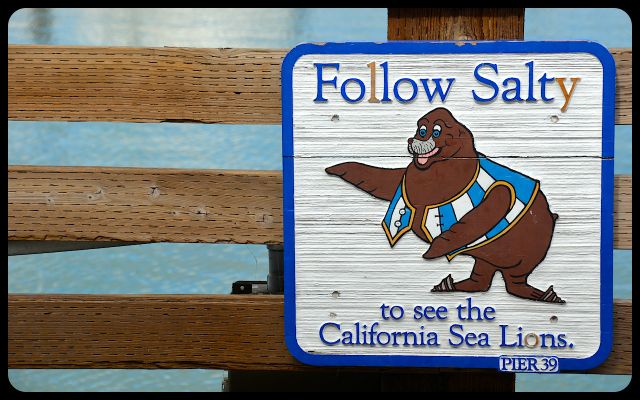
For more than twenty years, these aromatic and animated critters have called Pier 39 home. It is uncertain why the sea lions, which previously frequented Seal Rock, have taken a liking to this stretch of real estate. But it’s believed that they feel more comfortable inside the Bay. At its largest, the Pier 39 sea lion population has swelled to more than 1,700.
California sea lions are native to western North America, and they live along the Pacific Ocean’s craggy coastline. The blubbery beasts can weigh up to almost 400 kg (more than 900 pounds). Their fat helps insulate their bodies from the bitter, marine waters. Despite their corpulence, the sea lions can race up to 40 km (25 miles) an hour.
The carnivorous critters like to feast upon anchovies, sardines, squid, and shellfish. Females in the wild can live up to 30 years, whereas the males’ life expectancy is a bit less.













Where in the World?
Photography & text © Tricia A. Mitchell. All Rights Reserved.


Leave a reply to Tricia A. Mitchell Cancel reply