

Though I love the energy and cultural offerings characteristic of large cities, I’m most at home in natural settings. During my childhood, I’d go “on safari” in my backyard, passing away hours hiking and hunting for fossils and critters.
It comes as no surprise, then, that during our travels to North Macedonia’s capital city, Skopje, I was eager to escape the hustle and bustle. Visiting the serene Matka Canyon (which is only a 30-minute drive from Skopje) made for the perfect day trip.
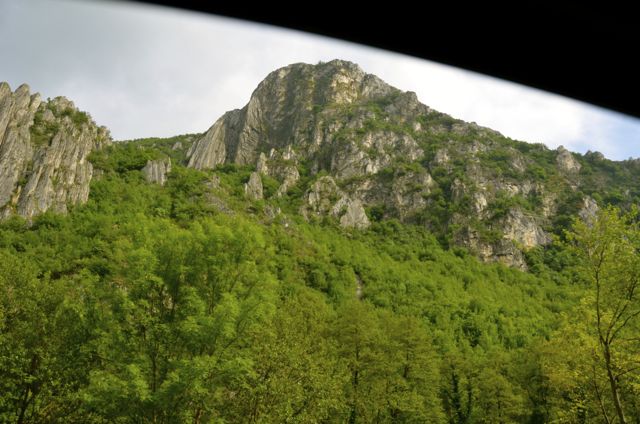
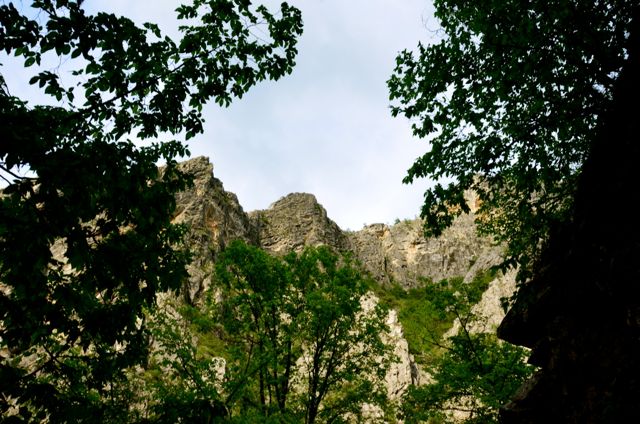
It was approaching the late afternoon hours when our zestful guides from Macedonia Experience, Ljupco and Aleksandar, picked us up from central Skopje. We rode through a countryside of rolling verdant hills, red poppy flowers, and the minarets of mosques.
The night before, Ljupco had hosted us for a wine tasting in Skopje. As we swirled wine, Ljupco taught us all about life in the Macedonian countryside, which apparently teems with homemade fig and walnut marmalade, lokum (similar to Turkish Delight treats), and baklava.
Ljupco explained that rural dwellers still often welcome guests with a dollop of marmalade and a glass of fresh spring water, a tradition that goes back centuries.
“One touch of nature makes the whole world kin.”
William Shakespeare
Given our short time in Skopje, and the stubborn cold I was battling, we wouldn’t be able to go on some of Macedonia Experience’s signature excursions — namely a 14-kilometer hiking trip from Skopje’s Millennium Cross to the Matka Canyon, a butterfly spotting walk, their active tours, or their ethnological excursions to meet villagers. Nevertheless, we were eager to visit the Matka Canyon, a natural escape that’s quite popular with Skopje residents, especially on weekends.
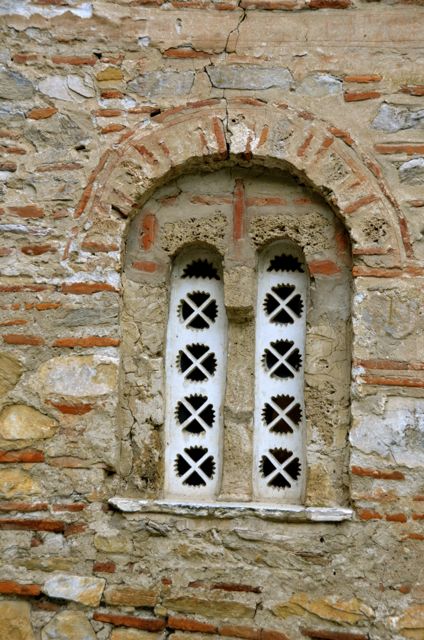
Swapping honking horns for a symphony of chirping birds, we arrived at our wooded retreat. Shawn and I made a short stop in a tiny, centuries-old Eastern Orthodox church, reminiscent of those we’d seen in Macedonia’s spiritual center of Ohrid. The brick structure’s interior walls were adorned with bold frescoes, which were darkened by the smoke of candles. We lit slender candles, placed them inside, and then joined Ljupco and Aleksandar outdoors.



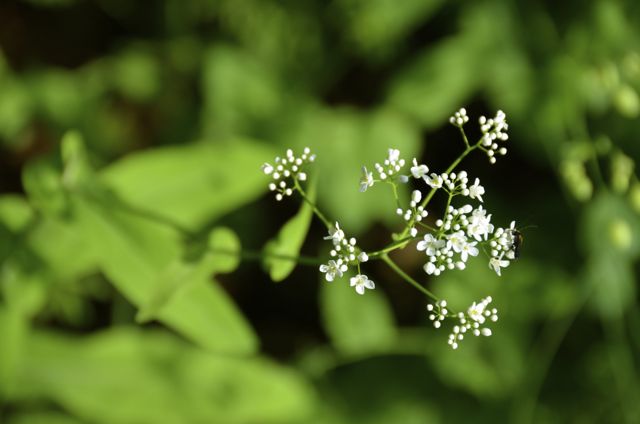
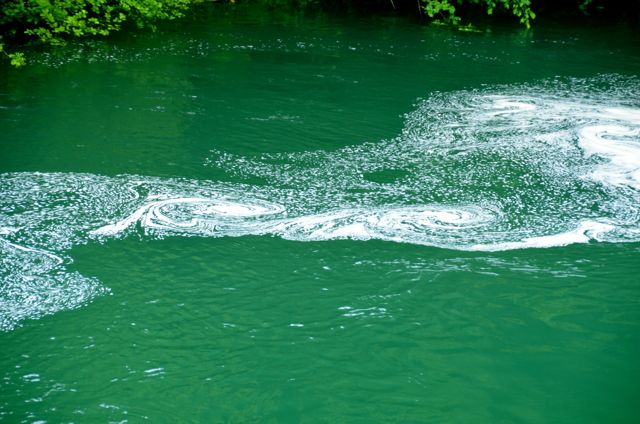
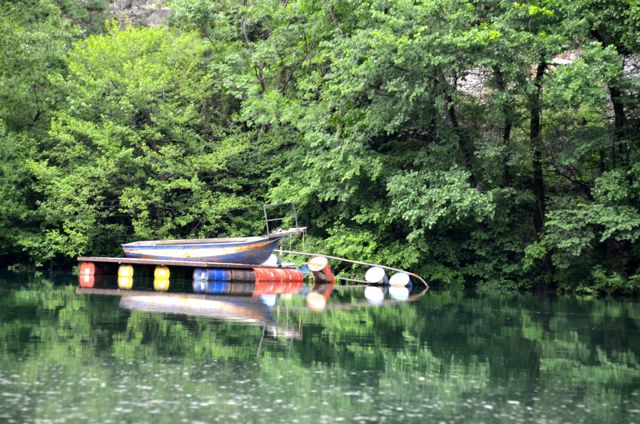
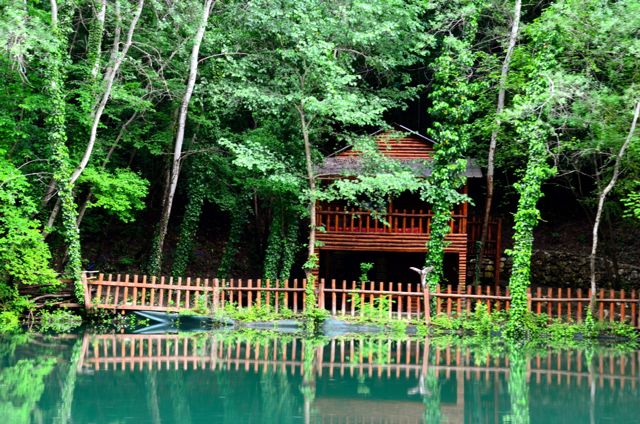
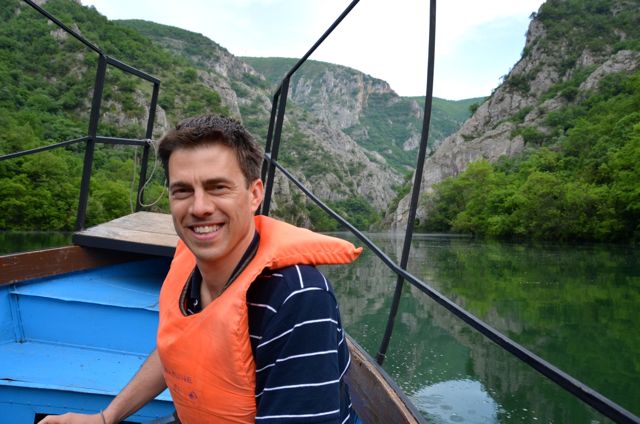
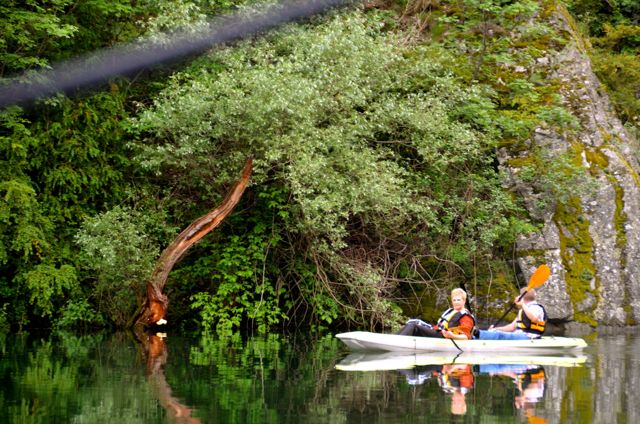
Hopping into a small boat near the church, we headed off to the Vrelo Cave, about three kilometers away. On the way, we passed a canoeing couple, rugged rocks on which some trees grew, and lush spring foliage. The air was cool and invigorating. We learned that matka means ‘womb’ in Macedonian.
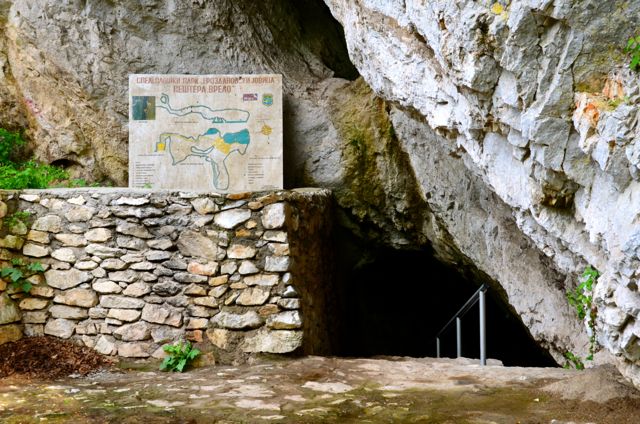
The entrance to the cave.
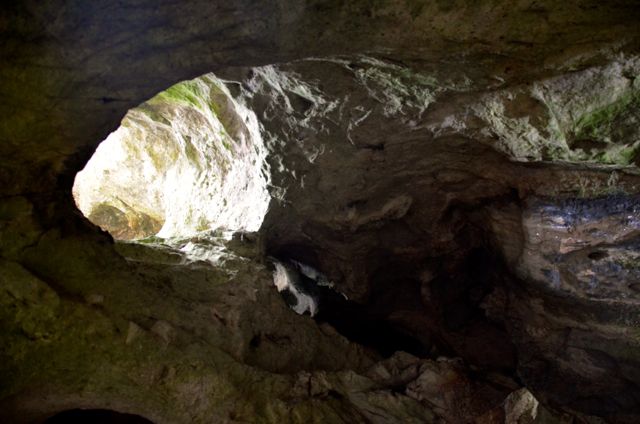
The cave, discovered in 1982, is 30 meters deep and maintains an even temperature throughout the year. Inside, several bats awakened by the group of visitors flew overhead, while the rest of the colony slept among the stalactites. The acoustics are so good inside the cave that in 1995, a philharmonic performance was held there. I wonder how the bats responded to those vocalists’ crescendos?


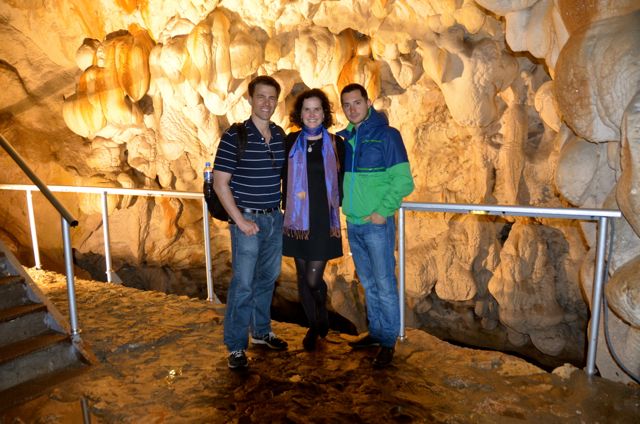
Shawn, me, and Ljupco.
An underwater portion of the cave is attracting interest from scientists, some of whom think it’s the deepest in the world. So far, it only holds the title of being the deepest in the Balkans, and the second deepest in Europe. Its water exits into the river at the rate of 2,000 liters per second.


As light was becoming increasingly scarce, we began our boat ride back to the canyon’s entrance, soon learning that our boat’s driver and trip hosts were not only skilled at entertaining visitors but also rescuing them.
On one of the rugged rock formations, we saw the figure of a young man, gently waving at us. Our boat’s pilot approached the land’s edge to hear the traveler shout out that he’d fallen a considerable distance from a path and that he needed help.
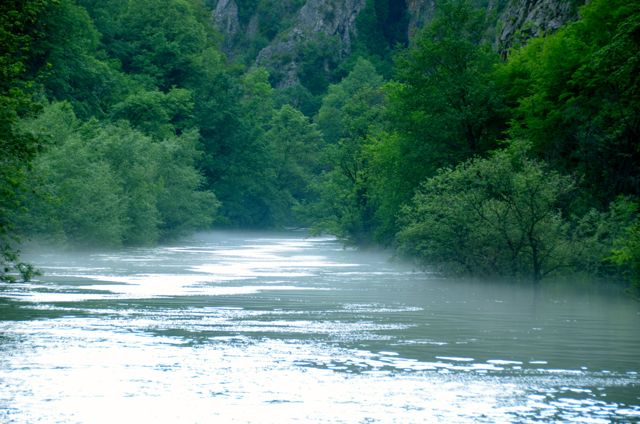
Our new boating companion was a Japanese traveler on a round-the-world adventure, who was visibly shaken and mildly scratched, having been disoriented at the water’s edge for several hours. Shawn’s knowledge of Japanese came in handy, helping to comfort the traveler. We shuddered to think what would’ve happened if we had missed him.

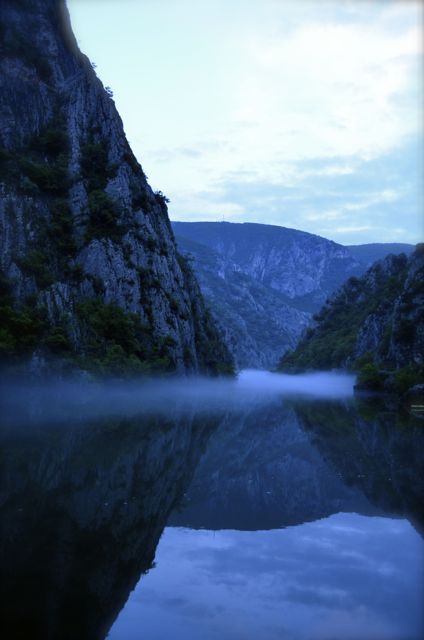
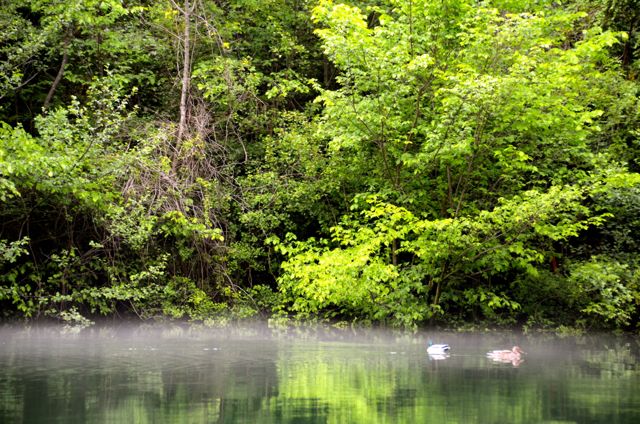
By now, the river had become still — almost glass-like — reflecting the rugged silhouette of the canyon’s rocks. Mist had descended throughout the valley, lending a mysterious air. Wanting to soak up our tranquil surroundings a bit more, we stopped at the restaurant situated on the water’s edge, chatting with Ljupco and Aleksandr over tea and coffee, before returning to the hustle and bustle of Skopje. The Matka Canyon had been just the natural escape for which we’d been yearning!

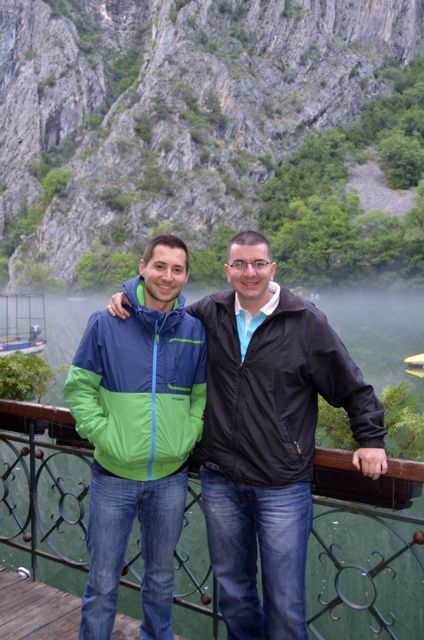
Video of this Experience:
Where in the World?
Planning Pointers:
- When you visit Matka Canyon, wear comfortable shoes, and pack your backpack with water and snacks. We also enjoyed stopping at the canyon’s waterside restaurant as the sun began to set. It was the perfect spot to enjoy hot beverages on a chilly evening!
- The next time we visit Macedonia, we’ll be sure to hike the 14-kilometer distance to the canyon from Skopje’s Millennium Cross, because we’d love to see the mountaintop monastery that can be visited on foot. (Thank you, Ljupco and Aleksandr, for tempting us with that offer!)
- As the encounter with the injured hiker taught us, it’s indeed wise to have a guide along to navigate the rugged mountains. If you like customized, active tours (hiking, boating, kayaking) or cultural ones, consider touching base with the Macedonia Experience team. We respect their desire to promote sustainable, sensitive tourism, and enjoyed meeting a handful of the energetic professionals who established the small company.
- Need more inspiration? This link contains an index of all my posts from North Macedonia.
Disclosure & Thanks:
Macedonia Experience hosted us for this Matka Canyon excursion.
Благодарам / Many thanks Ljupco and Aleksandar for taking us on this refreshing day trip. The natural wonders and fresh mountain air were wonderful, as was your company, and the cultural and historical tidbits that you shared with us during the journey.
Photography & text © Tricia A. Mitchell. All Rights Reserved. My husband, Shawn, created the video.


Leave a reply to gallivance.net Cancel reply