
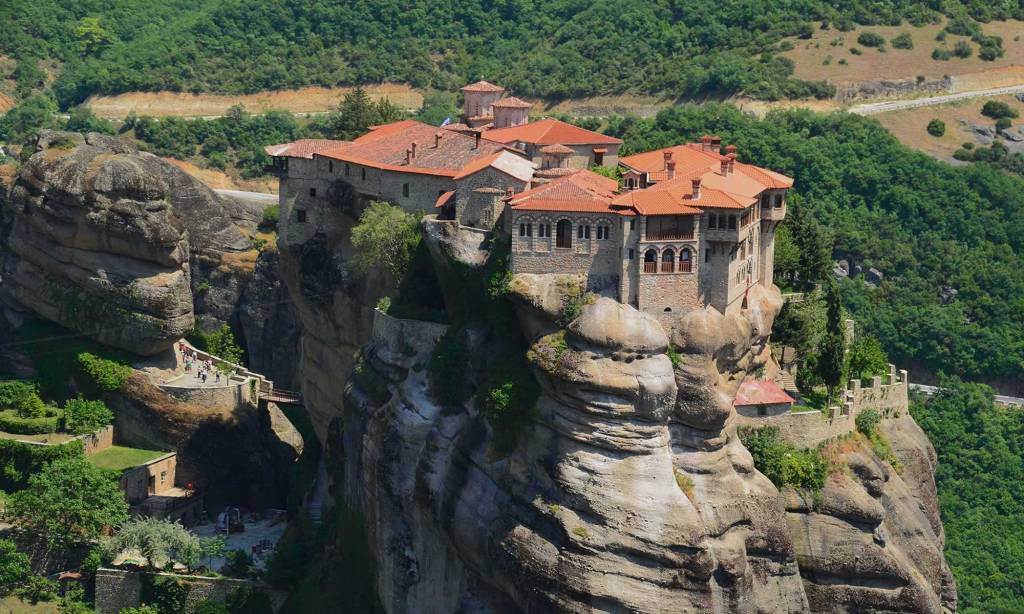
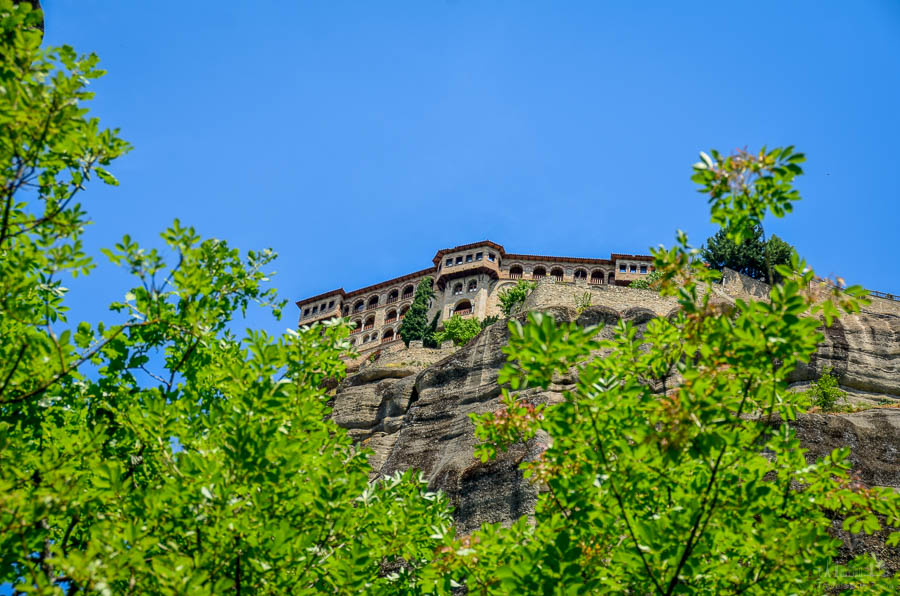
The monasteries of Meteora, Greece offer an impressive blend of natural and human-made beauty. Incredibly, some of these Eastern-Orthodox monasteries have crowned the tops of Meteora’s otherworldly rock formations for more than 700 years.
Monks who were trying to escape persecution originally built 24 monasteries in this part of central Greece. Over the centuries, weather and neglect took their toll on many of the structures, leaving only six active monasteries today. The remaining inactive monasteries are either closed to the public or in ruin.
In 1988, UNESCO inscribed the Meteora monasteries on its World Heritage List.
In an age of sophisticated building equipment, it’s easy to take the construction of Meteora’s monasteries for granted. Yet, imagine how difficult it was to carry the building materials to the peak of these rock formations centuries ago. On average, the tops of the formations are 300 meters (1,000 feet) high!
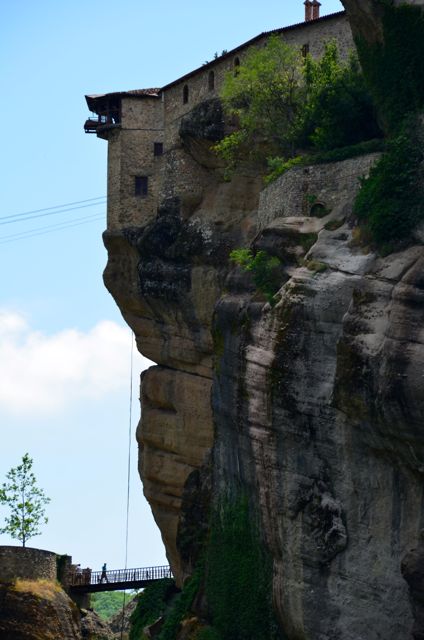
Also, consider the challenges monks would have faced in getting themselves up to the monasteries. Today, many of the monasteries can be reached by staircases. But originally, many of Meteora’s monks rode up in nets. Perhaps they relied on their faith to banish any terrifying thoughts that the rope on which their lives depended might break.
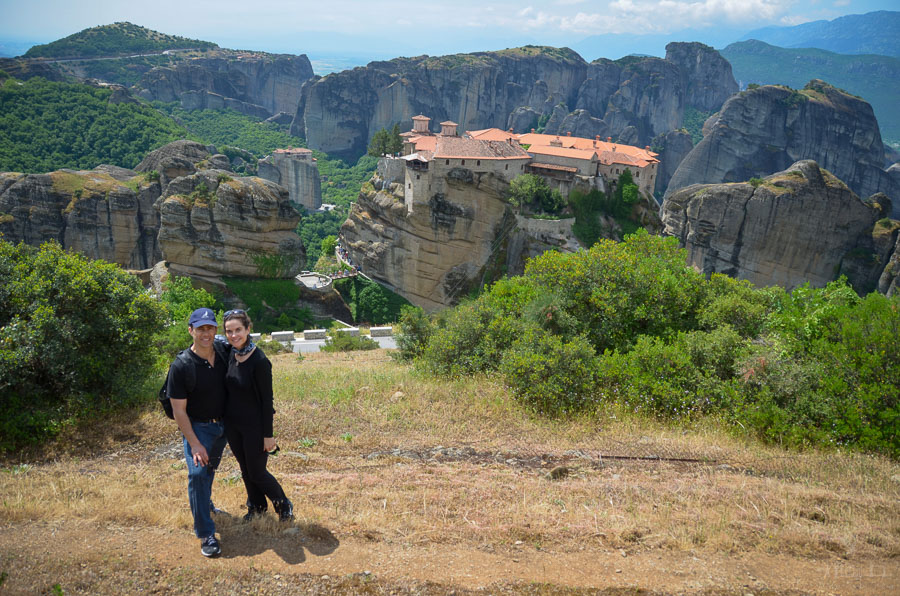


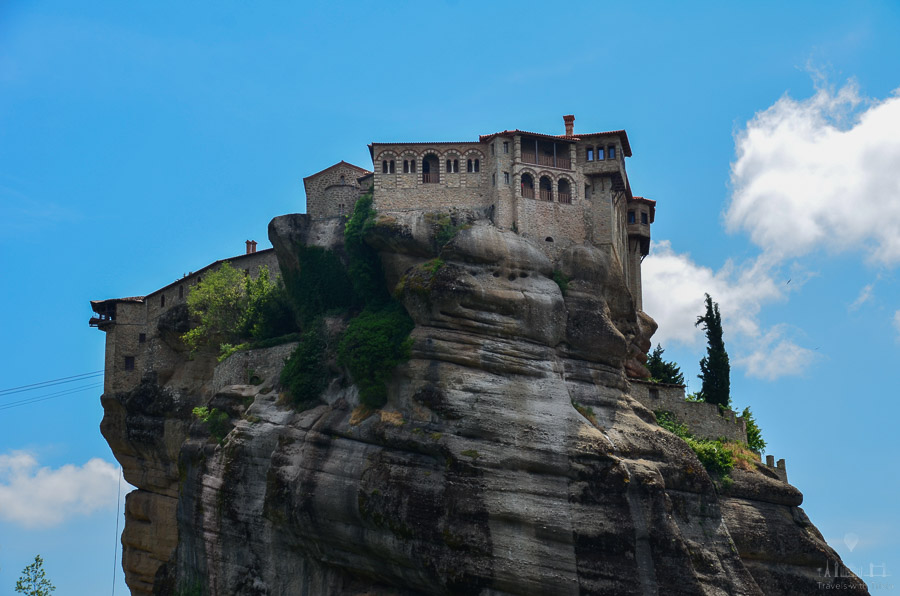

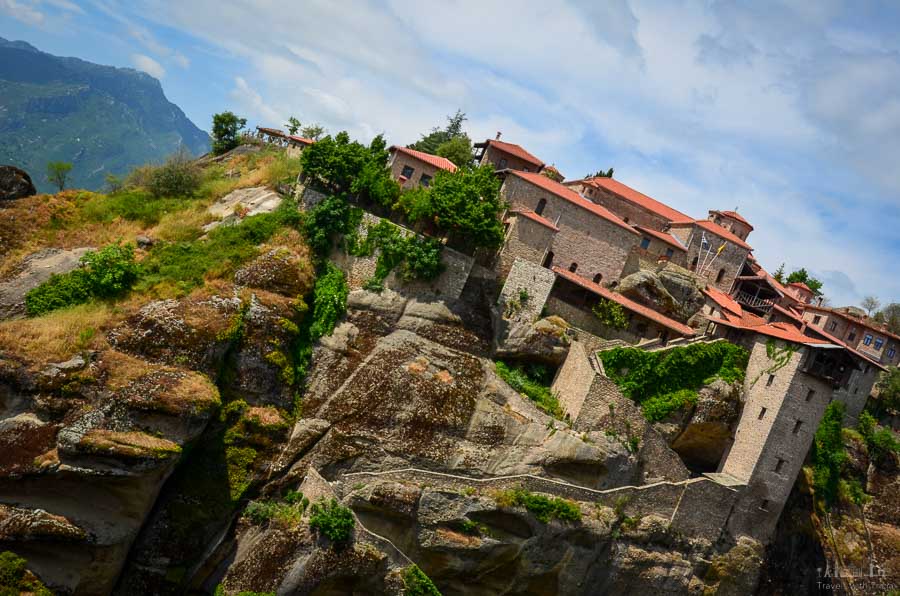
When we set out to see Meteora’s magnificent monasteries for the first time, Shawn and I took the traditional approach – on foot. As we began our journey, we met a few creatures, including a tortoise and a viper snake. Eventually, we spotted a few of the monasteries holding court high above us. We wanted to continue exploring, but we were uncertain which path to take. Since the evening hours were quickly approaching, we decided to turn back.
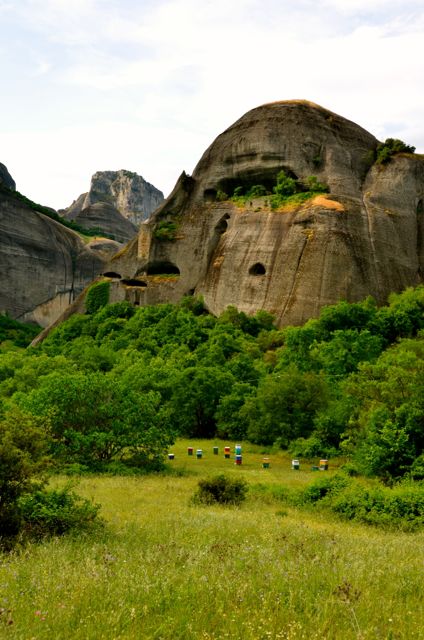
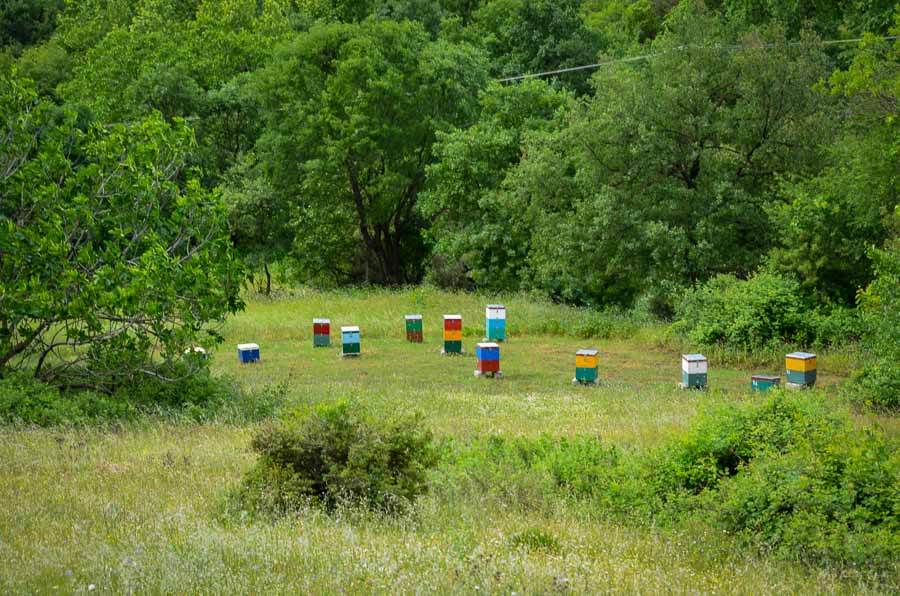
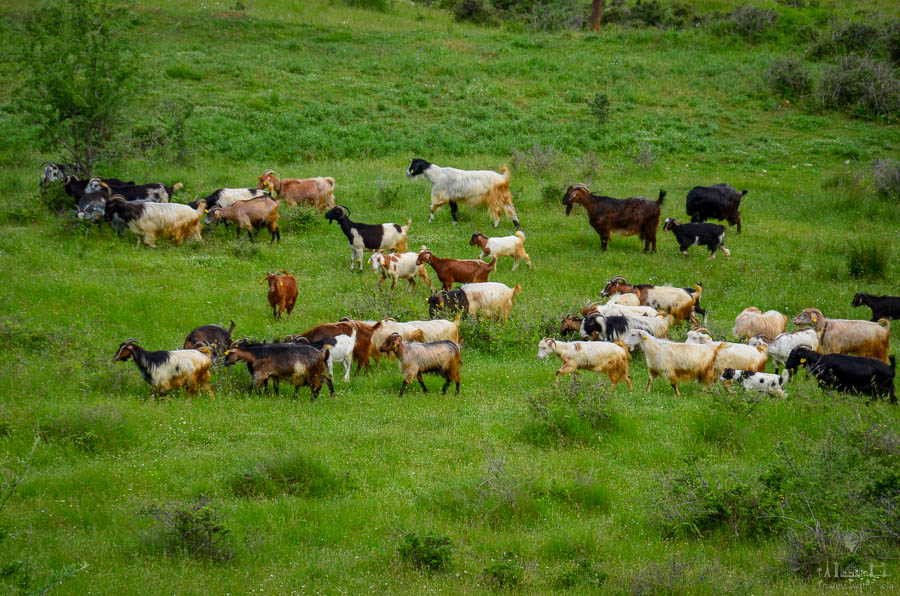
The next day, we met George, our energetic tour guide from Visit Meteora. It was an overcast morning, but George led the way and took us off the beaten path as only a local can do. Together, we passed a colorful cluster of wooden beehives, a shepherd and his flock, and a small prayer shrine.
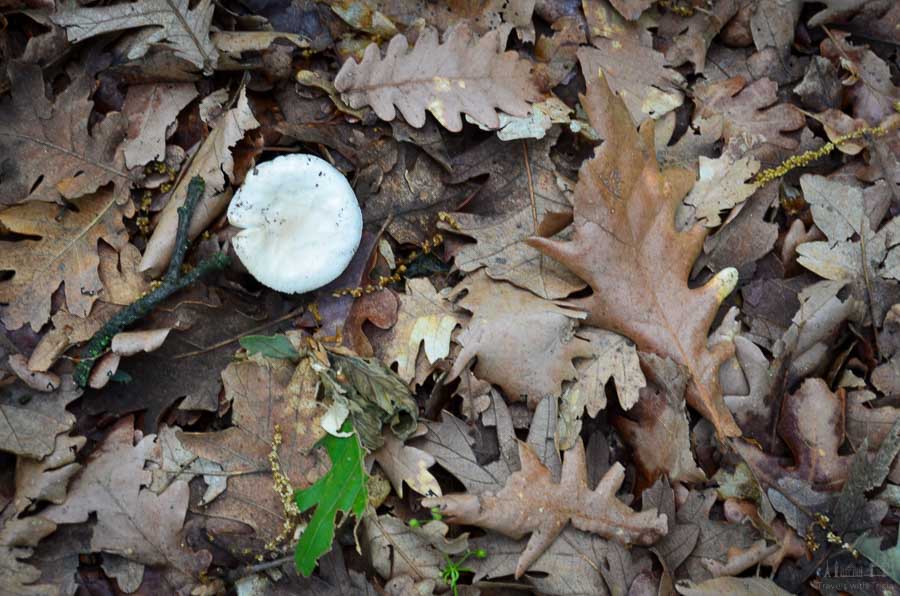
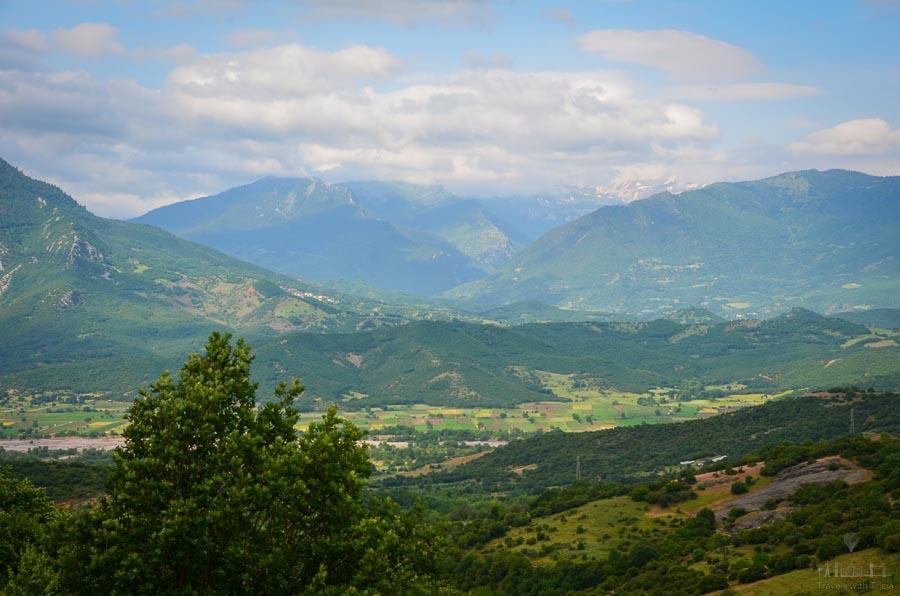
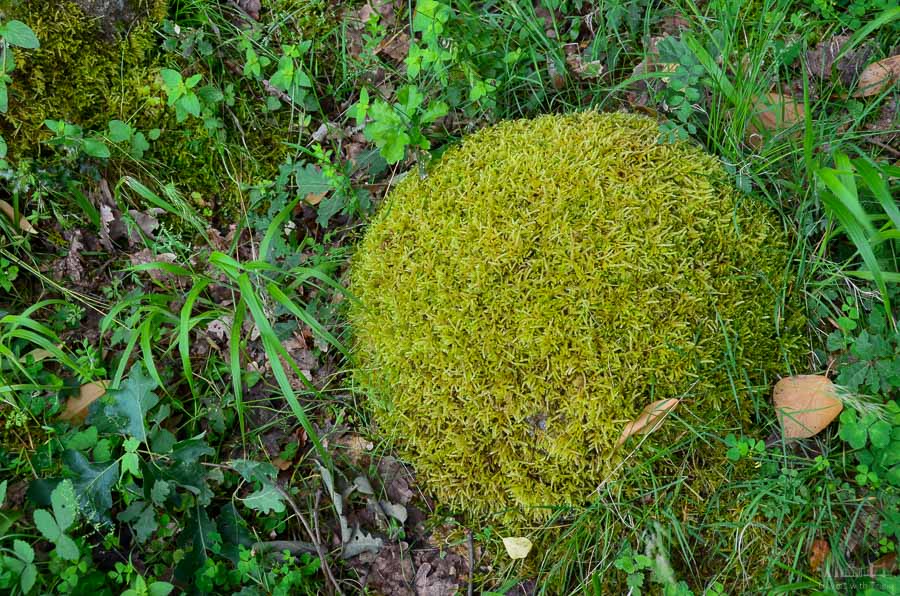
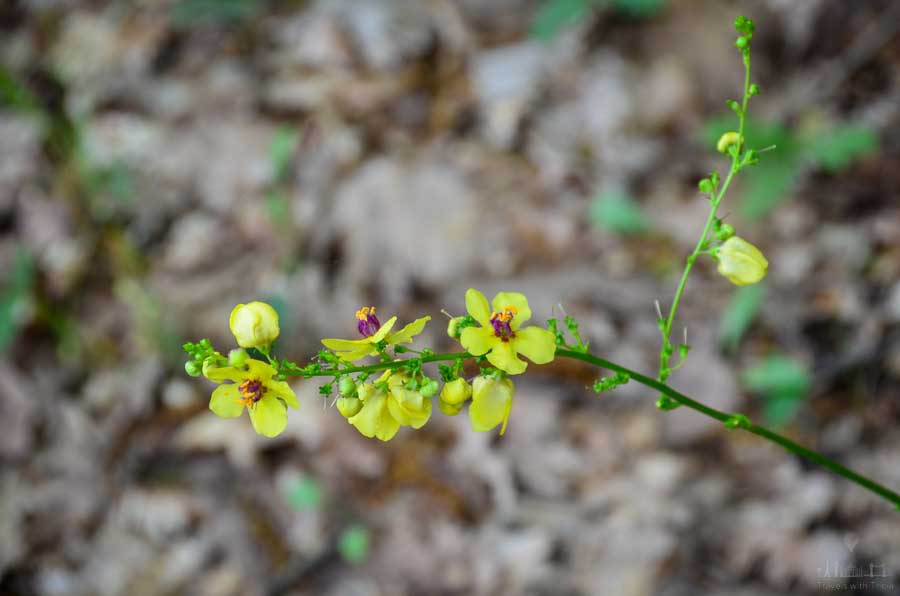
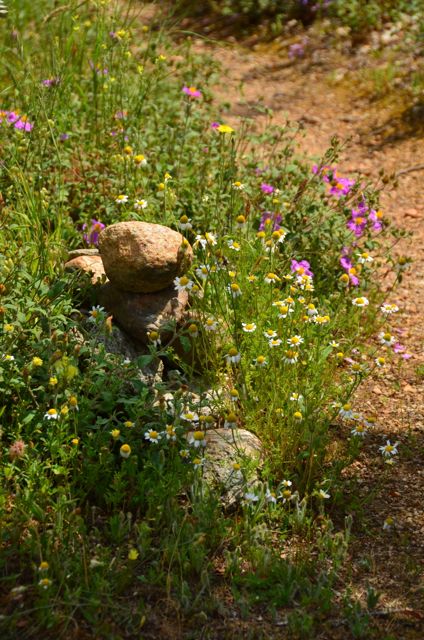
Soon, the clouds burned off. This change in weather exposed aquamarine skies, patchwork quilt-like tracts of land, and snow-capped mountains. Eventually, we wandered away from the rock formations a bit. Here, the landscape was filled with an abundance of wildflowers, a shag-like carpet of moss, and mushrooms. We encountered geckos, as well as a parade of insects. Included in that bug procession were everything from tank-like beetles and mammoth wasps to alien-faced grasshoppers and industrious ants.
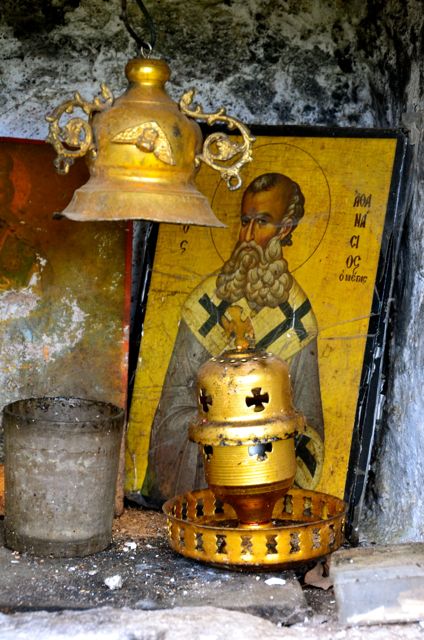

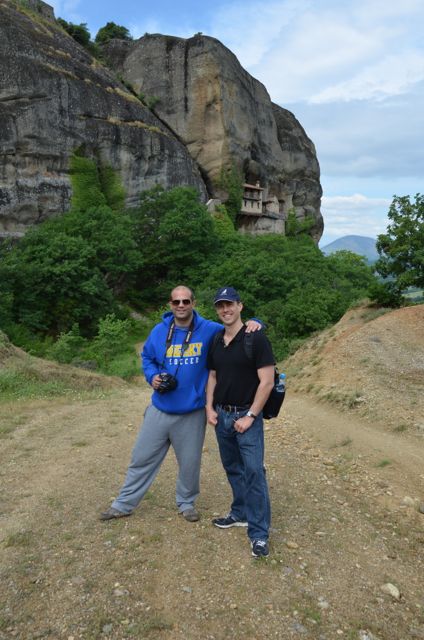
As we wound underneath an oak tree’s branches, we spotted a monastery that most visitors to Meteora never see – the Ypapanti Monastery. It doesn’t sit atop rock formations. Instead, it appears to be clinging to the side of one. George explained that the Ypapanti Monastery is one of several monasteries that is no longer active. It’s currently closed to the public.
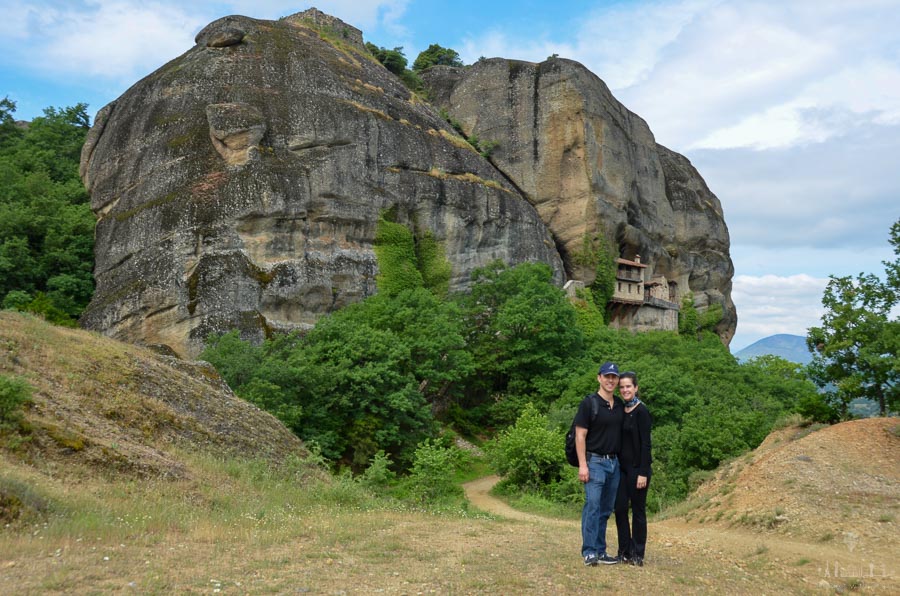
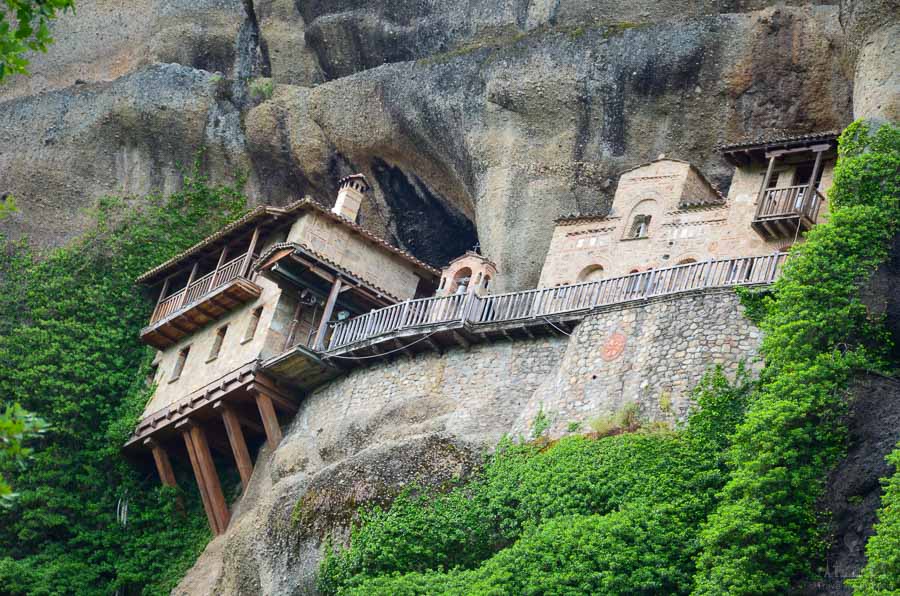

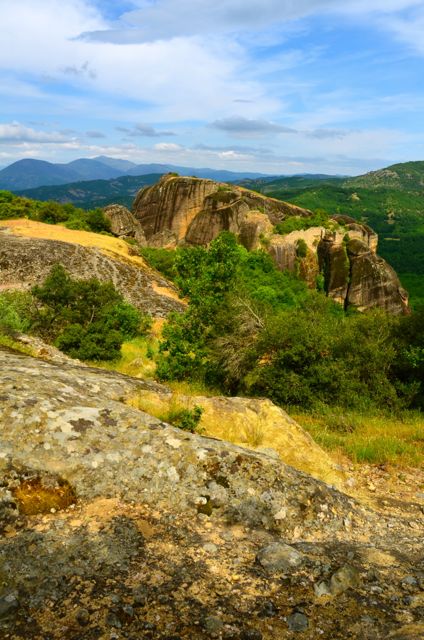
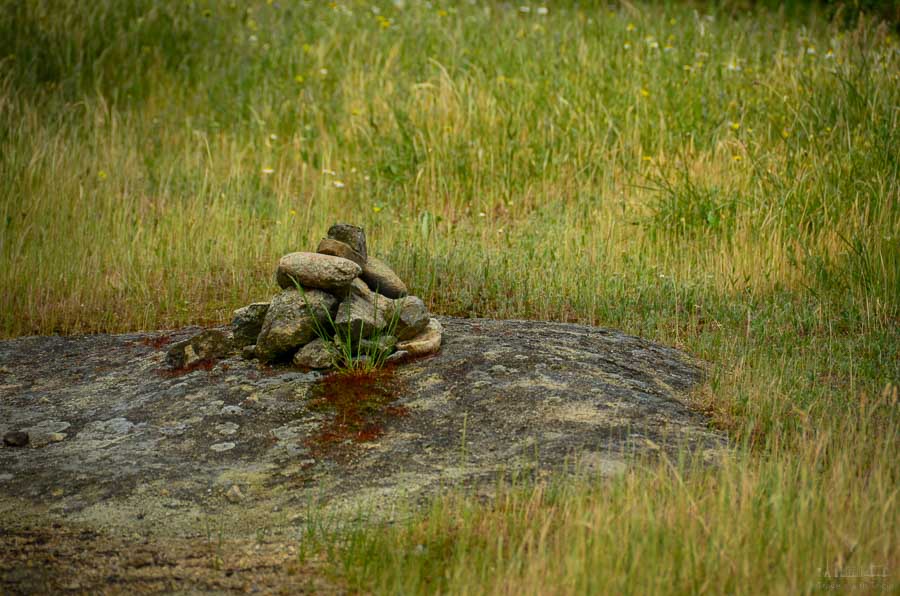
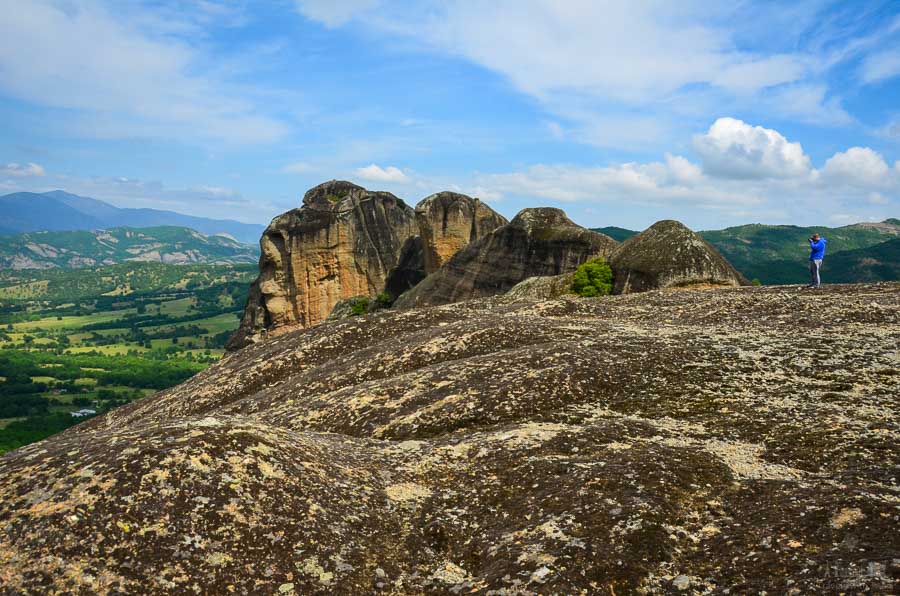
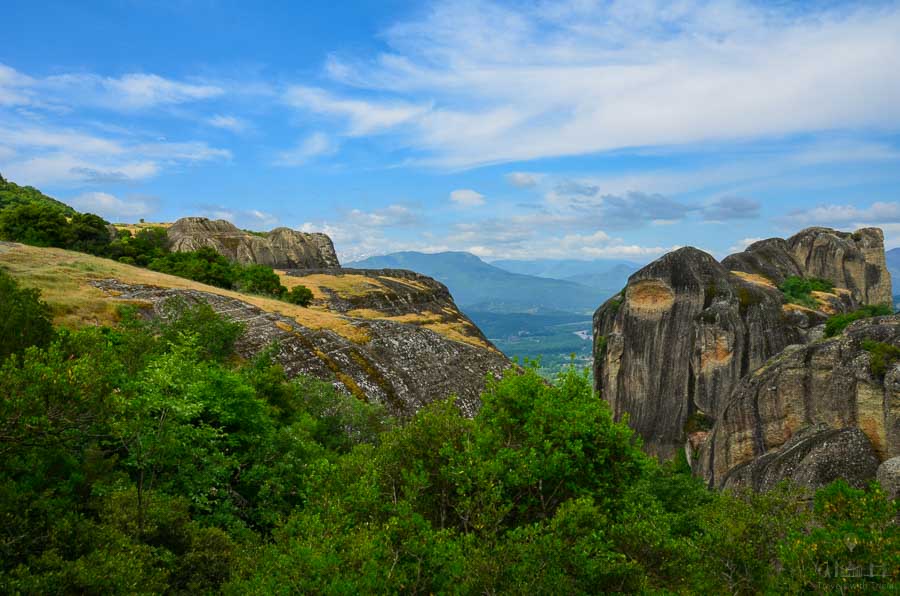
Hiking a bit farther, we approached an odd landscape. It took a bit of time until we realized that we were actually now walking on top of some rock formations. Sections of the rocky tops were smooth, whereas other parts were carpeted with straw-colored grass. George stopped to add a rock to a cairn or makeshift tower, a custom that we’d later see practiced on hiking trails elsewhere in the country.
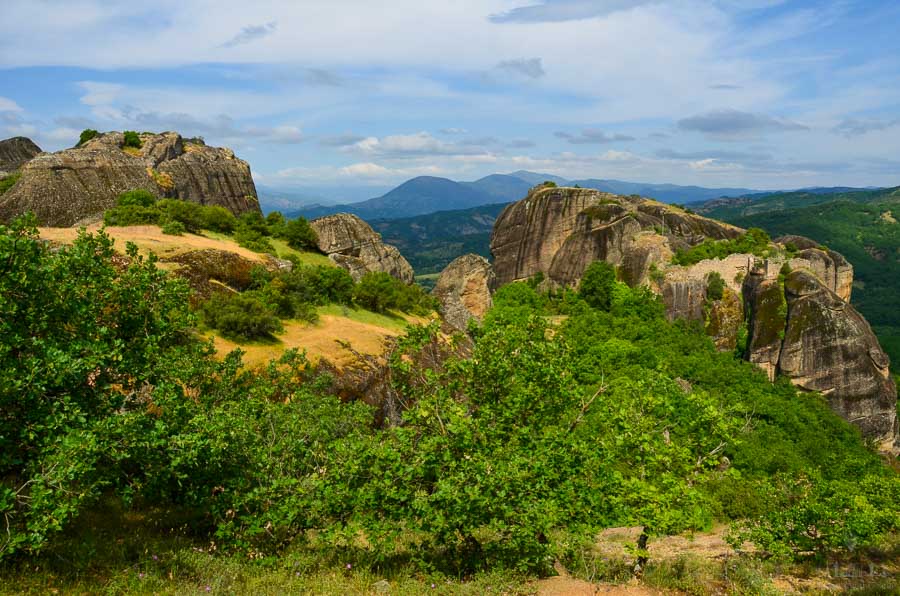
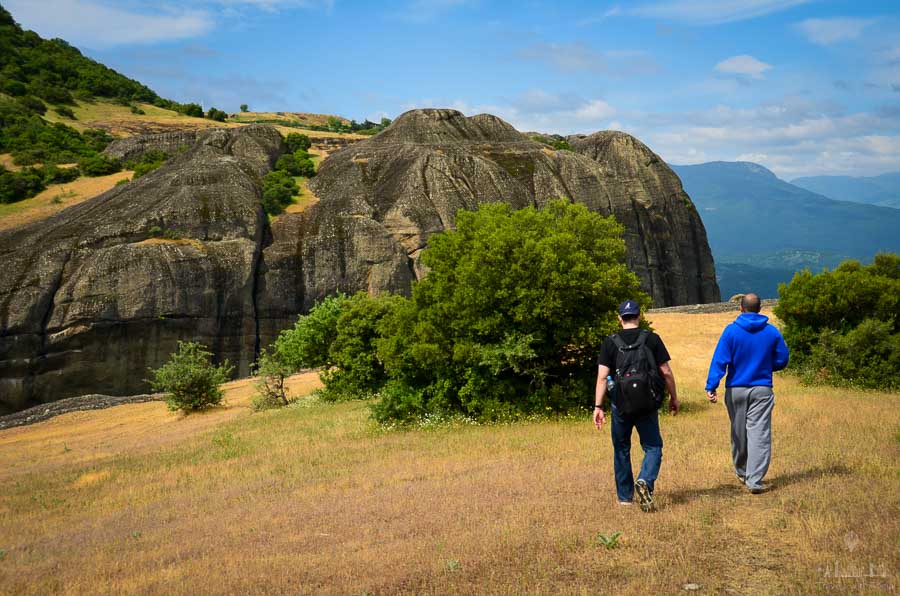


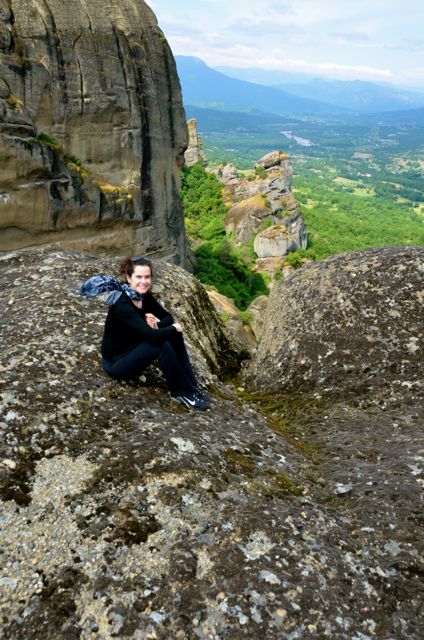
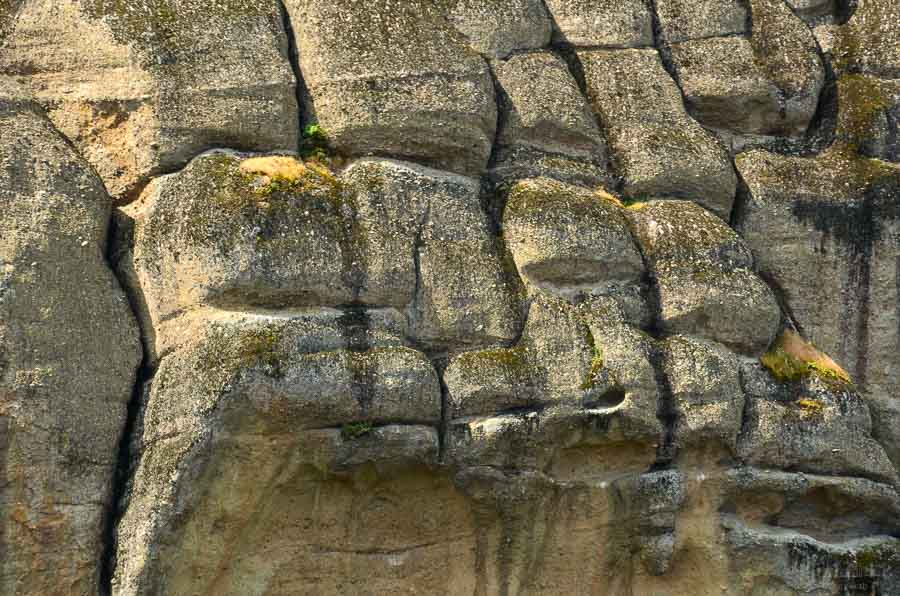
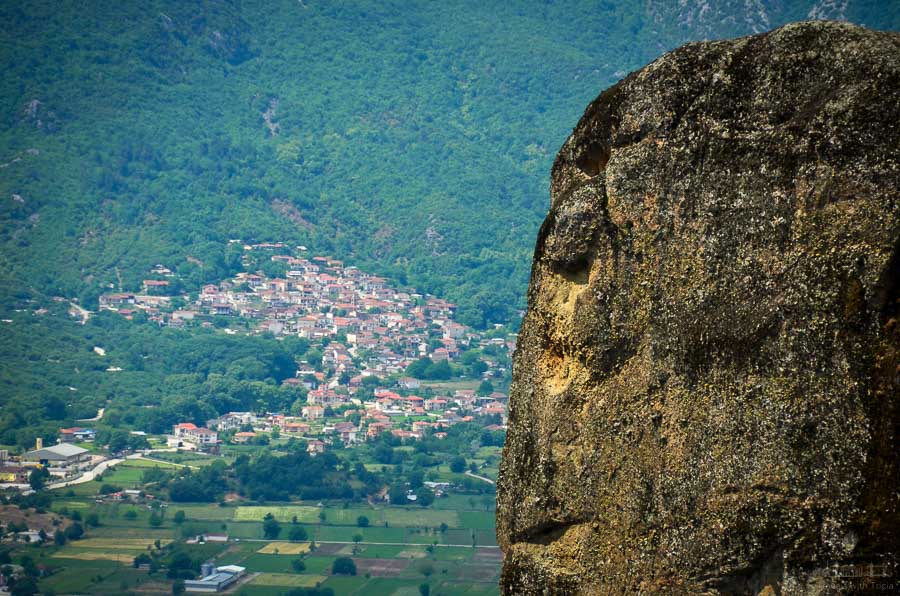
Like children seeking to find familiar shapes in the clouds, Shawn and I tried to make out faces and shapes in the rugged rocks. Eventually, we just let our minds rest so that we could take in the serenity of the landscape. Birds soared overhead and flitted from one precarious boulder top to another. We were the only people in sight.
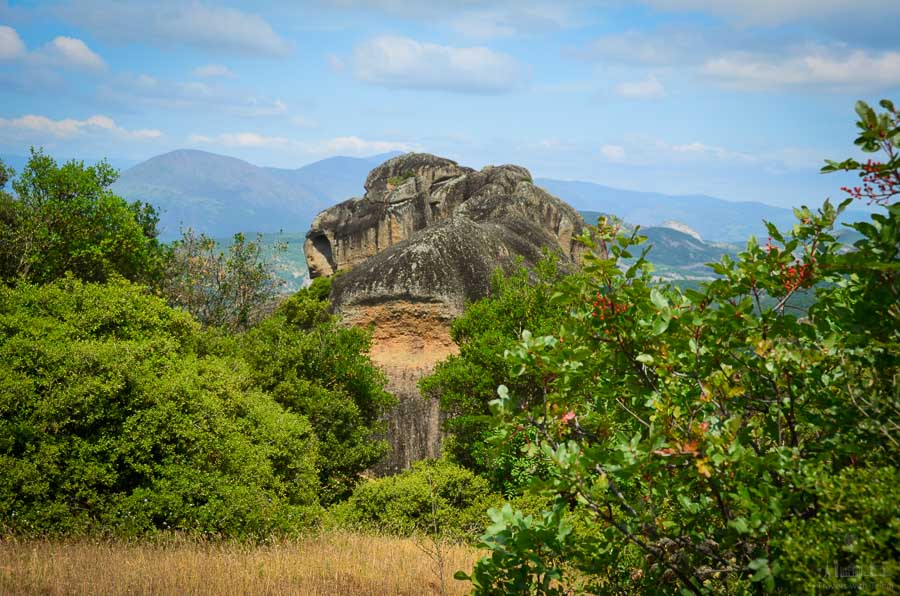
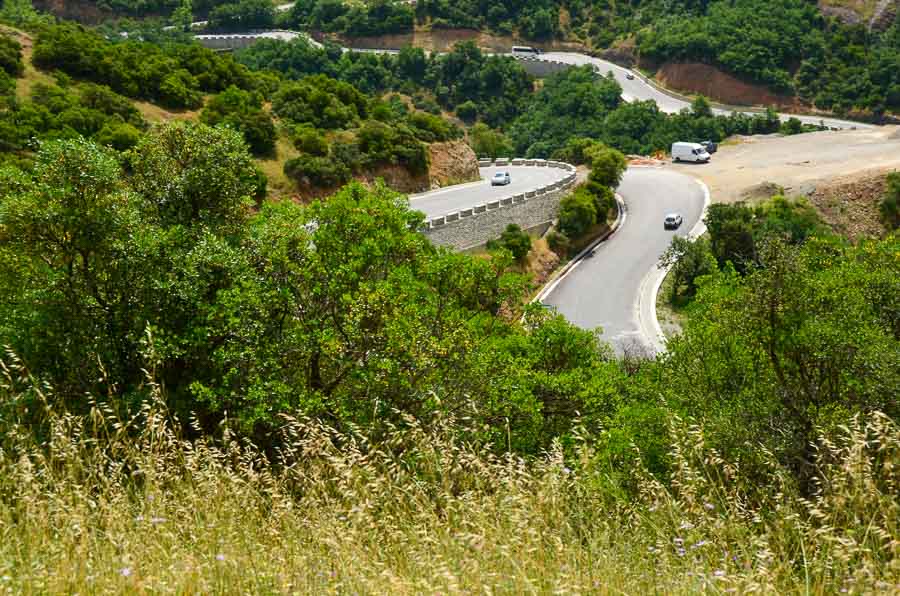
As we continued our trek, we caught glimpses of three additional monasteries. At this point, we’d been surrounded by nature for the past few hours. As a result, it was jarring to now see tour buses whizzing by, and visitors being hurried from monastery to monastery.
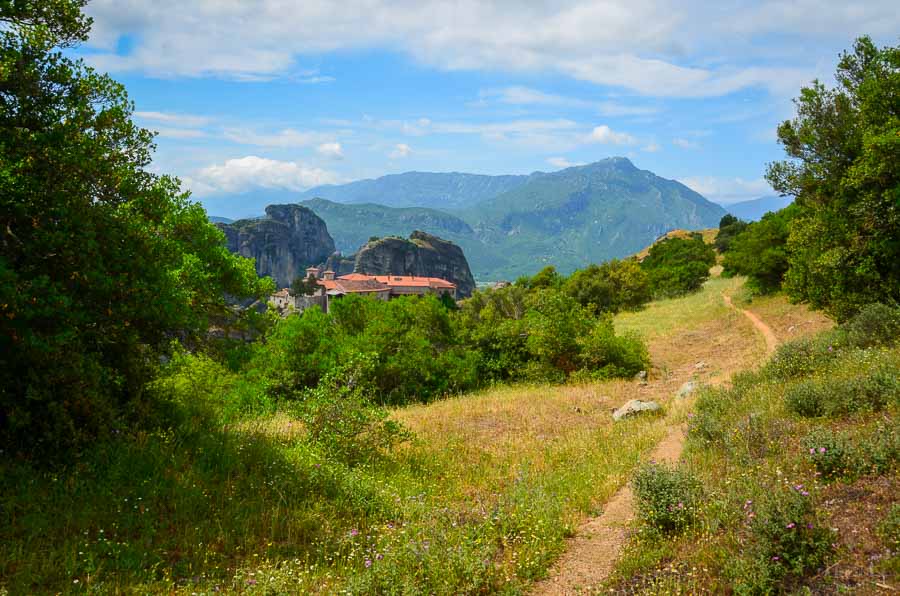

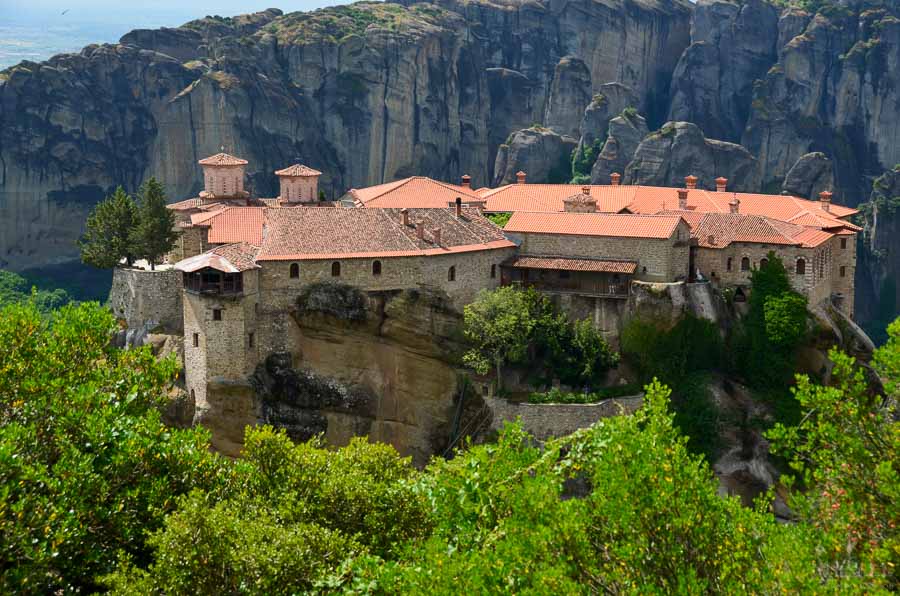
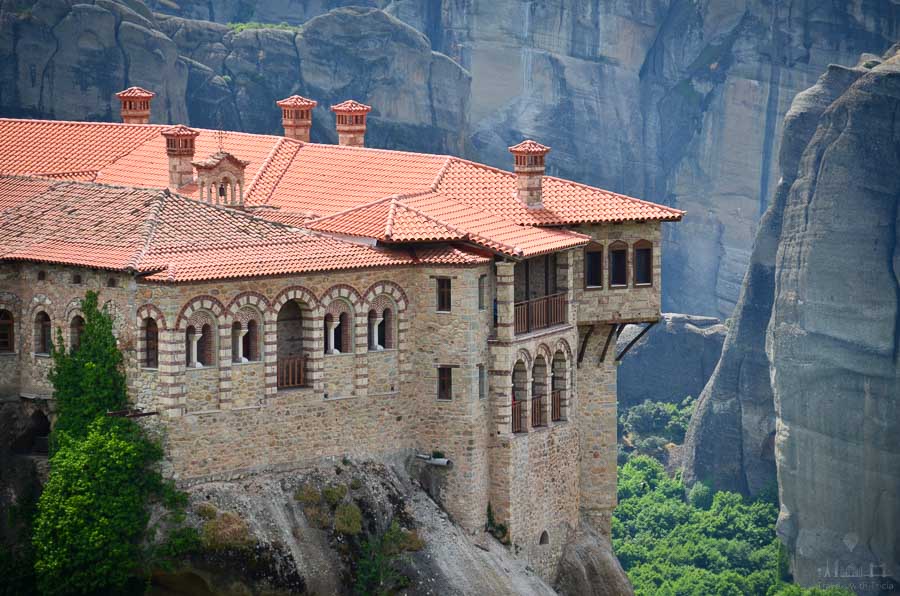

On the stairway leading toward the Great Meteoron Monastery, we glimpsed thousands of caterpillars rappelling down from the trees, building chrysalises. It seemed fitting that the insects swung on silk cords, not far from where monks once rode up to the monastery in a rope basket.
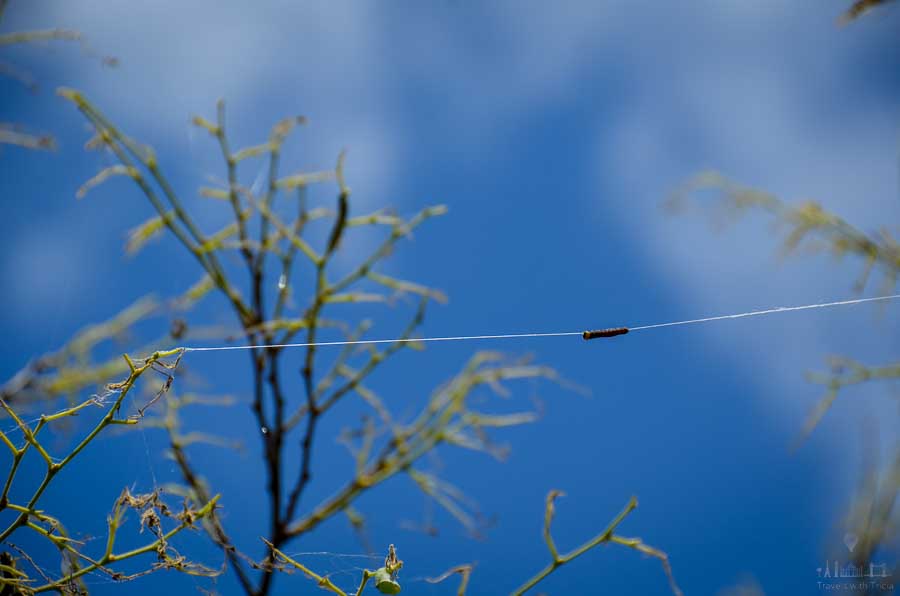
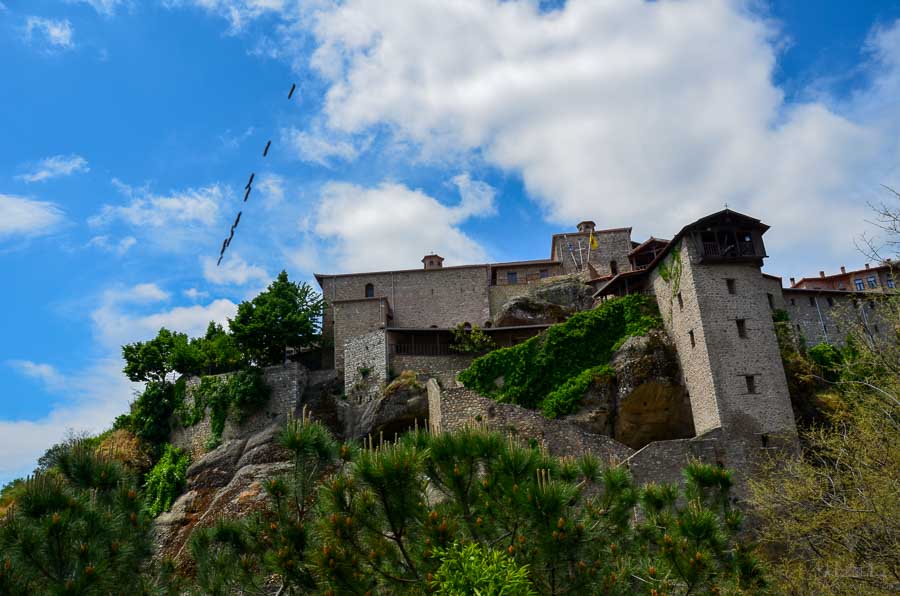
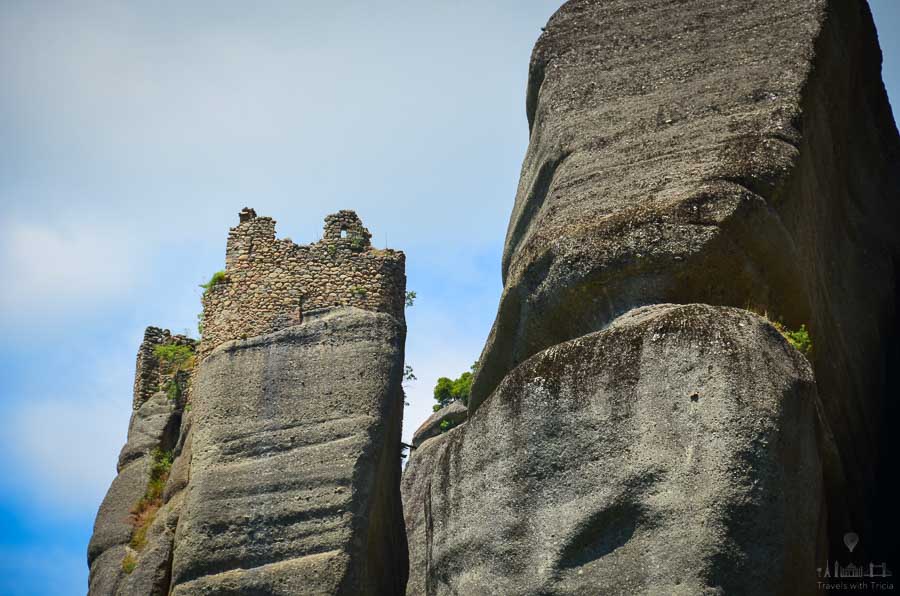
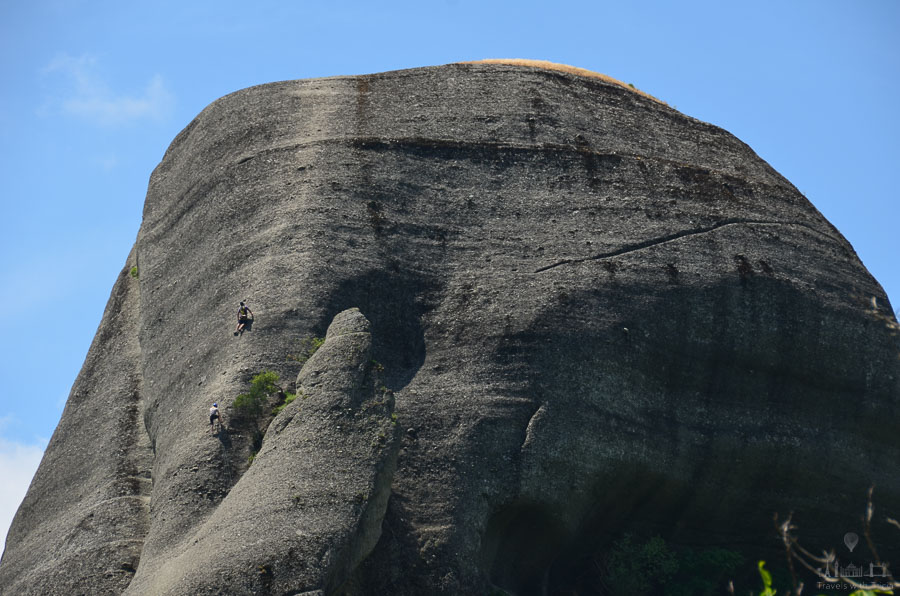
Several caterpillars tried to stow away with us during the hike down to the village of Kastraki. On the way back, we saw the ruins of monasteries that once graced the tops of the boulders. We even saw two adventure seekers climbing the rugged rocks.
George gave us the option of touring some of the monasteries’ interiors, but we decided to save them for the next day. We then wove our way down a well-shaded trail back to our home away from home, on paths covered by twisted roots. Occasionally, we caught a glimpse of the majestic monasteries, which were now high above us.
Video of this Experience:
Where in the World?
Planning Pointers:
- Meteora is about 4 hours northwest of Athens. To get there, we traveled by bus from Skopje, North Macedonia. (We departed Skopje before sunrise and then traveled to Thessaloniki, Trikala, and Kalambaka, all in one day. We bought separate bus tickets for each leg of the journey.)
- It can be easy to get lost when hiking in the remote wooded areas around the Meteora Monasteries. Be sure you have a good map, or consider hiring a guide to find those less-trodden paths.
- The weather was especially hot during our springtime visit, so we were happy to have packed ample water and snacks. It’s possible to purchase refreshments near some of the popular monasteries, but because the hike can be long, I recommend bringing your own.
- Be sure to check the opening hours for the monasteries that you plan to visit. A different monastery is closed each day to allow the monks a workday without visitors. The Visit Meteora website is a useful planning resource, and we also enjoyed stopping by this agency’s office in Kalambaka. With a helpful team of staff members on hand, free Wifi, great reading material about the local attractions, and cozy chairs available to the public, it’s a one-stop shop.
- Visit the Kalambaka Tourist Center website for information about the monasteries, as well as other activities that you can do in Meteora.
- Accommodation wise, we stayed at the cozy Guesthouse Patavalis (affiliate link) in the village of Kastraki. The hotel’s owner, Marina, whom we dubbed our “Greek mama,” surprised us with samples of tasty, home-cooked Greek food like spanakopita, candied figs, and milk custard pie. In total, we spent about a week at the Guesthouse Patavalis, staying in its Purple Room. We enjoyed the property’s terrace views of the surrounding rock formations and its convenient location. It made a great hub for exploring some of Meteora’s monasteries.
- Need more travel inspiration? This link contains an index of all my posts from Greece.
Disclosure & Thanks:
Visit Meteora hosted us for this hiking adventure.
ευχαριστώ πολύ/ A big thank you to George for guiding us. We loved getting off-the-beaten path with you, hearing your insights about these magnificent monasteries, and learning more about Greek culture.
Photography & text © Tricia A. Mitchell. All Rights Reserved. My husband, Shawn, created the video.


Leave a reply to Volos Taxi Service Cancel reply