

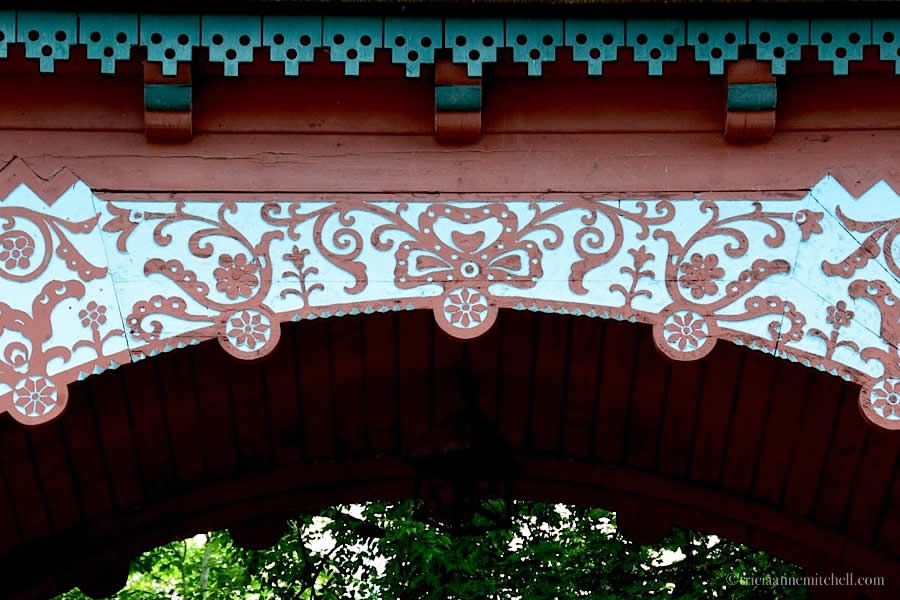
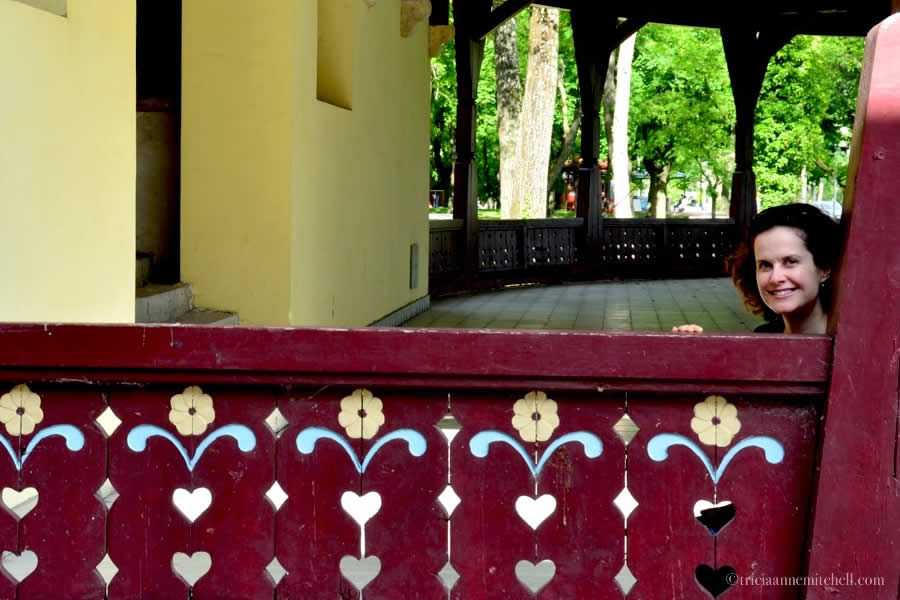
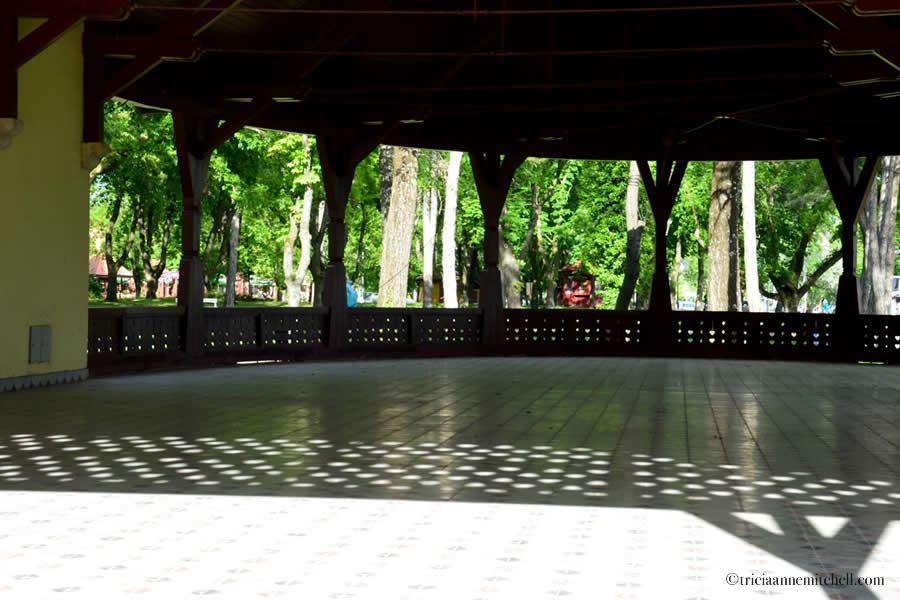
Passing through Palić’s Great Park entrance, a heavily-carved wooden arch that resembled reddish-brown lacework, I couldn’t help but imagine who had strolled through the gates a century earlier when this part of northern Serbia was part of the Austro-Hungarian Empire.
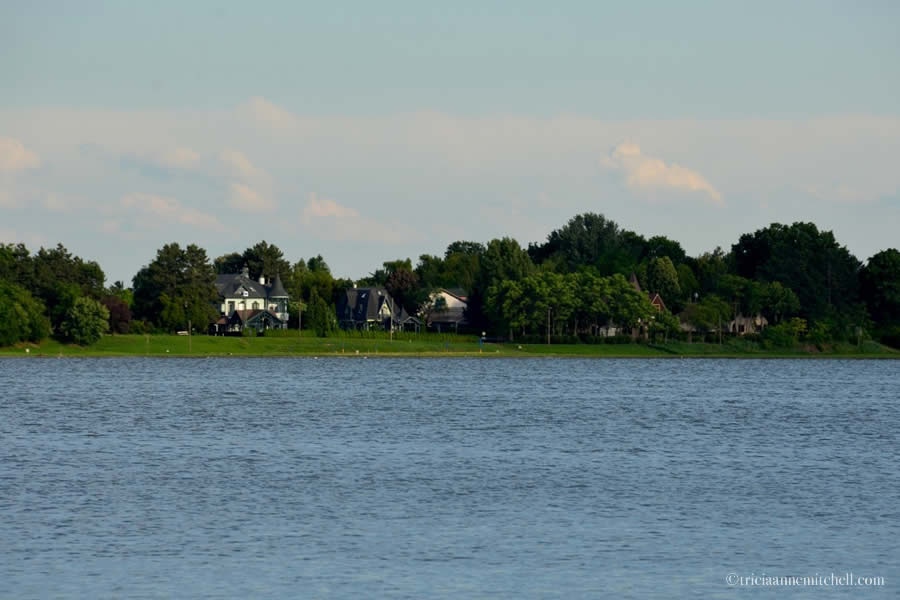
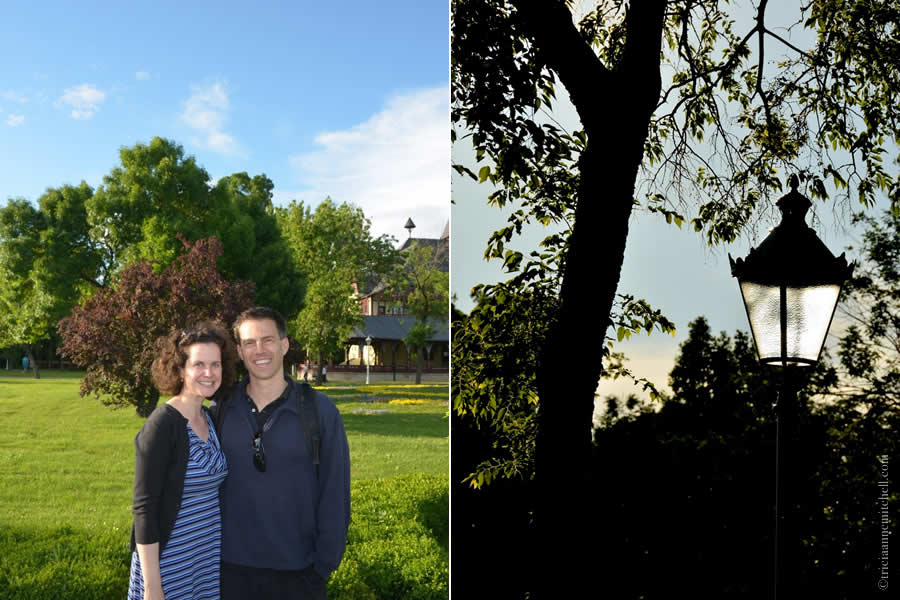
We continued along on a sidewalk that was covered by a thick canopy of handsome old trees, our sights set on tranquil Lake Palić a few hundred meters off in the distance. White lamp posts framed the walkway, and eventually we reached the water’s edge.
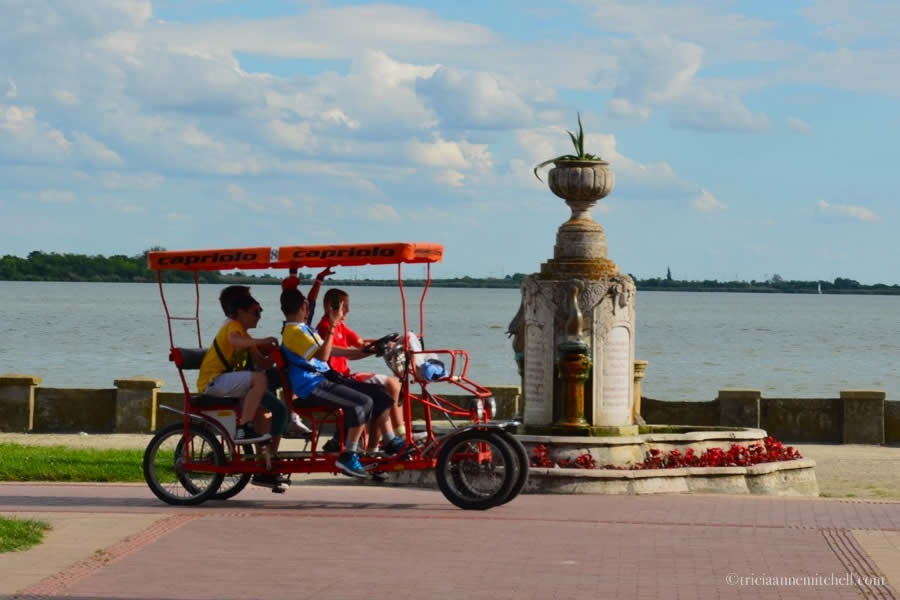
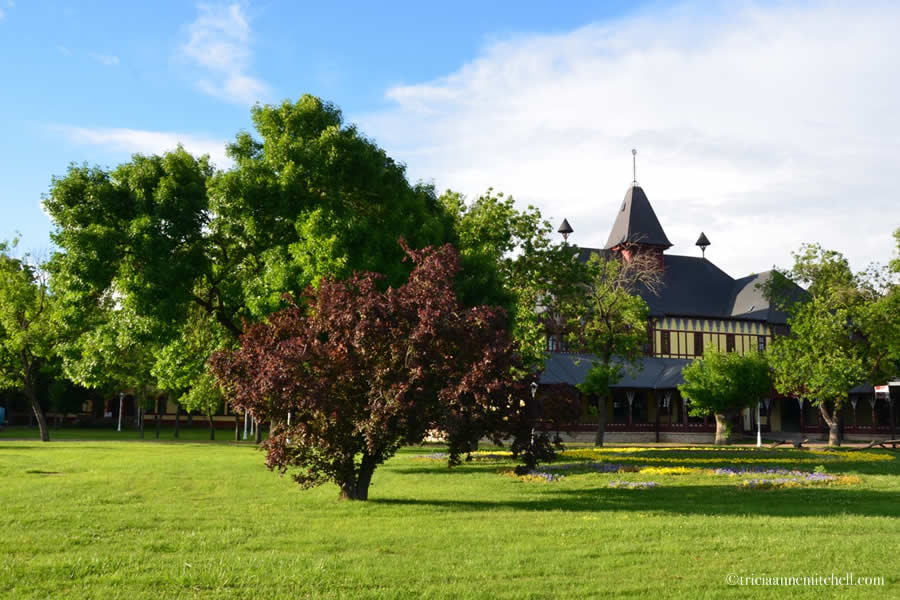
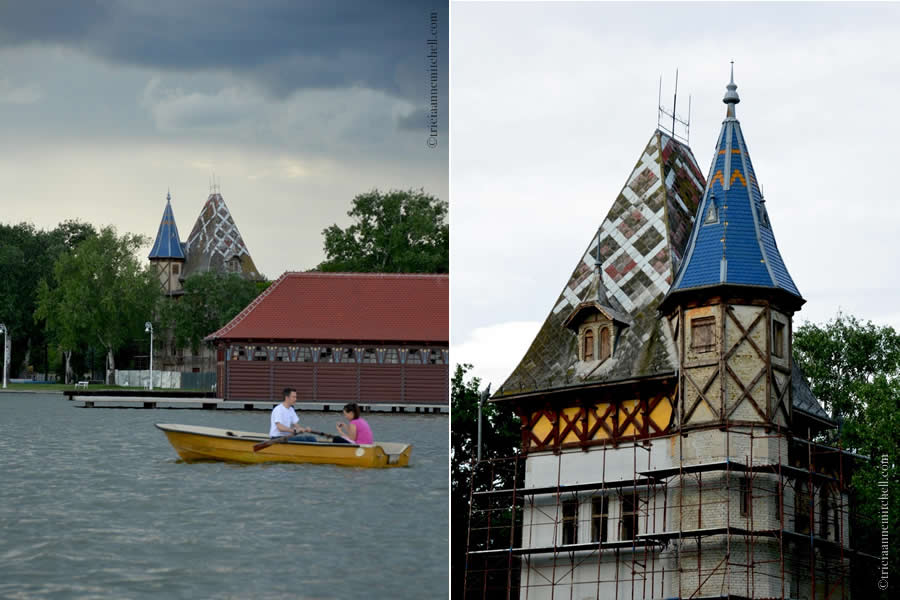
Youth on a field trip excitedly pedaled double cycles on the promenade along the lake. A few vessels floated on the water, and frilly Art Nouveau buildings, designed in the Hungarian Secessionist style, surrounded the lake. (The style of architecture is referred to this way because Secessionists essentially seceded from the mainstream, traditional art institutions of the time, opting for more progressive designs and philosophies.)
Palić’s structures were built by Hungarian architects Komor and Jakab, who also designed Europe’s second-largest synagogue in the nearby town of Subotica, as well as its town hall. Sadly, Komor would perish during the Holocaust.
Perhaps it was the expansive lawns, or the knowledge that this was an old resort area, but I couldn’t get Seurat’s painting, A Sunday Afternoon on the Island of La Grande Jatte out of my mind. I envisioned ladies holding parasols, watching sailboats glide on the lake, and children chasing each other on the shaded lawn. Since there is a zoo within the park, perhaps even the painting’s mischievous monkey would make an appearance.
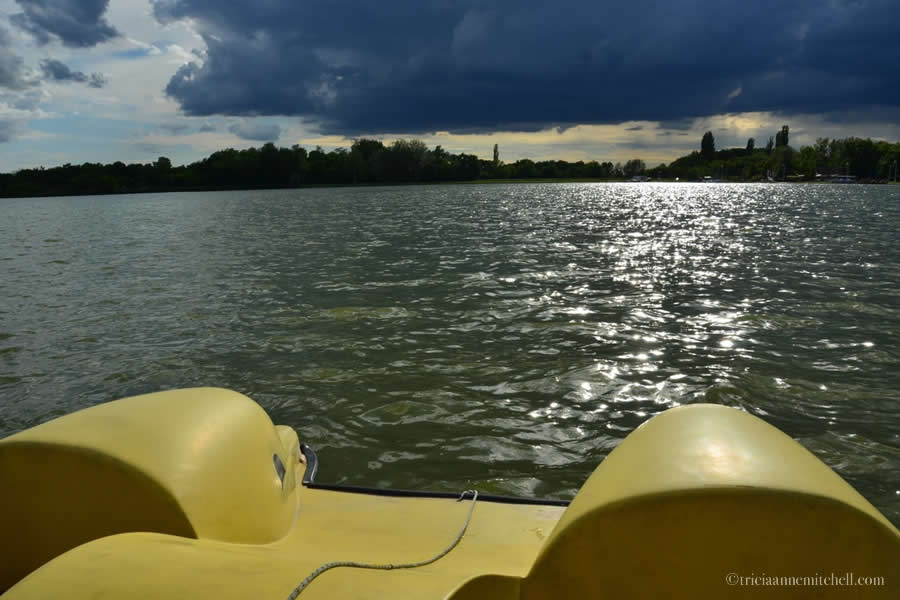
Despite the midnight blue clouds that loomed overhead, we were determined to take a paddleboat out for a spin. Handing over 500 Serbian Dinar (about $5 USD), we purchased 30 minutes of paddleboat or pedalina time, then took to the waters. We powered past the elaborate Women’s Lido building, which was previously used as a beach for female bathers, when privacy was of utmost importance. The curly adornments on the top of the building’s roof reminded me of a Southeast-Asian pagoda. We passed a couple in a rowboat whose wooly dog stood at the boat’s bow, peering into the water below.
We returned to land just as the raindrops began to dance from the sky, and sought refuge in a café inside the Women’s Lido, enjoying a piva (beer) and topla čokolada sa šlagom (hot chocolate with a fluffy dollop of cream).
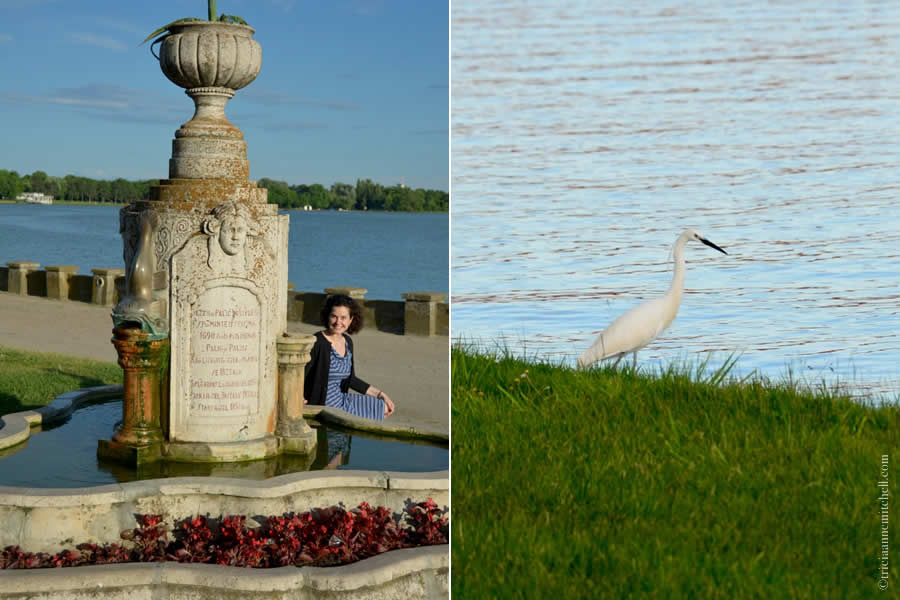
On the way back to our home away from home, an elegant egret flirted with us along the water’s edge, before we walked back through the fairy tale forest.







Our Video of This Experience:
Where in the World?
Planning Pointers:
- Palic Lake and the village of the same name are located just 8 km. (about 5 miles) from Subotica, Serbia’s fifth-largest city. Visit the Palić Tourism Office website for more details.
- We stayed several nights in the family-owned Stara Breza Apartments (affiliate link) in the nearby town of Palić. We enjoyed the establishment’s quiet atmosphere, made even more picturesque by its small fishpond and pleasing garden. It’s about a five-minute walk from the Stara Breza to a bus stop, and the bus there can take you to Subotica in about 15-20 minutes. As of May 2014, the bus-fare for one adult was 86 Serbian Dinar, about $1 USD each way. Palić has a lovely lake and was a popular resort town in the early 20th century.
- Need more trip-planning inspiration? From Belgrade to Novi Sad, this link contains an index of all my posts from Serbia.
Photography & text © Tricia A. Mitchell. All Rights Reserved. The video was created by my husband, Shawn.


Leave a reply to Melinda Lusmore Cancel reply