

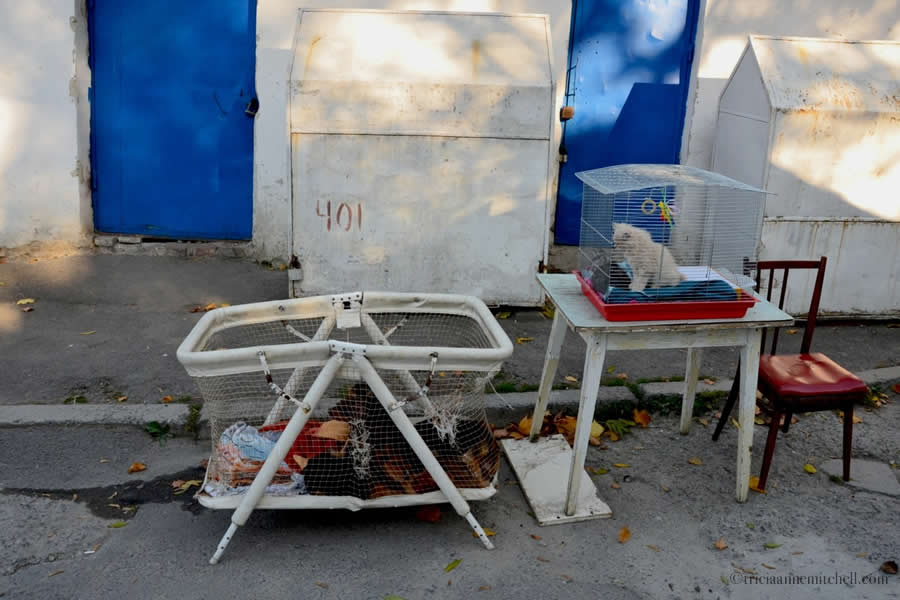
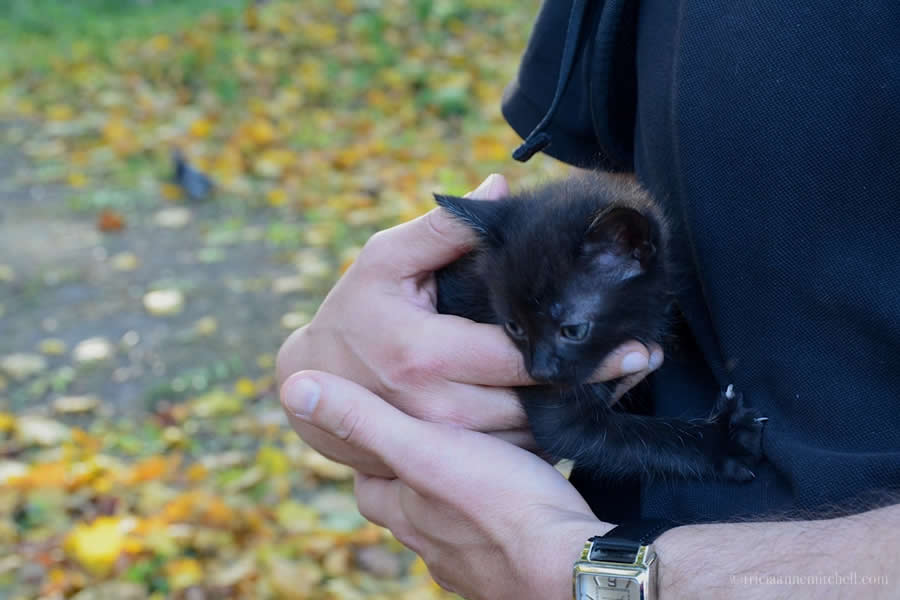
As the golden leaves of autumn danced from the branches above, a man walked past us, a black kitten in his hands. Since there was an open-air pet market selling puppies in vintage playpens and kittens in birdcages just around the corner, we thought the man had just purchased a kitten. I had cheery visions of him perhaps taking it home to a jubilant family.
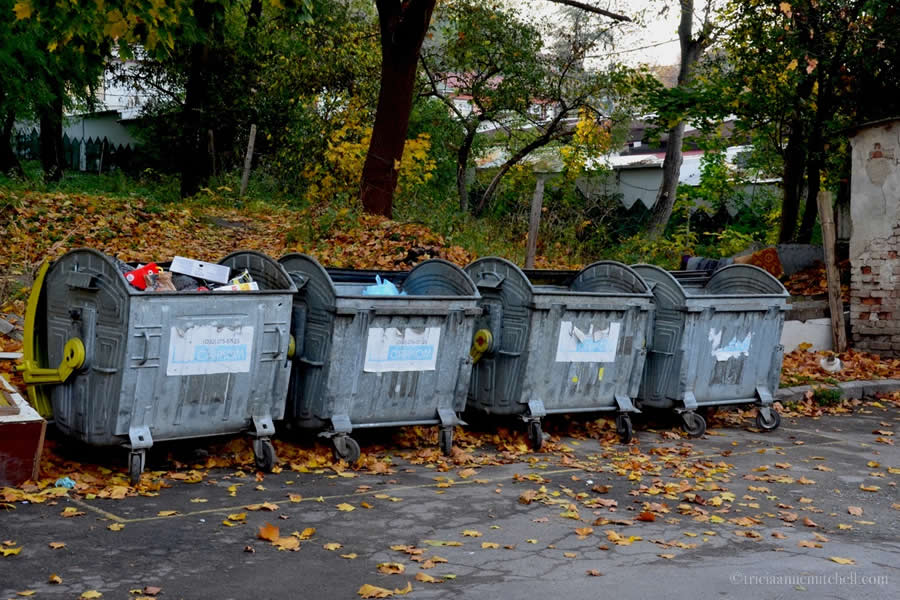
Instead, he walked behind a set of steel-grey dumpsters and dropped the kitten into a pile of mixed leaves and trash. Stone-faced, he then walked briskly past us, keeping his gaze forward and careful not to make eye contact with us.
My husband, Shawn, and I were speechless. Over several years of travel in many corners of the world, to include our home country, the United States, we’d likely seen hundreds, if not thousands of homeless pets on the streets. However, we’d never before seen one disposed of right in front of us.
Within seconds, the man had turned a corner and was gone.
Travel is a master at presenting the beautiful and tragic elements of life in a concentrated fashion, providing lessons at a pace that gets more hurried as you move from one new place to another. However, this particular moment was especially harsh. It reminded us of the fragility of life. But it also reinforced the idea that instead of deferring travel to places where injustices occur, instead of thinking that any act of goodwill is too insignificant, we can all do something – ever small – to make a difference.
As the kitten cried, Shawn walked over and picked it up. A woman who was working at the animal market nearby approached us a moment later and tried to dissuade us from taking the kitten. Cobbling together German and Ukrainian words, we understood her to say, “Not good. No home. Leave it there.” There was no confrontation. We waited until she walked away.
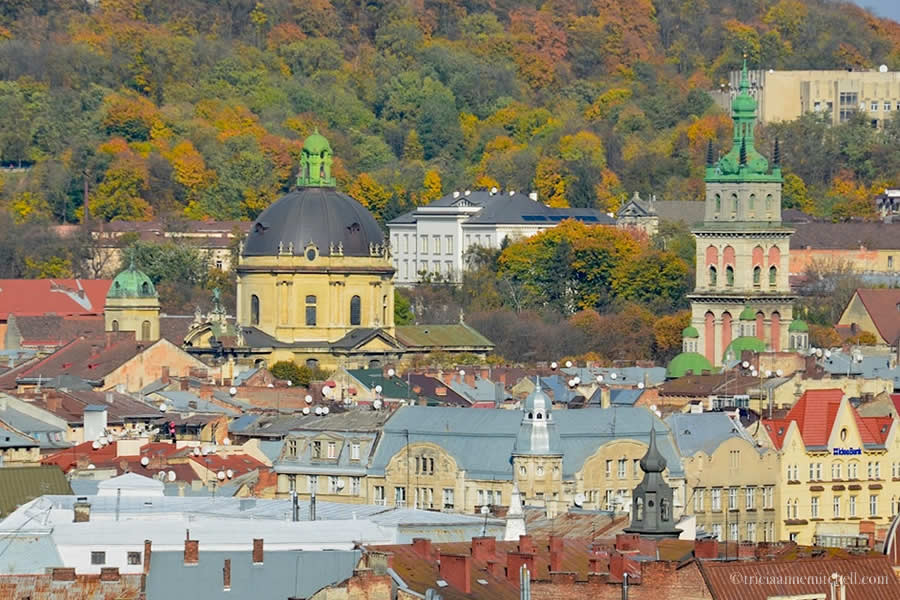
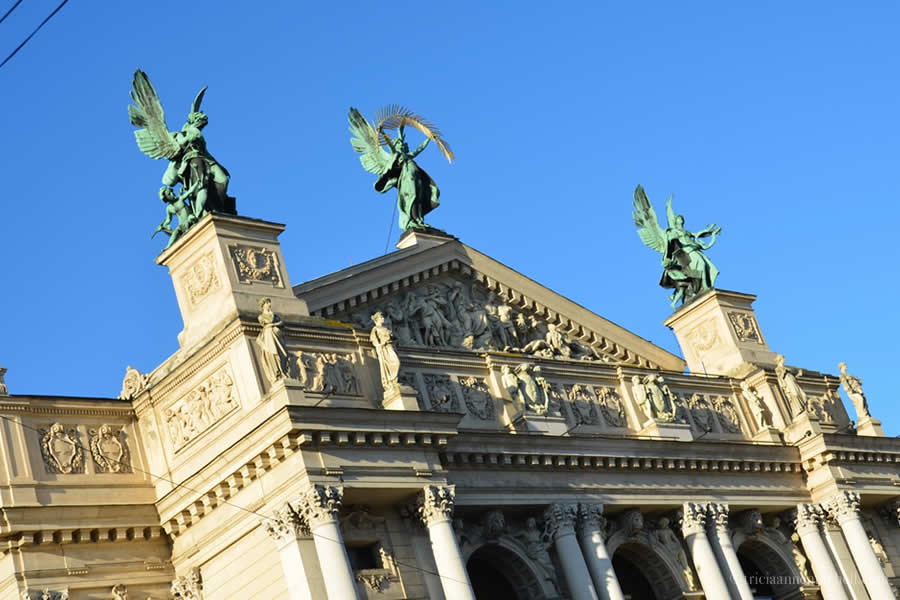
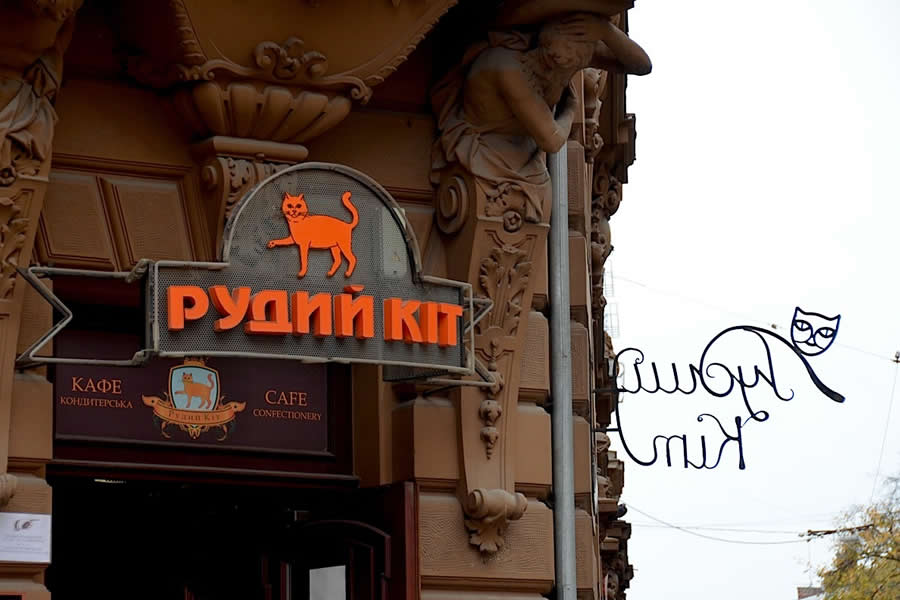
As nomads who have by choice been without a home base these past three years, we knew we were in no position to become pet parents to the little one. But, we also couldn’t leave the kitten near this marketplace in Lviv, Ukraine – a gorgeous city known for its UNESCO World Heritage architecture, chocolateries, and coffeehouses harking back to the days when it was part of the Austro-Hungarian Empire.
With the confused and scared kitten in our arms, we walked home toward our temporary apartment and stopped to ask a couple where a pet shop might be. When I explained the situation, the young man said, “I know it’s very sad, but it’s normal here to see animals on the street. You must just walk by.”
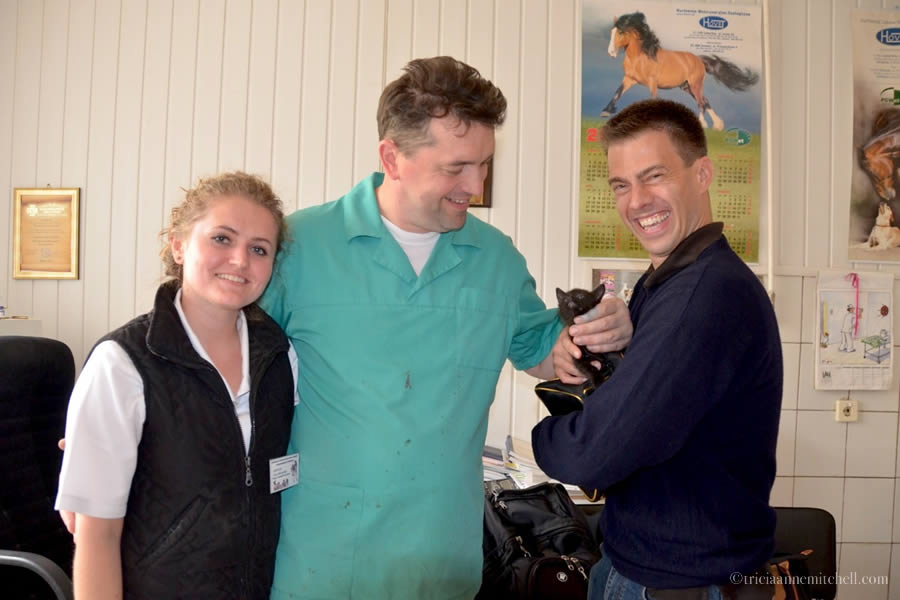
In the subsequent ten days, there would be many positive developments in the kitten’s life. We carted him around to two wonderful veterinarians, doing our best to make our way on an unfamiliar city’s streets while deciphering signs bearing the Cyrillic alphabet. Via social media, we were fortunate to have connected with two hard-working and dedicated Ukrainian animal-welfare advocates who helped us virtually translate the kitten’s medical records.
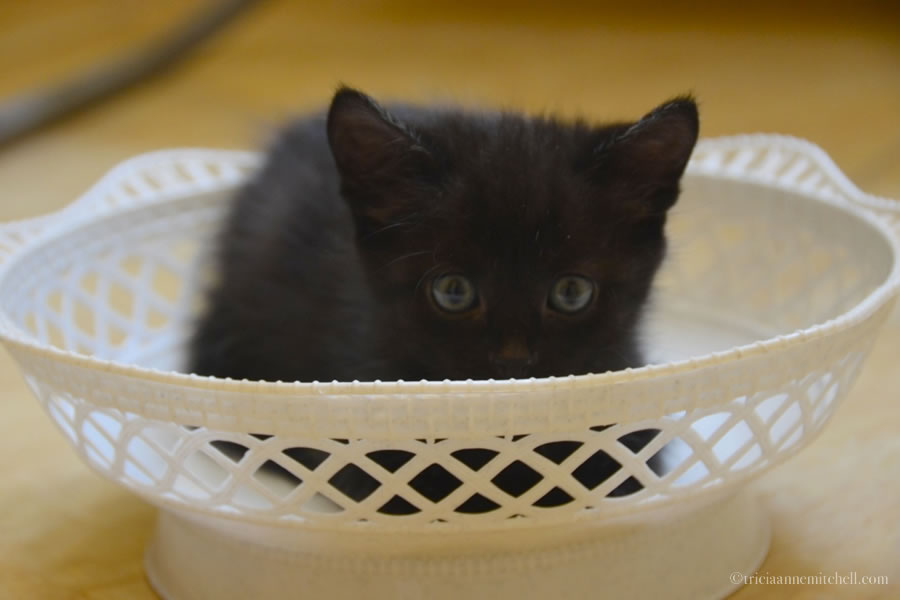
The kitten was given a Ukrainian pet passport, initial vaccinations, flea and de-worming treatment, and a microchip. We learned that he was about six weeks old, and we named him Cocoa, inspired by his hometown’s centuries-old love affair with chocolate and coffee.
As we navigated the Ukrainian veterinary system, there were a few moments when I felt a tear of happiness about to emerge. When the first veterinarian rubbed a cotton swab of flea removal medicine on Cocoa’s spine, visions of flea-infested animals in Bali, Montenegro, and Greece came to mind. I silently accepted that although we couldn’t help them all, Cocoa would be flea free. I also smiled when he was issued his green Ukrainian pet passport. Cocoa would not be just another anonymous street kitten (if indeed he’d even survived his first night on the street), rather he was documented and official.
When we ferried Cocoa around from appointment to appointment in a navy-blue cosmetics case that we dubbed the ‘Cocoa Mobile’, people couldn’t help but fall for his baby-blue eyes, which sometimes looked emerald green, reminiscent of photographer Steve McCurry’s famous 1984 image of the Afghan Girl. We told them all of his humble beginnings, and they smiled.
Learning that the animal welfare situation is dire in Ukraine, and that there are but a few shelters in the country to care for street animals, we made the decision to take Cocoa back with us to Germany. Our reasons for doing so were varied. We didn’t want to overburden the Ukrainian system further, we questioned if he’d ever be adopted, and we were optimistic that if we contacted enough friends and family in Germany and beyond that we could find Cocoa a loving home.
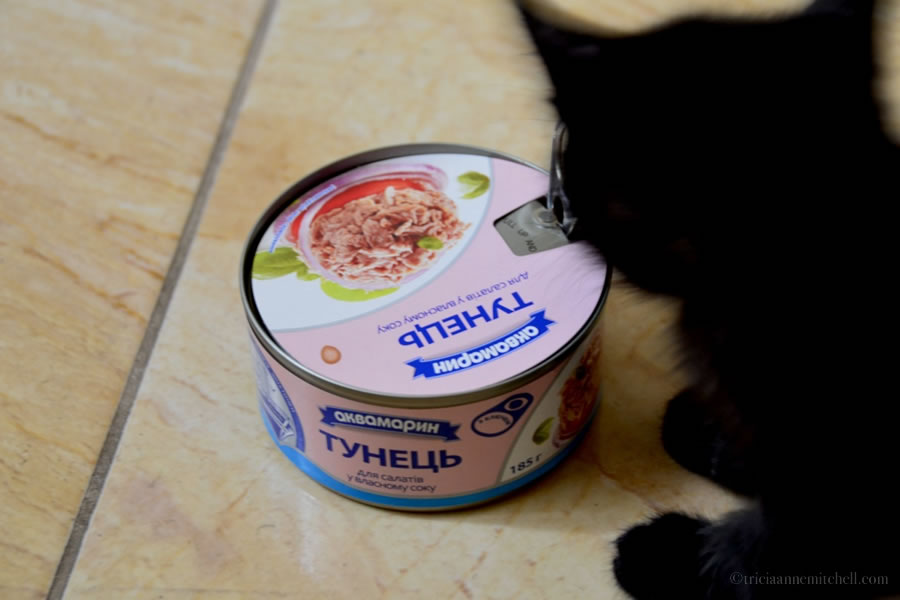
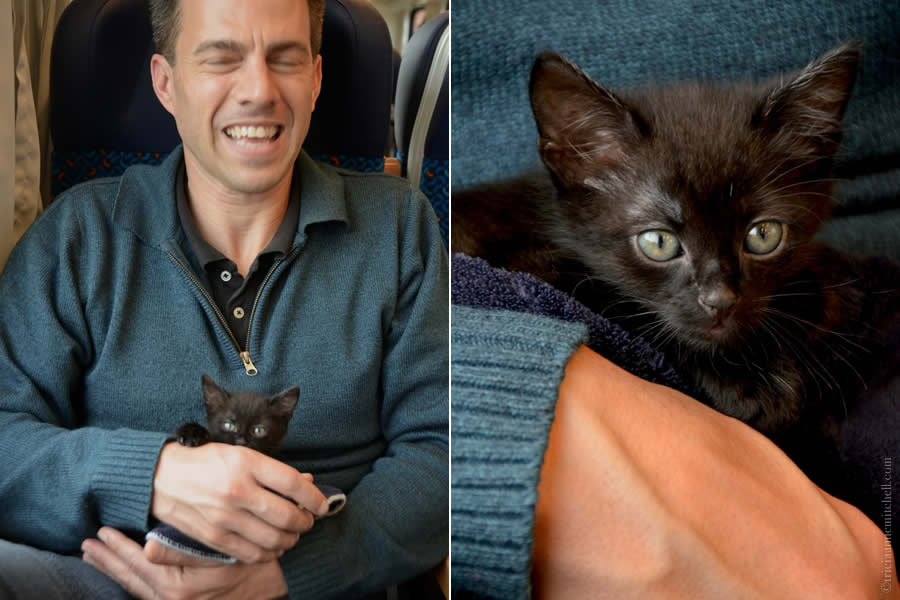
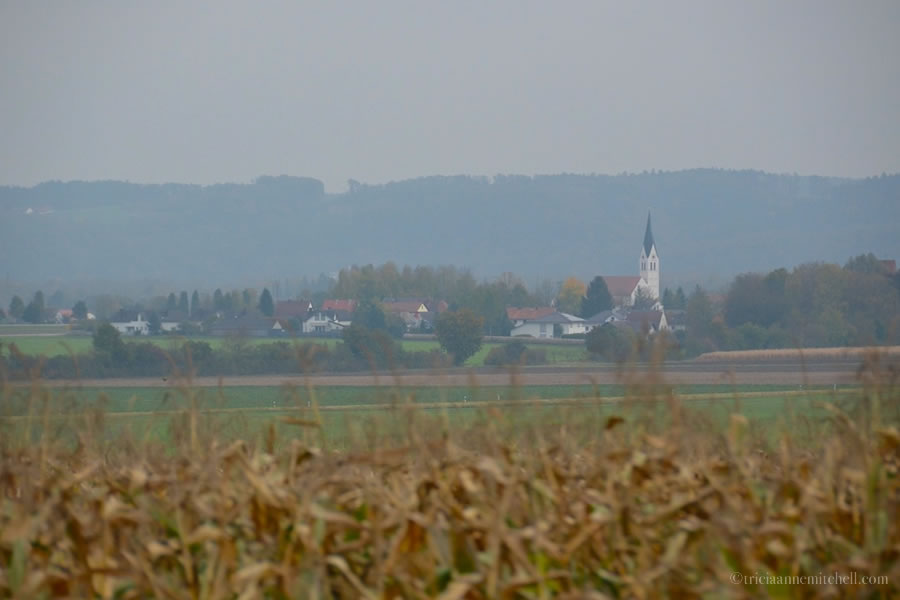
Little Cocoa grew bigger by the day on a diet of tuna and soon bid farewell to his hometown of Lviv, embarking on a grand tour of Europe that took us over 1,000 km. (600 miles) through Old-World cities like Krakow, Prague, Plzen, and finally Munich. With the ever-evolving landscapes, the word for tuna changed too – тунець (tunetsu), tuńczyk, tuňák, Thunfisch.
During our 24 hours of overland travel together on buses, streetcars, taxis, and trams, Cocoa would peek out of our hands, eliciting warm smiles from travelers. When he ‘broke wind’ or meowed, we apologized profusely to fellow passengers. Even the sternest of them smiled in reply. After an especially powerful toot, one passenger said with a grin, “C’est la vie — that’s life!”
Now safe in Germany, Cocoa looks out the window and invariably wonders why his house isn’t moving. We’re hoping that he doesn’t have to move much farther to find a good home.
Cocoa has taught us much about life. He may be just one little life to have saved on this great international journey of ours, and I wish we could’ve helped more of the animals along the way, but then I remember a lovely quote by South African social rights activist, Desmond Tutu:
“Do your little bit of good where you are; it’s those little bits of good put together that overwhelm the world.”
Desmond Tutu
If you know of a loving family that’s looking for a playful, sociable, and energetic kitten that’s as well-travelled as Cocoa, please spread the word.












Where in the World?
How to Help
I asked Natalie, an animal-welfare advocate in Ukraine, how individuals can help the country’s animals, should they wish to donate. She suggested working through Naturewatch or Arche Noah (Switzerland).
Of course, you can also donate to your preferred animal charity.
Photography & text © Tricia A. Mitchell. All Rights Reserved.
***
11/16/2014 UPDATE: Cocoa has been adopted by a loving family in Switzerland. Please read the news of the happy ending here.


Leave a reply to fotoeins Cancel reply