
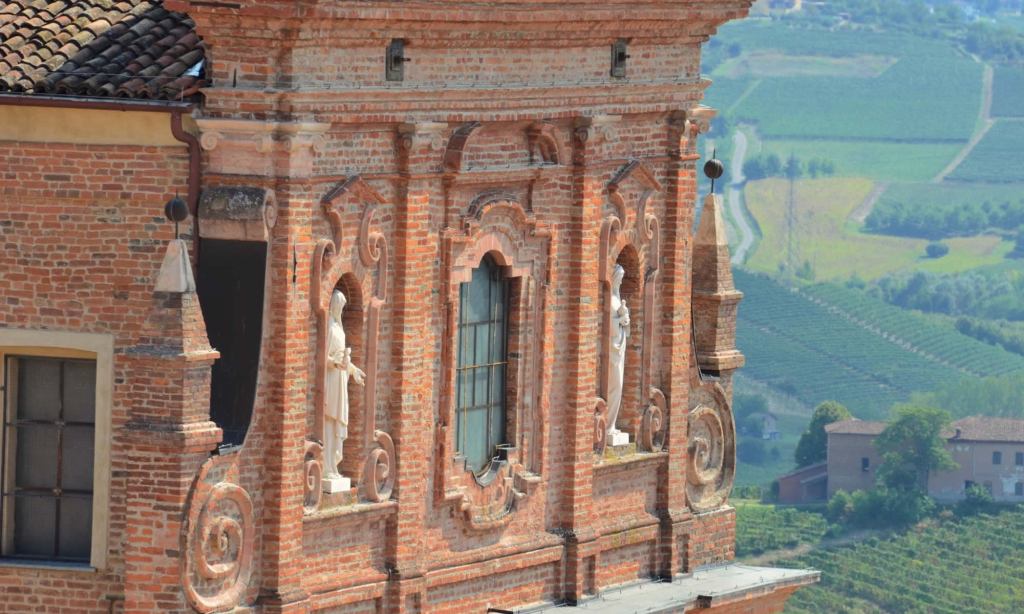
Motoring through Italy’s Piemonte or Piedmont region, I sometimes felt as though I’d been whisked back in time a few decades, perhaps even centuries. The dramatic hills of the Langhe, Roero, and Monferrato districts were wrapped with rows of grapevines and orchards, crowned with handsome fortresses, and dotted with villages wearing terra-cotta rooftops. Large-scale industry was largely absent from this swathe of the Northern Italian landscape, and that’s much of what made it so visually appealing.
With just weeks to go before the grape and white truffle harvests, the enthusiasm among the locals was already palpable. Together with our local guide, Marco from Meet Piemonte, Shawn and I would spend two days exploring pockets of Piedmont. This article highlights our time in the Monferrato district, to include the city of Asti, home to the famous Palio horserace, plus wine-tasting and truffle hunting excursions in the countryside. My other post in this series focuses upon the nearby Langhe-Roero hills, including the elegant city of Alba.
Italy’s Piemonte Region: UNESCO World Heritage Vineyard Landscapes & the Birthplace of the Slow Food Movement
For nearly one thousand years, generations of residents have carefully molded Southern Piedmont’s terrain, sculpting it into the viticultural masterpiece that you see today. In the summer of 2014, the vineyard landscape of the Langhe-Roero and Monferrato districts was formally recognized when it was granted UNESCO World Heritage status. It was Italy’s 50th site to attain such recognition.
While wine connoisseurs worldwide will undoubtedly recognize Piemonte wine stand-outs such as Barolo, Barbera and Barbaresco, food enthusiasts likely also know that Piedmont was the birth place of Italy’s Slow Food Movement, and home to a rich food culture. Slow Food — which was started in 1986 to serve as an alternative to fast-food, and to help preserve traditional cuisines — branched out from its Italian roots. It eventually morphed into a global movement that still seeks to promote local, small businesses while encouraging cultivation of regional plants and livestock.
Exploring Asti’s Culture & Gastronomy
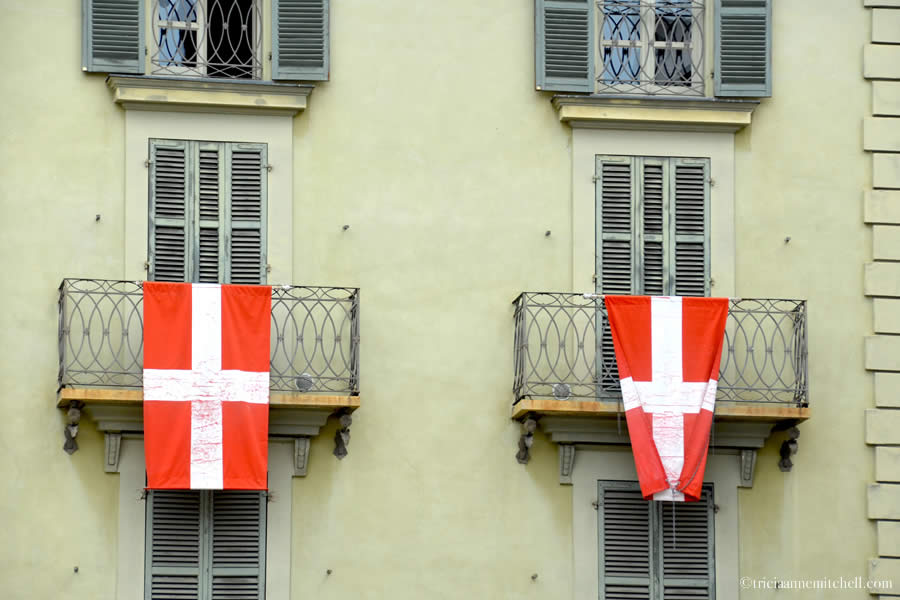
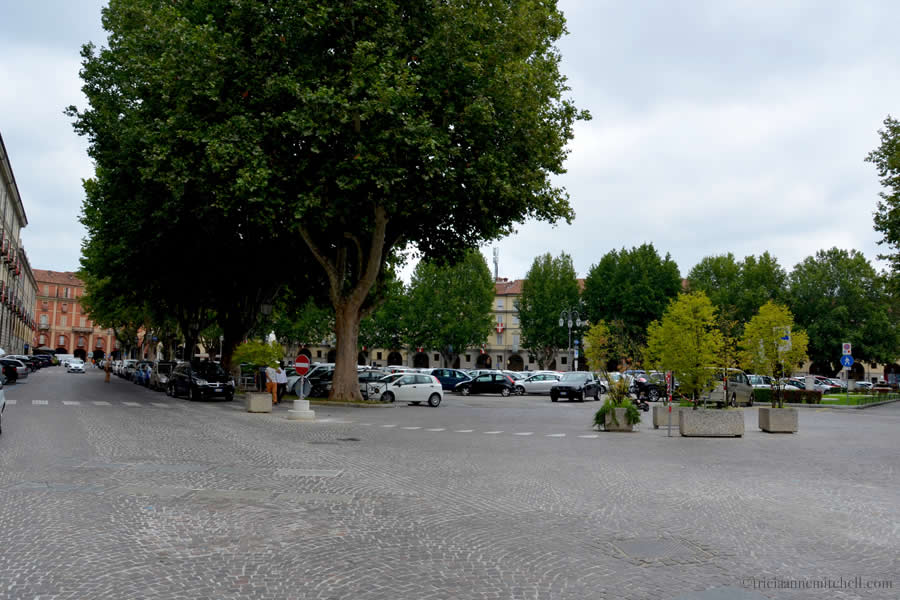
Taking to the cobbled lanes of Asti, Marco enthusiastically focused upon two of the city’s biggest draws: its distinctive cuisine, and its annual Palio festival, a medieval horse race. Visiting in August, we would miss Asti’s September Palio by a few weeks, nevertheless Marco said that the locals’ “anticipation and passion” for the 700-year-old-plus event could already be felt.
“Preparation for the Palio takes place year-round,” he explained. “Each of the districts taking part must stage some sort of a theme in the parade, such as a wedding or a scene from family life. There are about 1,000 participants. They wear elaborate, homemade costumes, some of which come from La Scala in Milan.”
Pointing to a nondescript road and parking lot, Marco tried to help us visualize how the area is transformed for the Palio race, when 17 horses and their jockeys take to the course.
“Thick layers of sand are placed here, along with seating. As you can see, the course’s turns are tight. Jockeys do get hurt in the race, but everyone cares more about the horses.”
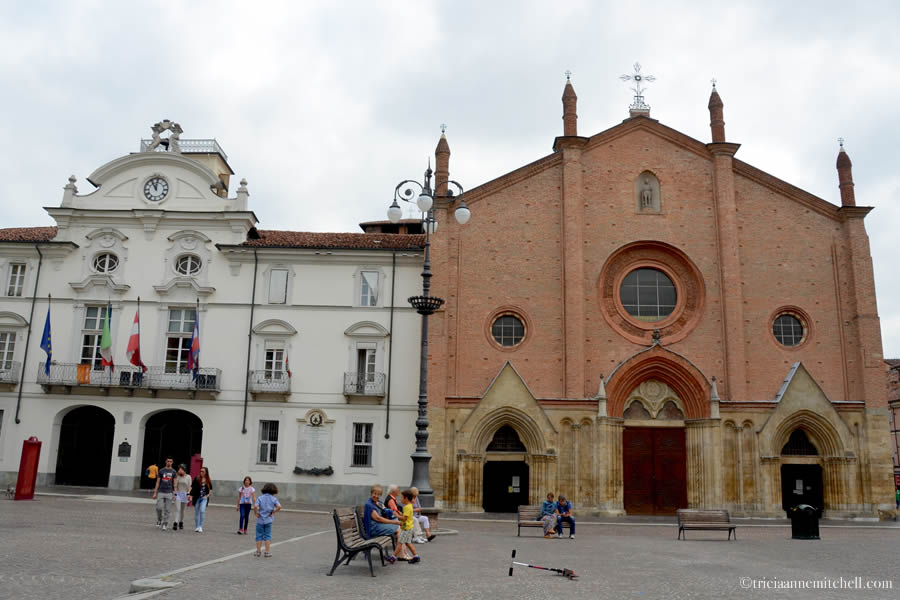
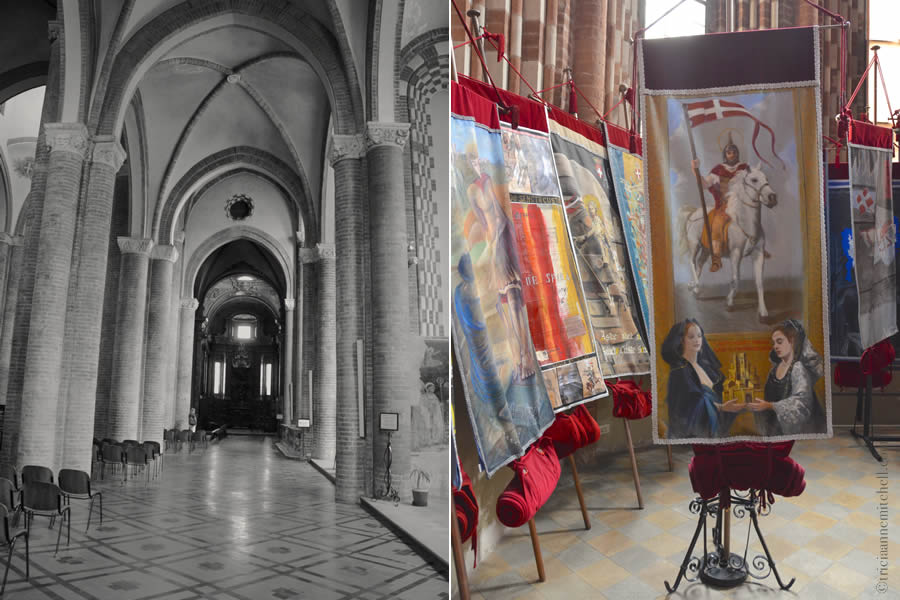
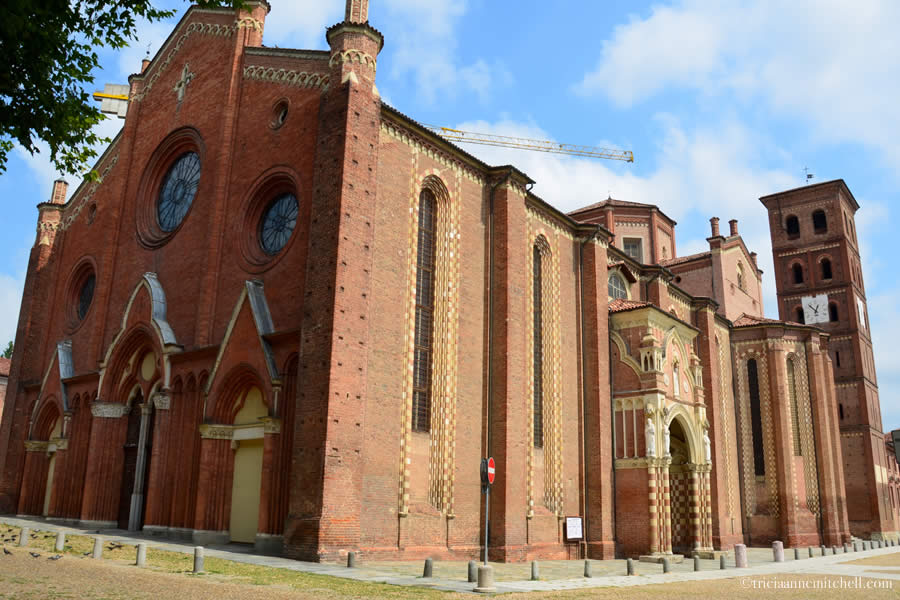
Stepping into Asti’s San Secondo Church, the Palio theme continued as we were greeted by the church’s collections of contemporary as well as antique faded Palio flags.
“Asti’s City Hall commissions painters to create a set of flags to represent each district participating in the Palio, one flag is large, the other smaller. The winner of the race is given the large version of the flag as a prize, while the church gets to keep the smaller one,” Marco said. “Unlike the Palio in Siena, Asti is more generous, giving second and third-place participants prizes too. Traditionally, the last-place participant even gets an anchovy and some lettuce,” he added, with a smile.
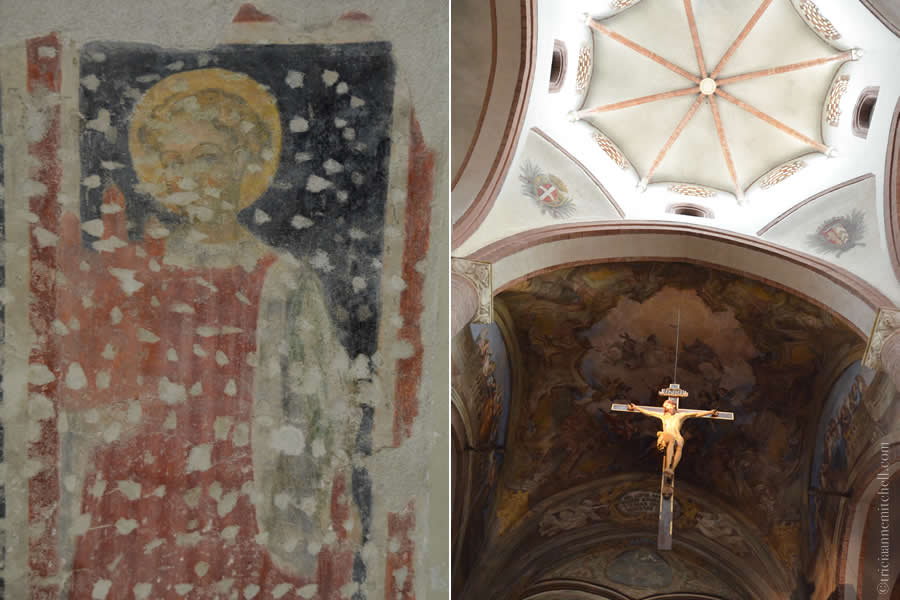
Walking past the church’s weathered frescoes, and ornate paintings comprised of numerous panels, Marco switched gears to talk about Asti’s art history, relaying that while Piedmont didn’t have a Renaissance as Florence, Venice and Rome did, its art nevertheless represented a variety of styles from elsewhere in Europe.
“For centuries, various powers wanted to conquer Piemonte, because of its strategic geographic position. Merchants traveled through the area, and so did ideas and styles from other parts of Europe. As a result, you can see Flemish influences in our art, even Mediterranean and Provençal styles.”
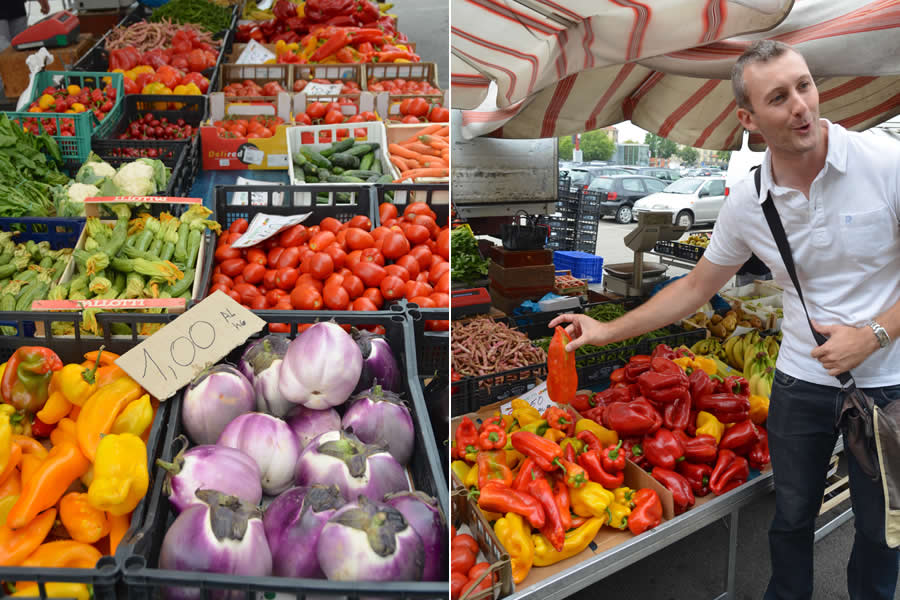
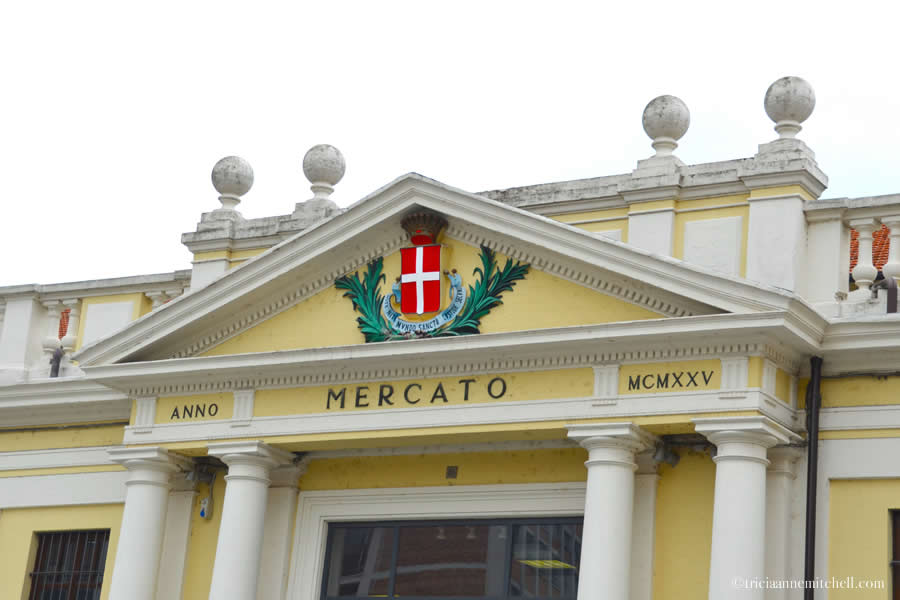
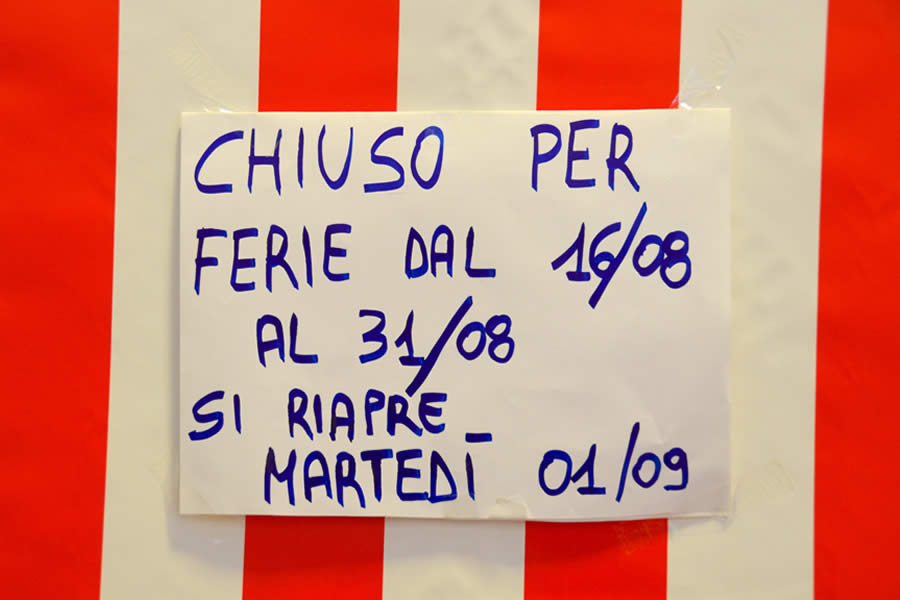
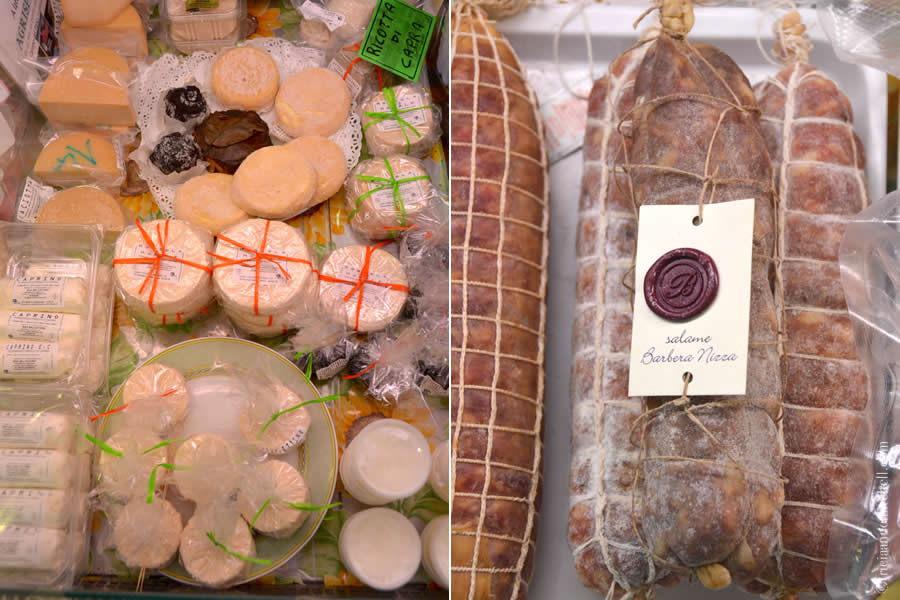
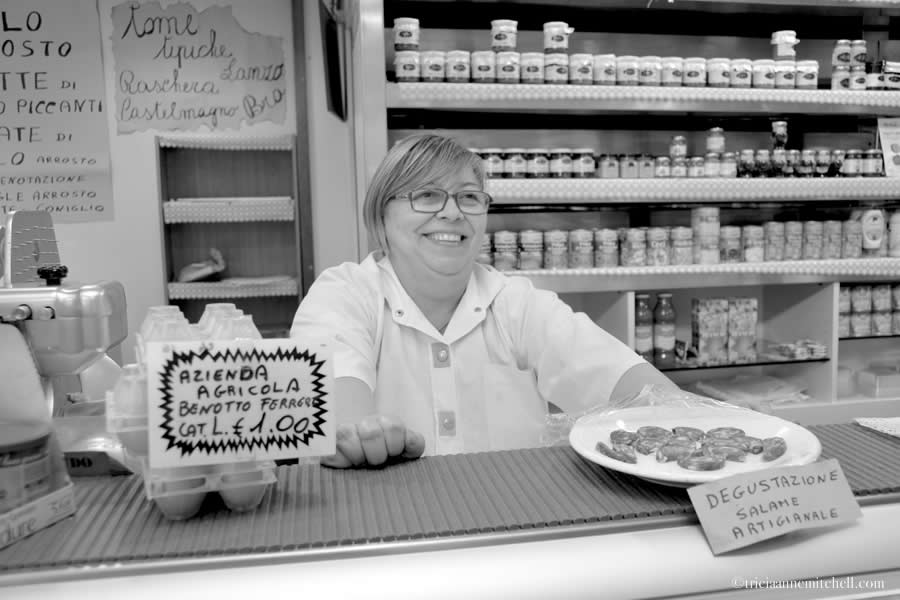
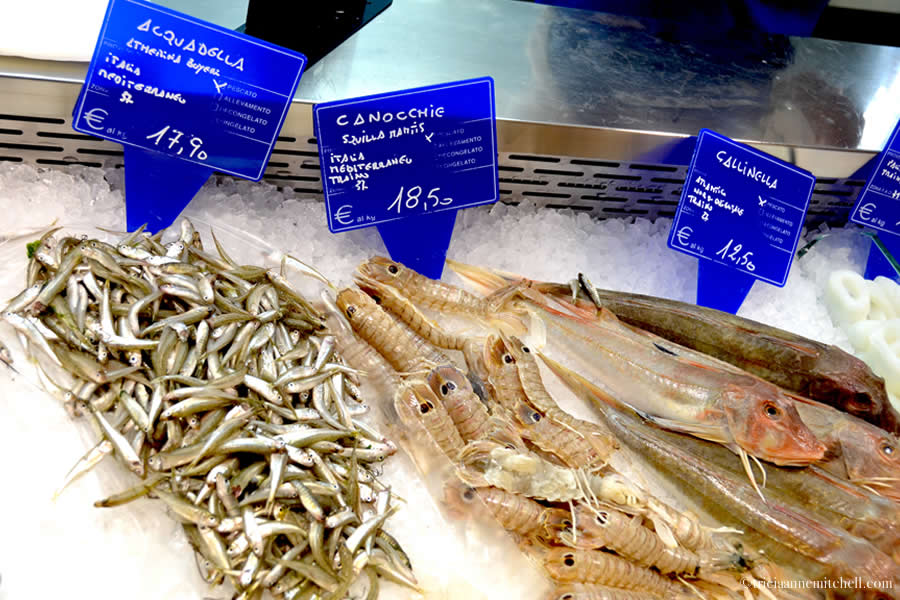
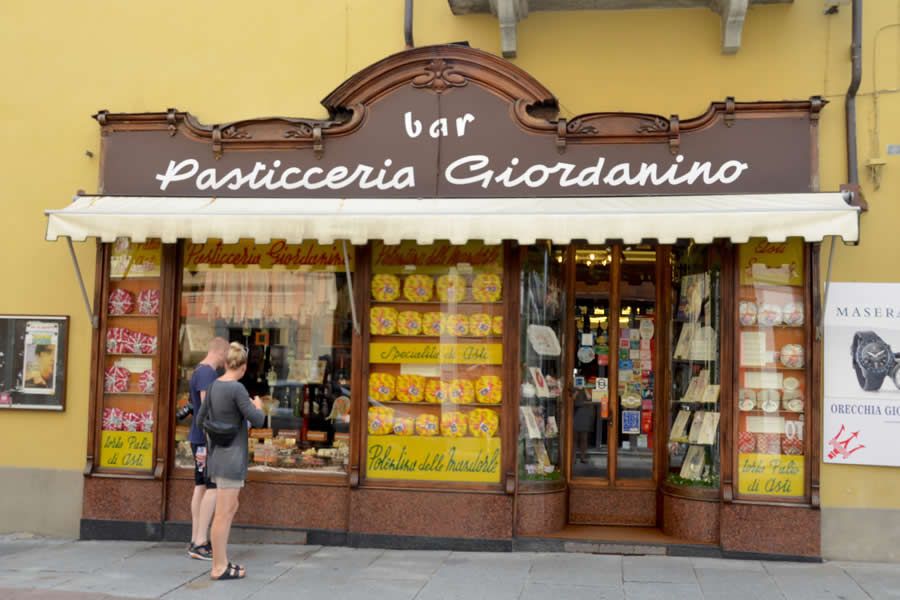
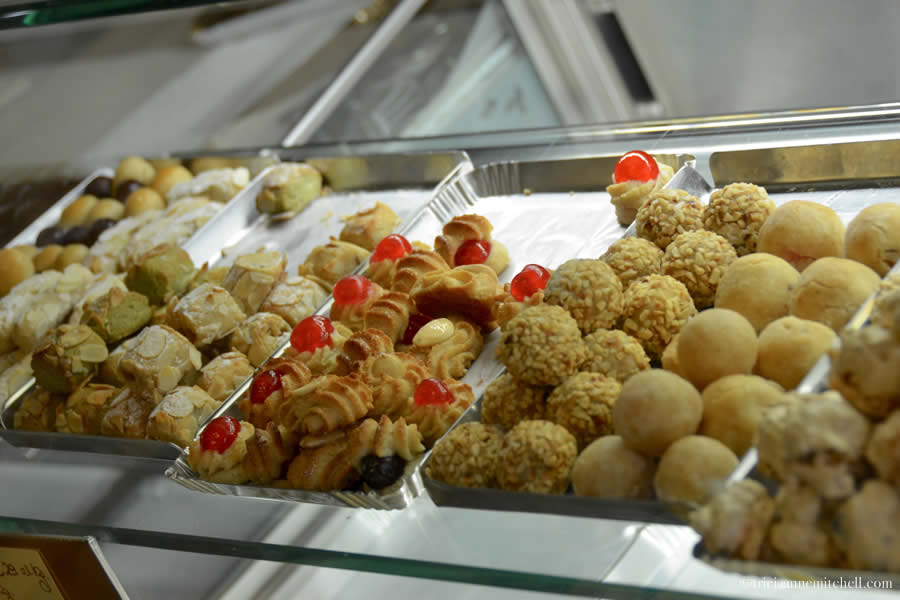
With Italy’s August holiday season in full swing, Marco mentioned that he’d had to be flexible when choosing which gastronomical spots to take us to. Because so many Italians had taken to Adriatic beaches, or were vacationing elsewhere in Europe, we spotted a plethora of shuttered storefronts and stalls at Asti’s markets. This made encounters with the smiling, welcoming staff ‘left behind’ even more appreciated.
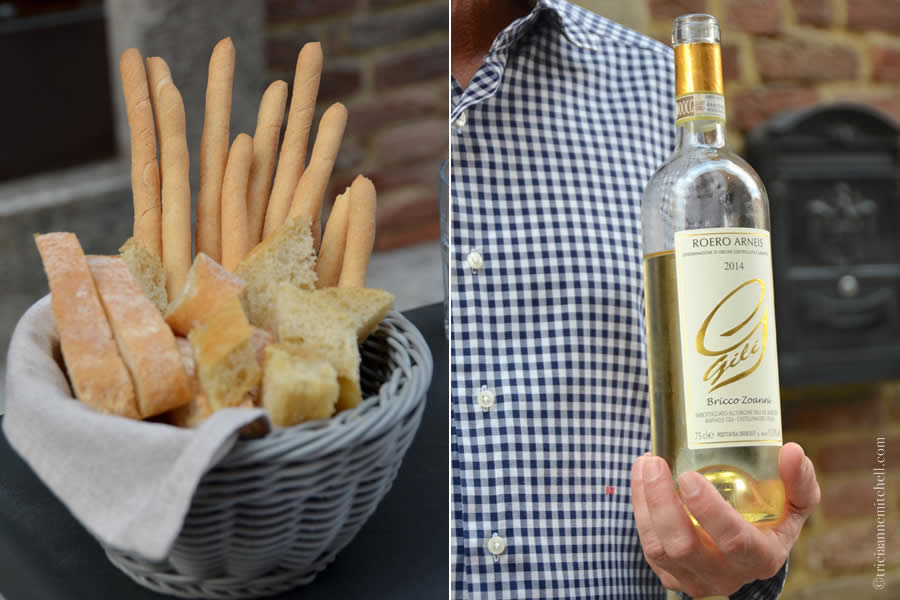
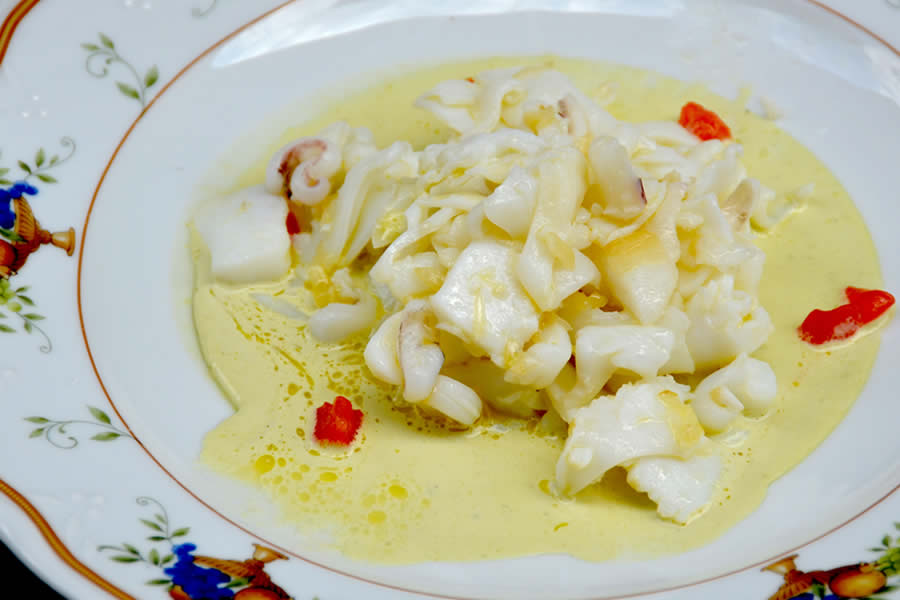
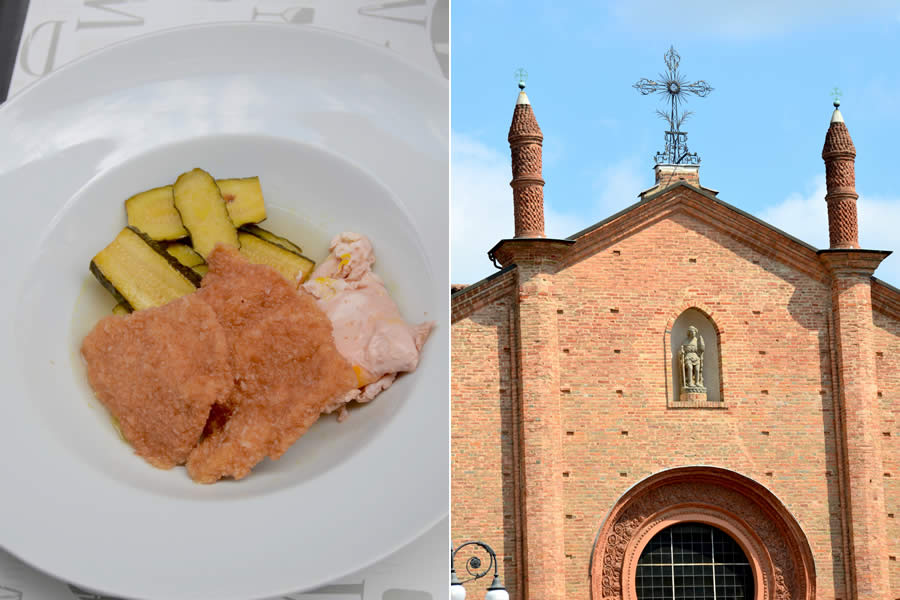
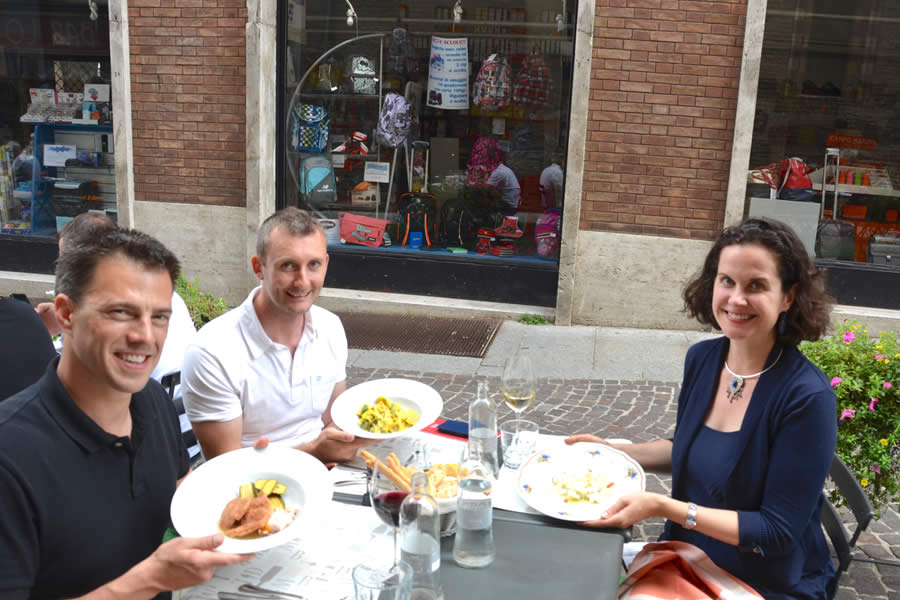
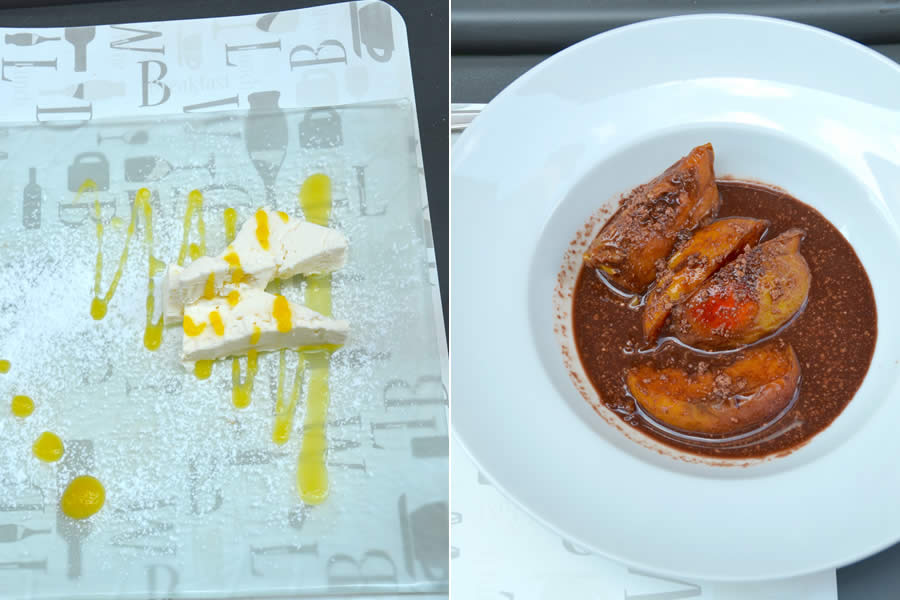
While in Asti, we’d visit vibrant markets and a pastry shop, before sitting down to a lunch that married Piemonte culinary tradition with more non-traditional ingredients like ginger, coconut, and pineapple. And, once out in the Monferrato countryside, we’d complete our encounter with Monferrato’s most famous products while sampling wine from a family-owned winery, and shadowing with a truffle hunter.


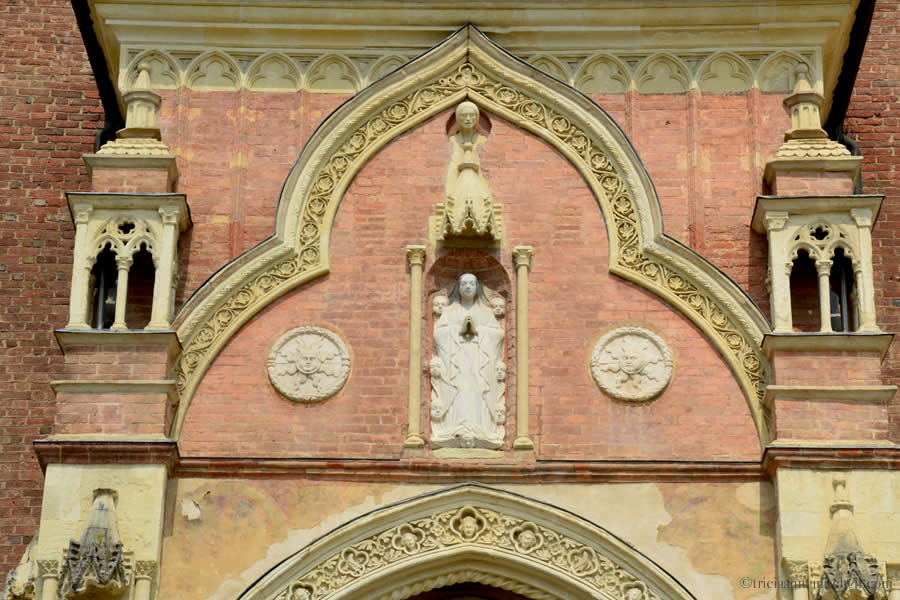
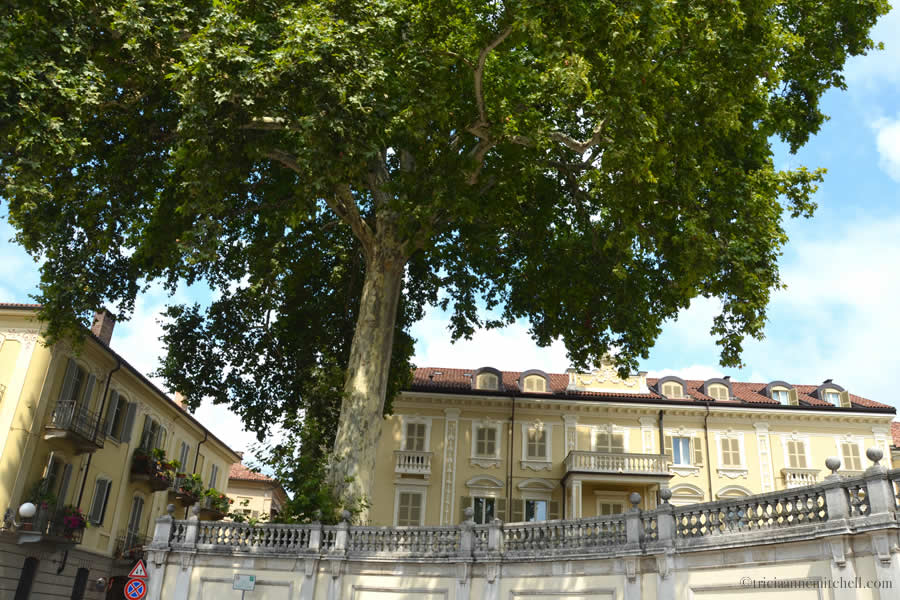
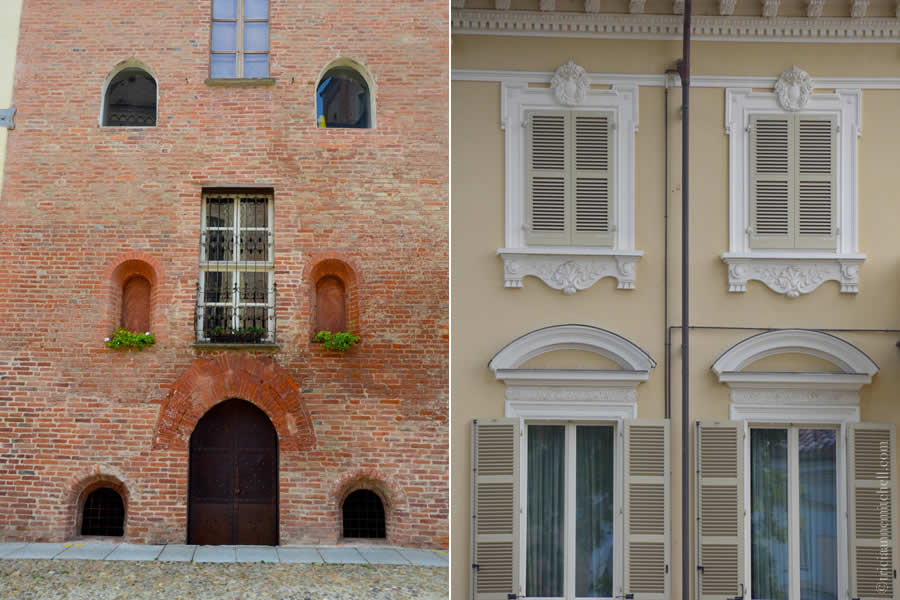
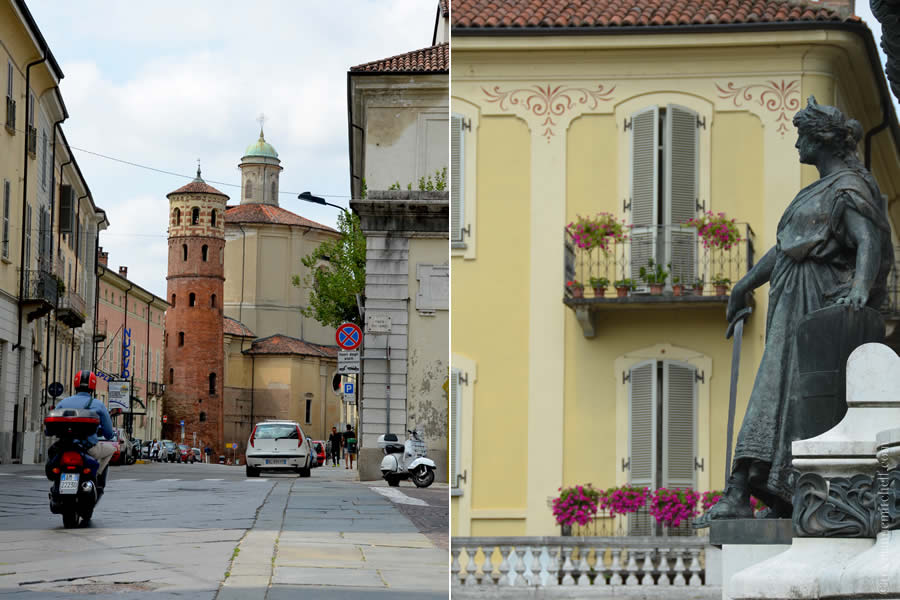
Into the Countryside: A Stroll Through the Village of Castelnuovo Calcea
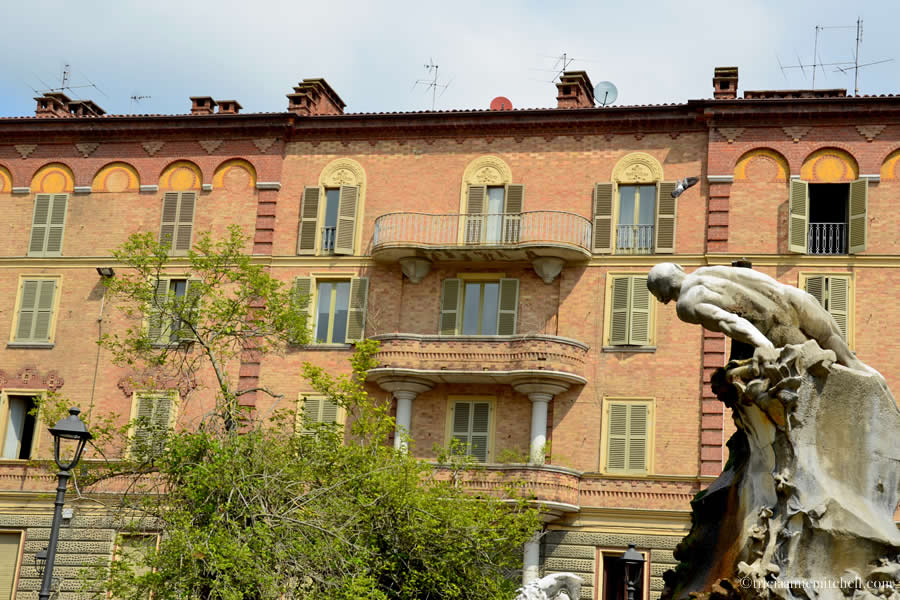
While the cities of Alba, Asti, and Barolo are popular draws for European tourists and gourmet foodies from the United States, villages, such as Castelnuovo Calcea, are quiet and lesser-known Piemonte destinations.
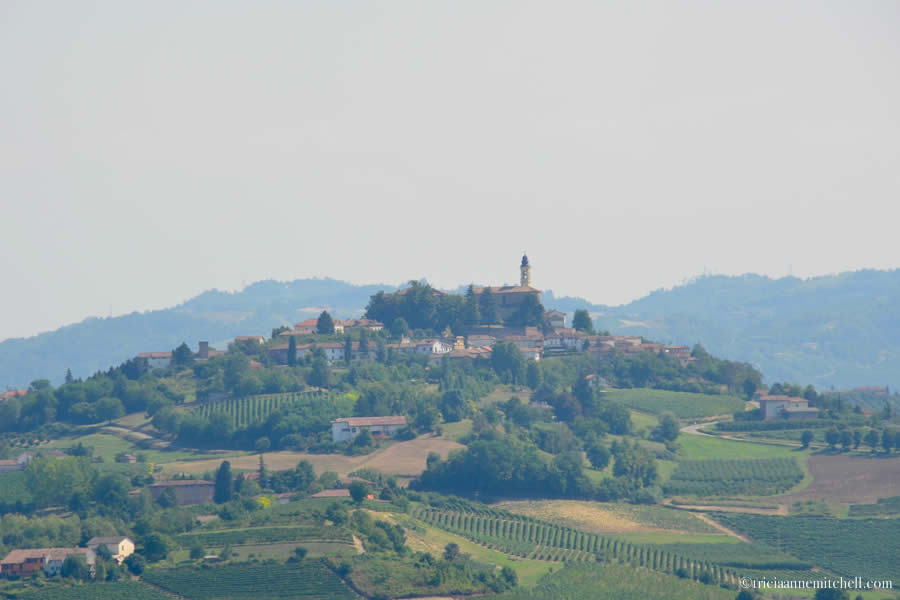
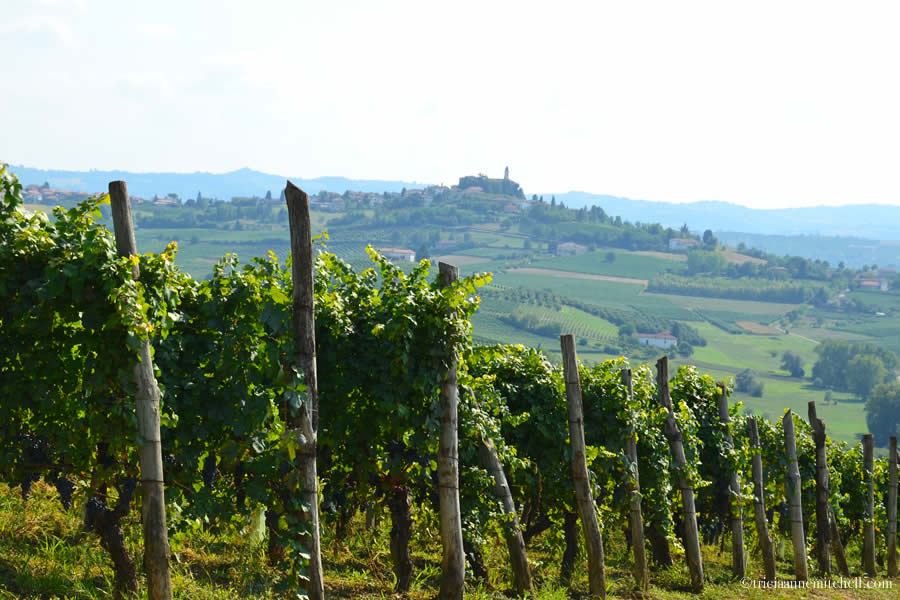
On the way to our wine-tasting, Marco drove us out of urban Asti, into the Monferrato countryside. My spirit for Piemonte was officially awakened when I saw the patchwork quilt-like landscape before us: striped vineyard patches, bumped up against solid fields of green, nestled beside clusters of burnt-orange rooftops. Marco aptly relayed that locals refer to it as an intricate “lace-like” panorama.
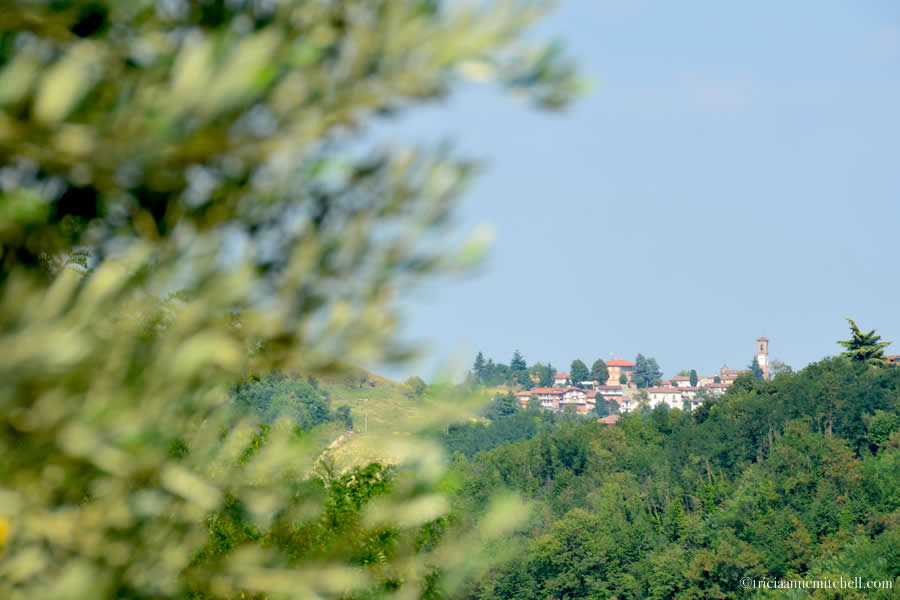
Pointing out into the distance to a hilltop community, Marco nonchalantly said, “That is my village.” When I heard that rents in some Piedmont villages could be as low as 400 Euros per month, I became even more intrigued by the picturesque area and the prospect of perhaps someday living there. I would need to embrace the snow if we were to do that! :)
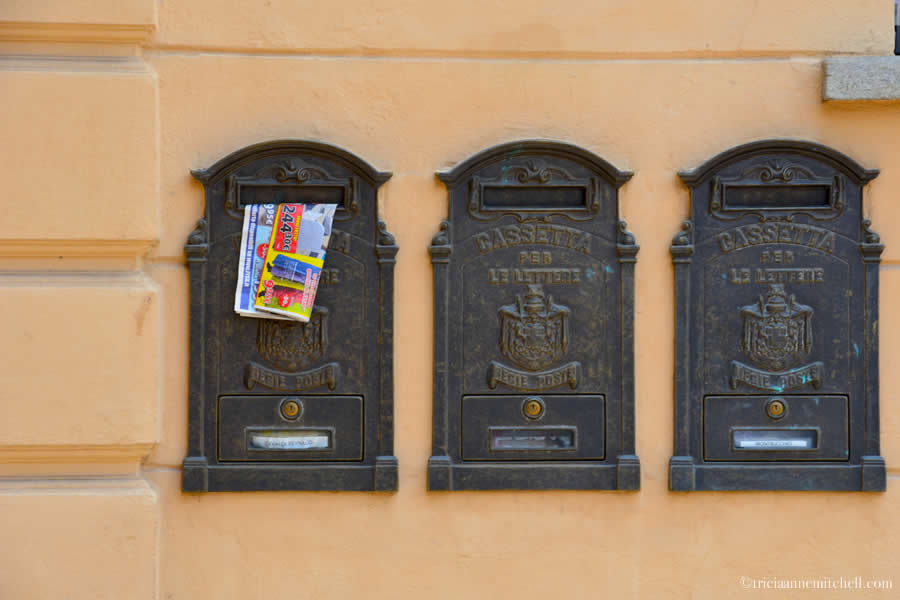
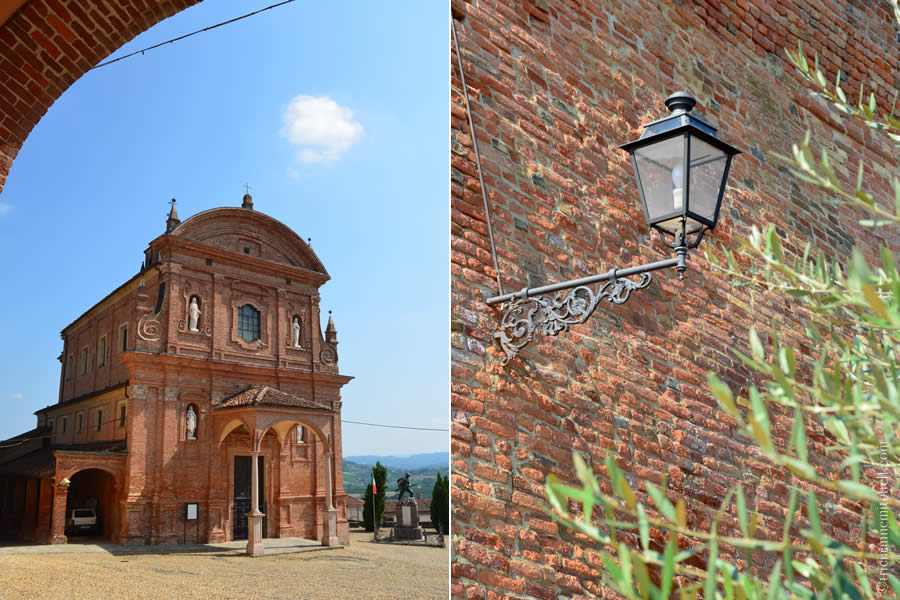
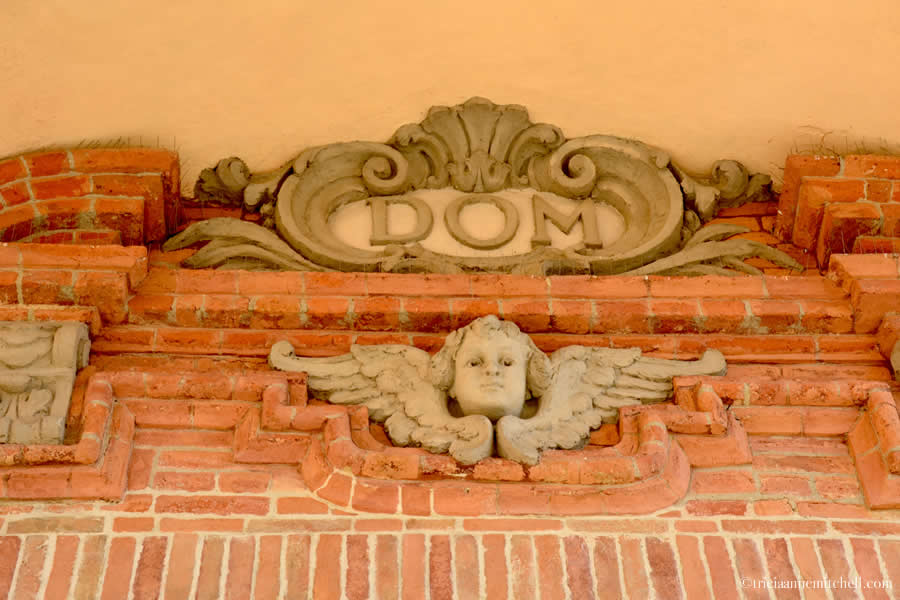
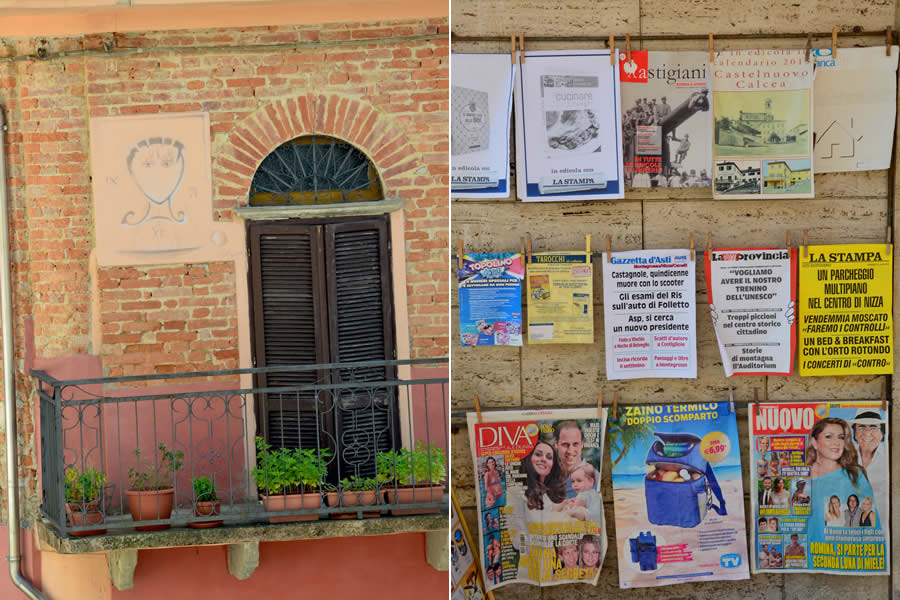
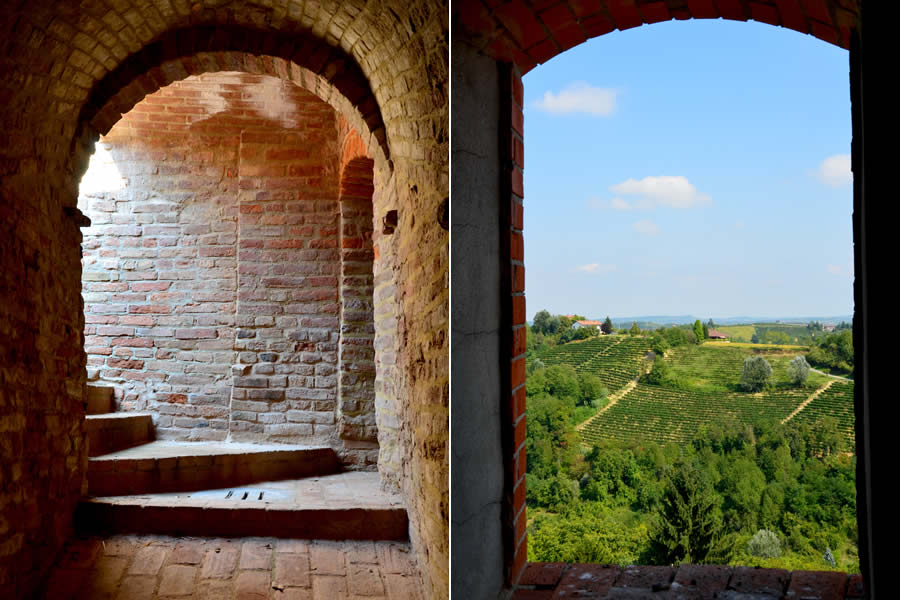
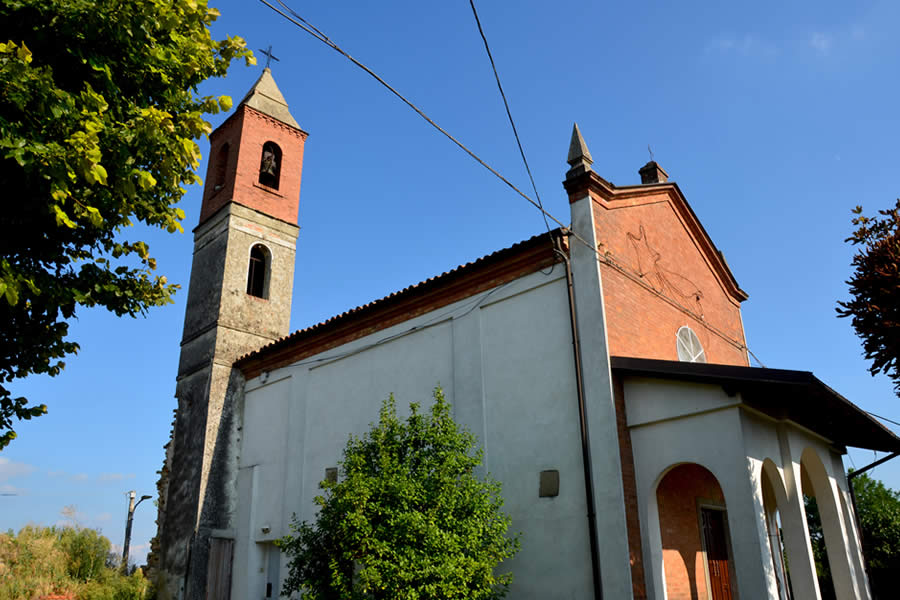
Promising a beautiful view of the surrounding hillsides, Marco stopped in Castelnuovo Calcea, where we admired the red-brick buildings, a centuries-old church, and extraordinary views, framed by the arched window of a historic tower. A vocal dog and pinned front pages of newspapers for sale hinted at civilization in Castelnuovo Calcea, otherwise it felt like an elegant ghost town. Perhaps the siesta hour coupled with sizzling temperatures had something to with that.



Wine-Tasting in the Monferrato Countryside
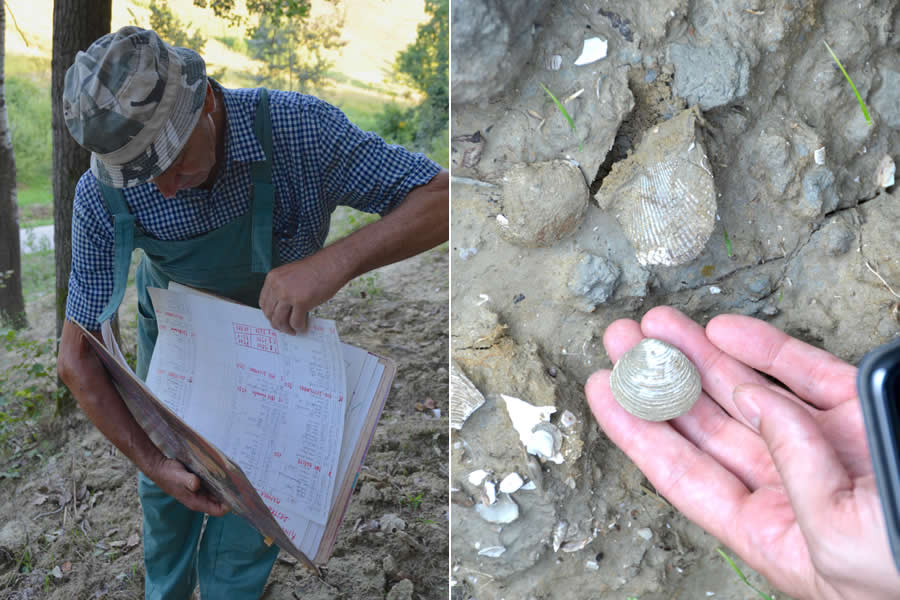
Monferrato is one of Italy’s most famous wine-making regions. Millions of years ago, the area was submerged underwater, explaining why seashells and fossils are still found. Marco said that a whale skeleton was discovered near his home village, and so were the fossilized remains of dolphins, tropical flowers and palm trees! Monferrato has sandy soil, which is rich in calcium carbonate, something that makes the wine and white truffles from the region famous. (The neighboring Langhe district’s soil, in contrast, is more clay-like.)
Riding on curvy, roller coaster-like roads among Monferrato’s rolling hills, Marco piloted us to the unassuming Erede di Chiappone Armando Winery. Marco had explained earlier that he and his three Meet Piemonte colleagues prefer to work with smaller, family-owned operations. Their business name reflects their desire to introduce visitors to the locals. Our first wine-tasting destination seemed well-aligned with that philosophy.
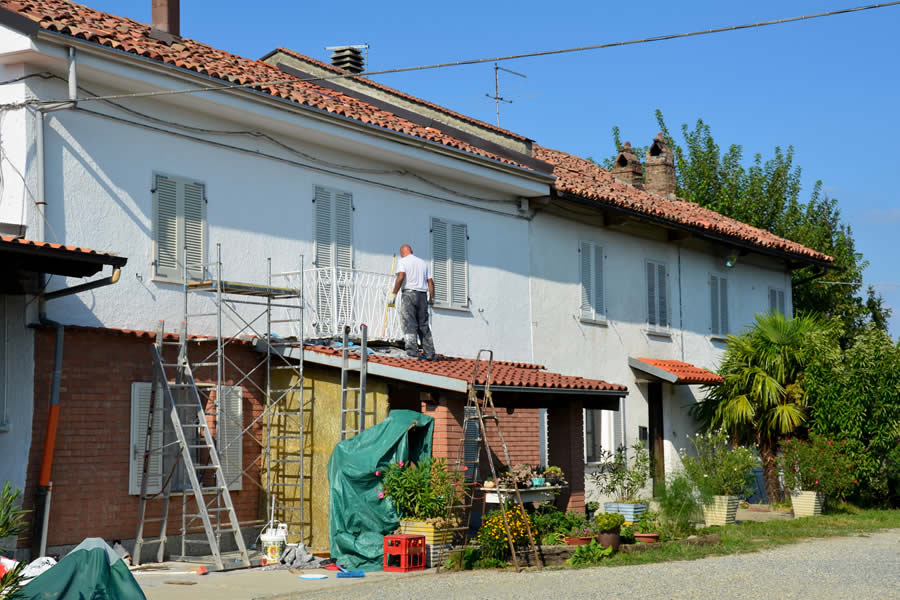
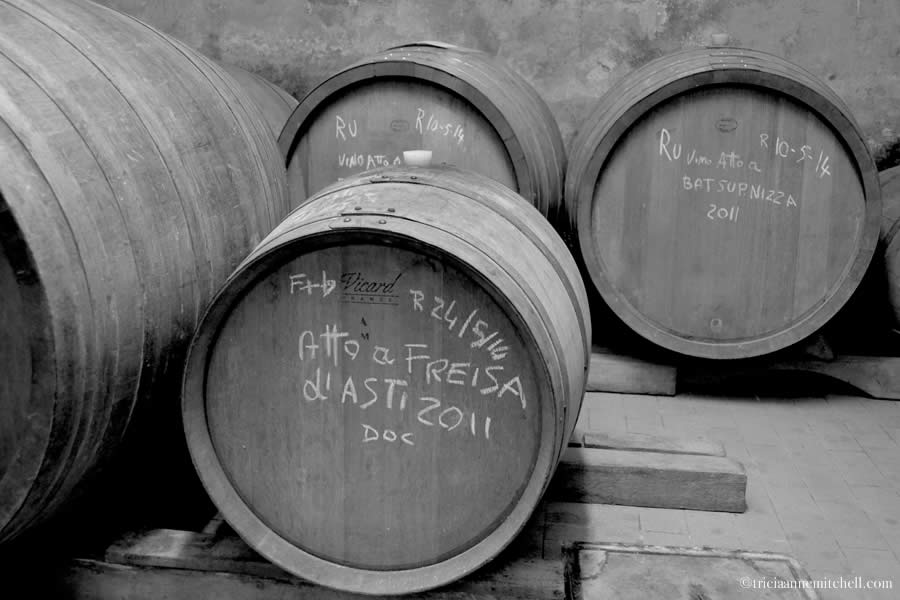
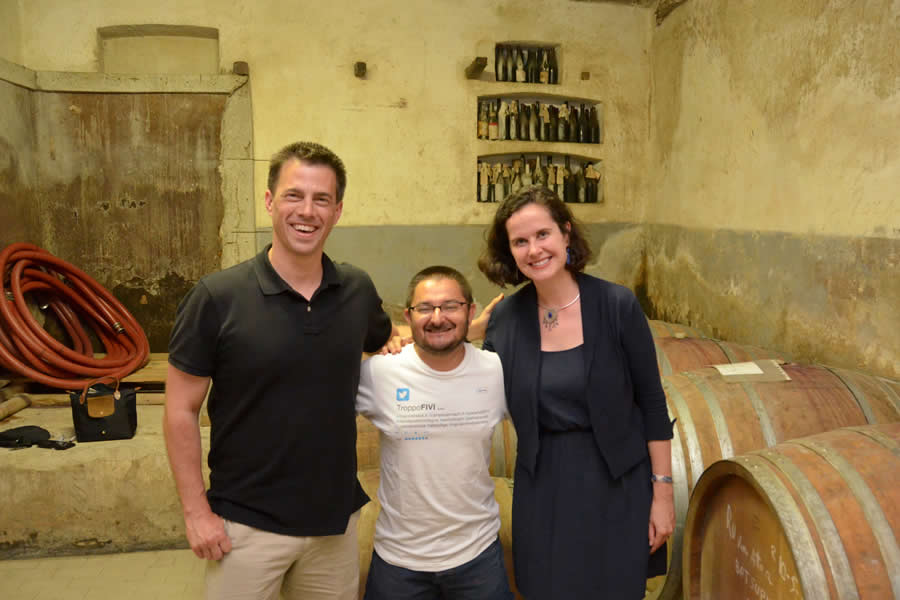
The vineyard was bustling with activity. Family members were coordinating a house-painting project and tending to the vines. Our host, Daniele, greeted us in the courtyard, along with a skittish kitten. We immediately set off to explore the fermentation room and cellar, appreciating the fact that Daniele’s grandfather crafted the cellar himself. On the ceiling, high above the French oak barrels was stylistic plasterwork depicting four wine bottles. You could sense the layers of history inside: shelves filled with empty collectible wine bottles, and a more modern fluorescent light illuminating the chalk markings on the barrels below.
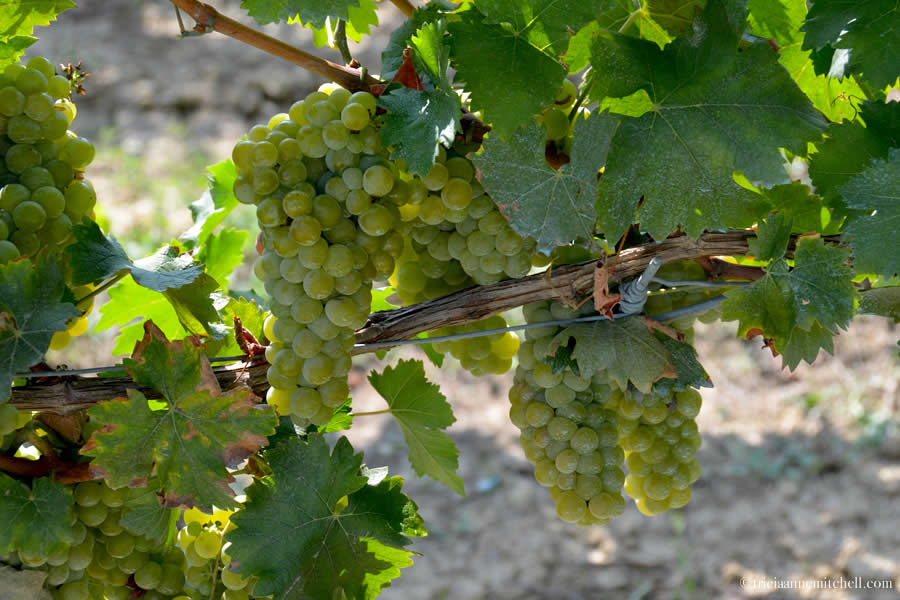
“We’ll start the harvest in a few days,” said winemaker Daniele, with a twinkle in his eye. “We have eight harvesters and everything is done by hand. “We believe that if we have the best quality in the vineyard, then you’ll find it in the bottle.”
Pointing to a square cut-out in the floor, he explained that the grapes are pushed through this trapdoor, into a tube, and from there they are transported to a machine and pressed.
“This approach allows for more freshness, and ensures a good start to the fermentation process,” Daniele continued.
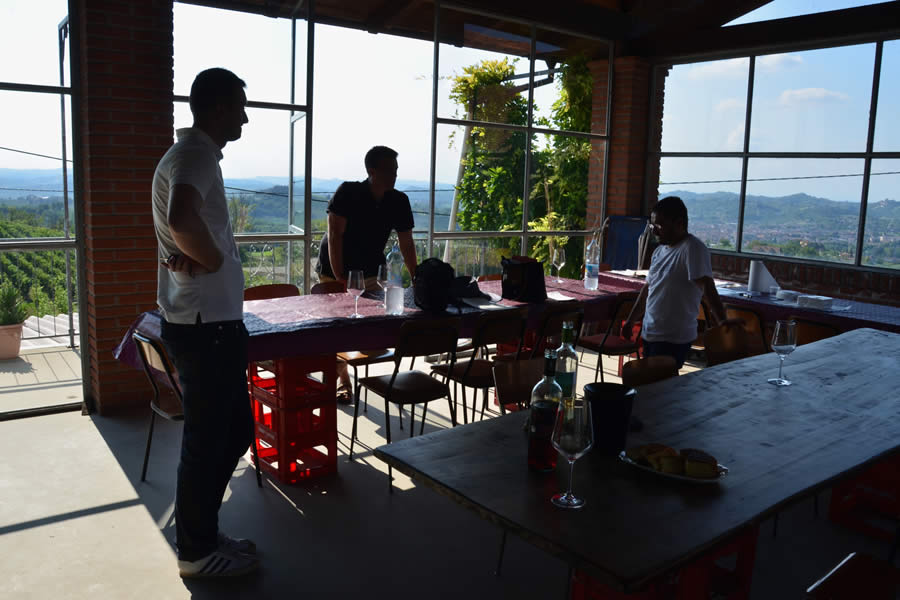
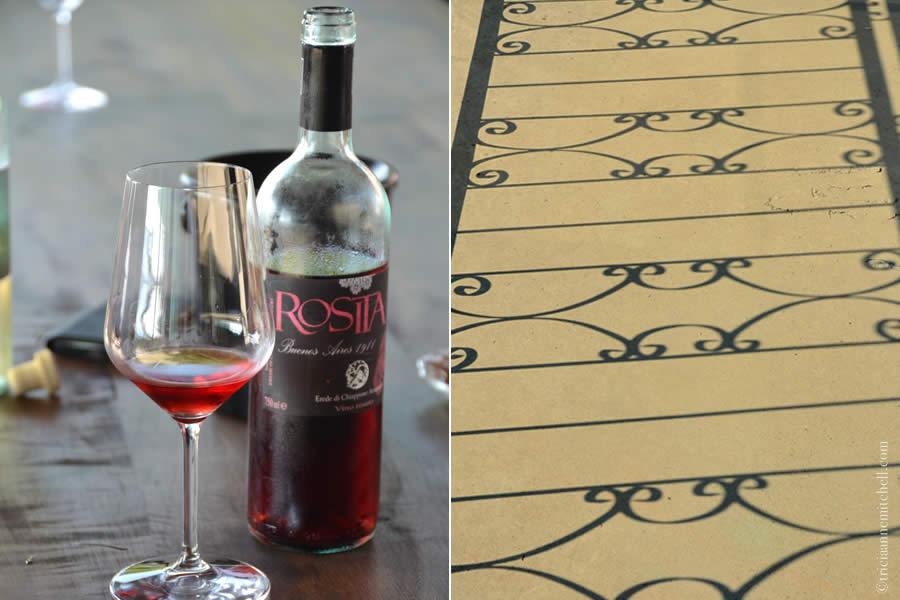
In the winery’s panoramic tasting room, which was flooded in sunlight, we tried a white wine, and a Rosé. The blush-colored 2014 Rosato, made from Barbera and Dolcetto grapes was our favorite. It was fruity and nicely-chilled, bringing to mind flavorful summer peaches.
Though the day had transitioned from largely grey skies in Asti, to intense sunlight in Monferrato’s countryside, a few wispy clouds still dotted the sky. If not for them, Daniele and Marco explained, we might have been able to spot the Alps, perhaps even the Matterhorn, from Daniele’s tasting room.

A Tale of Two Truffles
For years, I’d wanted to witness a truffle hunt, but we never seemed to be in the right place during the right season. Just as our wine-tasting with Daniele was wrapping up, Marco ended a call on his mobile phone, and grinned.
“I have a surprise for you,” he said. “We’re going to meet a truffle hunter and his dog!”
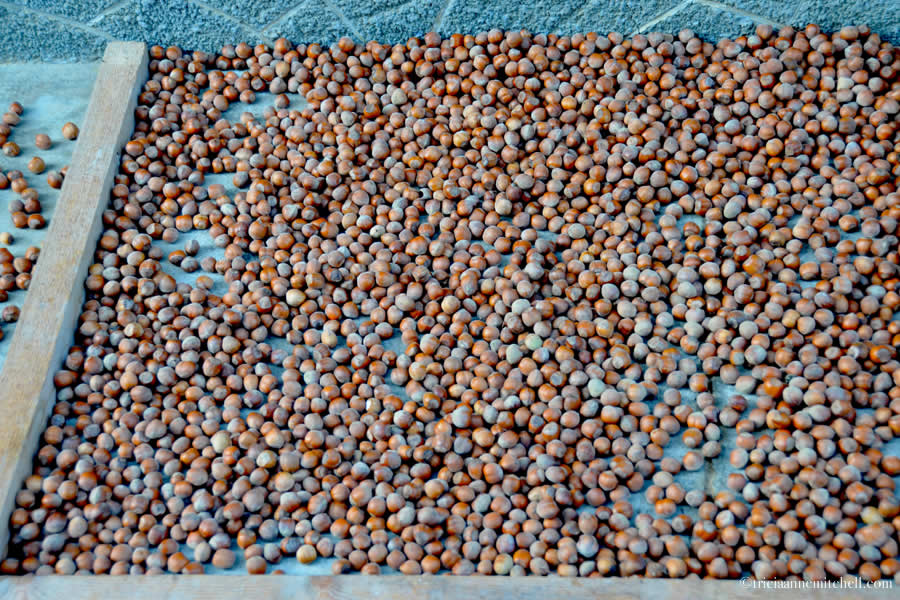
On the way to the truffle hunter’s home, past tractors and people harvesting hazelnuts and putting them into overflowing sacks, Marco gave us an overview of truffles.
“There are black truffles and there are white ones,” Marco said. The white truffles are more valuable than the black ones, and only grow within a small window of time each autumn. They cannot be cultivated. The black truffles grow during the rest of the year.”
While it is prized internationally, Marco explained, the white truffle is very selective about where in the world it crops up. Most of these fantastic fungi are only found in the countryside around the Monferrato and Langhe area, while a smaller number are harvested in Tuscany, France, Slovenia, and Croatia.
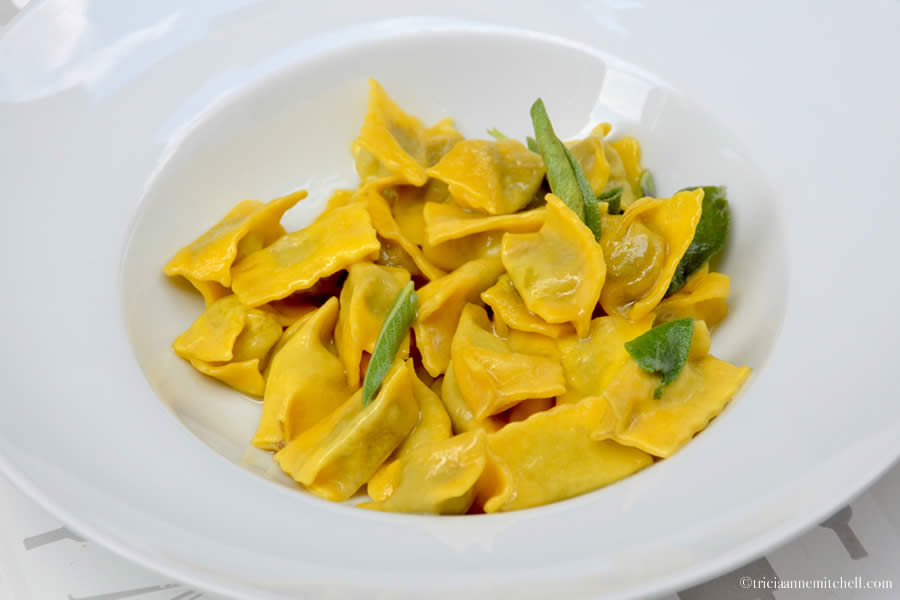
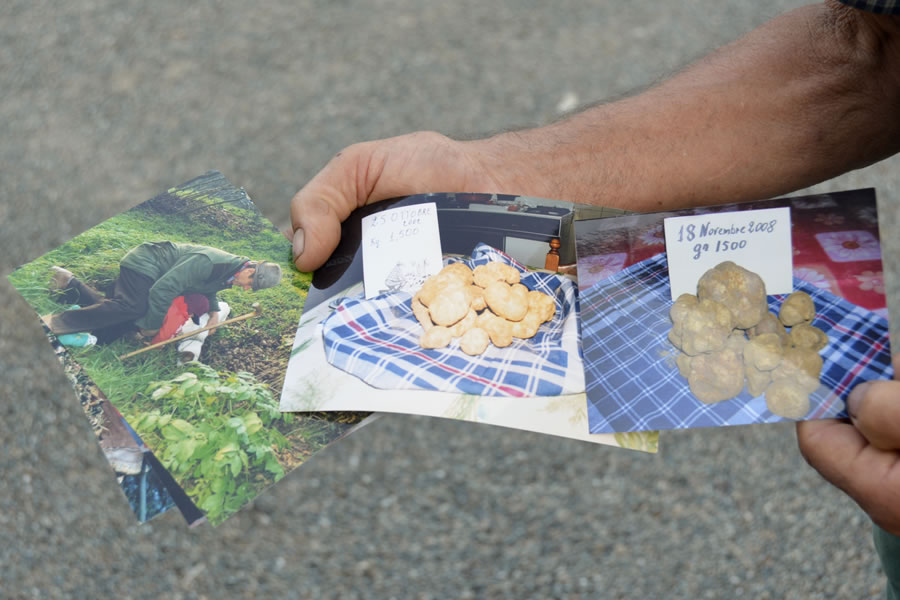
White truffles, it turns out, are more delicate than their black truffle cousins. Whereas the black truffles can be cooked, even added to sauces or oil, the white ones should only be cleaned and brushed. The white truffles are best enjoyed on simple dishes such as pasta, with sage and butter. Since the white truffles are delicate and spoil quickly, there is a rush to get them from their origin to their destination quickly. This need for careful and quick transport, coupled with their reputedly-fabulous flavor, makes the white truffles very pricy. Italy’s white truffles are perhaps the most esteemed, fetching between 250 to 500 Euros per 100 grams (roughly $277-$555 for 3.5 ounces)!
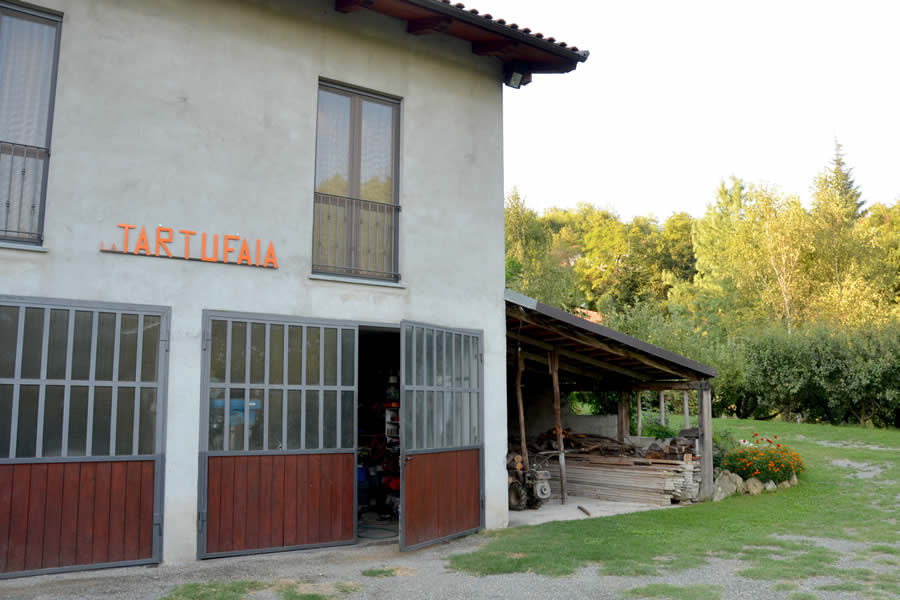
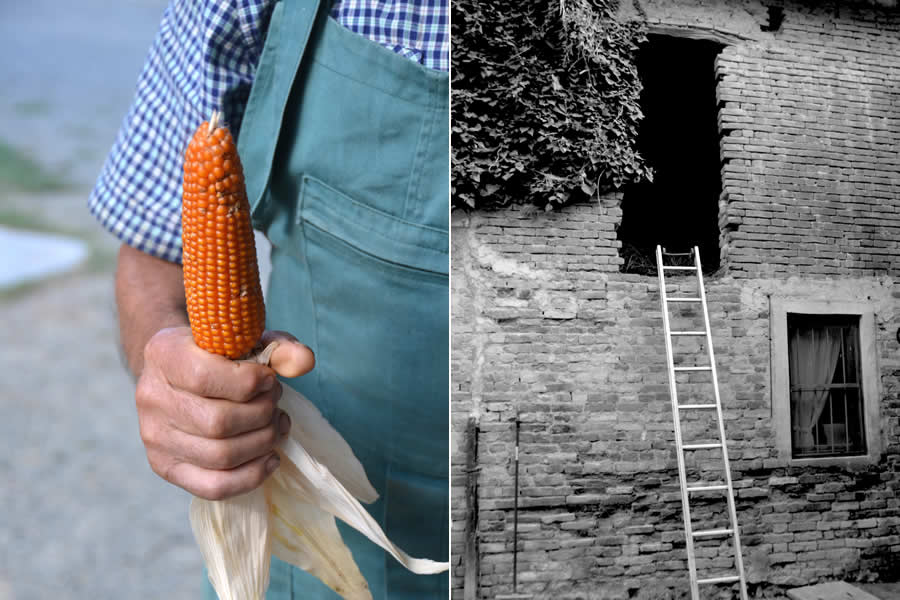
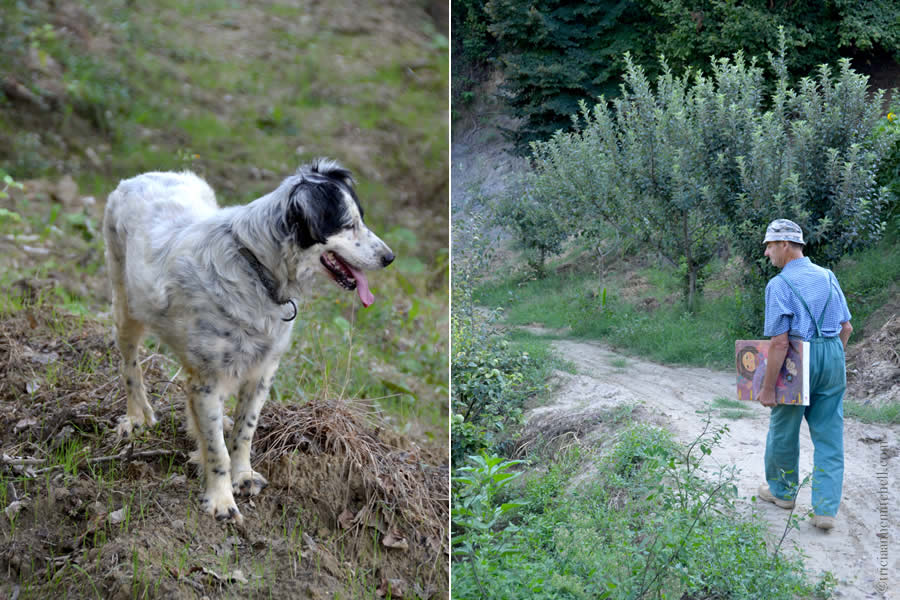
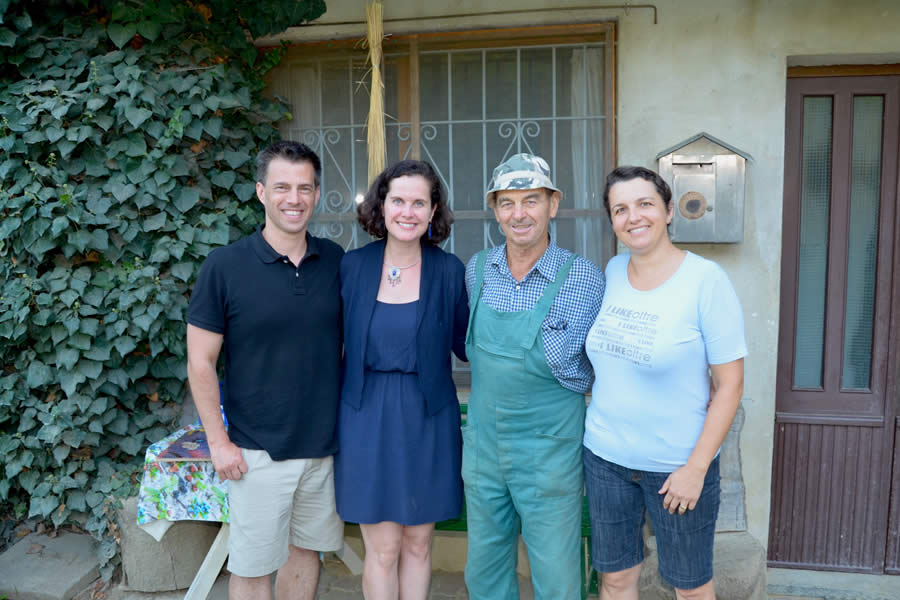
Arriving at Tartufaia , an agriturismo (tartufaia also means a place where truffles are found), we were met by 77 year-old Egidio, who was clad in teal overalls, and a blue and white plaid shirt.
Marco thanked Egidio for offering to walk us around his grounds on such short notice. With Marco acting as translator, Egidio said there was no reason to thank him.
“This is a passion for me. I’m happy to share something I love with others,” he said.
Truffle hunting, it seems, is in Egidio’s genes, with family members on his paternal and maternal sides having made a living out of truffle hunting for generations.
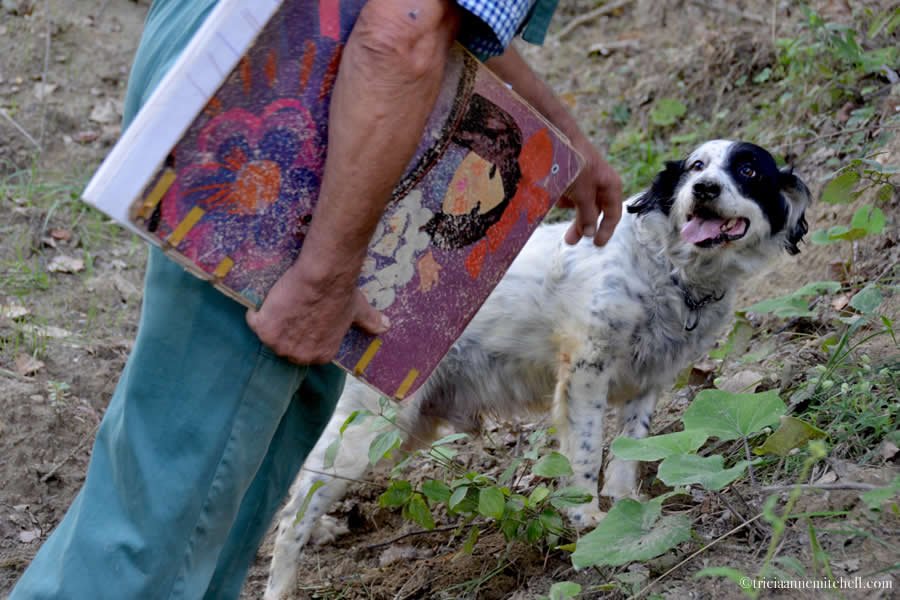
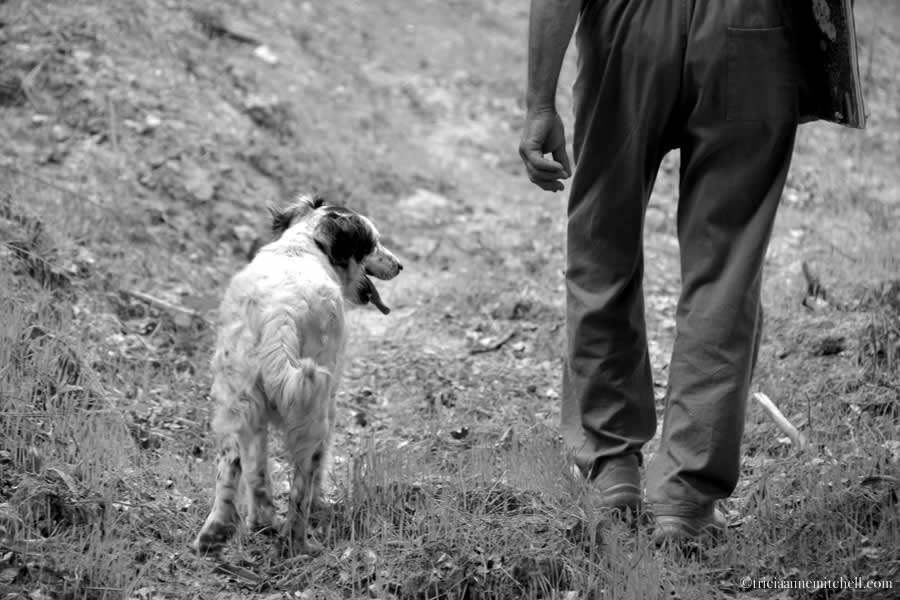
Soon we were introduced to Egidio’s two trusty truffle-hunting canines. One was “retired”, soaking up the late-afternoon sunshine, while the other pooch was utterly ecstatic when taken off her leash. We learned that the younger, sprite dog’s name was Brill, related to the Italian word for ‘brilliant’. Brill danced around her owner’s ankles, occasionally coming over to sniff our hands, or dash around the grounds.
“Without a dog, it’s not possible to find the white truffles. We don’t use pigs for hunting here, as they do in France. The pig would ruin the truffles, because the white truffles are much too delicate for them,” Egidio said.
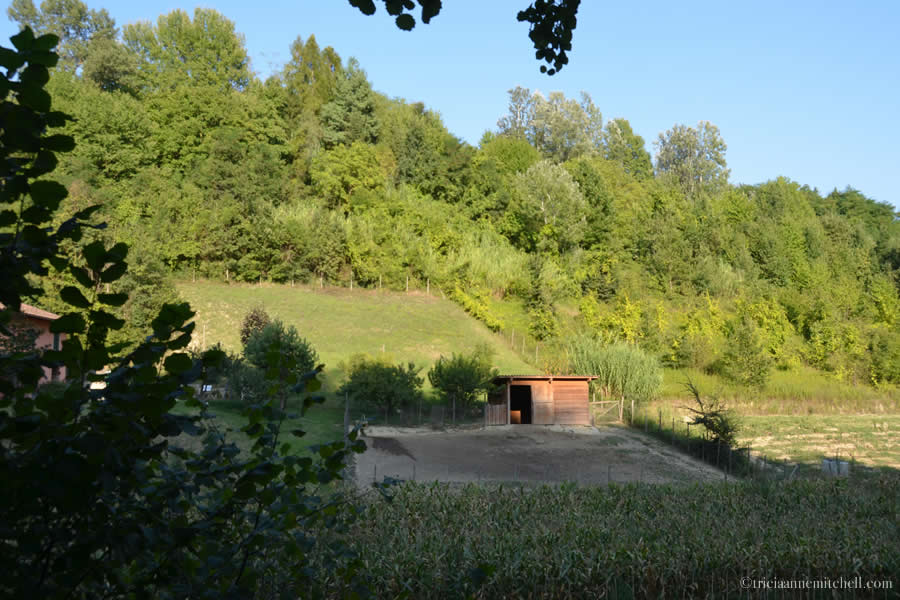
Entering the neighboring forest, Egidio and Brill seemed like they’d suddenly transitioned to business mode. Both Egidio and Marco reiterated that it was too early in the season to be finding white truffles, and that ours was more of a mock hunt. Still, we became hopeful and excited when Brill began to sniff a patch of ground, looking to her master for instructions. The dog then began digging excitedly, tearing up the same color soil that she’d left on my navy dress when she earlier jumped on me to say hello.
“Come on, find something!” said Marco, cheering Brill on. Not surprisingly, given the time of year, Brill did not find any white truffles. Still, she was enthusiastic, and her enthusiasm was contagious.
Marco relayed that Brill was excited to have visitors at the property, because she associated visitors with truffles, and ultimately dog treats, which are her payment. In advance of tourist visits, it turns out, Egidio will often find a truffle specimen, and hide it on the property so Brill can demonstrate what it’s like to unearth one. Since Brill is given dog treats whenever she uncovers a truffle, she is accustomed to regularly finding truffles when observers are there. She seemed a bit surprised that she did not recover any of the prized fungus during our visit.
“A tartufaia (piece of land) that produces truffles can be more profitable than a vineyard. It’s like winning a lotto if you find a plot of land that’s productive,” Egidio explained, as we walked through the muddy landscape, one that the family tinkers with to make it more conducive for white truffle growth.
“About 15,000 people have permits to hunt for truffles,” continued Egidio, “but only roughly 200 people find any.”
Egidio is one of those lucky 200, estimating that he finds about 5 kg (11 pounds) of truffles each year.
Video of This Experience:
Where in the World?
Planning Pointers:
- Asti is located in Italy’s Piedmont (Piemonte) region, about 55 km (30 miles) southeast of Turin, and 140 km (85 miles) southwest of Milan. High-speed trains link the Piedmont area to Italian tourist meccas such as Rome and Venice. See Trenitalia for schedules and prices.
- We traveled by train from Milan to Asti, and even day-tripped to Turin using Asti as our home base for 3 out of 4 nights. In Asti, we stayed at the La Fabbrica dell’Oro Hotel (affiliate link). We found it to be clean and centrally-located, and we enjoyed our Palio-themed room, as well as all the black & white family photographs in the entryway. (The other night, we stayed at a lovely agriturismo in the Monferrato hills.)
- While we found mass transit accessibility to be good in larger cities like Asti and Turin, we were told that public transportation is quite limited in Piemonte’s countryside. Locals routinely advised us to rent a car or hire a private driver.
- Marco, one of Meet Piemonte‘s co-founders, coordinated the details of our visit in advance, and guided us through each excursion. He and his colleagues lead customized tours covering everything from wine tastings, to cooking classes, truffle hunts, hiking and biking excursions, and visits to Piedmont’s rice fields. Having worked in the tourism industry for more than a decade, Marco speaks fluent English and also helped ensure that tour partners took into account my gluten intolerance.
- For more information, visit the Asti Province Tourism website.
- Need more inspiration? This link contains an index of all my posts from Italy.
Disclosure & Thanks:
Meet Piemonte hosted us during this day’s excursion.
We’d like to say Mille grazie to Marco for being such a knowledgeable, patient and enthusiastic host — and trip coordinator!
Photography & text © Tricia A. Mitchell. All Rights Reserved. My husband, Shawn, created the video.


Join the conversation.