
When I first visited Malta, my new Maltese friends told me about the islands’ beloved festas — days on which church parishes honor a patron saint in the most celebratory of fashions.
These feast days are replete with fireworks, food, parades, and elaborate decorations. Most festas are crammed into the summer months, and my maiden Maltese visit in November unfortunately didn’t coincide with any. My intense curiosity about festas was finally satisfied on December 8th of last year, when the city of Cospicua (known locally as Bormla) celebrated the Feast of the Immaculate Conception.
A Bit About Bormla (Cospicua)
Bormla / Cospicua is one of the so-called “Three Cities,” a trio of cities across the Grand Harbour from Valletta that actually predates Valletta. The Three Cities are also collectively known as “the Cottonera.”
If your head is spinning trying to remember all of Malta’s many place names, you are not alone! When I find myself confused, I remember that all the different names merely reflect Malta’s complex history and how it’s been occupied by so many different peoples. Still, it’s a lot of names to mentally juggle.
The Three Cities have withstood two sieges, each worthy of more reading if you’re interested in Malta: The Great Siege of 1565 (against the Ottoman Turks), and the World War II Siege (against the Axis powers), during which Malta became one of the most bombed places on earth.
Bormla was the city’s original name, but it was renamed Cospicua after the Great Siege of 1565 because of the prominent — or conspicuous role — it played during the siege. While many tourist maps and brochures will refer to the town as Cospicua, most of the Maltese people I’ve chatted with call it Bormla.
Finally, if you see The Three Cities called the Cottonera, know that name goes back to when Malta was occupied by Napoleon’s troops.
The other two of the Three Cities are called Birgu (Vittoriosa) and Isla (Senglea). They’re both certainly worthy of a visit.
Let the Festa Begin!
Arriving in Bormla just moments before the fireworks were set to begin, Shawn and I pounded the limestone cobblestones at a rushed pace, looking for the perfect viewing spot.
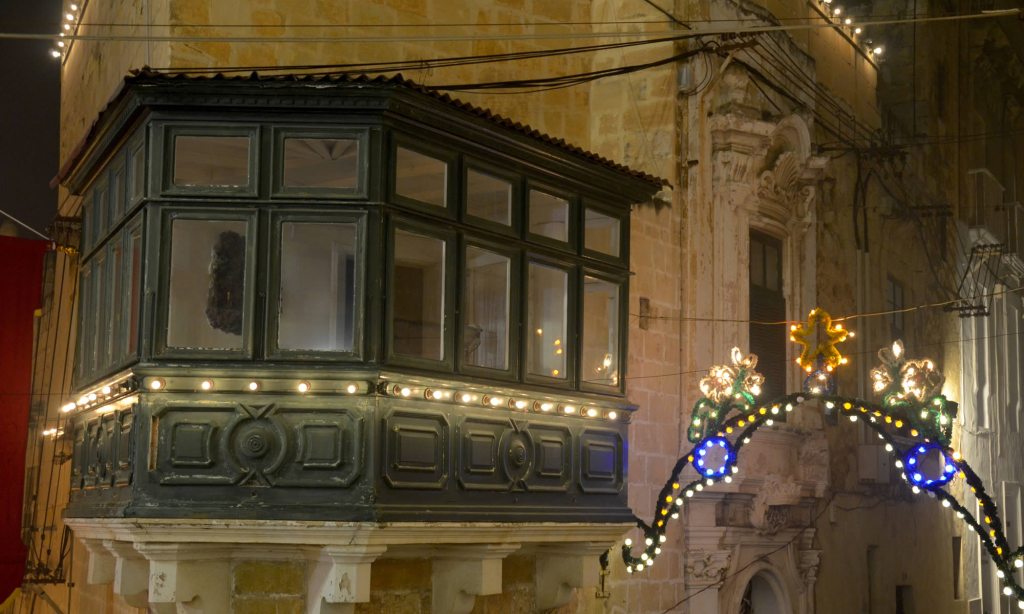
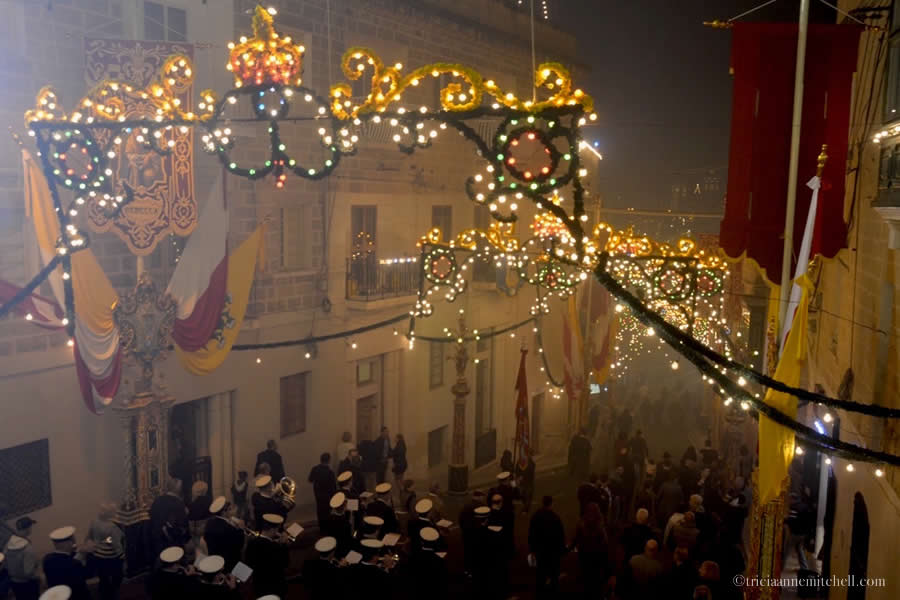
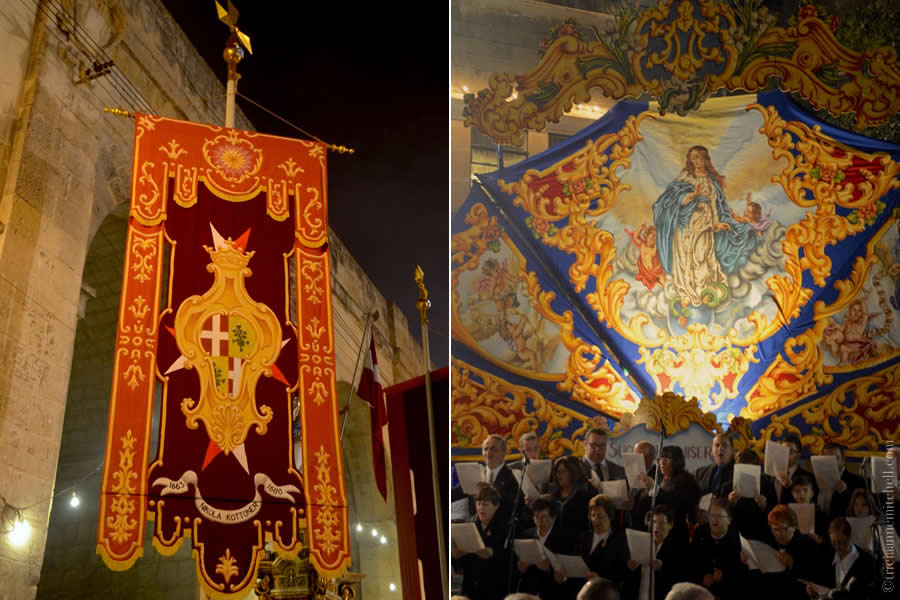
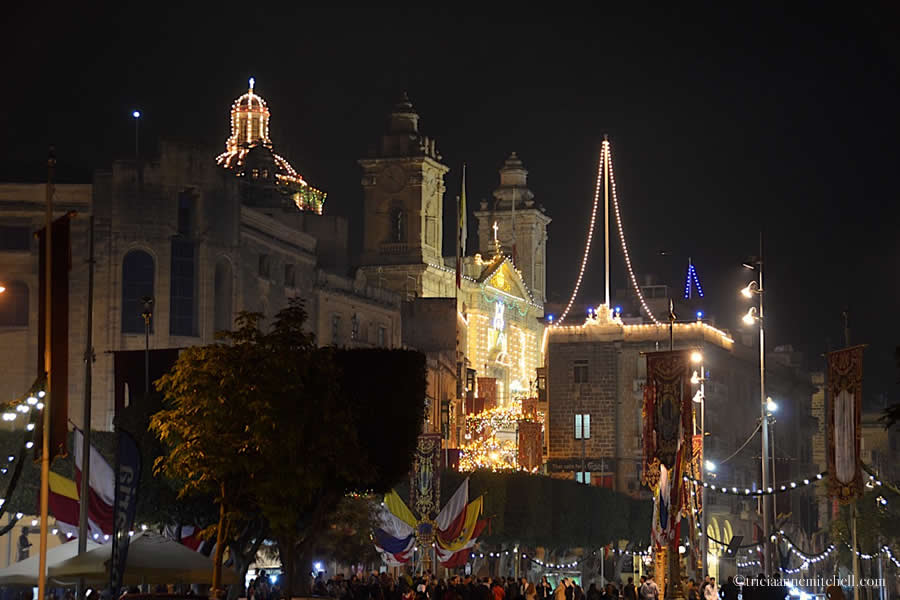
Despite the promise of the pleasant pyrotechnics about to come, I could have remained on Bormla’s streets for a much longer time, just taking in the magic around us. The narrow, winding lanes were festooned with lights. Medieval-looking banners fashioned out of burgundy, navy and hunter-green fabric adorned windows and balconies. Saint figures, nearly life-sized, stood guard on a balcony. And the church’s exterior twinkled like the Lite-Brites of my childhood.
We finally found the fireworks and most of the city’s citizens in an open area just outside of Bormla’s city gate. Despite having read that festas are often the social event of a city’s or village’s year, I was still surprised to see the massive crowd, made up of people of all ages. Most of the younger women were sporting towering stilettos.
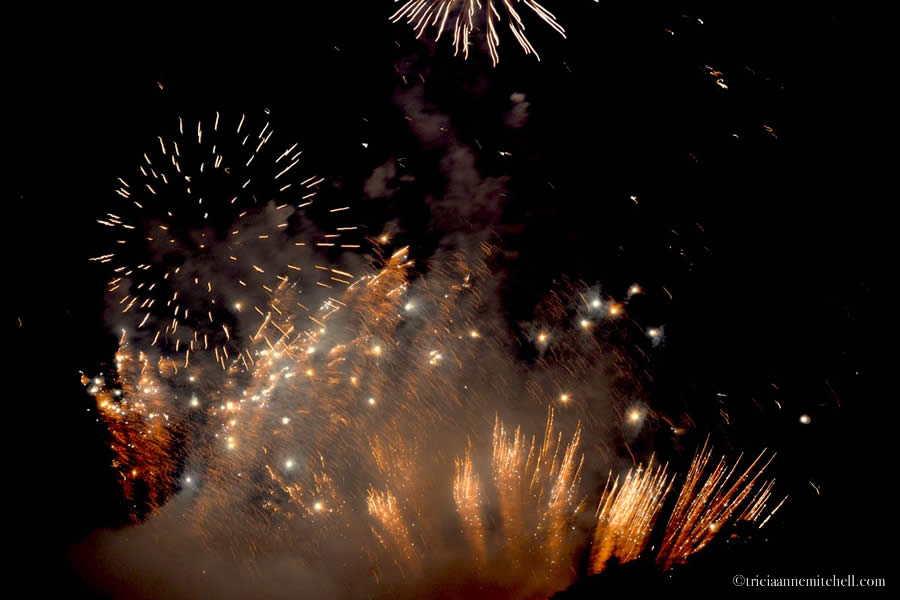
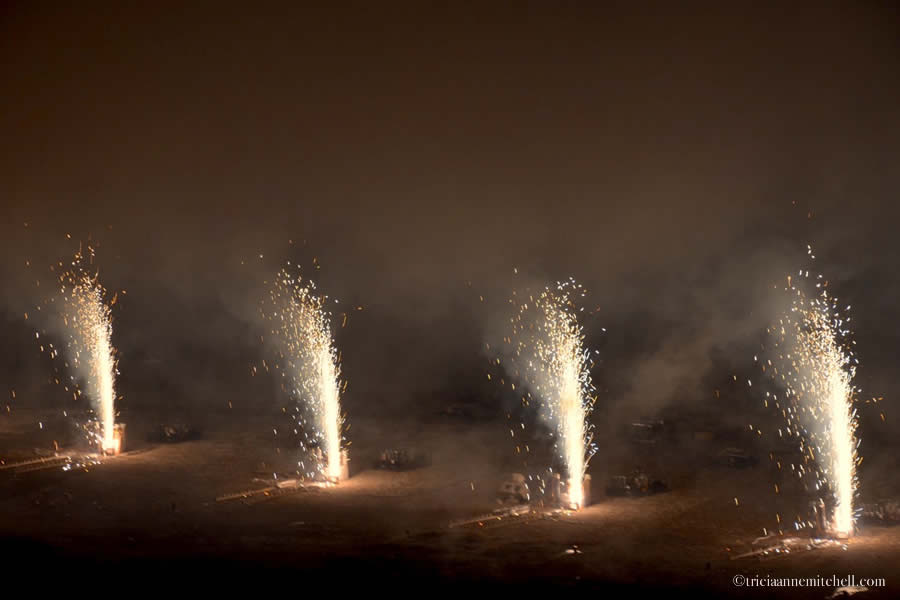
The gorgeous fireworks were synchronized to a mélange of music, including Mozart’s Sonata Facile, Rimsky-Korsakov’s Flight of the Bumble Bee set to electric guitar, Greased Lightning, Enya’s Sail Away, and contemporary pop.
Once the pyrotechnics had subsided, Bormla’s band led us into the square in front of the Church of the Immaculate Conception. With a smoky haze in the air, the procession seemed somehow mysterious, distinctly magical.
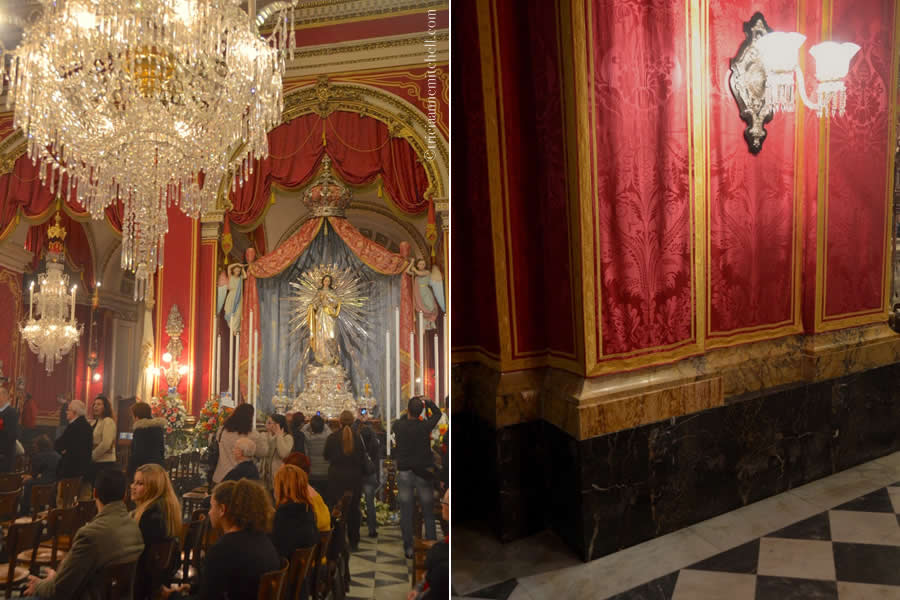
As the band continued to the square for a public concert, Shawn and I popped into Bormla’s 17th-century church to peek at the interior. Red-damask fabric covered the walls, making the church look even more ornate. The black and white, marble-checkered floors were polished to perfection. Crystal chandeliers twinkled.
Many of the people inside the structure focused their attention upon the church’s patron saint, Mary. Some visitors sat on wooden chairs taking in the ornate surroundings. A mother gestured to her son to stand closer to the shimmering statue for a photograph. People waited in line so that they, too, could take a selfie with the statue.
Deep-fried fest food and sweet treats tempted our olfactory senses as music from an outdoor concert competed with tunes pouring out of Bormla’s cafés. Despite this festive atmosphere, we left the twinkly lights of Bormla behind somewhat early because we had to get back home to Valletta before the buses stopped running.
Once back in Valletta, we stood in the Upper Barrakka Gardens gazing across the vast and dark Grand Harbour. We caught a glimpse of the lights and festivities in Bormla that we had just left behind.
With that vibrant image in mind, I’m looking ahead to this summer’s festa season!
Have you attended a Maltese festa or a similar festival elsewhere in the world? If so, what was your experience like? If you’re a local, which Maltese festas would you recommend as being particularly special?









Video of This Experience:
Where in the World?
Planning Pointers:
- The Feast of the Immaculate Conception is celebrated in the city of Cospicua (also known as Bormla) on December 8th. We attended the fireworks and band performances on the night of the 7th, before the actual feast day, but heard that more processions, band performances and fireworks were to take place on the actual feast day. I initially had a hard time finding information about the festa’s schedule, so I emailed Bormla’s church via their Facebook page (Kolleġġjata Marija Immakulata Bormla) and received helpful replies in English.
- Malta and Malta’s sister island of Gozo have more than 70 festas each year. Most of them take place during the summer months of May through September, but there are some exceptions, such as wintertime festas in Bormla and Valletta. Use Visit Malta’s event calendar to determine if there will be a festa during your visit. Select ‘Village Festa‘ from the ‘Event Type‘ field and input your dates.
- If you’re traveling to the Three Cities via Malta’s mass transit, use this Bus Journey Planner to access schedules. An alternative and more romantic way of getting there is via ferry or water taxi. You can set off for this crossing in Valletta, just below the Upper Barrakka Gardens.
Photography & text © Tricia A. Mitchell. All Rights Reserved. My husband, Shawn, created the video.


Leave a reply to turinmamma Cancel reply