As I sat in a dentist’s chair halfway around the world, the dentist shared the disappointing news: I had my first—albeit tiny—cavity.
Shawn and I had come to Subotica, Serbia, to devour its delightful Art Nouveau architecture, but I hadn’t imagined that one of my teeth would be wearing a porcelain souvenir when we left this pretty city.
Before we arrived in Subotica, we had read about the city’s beautiful architecture and promising wine in a New York Times article dubbing it one of 52 Places to Go in 2014. However, we’d only learned about the northern Serbian city’s well-respected dental tourism by chance, once we’d arrived there.
Long curious about the medical tourism phenomenon, we sandwiched routine dental check-ups in between a Subotica walking tour, market visit, and leisurely strolls.
As the dentist and her assistant initiated the drilling on my hitherto pristine tooth, they spoke in their native tongue, alternating to English whenever they walked me through the procedure.
The television monitor facing me was there to distract and comfort patients. However, a Nirvana video featuring Kurt Cobain violently thrashing a guitar did nothing of the sort, especially as the dental drilling began and my nervousness set in.
A few minutes later, with a successful and painless filling under my belt and pearly whites to boot, Shawn and I left the modern clinic. My bill had only come to about 35 Euros (roughly $40 USD)! With those prices, it was no wonder that the waiting room of this clinic had been filled with patients from Scandinavia awaiting dental implants and advanced dental procedures.
During a spontaneous stop into Subotica’s tourist office earlier in the week, we had met staff member, Homolya ‘Levy’ Levente. Levy’s background, it turns out, is practically as diverse as Subotica’s and the Balkans: he speaks Serbian, Hungarian, English, and a smattering of German, and he has a mother who comes from Bosnia-Herzegovina and a father from Subotica.
Subotica is located a few kilometers from Hungary, and the town was once part of the Ottoman and Austro-Hungarian Empires. As a result, Subotica’s population is today divided between ethnic Hungarians, Serbians, Croats, and Bunjevci people. It is one of Serbia’s largest cities.
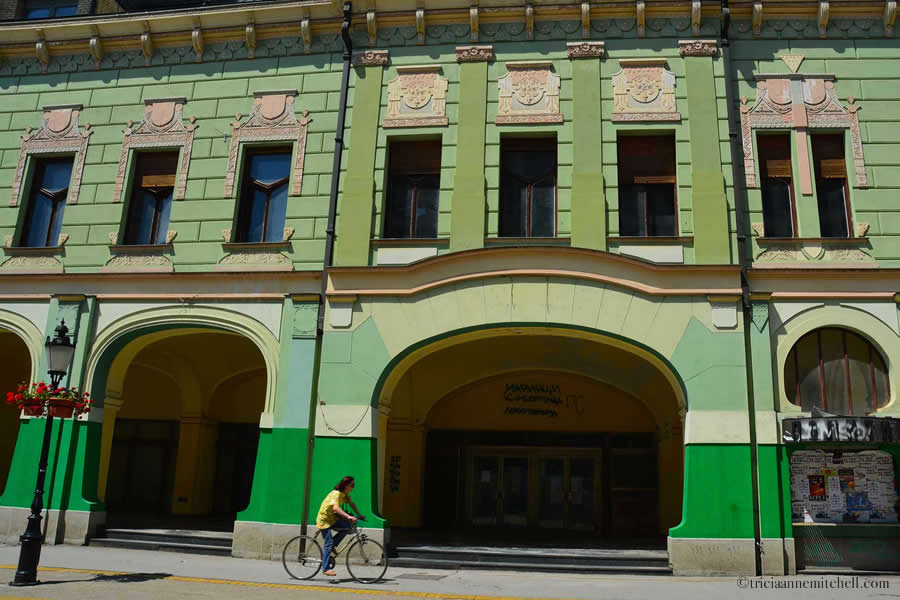
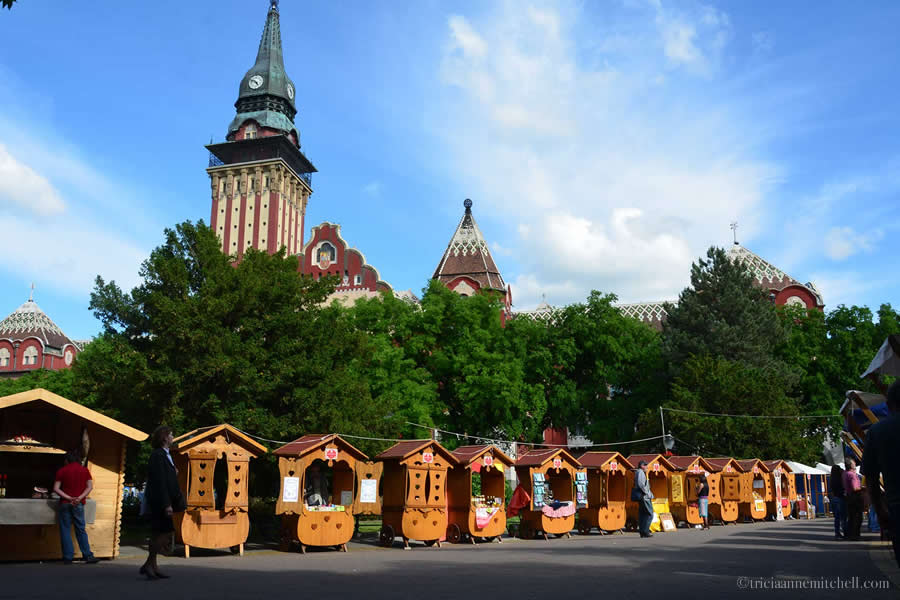
Levy enthusiastically took us under his wing, and we embarked on a walking tour of the city, which was heavily focused on its Art Nouveau architecture. Along the way, we learned that the buildings’ designs had been largely influenced by folk art motifs and that the area was once at the heart of a cultural crossroad.
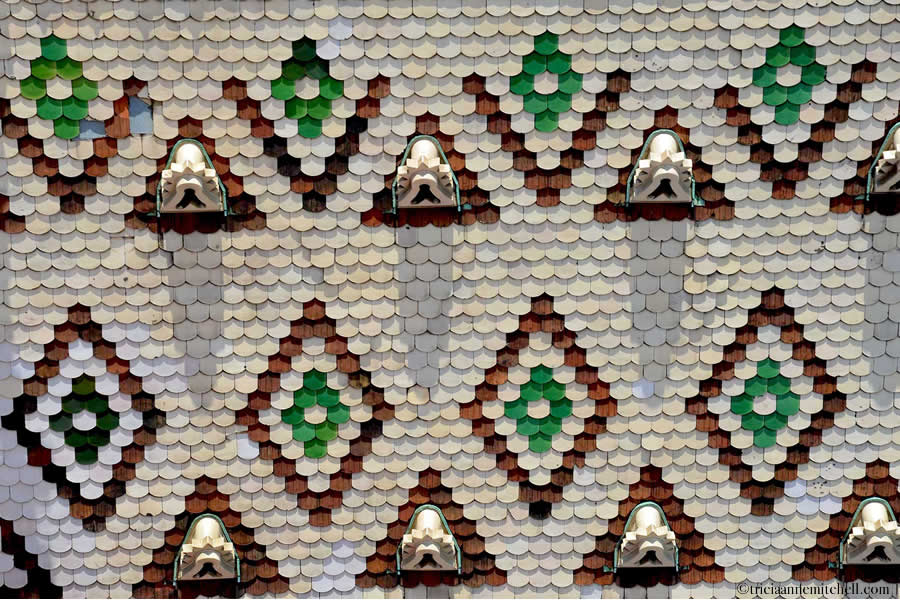
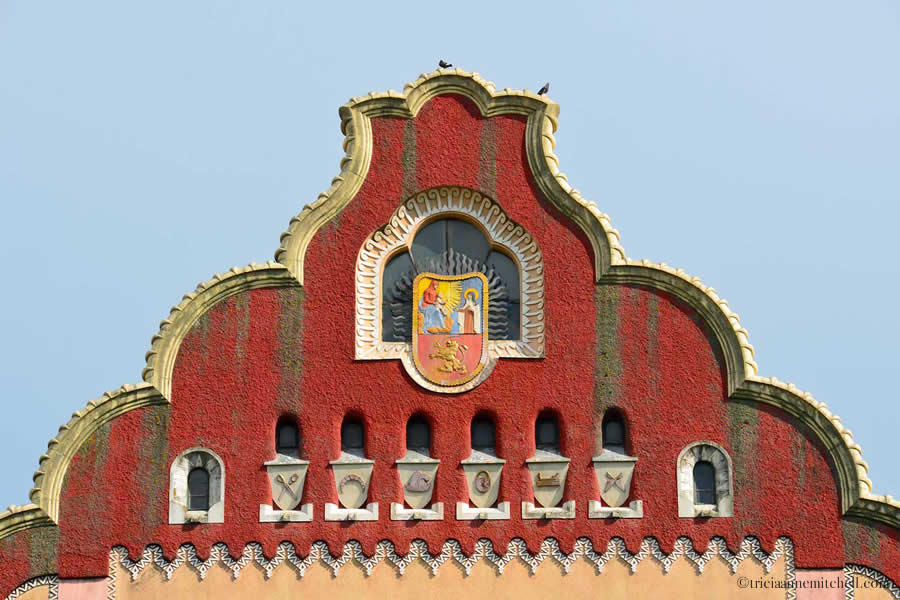
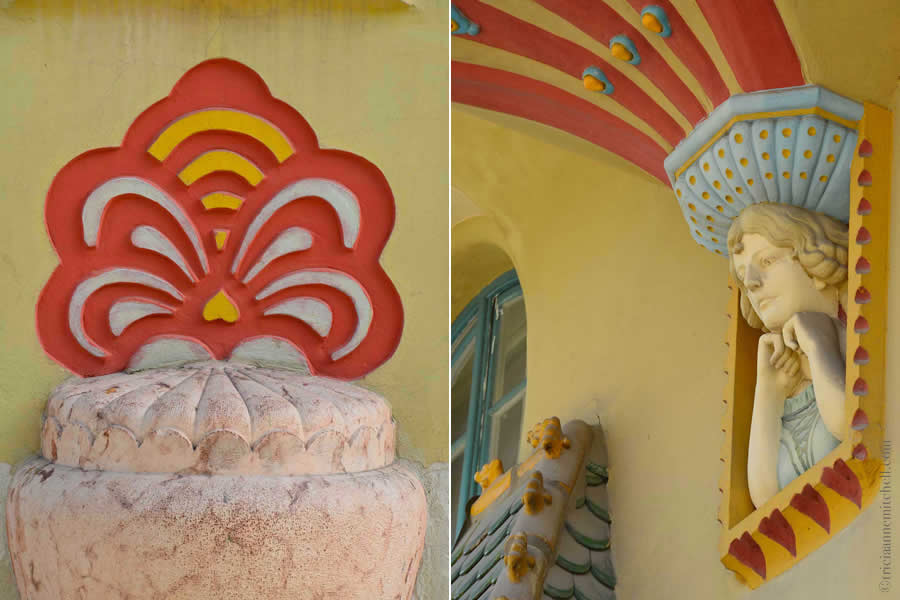
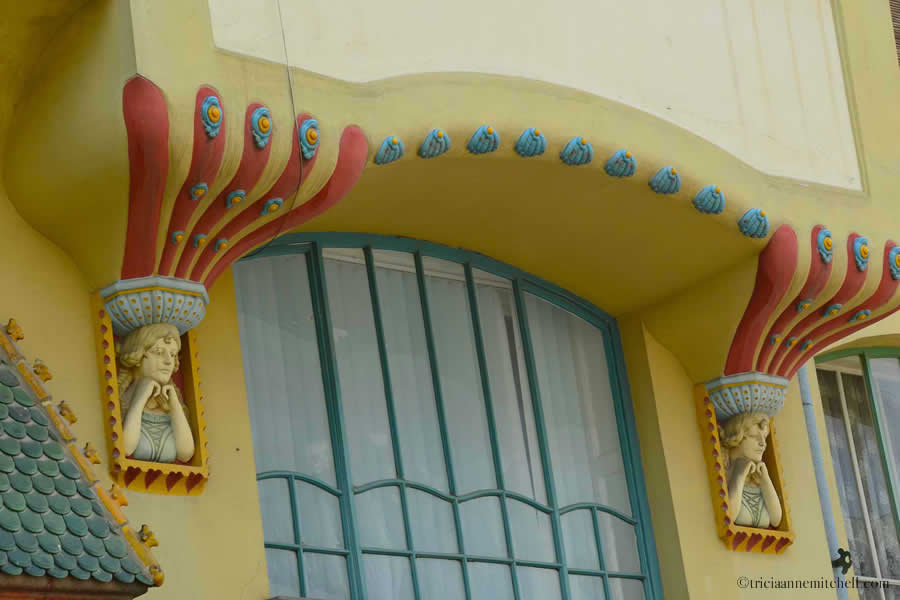
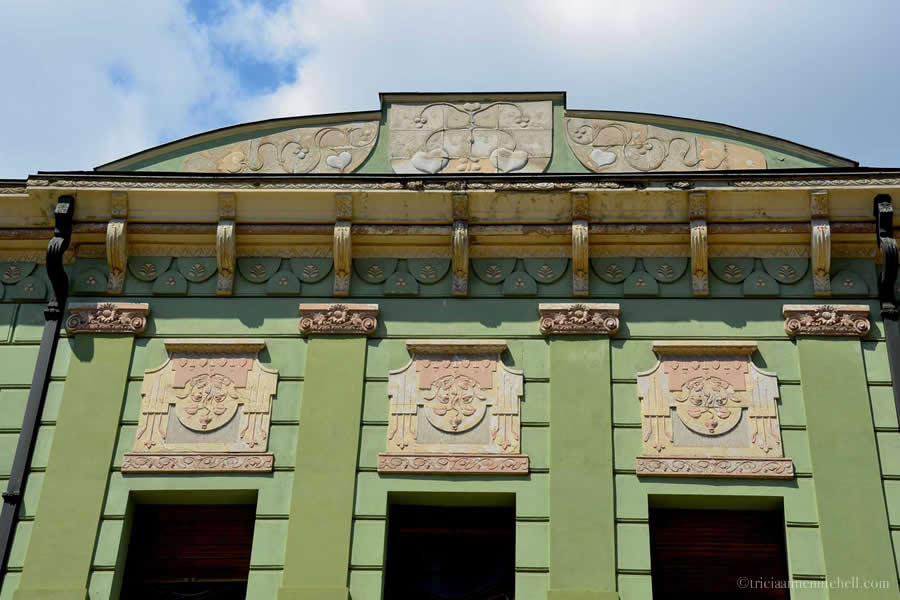
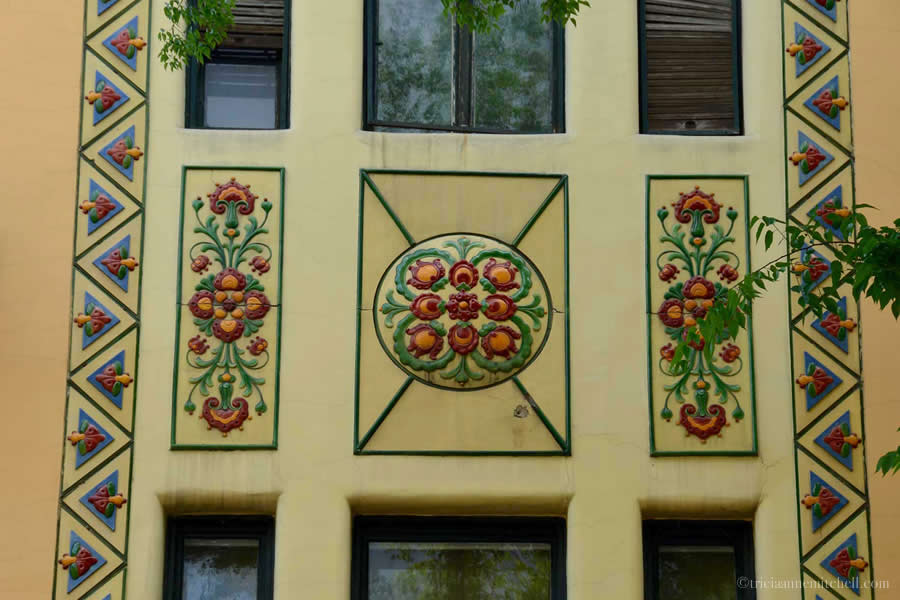
At times, I imagined that the elaborate structures had spilled out from the pages of a Dr. Seuss book, thanks to their colorful and whimsical nature. I loved the vibrant ceramic tiles adorning select rooftops, the curved gables and symbolism—everything from beehives and hearts to gargoyles and flowers.
Indeed, we will come back to Subotica someday.
And, I won’t be surprised if we spend some planned time in the dentist’s chair the next time we return!
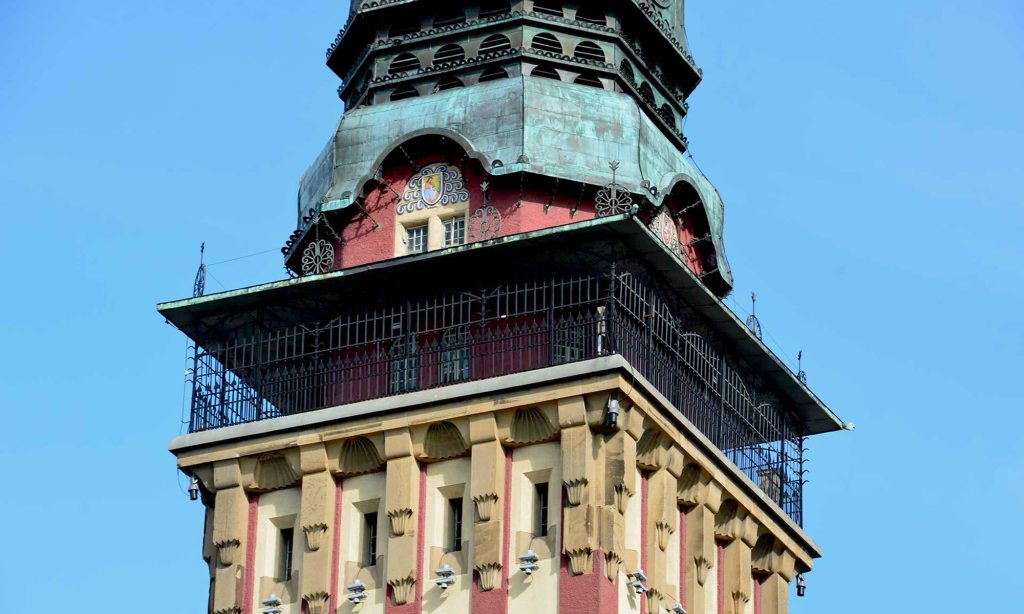
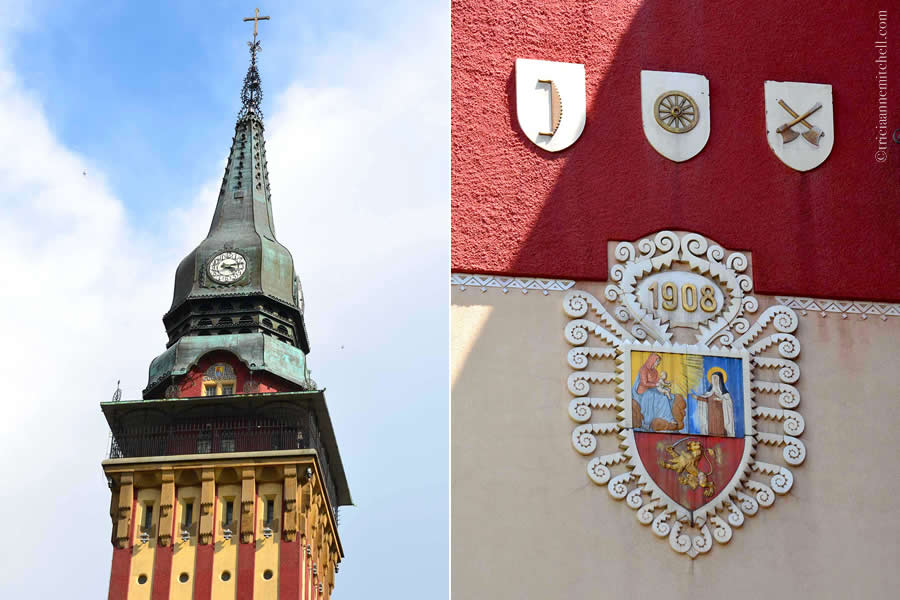
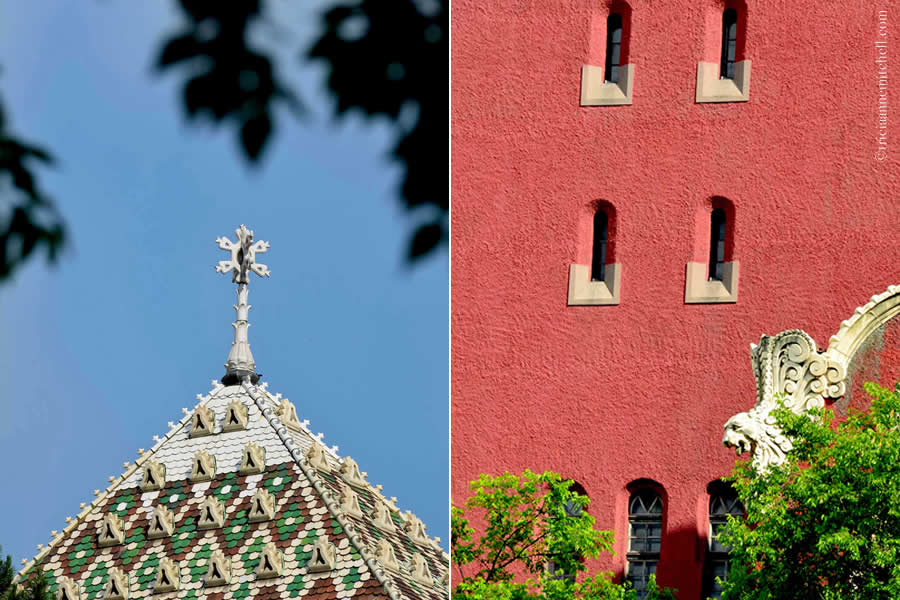
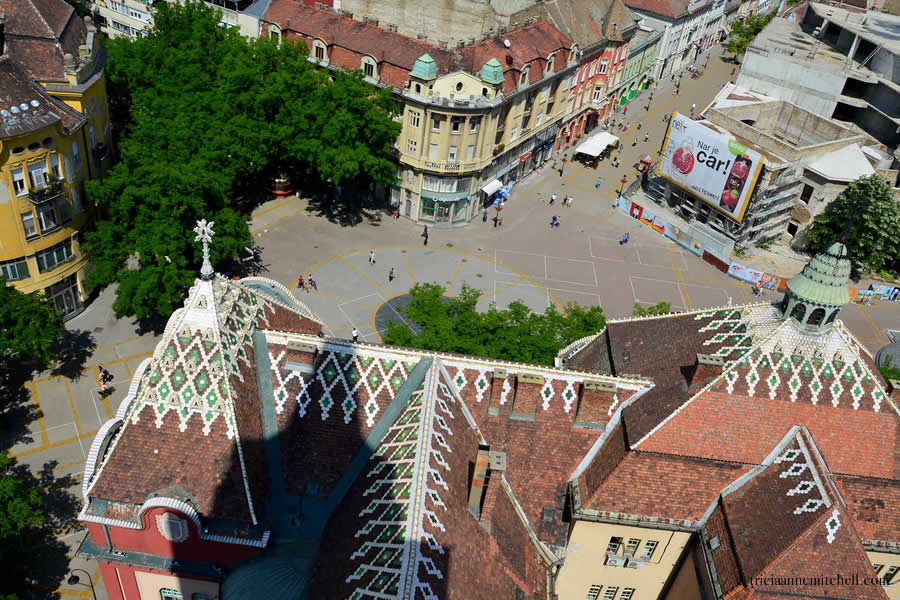
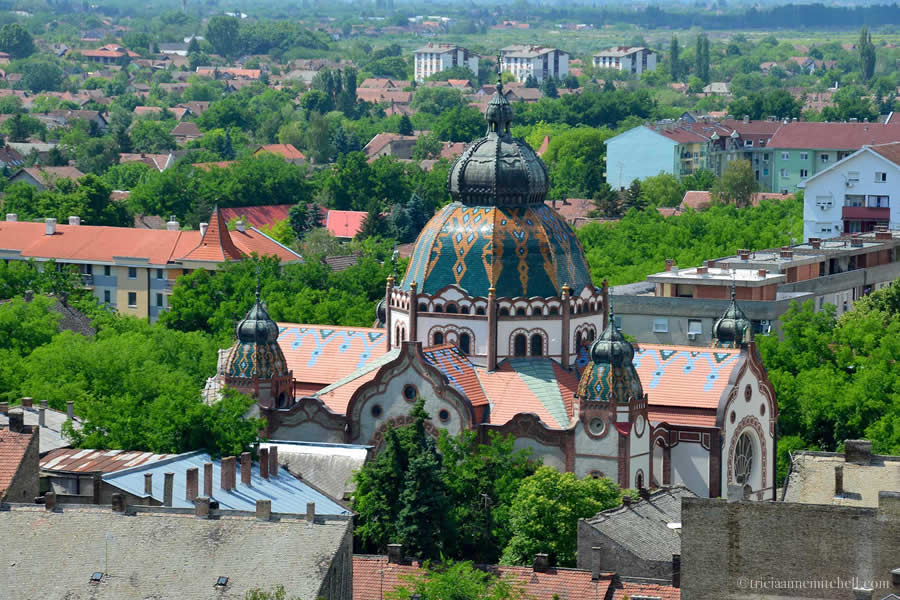
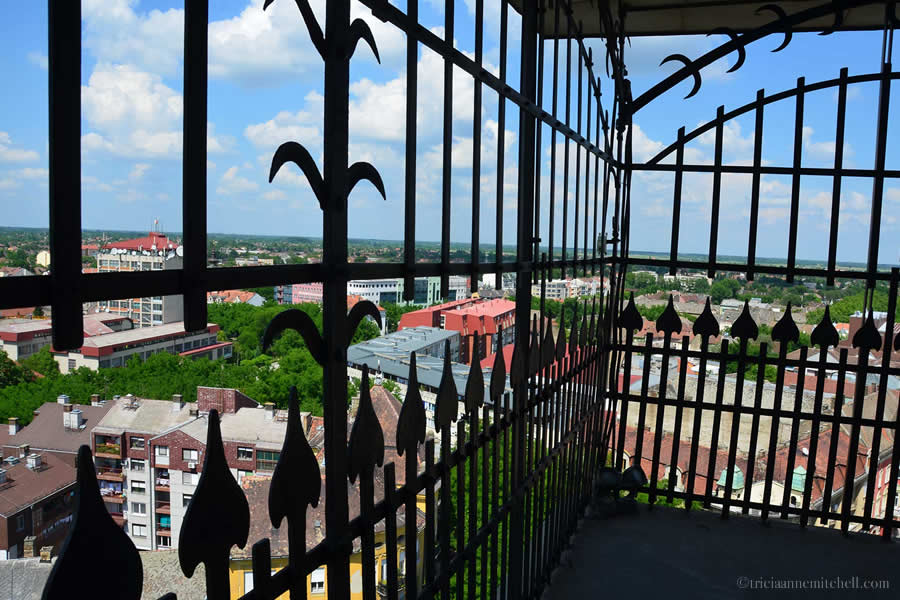
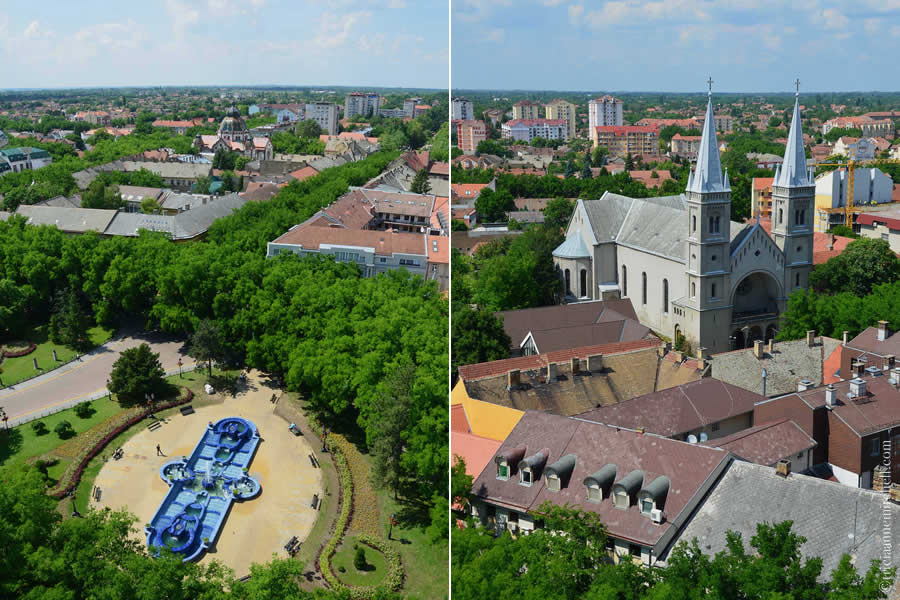
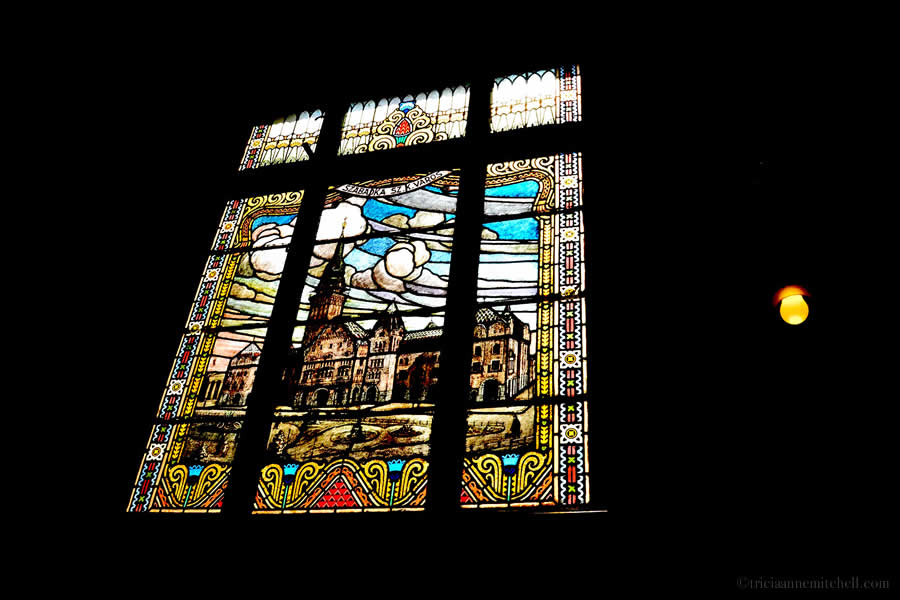
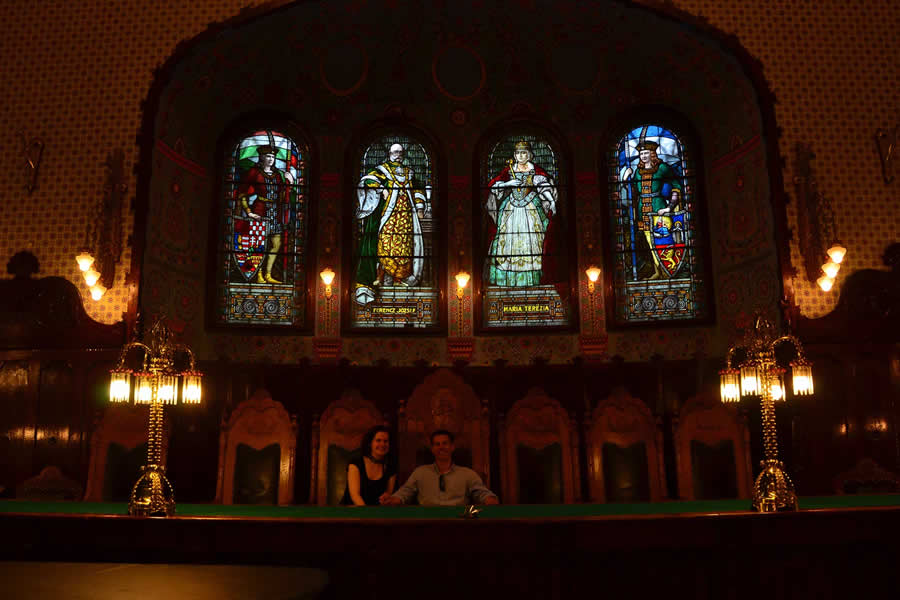
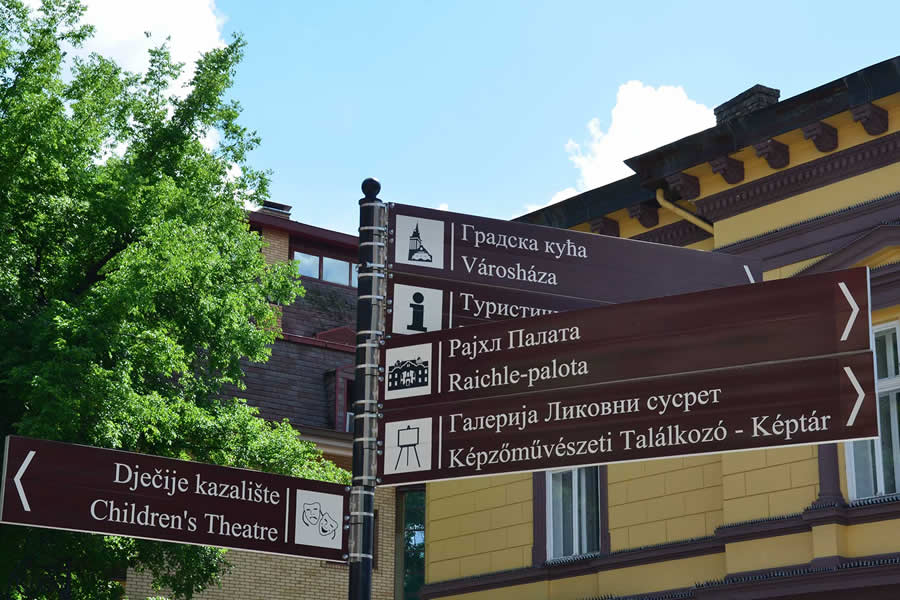
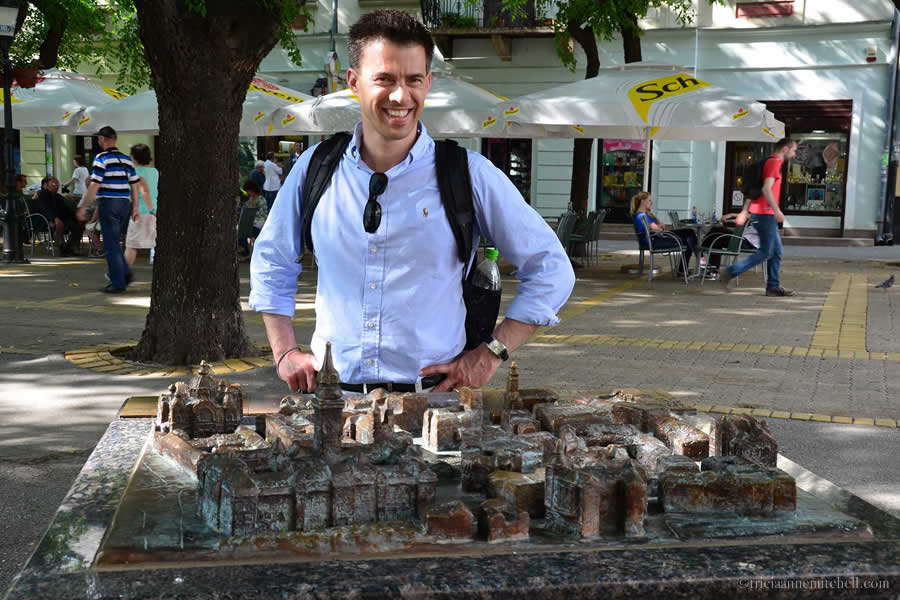
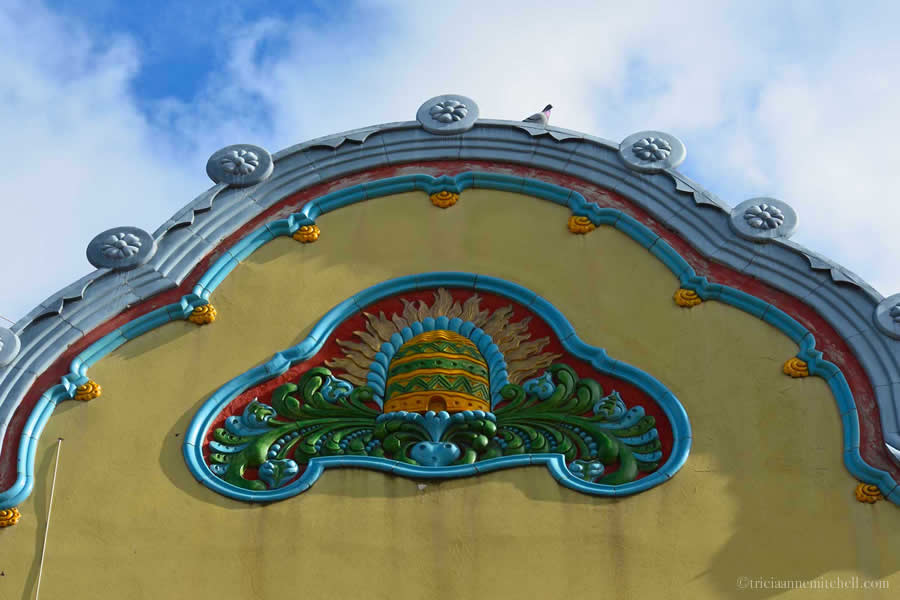
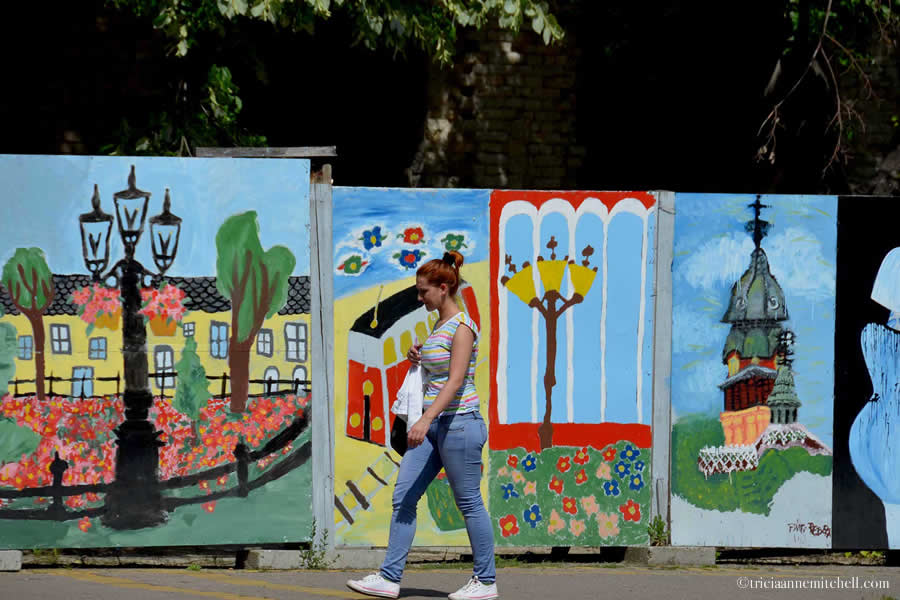
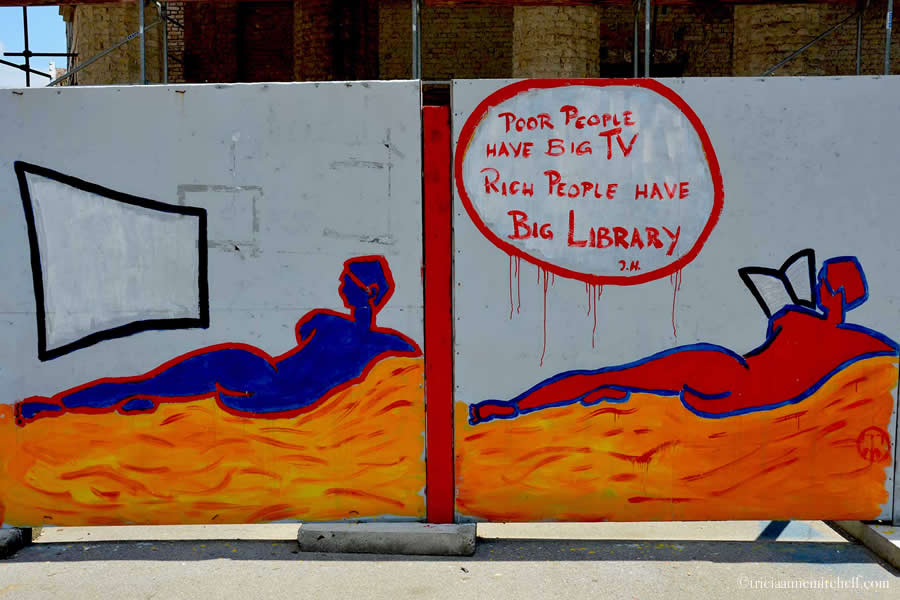
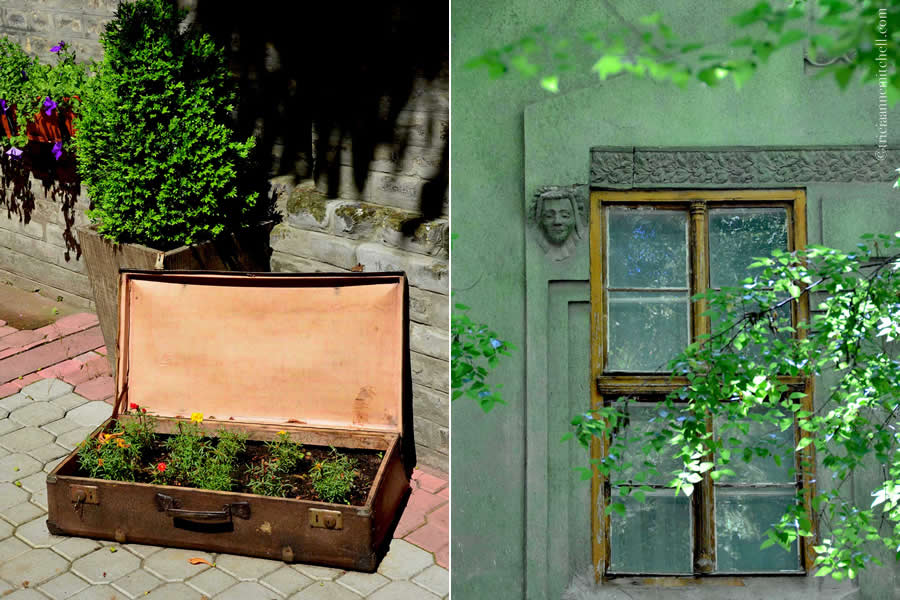
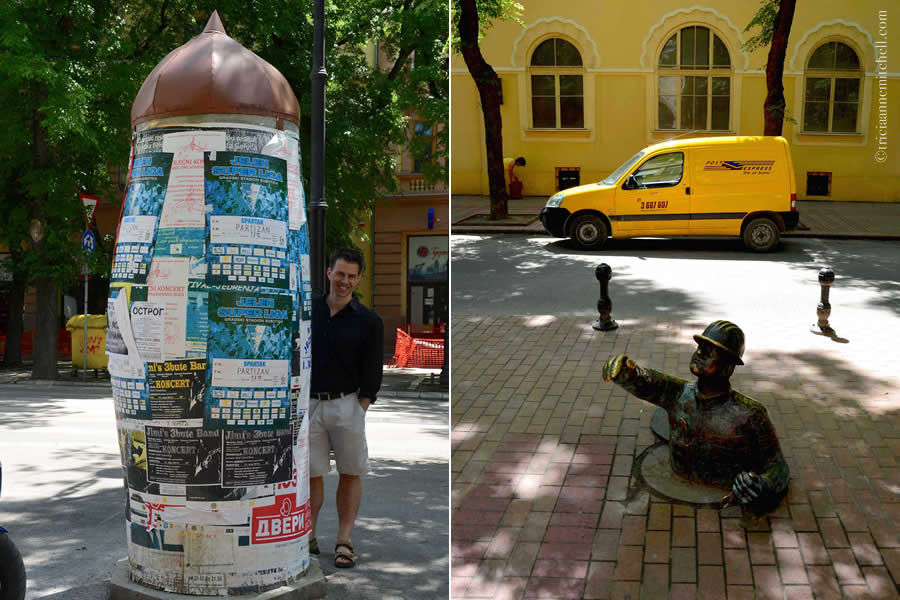
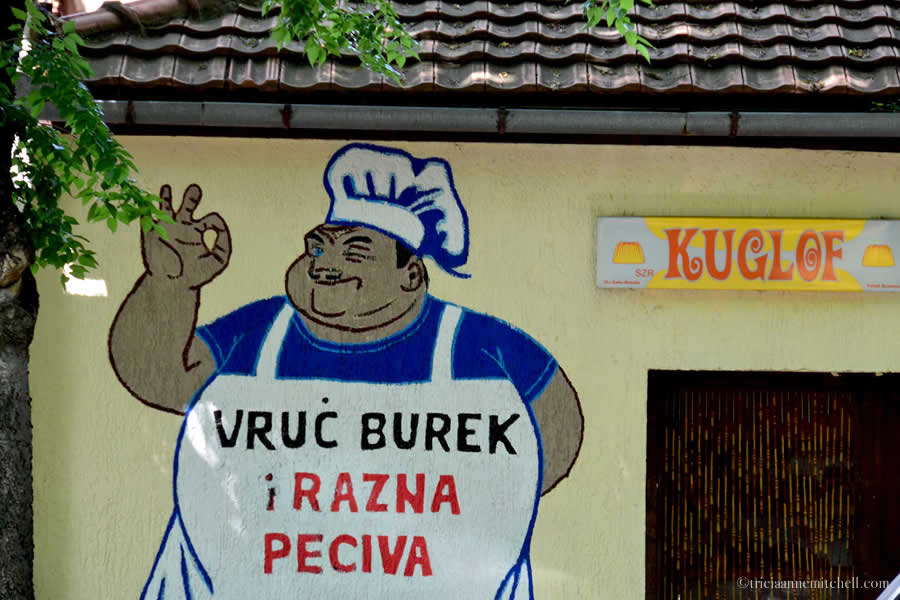
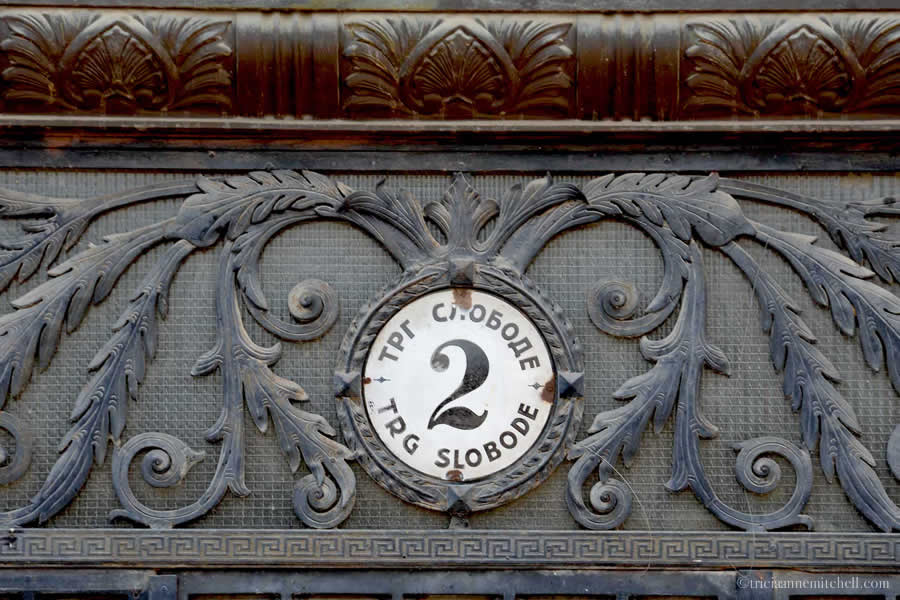
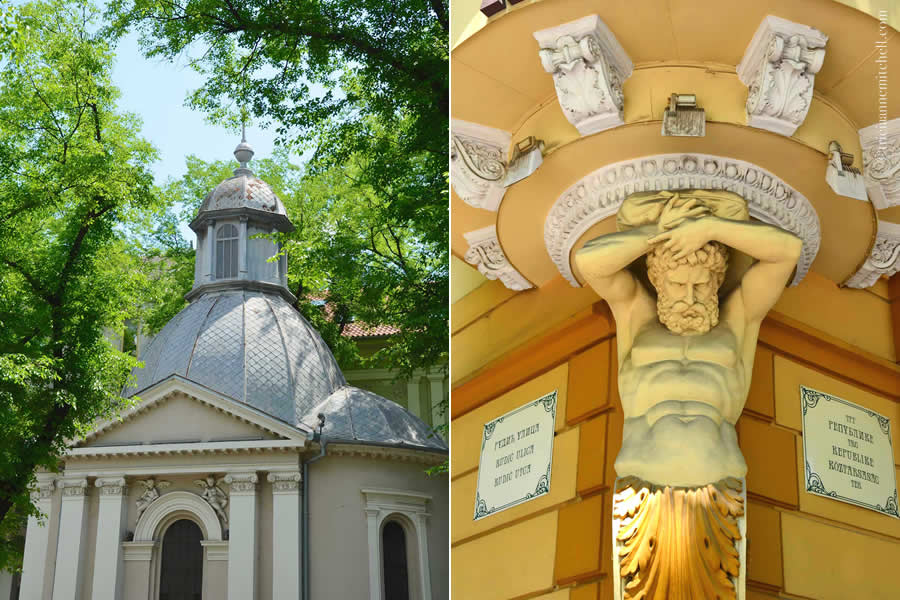
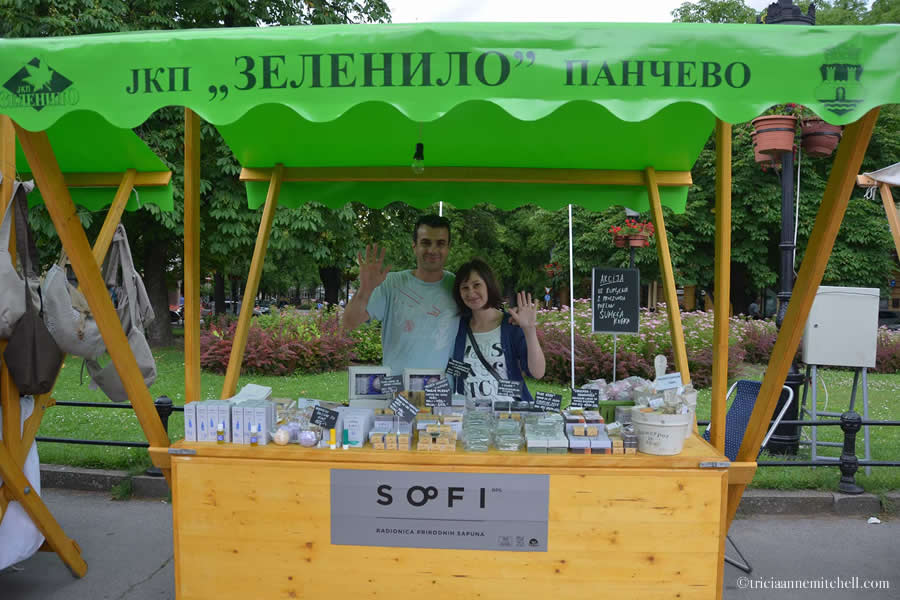
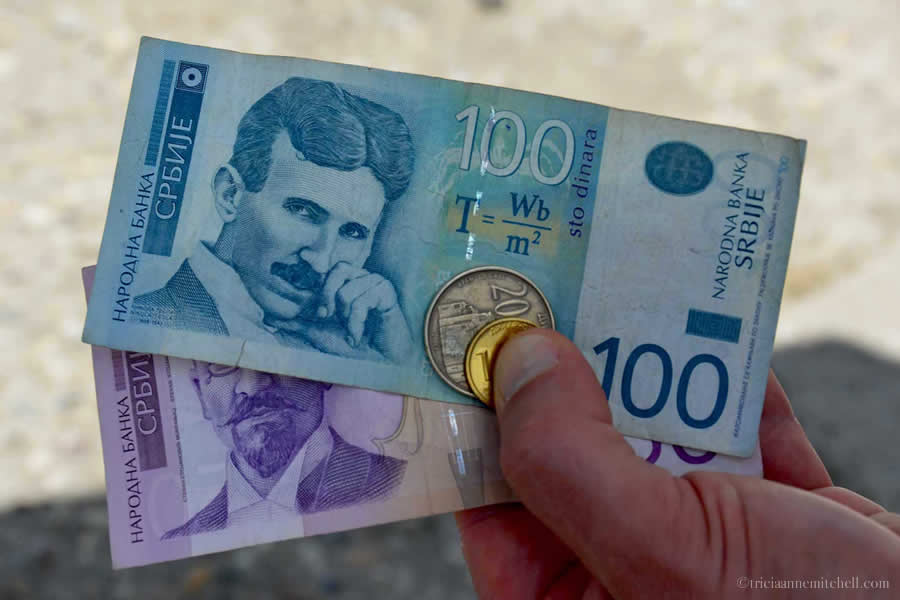
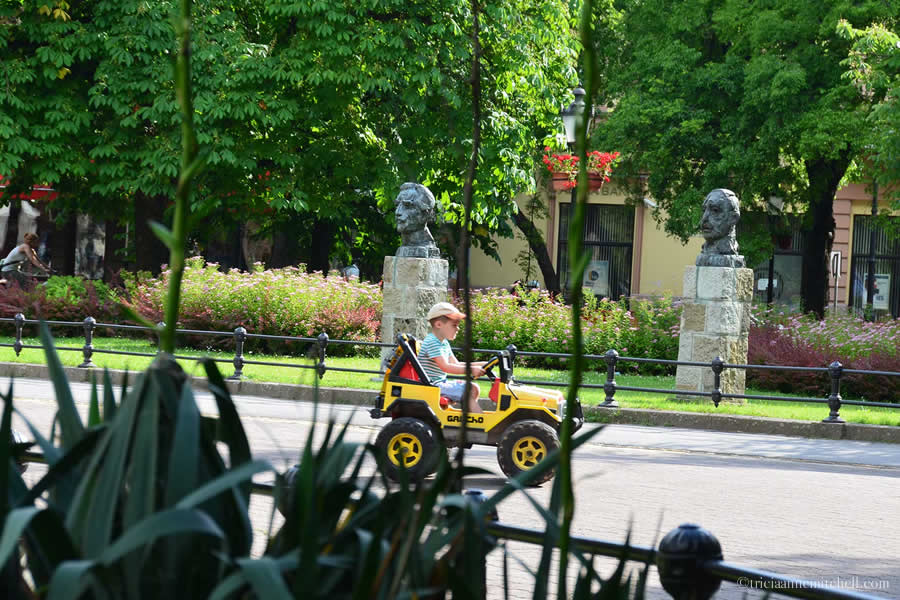
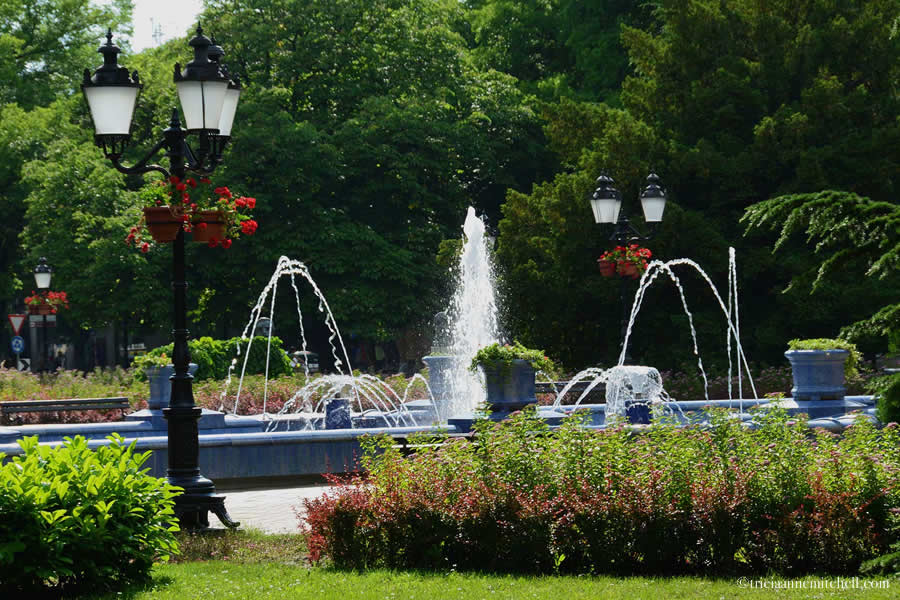
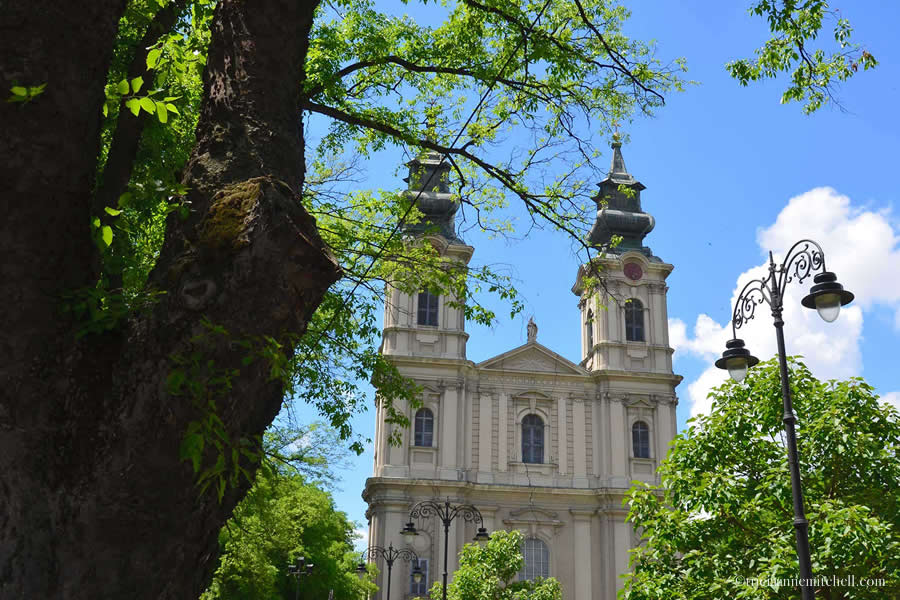
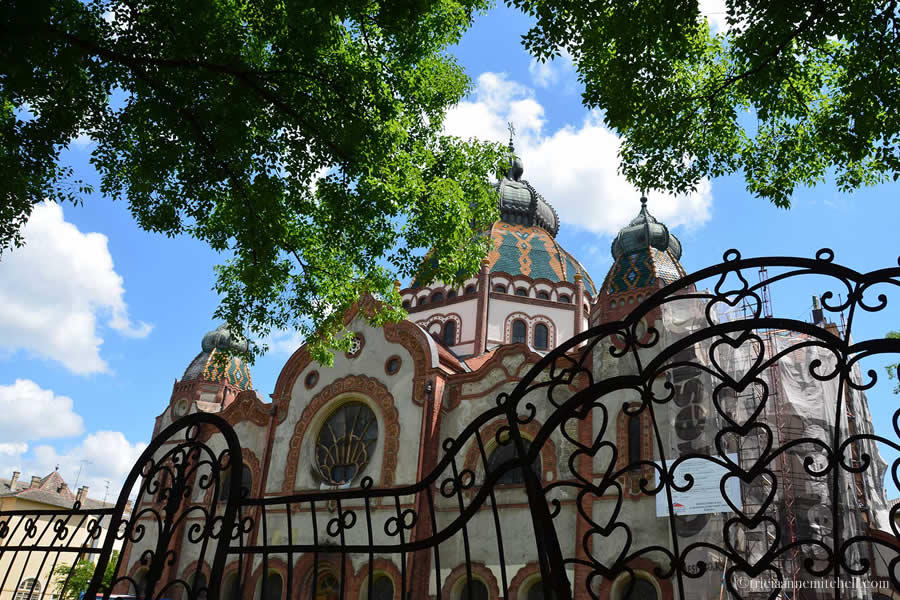
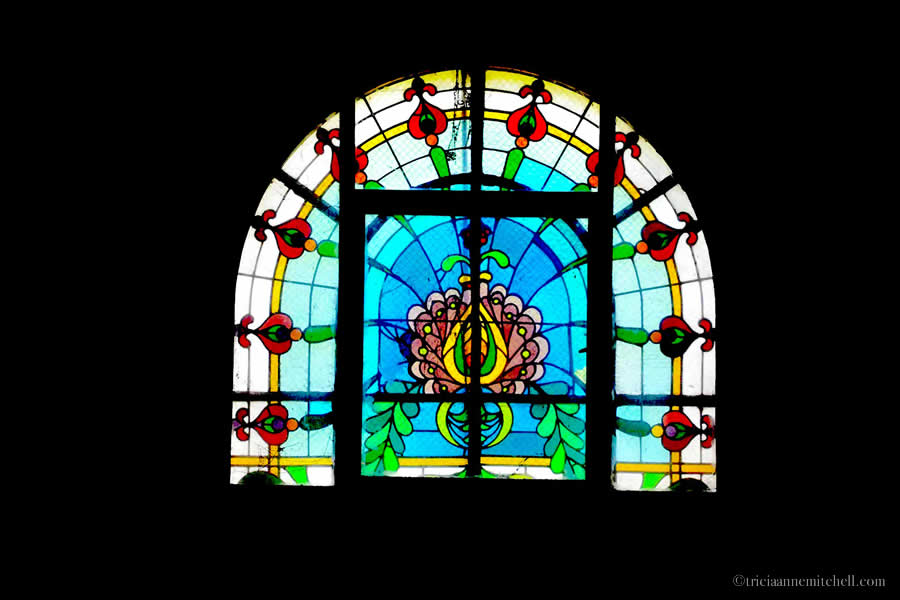
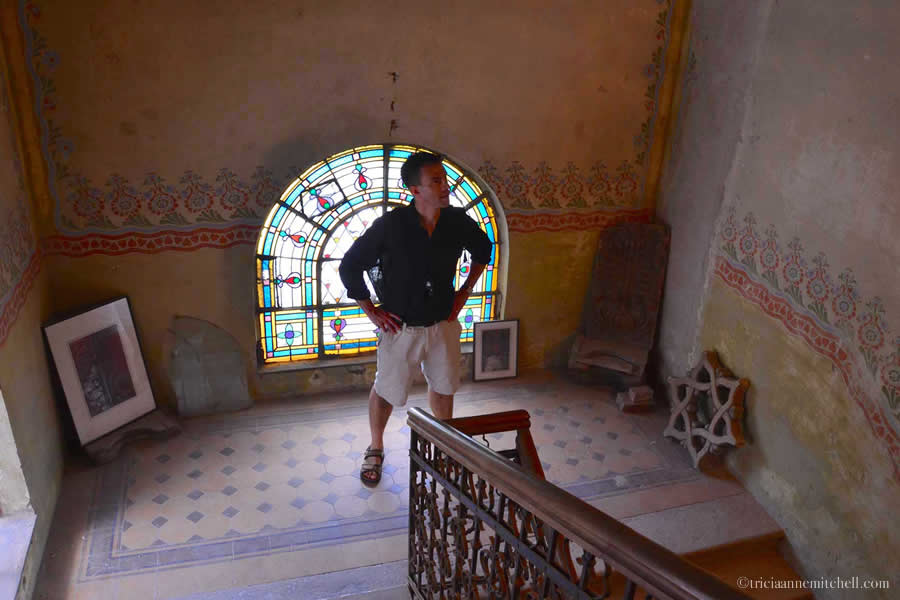
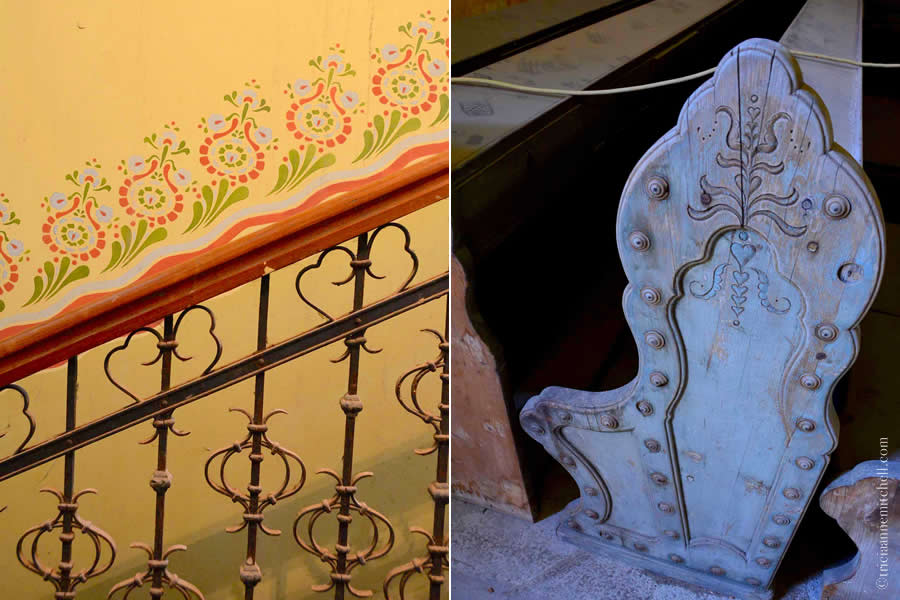
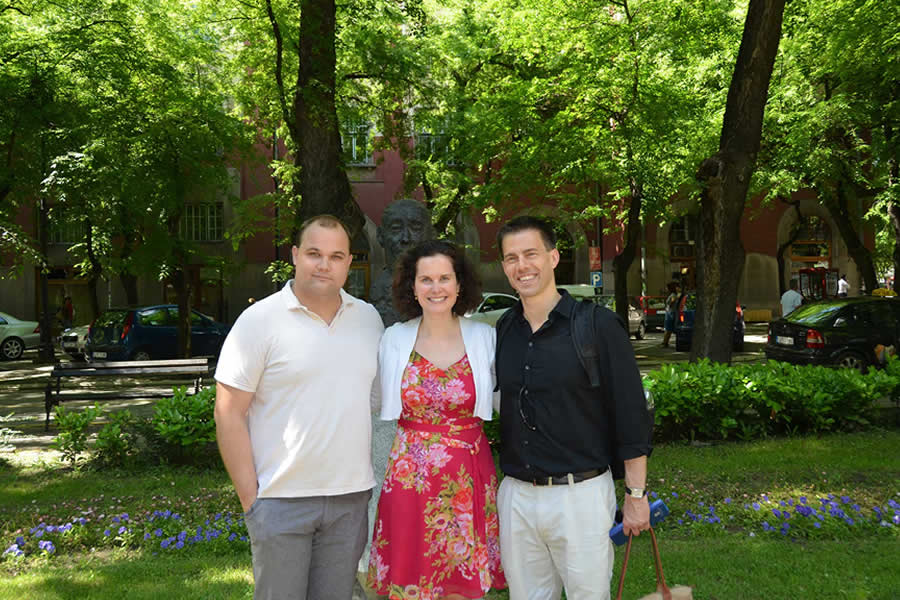
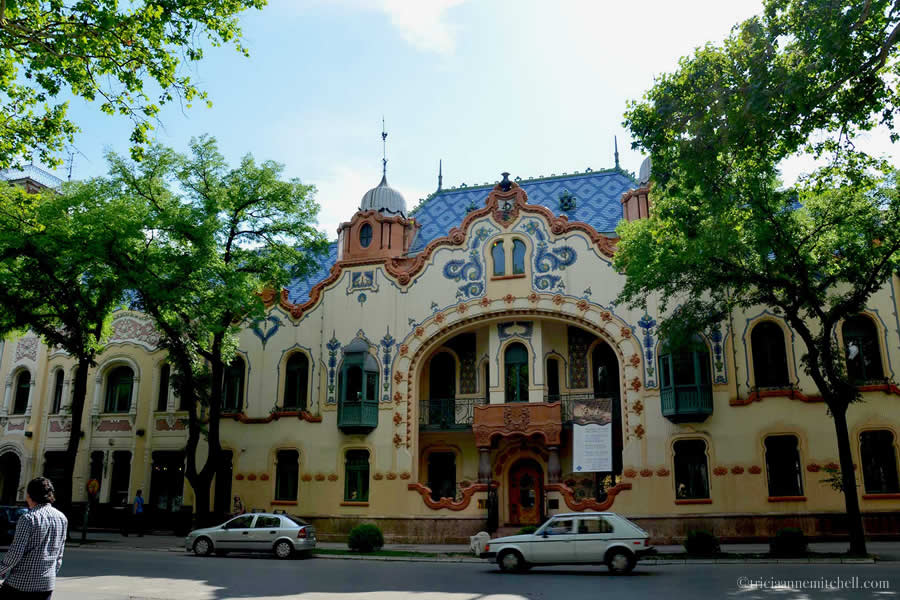
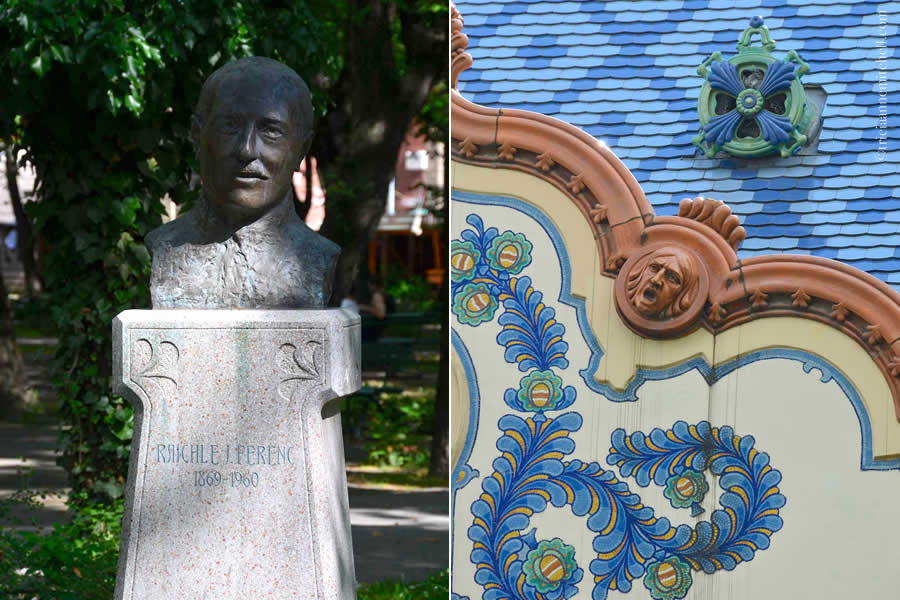
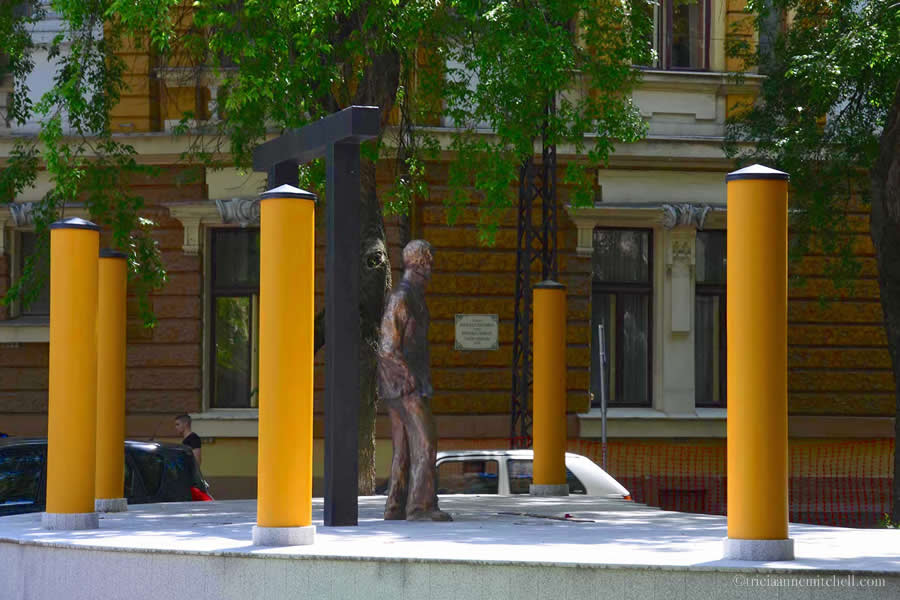
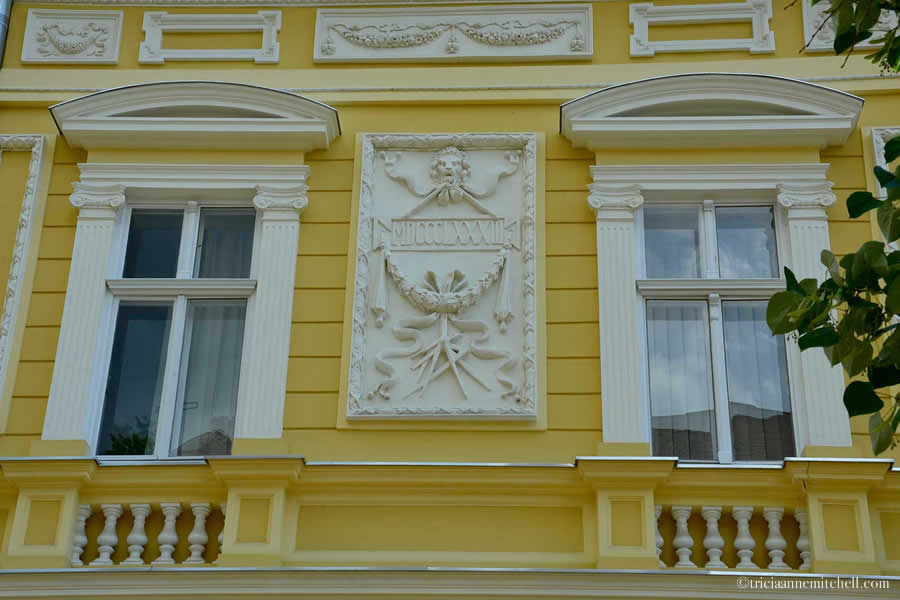
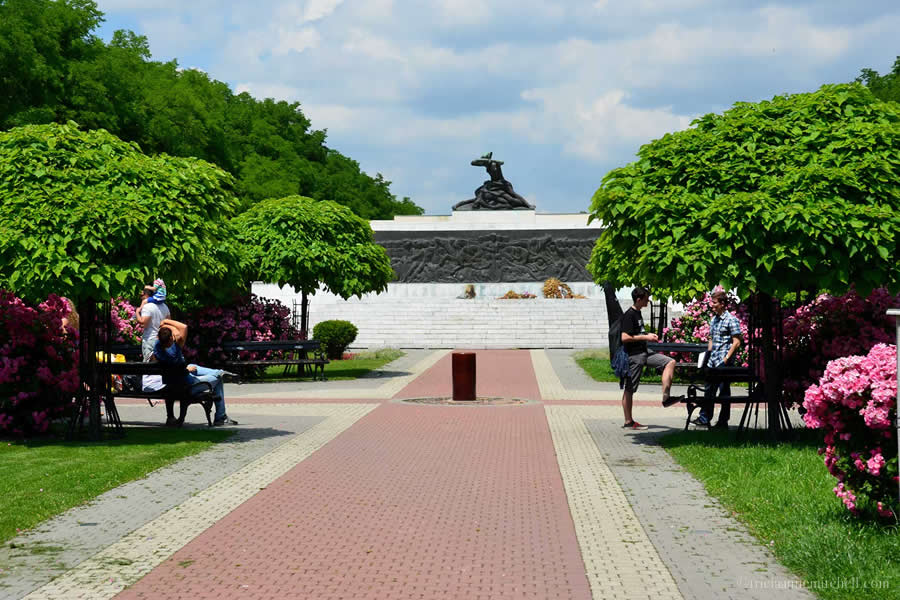
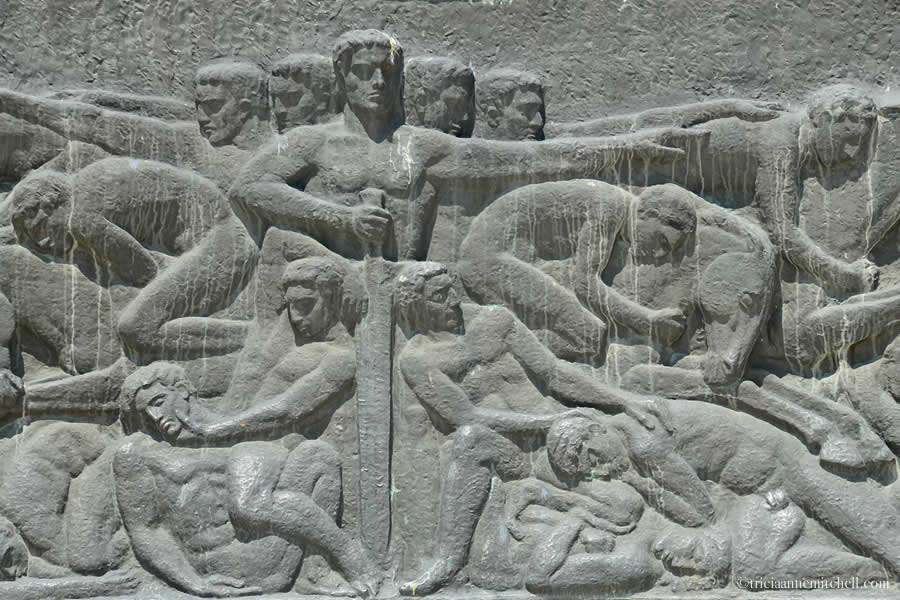
The roof tiles of Subotica’s City Hall.Details of Subotica’s City Hall building (Gradska kuća), which was built between 1908 – 1912. Levy, one of Subotica’s tourist office employees, was kind enough to give us a mini tour of the grand building. We climbed to the top of the town hall’s tower and also explored the ornate chamber where Subotica’s City Assembly meets.In 1906, a competition was held, inviting architects to submit proposals for Subotica’s future Town Hall building. Architects Marcell Komor and Dezső Jakab were eventually selected to design the building, and construction began in 1908 (as seen in this coat of arms on the right). In the picture on the left is the observation tower where we ascended. It offers splendid views of Subotica’s Old Town core.Left: The intricate tiled rooftops of the city hall. Right: A gargoyle-like figure contrasts with the building’s colorful façade.Views of Subotica’s Main Square (Trg Slobode) from the top of the City Hall.Subotica’s Synagogue, which is currently undergoing restoration. It was designed by the same architectural duo that created the City Hall.Wrought iron-work encases the city hall’s observation deck, lending lovely silhouettes.Left: A bird’s eye view of Subotica’s ‘Blue Fountain’, which was installed in 2001. Right: The 18th-century Franciscan Church.These stunning, jewel-toned stained glass windows were made by the same craftsmen who fashioned the stained glass in Budapest’s Parliament Building.Mood lighting inside the building’s elegant Council Hall.Street signs and tourist markers in Subotica’s center are written in several languages: Serbian, Hungarian, and sometimes English. Here, they use both the Latin and Cyrillic alphabets.Shawn enjoys another aerial view of the city.Subotica is replete with Art Nouveau beauties. These decorative frosting-like details are on the former Subotica Savings Bank.A beehive adorns the top of this former bank; the symbol is said to represent thrift and good financial management.Colorful panels dress up an otherwise drab construction site.Left: A suitcase finds new life as a planter. Right: A sea of green details.Left: Shawn poses next to an Old World-style advertising column. Right: A quirky brass statue rises from a manhole.Though Shawn enjoyed his fair share of Burek in Croatia, he didn’t get to try it here in Subotica. We heard this place has tasty versions of the savory pastry, which can be stuffed with everything from cheese and spinach to minced meat.Left: This tiny grey chapel was built after the Plague ravaged the city. Right: The fanciful architecture that abounds in Subotica’s Old Town-core.Formerly a popular hotel and restaurant (the Golden Lamb Hotel), this building was actually built in the 20th century, in a similar style to its 19th-century predecessor. I liked its cheery heart and flower motifs.Symmetrical and colorful ceramic-work, making me feel as though I was looking through an Art Nouveau-style kaleidoscope.A small market was taking place during our visit, with vendors selling everything from honey and handmade textiles to soap, wine, and liqueur.At the market, we were introduced to Sofi, a natural brand of soap and essential oils. The company’s founders, pictured here, spoke English very well and were happy to answer our questions. Shawn and I purchased handmade soap, as well as lavender and clove essential oils. Later, when we’d moved on to Serbia’s capital city, Belgrade, we were excited to see Sofi products for sale in a design district there.Serbian-American Nikola Tesla appears on the country’s 100-dinar bill. Tesla was a brilliant inventor and engineer. In Belgrade, where we traveled after visiting Subotica, there’s a wonderful museum dedicated to Tesla, where you can see some of his inventions at work.These little motorized vehicles were popular in parks in Serbia. Here, a young boy motors past busts of the architects who designed Subotica’s City Hall and Synagogue.The Blue Fountain.The Baroque-style Cathedral of St. Theresa of Avila was built in the 1770s, when Subotica was part of the Habsburg Empire.Subotica’s old synagogue is the third largest in world in the world, in terms of its seating capacity. It opened in 1902. Its dome features Zsolnay-glazed roof tiles.The synagogue’s vibrant stained glass windows were made in Budapest.Since the synagogue has fallen into disrepair, organizations are trying to raise a few million euros to restore it. As Subotica no longer has a sizable Jewish population, the structure might be used as a concert venue or museum.Left: A stenciled hallway. Right: Folk-art themes are evident on a wooden bench.Posing with Shawn (right) and our host extraordinaire, Levy, from Subotica’s tourist office (left). Levy was previously a member of Parliament. He speaks Serbian, Hungarian, and English, plus a smattering of German.Today, this elegant building hosts a modern art gallery, but it was previously a family home and office, built by architect Ferenc Raichle.Left: A bust of Ferenc Raichle. Right: The detail of his former home and office.A statue depicting Dezső Kosztolányi, a Hungarian writer and poet, who also wrote haiku (Japanese poetry).The city’s Monument to the Victims of Fascism.The detail of a copper relief on the monument.
Video of this Experience:
Where in the World?
Planning Pointers:
Subotica (also known as Суботица and Szabadka) is located in northern Serbia, in the country’s Vojvodina region. The city is roughly 10 km (6 miles) from the Hungarian border. See Subotica‘s or Vojvodina‘s websites for details.
We stayed in the family-owned Stara Breza Apartments (affiliate link) in the nearby town of Palić. We enjoyed the establishment’s quiet atmosphere, made even more picturesque by its small fishpond and pleasing garden. It’s about a five-minute walk from the Stara Breza to a bus stop, and the bus there can take you to Subotica in about 15-20 minutes. As of May 2014, the bus-fare for one adult was 86 Serbian Dinar, about $1 USD each way. Palić has a lovely lake and was a popular resort town in the early 20th century.
When we toured Subotica and learned about its dental tourism, we spontaneously decided to have routine check-ups and cleanings done at the NorDent Dental Center. We were pleased with the level of care there, as well as the reasonable price of our bill!
Need more trip-planning inspiration? This link contains an index of all my posts from Serbia.
Thanks:
A big thank you to Levy for taking the time to show us around this lovely corner of Serbia!
Hi! My name is Tricia Mitchell. I delight in telling stories about my slow travels through more than 65 countries. Some of my highlights have included sharing meals with locals in Armenia, Cambodia, and Tunisia; sipping sparkling wine with French cousins in Alsace; milking goats in a sleepy Bulgarian village; and training with a Japanese mine-clearance team in Laos. My husband, Shawn, and I are based in France’s Loire Valley.
Jess, Subotica’s architecture and the area’s natural beauty do make this part of Serbia a worthwhile place to visit. It’s also a good selling point that the city is not so far away from Budapest and Belgrade.
Thanks for reading, and wish you happy travels ahead!
Darlene, we’d been curious about Serbia for some time before this trip, and were prompted to go there as our Schengen visa was expiring. We ended up enjoying Subotica, Novi Sad, and Belgrade so much that we came back again a few months later. We’re still in Malta, and this visit was actually about 2 years ago, but as spring returned here, we thought it was time to finally share our impressions of this pretty architecture and the nice people who welcomed us in Serbia.
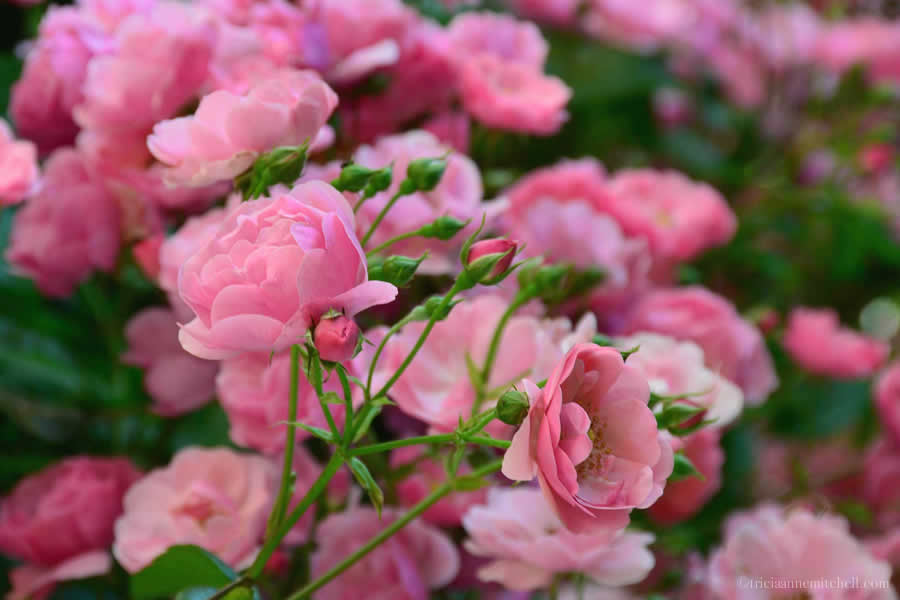
I can’t say for sure, Halee, but I think they may be roses. I’m with you, though – I loved the floral motifs to be found in Subotica’s architecture, as well as its gingerbread-like nature. I also thought some of the buildings looked as though a pastry artist had piped on rich swirls of frosting on them. :)
What a nice town! It reminds me a bit of the town where I lived in the Czech Republic, which also had a statue holding up a building like in one of your photos above. I’d love to visit Serbia one day.
Jenna, I wonder if the architectural similarities might be because both countries were part of the Austro-Hungarian Empire? I’d also like to explore ‘your’ part of the Czech Republic some day. I hear Moravia has some very pretty wine country, and I recently discovered that a branch of our family comes from there. Very distant, nevertheless it adds a nice personal touch to a place.
Here’s hoping you and your family will get to Serbia someday soon. I imagine your boys would love the fortresses there. We’ve only seen a few, but some look quite dramatic!
What a beautiful city Subotica is. I really love the architecture of the city hall and the synagogue — it looks elegant and playful at the same time. Speaking of dental tourism, it reminds me of this Canadian woman I met in Bangkok a few years ago who always returned to the city every year to get a dental care.
“Elegant and playful” – a fitting way to describe the architecture, Bama!
From the sound of it, Bangkok is a popular dental tourism destination too. With elevated prices in many countries, I can see why people marry a vacation with medical care.
Hope your week is off to a wonderful start! I imagine it’s sizzling hot there now? We’re preparing for a very warm (and our first) summer here in Malta.
The decorations on the buildings are so pretty. It was interesting to read about the dental reputation of this place. Many people from Australia go to Thailand for major dental work because it is so much cheaper there.
Carol, it’s been two years since Shawn and I were in Subotica, but as I rounded up the photographs for this piece, and as Shawn created his video, we said how much we would like to return. Between the fairy tale-like architecture and the peace and calm of Palić Lake, this trip was especially relaxing (even though a trip to the dentist was involved). :) Hope you had a wonderful weekend!
Thank you, Mark! And the cavity was so minute, the procedure was painless. With us having been on the road so much during this time period (about 2 years ago) I just feel lucky to have been near a good dental clinic though.
Hope you’re well and enjoying your maritime adventures.





Join the conversation.