

Malta was ruled, occupied and colonized by a great number of different peoples throughout the last few thousand years. Not surprisingly, since the island is in the heart of the Mediterranean, the Romans were among them.
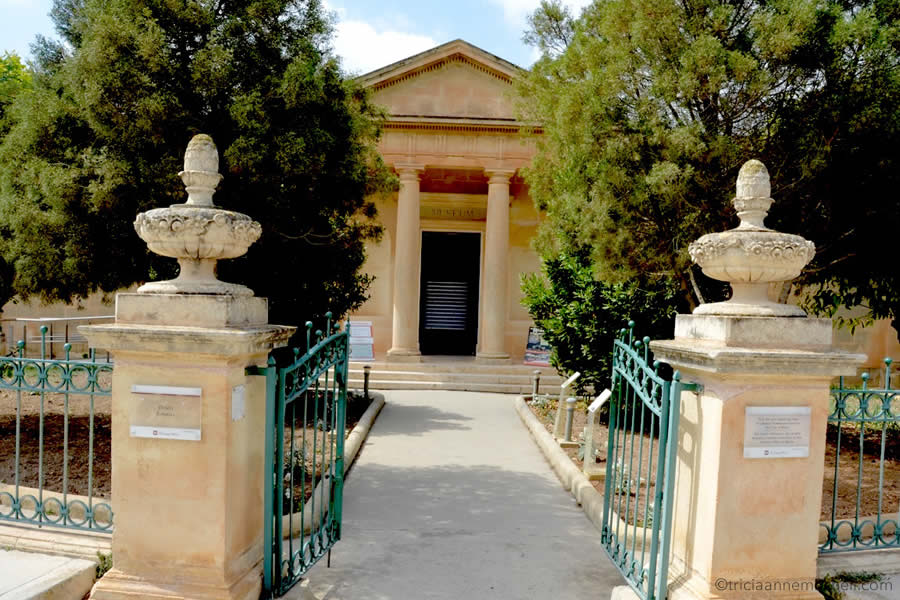
Situated just outside the popular and atmospheric walled city of Mdina is the small Domus Romana Museum. It was once a townhouse for a Roman aristocrat living in the ancient Roman town of Melite, in what is now Mdina and Rabat. (In Latin, domus means ‘home’ or ‘residence’.) It’s believed that it was built in the 1st century CE.
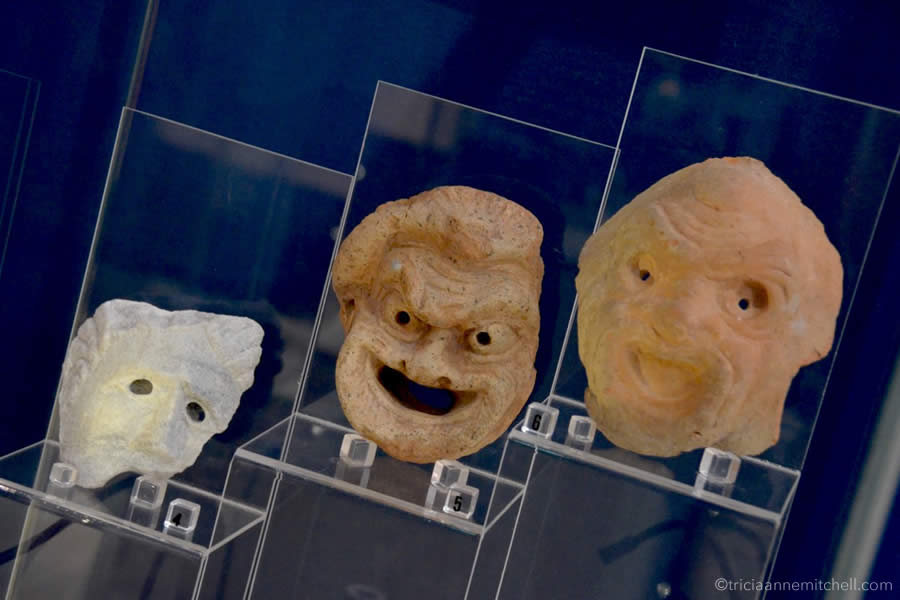
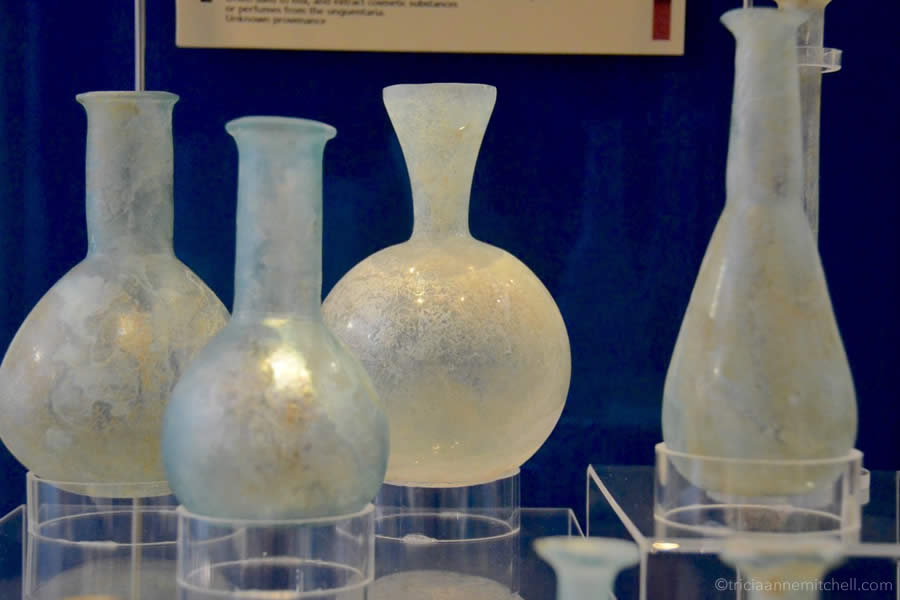
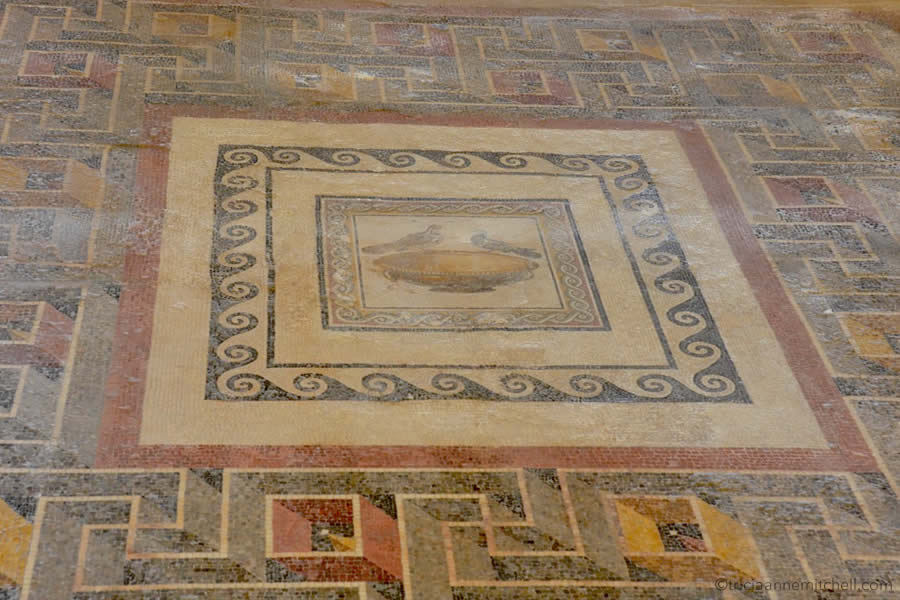
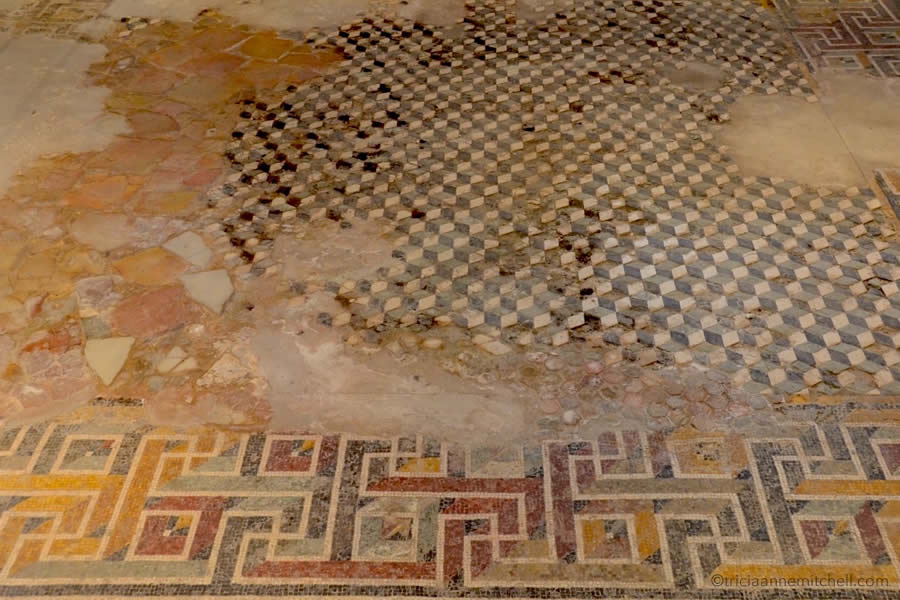
Since most of the original townhouse was destroyed before being discovered in 1881, a newer museum structure was built over the remains to shelter them. Inside the Domus Romana museum today, there are impressive mosaic floors, columns and marble statues. The museum also showcases an array of everyday items like pottery, coins, oil lamps and hair pins. Having moved my own fragile perfume bottles from Cairo to Germany, I was amazed that the museum’s delicate examples managed to survive so many tumultuous centuries!
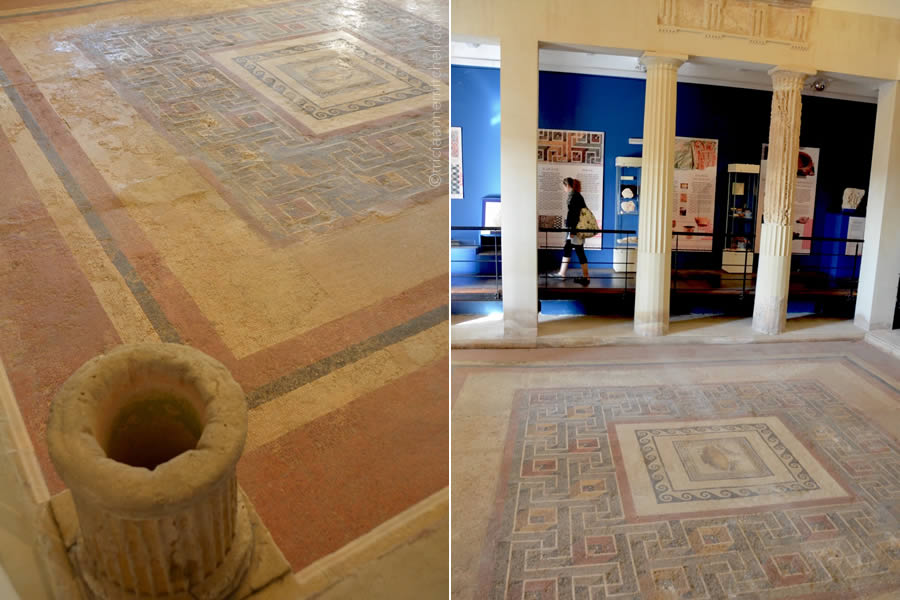
Of all the items, it was the mosaic floors that fascinated me the most though. Perhaps this is because they were utilitarian, yet also design focused. In one of the museum’s mosaic pavements, you can see that it’s been altered several times. This made me wonder how many feet had walked over them through the millennia, who repaired them and why they were repaired in different styles. (The museum signs suggest this may show financial struggles as the Roman Empire declined.)
There is also evidence of the people that came after the Romans. Above the Roman-era mosaics, archaeologists found a few hundred Muslim graves. (Malta was under Arab rule during parts of the 9th to 11th centuries CE. You can still detect this Arabic influence in place names like Mdina or Rabat, even in the Maltese vocabulary. Malta is a predominantly-Catholic country, but their word for God is Alla.)
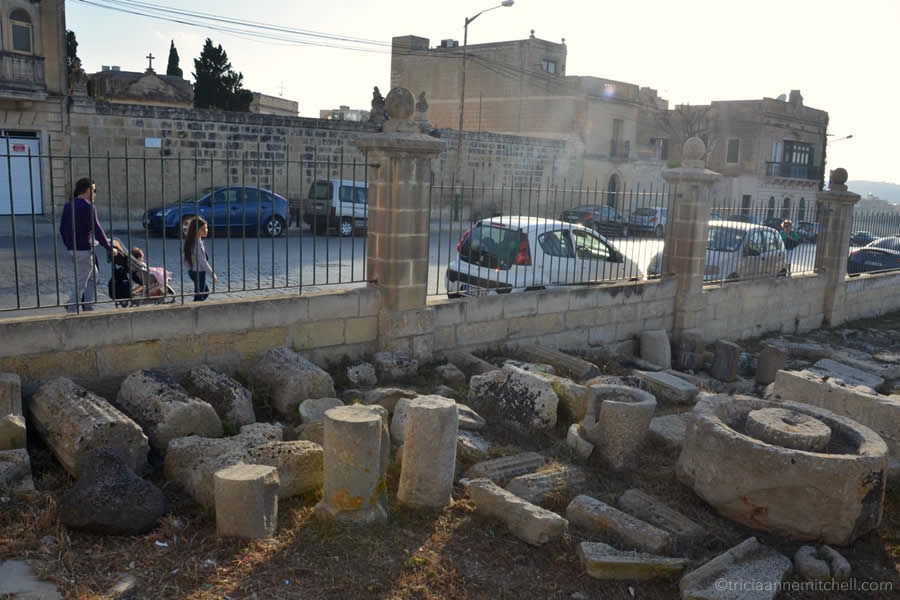
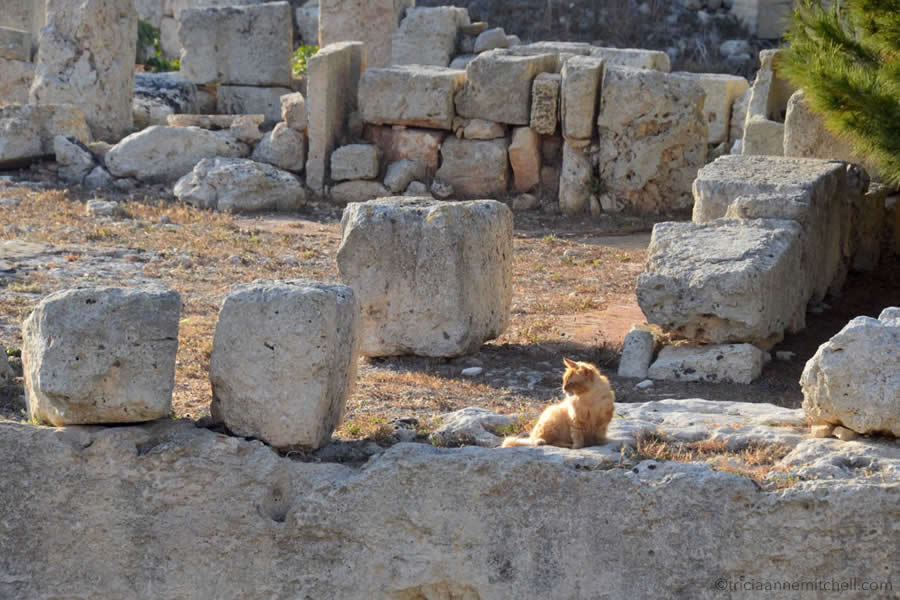
As the sun began to set during our visit, the last of the day’s rays illuminated the ruins outside the museum. Light shone on the mosaics which would’ve once graced the townhouse’s open courtyard. A cat soaked up the sunshine. And Shawn and I headed home to Valletta, mindful of what may be underfoot, and reflective about what traces our civilization will leave behind.





Video of this Experience:
Where in the World?
Planning Pointers:
- The Domus Romana (sometimes spelled Domvs Romana) is located in Rabat, on the border with Mdina. The Roman Domus is just a few minutes’ walk to Mdina’s Main Gate. For opening hours and ticket prices, see the site’s official website.
- Another Roman-era site are St. Paul’s Catacombs, which are also located in Rabat.
- Given how small the island of Malta is, it’s rather easy to get around using its bus system. Just know that short distances can be deceiving, especially during peak traffic times! Use Malta Public Transport’s Trip Planner or Route Map to plan your excursions.
- Ever since we lived in the shell of Roman Emperor Diocletian’s Palace in Split, Croatia, Shawn and I have been intrigued by this chapter of history. If you are too, you might also enjoy dispatches from our visits to the Roman ruins of Salona, Croatia, as well as Split’s Archaeological Museum.
- Do you need more Malta trip-planning inspiration? This link contains an index of all my posts from Malta.
Photography & text © Tricia A. Mitchell. All Rights Reserved. The video is a creation of my husband, Shawn.


Leave a reply to elliebleu Cancel reply