

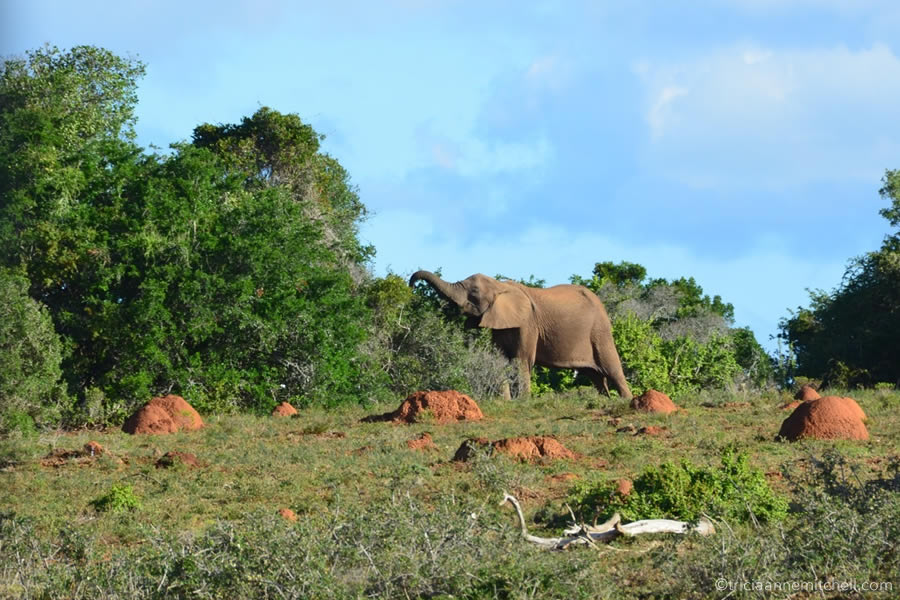
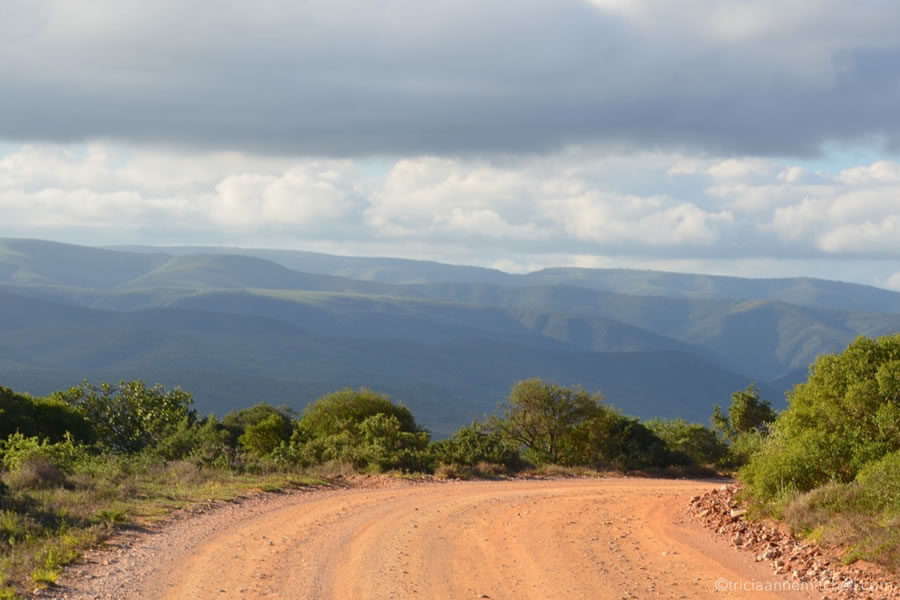
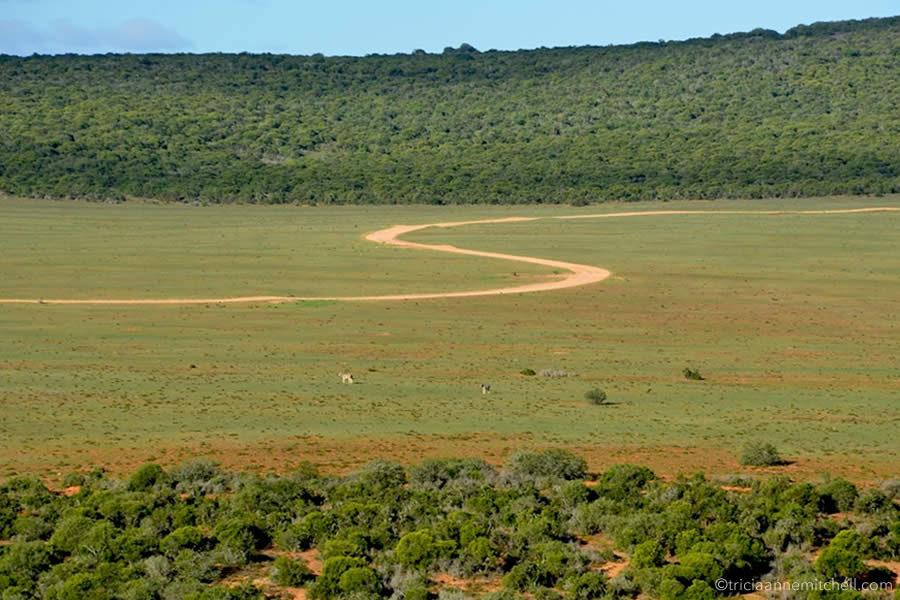
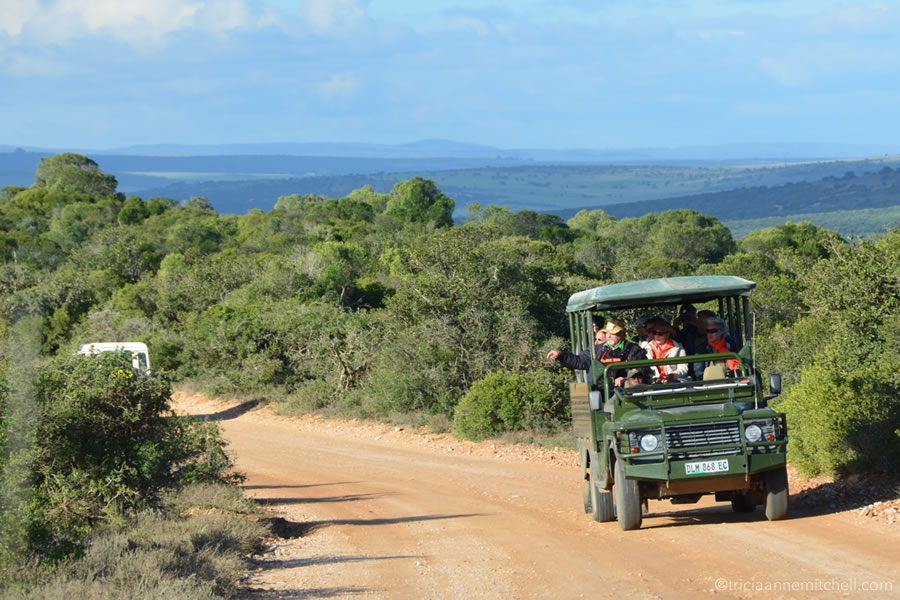
As golden-hour rays of sunshine cast shadows upon South Africa’s Addo Elephant National Park, we remained cautiously optimistic that we’d spot wildlife. Our open-air safari vehicle rolled through the stunning landscape, characterized by sage-colored foliage and terracotta-hued soil. Water droplets sparkled on the vegetation, the result of an earlier rainfall that had quenched Addo’s parched terrain.
Embarking on the late-afternoon game drive moments earlier, the guide cautioned our group that no “Big Five” animal sightings could be guaranteed. The Big Five, a term originally coined by hunters, describes creatures considered the most challenging to hunt: elephants, lions, buffalo, rhinoceroses and leopards.
Despite the ranger’s disclaimer, the animals did emerge. First, we spotted a quartet of kudu. The animals’ antlers resembled curling ribbon twisted around a gift.
A few moments later, the most observant in the group called out, “Look on the right – elephants!”
Like spectators at a tennis match, we craned our necks at breakneck speed. Sure enough, a pair of young bulls were play-fighting, just a few meters from us. Spotting our vehicle, the elephant youth rapidly darted into the bushes, seemingly worried they might be scolded for being mischievous.
Moments later, we encountered a sweet baby elephant cautiously shadowing its mother. While the mama elephant nibbled on foliage, the little one watched as a paparazzi of tourists feverishly snapped away.
Standing only as tall as its mother’s breast, the baby elephant was tiny. The end of its trunk looked like a piece of homemade pasta. Given the Italian penchant for giving regional pastas descriptive names, I wouldn’t be surprised if a tube-shaped pasta had already been dubbed ‘little elephant trunk’.
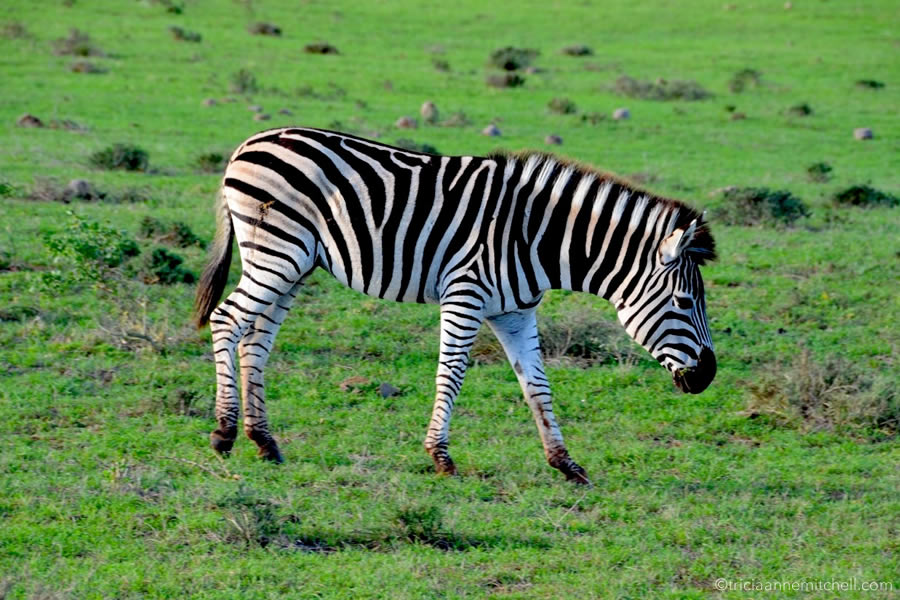
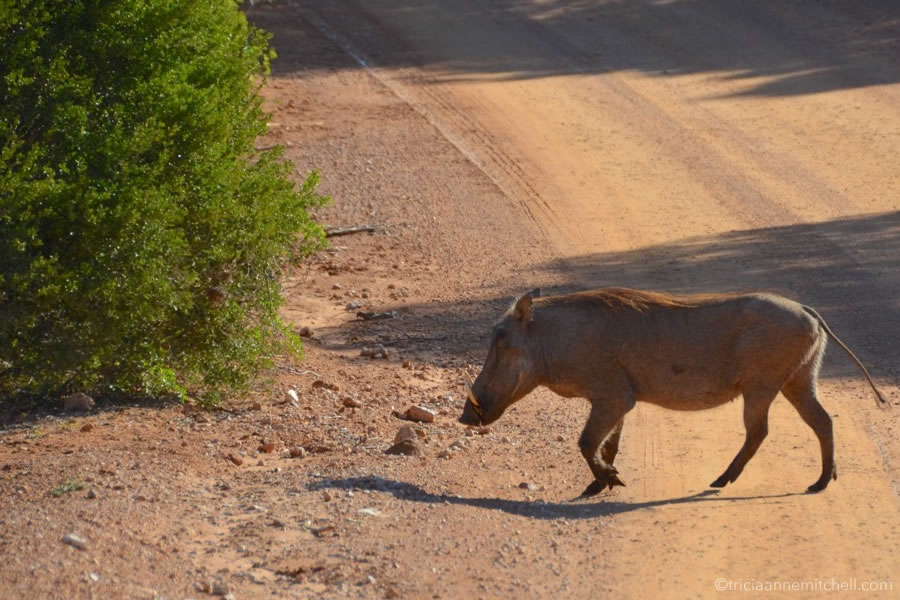
Other sightings included warthogs, elands, a zebra, a spotted hyena, as well as a pride of lions lounging confidently in the distance. There were signs of smaller life too – everything from the protected flightless dung beetle, to massive termite mounds.
Not surprisingly, as life’s best moments often do, the safari passed quickly, and we found ourselves back at the park’s welcome center. Wandering down a flight of stairs leading to a wooden observation deck, I spotted several adult elephants drinking at a watering hole. The lighting was warm, and the elephants appeared relaxed, despite a handful of visitors watching them from afar.
With that special scene forever etched in my memory, my Addo safari was complete. It’s no wonder why the word “safari” originally meant ‘journey’.






Video of this Experience:
Where in the World?
Planning Pointers:
- Addo Elephant National Park is one of South Africa’s largest national parks, and it’s also a sanctuary success story. In the 1930s it was established to protect just 11 elephants, and today it’s home to more than 600! It’s located in the Eastern Cape province, roughly a 40-minute drive from the city of Port Elizabeth. This Addo map gives an overview of the site, and even includes an animal-sighting game.
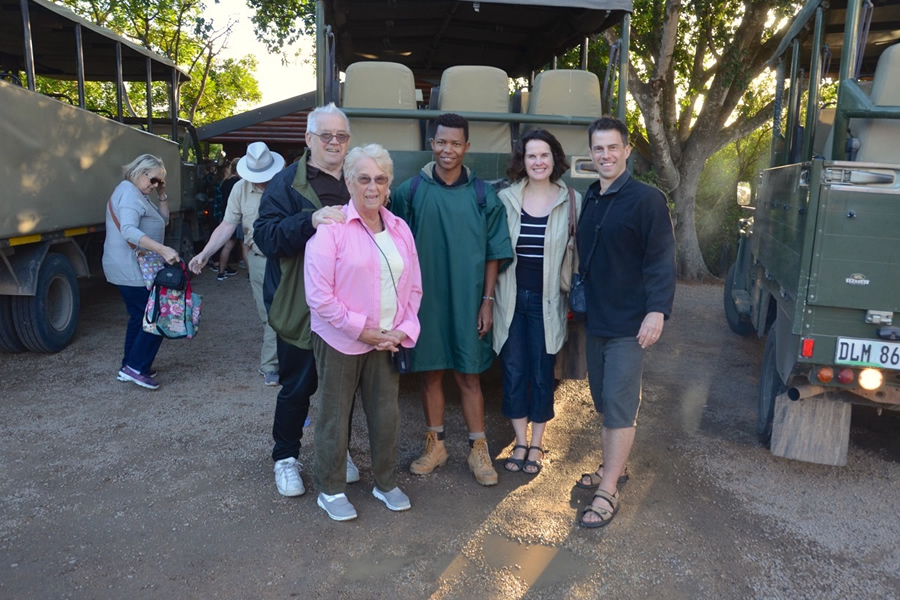
- It’s possible to do a self drive through Addo, but we joined an official guide for this sunset tour. Here are Addo entry fees and game drive costs.
- In the past decade, it’s estimated that the global elephant population has decreased by about 60%. From avoiding organizations that exploit elephants, to refraining from buying ivory, here are things you can do to help elephants.
- Visit the Great Elephant Census, or this list of elephant advocates for more information.
Photography & text © Tricia A. Mitchell. All rights reserved. My husband, Shawn, created the video.


Leave a reply to the eternal traveller Cancel reply