
Since ancient times, the Mediterranean island of Malta has been renowned for its splendid honey. There’s even some speculation that the country’s name has its origins in honey. The ancient Greeks, for example, referred to Malta as “Melite” (Μελίτη), which translates to “honey sweet.” And during the Roman period, the island was called “Melita.” In Latin, “mel” means honey.
It’s believed that the Phoenicians first introduced domesticated beekeeping to Malta. The Phoenicians, known for their maritime trade and sailing know-how, settled in Malta around 800 BCE.
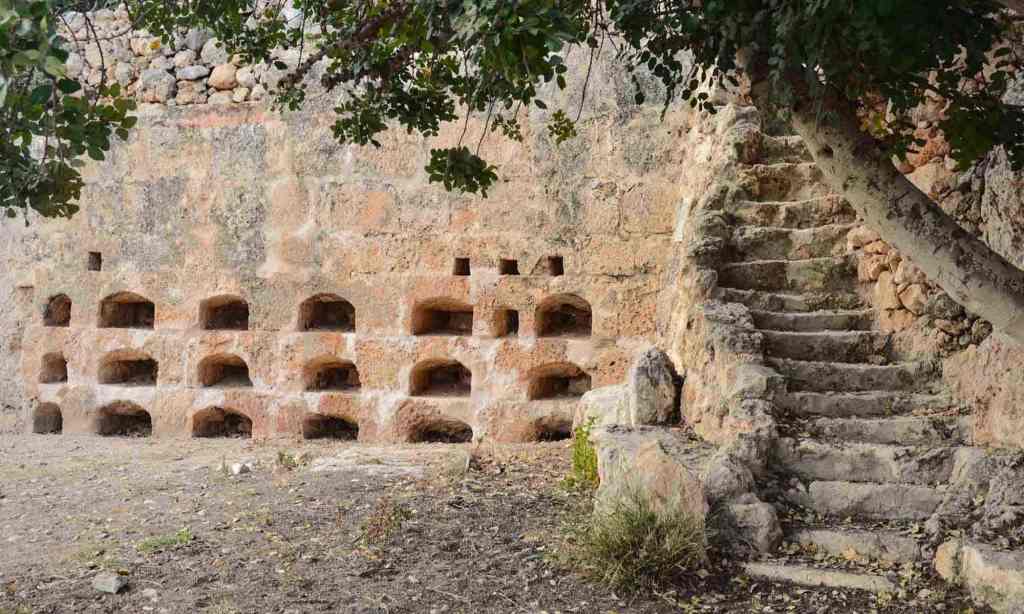
Apiaries are places where bees are kept for honey production. Remarkably, several ancient apiaries still exist in Malta. Originally, Malta’s bees would’ve been kept in earthenware jars.
Some historians speculate that Malta’s existing apiaries might date back to the time of the Carthaginians or the Romans, who came after the Phoenicians. However, other apiaries on the island are considerably newer.
The apiary pictured here is located on the Xemxija Heritage Trail in northern Malta. This apiary, as well as others in the area, might have served varying functions during different time periods. First, it could have been used as a burial site. Later, it might have been transformed into human dwellings, an animal shelter, and even a WWII-era bomb shelter.
Other points of interest on the fascinating Xemxija Heritage Trail include:
- prehistoric cart ruts
- once-inhabited caves
- a centuries-old carob tree
- tombs
- Roman baths
- structures that were used by farmers in more recent times.
For more details, see this Xemxija Heritage Trail brochure, written by the Malta Tourism Authority.
Since we lived in Valletta, Malta for one year, Shawn and I visited the Xemxija Heritage Trail several times. Midway through our 12-month stay, we were even invited to a Maltese beekeeper’s apiary to see how honey is produced. The honey made from autumn flora was our favorite, for sure!
When it came time to bid farewell to Malta, we left the island with a greater appreciation for bees and the role they play in pollinating our food. By some accounts, they pollinate about 80% of crops!
Where in the World?
Photography & text © Tricia A. Mitchell. All Rights Reserved.


Leave a reply to dzidzoblagogee Cancel reply