

Portugal is a feast for both the stomach and the eyes. It’s a land of irresistible port wine, trayfuls of crispy and creamy pasteis de nata (custard tarts), and buildings adorned with colorful ceramic tiles called azulejos.
When you visit Portugal, you’ll spot azulejos on the outsides and insides of many different types of buildings, including railway stations, churches, palaces, and even everyday homes.
Etymologically speaking, the name “azulejo” is believed to have its origins in the Arabic word, az-zulayj, which translates to “polished stone.” Originally, these vibrant tiles were created to mimic the mosaics that were perfected in the ancient Roman and Byzantine worlds.
Portugal’s eye-catching tiles are reminiscent of the colorful zellige that you’ll see in Morocco (I can’t help but think of Marrakech’s Bahia Palace) as well as in Spain’s Moorish architecture (especially Granada’s Alhambra).
In the header image above, pedestrians in Porto stroll by a photogenic church called the Capela das Almas (Chapel of Souls). The people are seemingly unaware of the fabulous splash of blue and white tiles alongside the sidewalk. Meanwhile, across the street, a small group of travelers (ourselves included!) were well aware of these enchanting azulejos.
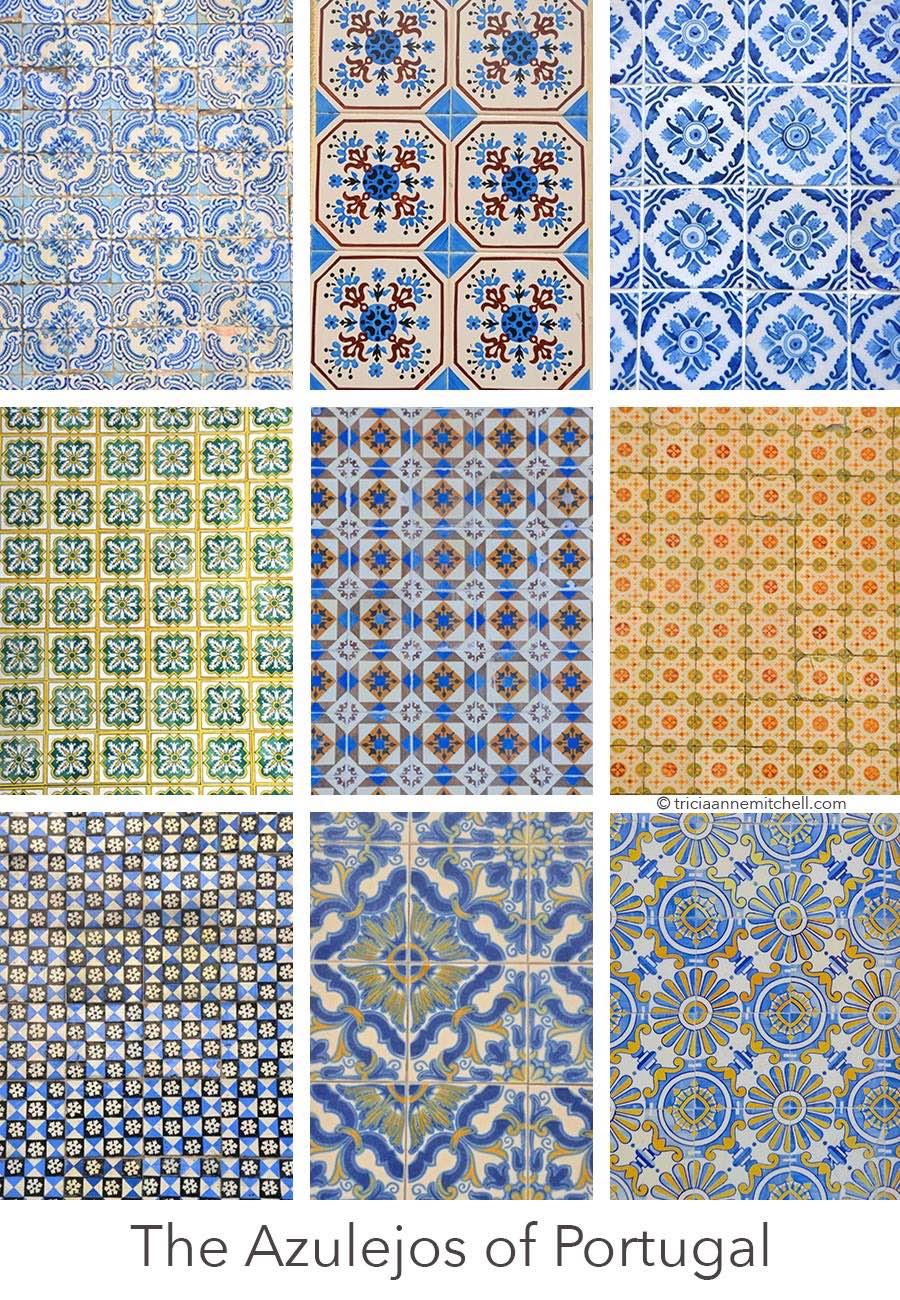
For my azulejo collage, I’ve rounded up tiles from Porto, Coimbra, and Lisbon’s more simple buildings. Still, I think the colors and patterns are extraordinary.
Wouldn’t it be fun to have some of these beauties adorning your own home — perhaps in a garden courtyard or as a kitchen splashback?
Further Resources:
- The Best Places to See Azulejo Tiles in Porto (Portoalities – Discover Porto blog)
- The Art of Crafting Portuguese Tiles (Great Big Story video on YouTube)
- Museu Nacional do Azulejo (National Tile Museum in Lisbon)
Where in the World?
Photography & text © Tricia A. Mitchell. All Rights Reserved.


Leave a reply to Bobbi Cancel reply