
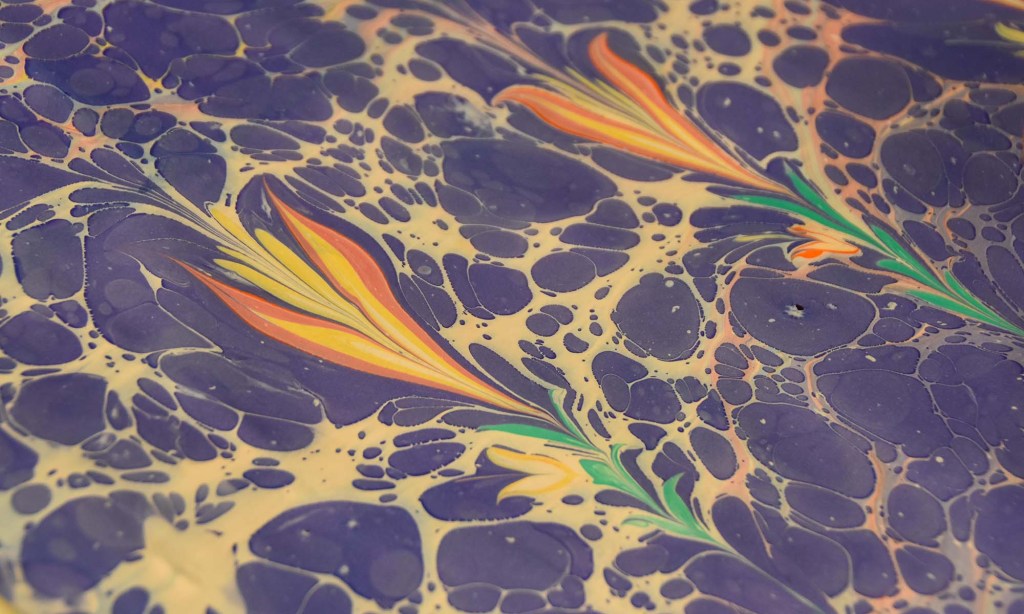
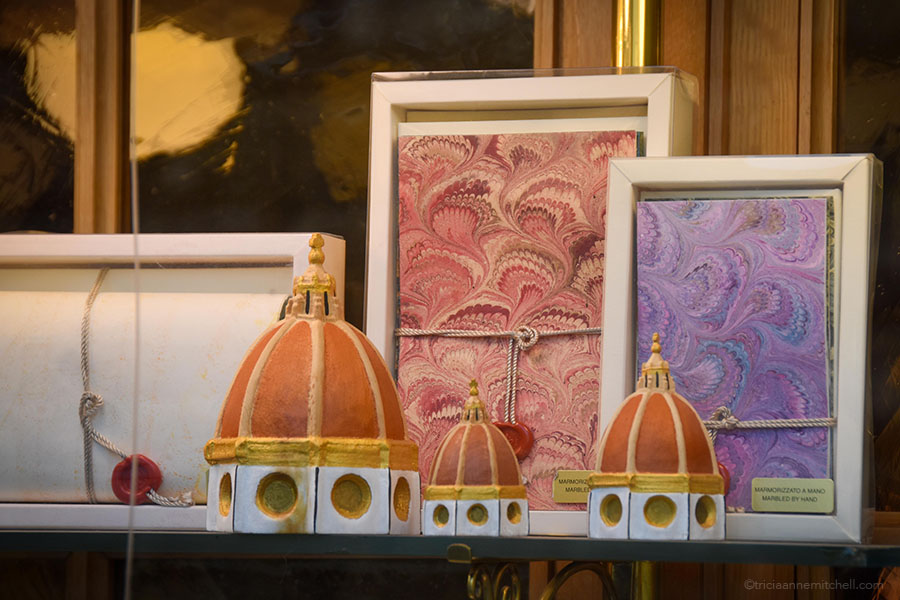
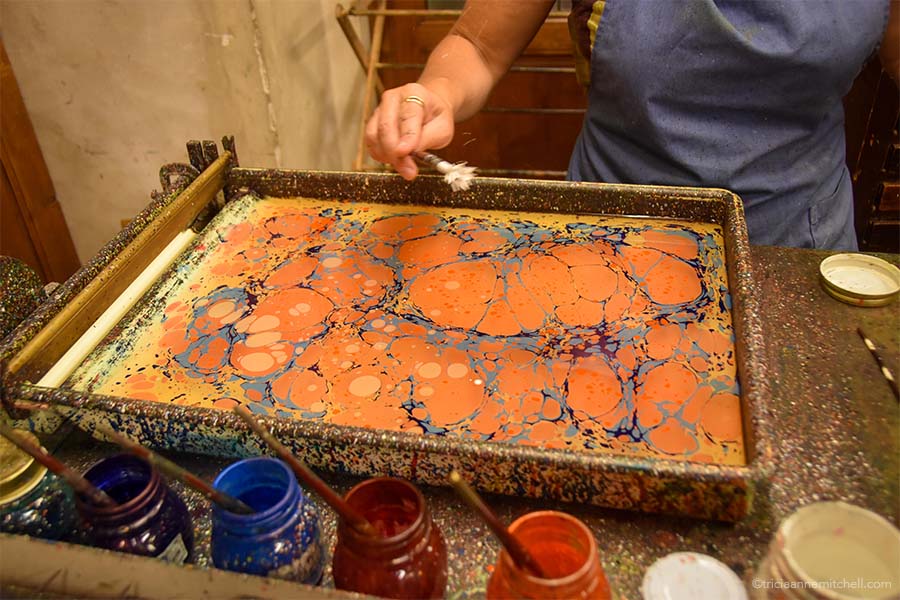
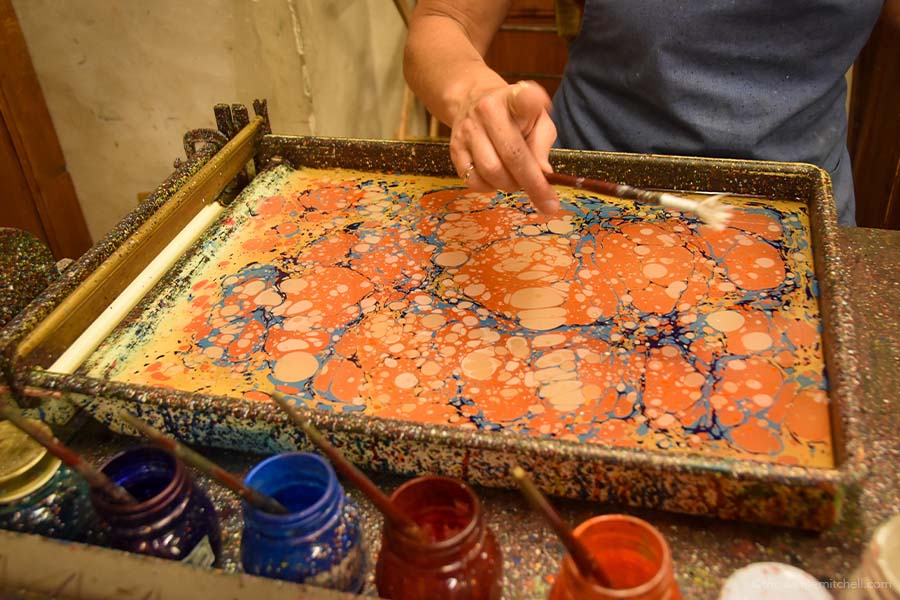
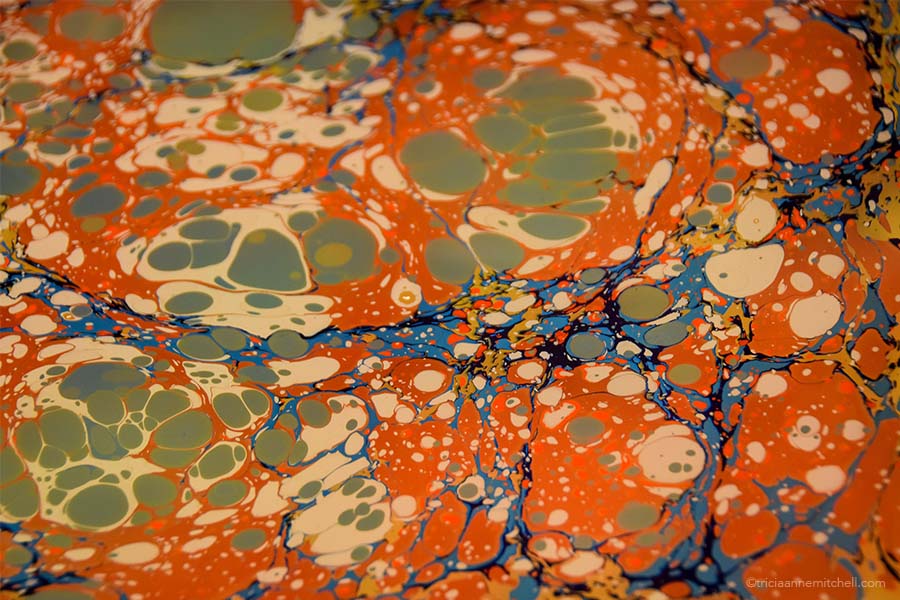
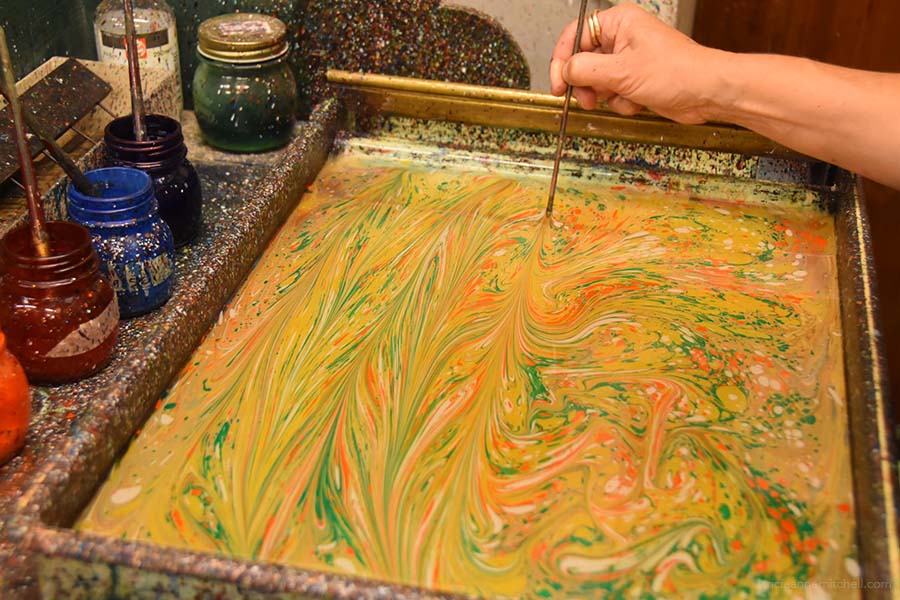
The art of paper marbling is mesmerizing. An artisan applies droplets of paint to a small pool of water. The colors appear to gracefully dance upon the surface of the water, but these individual splotches of paint respect the neighboring colors’ boundaries. As the artisan adds more and more colors, this dance continues. Finally, when the artisan feels the effect is just right, she gently places a piece of paper on the surface of the water, and voilà, the art is transformed from an ephemeral state to one that’s everlasting.
I first held a piece of marbled paper in my hands when I was a child. My mother liked stationery decorated with this effect, and so too, did some family and friends who mailed us letters. I’m not sure when precisely my love of stationery and collectible paper items was born. However, I remember trying to hand-decorate stationery when I was a child. (The attempts were admirable, but lacking in sophistication!)
As I grew older, I also collected lacy vintage valentines, trade cards (stylish advertisements), and post cards from the 19th and 20th centuries. Decades ago and even now, I still love sending and receiving hand-written notes. Of course, since almost everything is now digital, paper correspondence is more and more of a rarity. Still, I try to strike a happy medium.
With that said, it comes as no surprise that during our recent trip to Florence — a city long known for its handmade marbled paper — I was eager to learn more about this elegant and historic technique.
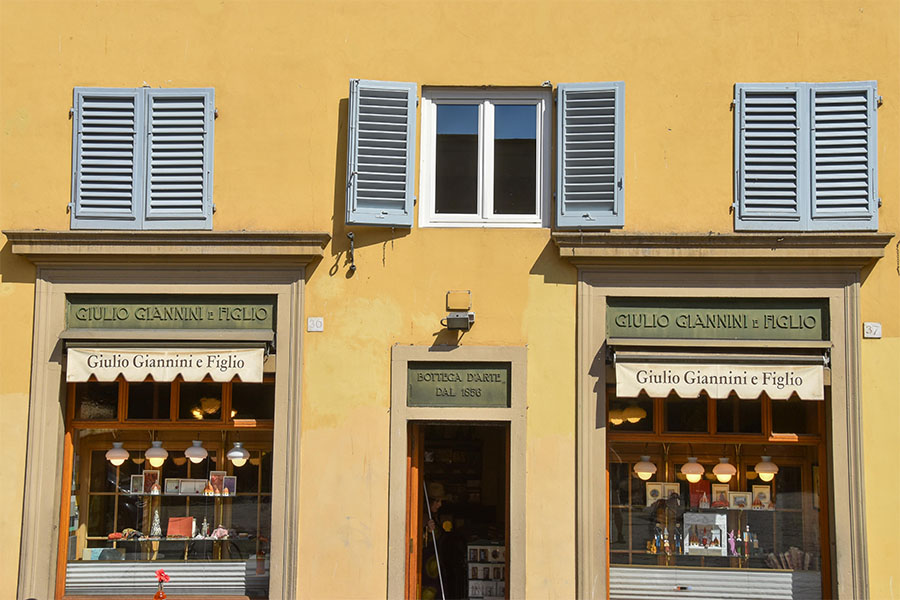
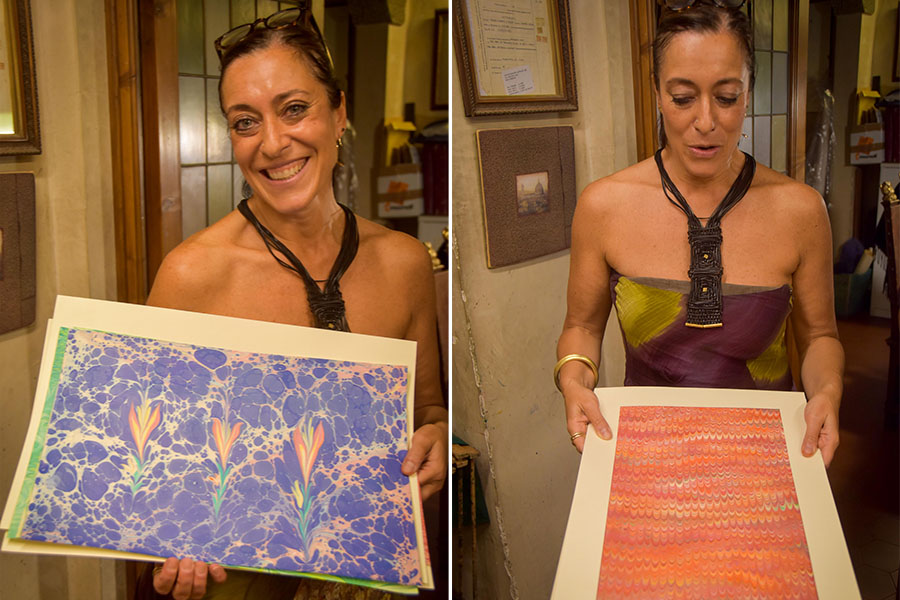
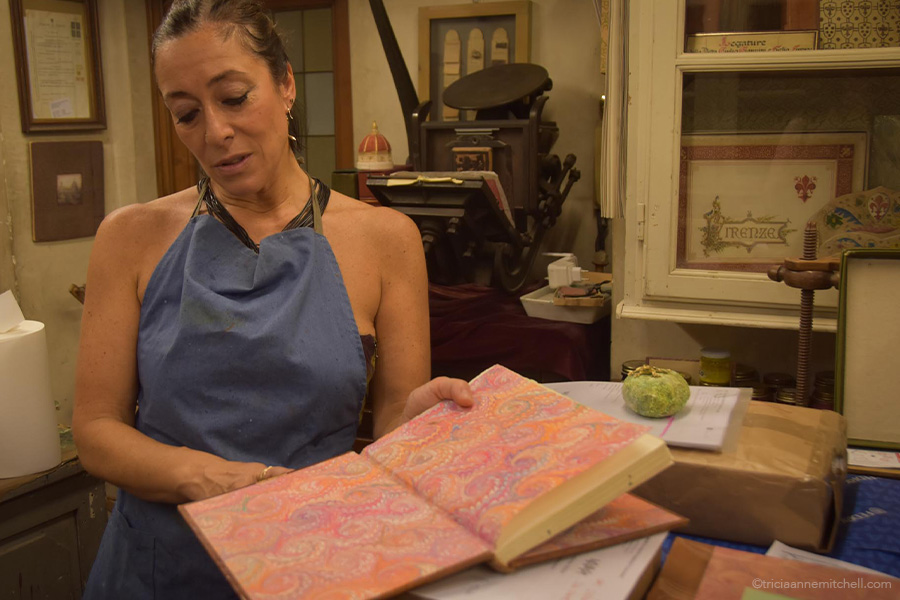
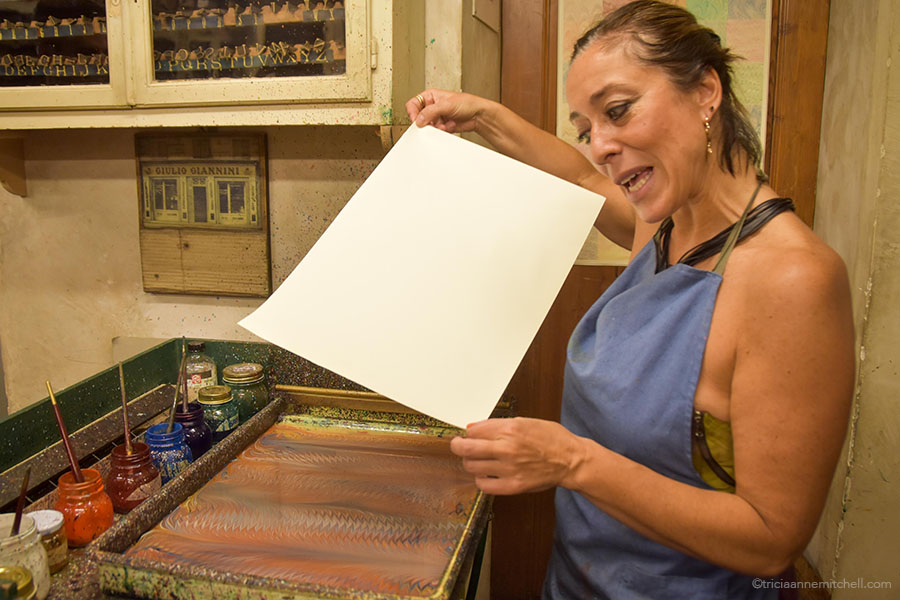
One sun-drenched afternoon, Shawn and I visited Giulio Giannini & Figlio, Florence’s oldest marbled-paper maker. There, we met Maria Giannini, the 6th-generation artisan who runs this iconic Florentine business.
Over the course of a few hours, Maria shared the story of her business and explained how the items in her boutique were crafted. Later, she took us to the workshop in the back of the boutique where she demonstrated how to marble paper. The result? I was spellbound and utterly determined to learn more about marbling. Someday, I also hope to get my own materials and give this classic technique a whirl.
What follows is Maria’s story, a brief history of paper marbling, and a peek at how marbled paper is handmade in Florence.
The History of Paper Marbling
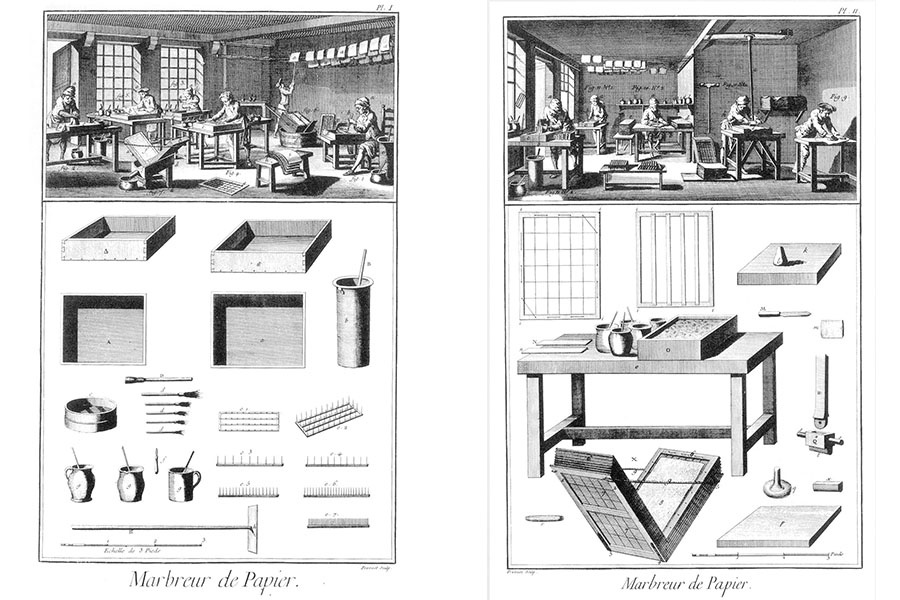
Paper marbling techniques have origins that go back centuries, perhaps even more than one thousand years. Historians aren’t sure where the earliest versions of the art originated, nor how much exchanging of ideas took place.
In Japan, a paper decorating technique called Suminagashi (墨流し) — literally “floating ink” — has likely existed since at least the 10th century. Some scholars think that an art similar to marbling was also practiced in China in the 14th century and perhaps even earlier.
As time went on, artists throughout Central Asia and Persia practiced similar techniques, too. In Turkey, the craft came to be known as Ebru, whereas in Persia it was called Abri.
By the 16th century, the technique had also made its way to Europe, in particular Italy, where it’s called Marmorizzazione, and France where it’s known as Papier marbré.
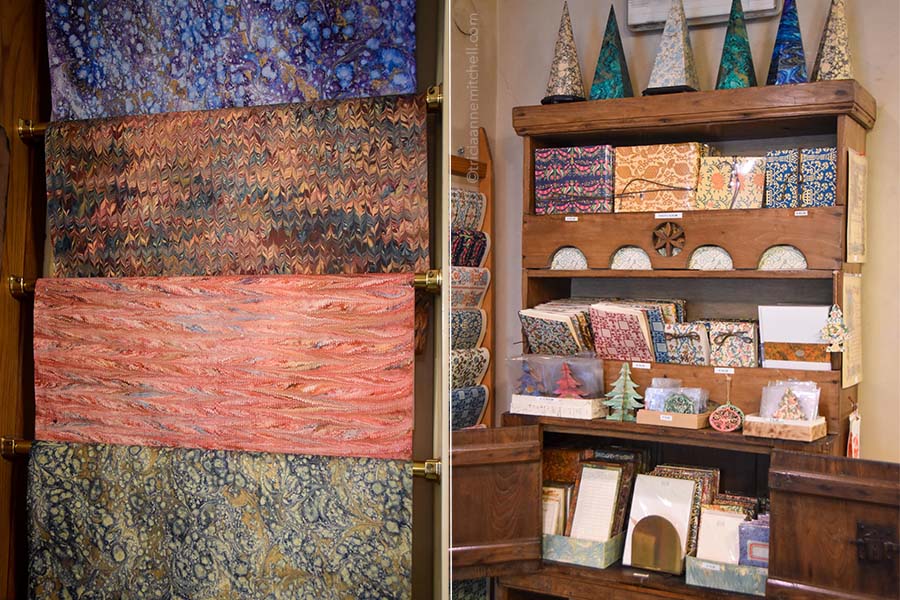
Over time, it become popular to use marbled paper as bookcovers and endpapers. The marbleized papers were even sought after to line bookshelves and furniture drawers. Beyond its aesthetic appeal, marbled paper also had a more practical application since it helped guard against forgeries.

Watch a Video of This Experience
Visiting Giulio Giannini & Figlio
Since 1856, the Giannini family has been crafting paper treasures for a wide audience, including Florence residents, popes and queens, and generations of tourists.
In English, the shop’s Italian name, Giulio Giannini & Figlio, translates to “Giulio Giannini & Son” — a nod to one of the shop’s earlier owners, Giulio, Sr., and his son, Guido, Sr. However, 165 years after its founding, the shop — Florence’s oldest marbled-paper maker — has a daughter, and not a son, at its helm.
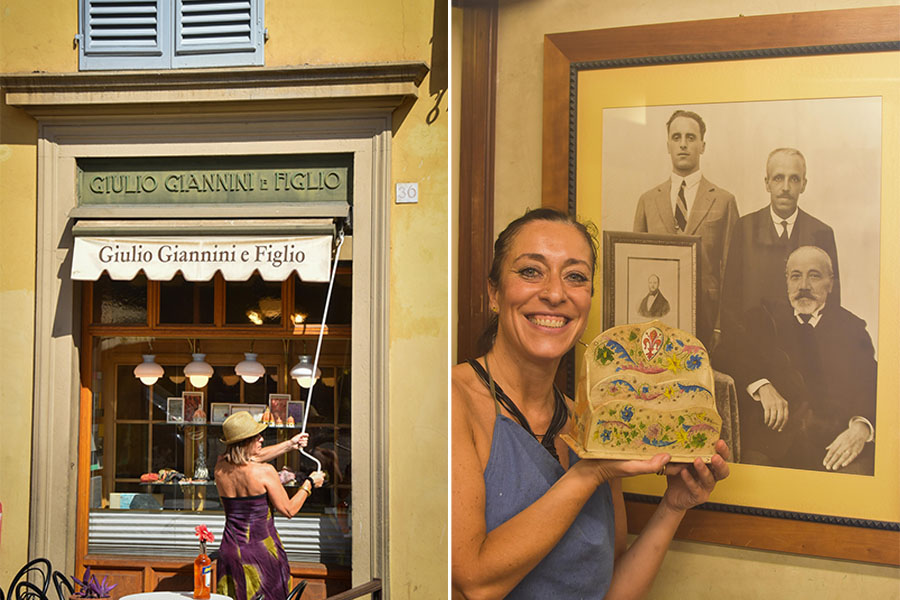
The current owner, Maria Giannini, is a sixth-generation master artist, who like her Giannini ancestors before her, has kept this historic workshop in Florence’s Oltrano district thriving.
Maria is a classic example of an autodidact. Though she descends from a long line of Florentine bookbinders and hand-decorated paper masters, much of what she’s learned about the business, she’s taught herself.
When she was 13, Maria started working inside the family shop during the summertime “for fun” and to earn a bit of money. She says that some of her elders at the shop were too busy to teach her. As a result, she did everything she could to soak up knowledge from a variety of sources.
“I experimented. I listened and grabbed from here and there,” she says, as she explained how she learned to perfect various paper-decorating techniques.
“I even learned English by listening to the young Czech women who [sometimes] worked in the shop,” Maria says. With a smile, she adds that she once developed a bit of a Czech accent as a result.
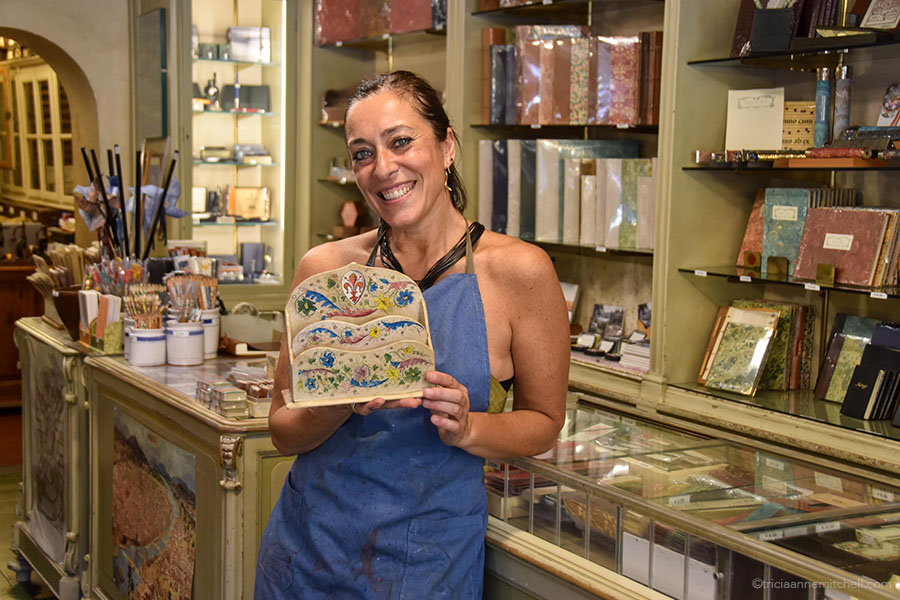
Gesturing towards a decorative desk organizer from about 1902, Maria mentioned that her great-grandmother was a talented artist herself.
“My great-grandmother made this,” Maria said while holding the weathered organizer adorned with a fleur-de-lys symbol.
“However, due to customs of the time, she was not allowed to work in the front of the shop, nor was she allowed to sign any works that she decorated,” Maria adds.
I find it fitting that Maria’s great-grandmother’s name was also Maria. I wonder what the elder Maria would think of the fact that her great-granddaughter is now the owner of the shop.
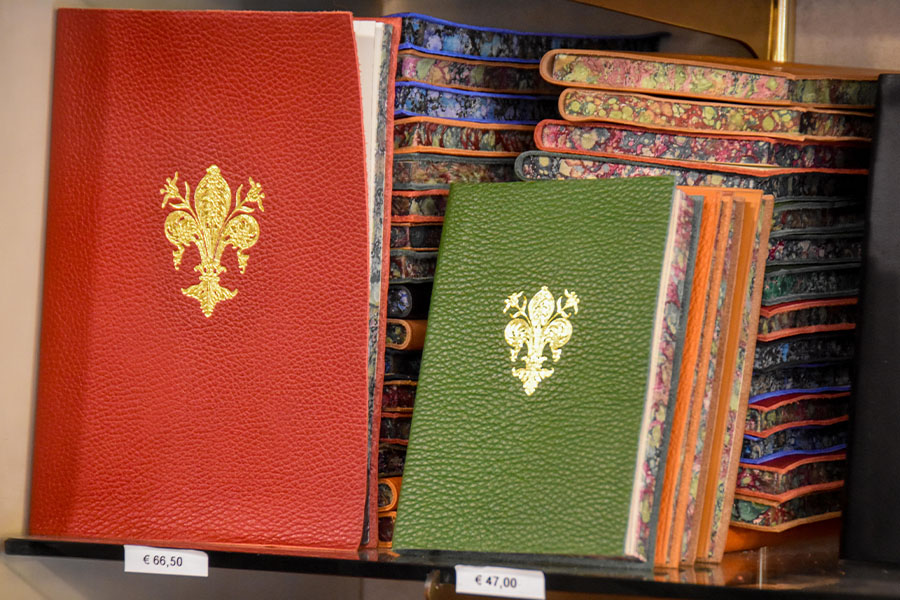
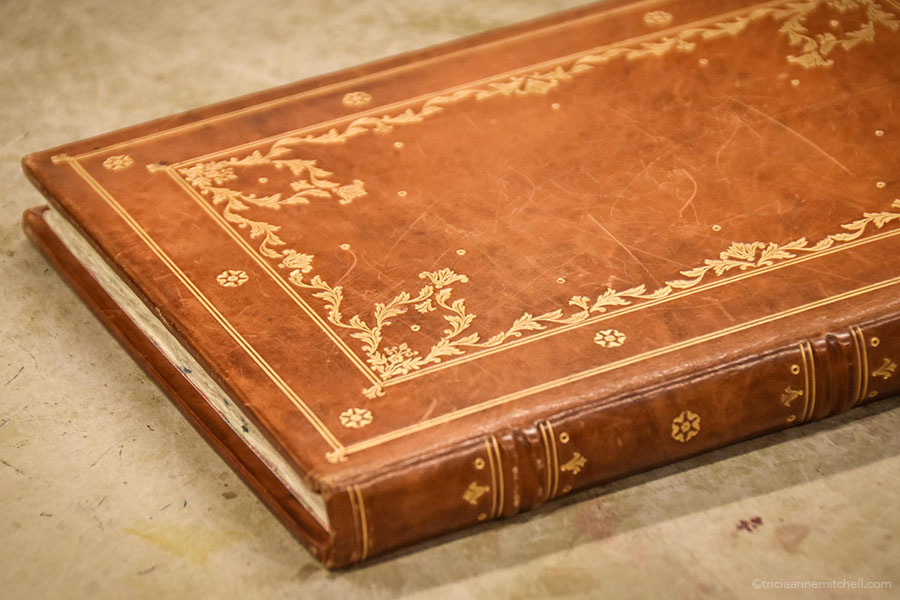
In the 19th century, Giulio Giannini & Figlio became well known for its bookbinding services, something Maria’s uncle, Guido, Jr., still does today. In particular, the workshop specializes in limited editions of books, and binding restoration for collectors and libraries. They’ve also collaborated with artists, writers, and publishing companies to design the entire aesthetic of books — choosing everything from paper type to the look of the book’s cover.
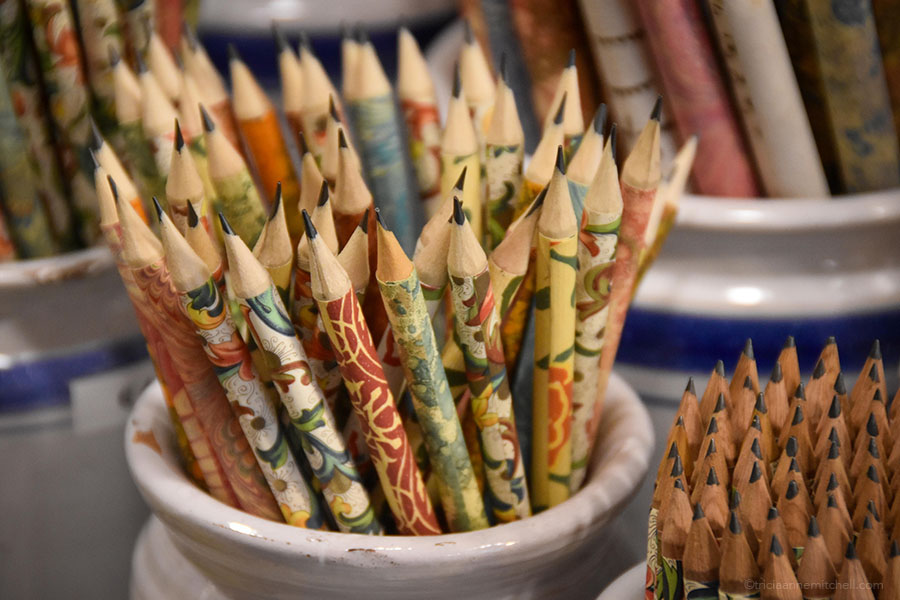
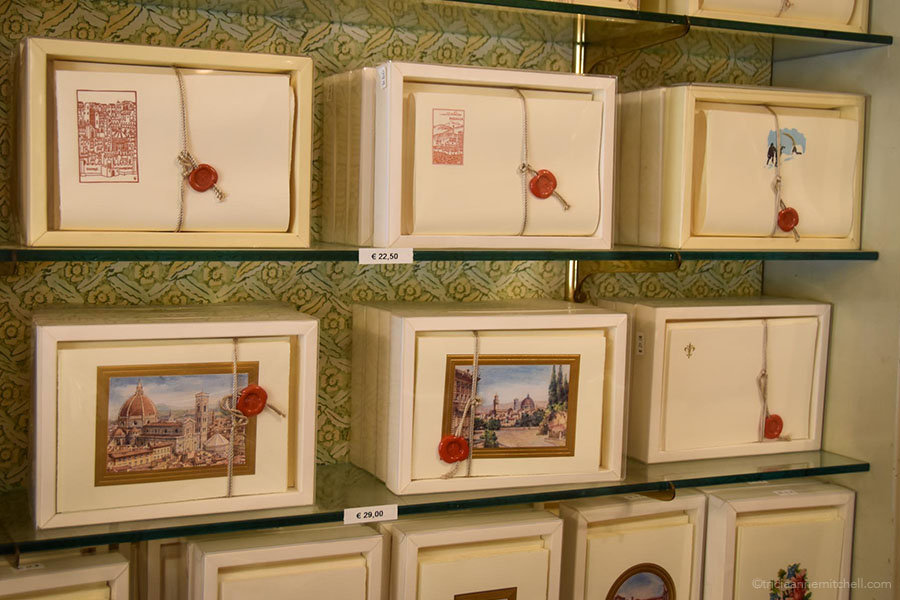
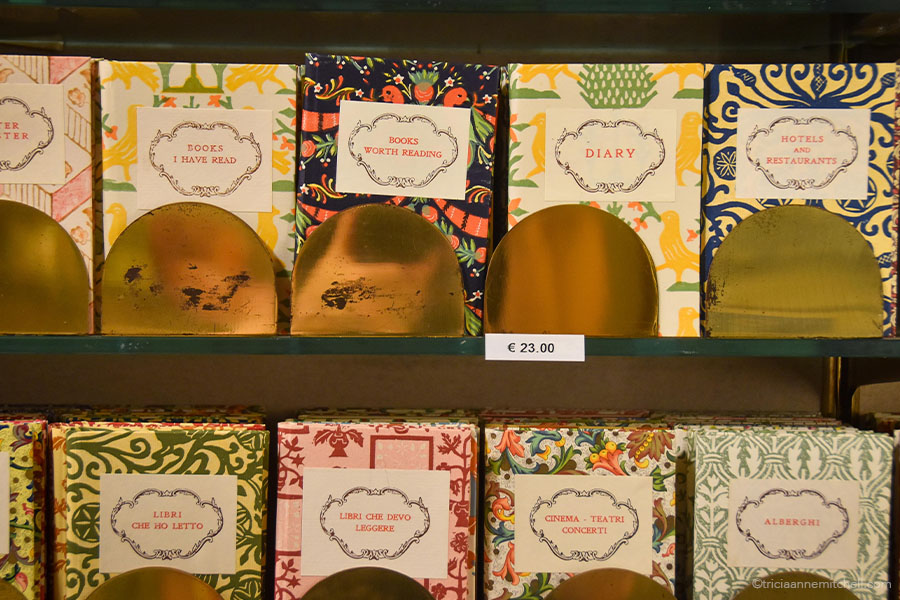
Aside from the bookbinding, Maria essentially runs all aspects of the business. She is also a master paper marbler, who makes sophisticated decorated paper for a variety of products. Like her ancestors before her, Maria’s decorated paper has graced leather books, greeting cards, and stationery.
More recently, she’s innovated by creating marbled designs to adorn scarves, face masks, and phone covers. (To get a feel for the shop’s product line, have a peek at the Giannini catalog.) Maria has also collaborated with other businesses such as S’well (to design reusable water bottles with a marbled design), and a California winery (to craft unique wine labels that reflect the wine’s special characteristics).
Beyond her hand-made marbled paper creations, Maria also dedicates time to safeguarding relics from the past.
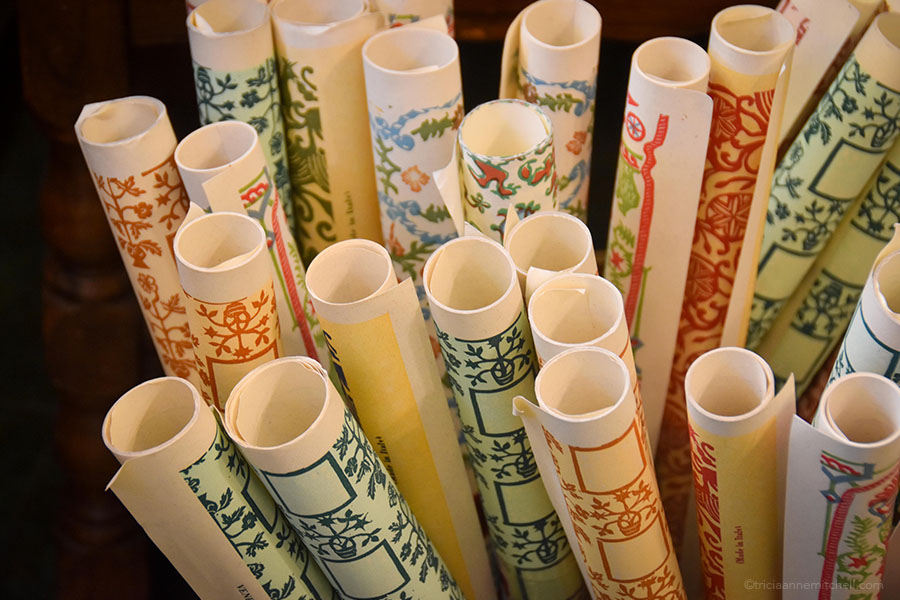
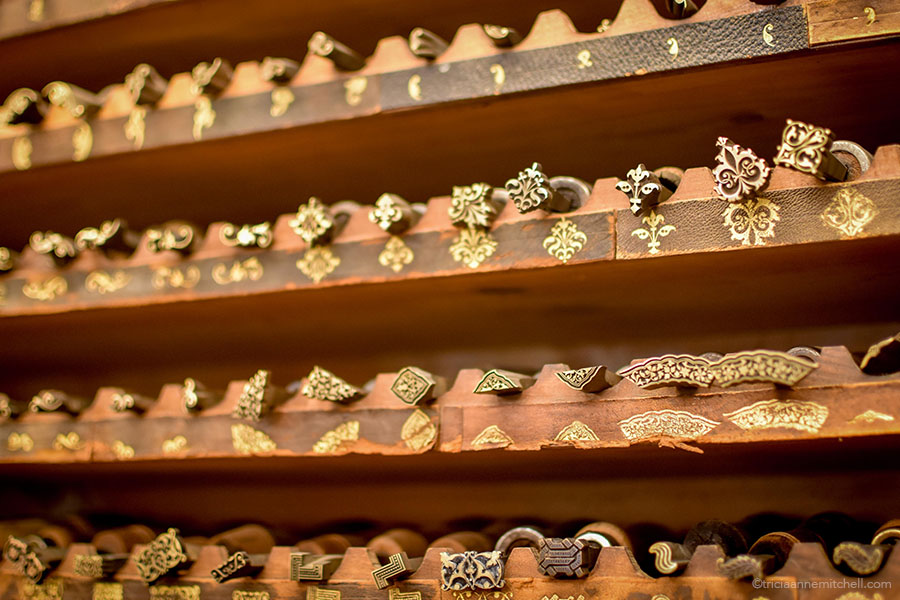
Using stamps from the shop’s vast and historic collection, Maria has designed a variety of products. They include monogrammed jewelry as well as paper that’s adorned with traditional Italian folk designs. For several years, she’s been working on a digital archive of the shop’s 1,000 or so bronze stamps. Maria also hopes to bring the shop’s designs to other markets.
“This is my moment. I feel a responsibility to preserve, to change, to go further. I’m very conscious of that. I have lots of ideas,” she said.
“This is my moment. I feel a responsibility to preserve, to change, to go further. I’m very conscious of that. I have lots of ideas.”
– Maria Giannini



How Handmade Marbled Paper is Crafted, Step by Step:
Making marbled paper is both an art and a science.
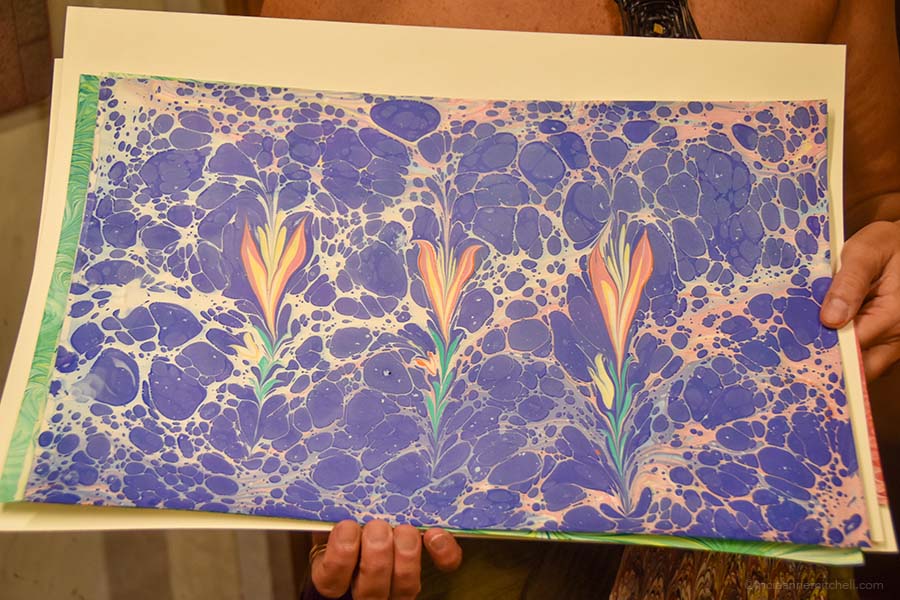
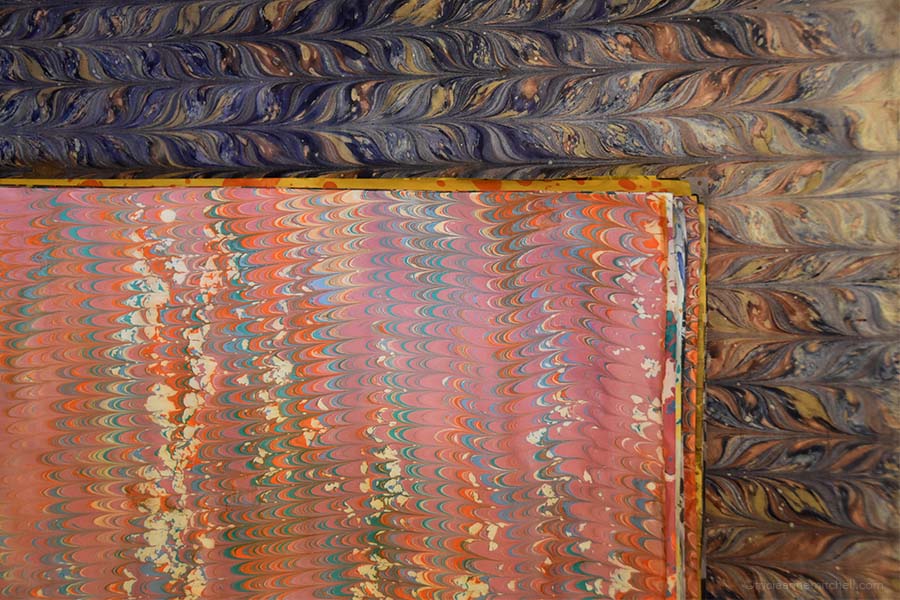
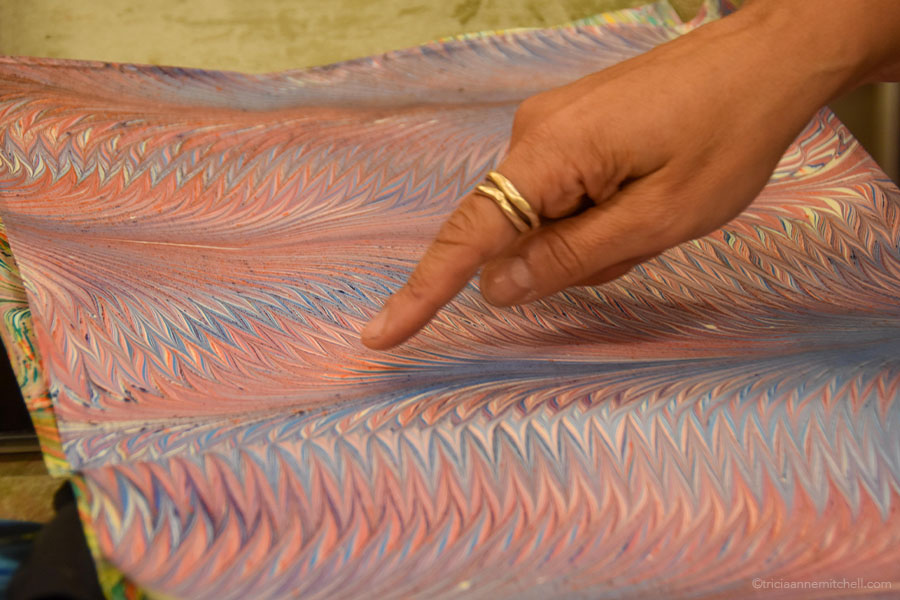
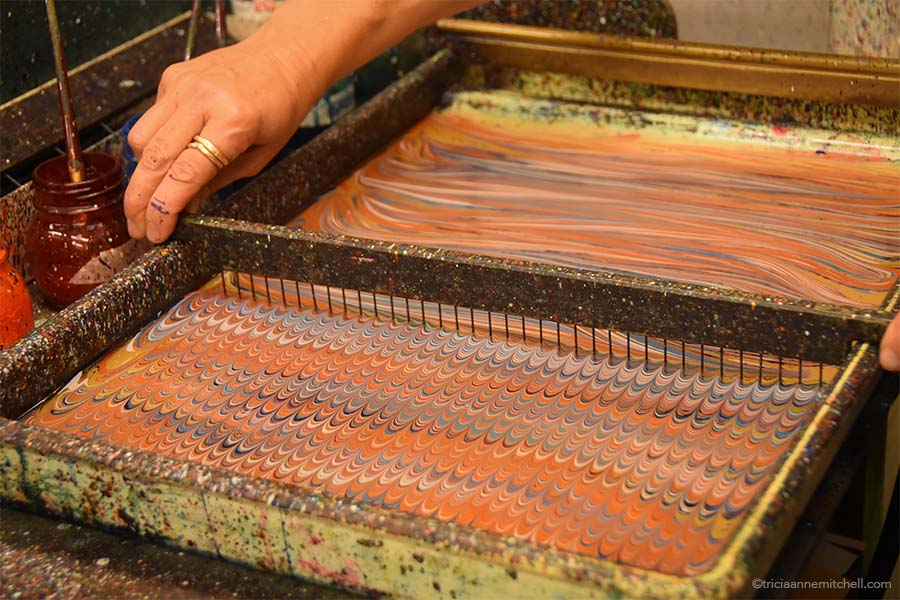
On one hand, you have the artistic elements — the colors and patterns. Some patterns have become well-known among artists in different parts of the world. They have whimsical names like peacock, bouquet, snail (or French curl), flame, feather, double comb, stone, tiger, and more. Master artisans, as well as hobbyists worldwide, have also innovated and created their own patterns. Even though this is a centuries-old craft, there are still infinite opportunities to innovate!
Scientifically speaking, there’s chemistry involved, too. Fluctuating temperatures and humidity levels can impact how the paint droplets interact with the liquid bath on which the paint floats (called “size”). Putting too much paint into the size might result in paint sinking to the bottom of the tray. And if you don’t properly prepare the paper in advance, a carefully crafted design might briefly imprint onto the paper, only to slide off it in a heartbreaking fashion.
This is a basic peek at the materials and steps involved to marble paper, however, there are variations, of course.
Materials:
- tray
- size – a gelatinous liquid made with water and powdered carrageenan (carrageenan is a type of seaweed)
- ox gall – a surfactant that is sometimes used to help the paint float on the surface
- alum
- sponge
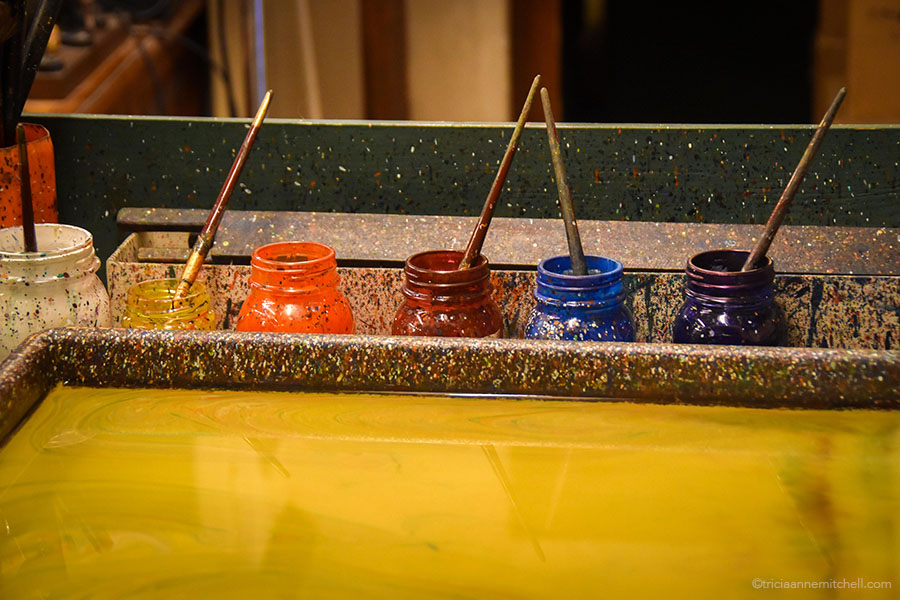
- pigments mixed with distilled water
- paint containers
- cotton paper
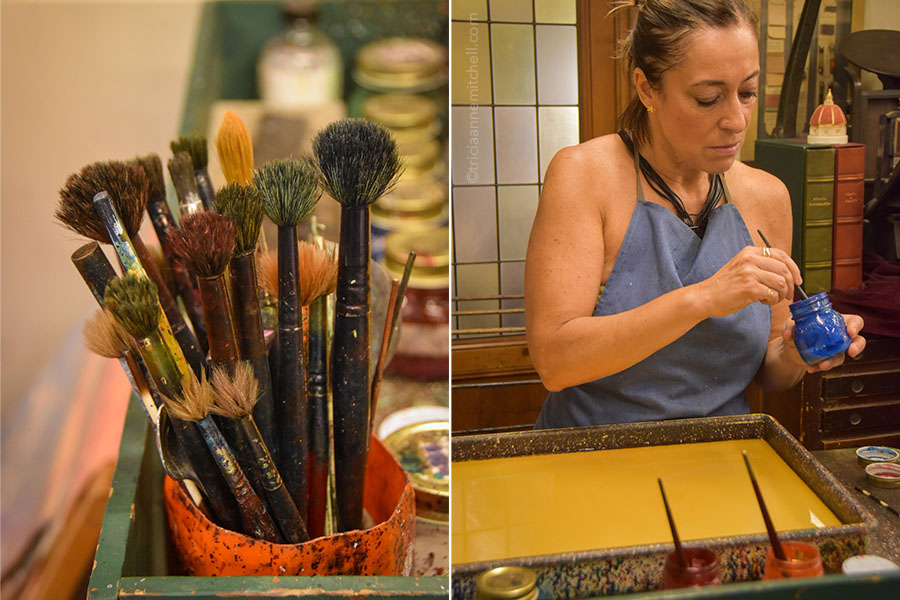
- paintbrushes / spatter brushes
- stylus
- combs of varying sizes (fine-toothed to wide-spaced width)
- rake tool
- scraper stick
Process:
- Preparation of the size: The artisan prepares the liquid on which the paint will float. This is usually done one day in advance by mixing the carrageenan powder and water, then bringing them to a boil. Once the liquid has cooled, the artisan pours it through a sieve and puts it into a jug to set overnight.
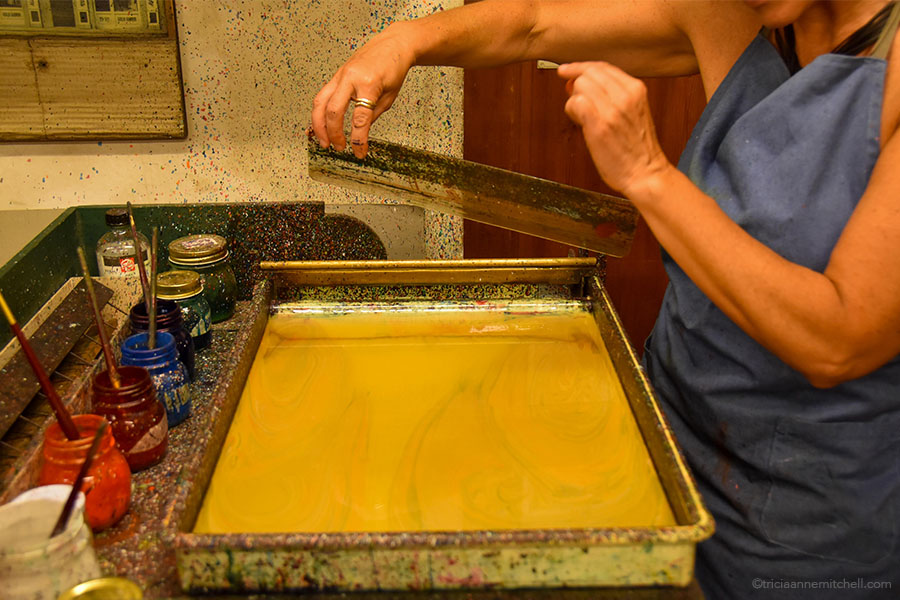
- Filling the tray with size: Next, the artisan pours the size into a tray.
- Testing the colors to ensure the consistency is right: Before starting to create a design, the artisan tests the colors to ensure they spread out and float properly. At this stage, a few drops of ox gall might be added to the colors.
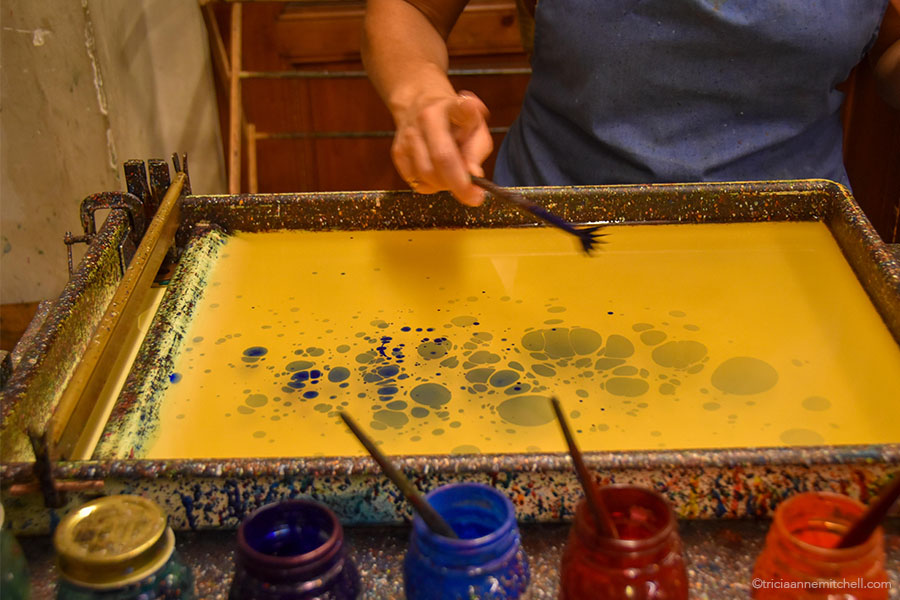
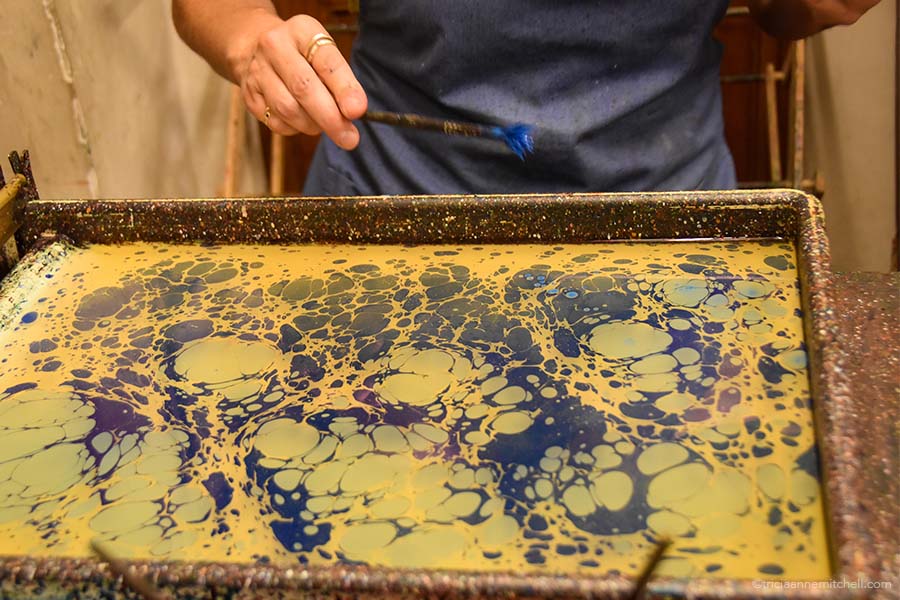
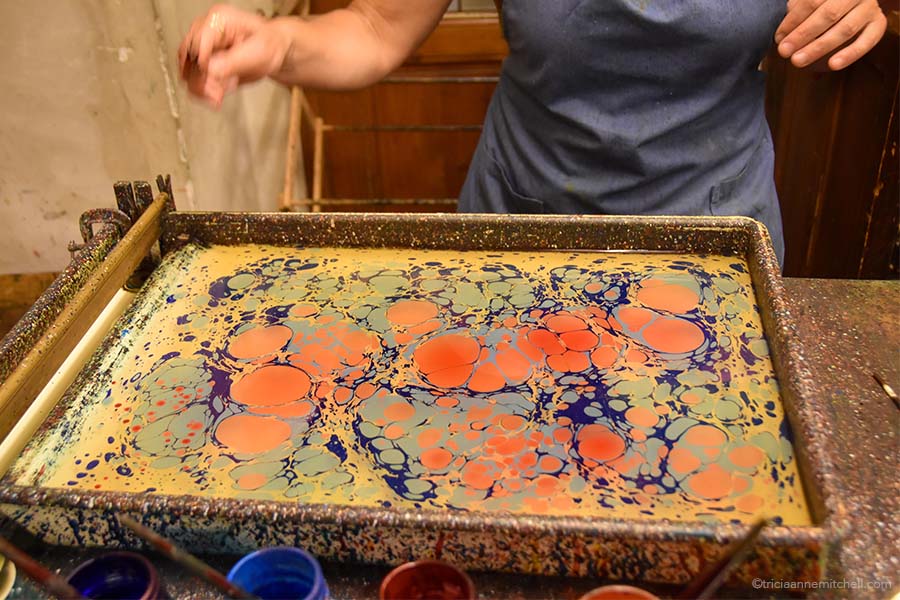
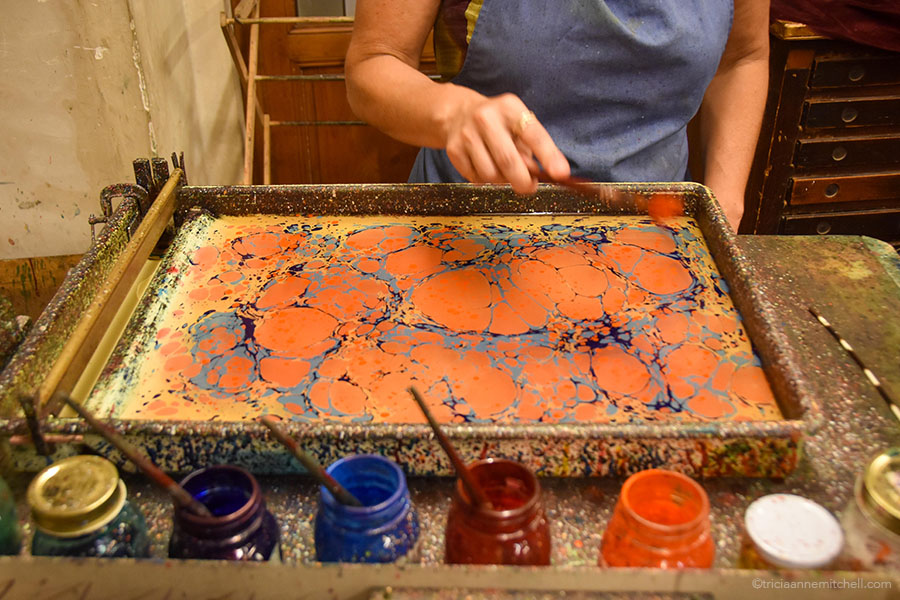
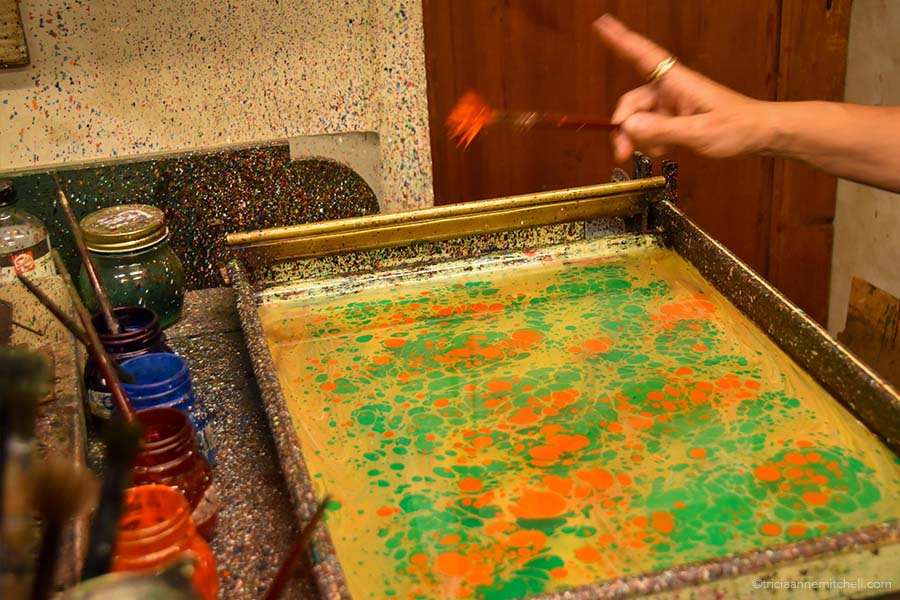
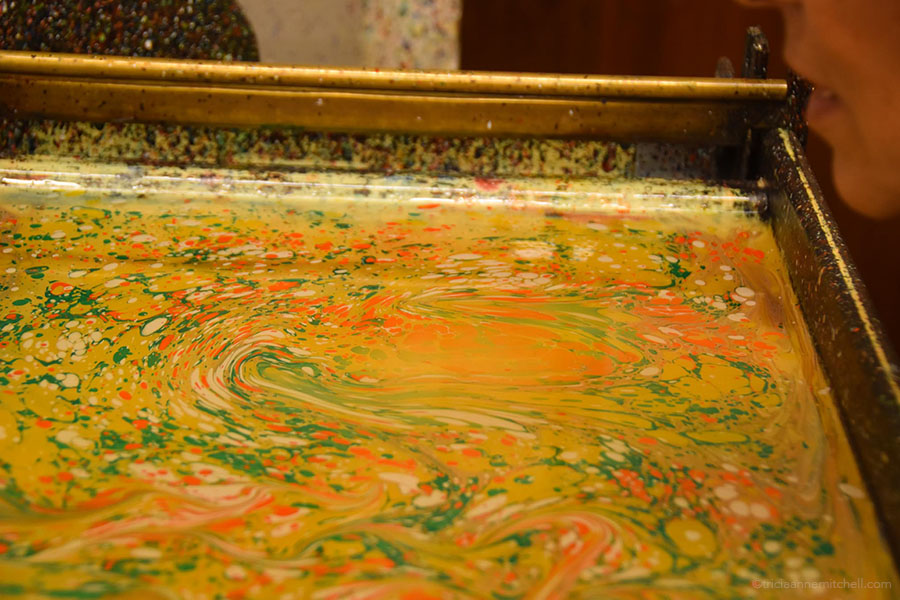
- Making the pattern: Using paintbrushes or spatter brushes, the artisan thoughtfully drops a series of colors onto the size. The paint will appear to “dance” on the water. The artisan might also use tools such as combs, rakes, a stylus, and even her breath to manipulate the colors to get the desired effect.
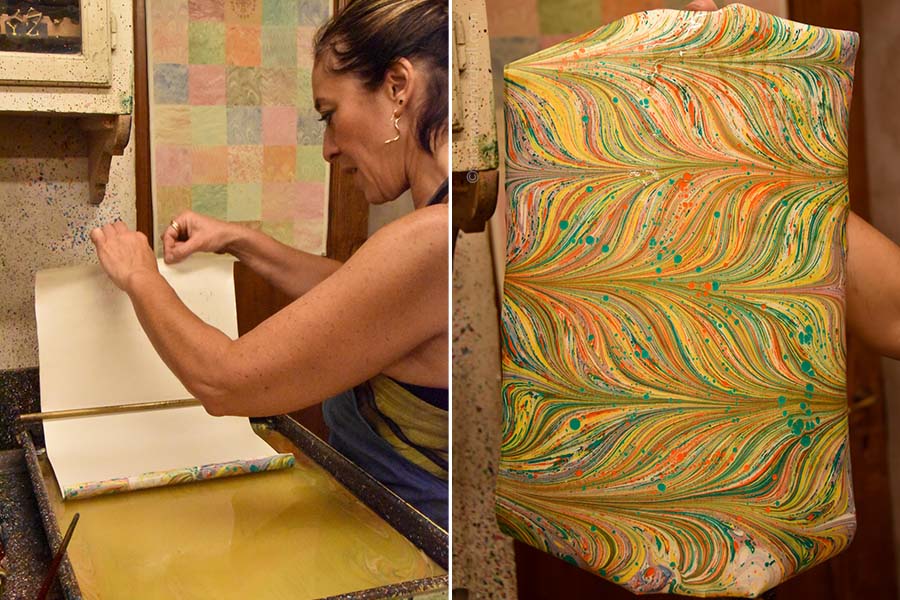
- Transferring the design to paper: The artisan carefully places a sheet of paper (that’s been pre-treated with an alum solution) onto the surface of the water. She allows the paper to sit there for a few seconds to absorb the colors before removing the paper.
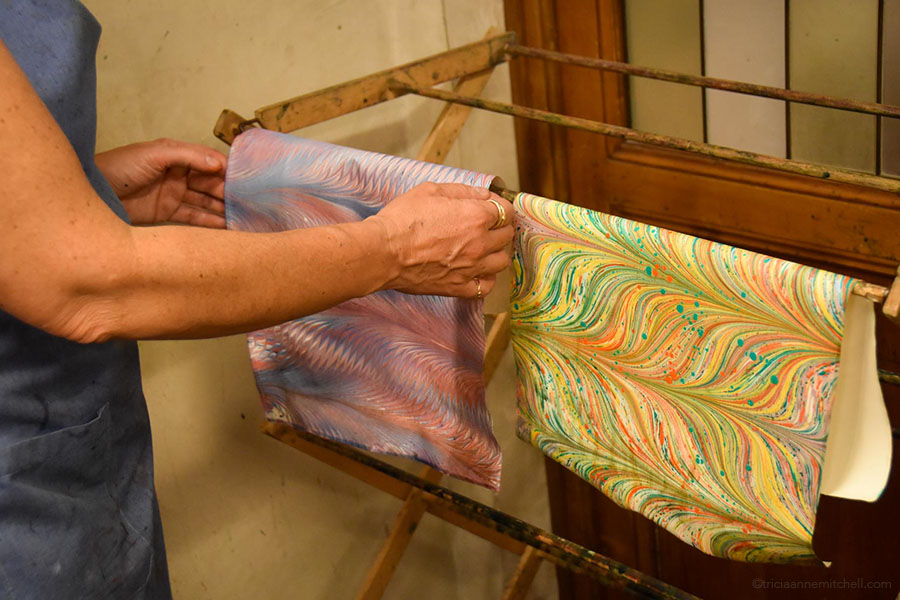
- Setting the paper aside to dry: Once the paper has been removed from the water, it is set on a drying rack or hung up to dry for several hours.
- Skimming the size: If the artisan wants to decorate additional sheets of paper, she skims off any remaining paint that’s floating on the size to prepare it for the next round. Skimming can be done with a piece of newspaper or with a special skimming tool.




Further Resources:
- The Forgotten Tradition Of Making Marbled Paper By Hand, a video featuring Maria Giannini and her workshop, on the DW Euromaxx YouTube channel.
- Art of the Marbler, a 1970 film made by the Bedfordshire Record Office of Cockerell marbling.
- A Beginner’s Guide to Paper Marbling, a HGTV Handmade YouTube video with Rajiv Surendra. He shows the marbling technique and how to make your own tools.
- Marbled Paper Patterns, a visual glossary of patterns on the University of Washington University Libraries website.
- Decorated and Decorative Paper Collection, more than 500 antique and contemporary examples, on the University of Washington University Libraries website.
- How to Marbleize Paper : Step-By-Step Instructions for 12 Traditional Patterns, a 1984 book by Gabriele Grünebaum. You can borrow it for free at Archive.org (a non-profit digital library).
- The International Marbling Network, a website dedicated to the preservation and promotion of the art of marbling.
- Marbled Paper From Florence, an article in The New York Times dated 13 December 1987.
- Marbling Techniques: How to Create Traditional and Contemporary Designs on Paper and Fabric, a 1994 book by Wendy Addison Medeiros. You can borrow it for free at Archive.org (a non-profit digital library).
- The Practical Guide to Marbling Paper, a 1986 book by Anne Chambers. You can borrow it for free at Archive.org (a non-profit digital library).
- Turkish Paper Marbling: Ebru, a YouTube video filmed in Istanbul showing an artisan doing paper marbling via the Ebru technique.
- Van Gogh on Dark Water, a 4.5-minute YouTube video in which artist Garip Ay recreates Van Gogh’s painting, The Starry Night. Set to Beethoven’s Moonlight Sonata, the effect is magical!
Where in the World?
Planning Pointers:
How to Visit Giulio Giannini & Figlio:
* 2025 Update: According to Google Maps, Maria’s shop is no longer in its original location. The new address is listed below, and posted on the above Google Map. *
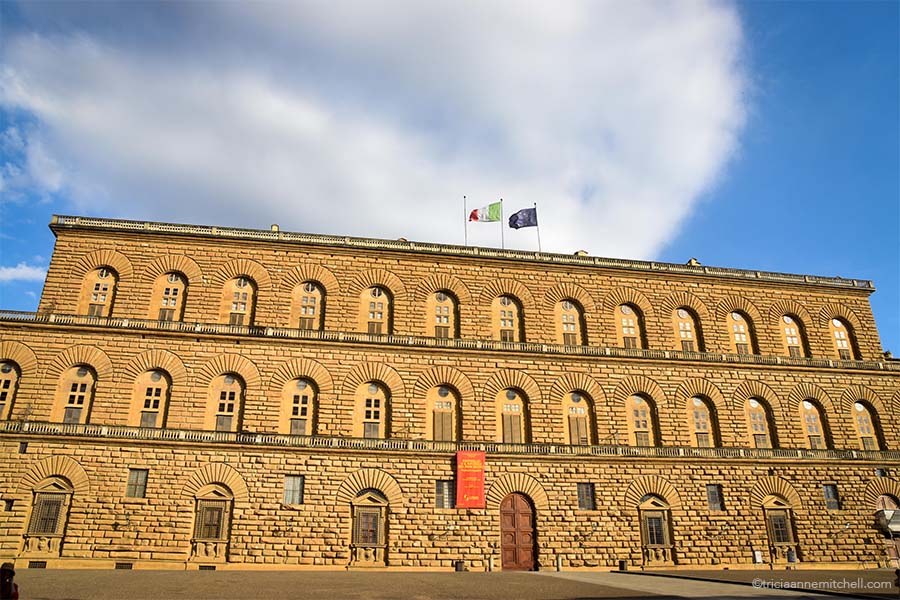
Giulio Giannini & Figlio is located in Florence’s Oltrano neighborhood, not far from the Palazzo Pitti (Pitti Palace). On foot, the shop is a few minutes away from the Ponte Vecchio, Florence’s landmark bridge.
Maria offers a variety of experiences, including marbled paper demonstrations, marbled paper classes, and book-making workshops. To schedule one of these experiences, contact Maria in advance.
Giulio Giannini & Figlio Contact Information:
- Address: Via dei Velluti, 1, 50125 Florence, Italy
Former address: Piazza Pitti, 36-37/r, Florence
- Telephone: +39 055 212621
- Social Media: Facebook | Instagram
- Website: Giulio Giannini e Figlio
Hotels and Accommodation in Florence:
Florence has long been a popular travel destination, so you’ll find a wide variety of accommodation options. From boutique hotels to apartments with all the conveniences you’d find at home, Florence has it all.
Below, I’ve rounded up a few distinctive accommodation options. Please note that some affiliate links follow.
Accommodation with Incredible Views:
- Granduomo Charming Accomodation – Located just across the street from Florence’s magnificent Duomo, these stylish apartments are housed in a Florentine residence dating back to the 18th century. Each features hardwood floors and exquisite Italian furnishings.
- Piazza Signoria 1 Apartment – Just footsteps away from the Palazzo Vecchio, this 55-square-meter (180-square-foot) apartment features air conditioning, a comfortable bedroom, a fully equipped kitchen, and a private bathroom with all the essentials. What’s more, it even has extraordinary views of one of Florence’s most famous squares, the Piazza Signoria.
- Attico in Piazza Santa Croce – The Attico in Piazza Santa Croce is a cozy penthouse apartment offering stunning views of the Basilica of Santa Croce, where famous historical figures like Galileo, Michelangelo, and Machiavelli are buried. The apartment features two bedrooms, a living room, a well-equipped kitchen, and a bathroom. Its classic antiques and vintage-tiled floors create a warm and authentic atmosphere, while the balcony provides a perfect spot to enjoy the panoramic views.
Luxurious Properties:
- Palazzo Niccolini al Duomo Residenza D’Epoca – This refined property is located just steps away from the Duomo Cathedral. The rooms are beautifully decorated, with some featuring ornate ceilings and frescoes, and even fireplaces. Some rooms offer breathtaking vistas of the Duomo. Guests can enjoy a delicious buffet breakfast each morning.
- Borgia di Firenze – This elegant apartment is located on the second floor of Santa Trinita Palace. The Borgia di Firenze offers traditional Florentine decor, including stunning frescoes and modern comforts like an elevator, free Wi-Fi, and air conditioning. The apartment is ideally situated within walking distance of numerous attractions, and it’s just 600 meters (just over one-third of a mile) from the Santa Maria Novella train station.
- Dante States Apartments – Nestled in a 600-year-old building, the Dante States Apartments offer classic-style accommodations in the heart of Florence. Enjoy free high-speed Wi-Fi, handsome wood-beamed ceilings, and well-equipped kitchens in these lovely apartments. Explore Florence’s top attractions on foot, with Firenze Santa Maria Novella Train Station just a 15-minute walk away.
Cozy Apartments:
- Aleri – The Aleri is a cozy 1-bedroom apartment in a historic building, just a short walk from the Santa Maria Novella Train Station. With 50 square meters of living space (about 535 square teet), the apartment features traditional decor, including wooden beamed ceilings and a 4-poster bed. Despite its historic charm, the Aleri offers modern amenities such as Wi-Fi, satellite TV, and a well-equipped kitchen.
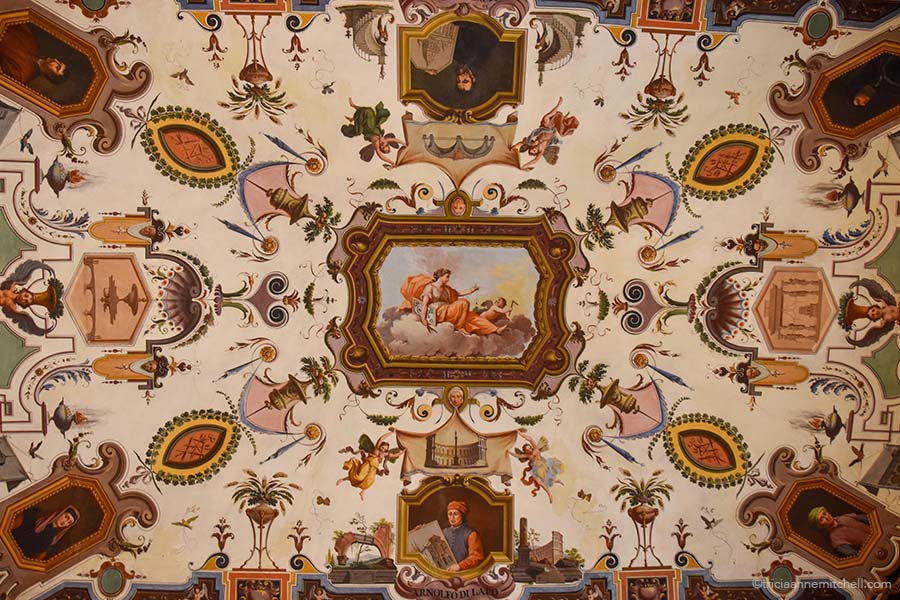
- Giotto – Shawn and I spent one month in this apartment, which is located in the San Frediano neighborhood, about a 20-minute walk from the Uffizi Gallery and the Santa Maria Novella Train Station. The apartment has a living room/kitchen, bedroom, and bathroom and it offers a lovely mix of old and new. The interior was recently renovated and has a new washing machine, dishwasher, refrigerator, and two air conditioners. Like most Italian apartments, the Giotto also has an espresso maker, in this case, a Bialetti Venus moka. We loved the sleek design and functionality so much that we later bought one. Since we had a fair amount of luggage with us, we liked that the apartment had lots of storage space. What’s more, the ceilings above our bedroom and the kitchen were a work of art themselves! They were painted in the early-20th century. After a long day of sightseeing in the sweltering June and July heat, we loved coming “home,” lying in bed, and looking at the scenes of birds and nature above our bedroom. The apartment overlooks a courtyard that doubles as a small parking lot for the other residents. Since we weren’t facing the street (with all the scooters whizzing by), the apartment was blissfully quiet. We also enjoyed chatting with the apartment’s thoughtful and helpful owners, Paola and Roberto. (2025 update: It appears that the Giotto is no longer being offered as a short-term rental. However, the hosts do have other short-term apartments for rent in the same complex.)
Bed & Breakfasts:
- Canto degli Arancini – The Canto degli Arancini is a delightful bed and breakfast located in the Santa Croce district of Florence. It has a modern interior and offers various room types, including doubles, suites, and family suites. The hotel features an elevator and air-conditioned rooms. There’s also a buffet breakfast with gluten-free options.
- Dimora Bandinelli – The Dimora Bandinelli is a charming bed and breakfast offering double and triple rooms adorned with beautiful 19th-century frescoes. Guests can enjoy a buffet breakfast featuring fresh, seasonal products, including gluten-free options. The bed and breakfast is conveniently located within walking distance of Florence’s old town center. For a leisurely stroll, guests can enjoy a 15-minute walk along the riverbank to reach the heart of Florence. Alternatively, the tram stop is just 50 meters (165 feet) away, offering a quick seven-minute ride to the city center.
Spas:
- B&B Mr. My Resort – The B&B Mr My Resort is conveniently located just a short walk from the Accademia Gallery, home to Michelangelo’s iconic David statue. This charming bed and breakfast offers a private wellness center with a Turkish bath and a hot tub for guests to enjoy. Some rooms feature views of the peaceful internal garden, while others showcase historic charm with features like stone walls, old frescoes, and exposed wooden beams.
Pet-Friendly Lodging:
- Riva Lofts Florence – The Riva Lofts apartment complex is located near the Cascine Park and overlooks the Arno River. Featuring an outdoor swimming pool surrounded by gardens, Riva Lofts offers a luxurious and relaxing stay. Some studios feature private terraces with lovely views of the complex’s gardens. The Riva Lofts offers a buffet breakfast featuring homemade cakes, Tuscan cheese and ham, and even gluten-free options. You can enjoy breakfast on the terrace overlooking the swimming pool or in the comfortable dining area. Riva Lofts is located near the Sansovino tram stop, providing easy access to Santa Maria Novella Railway Station. Free bicycles are available for exploring the city, and pets are allowed.
- Relais Piazza Signoria – The Relais Piazza Signoria offers a variety of accommodation options, including studios, suites, and apenthouses with wonderful views. Conveniently located on the corner of Piazza Signoria in Florence you can reach the Uffizi Gallery and Palazzo Vecchio on foot within a few minutes. The apartments offer modern amenities such as kitchenettes, LCD TVs, and air conditioning, along with an elevator for easy access. Pets are welcome.
Looking for more Italy trip-planning inspiration?
From meeting a truffle hunter in Northern Italy to taking a cooking class in the delightful city of Modena, see all of my posts from Italy.
Save to Pinterest
Photography & text © Tricia A. Mitchell. All Rights Reserved.


Leave a reply to Christopher Ehler Cancel reply