Last Updated:

An Afternoon in Cinq-Mars-la-Pile, France: Where Roman Mysteries Meet Renaissance Drama

Posted by

·

, ,

In a region that’s home to world-famous châteaux, other worthwhile destinations can easily be overshadowed. But the French town of Cinq-Mars-la-Pile, with its enigmatic Gallo-Roman tower and its small, but atmospheric castle, also deserves a peek when you’re visiting the Loire Valley. One sunny spring day, Shawn and I did just that.

Catching a train in our hometown of Amboise, we headed to the city of Tours. We had a brief layover in Tours, which gave us the perfect amount of time for a coffee break on a leafy square.

After caffeinating and people-watching, we headed back to Tours’ grand gare (one of the prettiest train stations in France!) to catch another train. Cinq-Mars-la-Pile is only 20 km (12 miles) west of Tours, so this train journey was très rapide.

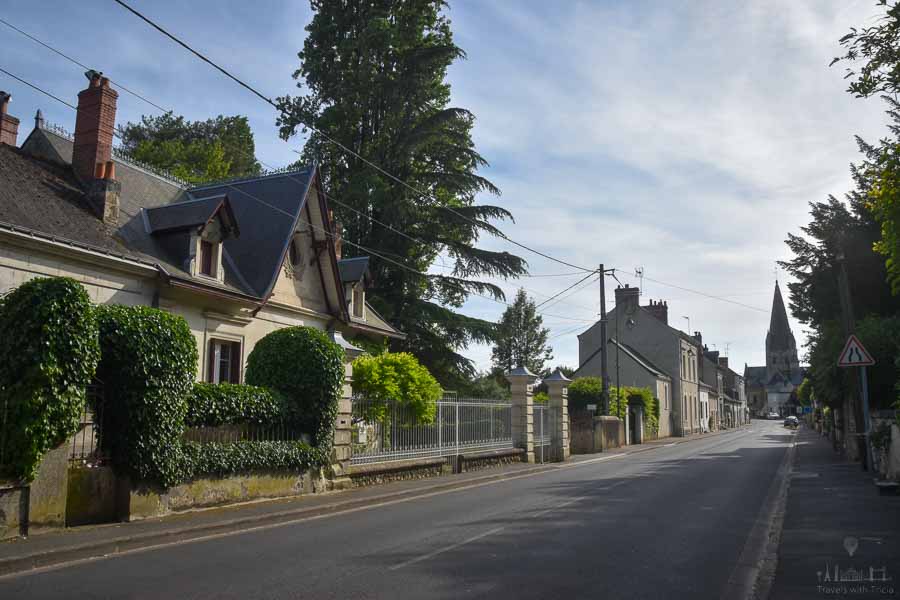
When we arrived at the Cinq-Mars-la-Pile train station, we could see the two rounded towers of the Château de Cinq-Mars, as well as the grey steeple of the town’s church, the Église Saint-Médard.

We were instantly struck by how calm the town was. Birds chirped. A few cyclists on the Loire à Velo bicycle route pedaled by, some playfully engaging as I snapped photos of the attractive tufa-stone homes.

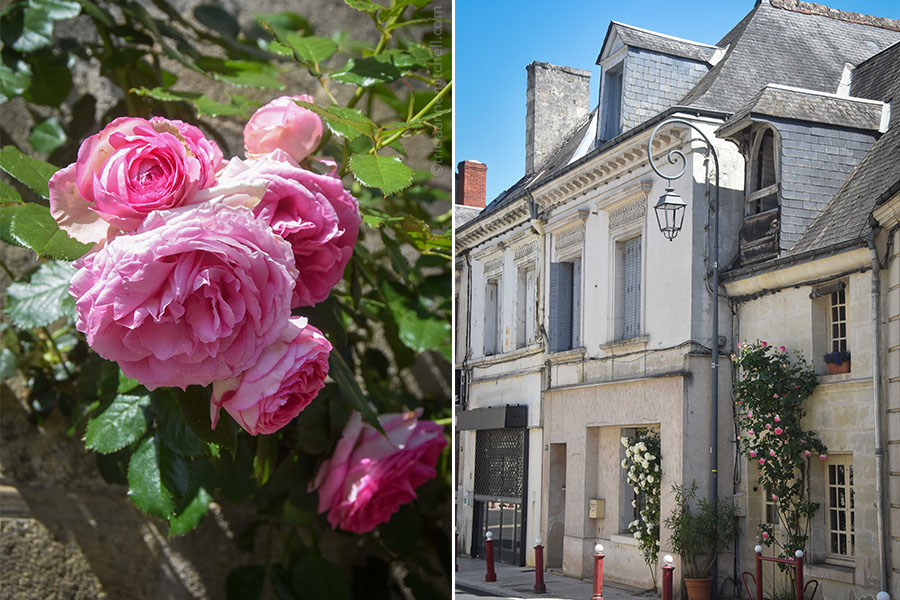
The abundant roses, bridalwreath, peonies, rosemary, sage, and artichoke plants were a treat for the eyes and the nose. Unsurprisingly, many happy bees danced from one flower to the next.

Having lived in the Loire Valley for several years, Shawn and I are fortunate to have visited the most famous of the region’s castles. These attractions can be understandably touristy, and the sites are often overcrowded. Therefore, it was a treat to have arrived in a lesser-visited town in the Loire Valley.
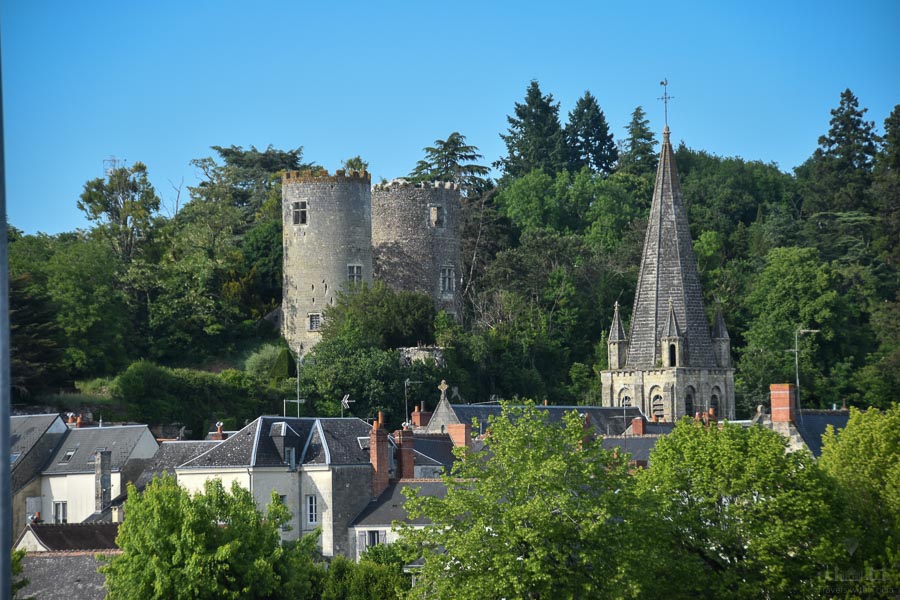
In the French town of Cinq Mars la Pile, the church steeple and castle towers rise about the town's rooftops.
The twin towers of the Château de Cinq-Mars (left) and the steeple of the Église Saint-Médard (right).
On the left, a cluster of pink roses grow on the trellis of a building. On the right, stone buildings line a main street in the town of Cinq Mars La Pile, France.
Left: Aromatic roses in full bloom. Right: Trellises filled with climbing roses adorn the fronts of townhouses.
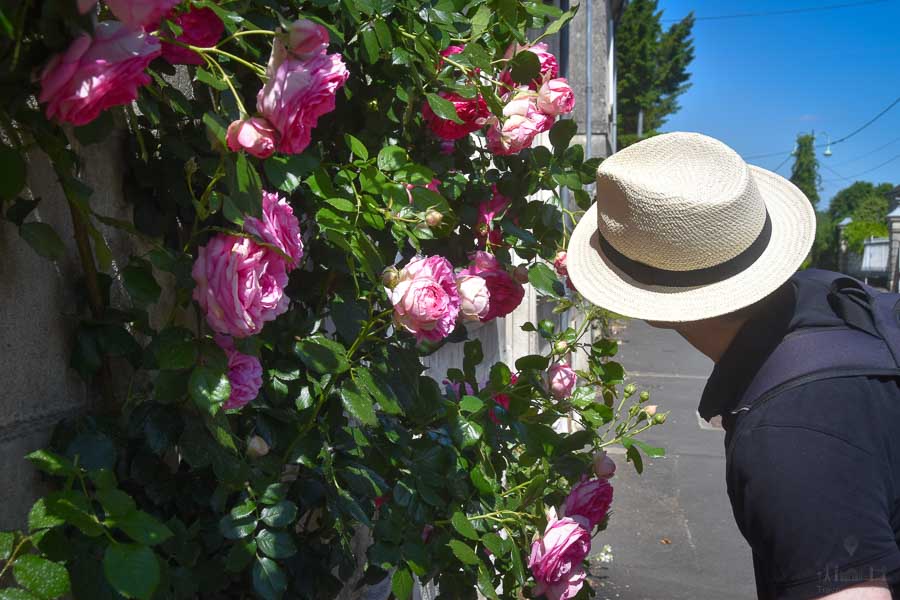
A man wearing a straw hat smells pink roses growing on the facade of a stone building in France.
Shawn takes in the exquisite aroma of the roses.
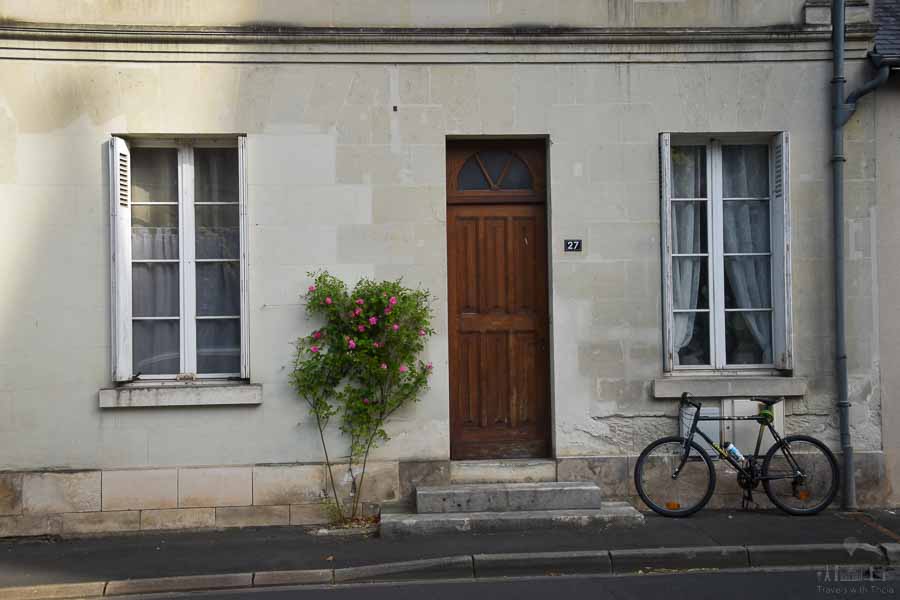
A bike leans against a stone building in the French town of Cinq Mars la Pile, France.
A stone home with a green and red gate in Cinq Mars la Pile, France.
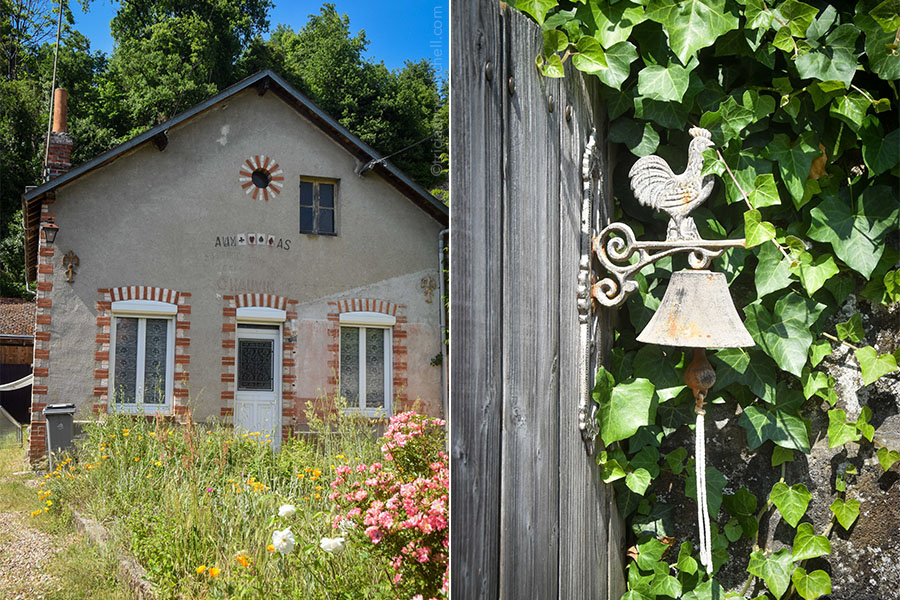
On the left, symbols found on a deck of cards decorate the facade of a French cottage. Right: A bell topped with a rooster hangs on a wooden door in the French town of Cinq Mars la Pile. Green ivy surrounds the bell.
Left: Playing card symbols decorate the façade of a home. Right: A bell adorned with a rooster, the symbol of France. Many of the homes’ gates had old-fashioned bells like this one, as opposed to modern doorbells. How charmante!
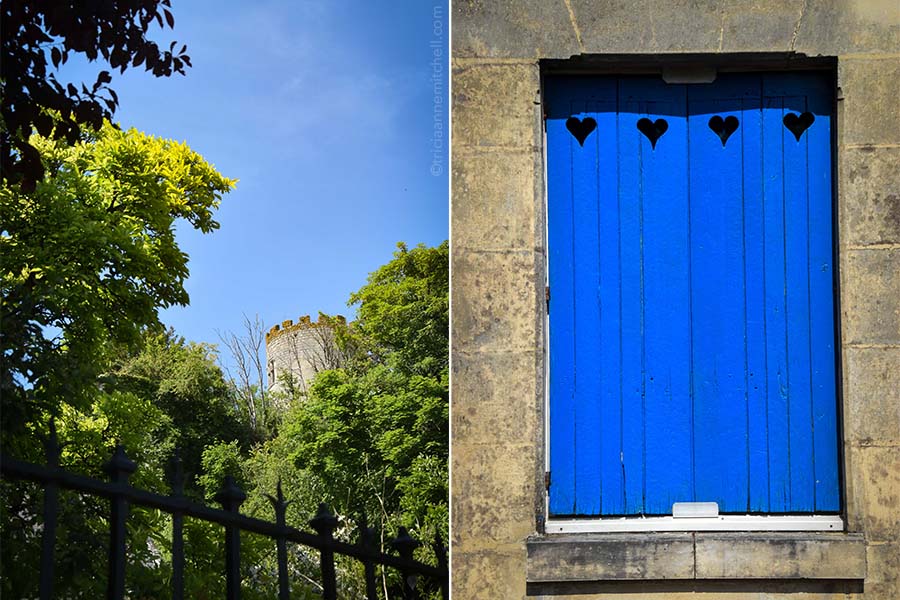
On the left, a round tower rises above the treetops in the French town of Cinq Mars la Pile. On the right, a closed set of blue shutters with heart cut-outs adorn a stone home.

The Château de Cinq-Mars: A Fortress Razed During the Renaissance

All was quiet when we reached the grounds of the Château de Cinq-Mars. A weathered bell, suspended next to the arched green wooden doors, invited visitors to announce their arrival. A sign instructed visitors to Sonnez fort – ring the bell loudly. Disturbing the tranquil atmosphere by ringing the bell seemed impolite, but we did so nonetheless. No one came to the door, so we reluctantly left and vowed to visit another day.

We found the forecourt of the château to be a peaceful place, but it hasn’t always been this way. One of the château’s past owners, Henri Coiffier d’Effiat, the Marquis de Cinq-Mars, was a favorite of Louis XIII. In 1642, he tried to overthrow the influential Cardinal Richelieu, leading to the Marquis’ execution at the age of 22 for high treason.

After the Marquis was executed, Cardinal Richelieu ordered that the Château de Cinq Mars be destroyed. The dramatic events surrounding the Marquis eventually inspired the novel Cinq-Mars by French writer and poet Alfred de Vigny.

Aside from being the setting for these dramatic events, the château also features an attractive park, 16th-century moats, and a painter’s studio.
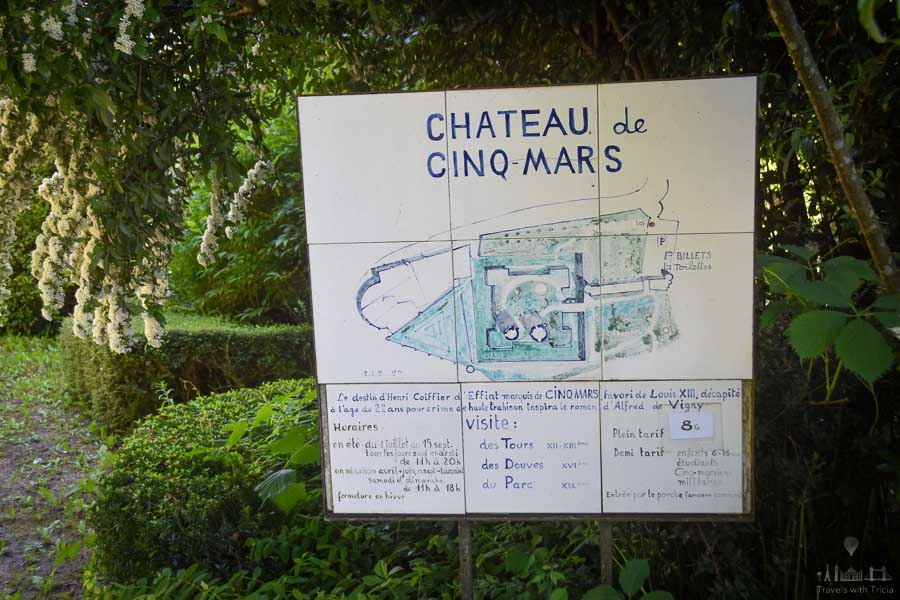
A welcome sign at the Chateau de Cinq-Mars lists the opening hours, ticket prices, and history of the building.
You know you’re (delightfully) off the beaten path in the Loire Valley when you find a castle with a hand-written welcome sign.
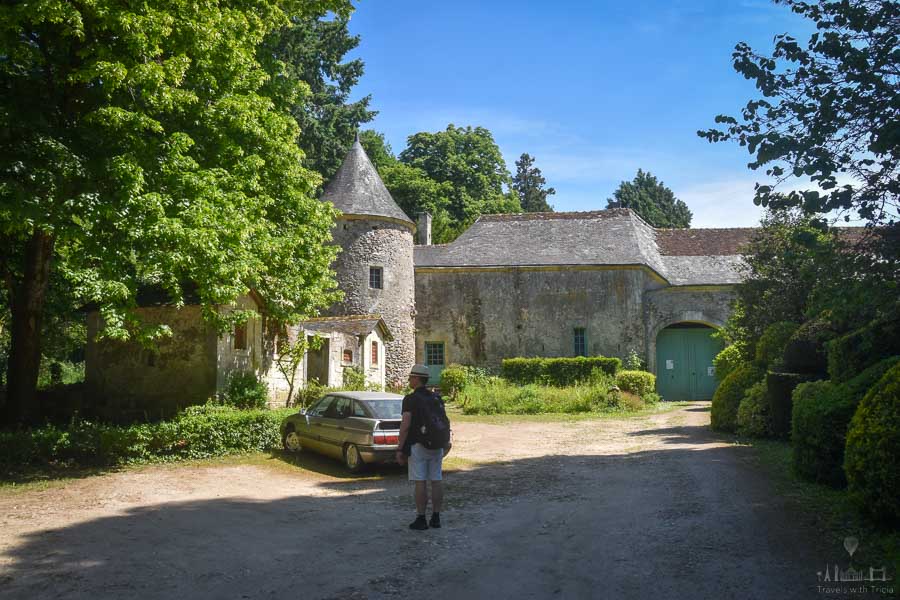
The driveway of the Château de Cinq-Mars is overlooked by leafy trees and a round stone tower.
Shawn enters the driveway of the Château de Cinq-Mars. It is a Monument Historique.
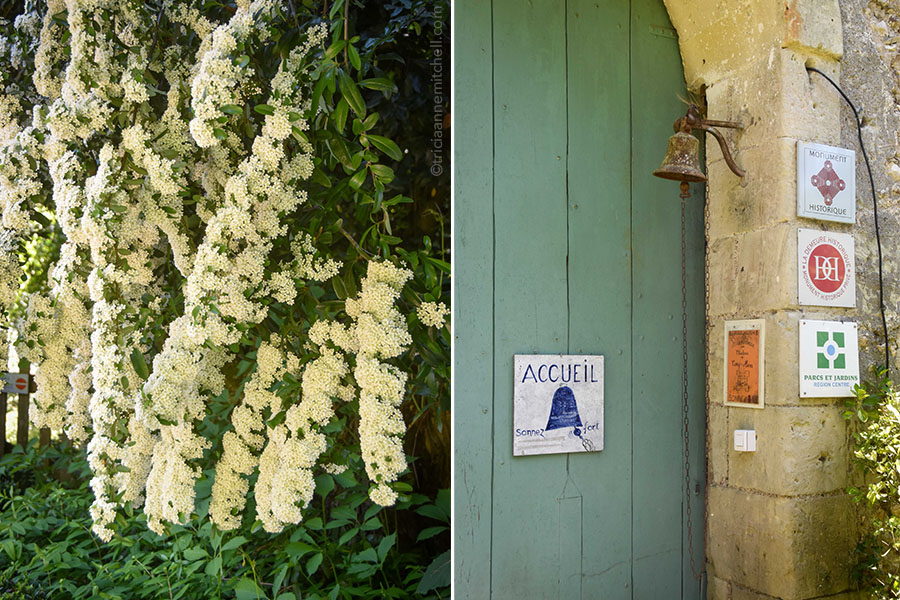
On the left, branches filled with white bridalwreath flowers hang in the courtyard of the castle in Cinq Mars la Pile, France. On the right, a bell hangs on a stone archway, near a green wooden door. Signs posted on the door, written in French, indicate that this is a historic monument and that visitors to the castle should ring the bell forcefully.
Left: Delicate white blooms rappel down from a bridalwreath flower bush. Right: The door of the château was closed, so we followed the sign’s instructions to Sonnez fort – ring the bell loudly. There was no answer, so perhaps we’ll make it inside another time…
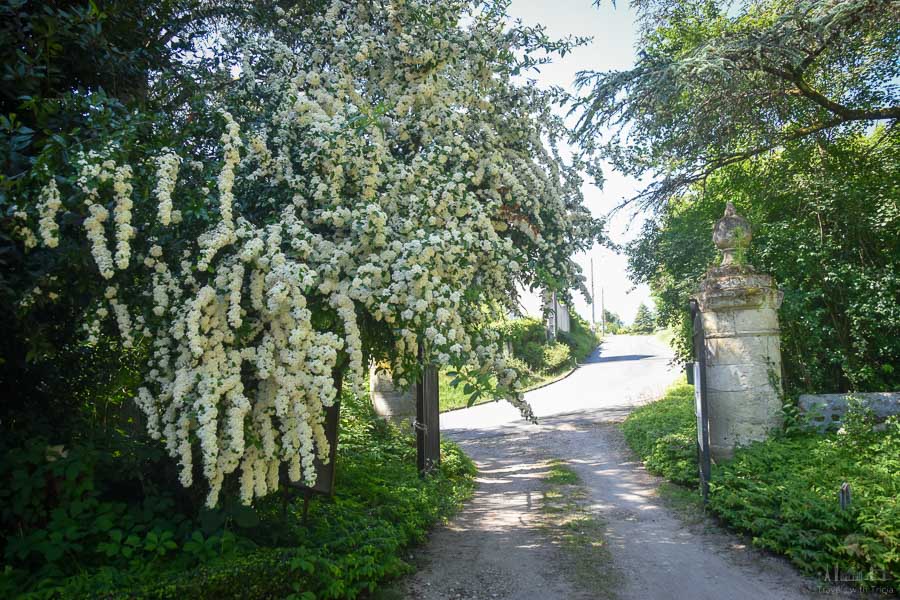
A large bridalwreath bush hangs over the driveway to the Château de Cinq Mars in France.
These bridalwreath flowers reminded me of my childhood backyard in Illinois, where there were abundant bridalwreath bushes.
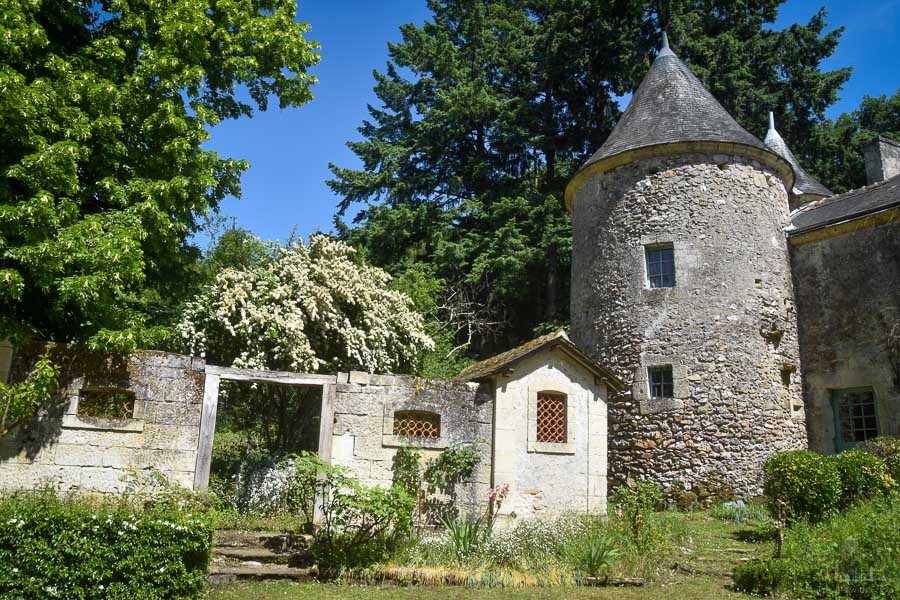
In the gardens of the Château de Cinq Mars, a stone tower and large trees overlook the rustic garden.
With its weathered stone tower and abundant greenery, the château has centuries-old charm.

L’Église Saint-Médard: The Sacred Heart of Cinq-Mars-la-Pile

For more than 1,000 years, the Église Saint-Médard has been the sacred heart of the town. Its 11th-century foundations are Romanesque, but there’s some evidence to suggest that the church was built over 6th-century Merovingian sarcophagi! In the 15th and 16th centuries, the church had Gothic and Renaissance-style additions, making the church a hodgepodge of architectural styles.

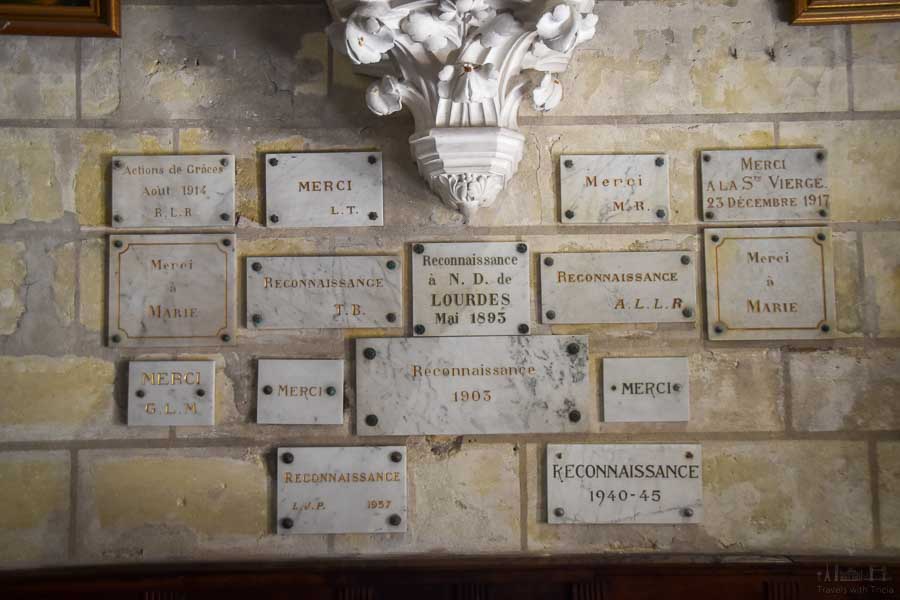
Beyond the architecture, several details stood out to us. Inside the church, plaques offered by townsfolk expressed thanks for surviving World War I or II. Outside, an engraving on a wall designated how high the water reached during a flood of the “wild” Loire River in the summer of 1856.
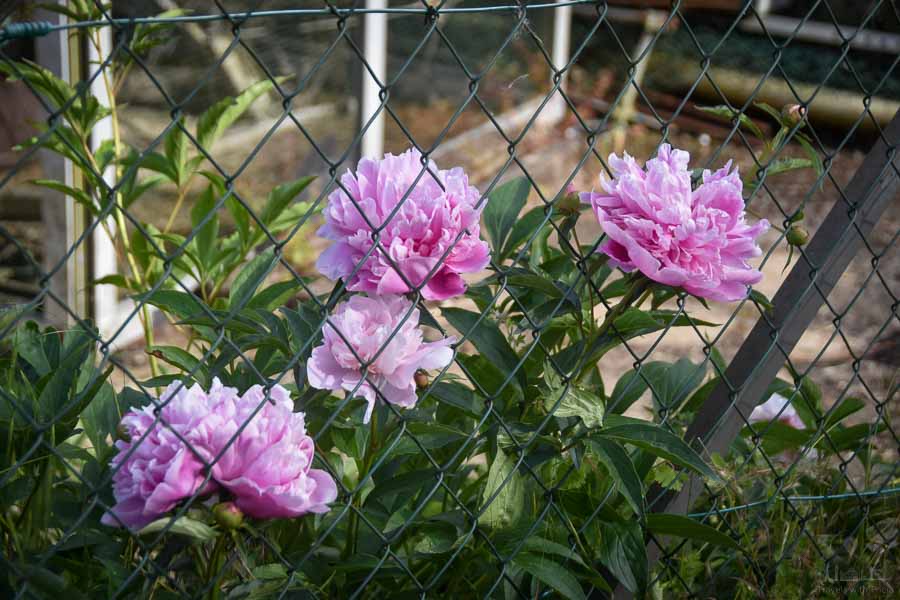
Four pink peonies pop through a green chain-link fence.
Pretty pink peonies.
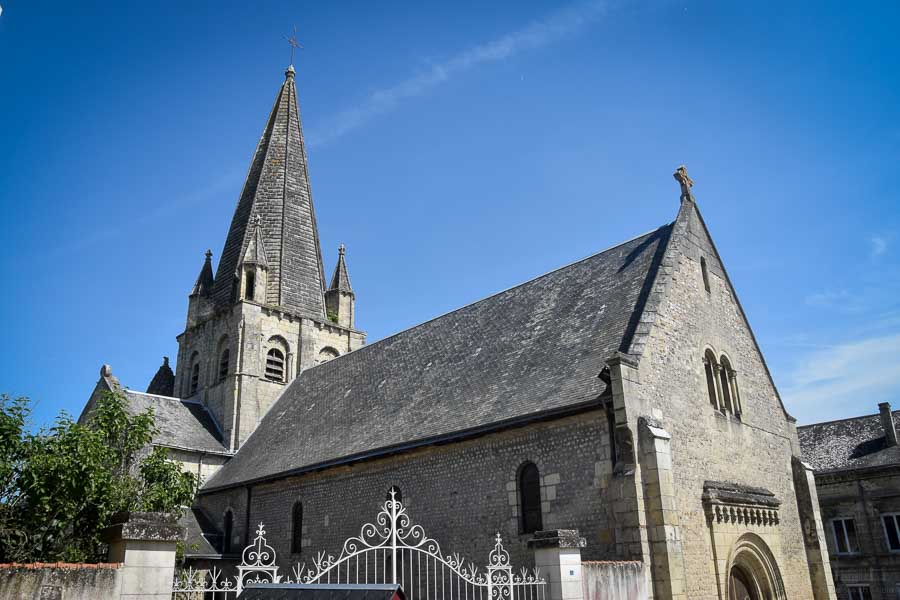
The steeple and roof of the Église Saint Martin et Saint-Médard in Cinq Mars la Pile, France.
Construction of the Église Saint-Médard began in the 11th century.
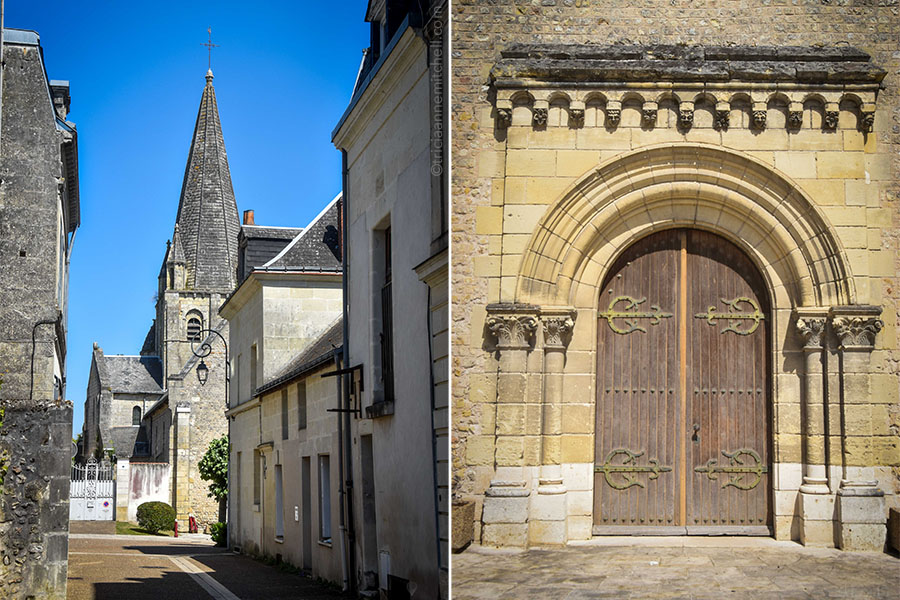
On the left and right, the steeple and doorway of the Église Saint Martin et Saint-Médard in Cinq Mars la Pile, France.
Left: The Église Saint-Médard overlooks a quiet street. Right: The church entrance features Romanesque-style architecture.
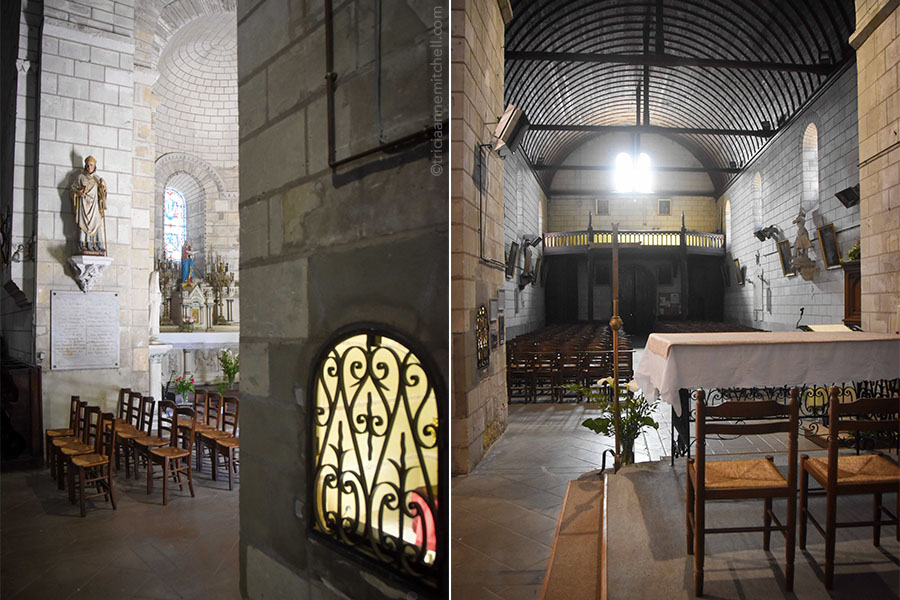
On the left and right are two photos of the interior of the Église Saint Martin et Saint-Médard in Cinq Mars la Pile, France. Wooden chairs stand in rows underneath the barrel shaped ceiling alongside religious statues.
Left and Right: The interior of the church.
Marble plaques are affixed to the interior stone wall of the Saint Martin et Saint-Médard Church in Cinq Mars la Pile, France. They express thanks and are written in French.
Plaques offered by townspeople express thanks.

The Tallest Roman Funerary Pile in Gaul

A few minutes’ walk outside of town, we reached the site we’d been most eager to see—the Pile de Cinq Mars. Using upwards of 120,000 bricks, the Gallo-Romans built this brick tower-like structure more than 1,800 years ago!

Historians aren’t sure what function the Pile de Cinq Mars served. Was it a lighthouse to guide people navigating the Loire River? Unlikely.

A shrine to a god or a territorial marker. Perhaps.

Today, the most widely held belief is that it was a funeral monument for a prominent citizen, perhaps a revered military officer. If so, this would make Cinq Mars the tallest Roman funerary pile in Gaul.

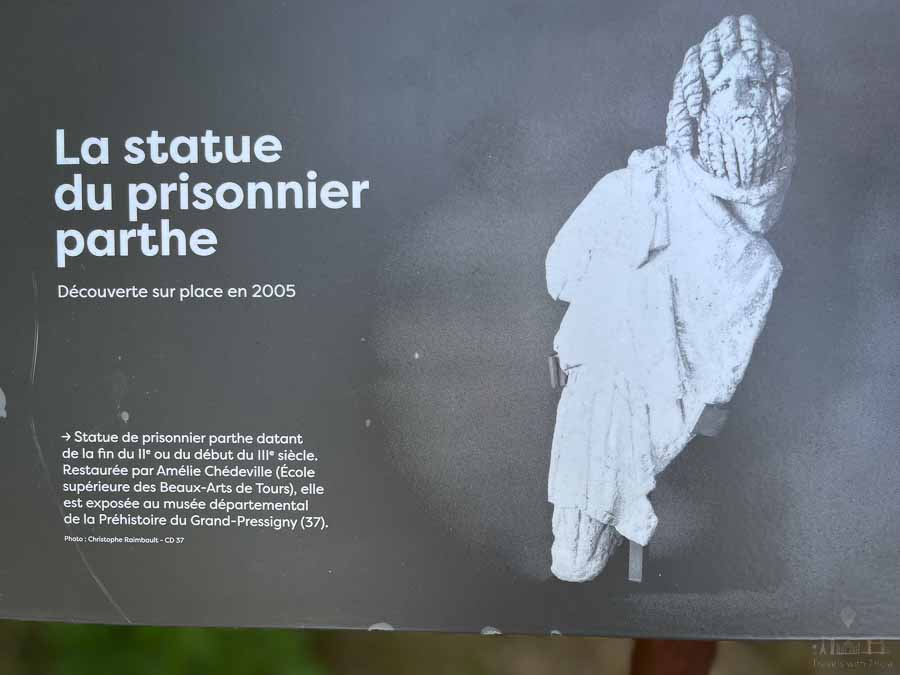
During digs, archaeologists discovered a small statue of a human figure near the structure. However, they have yet to find any tomb or engraving to shed light on whether anyone was buried there. (This in-depth journal article about the Pile de Cinq Mars features some neat old engravings and more details about archaeological investigations and the statue unearthed there.)

Shawn and I enjoyed a picnic in the shadows of this mysterious Gallo-Roman tower. While we feasted on our cheese from the Touraine region and crackers, we admired the green landscape off in the distance, as well as the sound of a neighborhood musician strumming on his acoustic guitar.

It was a lovely afternoon escaping the well-trodden tourist paths of the Loire Valley.
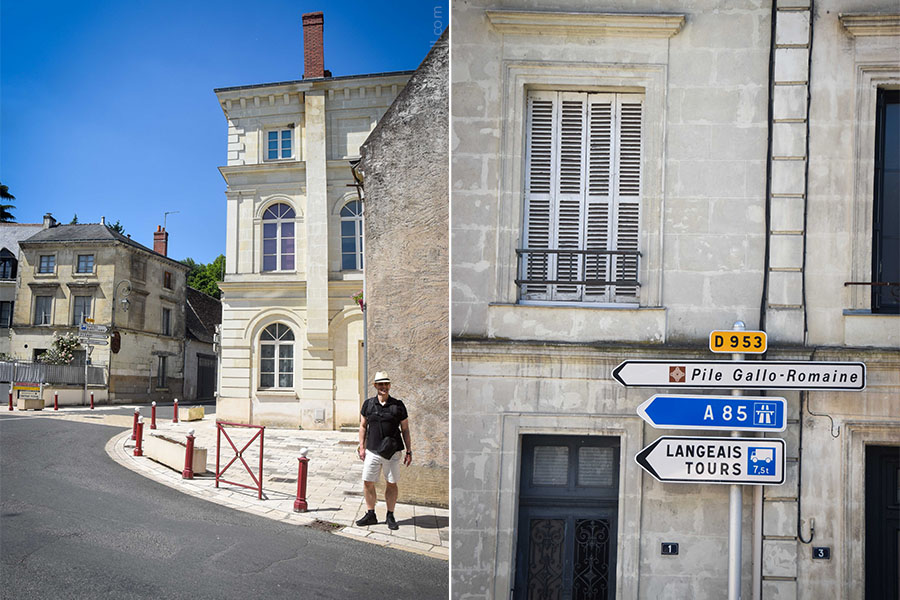
On the left, street scenes in Cinq Mars la Pile, France. White stone buildings are visible, alongw ith signs pointing to the "Pile Gallo-Romaine" and the cities of Langeais and Tours.
Left: Shawn. Right: A sign shows the direction of the Pile Gallo-Romaine (Gallo-Roman Tower).
A man wearing a straw hat looks at white roses growing on the gate of a stone home in Cinq Mars la Pile, France.
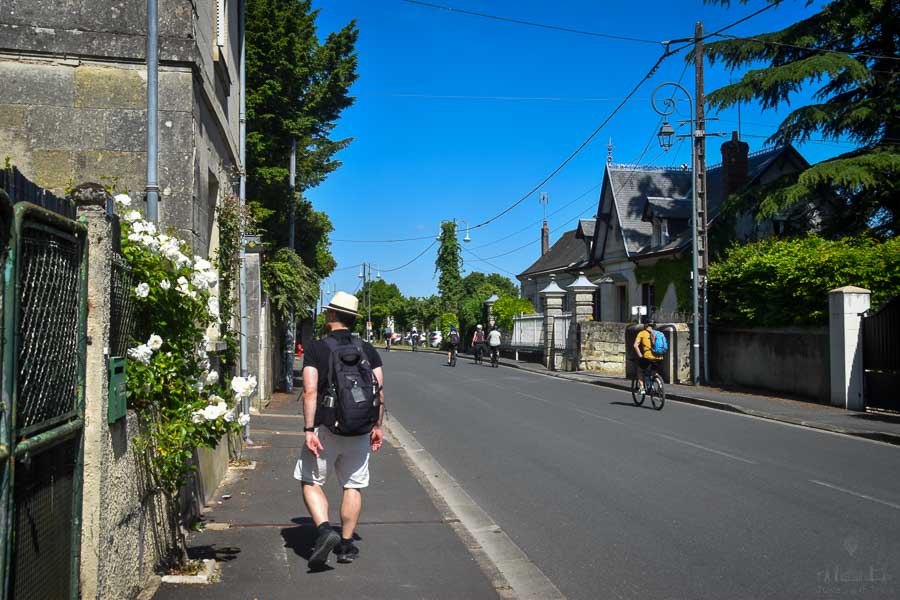
Shawn heads out of town towards the Gallo-Roman Tower. It is 1 km from the city center (just over half a mile).
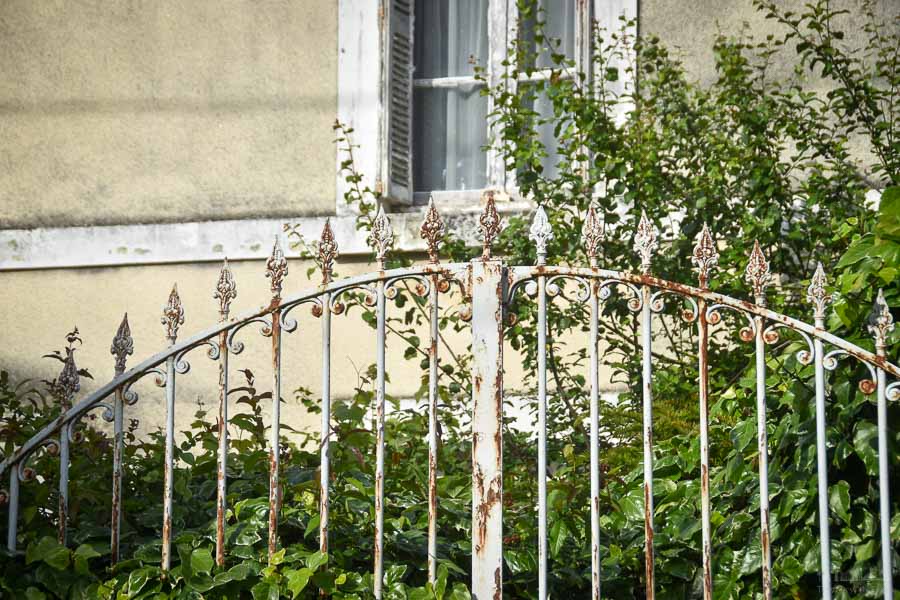
A white, and partially rusty ornamental gate in front of a home in  Cinq Mars la Pile, France..
A weathered ornamental gate.
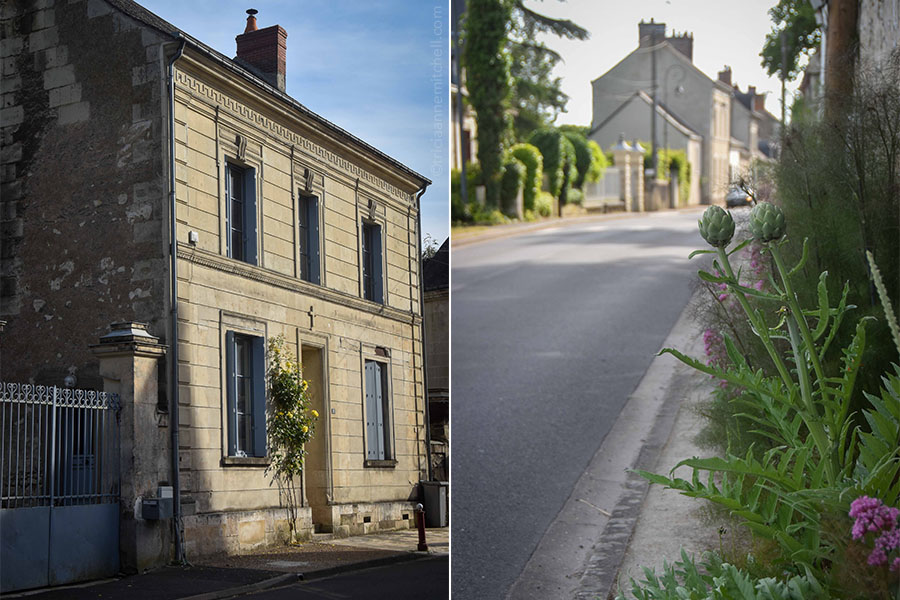
On the left and right, street scenes in Cinq Mars la Pile, France. On the left is a stone building with blue shutters and a blue gate. On the right, foliage grows along the roadside. Artichoke is the most prominent.
Left: A yellow rose climbs the façade of a home across from the town church. Right: An artichoke plant grows alongside the road. We also saw sage, rosemary, poppies, and more.
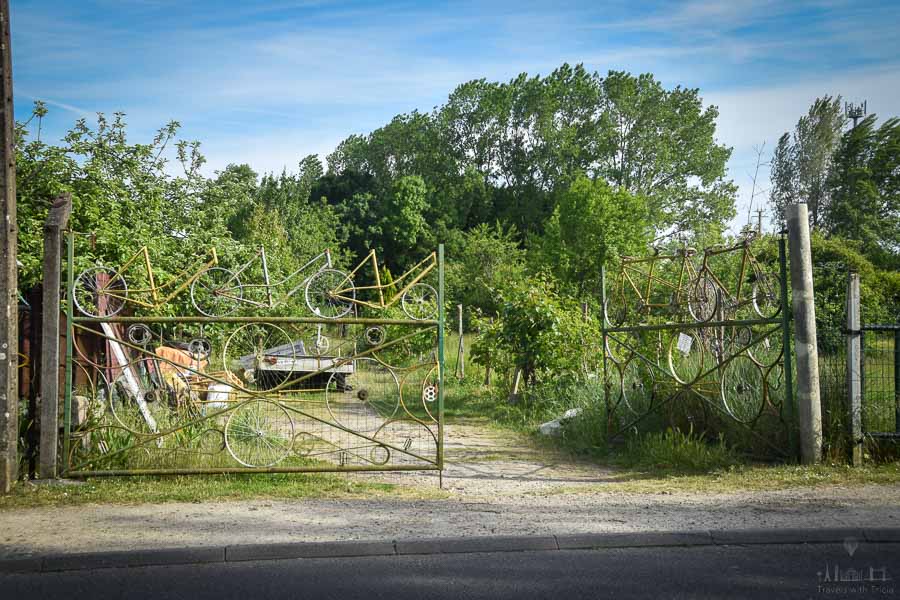
The metal frames of old bicycles adorn gates on the outskirts of Cinq Mars la Pile, France.
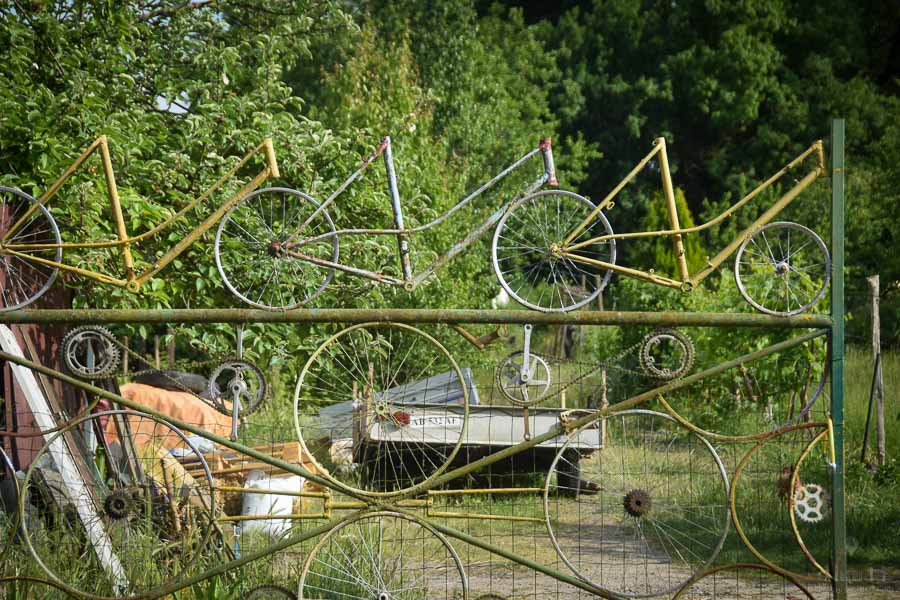
Bicycle frames create a whimsical fence on the outskirts of town.
The metal frames of old bicycles adorn gates on the outskirts of Cinq Mars la Pile, France.
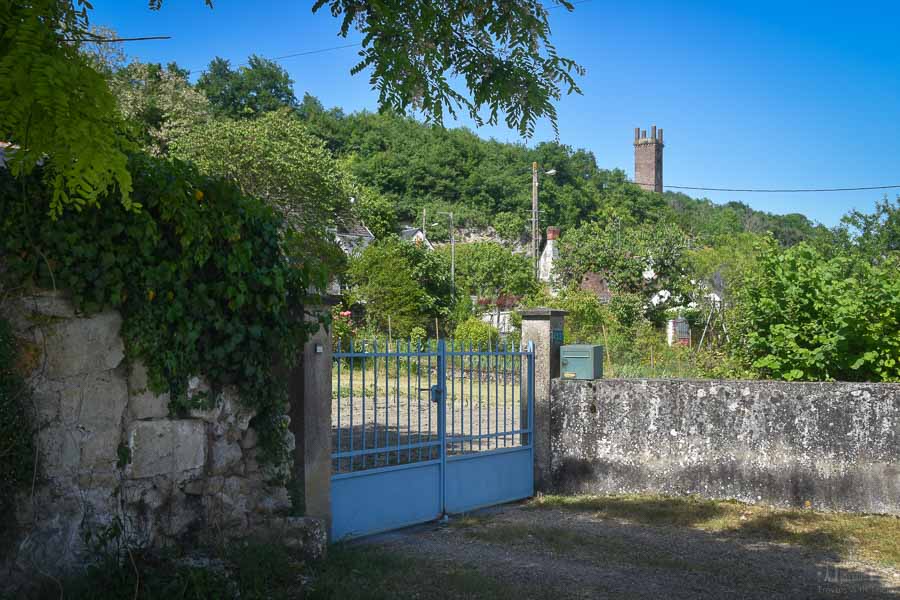
The Pile de Cinq Mars (a brick Gallo-Roman tower) rises above the treetops on a hillside in the town of Cinq Mars la Pile, France. In the foreground is the entryway to a home with a blue gate.
Just outside of town, we catch our first glimpse of the tower (Pile de Cinq Mars), which rises from the hillside near a residential area.
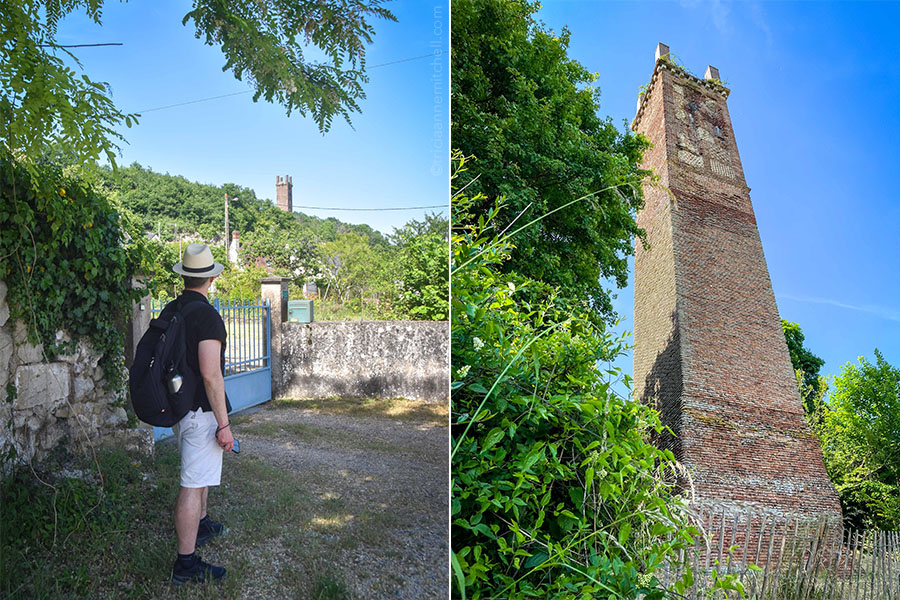
From afar, a man looks at the Pile de Cinq Mars, a brick Gallo-Roman tower.
Left: Shawn in explorer mode. Right: The south-facing side of the tower.
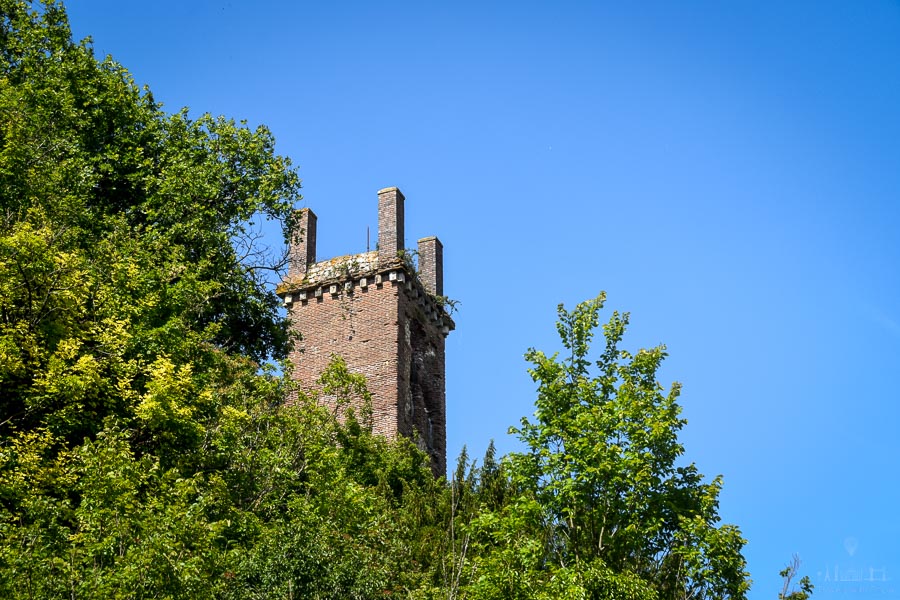
The Pile de Cinq Mars (a brick Gallo-Roman tower) rises above the treetops on a hillside in the town of Cinq Mars la Pile, France. The sky is blue with no clouds.
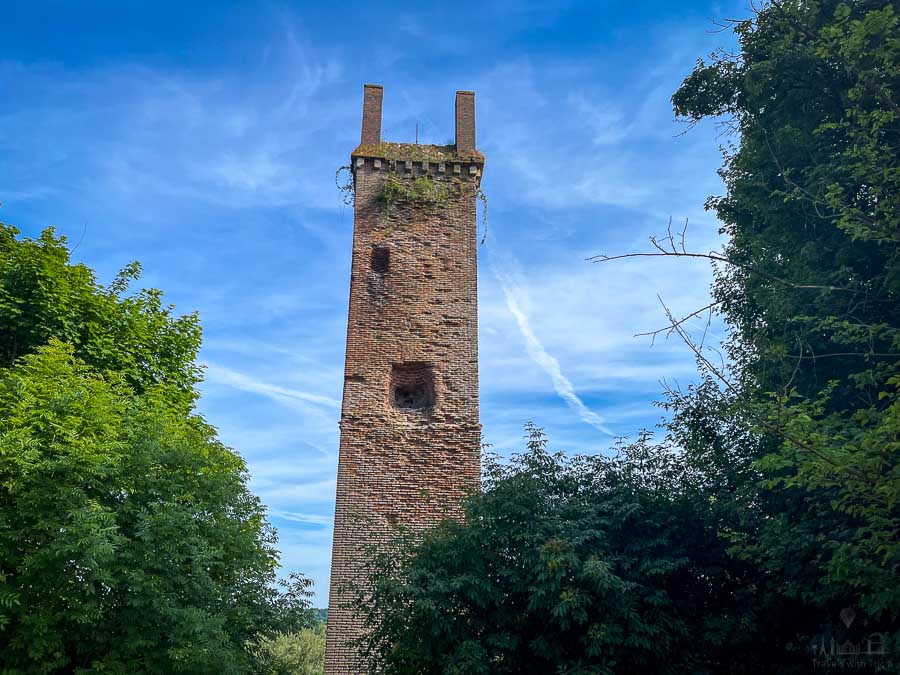
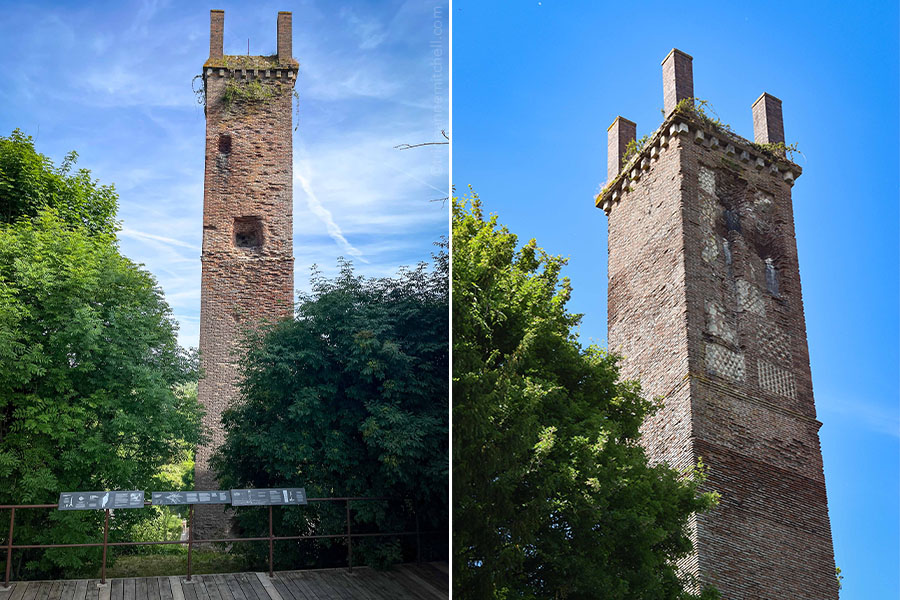
The Roman tower is close to 30 meters tall (roughly 98 feet). Today, there are four pillars. Up until 1751, there were five.
Branches filled with young green leaves fill the foreground on a blue-sky day.
Spring foliage.
The Pile de Cinq Mars (a brick Gallo-Roman tower) rises above the treetops on a hillside in the town of Cinq Mars la Pile, France.
In this snapshot of an informational sign at the Pile de Cinq Mars in France, there's a photograph of a statuette discovered by archaeologists in 2005. The headline, in French, reads: "La statue du prisonnier parthe, découverte sur place en 2005."
In 2005, archaeologists discovered a statue of a prisoner, believed to date from the end of the second or third century. The statue is now on display at the Grand-Pressigny Prehistory Museum.
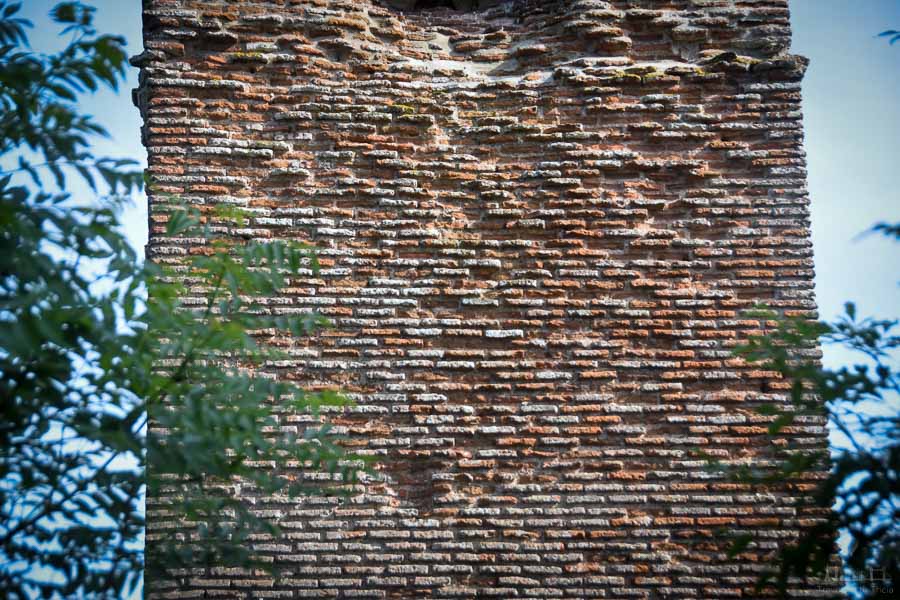
A close-up of a red brick face of the Pile de Cinq Mars in France. Tree branches fill the foreground of the photo.
Approximately 120,000 bricks were used to build this tower nearly two thousand years ago.
On the left and right, the Pile de Cinq Mars towers alongside a green tree in Cinq Mars la Pile, France.
Left: On an observation deck on the north side of the tower, there are signs with historical information. Right: The south-facing side of the tower features 12 decorative panels of unknown significance.
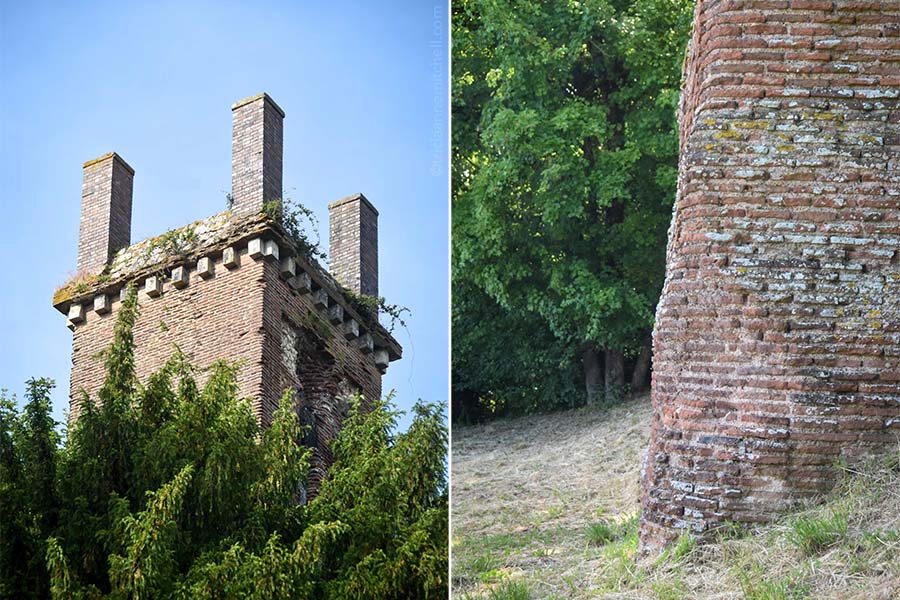
On the left and right, a close-up of the Cinq Mars la Pile top (left) and base (right).
The tower, from top (left) to bottom (right).
The two-lane road heading into the town of Cinq Mars la Pile, France. The town's church steeple is visible at the end of the road, and an old home is on the left side of the road.
Heading back into town to catch our trains to Tours and Amboise.

Where in the World?

Planning Pointers:

  • The town of Cinq-Mars-la-Pile is located 20 km (about 12 miles) west of the city of Tours. To get there, we took the train from Amboise to Tours (about 20 minutes), then another train from Tours to Cinq-Mars-la-Pile (about 15 minutes).
  • There is no cost to visit the Gallo-Roman tower (Pile de Cinq Mars). To get there, look for signs that say Pile Gallo-Romaine. You can access the structure from the south via a staircase. On the north side, there is a parking lot and a grassy area with a few picnic tables.
  • The Château de Cinq-Mars doesn’t seem to keep regular opening hours, as we discovered when we arrived and found it closed. A sign posted outside noted that tickets for adults cost 8€. Have a peek at their website to see the opening hours for the time of year you’re visiting.
  • Are you spending a few days in the Loire Valley and looking for inspiration? From hot-air balloon rides to a castle’s tomato festival, see all of my posts from the Loire Valley.

Photography & text © Tricia A. Mitchell. All Rights Reserved.

Tricia A. Mitchell Avatar

About the author

Hi! My name is Tricia Mitchell. I delight in telling stories about my slow travels through more than 65 countries. Some of my highlights have included sharing meals with locals in Armenia, Cambodia, and Tunisia; sipping sparkling wine with French cousins in Alsace; milking goats in a sleepy Bulgarian village; and training with a Japanese mine-clearance team in Laos. My husband, Shawn, and I are based in France’s Loire Valley.

Join the conversation.

This site uses Akismet to reduce spam. Learn how your comment data is processed.