

During Oberammergau’s peak tourist seasons, visitors can easily while away an hour watching artisans demonstrate their trades on the ground floor of the beautifully frescoed Pilatushaus building.
In past centuries, nomadic traders acquired crafts like these and sold them throughout Europe, making Oberammergau famous for its fine work. Today, travelers can purchase the items directly from the craftsmen and women at the Pilatushaus.
Just before Christmas, my mother and I ventured to the Pilatushaus, pleased to find three craftspeople at work: a woodcarver, coppersmith, and an embroiderer. The brochure we were given noted that more than 50 artisans — including potters, puppet makers, reverse glass painters, and basket weavers — also show off their technique on certain days.

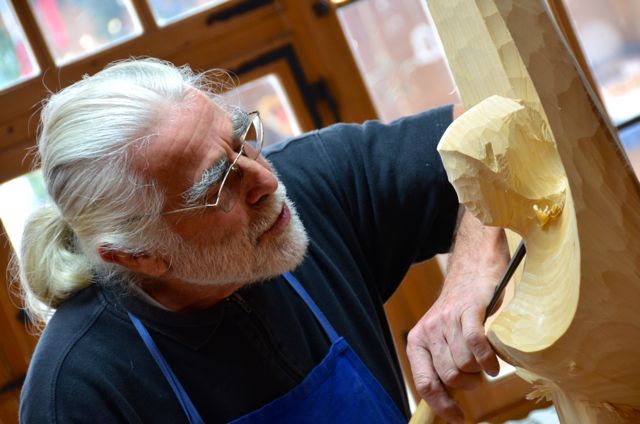
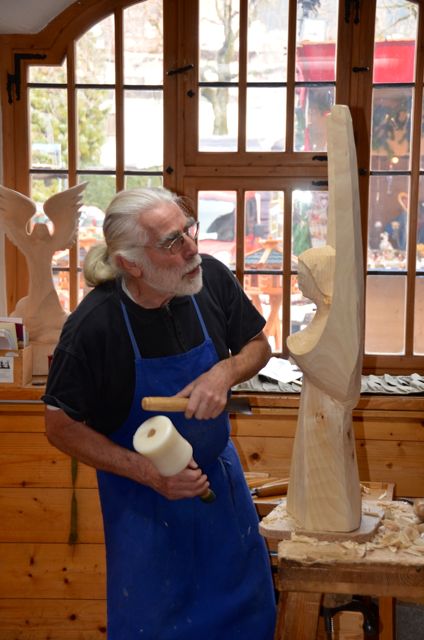
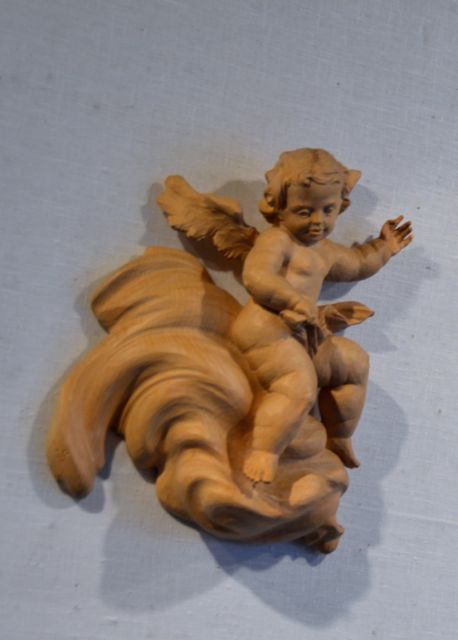
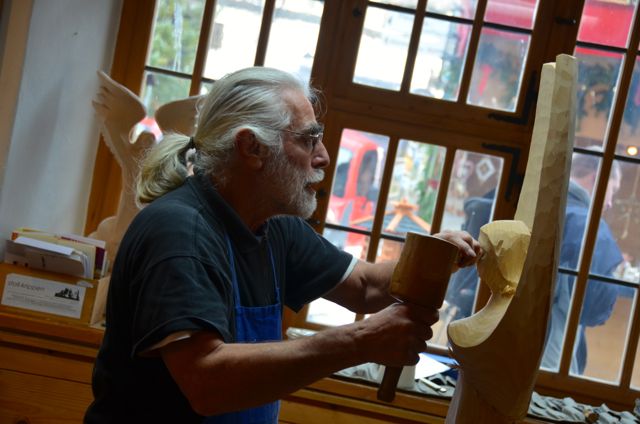
Oberammergau is renowned for its woodcarving, so I especially enjoyed watching a woodcarver (Schnitzer) named Karl Heinz working on creating a graceful angel. He explained that it had taken him several hours to do the initial shaping with an electric saw.
As Herr Heinz chiseled away at the angel’s features by hand, he mentioned that he loved how his non-technical job allowed him to live in a peaceful region like the Ammergauer Alps.

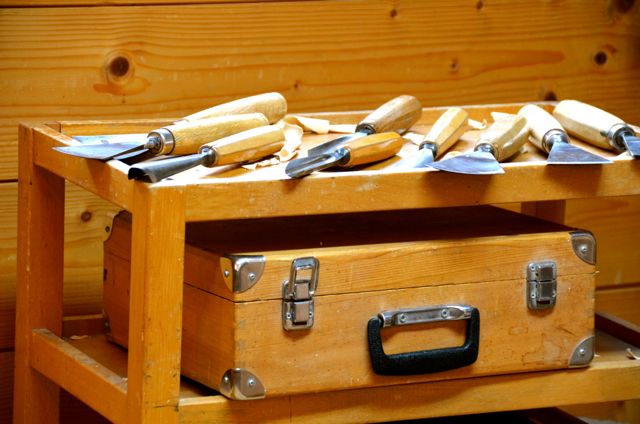
When I heard the great number of hours needed to complete a modest-sized piece, it helped justify the hefty prices I’ve seen for wood-carved figures in Oberammergau’s shops. Generally, such figures cost hundreds of euros.
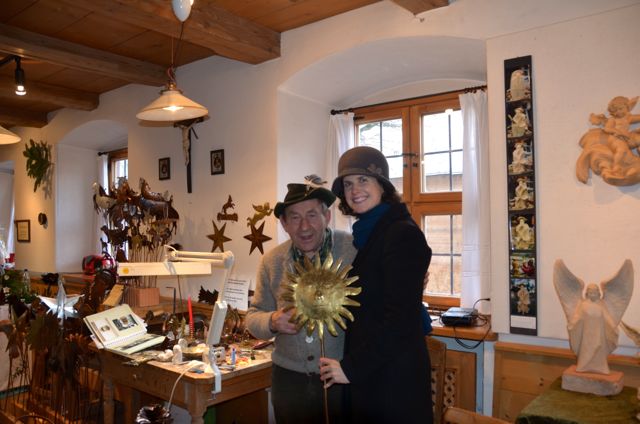
Next, we observed coppersmith (Kupferschmied) Josef as he showed off his skills on a piece of copper destined to be transformed into a regal eagle. Brass and copper garden stakes topped with horses, angels, and dog figures surrounded Josef.

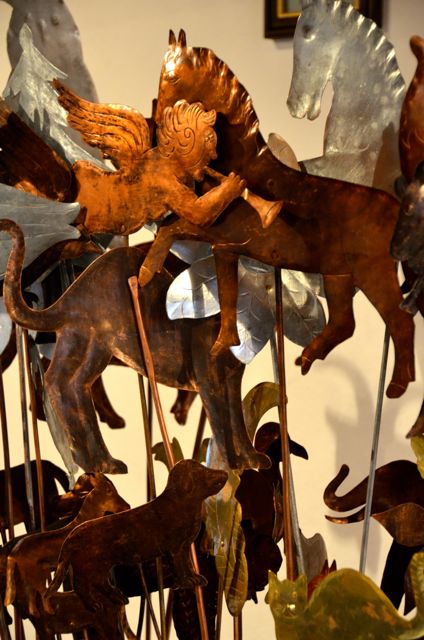
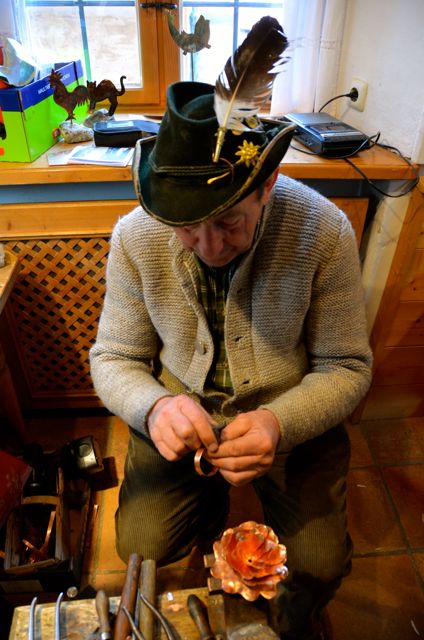
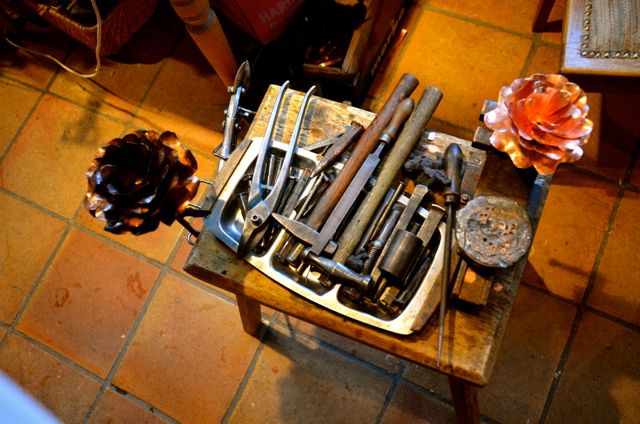
As I looked at Josef’s work table, I found it remarkable that delicate items — like petaled roses — could be fashioned from such rugged tools.
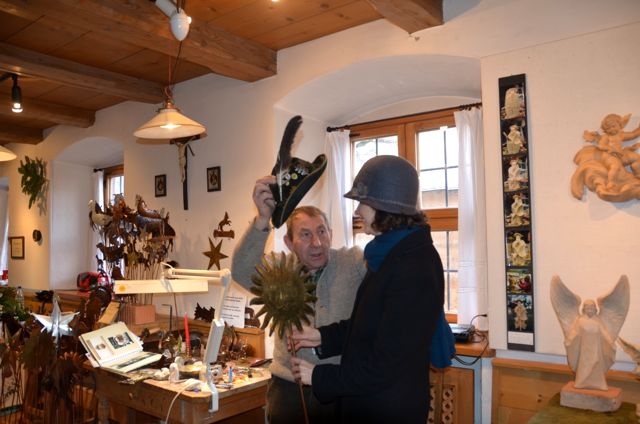
Josef was quite the social butterfly and offered to take pictures with me and my mom. At one point, he even mischievously took off his Bavarian hat and swapped it with my grey-wool hat.
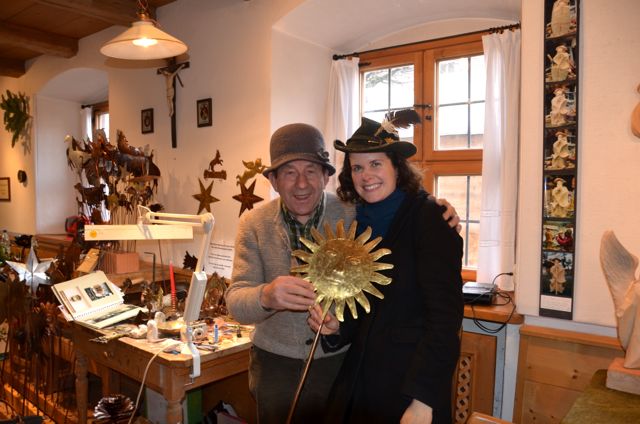
After the impromptu photo session, Josef kindly offered me the copper bracelet he’d demonstrated how to make earlier.
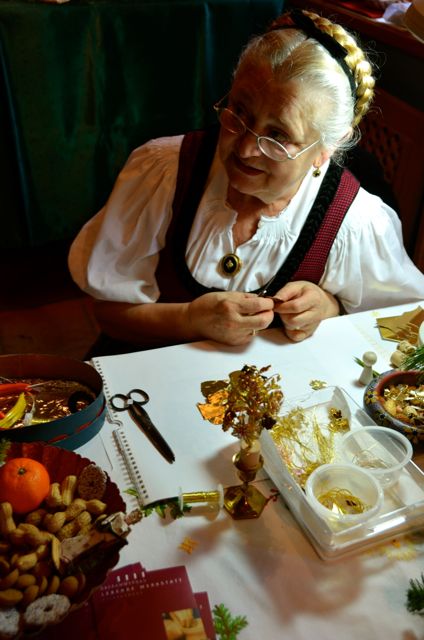
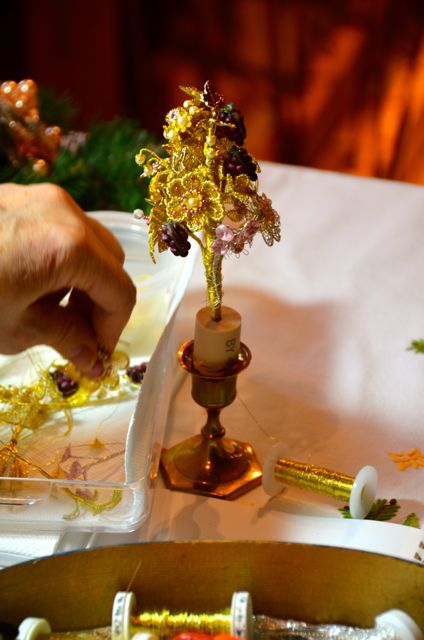
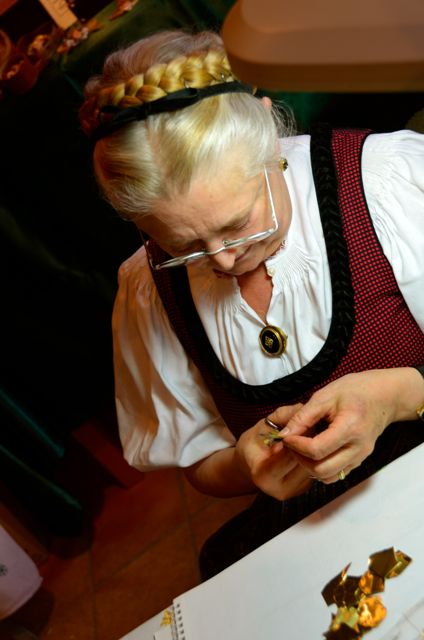
Our last lesson was with embroiderer (Stickerin) named Coletta. She sported an elegant Dirndl (traditional Bavarian dress), an upswept golden braid, and more accessories with Bavarian flair.
Coletta makes elaborate decorations for monasteries and private buyers using fine, gold metallic thread. One floral creation in progress sitting atop her table had already taken twenty hours to create!


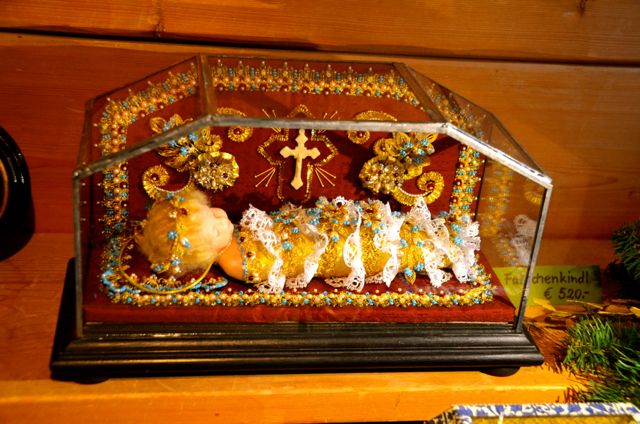
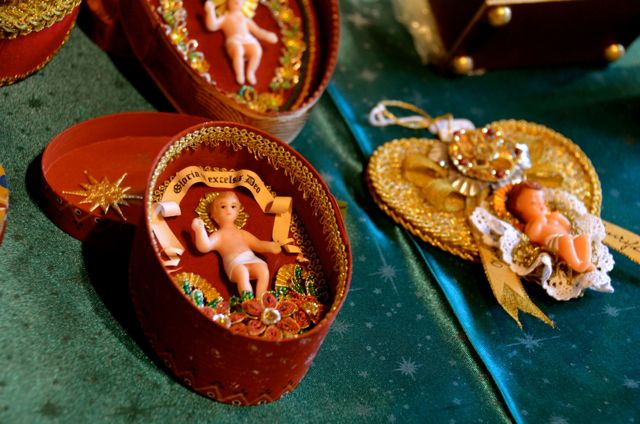
An intricate Christkind display — featuring a wax figurine of a ‘Christ child’ adorned in gold — was priced at more than 500 euros (nearly $700).
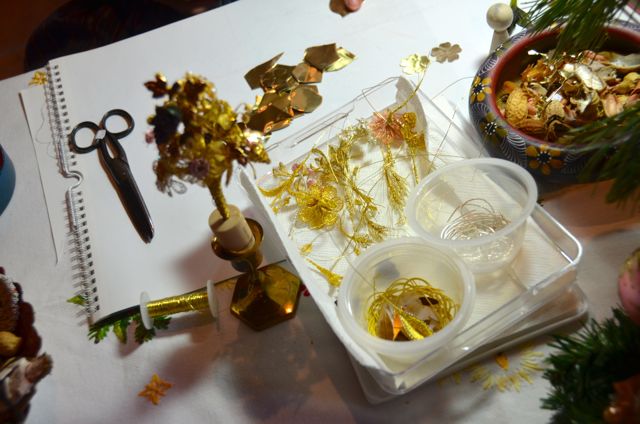

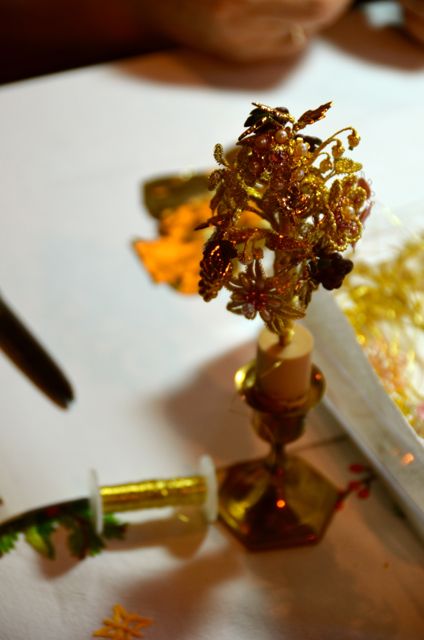
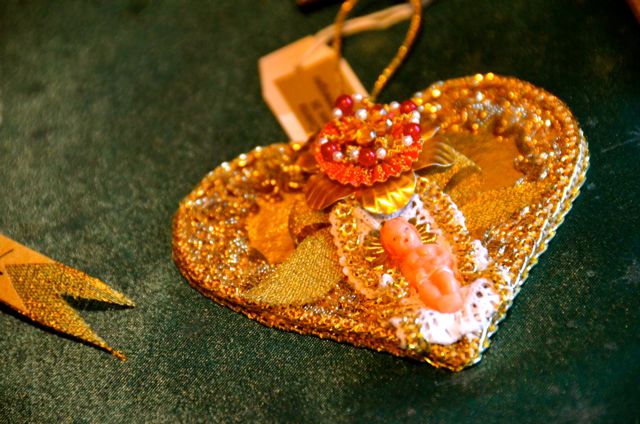
We left the exhibition with a greater appreciation of Oberammergau’s artistic heritage, and the desire to get creative ourselves. Perhaps follow-up lessons with Josef, Colette, and Karl Heinz are in order!


Where in the World?
Planning Pointers:
- The exhibition — called Lebende Werkstatt (Living Workshop) — is housed in Oberammergau’s Pilatushaus building at Ludwig-Thoma-Strasse 10. The telephone number is 08822-949511. Check the website for current exhibition dates and opening hours. Workshop admission is free.
- Oberammergau is located 90 km (55 miles) southwest of Munich. To get there by mass transit, research the Bayern Ticket (website is in German, but you can use Google Translate). As of 2021, these tickets start at €25 for one passenger, and cost €8 for each additional passenger. You can use the Bayern Ticket for most trains, trams, and city buses, making it a good deal if you’ll be doing a lot of exploring in one day. You can purchase tickets online, via a ticket machine, or in person.
- Are you looking for a guesthouse or hotel in Oberammergau? Here is my round-up of hotels, organized by theme.
- Visit my Germany page for more trip tips. If you’re seeking more ideas about what to do in this part of Bavaria, here are all my posts about Oberammergau.
Photography & text © Tricia A. Mitchell. All Rights Reserved.


Leave a reply to Tricia A. Mitchell Cancel reply