

Perhaps it is a bit macabre, but I find cemeteries – particularly those in foreign locales – to be fascinating and fitting spots to reflect upon a place’s culture and history, and upon life itself.
When my husband and I last visited Paris, we spent several hours strolling through the city’s famous Père Lachaise Cemetery, passing headstones of the famous such as Edith Piaf, Chopin, and Jim Morrison, and wondering about the lives of others buried there. Autumn leaves danced on the ground. The sun shone through the kaleidoscopic stained glass that adorned the windows and doorways of ornate mausoleums. Parisians on lunch break sought refuge from the hustle and bustle of the city by escaping within the cemetery’s peaceful walls; they sat on benches with books or lunch bags in hand.
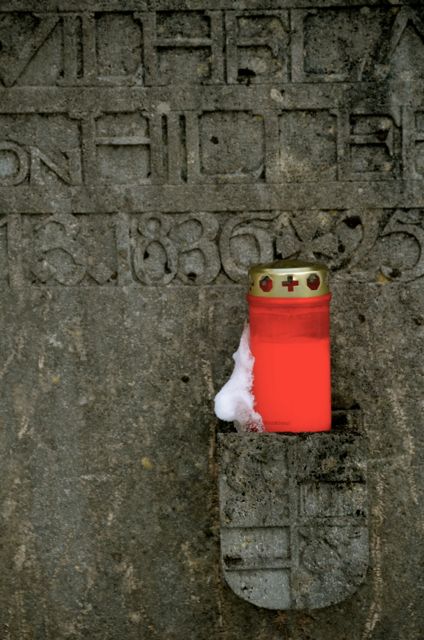
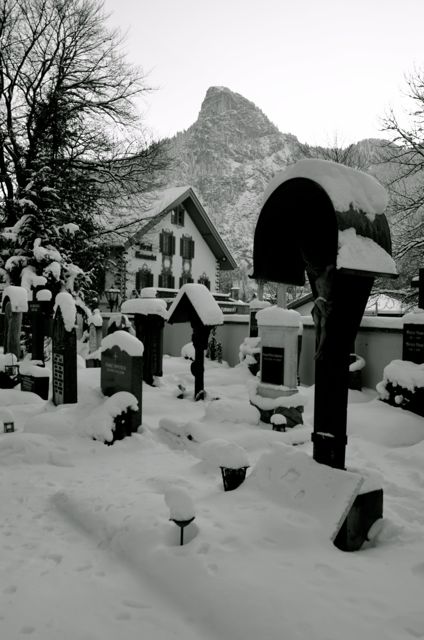
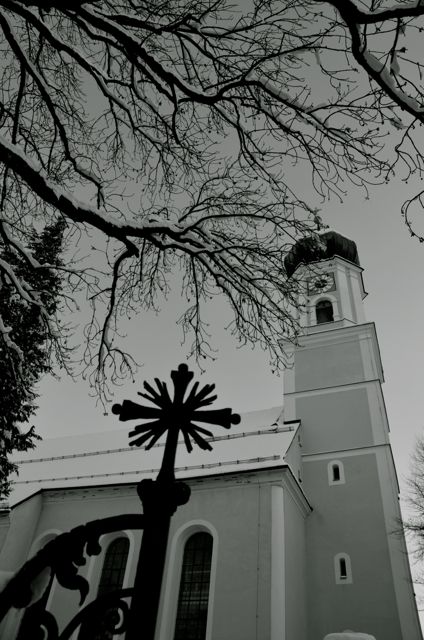
Just a few blocks from my parents’ home in Oberammergau, Germany is the St. Peter & Paul Church and Cemetery. The Rococo-style church that anchors the small cemetery was built from 1735-1749. Since the cemetery is just seconds’ away from the village’s center, we often pass it on the way home following an afternoon of errands. When we attended a picturesque Christmas Eve midnight mass service at the church, we saw young women, dressed in traditional Bavarian attire, placing candles at their loved ones’ graves. We learned that it is a tradition to do so here on Christmas Eve.
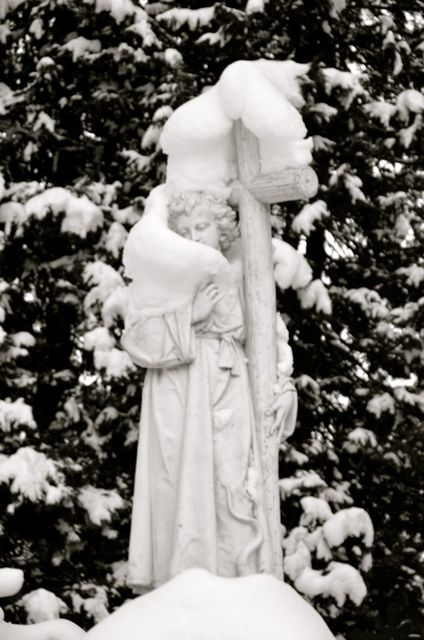
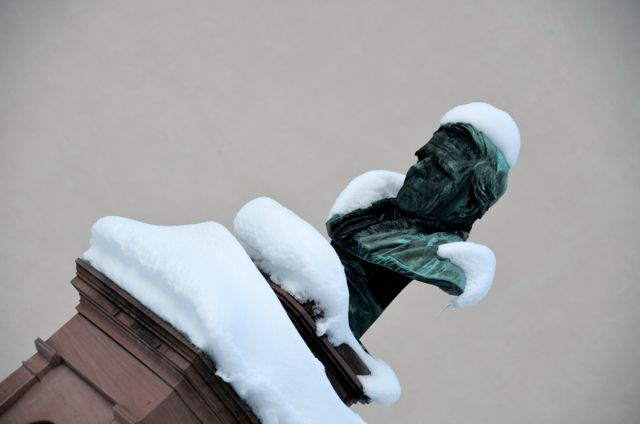
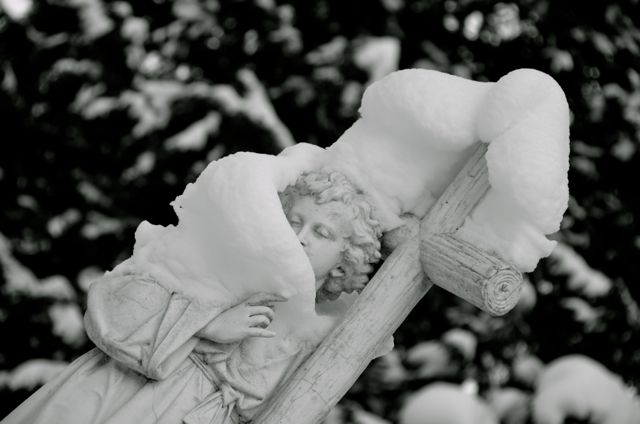
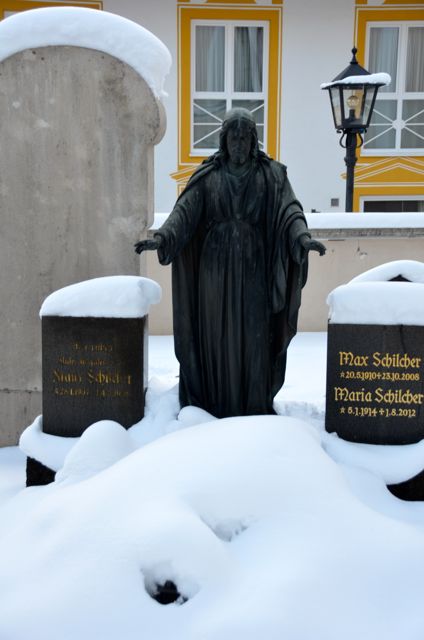
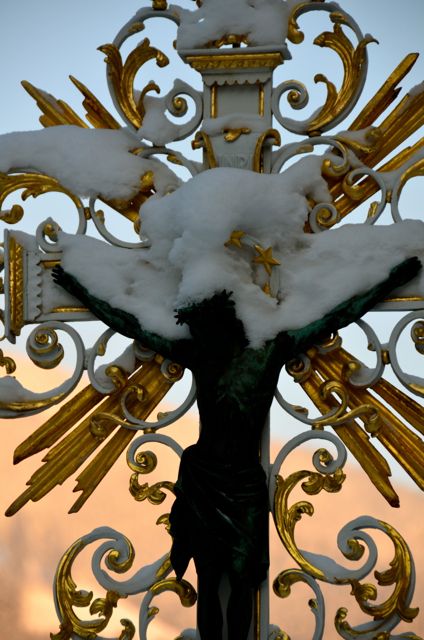
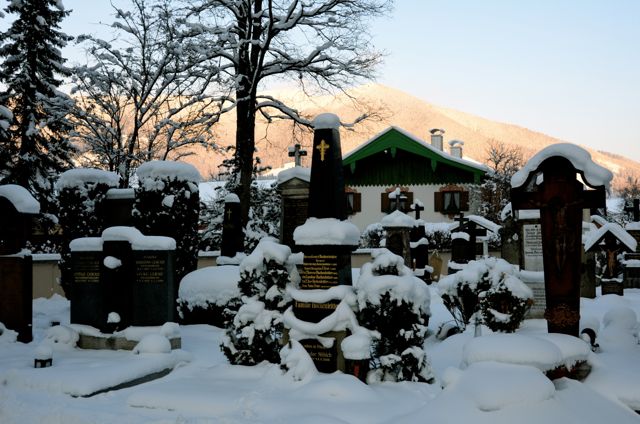
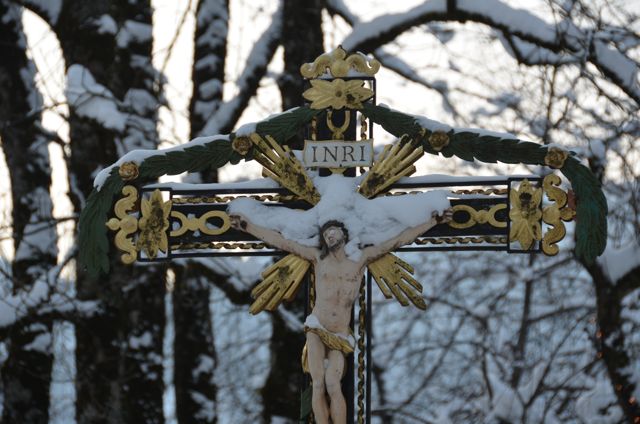
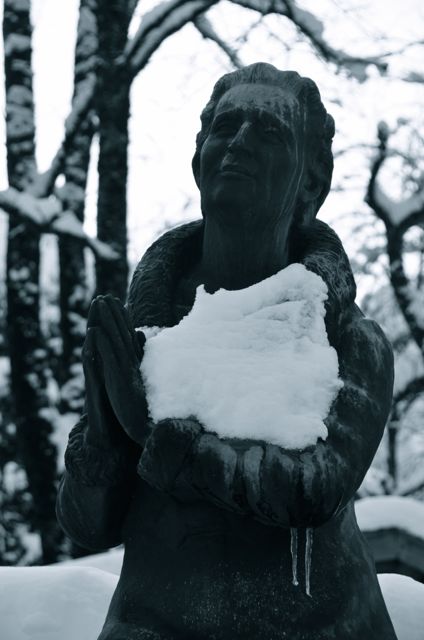
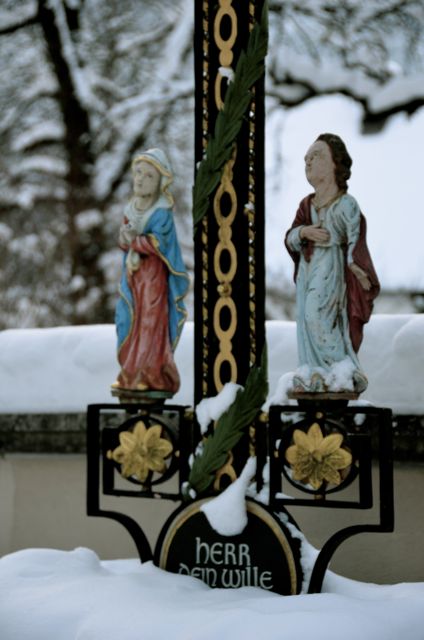
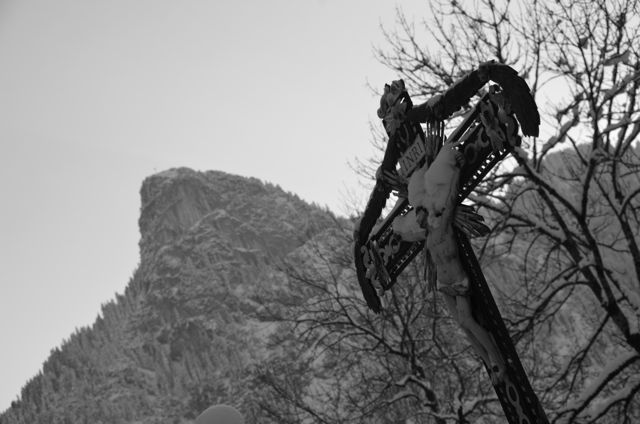
On a recent snowy afternoon, we stepped through the cemetery’s ornate iron gate to glimpse the cemetery with a fresh dusting of snow. A stole-like whisp of snow appeared to cascade around one saintly figure’s neck. Some statues looked as though they had epaulets of snow on their shoulders. One bust seemed as though he had on a Napoleonic hat. Mother Nature’s recently-fallen, glistening winter accessory clung to iron crosses, gates, and the elegant skeleton-like branches of neighboring trees.
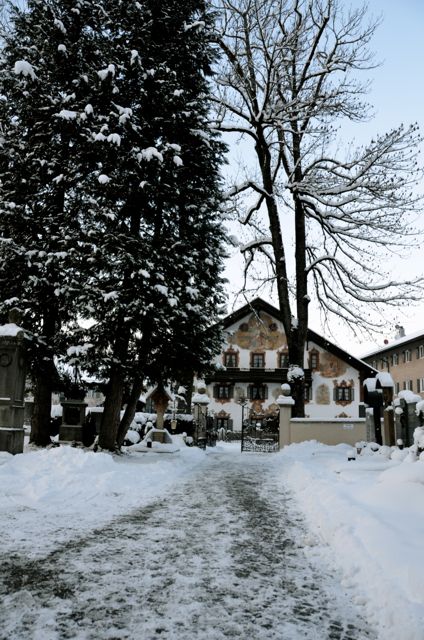
With the village’s signature mountain, the Kofel, overhead, I wondered about the lives of those buried there. Had their families lived in Oberammergau for centuries? Were they farmers or woodcarvers? What was life like for them during the World Wars? What were their dreams, their daily challenges, their personal stories?
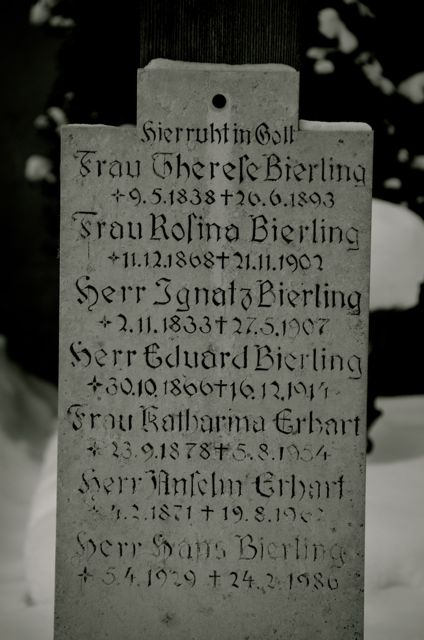
Some headstones were written in modern script, whereas others were etched in traditional Fraktur typeface. The dates spanned the 19th, 20th and 21st Centuries. As we left the stately, iron gates, we found that our Paris cemetery visit again came to mind – specifically our conclusion of the importance of making the hyphen in between the headstone’s two numbers the grandest of dashes.

Where in the World?
Photography & text © Tricia A. Mitchell. All Rights Reserved.


Leave a reply to Tricia A. Mitchell Cancel reply