

This spring, we’ve had the fortune of observing Easter celebrations not once, but twice. In Croatia, where Catholicism predominates, we celebrated Easter in late March. This past weekend, in North Macedonia, we had the chance to observe Orthodox Easter festivities.
The city of Ohrid has been dubbed the “Jerusalem of the Balkans” since it once had more than 365 churches. Ohrid, along with other natural and cultural sites in the region, was inscribed on UNESCO’s World Heritage List in 1979.
Today, many of Ohrid’s churches have been restored, but others are still awaiting their renaissance. It’s not uncommon to see a collapsed church juxtaposed against scenes of everyday life in a thriving neighborhood.
Just behind our current home away from home, for example, sits the small St. Nicholas Church, which is in ruins. Our hosts told us that local authorities are trying to raise more funds to restore it.
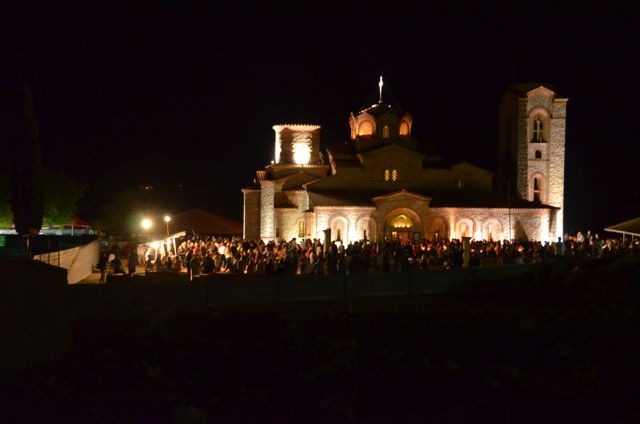


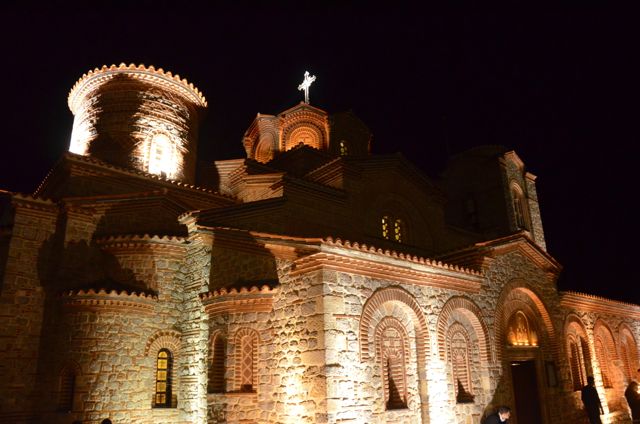
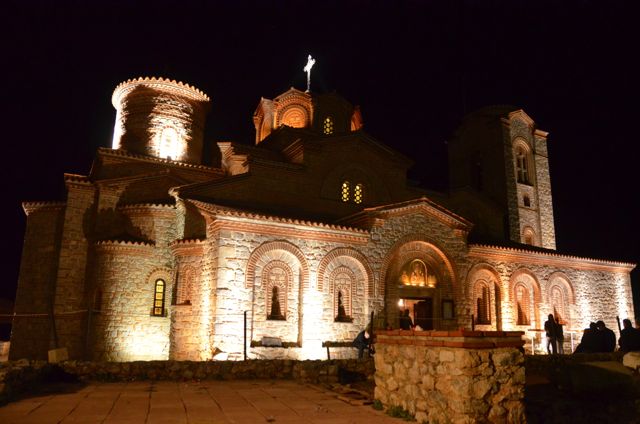
On Easter Eve, we joined a procession of thousands of North Macedonians to the nearby Saint Panteleimon Church, which was only recently renovated using the original materials that were still on site.
The church sits on the grounds of one of Europe’s oldest universities. In fact, the Cyrillic alphabet was developed at the learning institution that was previously here.
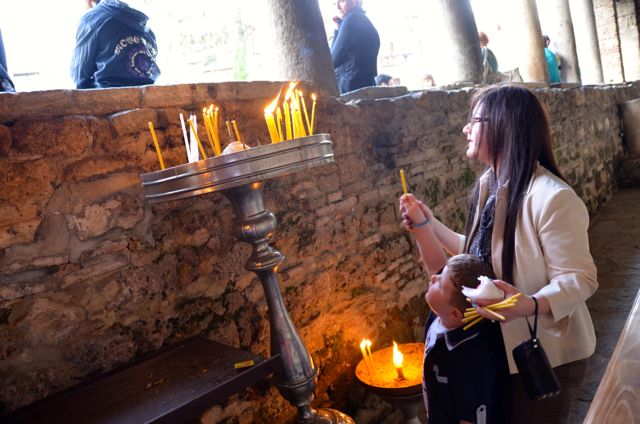
In anticipation of the massive crowds that would be passing through the neighborhood to the church, small, family-run stands had cropped up to sell candles. We purchased two slender beeswax candles from young girls.
Saint Panteleimon Church was dramatically illuminated for the occasion, showcasing its elegant mosaics and beautiful brickwork.
Our arrival around 11:15 p.m. couldn’t have been better timed! When we stepped into the church’s small interior, we only expected to see pre-mass preparations. Instead, we got to observe the entire ceremony, while thousands of others listened to the service outside.


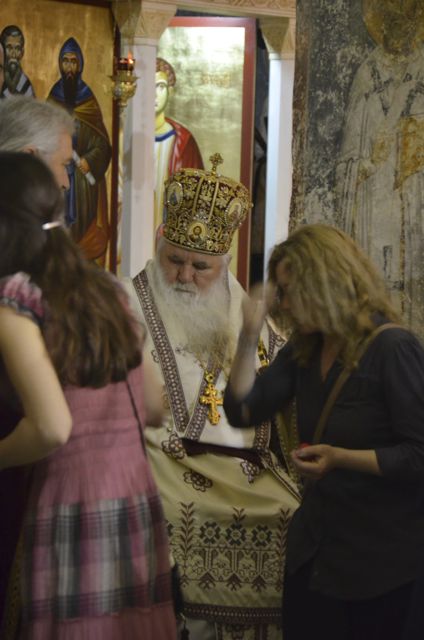
Upon entering the church, Orthodox Christians kissed the icons of the saints, then deposited a banknote or coins into the slot underneath the ornate images. A bishop and his deacons filled the air with song and the rich aroma of incense, as participants looked on with candles in hand.
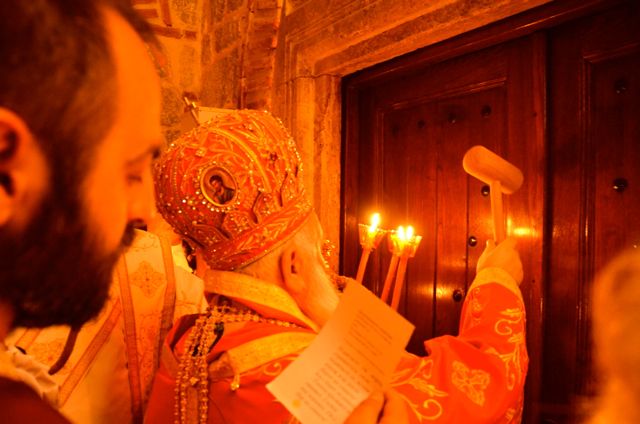
At one point, we were all led outside the church. It was dark as the doors were locked, and the ceremony continued outside. Shortly thereafter, the bishop returned with a wooden hammer in hand. He knocked three times, to symbolize Jesus’ resurrection. The people sang joyously outside, and again we were ushered inside.
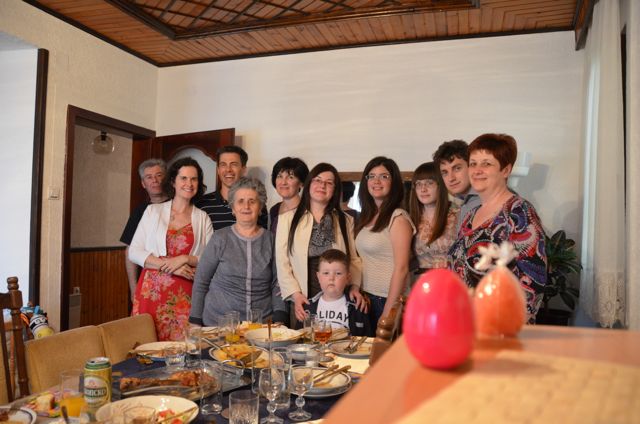
The next day, we were graciously invited to our apartment owner’s home for Easter dinner of lamb, roasted potatoes, Macedonian salad (cucumbers, tomatoes, feta cheese, and onions), and fresh-baked bread.
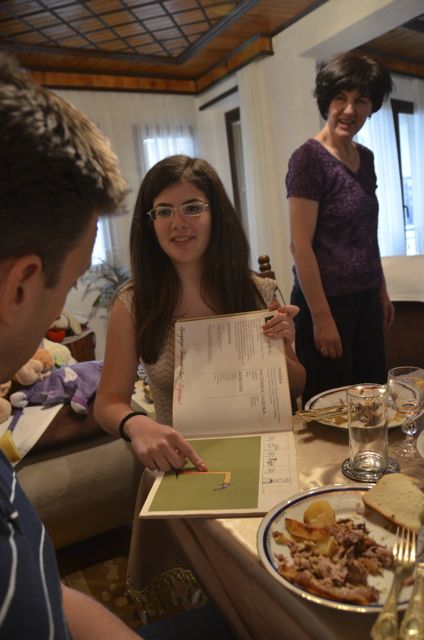
The family played North Macedonian music with accordion overtones, and one of our new friends gave us our first Cyrillic alphabet lesson from a family picture book.
The mass the family traditionally attends every year was set to begin at the nearby St. Sophia Church, so the family decided to do a progressive dinner. (Shawn would have to wait to feast upon the massive tray of homemade baklava that had been tempting him since our arrival!)


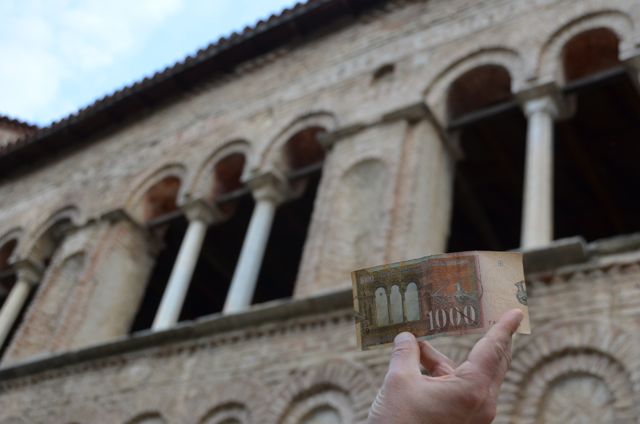
Though Saint Panteleim’s interior on Easter Eve was magnificent, St. Sophia’s offered a vastly different ambience. One-thousand-year-old frescoes with a deep blue background still adorned the ancient walls.
The church is thought to have been built in either the 9th or 10th centuries. The same bishop and clergy who’d presided over the services the night before had changed arenas and were now leading the late-afternoon ceremony.
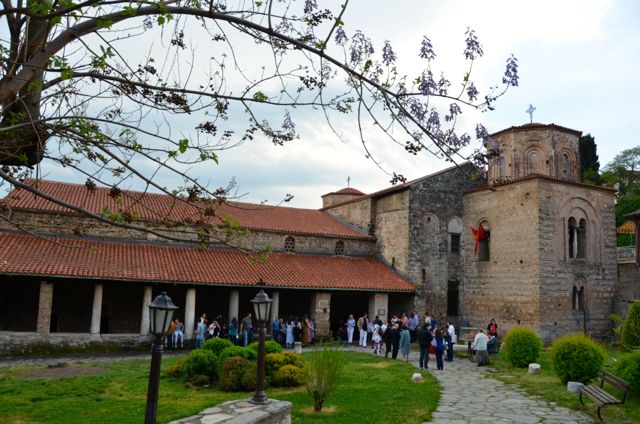


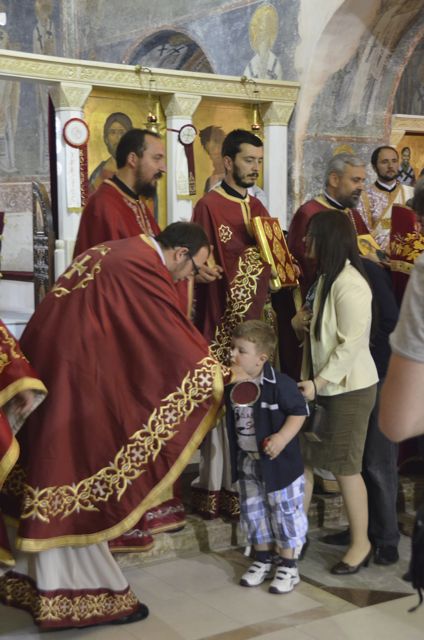
It culminated in the congregation participating in a procession that allowed them to kiss icons and crosses that the priests were holding. Children were also given red Easter eggs, which are customary in North Macedonia. They symbolize life and rebirth.





Homemade baklava.
When we returned to the family’s home, it was time to end this special day with a sweet finish. The family and Shawn feasted upon the homemade baklava, as well as a fruit cake infused with kiwi, bananas, and strawberries. I enjoyed (gluten-free) ice cream.
Rich Turkish-style coffee rounded off these treats.
We will forever remember our new friends’ warm hospitality. The joke is that we’ll host each other for our respective Christmas celebrations next year.
Where in the World?
Planning Pointers:
- Are you looking for accommodation in the heart of Ohrid’s Old Town? Shawn and I spent two weeks at the Svetlana Guesthouse (affiliate link), run by the family featured in this post. The location was fantastic, as it was about 100 meters to Ohrid’s Ancient Theater and roughly 200 meters from Samoil’s Fortress. We loved having our own balcony, as well as access to a communal kitchen when we wanted to cook. Svetlana, her children, and grandchildren made our stay in Ohrid extra special.
- Ohrid’s official website offers additional information about the city.
- This link contains an index of all my posts from North Macedonia.
Photography & text © Tricia A. Mitchell. All Rights Reserved.


Leave a reply to worldwanderer Cancel reply