

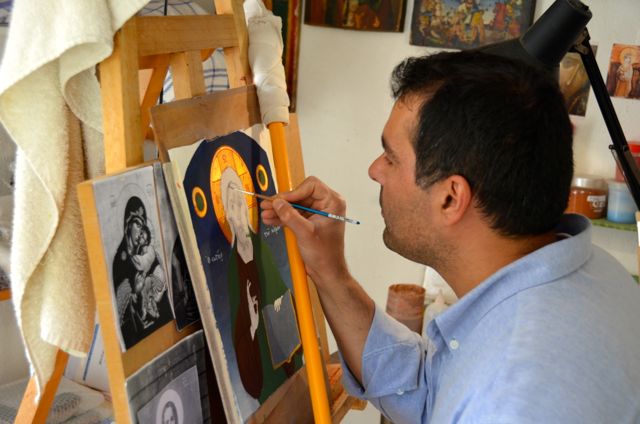
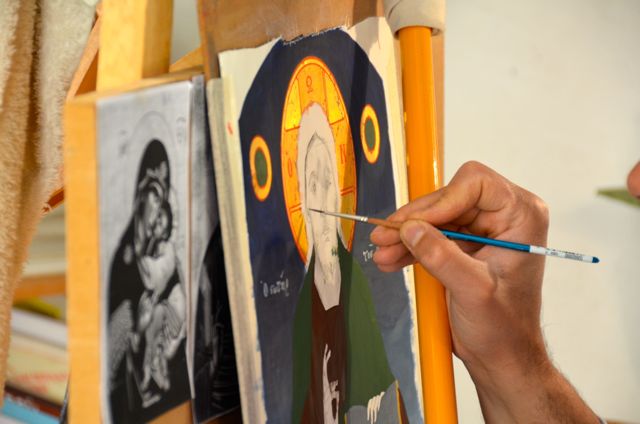
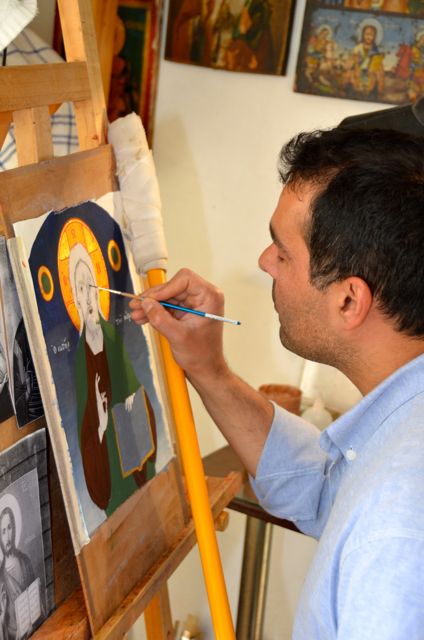
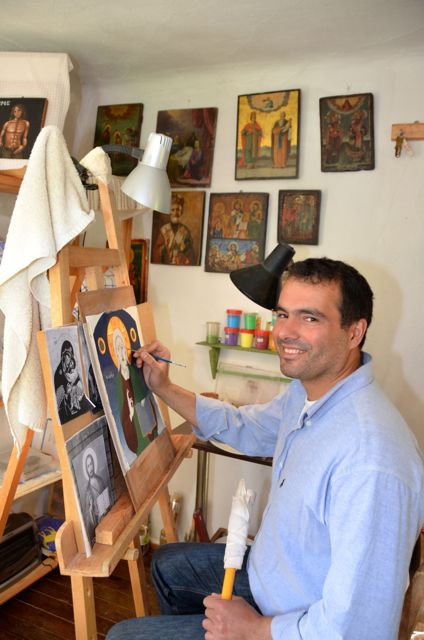
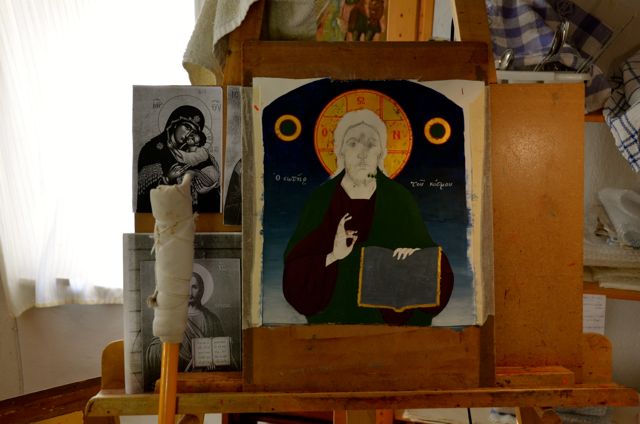
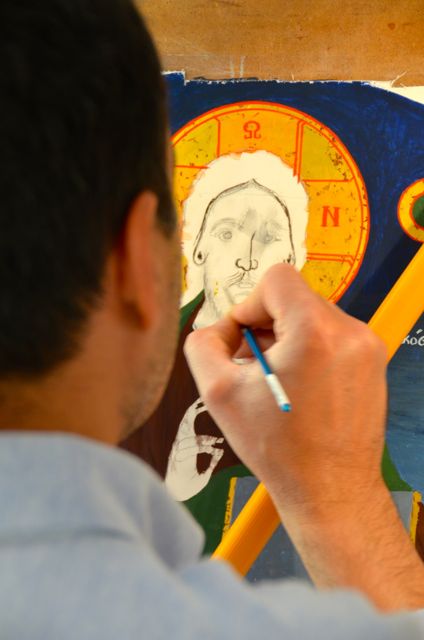
In a two-room workshop dwarfed by the massive Meteora rock formations that surround it, 38 year-old Greek iconographer Dimitrios Moulas demonstrates admirable focus towards his subject — an icon that will soon represent Jesus Christ.
With a delicate paintbrush in hand, Dimitrios carefully draws fine facial hairs. After a few moments have passed, the hairs have been transformed into a wispy mustache.
As I quietly watch the process from behind, it seems as though the artist’s and subject’s eyes are locked upon one another in an intense gaze.
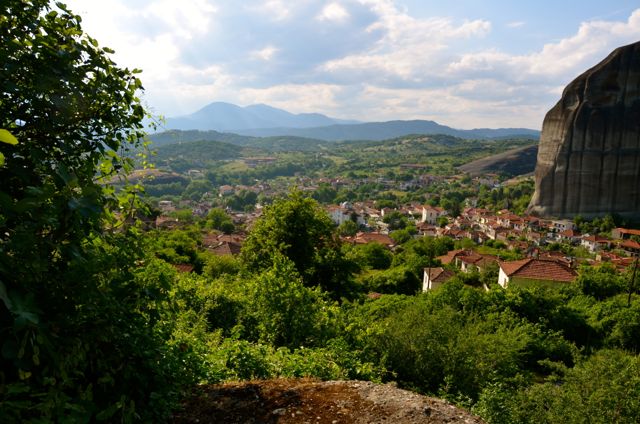
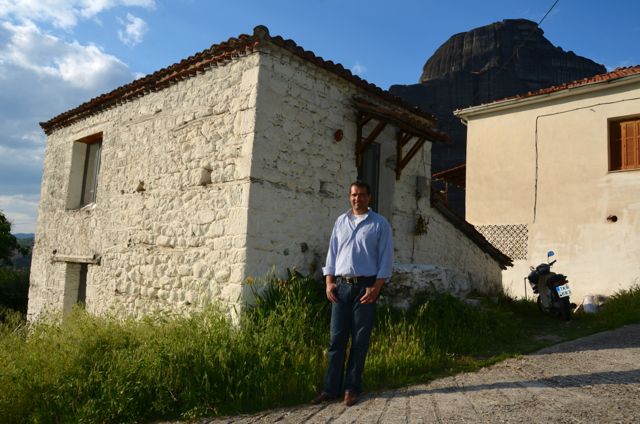
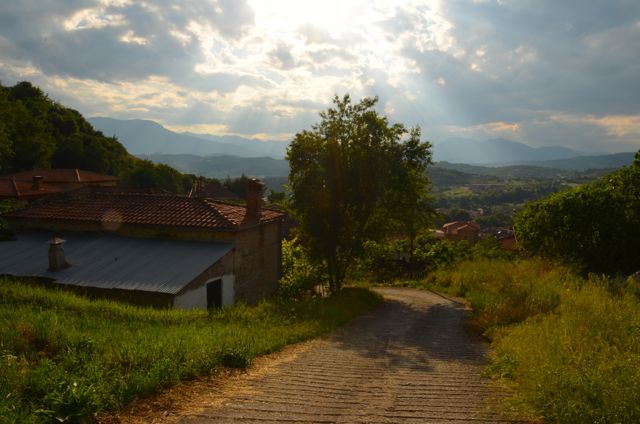
As we strolled the historic village of Kastraki, we were escorted by a friendly ginger-haired neighborhood dog. Purely by chance, we stumbled upon Dimitrios’ workshop, which is located among Old Kastraki’s buildings. As we started chatting with Dimitrios on the hilly streets that wind through the village, we asked him if he knew where our new canine companion lived. We wanted to be sure she returned home safely.
Dimitrios was friendly and chatty with us, and so gentle in his sales approach, that he didn’t even mention that he had a icon studio just meters away. Instead, he was curious about our home country, and he was eager to share that his grandmother and many Kastraki villagers had immigrated to Boston and New York in the early 1900s and returned to Greece in the 1930s.
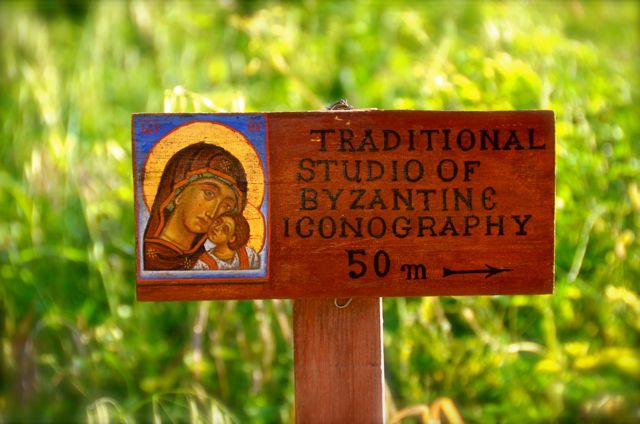
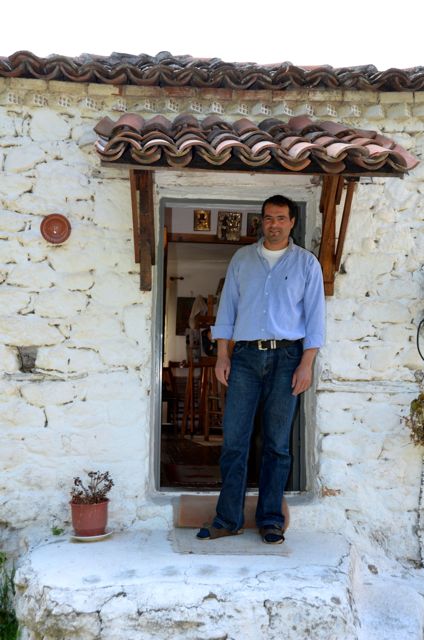
After we parted ways with Dimitrios, we saw a hand-painted sign leading to a small studio of Byzantine iconography, something I had been hoping to visit in Greece.
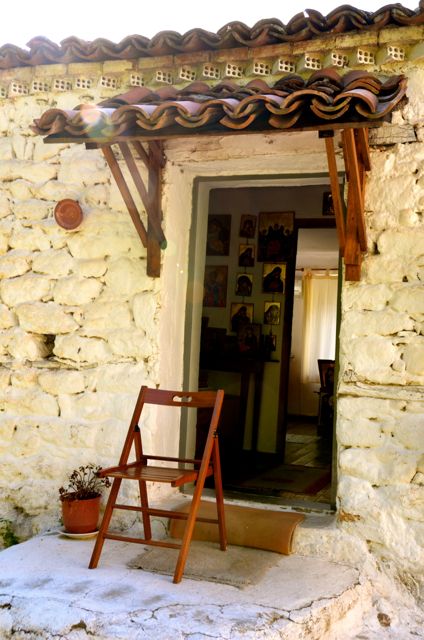
For Eastern Orthodox Christians, icons are an essential part of prayer. Unlike some of the icon workshops that we’d seen in nearby Kalambaka, this appeared to be an authentic, living studio. The whitewashed stone building seemed as though it’d be equally at home on a Greek island as it was in Kastraki. A small chair sat out on the stoop and a wall of icons with rich colors hung on the entryway’s wall, highlighted by warm beams of sunlight.
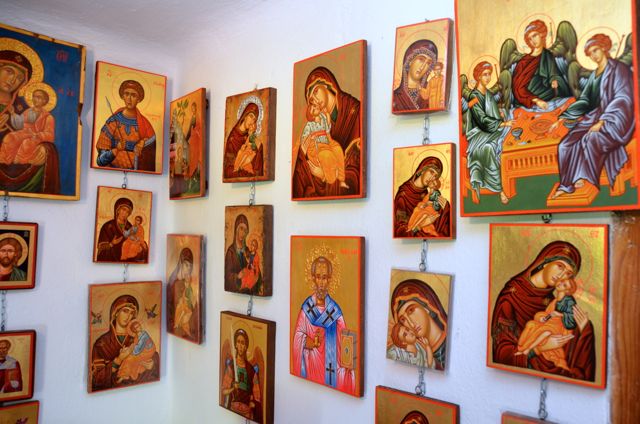
Spotting us by the entrance, the same passerby we’d chatted with earlier came bounding down the hill, eager to welcome us into his cozy studio. Jewel-toned icons that have been in his family’s care for centuries adorned the white walls, as did some that he acquired during visits to Istanbul and Russia. There were images of Saint George slaying the dragon, of Mary and Baby Jesus, of Jesus holding his right hand in such a manner that symbolizes the Greek letter for “Christos.”
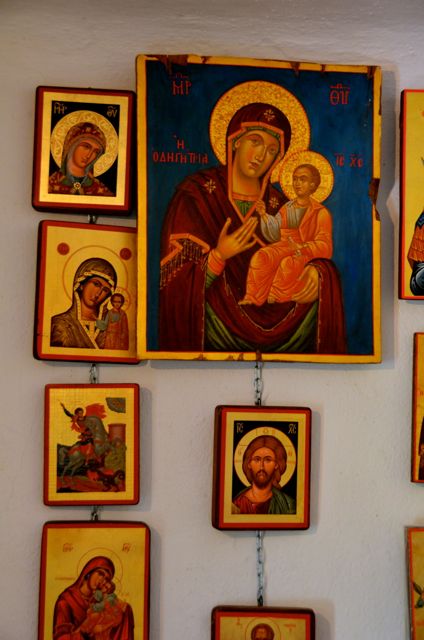
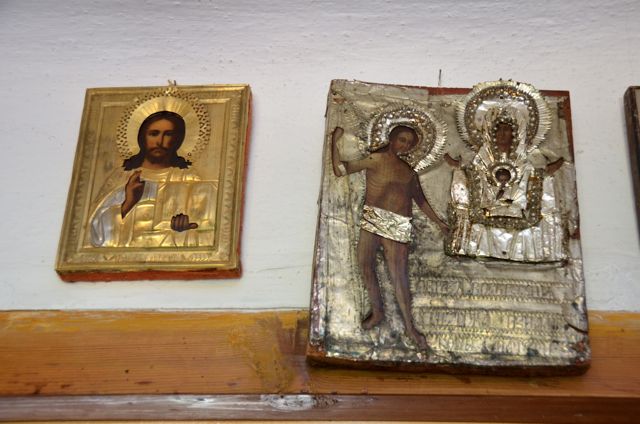

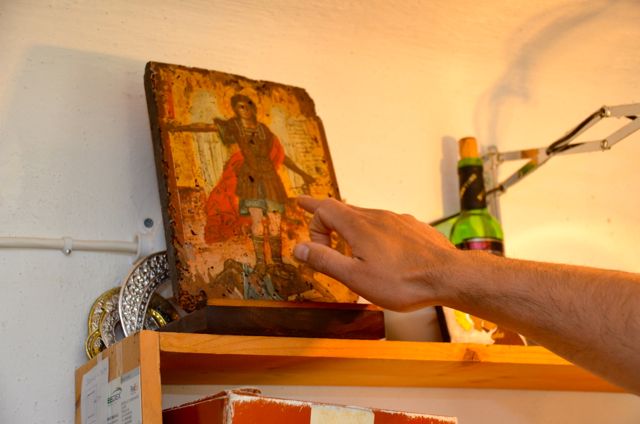
We learned about the colors and materials Dimitrios uses to create the icons, some of which can take up to one week to complete. “Gold symbolizes divinity,” he said.
Showing his palette and desk, Dimitrios explained, “I use all-natural materials such as egg tempera, which is a blend of egg yolk and vinegar. They are then gilded with 24 karat gold leaf.”
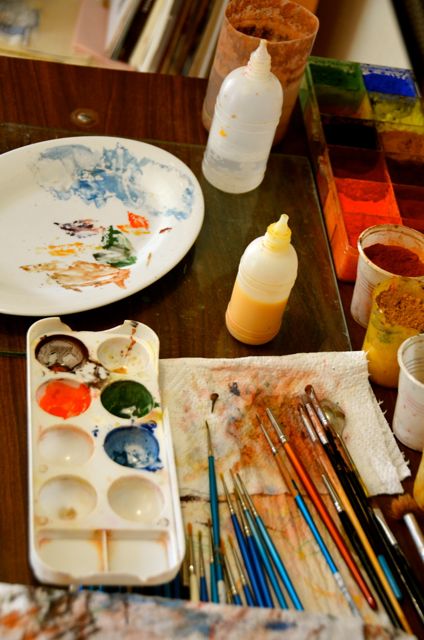
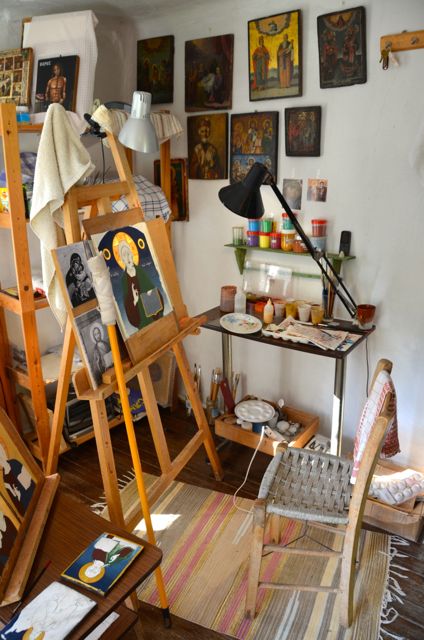
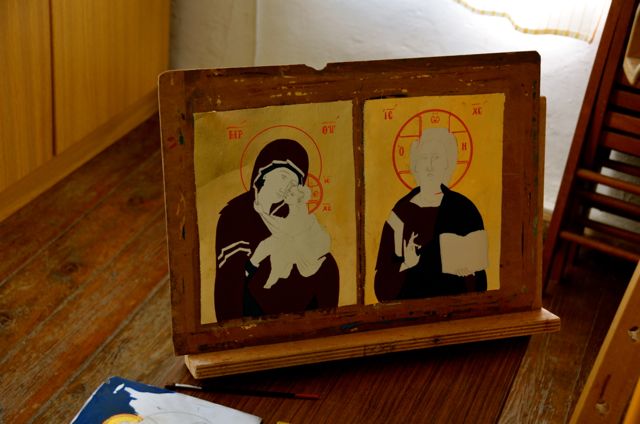
“In order to create the halos, sometimes I use pure-silver, and at other times I use a gesso technique.” (To achieve this technique, an artist uses a hard compound such as plaster of Paris as a base, giving three-dimensionality to a piece of work.)
I asked Dimitrios what he most appreciates about this art form that is so sacred in Greece, something that he has been practicing for 23 years.
“It is the mysticism,” he said. “When looking at the icons, one can see something that seems simple, but when you study them, you see that they have much deeper meaning.”
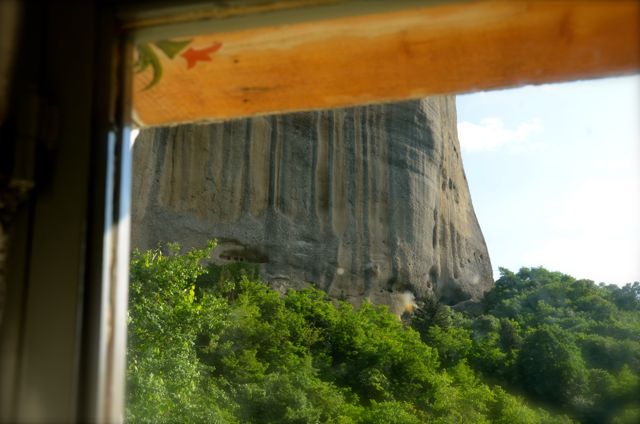
Dimitrios led us to his studio windows, eager to point out the 14th century hermit caves that are still visible in the formations not far from his workshop. In the golden hour light of the late afternoon, the setting seemed as mystical as the centuries old art form that Dimitrios is so keen on preserving.
Where in the World?
Planning Pointers:
- Dimitrios’ studio is located at the top of Old Kastraki. If you’re walking down towards central Kastraki from Adrachti (Kastraki’s signature rock formation) it’s likely you’ll happen upon his sign. At the present time, Dimitrios does not have a sign posted at the lower part of the hill. He joked that he does not want to be too commercial in his approach.
- Since we are long-term travelers and space is at a premium, I didn’t purchase an icon. However, Dimitrios does regularly sell them to visitors. He said that the bulk of his customers are from Greece and Italy. Prices range from 60-200 Euro depending upon the size of the icon purchased. Keep in mind that some of the larger icons take up to one week to complete.
- Dimitrios’ contact information is as follows: Address: Kastraki Kalampaka, 42200. Telephone: +30 2432075248. Mobile: +30 6977068376. Email: dimitriosmoulas {at} hotmail . com
- Visit the Kalambaka Tourist Center website for information about the monasteries, as well as other activities that you can do in Meteora.
- Accommodation wise, we stayed at the cozy Guesthouse Patavalis (affiliate link) in the village of Kastraki. The hotel’s owner, Marina, whom we dubbed our ‘Greek mama’, even surprised us with samples of tasty, home-cooked Greek food like spanakopita, candied figs and milk custard pie. In total, we spent about a week at the Guesthouse Patavalis, staying in its ‘Purple Room’. We enjoyed its terrace views of the surrounding rock formations, and its convenient location. It made a great hub for hiking to, and exploring some of Meteora’s monasteries!
- Need more inspiration? This link contains an index of all my posts from Greece.
Photography & text © Tricia A. Mitchell. All Rights Reserved.


Leave a reply to Beauty Along the Road Cancel reply