

As we bid farewell to our charismatic Greek cooking class Sous-Chef, Daniel, he shared parting culinary wisdom with a twinkle in his eye:
“Use your imagination and everything is possible. And remember – you needn’t measure – you must feel the taste.”
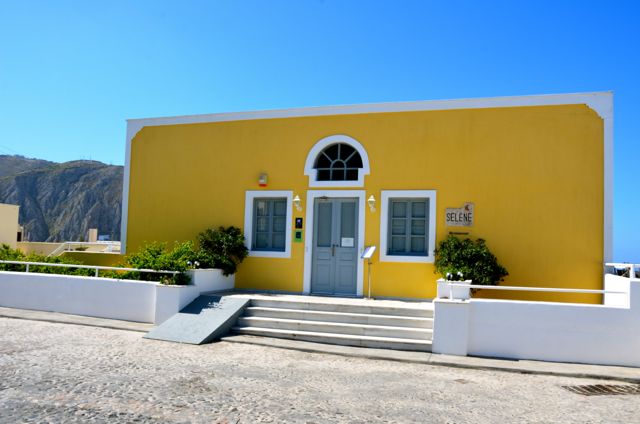
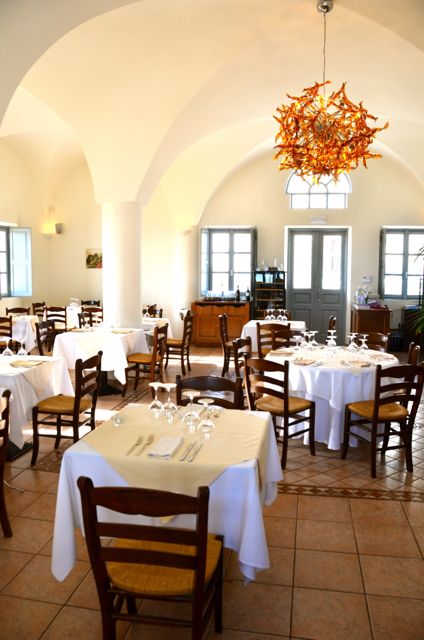
We’d come to the elegant, highly-acclaimed Selene restaurant on sun-drenched Santorini, Greece. We would spend the day learning about the island, its Cycladic neighbors, and their unique produce, cheese and wine. We would then try our hands at some of Selene’s trademark recipes and as a reward, savor what we’d prepared. As we strolled out into the Santorini sunlight after our cooking class and lunch, utterly relaxed, with creatively-stimulated minds and taste buds, we reflected on what an exemplary day it had been.

Santorini’s Unique Produce & Growing Environment
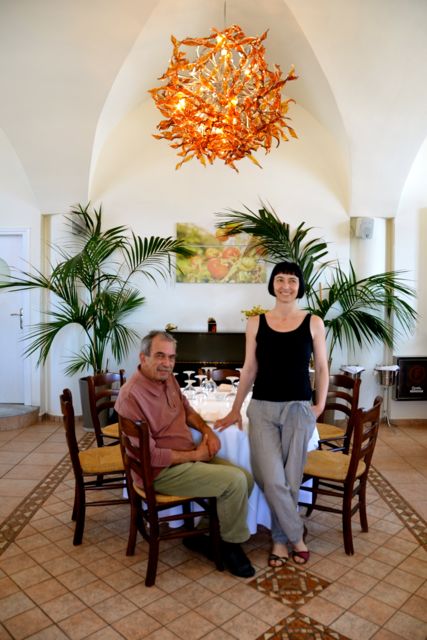
Arriving in Selene’s bistro in the delightful medieval village of Pyrgos, we were greeted by vivacious Georgia Tsara, our cooking class instructor. We’d later learn that her passion for gastronomy had started when she was an eight year-old in her parents’ small restaurant, later propelling Georgia to her role as Selene’s restaurant manager and sommelier.
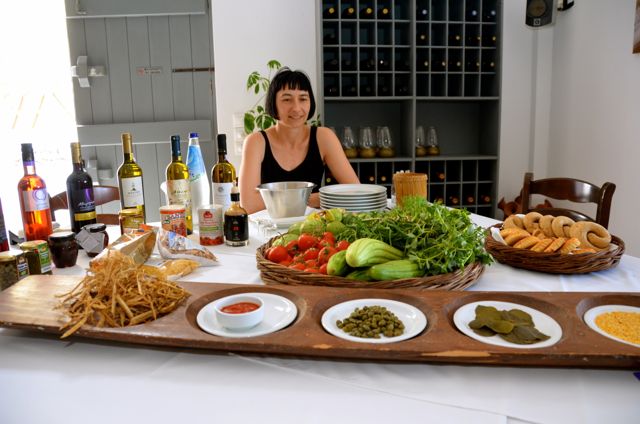
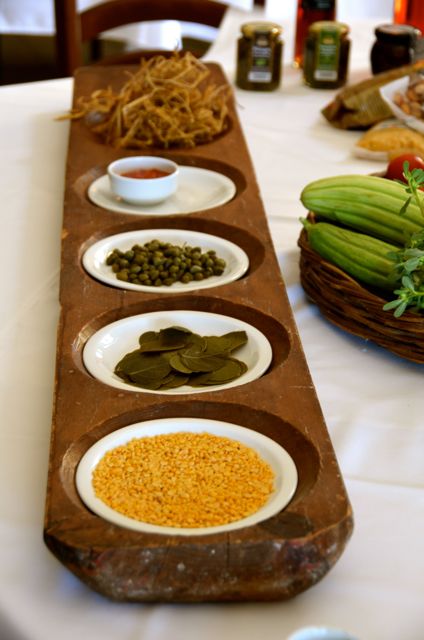
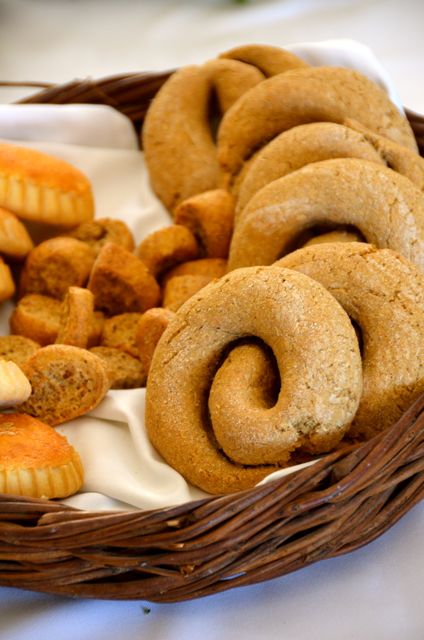
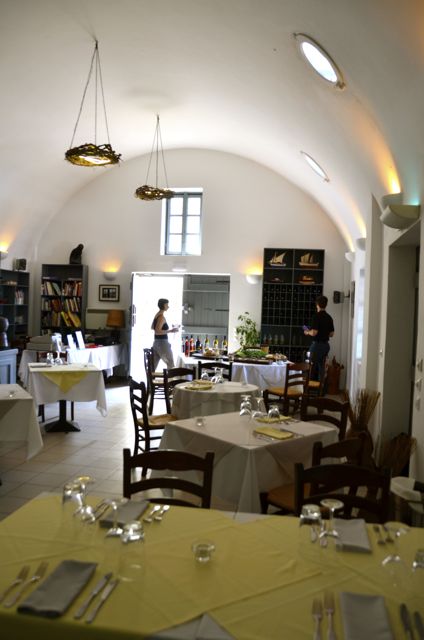
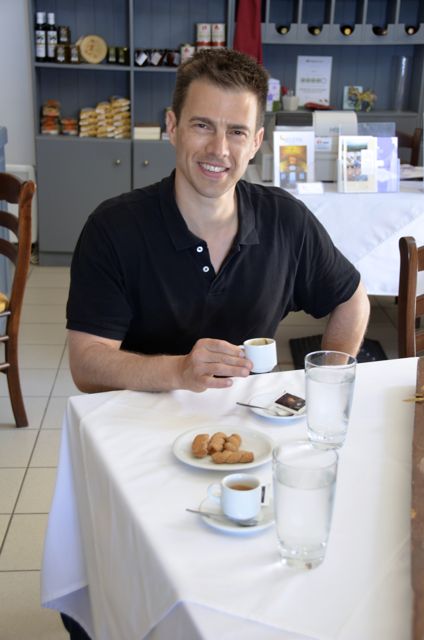
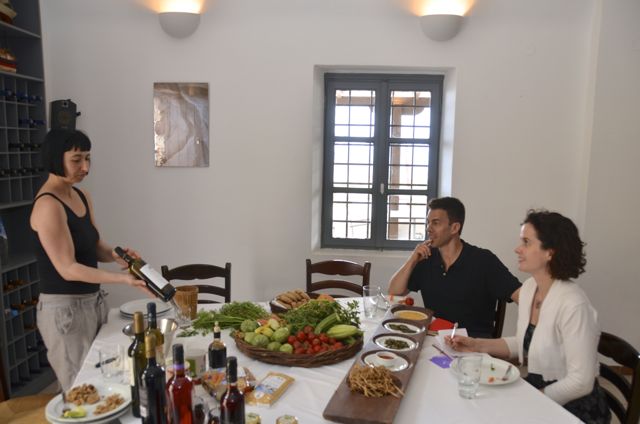
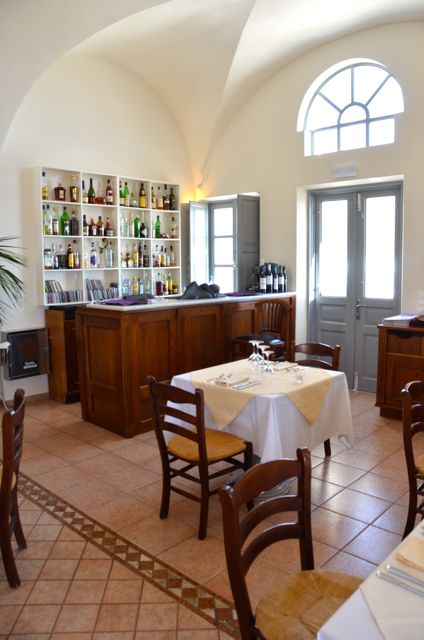
Instantly, we were given a feast for the eyes as well as the stomach. The table was adorned with a bounty of vibrant produce, and gourmet local products such as Santorini fava (small yellow peas), capers, caper leaves, tomato paste, and baskets of hearty bread as well as traditional cookies called Melitinia. Light streamed in via windows on the barrel-vaulted ceiling, illuminating the streamlined interior as we sampled each treat.
We learned that the devastating volcano of around 1500 BCE, which some believe obliterated the legendary civilization of Atlantis, not only shaped Santorini’s legendary caldera and cliffs, it also created a unique growing environment. The volcano caused some crops like saffron and olives to vanish, and other newcomers such as the Santorini Mini Tomato, Santorini Zucchini and Santorini White Eggplant to thrive in the volcanic soil. Amazingly, grapes, capers, the protein-packed Santorini Fava, melon-flavored cucumber and kardanides survived. Equally impressive is that today’s produce does so well in this hot desert climate which is characterized by strong winds and little water.
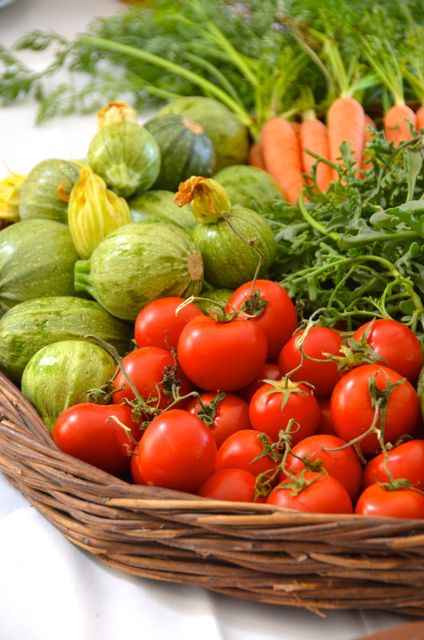
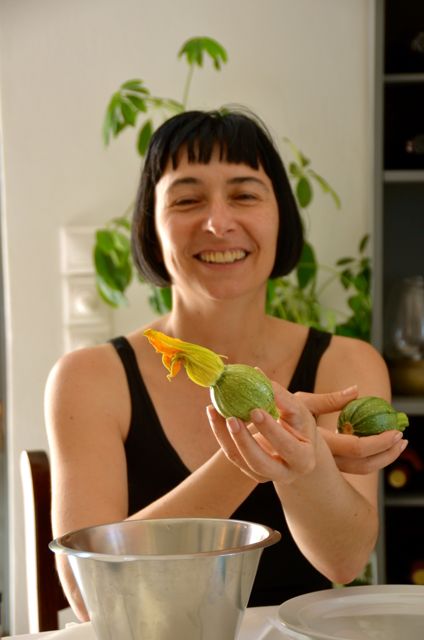
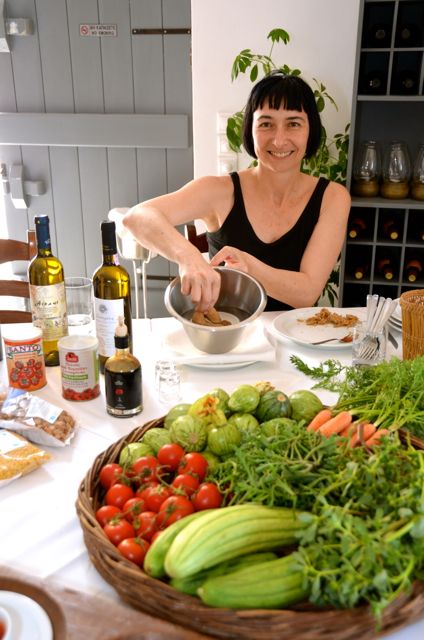
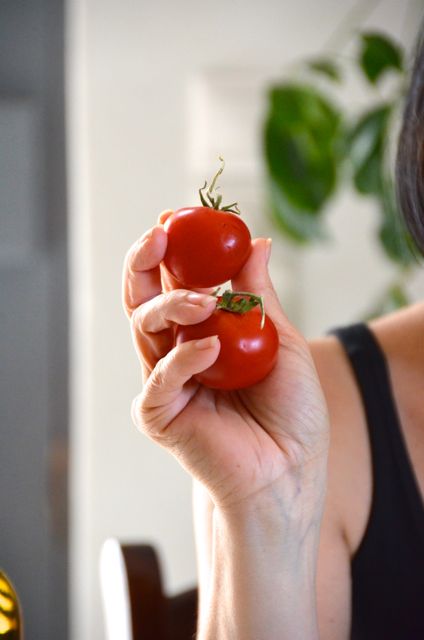
“Santorini’s produce tends to be more petite, with richer flavors,” Georgia explained, as she sliced a mini zucchini, then passed it to our tasting plates, all the while with a big smile on her face. As class continued, we noticed Georgia regularly exhibited the same bubbly expression whenever she unveiled a new delicacy. It was a pleasure witnessing someone so passionate about her work.
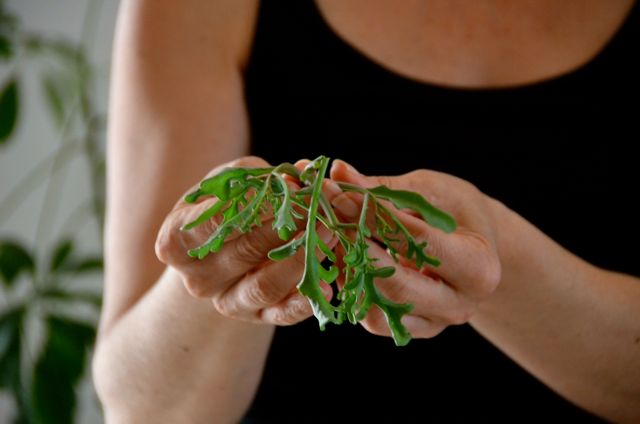
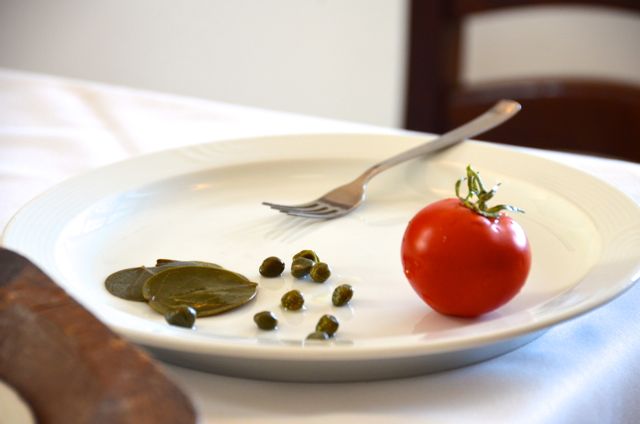
Santorini tomatoes, capers, and caper leaves.
A Challenging Wine-Growing Terroir
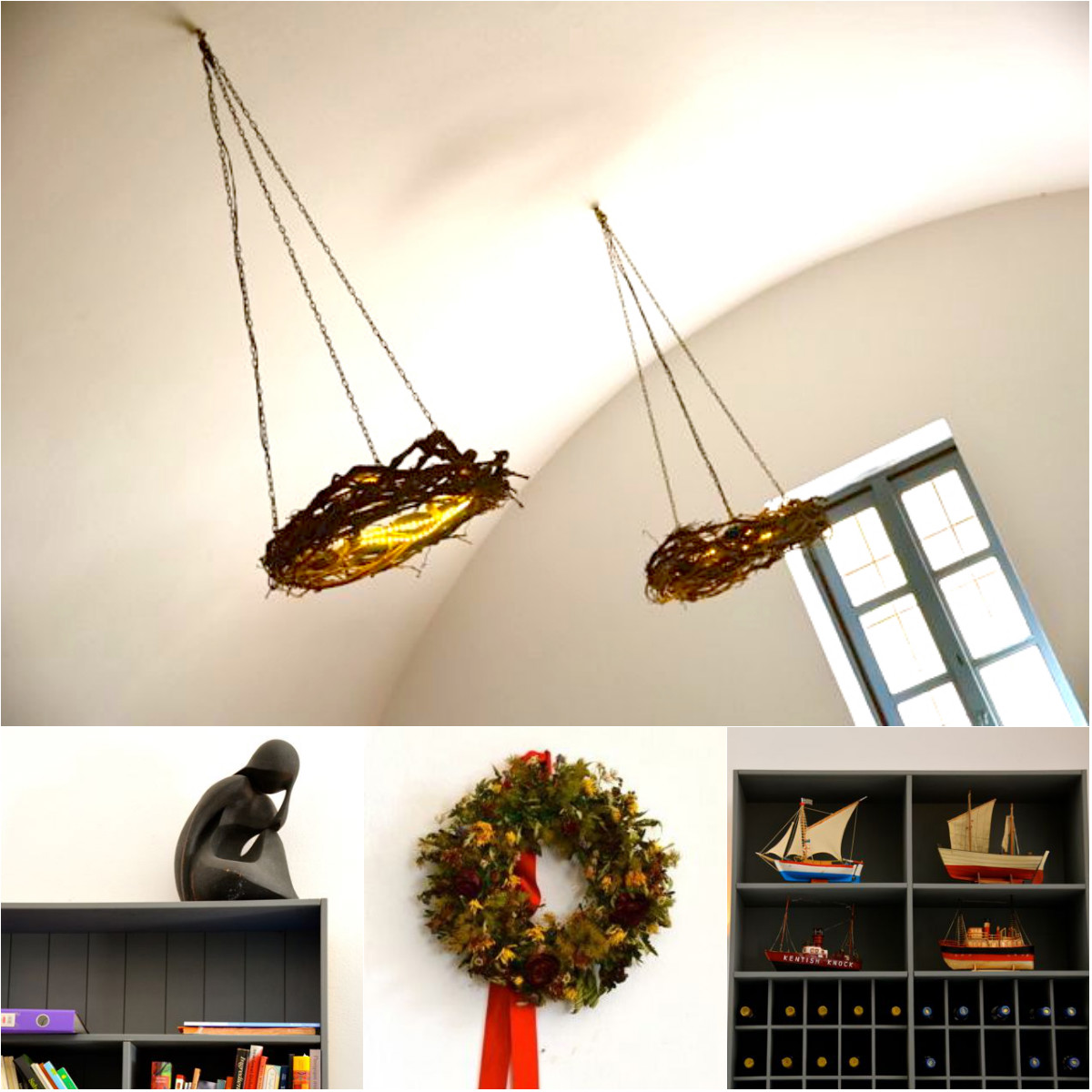
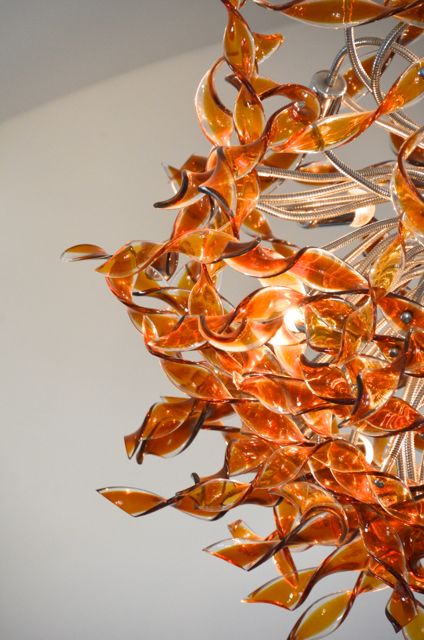
Transitioning into our course’s wine section, Georgia drew our attention to the restaurant’s wreath-adorned lights overhead, explaining that they were actually old grapevine roots. Instead of cultivating vines vertically on stakes, Santorini winegrowers train the grapevines to grow into a large basket shape low to the ground. In doing so, the grapes are protected with their own leaves. This shields them from intense heat and wind and allows morning dew to collect, which in turn provides essential moisture. The volcanic pumice in the soil also lends a hand, helping to protect against diseases like Phylloxera.
Despite such adaptation against the elements, wine cultivation on Santorini is extremely challenging given the vineyards’ narrow paths. As a result, no trucks can access the area, and everything is done by hand. Today, there are ten wineries on Santorini. Incredibly, some of Santorini’s oldest vine roots are more than three centuries old!
Georgia introduced us to some of the island’s most common varietals – whites such as Assyrtiko, Athiri & Aidani and reds like Mavrotragano and Mandilaria, as well as blended wines like Rosé. Finally, she introduced Vinsanto, Santorini’s beloved dessert wine, which is particularly labor intensive during harvest time when the grapes are being dried.
“Farmers must go to the field three times per day to turn the grapes,” Georgia noted. “They leave them in the sun for seven to twelve days.”

Cheese, Glorious Cycladic Cheese
Next, the cheese board made its grand appearance, adorned with eight blocks of beautiful cheese that had Shawn and me (cheese enthusiasts is an understated way to describe us!) responding in a Pavlovian fashion.
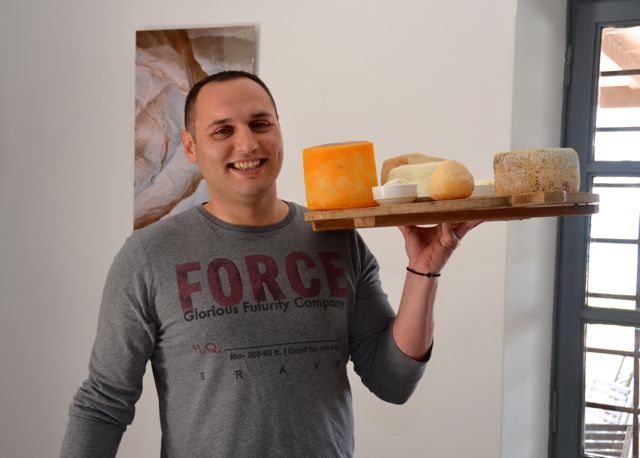
“Greeks consume cheese all day long,” Georgia said as she gestured toward the tempting arrangement.
“This is a small sampling of cheese from the Cycladic islands. Every region makes four to five kinds, and on some of the islands, the goat population exceeds that of the humans!”
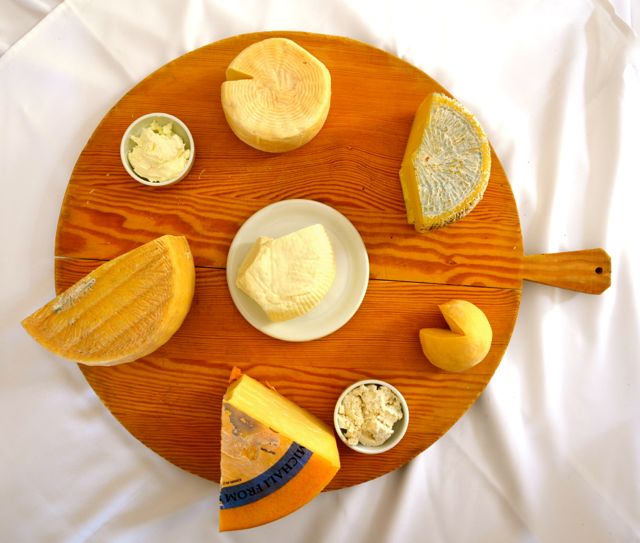
Georgia explained that types of goat-milk cheese like Mizithra, Souroto, and Chloro are “feminine” in nature, given their more delicate flavors. Skotiri, Niotiko and Arseniko, on the other hand, are more “masculine” because of their strong flavors, which are developed during the aging process. An additional two types of cheese we tasted, Volaki and San Mihali, are made from cow’s milk, unlike the first six types of cheese. Georgia also pointed out that the so-called feminine cheese types are made during the second round of the cheese-making process, whereas the masculine ones originate out of the first.
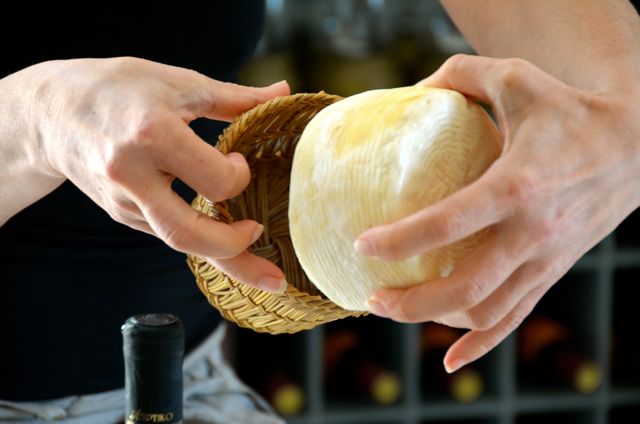
I’d previously thought that France was the world’s cheese capital, but after trying these unique Greek varieties, I must confess that the two countries might share that distinction. Some of the adjectives that I scribbled in my notes include: “creamy, buttery, a yogurt-like texture, fresh and light, essence of delicate herbs.”
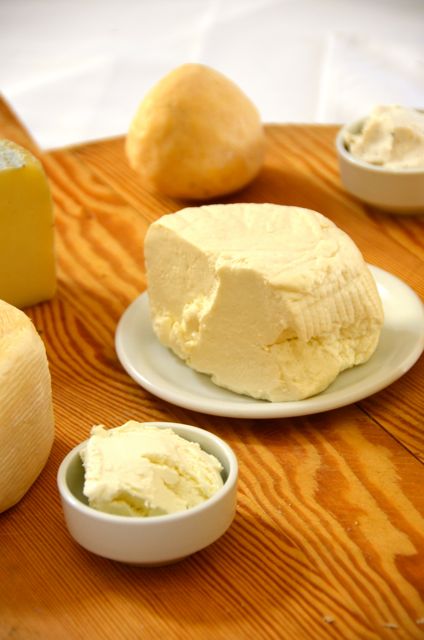
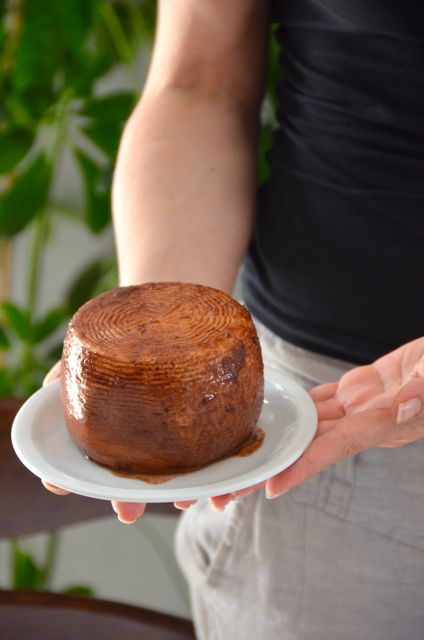
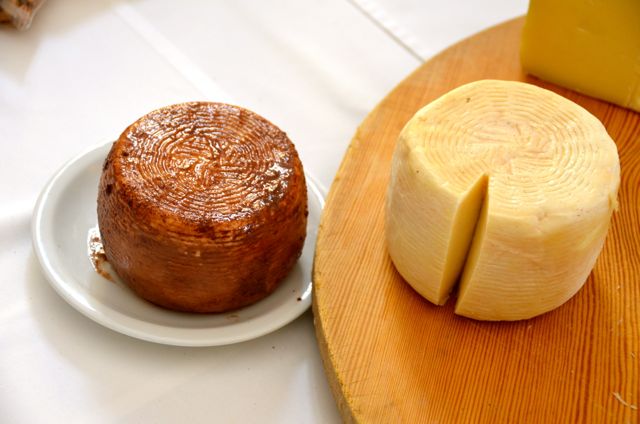
Selene’s innovative culinary team, exemplifying a philosophy of embracing local products in a creative manner, marinated Chloro cheese in Vinsanto leaves to produce a cheese that could be brilliantly paired with a glass of Vinsanto. We tried ‘Selene’s Cheese’ later during lunch and it was divine – particularly unique in the way that it alternated between sweet and salty flavors.
Visiting the Folk Museum
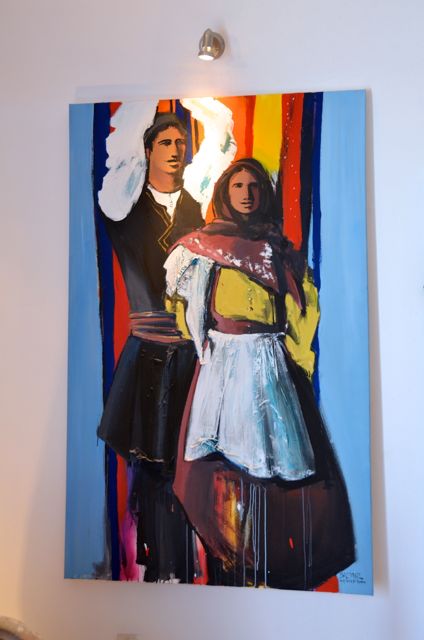
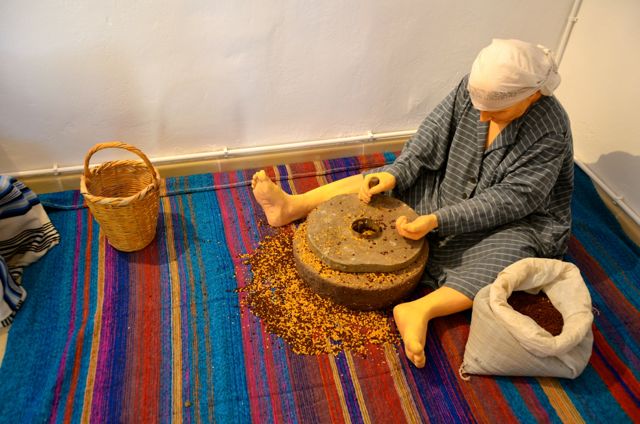
Before we went into the kitchen to learn from Selene’s award-winning chefs, Georgia whisked us off to the neighboring folk museum, which is situated in a traditional village. The displays inside the former winery depicted everything from the stomping of grapes, to bird catching, and the processing of fava. Afterwards, we better understood what unique and labor-intensive processes farmers went through and continue to encounter today on Santorini.

Taken Under the Chefs’ Wings
Upon entering Selene’s kitchen, we tied on our aprons and got to work with Chef Nikos Boukis and Sous-Chef Daniel Papatrianta-Fyllou and their team. Balancing a casual, yet professional, confidence with a playful personality, Daniel walked us through four recipes, giving us practical cooking advice that we’ll undoubtedly use in our own kitchen.
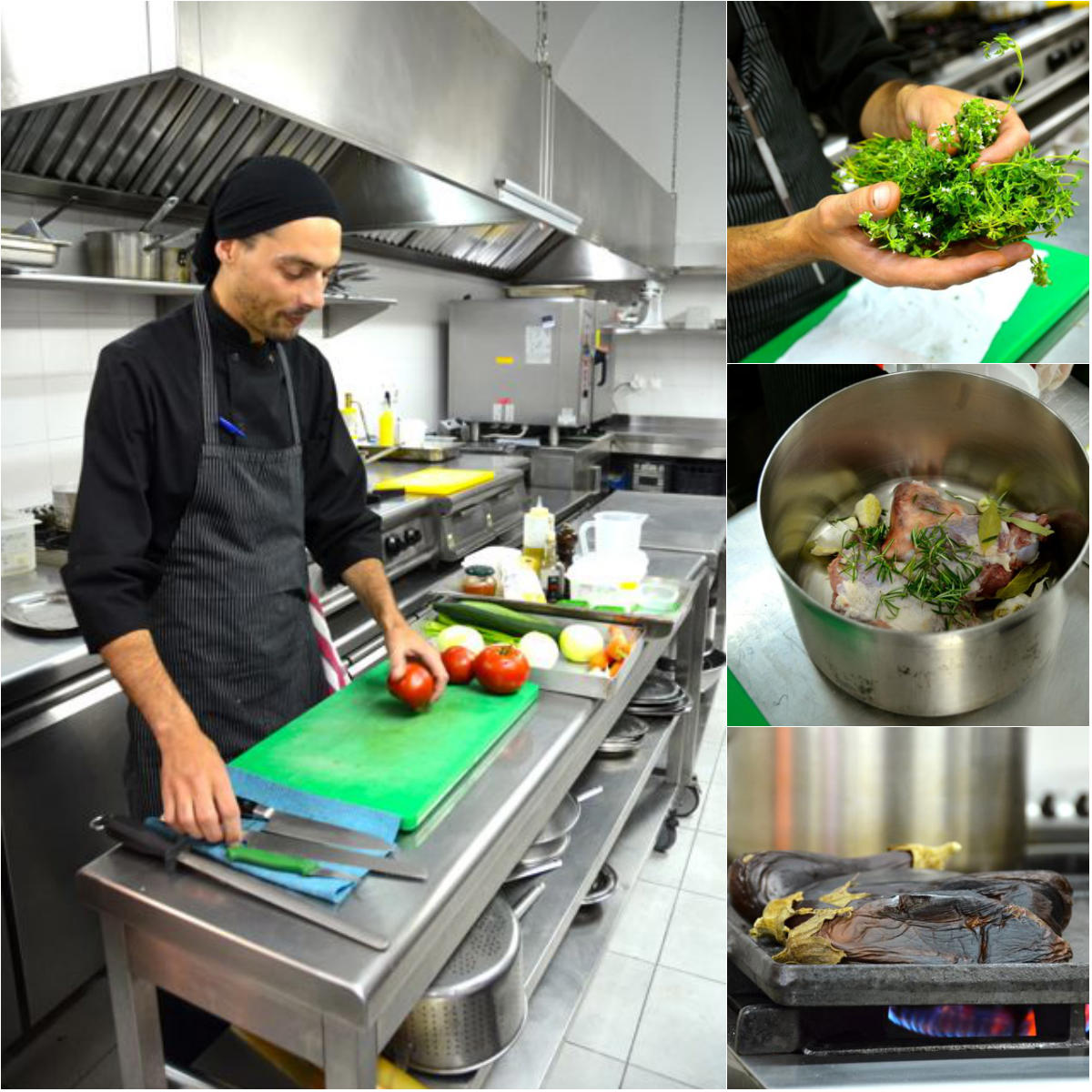
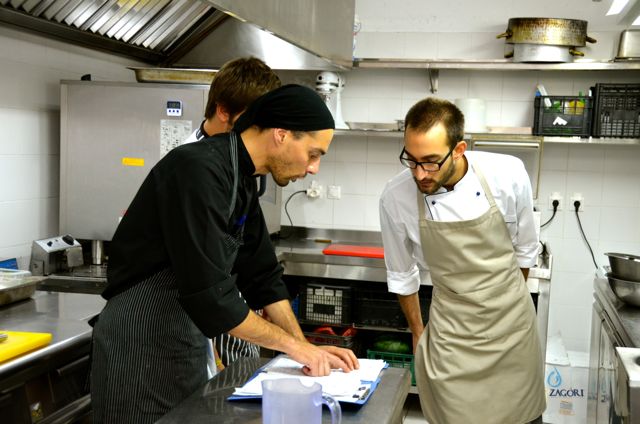
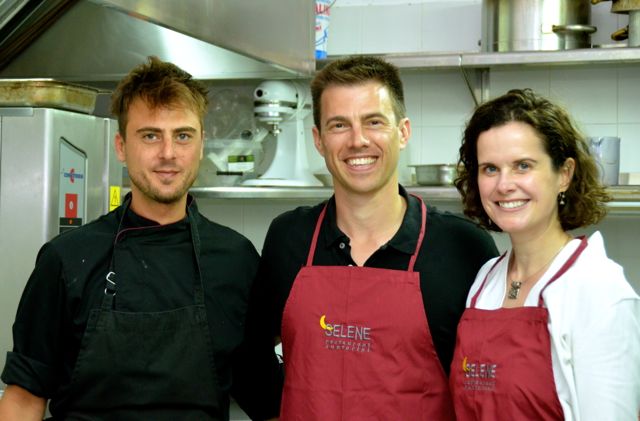
When I reminded Daniel of my gluten intolerance and ‘selectarian’ meat preferences, he enthusiastically tossed out options. Imagine my delight when three professional chefs commiserated about what gluten-free dessert to make for me. I was touched by their kindness and willingness to whip up something special. The gesture made me feel a bit like royalty.
Enjoying the Fruit of Our Labor
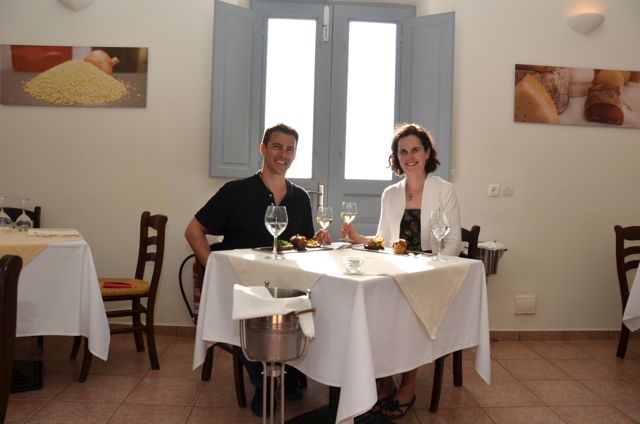
In Selene’s fine dining room, Georgia coyly delivered a bottle of 2012 Sigalas Assyrtiko to our table. She then handed us over to waiter Constantinus, who expertly guided us through our four courses, while reminding us of their special characteristics.
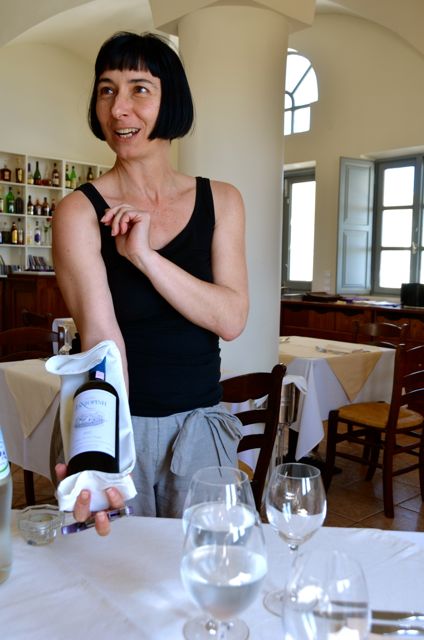
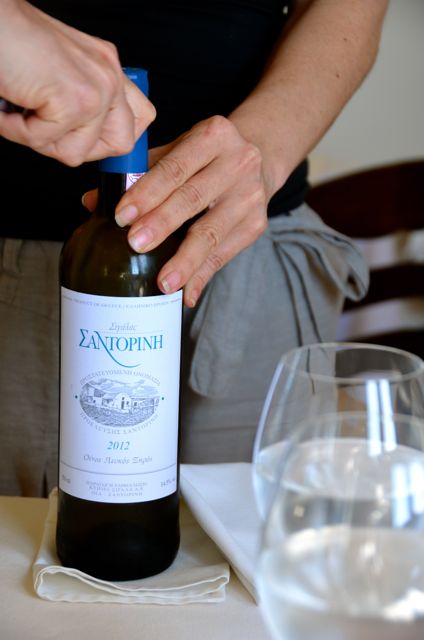
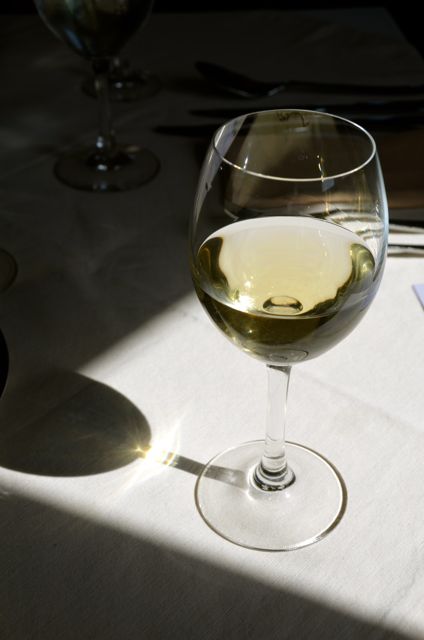
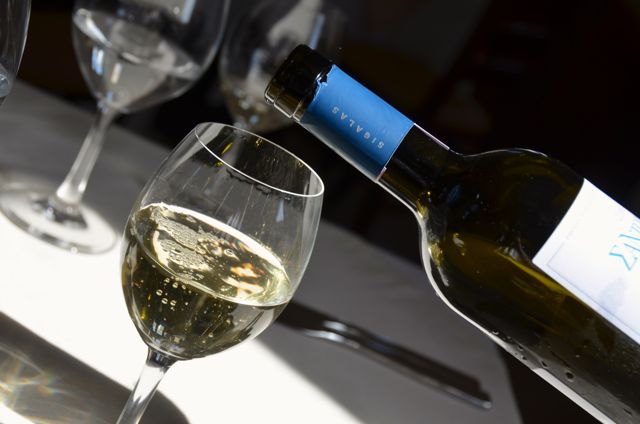
The wine, with 14.5% alcohol content, was a delightful choice. Sporting a lovely straw color that scintillated in the room’s late afternoon sunlight, the Sigalas Assyrtiko had finesse! Its most memorable feature was the lively mineral notes bestowed upon it by the island’s rich, volcanic soil.
The Menu:
- Cold Tomato Soup with Cheese Ice Cream
- Fava with Mastic Sap & Seafood
- Lamb (Shawn) or Chicken (Tricia) with Eggplant Puree
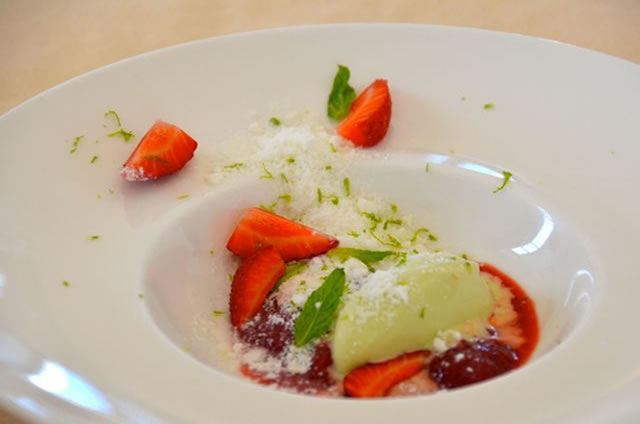
- White Chocolate with Raspberries, Strawberries & Thyme
- Strawberry Soup
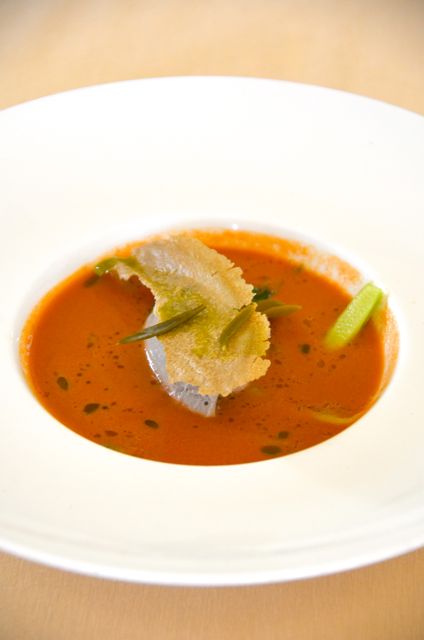
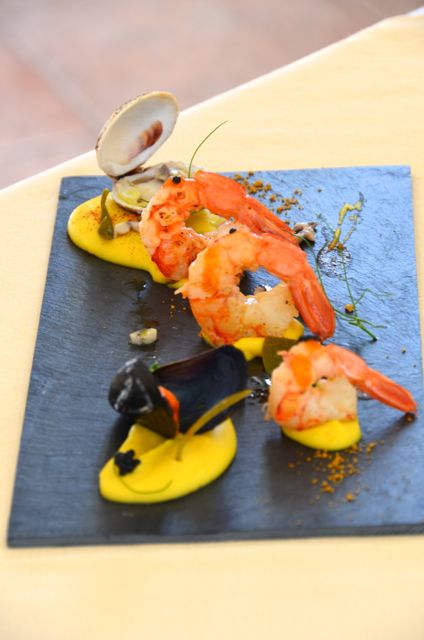
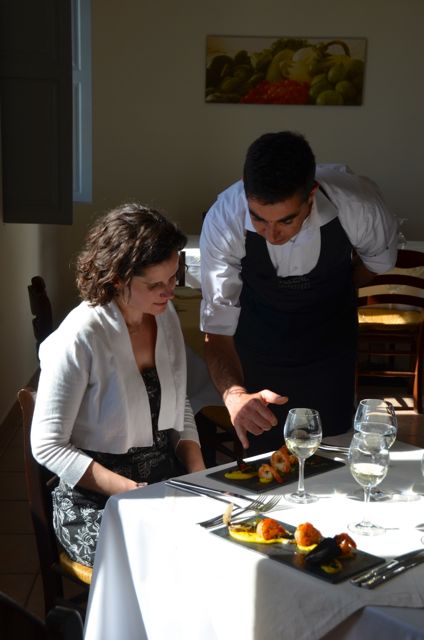
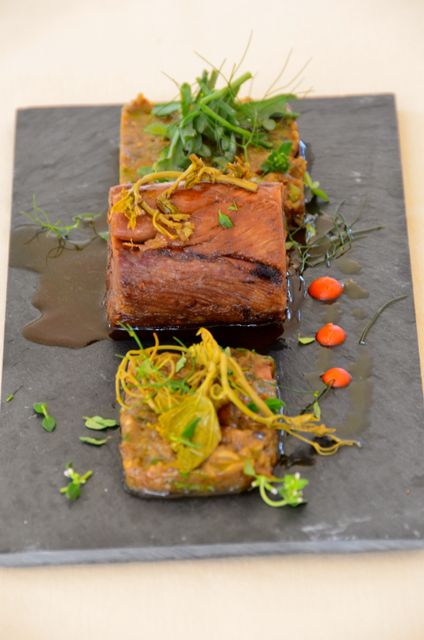
The courses were delicate in their presentation, but also in their flavors and textures. I loved the taste of the tangy tomato soup tempered with a dollop of rich, cheese ‘ice cream.’ It went particularly well with the crispy, homemade, gluten-free bread. My taste buds were aroused by the subtle flavor of the mastic sap emanating from the smooth, puréed fava that accompanied the seafood in the second course.
Next, I ate chicken that was tender and beautifully paired with the eggplant purée. Shawn feasted on the same dish, but with lamb instead of chicken.
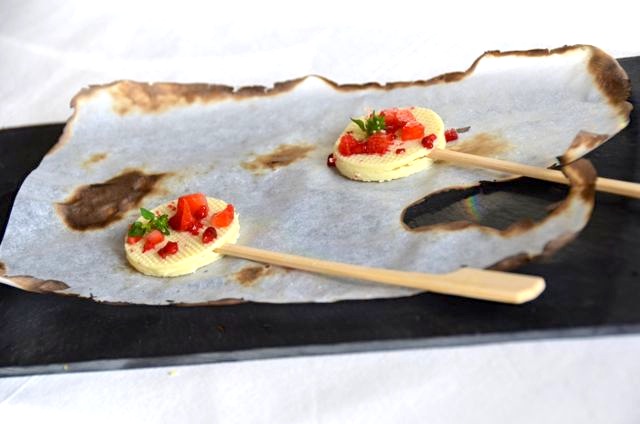
Finally, the desserts were light but utterly satisfying in the manner in which hints of thyme, lime and peppermint tickled the tastebuds.
Everything came together, perfectly. Thanks to our cooking class and experience behind-the-scenes, we understood that Selene’s perfection had not come easily.

Selene’s Cold Tomato Soup with Cheese ‘Ice Cream’
Tomato Soup Ingredients & Preparation:
- 3-4 tomatoes
- 1 stalk celery (Sous-Chef Daniel recommends removing the first layer of celery to make it less fibrous. This gives the soup a more delicate flavor.)
- 1/3 cucumber
- 1/4 clove garlic
- salt & olive oil
- vinegar & freshly-ground pepper
In a blender, mix all of the ingredients together, except the olive oil. The mixture must become a fine purée first. Then, gradually add the olive oil. Strain the mixture. Freeze and serve.
‘Ice Cream’ Ingredients & Preparation:
- 250 g. cheese
- 500 ml. fresh milk
- 100 ml. fresh cream
- 40 gr. egg yolk
- salt, fresh pepper
Blend the milk, fresh cream, cheese, salt and pepper in a saucepan and place it on a burner until the mixture starts boiling. Remove the pan from heat and let it cool. It must reach approximately 80 degrees Celsius (176 Fahrenheit). Whisk the egg yolks until they turn white and add them gradually to the previous mixture. After it gets cold, place it in an ice cream maker in order to freeze it.
Presentation:
Place a dollop of ice cream in the center of a bowl of cold tomato soup. Garnish with a delicate sliver of cucumber and fresh rosemary.
Shawn’s Video of This Experience:
Where in the World?
Planning Pointers:
- If you’re looking for a cozy studio apartment in Santorini, consider the Phaos Santorini Suites (formerly Rhapsody Apartments) in Imerovigli. We spent one week here. The owner, George, was helpful and friendly. He even shared delicious Santorini zucchini from his own garden with us. We loved the apartment’s quiet location. It was still a walkable distance to Fira, the island’s public transportation hub. The sunrise views from our balcony were extraordinary, too!
- Need more inspiration? This link contains an index of all my posts from Greece.
Disclosure & Thanks:
Our cooking class and dining experience were provided by Selene to which we extend thanks.
An extra special thank you – ευχαριστώ πολύ – to Selene owner, Mr. Hatzigiannakis, as well as Georgia, Chef Nikos, Sous-Chef Daniel, and Constantinus. We appreciate everything you did to make our experience so special. Your attention-to-detail, passion for what you do, sense of creativity and patience (with my gluten-intolerance and ‘selectarian’ meat preferences, in particular) are extraordinary.
Photography & text © Tricia A. Mitchell. All Rights Reserved. The video was created by my husband, Shawn.


Leave a reply to alessandro ciapanna Cancel reply