
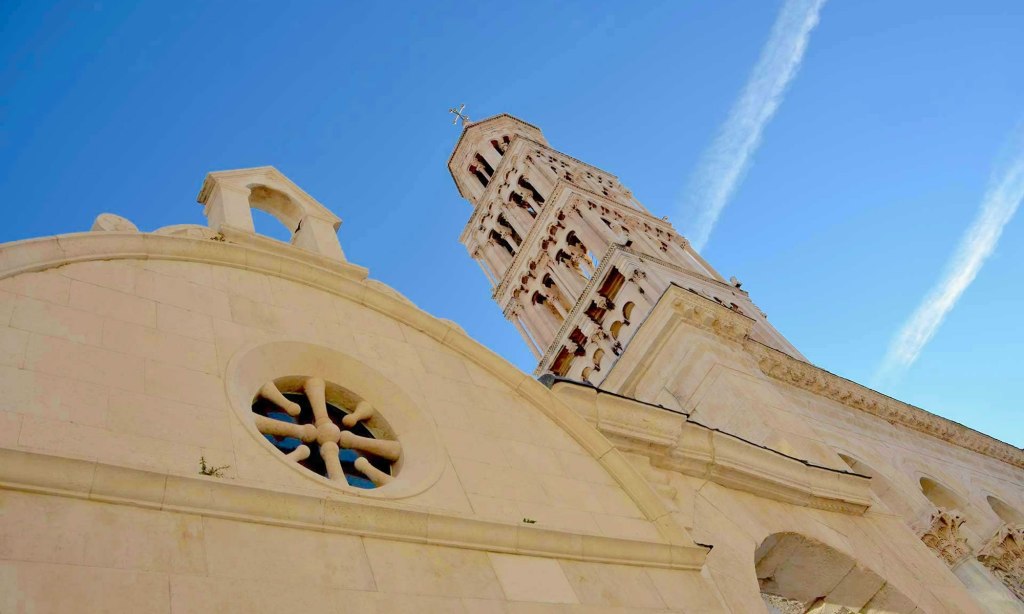
In Split, Croatia, residents’ ancestries can be just as intriguing as the remnants of the city’s Roman palace — something that we discovered on a superb walking tour of the UNESCO World Heritage Site.
Our host for the afternoon, history-teacher-turned-guide, Dino Ivančić, exuded passion for Split’s history, yet we found that he’s rather modest about his own. Incredibly, Dino’s roots in Split go back more than 1,000 years.
“During my studies, I was nicknamed ‘the nobleman’ by my teachers,” Dino said. He added that there was perhaps an expectation that he would excel academically, but that he did not receive any special treatment.
I am curious if Dino knows where his family’s ancestral home is, and what their coat of arms looked like. “Yes, for sure,” he said, “but the home is not in the family anymore. My grandparents renounced their wealth during Tito’s time.”
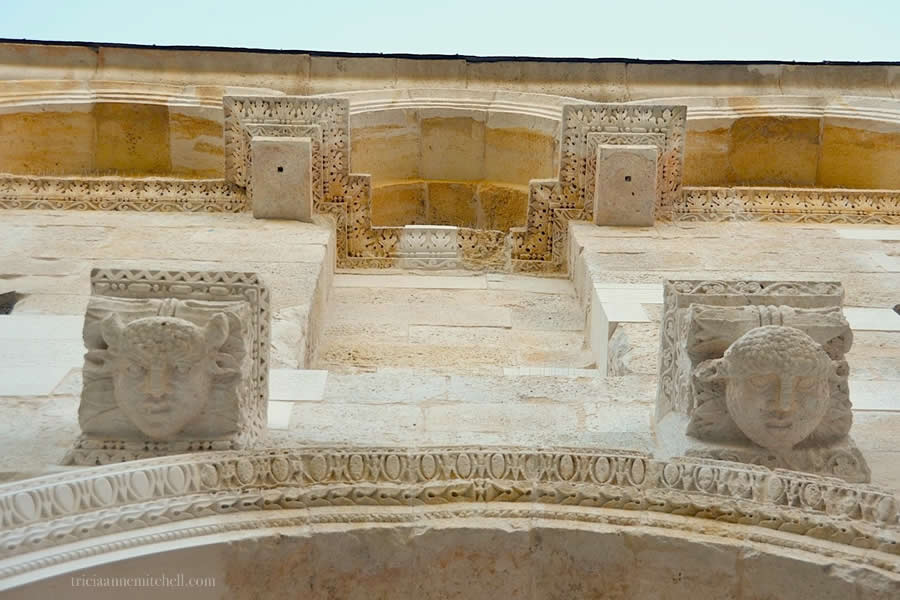
In a city with buildings that still bear coats of arms from centuries bygone, I ask Dino if his family would have had a coat of arms like those that we see adorning so many buildings in Split’s Old Town. Again, Dino is humble about his background.
“I think the coat of arms had two griffins, maybe with a golden cup.” Though Dino playfully laments that many of his friends are not as riveted as he is by the history that surrounds them, he does mention the locals’ interest in historical relics, especially when discovered on their own property.
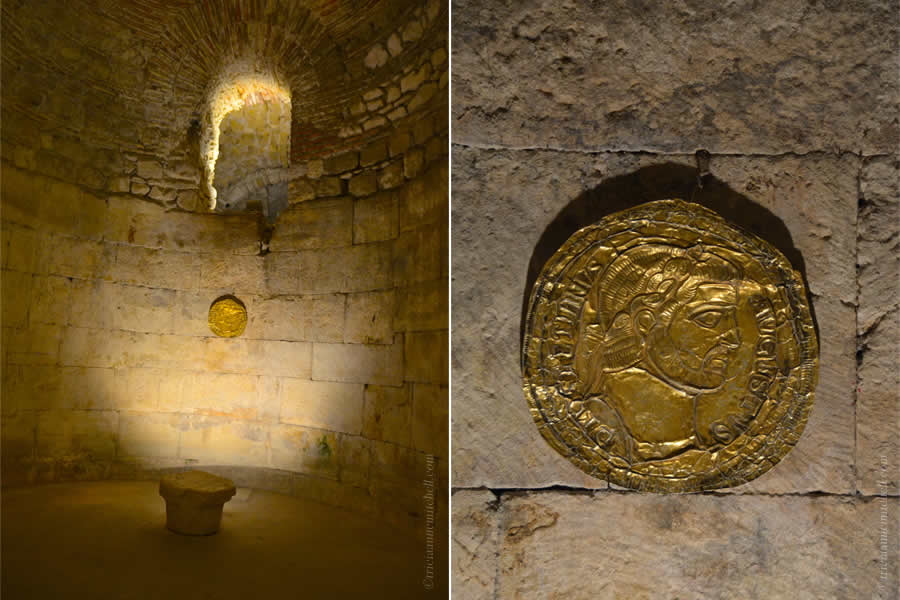
“During the Yugoslavian era, my friends found Roman-era coins in their yard. They sold them and were able to buy a house and an apartment with the money,” Dino said. “Imagine how much those coins would sell for now…”
The childhood archaeologist in me is secretly green with envy. I can’t imagine having grown up in an environment where people might chance upon 1,700-year-old coins in their backyard!
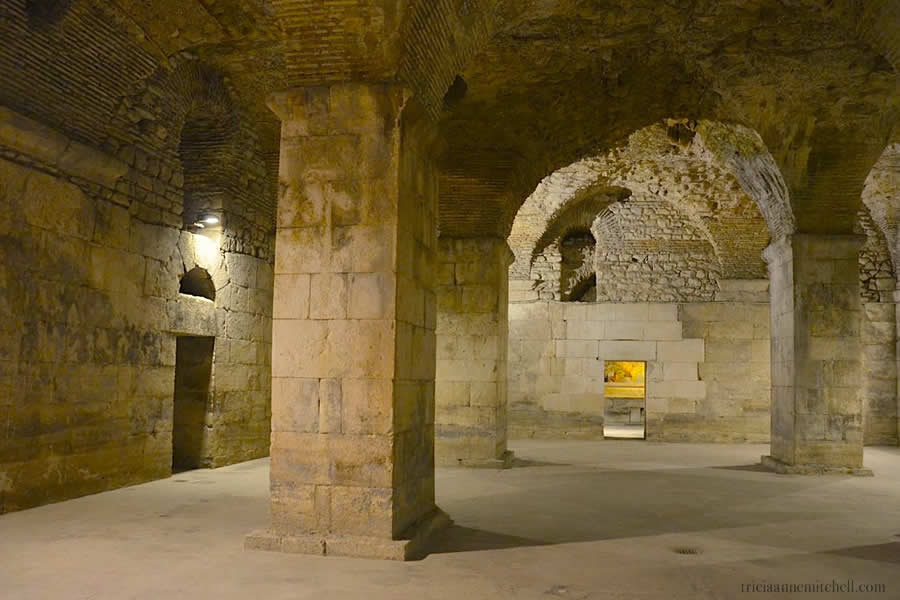
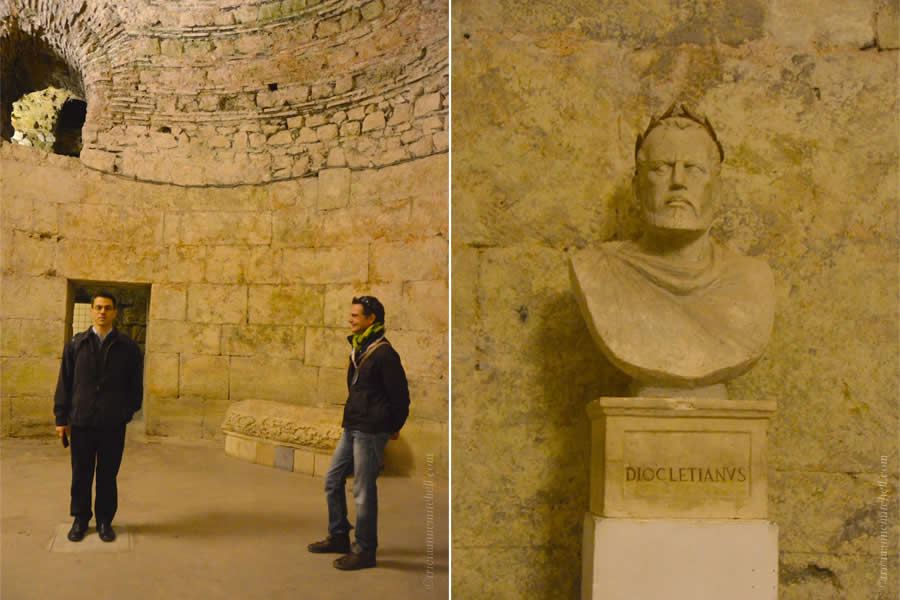
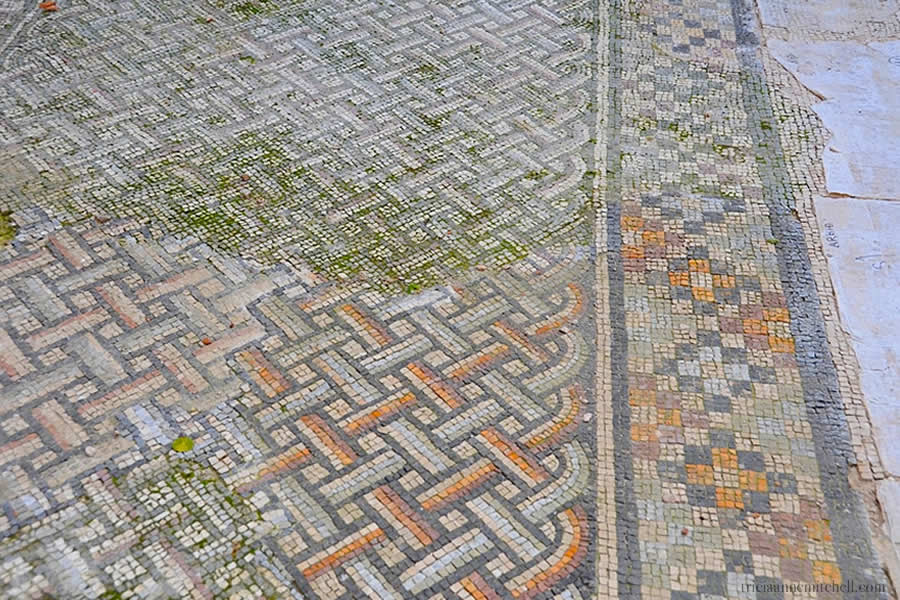
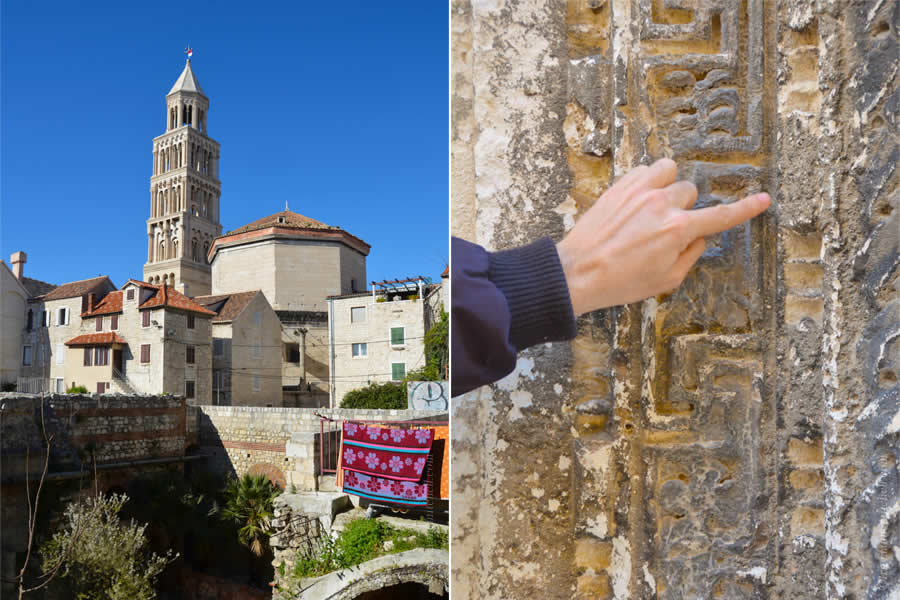
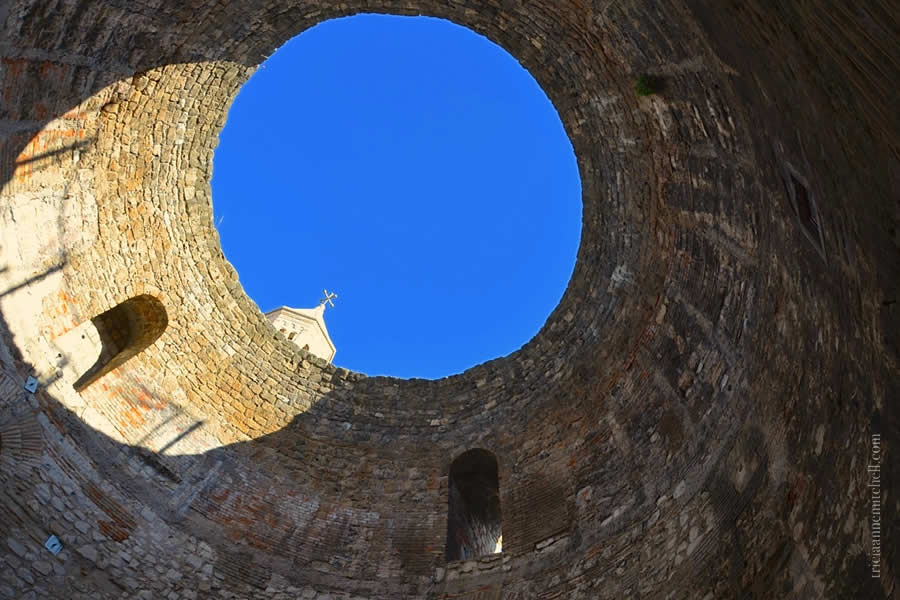
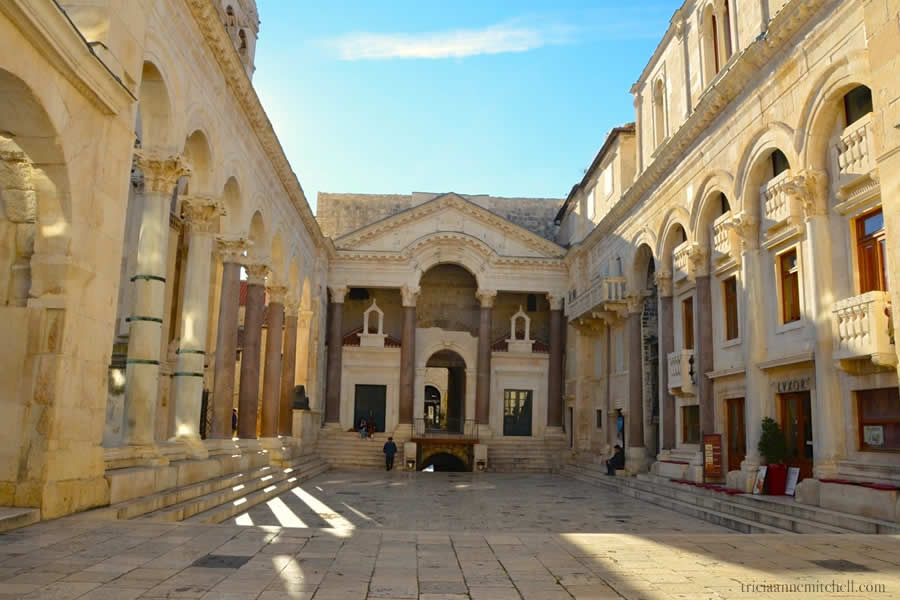
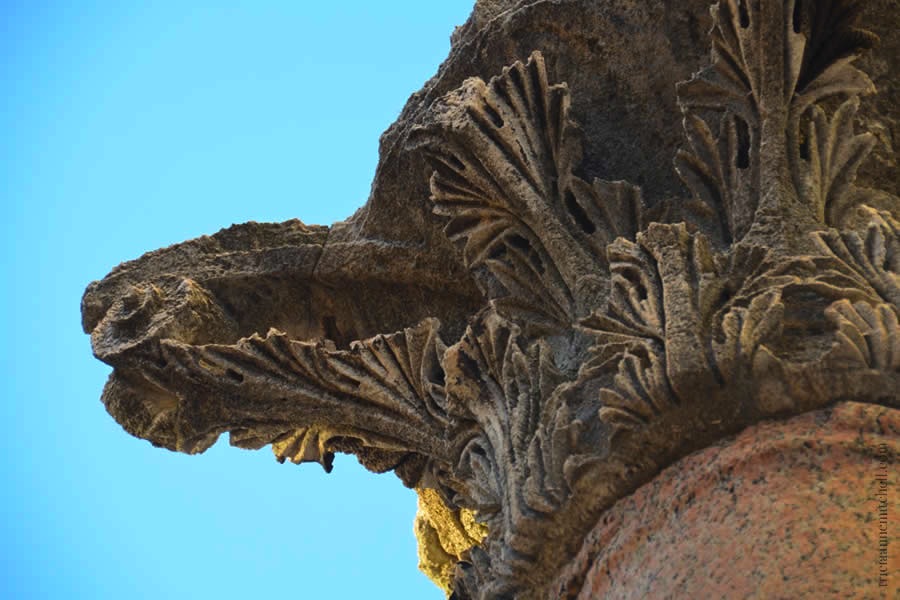
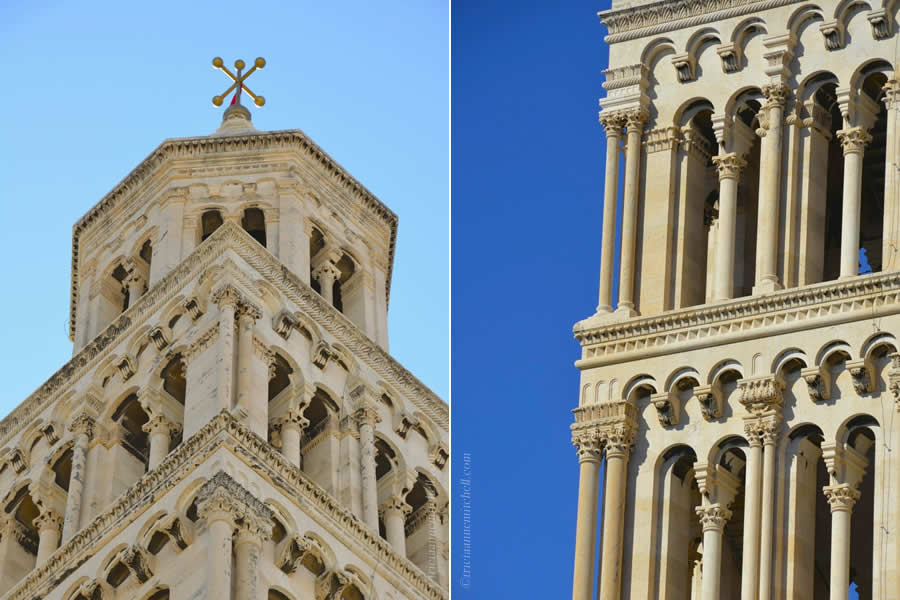
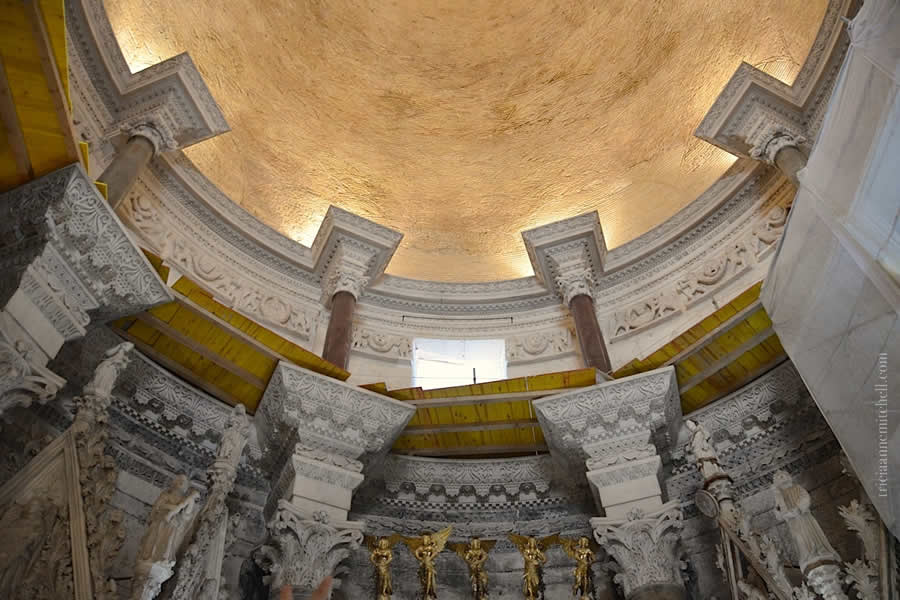
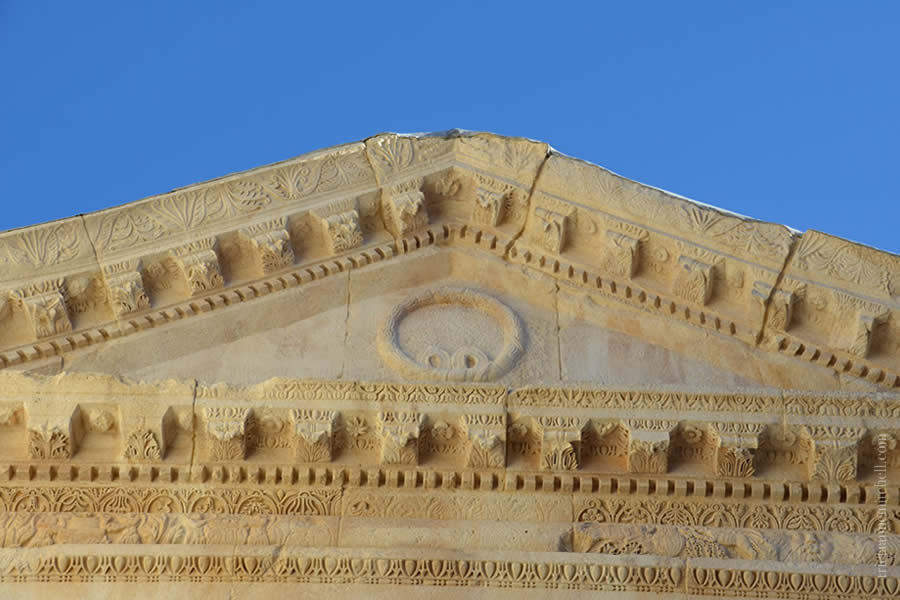
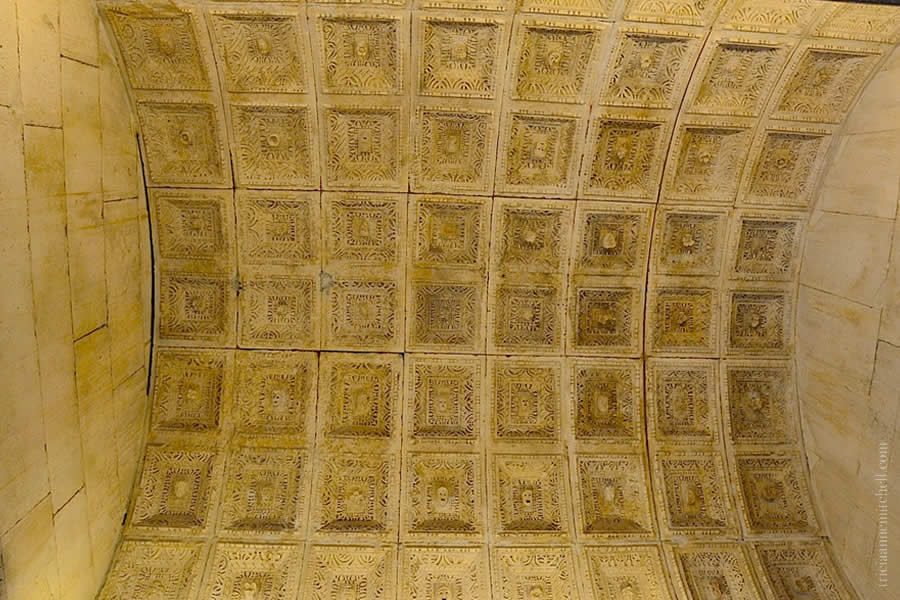
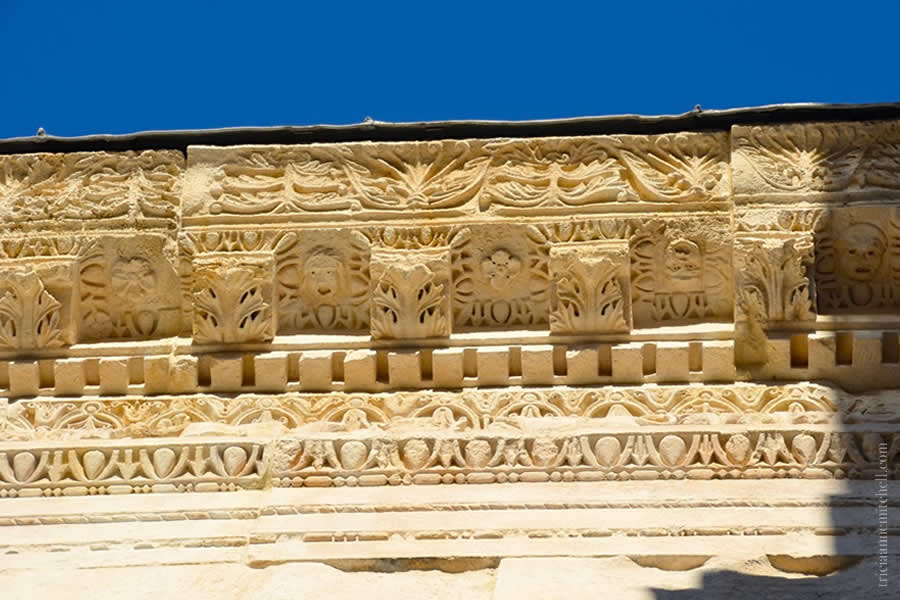
Next, Dino whisked us past what still remains of the Palace of Roman Emperor Diocletian — its walls, basement, Mausoleum (now the St. Duje Cathedral), Peristyle, Vestibule, and Jupiter’s Temple (now the baptistery). He also gave us an overview of Diocletian himself, describing the emperor as a “man of contradictions” who was born to a family in a low economic class not far from present-day Split, only to “rise to the stars.”
Since the Roman Empire was so large, Diocletian actually ran it with three other co-emperors.
“Diocletian made more reforms than any other Roman emperor,” Dino said. “He was also the first official to abdicate in western civilization, and one of the only Roman emperors to die of natural causes.”
“Croatians invented the necktie, fingerprinting, the torpedo, and even the pen.”
– Dino Ivančić
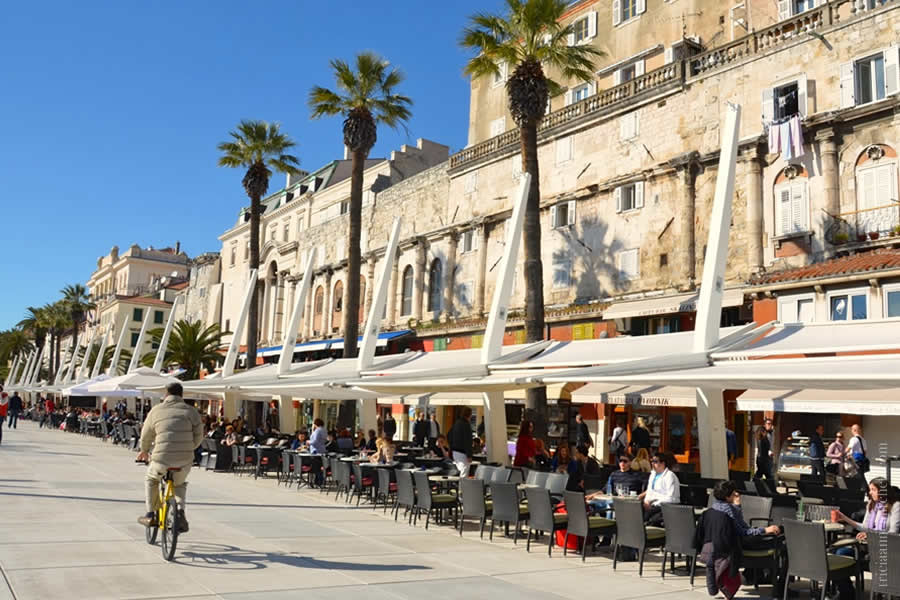
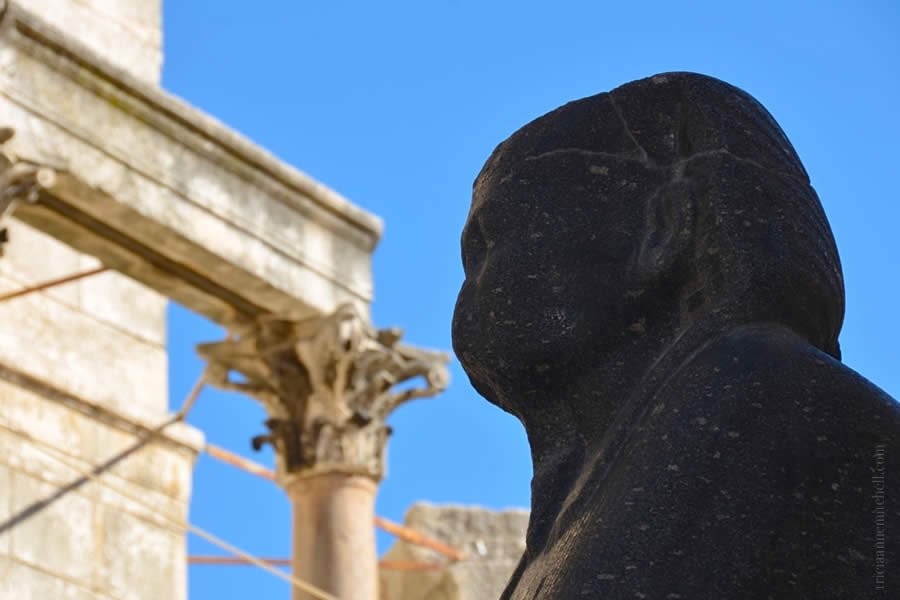
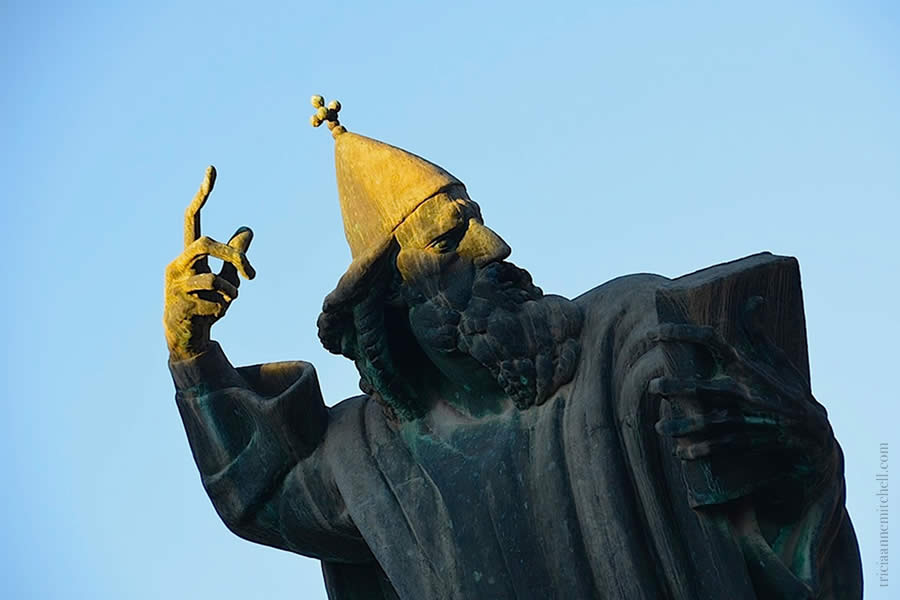
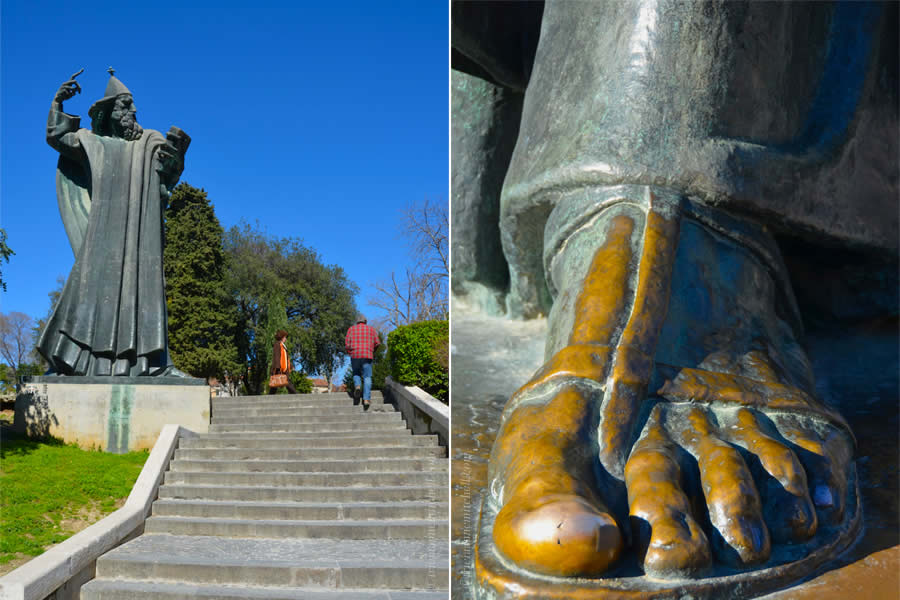
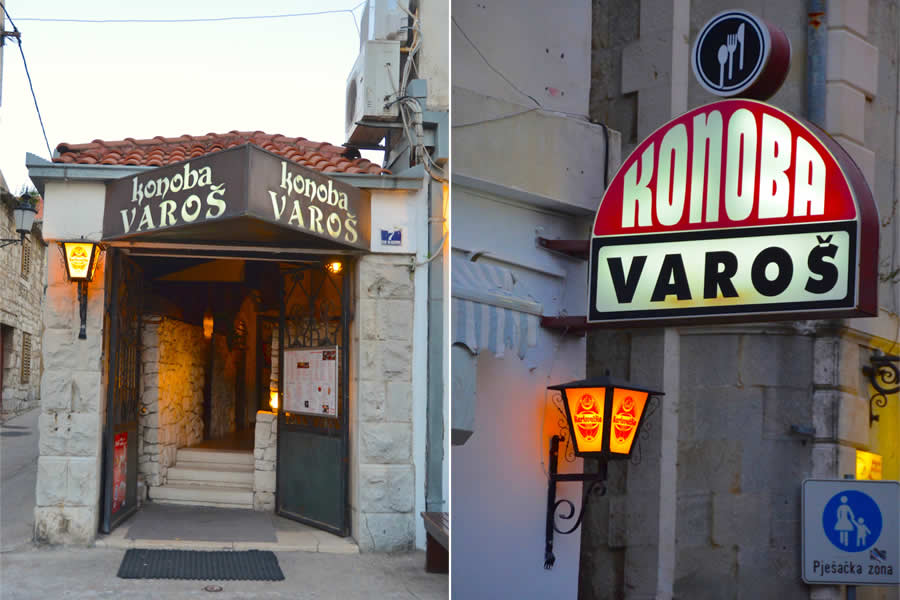
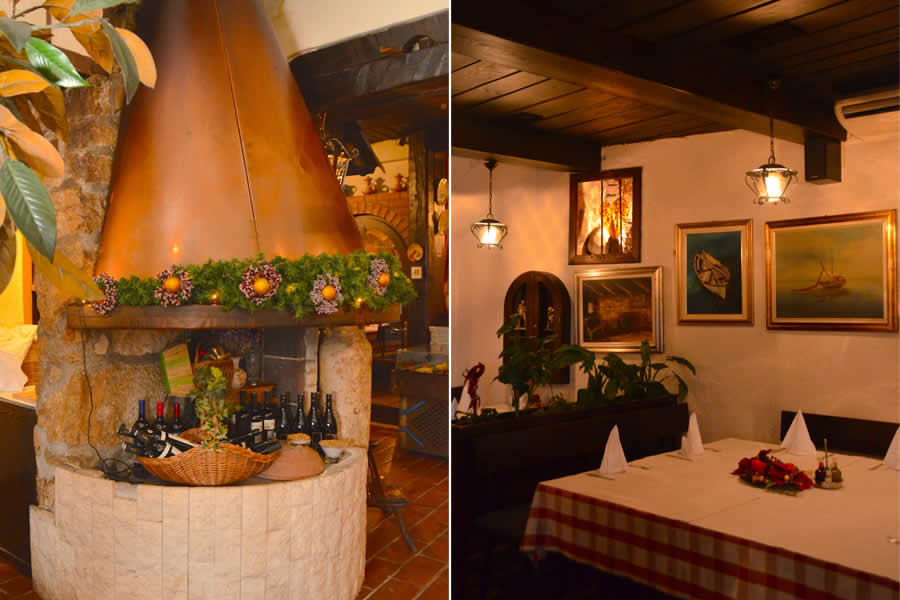
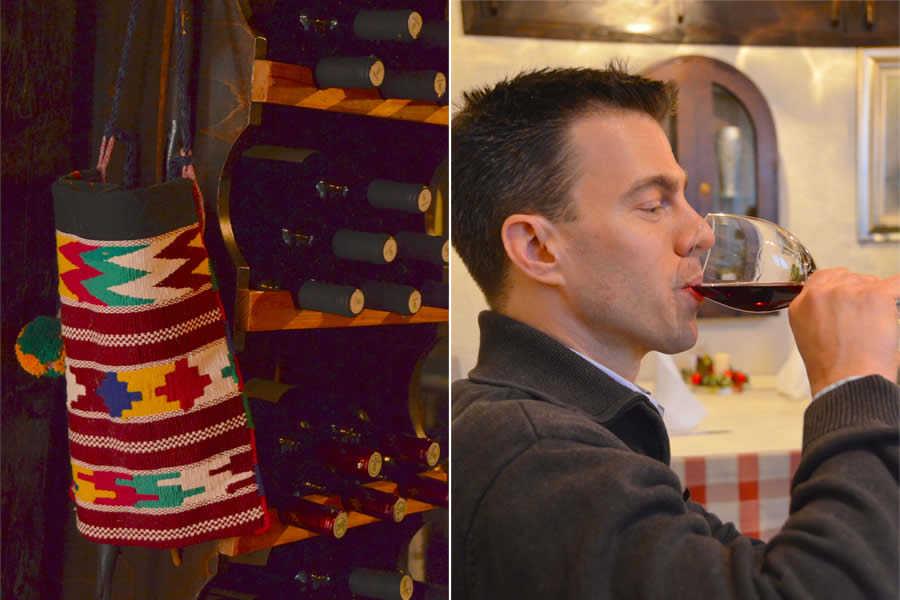
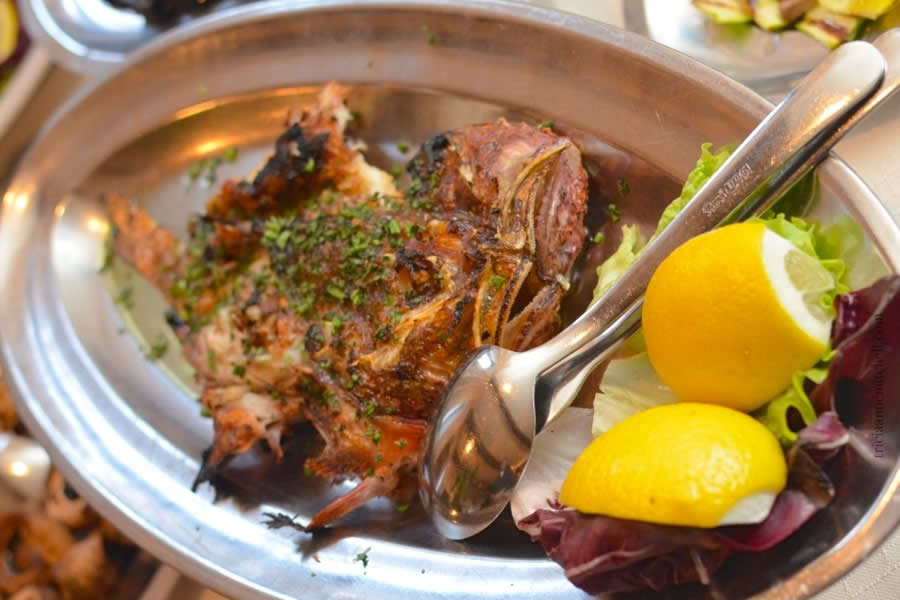
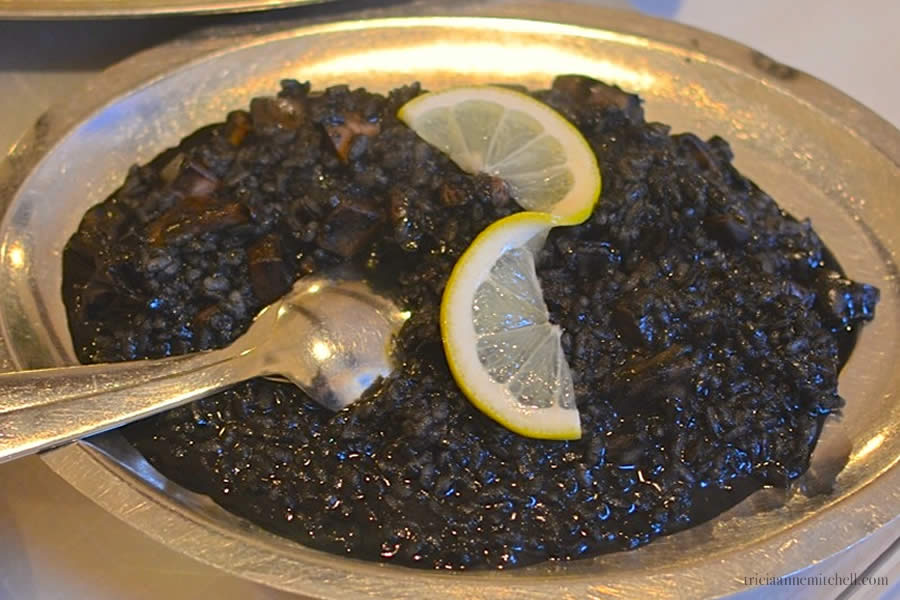
After Dino had shown us the the palace shell, and several other notable spots (Split’s Riva, a bustling seaside promenade filled with café-goers, the bronze Gregory of Nin Statue and the Pjaca — the so-called People’s Square), we had sufficiently worked up an appetite so we headed to the Konoba Varoš, a cozy restaurant that’s popular with Split locals and not far from the town center. Surrounded by ceilings enveloped with fishnets and walls adorned with maritime–themed paintings, we started off with a carafe of a Varoš house wine – a very pleasant and traditional Dalmatian Plavac Mali, which is a blend of Zinfandel (Crljenak Kaštelanski) and Dobričić grapes. Shawn and I ordered sautéed Red Scorpion Fish (Škarpina) and Black Cuttlefish Risotto (Crni Rižot).
“In Croatia,” Dino said, “it is customary to share all the dishes that are on the table — what’s there is fair game.”
Aiming to do as the locals do, Shawn and I sampled each other’s selections. The fare, served family style on stainless steel platters, was decidedly Mediterranean, flavored with Croatia’s celebrated olive oil, garlic, spritzes of lemon, and fresh herbs. A plate of grilled eggplant and zucchini was a perfect accompaniment, and Shawn enjoyed slices of golden, crispy bread.
“We have a saying that a fish must swim three times — once in the sea, in olive oil, and then in wine. Of course, the wine is in your stomach,” Dino said, as he encouraged me to drizzle more olive oil on my fish.
As we enjoyed our meal, we bombarded Dino with questions about life in Split. Somehow the conversation also transitioned to stray, but interesting topics.
“Croatians,” Dino mentioned, “invented the necktie, fingerprinting, the torpedo and even the pen.” The man who invented the solid-ink fountain pen was named Penkala.
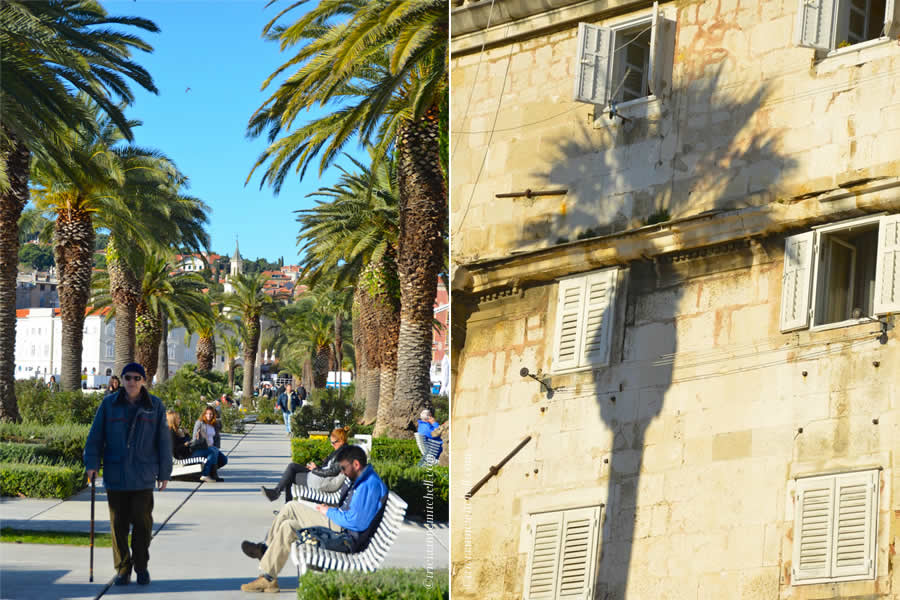
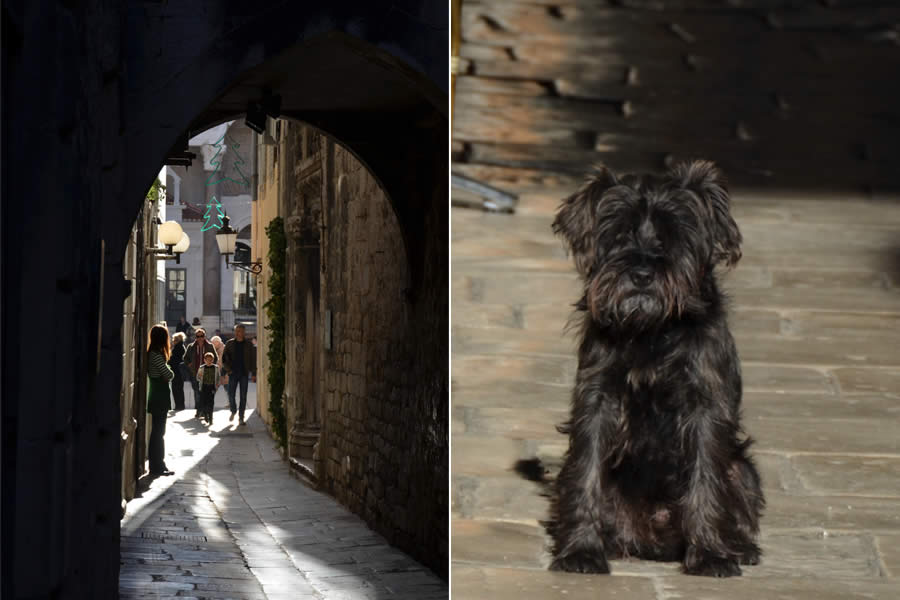
With the sky having transitioned from brilliant blue to steel grey and tangerine sunset tones, we strolled once more along the bustling Riva towards our ‘home away from home’ in the Old Town. Thanks to Dino, many of the city’s mysteries had been unraveled, but enough remained to keep me guessing as we passed through the weathered limestone gates.



Where in the World?
Planning Pointers:
- For more information on Split and the Central Dalmatia region of Croatia, visit the Central Dalmatia Tourist Board website. The Tourist Board of Split also has a helpful interactive map of Split.
- To schedule an individual or group tour with Dino in Split or beyond, you can reach him at the following email address: Dino.ivancic [at] hotmail.com, or mobile number: +00 385 98 647781.
- At the time of writing, there were separate fees to enter the St. Duje Cathedral, Jupiter’s Temple, and Basement / Cellar, all of which are situated in what was once Diocletian’s Palace. There is, however, no fee to walk through Diocletian’s Palace, since much of Split’s Old Town (including shops, hotels, restaurants, and residences) is now housed inside the palace’s former walls.
- If you’ll be staying in Split for a few days, you might be interested in the Split Card, which gives you free entry to certain museums and galleries, and reduced rates to others.
- If you’re interested in old Roman routes and history, be sure to explore the following websites, which allow you to plot out a route and glimpse Roman sites along the way: OmnesViae: Roman Routeplanner and Vici
- Do you need more trip-planning inspiration? This link contains an index of all my posts from Croatia.
Accommodation in the Split Area:
Shawn and I have spent a total of five winters and one summer in and around the city of Split, using it as a base to explore Croatia’s popular Central Dalmatia region. We’ve made it a habit to create new memories by staying in a different property each year. Over the years, we’ve had long-term stays in Split, Trogir, Solin, and Makarska. We would happily revisit all of the following apartments. (Please note that some are affiliate links.)
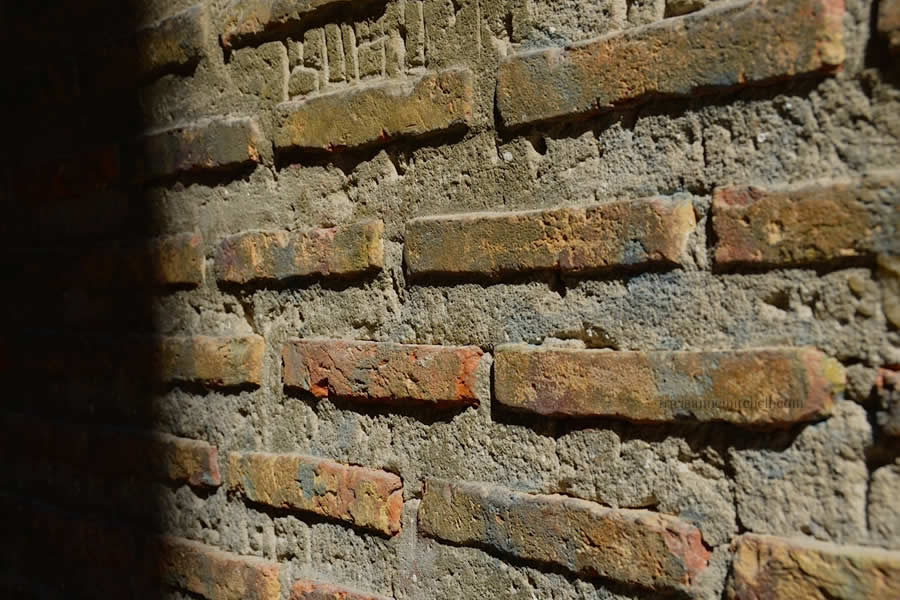
- Kaleta Apartments (Split) – These lovely apartments are located within Diocletian’s Palace (well, technically just a few meters from the Iron Gate). Our elegant studio apartment, called the “Diocletian’s Suite,” had lots of character — including Roman brickwork embedded into the wall. We had overhead views of life on Split’s Old Town streets, and we enjoyed chatting with the friendly owners, Novica and Negri. We spent about 2.5 months here.
- Guesthouse F (Split) – This cozy studio apartment is located in Split’s Varoš neighborhood, just a few minutes’ walk from Diocletian’s Palace. With its quirky narrow streets and stone homes decorated with hunter-green shutters and flower boxes, Varoš is charming. One of Guesthouse F’s apartments was originally a horseshoe maker’s workshop, owned by Anja’s grandfather. Shawn and I dubbed it the “horseshoe cottage.” Aside from our central location, we loved having a tiny terrace. We also appreciated the kindness of our hosts, Anja and Miro. In total, we spent about 2 months here.
- Viola Apartment (Split) – We spent roughly 3 months in this wonderful 2-bedroom apartment, which is also in the Varoš neighborhood of Split. The apartment also has a lovely sun porch and garden. It is in an old stone home, but the interior has recently been remodeled. We were in a perfect location for accessing Diocletian’s Palace and Marjan Forest Park, too. On foot, it takes about six minutes to reach Split’s most famous lookout point near the Caffe Bar Vidilica. The owner, Ljubica, lives upstairs. She is easygoing and helpful.
- Apartments Mirkec (Trogir) – We spent 7 wonderful weeks in this studio apartment, which is located in the heart of the town of Trogir. The apartment had good Wifi and a kitchen with all the basics. It was also perfectly situated in the heart of Trogir’s gorgeous Old Town, just a minute’s walk from the seaside walkway, the Riva. Trogir’s bus station was about a 5-minute walk from the Apartments Mirkec, making day trips using mass transportation easy. Note: As of 2025, I think this apartment has permanently closed. However, the owner’s popular restaurant (Pizzeria Mirkec), which is located underneath the apartment, is still cooking up delicious pizzas in their wood-fired pizza oven.
- Apartments Vesna (Makarska) – This 1-bedroom apartment was our home for about 12 months. The apartment is on the top floor and features skylights. A small balcony on the back of the apartment overlooks Makarska’s harbor — the views of Makarska’s dramatic mountains are wonderful! It takes about 8 minutes to reach Makarska’s bus station on foot. In a matter of minutes, you can also walk to Makarska’s Riva (seaside promenade), several grocery stores, restaurants, and cafés. The owners, Mise and Anna, are exceptionally friendly and helpful.
Disclosure & Thanks:
Our walking tour and lunch were provided by the Central Dalmatia Tourist Board, to which we extend thanks.
Hvala – an extra special thank you – to Nasja, to our guide Dino, and finally to the Konoba Varoš Restaurant team for everything you did to make our afternoon so special.
Photography & text © Tricia A. Mitchell, with the exception of the public-domain photograph noted above. All Rights Reserved. My husband, Shawn, created the video.





Leave a reply to Sue Slaght Cancel reply