

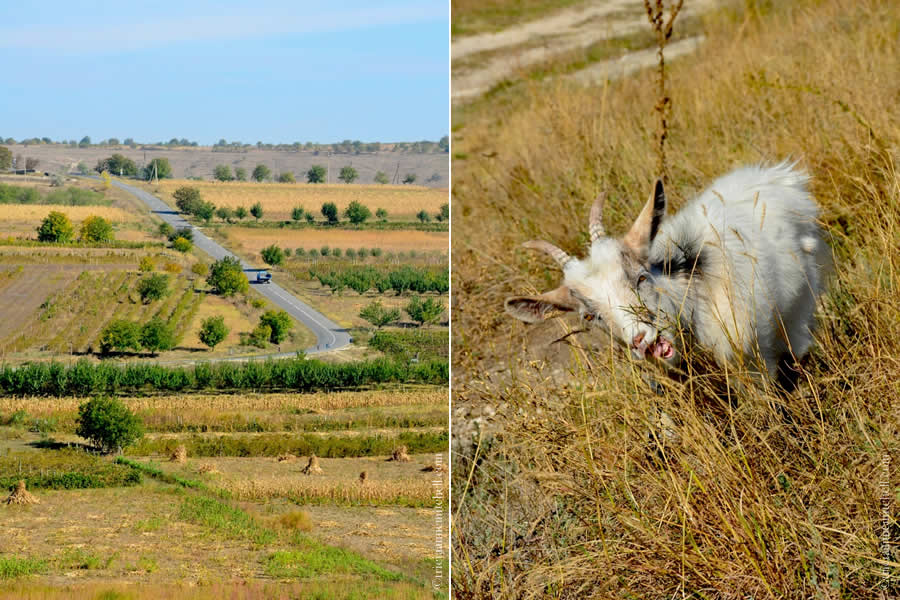
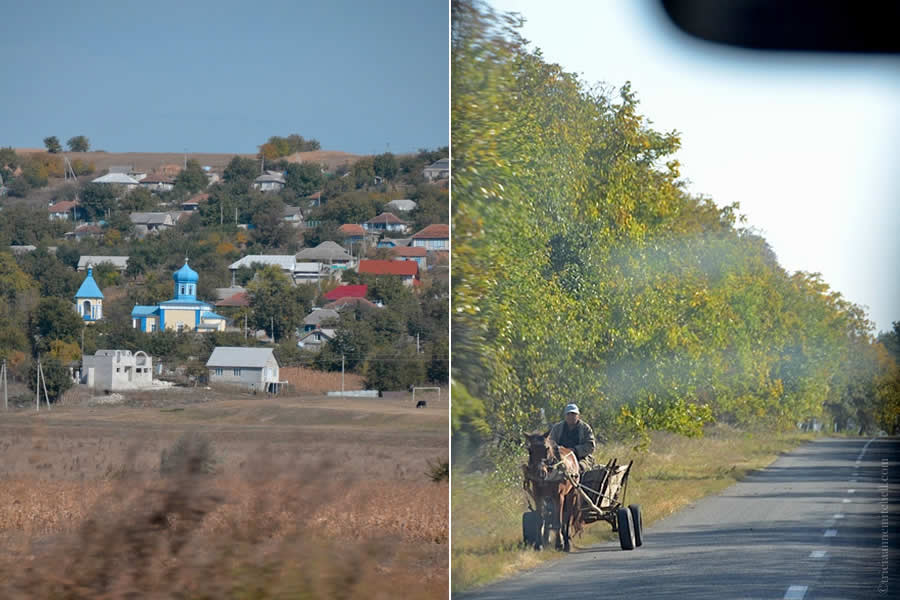
On a quest to discover Moldovan wine, food and culture, we embarked on an adventure in the countryside, having just left the small European country’s capital city of Chisinau. Roadside merchants sold their wares: wicker baskets, colorful mums wearing autumnal hues, and large bowls containing green grapes fashioned into a pyramid shape. Farmers picked apples in orchards, a grape-harvesting crew took a break by lounging in a vineyard, and cows and goats grazed on the expansive golden plains.
If ever a swathe of land could be called ‘wine country,’ Moldova would be one of the most deserving to wear the label. Nestled between Ukraine and Romania, the country is abstractly shaped like a cluster of grapes. Winemaking accounts for 7% of the country’s exports, and when you go there, you get the sense that every family has an amateur winemaker in its ranks. Though family-made wines are common, the country is also becoming increasingly well-known for its high-quality, commercial wine, which is now made with adherence to international, modern standards. A National Office for Vine & Wine was established to help regulate the industry and promote Moldovan wine abroad.
Formerly part of the Soviet Union, Moldova was once one of the USSR’s most-fertile territories, and its agricultural sector continues to flourish today. Fossils indicate that grapes have grown in the country as far back as 25 million years ago, and it’s suspected they’ve been cultivated in Moldova since around 2800 BCE. Ties with the Romans and Greeks helped to nurture the industry, while the Ottoman occupation, coupled with two world wars, and the phylloxera epidemic damaged it.
In the next day and a half, we would be off to visit two well-known wineries in Moldova, Château Vartely and Cricova, and the celebrated cultural sites of Old Orhei and the Curchi Monastery. These four points, which roughly create a diamond shape on a map, are within a reasonable driving distance from Chisinau. We were eager to see Moldovan winemakers’ interpretations of international grapes such as Merlot and Cabernet Sauvignon, but even more excited to try unique regional varietals like Fetească Regală and Fetească Neagră.
Château Vartely
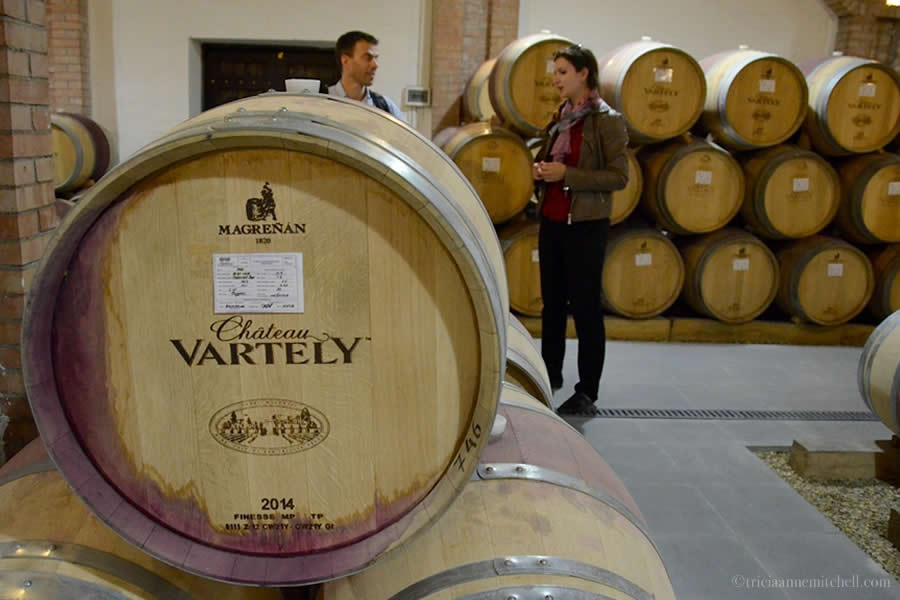
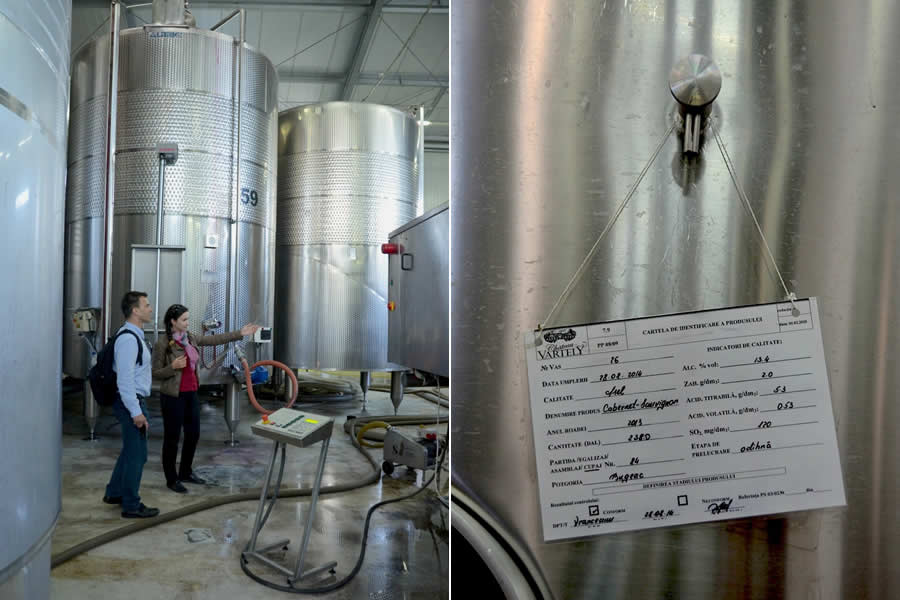
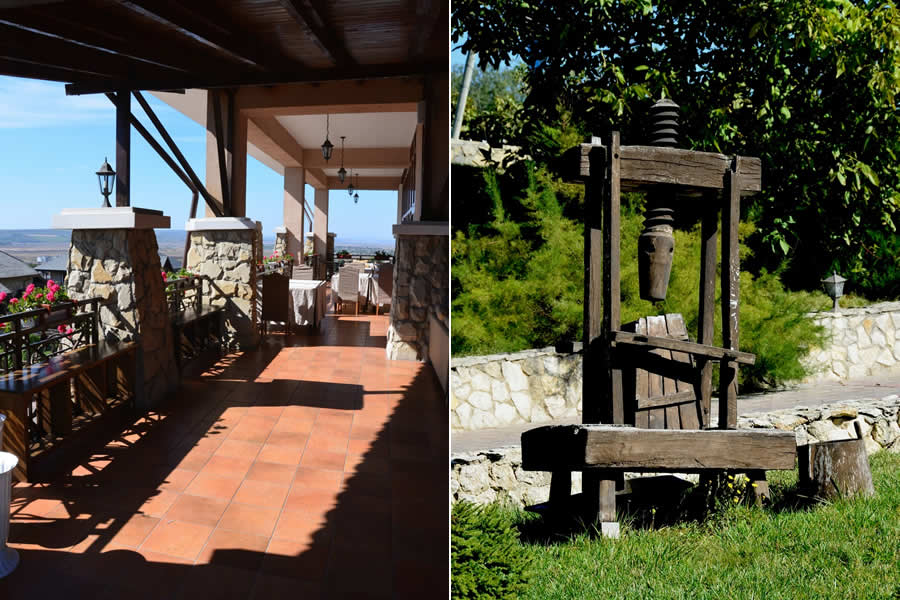
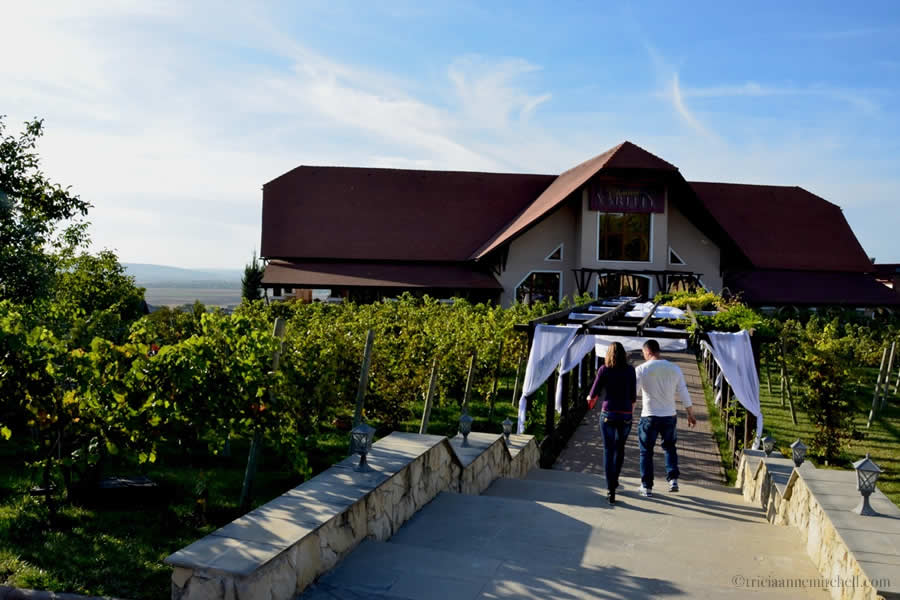
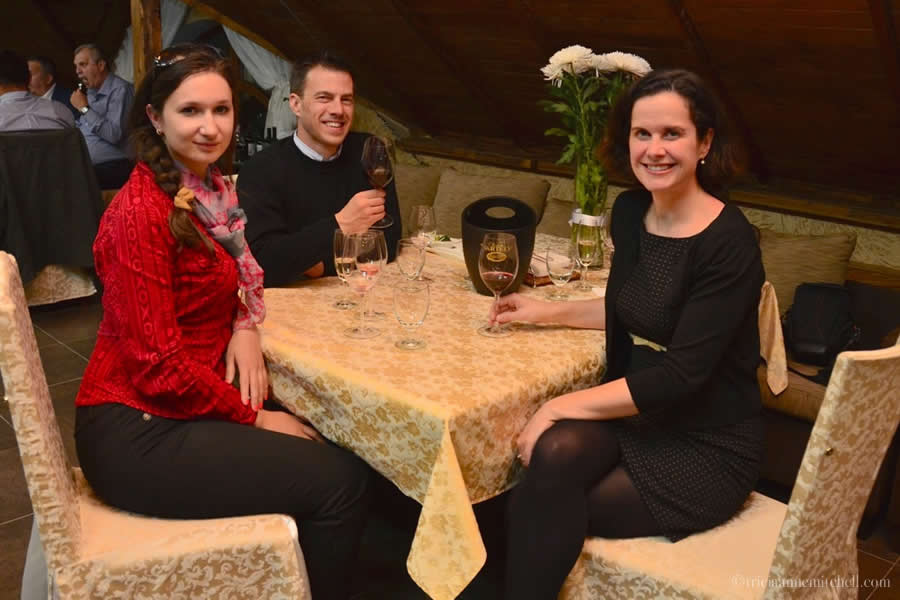
Our ‘home away from home’ for one day was the Château Vartely, (affiliate link) a winery and resort complex which opened in the city of Orhei just ten years ago. Taken under the wing of the complex’s guide and sommelier, Ludmila, we perused the wine cellar, and then serendipitously spotted large trucks overflowing with red grapes just as they were being delivered to the facility’s processing area. Transitioning into the fermentation room, we watched as the grapes were pressed, their stems removed and tossed into an ever-growing mountain.
Ludmila was quick to point out what we already sensed – that we were very lucky to be visiting Moldova during the harvest! Taking a large swirling glass, she poured freshly-pressed Sauvignon Blanc grape juice – or must – inside and invited us to try it. As it hadn’t yet gone through the fermentation process, the liquid wasn’t as clear as the finished product, nevertheless it was a treat. We learned that the modern winemaking equipment came from other parts of the world, notably that the grape presses were German.
Later, when we asked Ludmila if she had a favorite wine, she was ever the diplomat.
“They’re all my babies… It just depends on what you pair the wine with.”
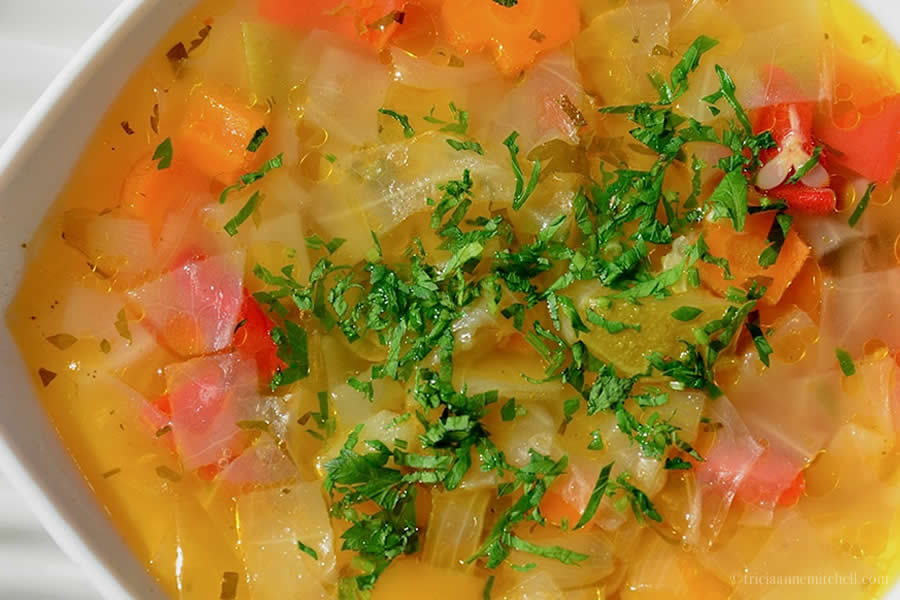
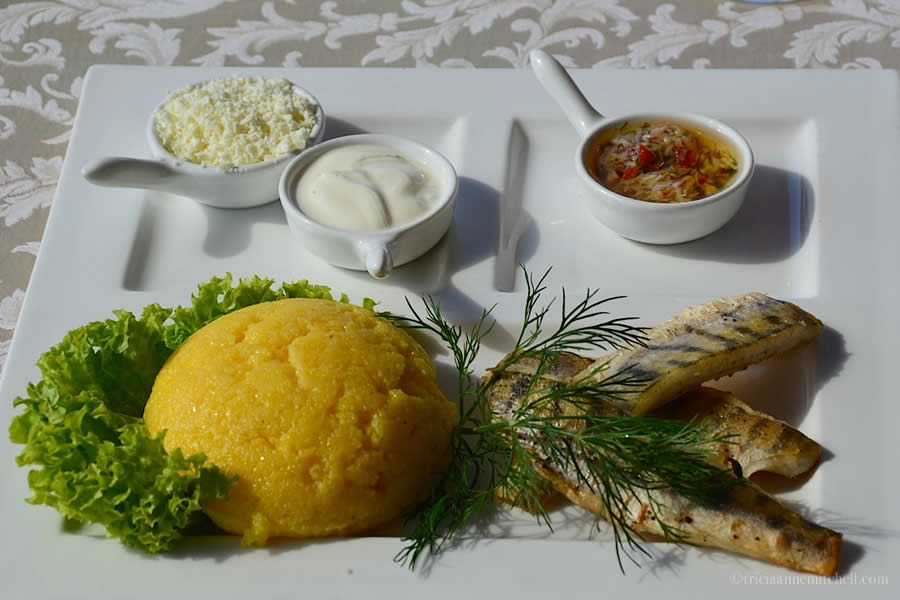
We’d get the chance to see the pairing potential of Château Vartely wine during two meals. What we most enjoyed, aside from the impressive wine (for wine aficionados my extensive tasting notes are detailed below), was how the winery’s staff brilliantly fashioned the hearty Moldovan dishes, which are usually served family style, into elegant arrangements, with just a slightly different twist. As I tried to break down the ingredients in each dish, I was also delighted that my dishes were gluten free, and that each ingredient seemed to be sourced locally – everything from rabbit and freshwater fish, to locally-made honey and fig jam.
It was a treat chatting with Ludmila, and learning more about not only wine, but also Moldovan culture. We talked about the physics of wine glasses and why it was important to use the right shape. Champagne flutes, for example, help to preserve the bubbles longer. Ludmila also explained why one should sniff the wine not once but three times (initial nose, second nose after swirling and before tasting, and third nose after tasting). Finally, we heard about some of Ludmila’s life experiences. She joked that she went to Portugal not only for the country’s famous Port, but also for Beyoncé, who was touring there.
Though she’s really knowledgeable about wine culture, Ludmila had a no-nonsense, friendly approach to her explanations. She wasn’t at all pretentious, and I was pleased to acquire more wine tidbits from her.
Curchi Monastery
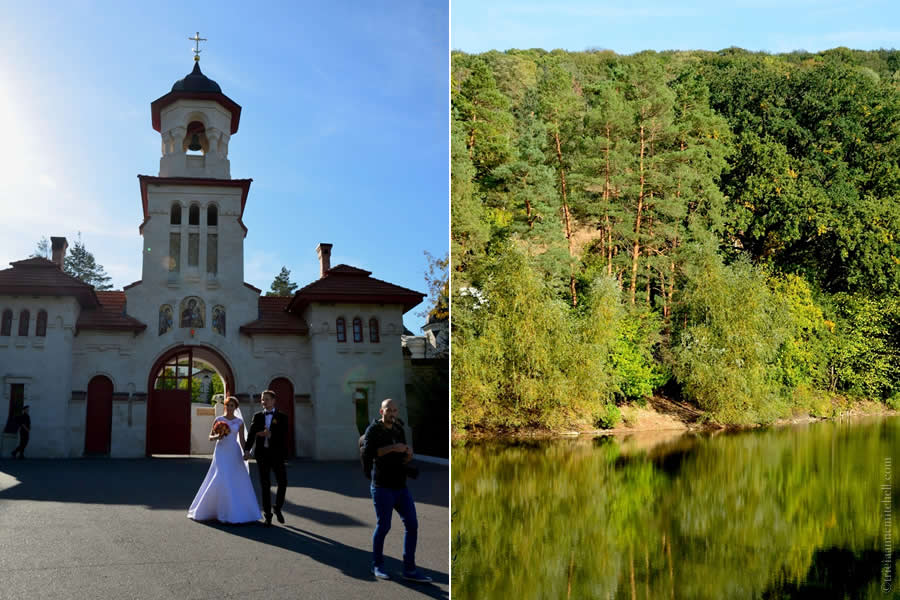
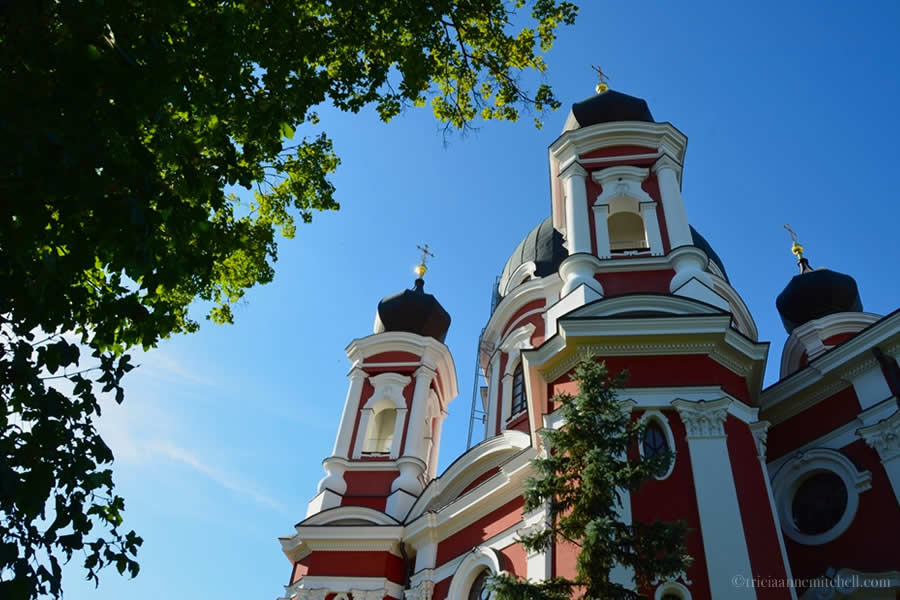
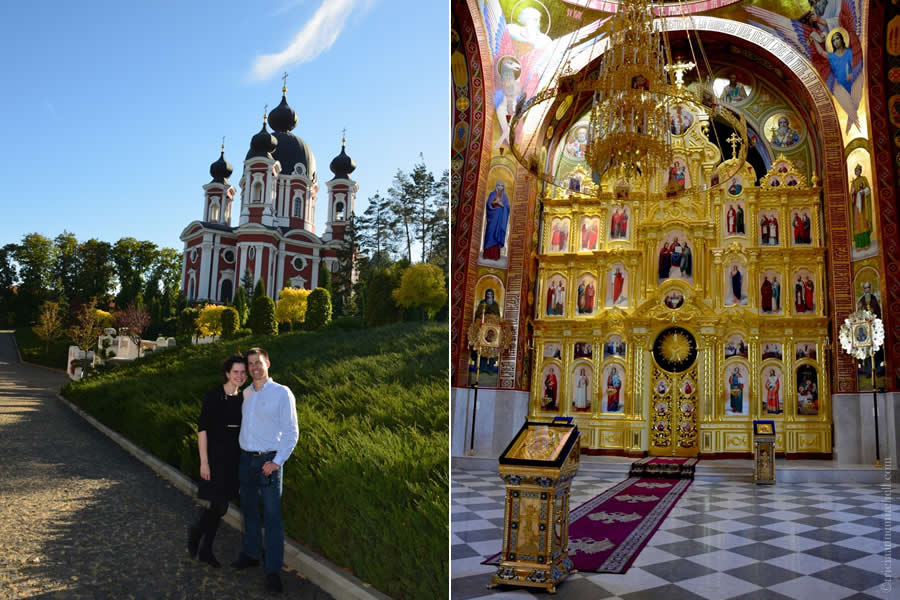
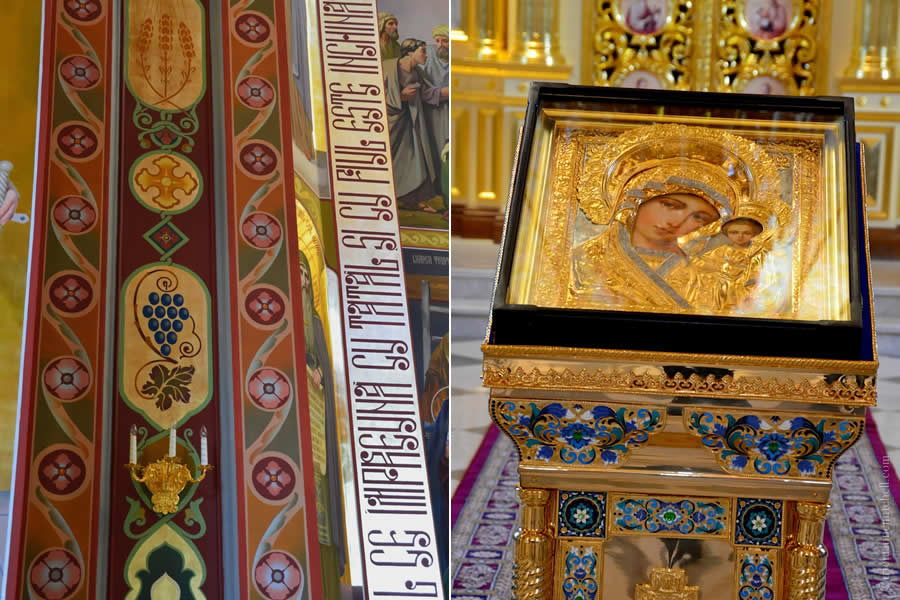
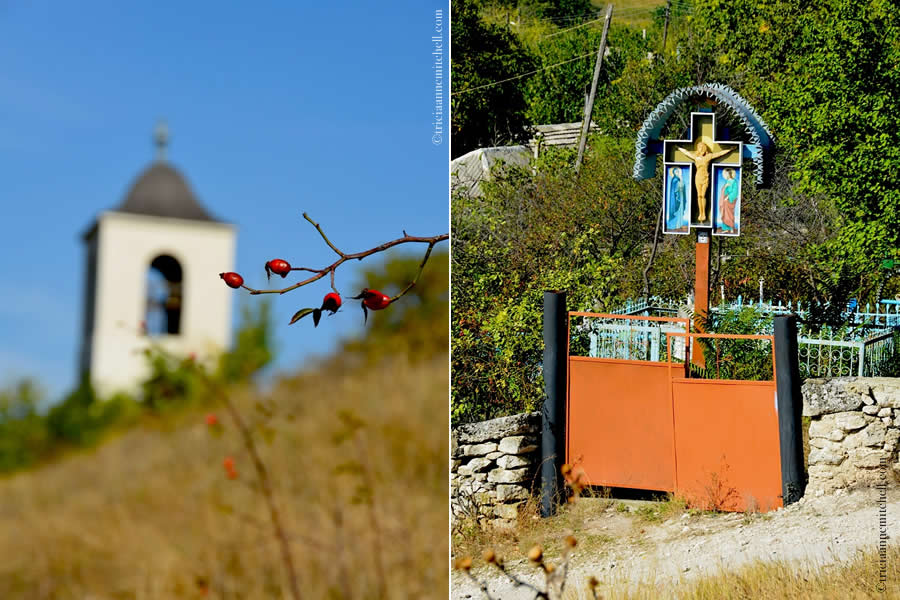
Switching gears from Moldovan winemaking to historic monasteries, we headed to the Curchi Monastery, about 15 minutes by car from Château Vartely. Towering over the landscape, and looking quite formal when contrasted with the folk-art decorated homes en route to it, the Baroque structure’s cardinal-colored exterior complemented the clear blue skies and varied greens of the surrounding forest. With the exception of one structure which is awaiting further renovation, the grounds and neighboring buildings of the monastery complex were immaculate. Mosaics featuring Orthodox religious motifs twinkled in the early-autumn sunlight, and inside we marveled at the jewel-toned paintings, and icons framed by glimmering-golden accents.
Old Orhei (Orheiul Vechi)
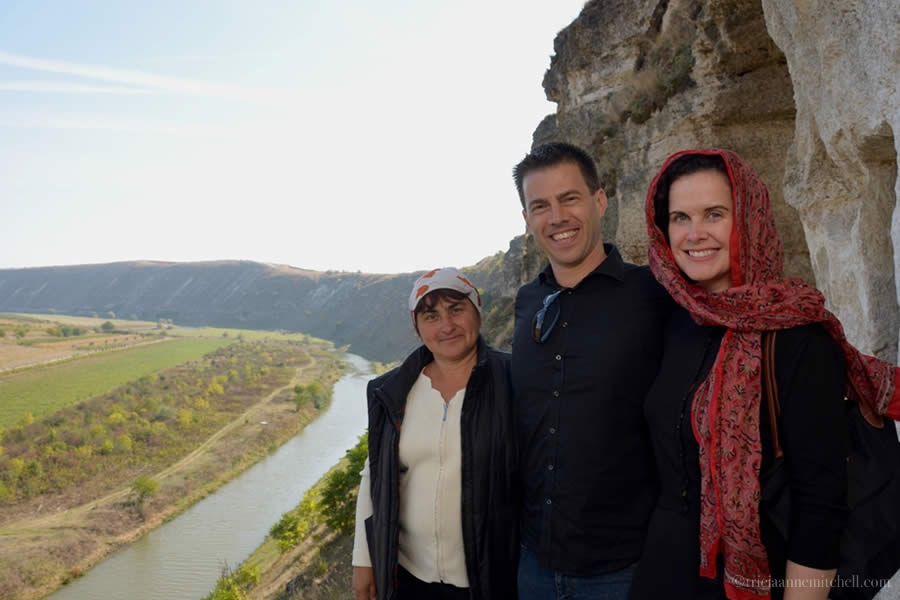
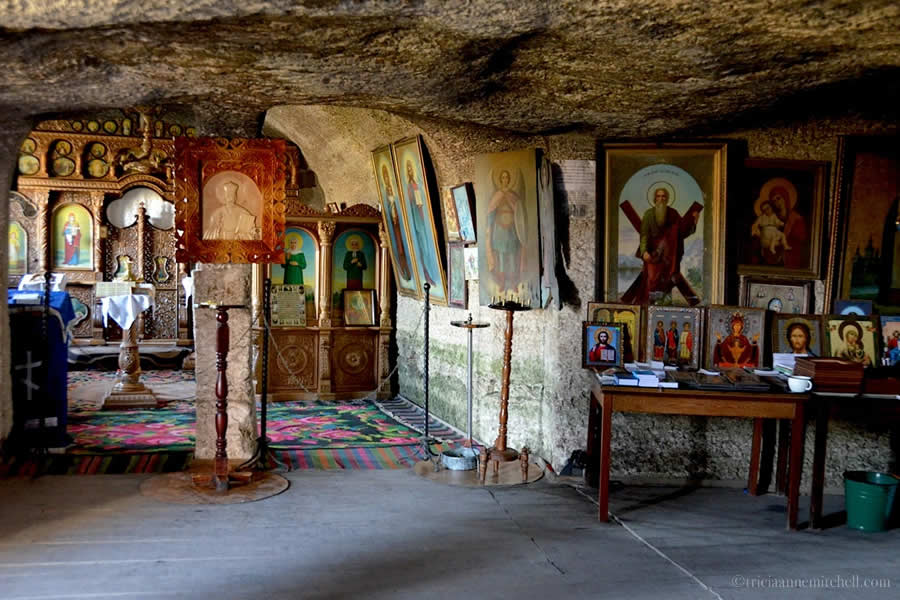
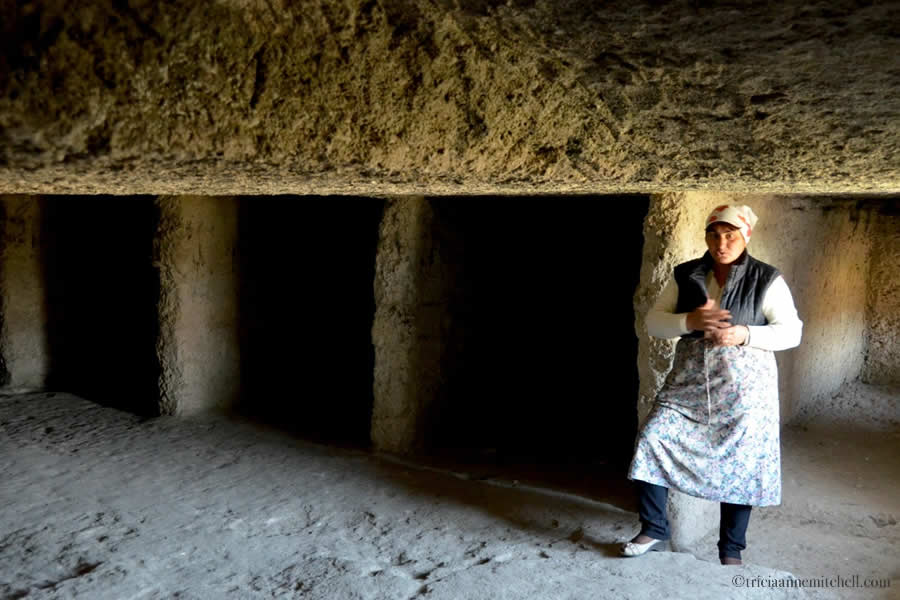
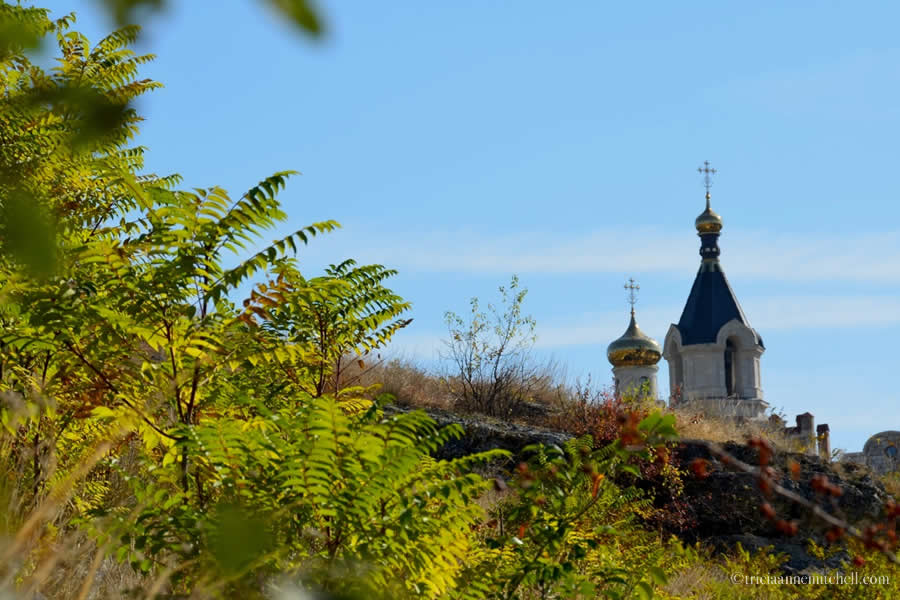
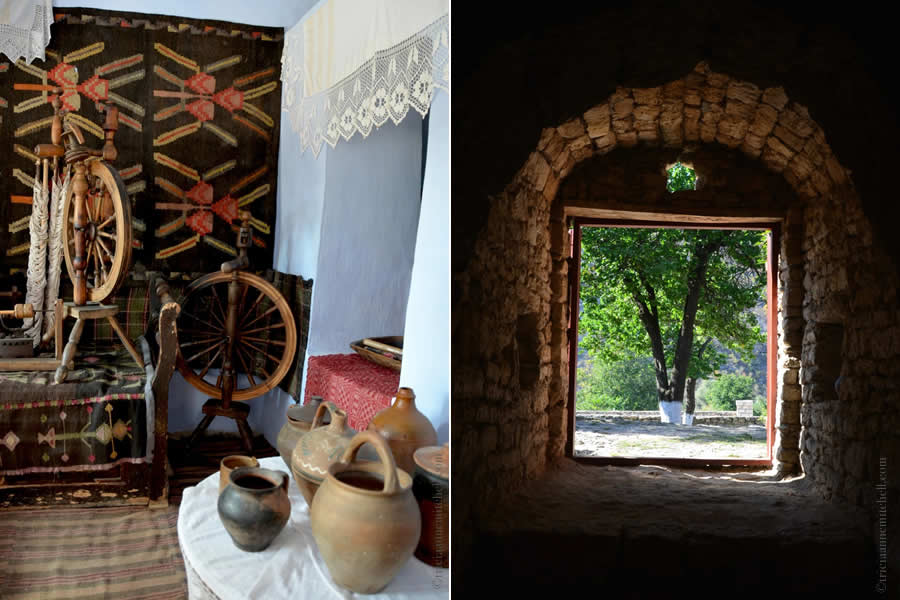
After having driven through Moldova’s steppes and agricultural areas, the open-air archaeological complex of Old Orhei looked almost other-worldly. We glimpsed cave monasteries carved out of the craggy limestone cliffs, the golden domes of a 20th-century monastery, lush fields dotted with crops, and the serpentine Răut River. We agreed that the area was so scenic and historically-significant that we could’ve easily spent an entire day there. Instead, we enjoyed a few hours of touring the cave monastery, carved out by monks 800 years ago. The area’s small archaeological museum houses artifacts unearthed on the vast site, such as ceramics, headstones from the Ottoman Empire, and fragments of statuettes.
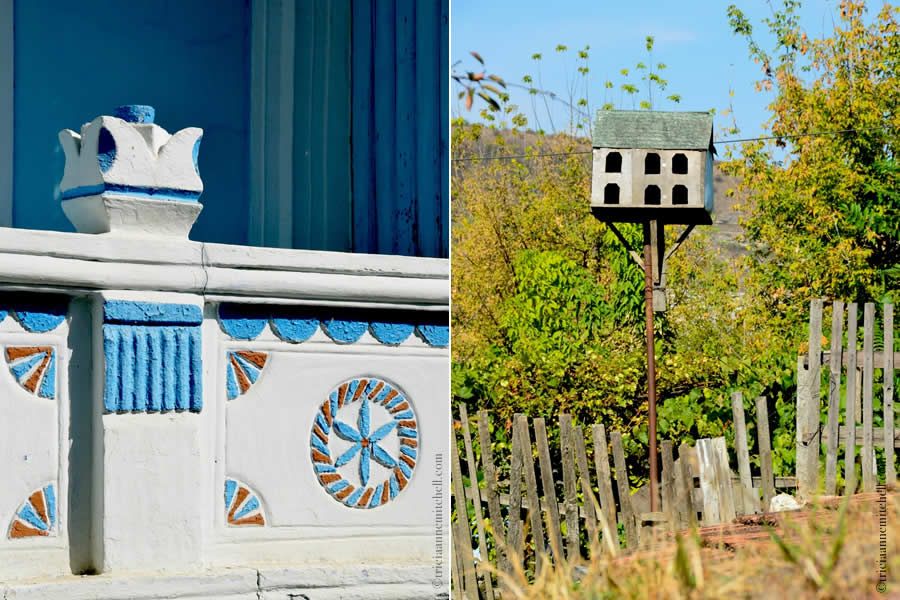
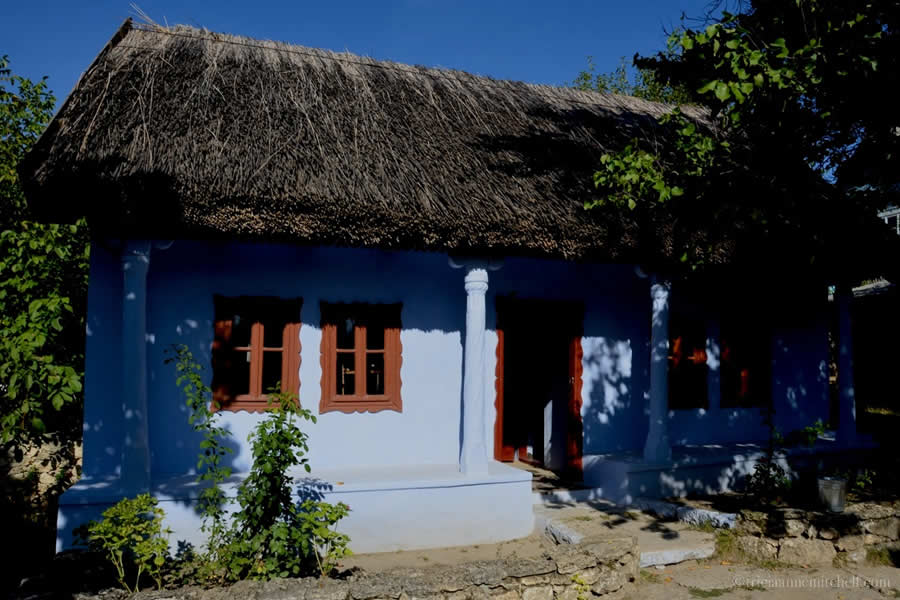
Butuceni, a nearby village, is comprised of beautifully-restored traditional homesteads which resemble quaint gingerbread houses. When we asked the Old Orhei guide Nina why robin’s egg-blue is featured so prominently in Moldovan home exteriors, even wooden cemetery headstones, she explained, “It is a connection between the blue of the sky and the blue of the water.”
Cricova Winery
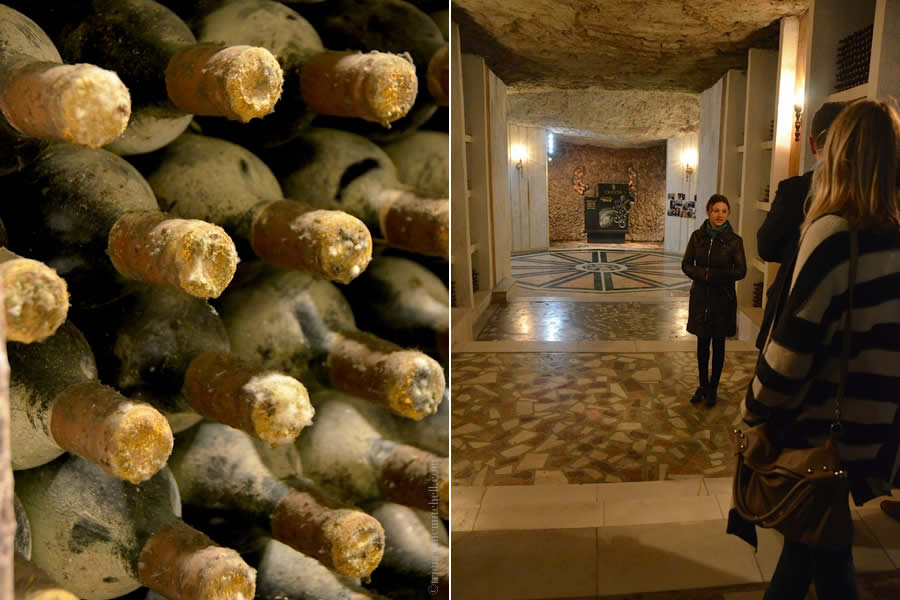
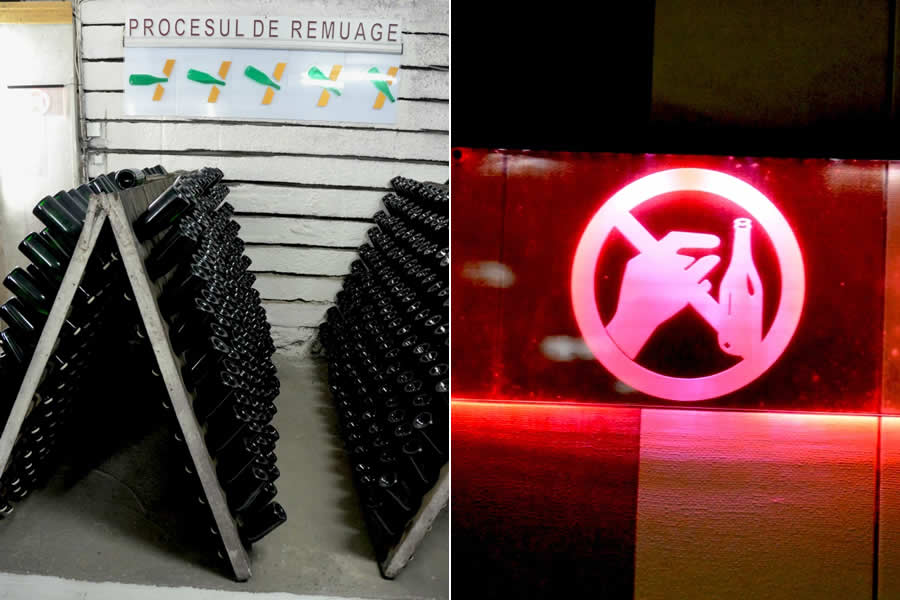
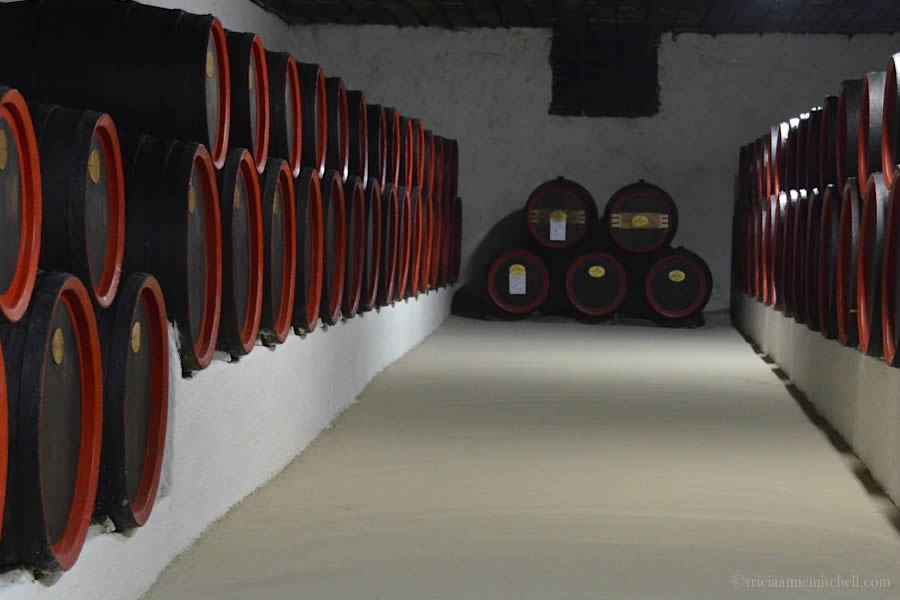
Coming full-circle, we would book-end our day-and-a-half excursion with a stop at the famous Cricova Wine Cellars, which are renowned for their extensive subterranean network of roadways and cellars. This labyrinth totals more than 100km (roughly 60 miles)! At their deepest, the cellars are 100 meters (300 feet).
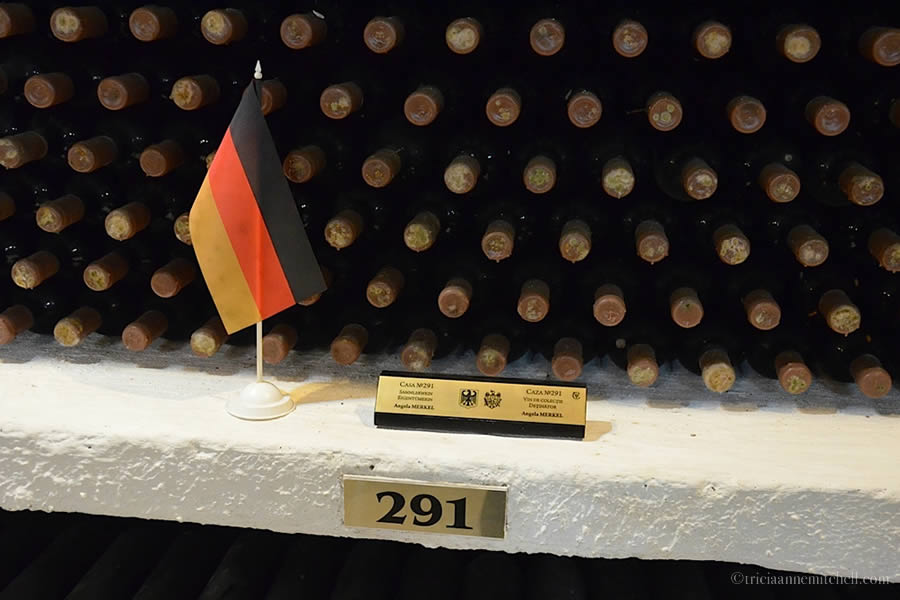
Hopping onto a golf-cart like train and slowly descending, I regretted I’d not brought warmer outerwear, for it was chilly down below. From wine collections of the world’s political elites, to themed tasting rooms reminiscent of Las Vegas, we toured a snippet of the underground city. It was fascinating to learn that the area had been tunneled out centuries ago, as it provided a source limestone to build the nearby city of Chisinau. It was funny to hear the anecdote that Soviet cosmonaut Yuri Gagarin had once gone underground to savor Cricova’s wine. Supposedly, he emerged two days later, walking as though he were in a zero-gravity environment. Cricova’s been home to wine since the 1950s and is still a popular mingling spot for the country’s visiting dignitaries.
For those with an interest in wine tidbits, and pairing ideas, my tasting notes from Château Vartely follow. Cheers, or as they say in Moldova, Noroc!











Château Vartely Flight of Wine:
- Brut, 2011, 12.5% alcohol, made with the Pinot Noir grape. Served at 6 degrees Celsius. Yeast and lime aromas. Ludmila pointed out that Moldovan winemakers tend to use one grape for sparkling wine – less blending. Château Vartely produces 5,000 bottles per year. Paired with dried apricots and prunes.
- Fetească Regală Select, 2013, 13% alcohol. Ludmila mentioned that this wine loses its freshness fast and that it should be served young. Light, refreshing taste – a good summer wine. Green apple, apricot, honey, and grapefruit notes. Served with fish and grapefruit wedge. In Romanian-Moldovan, the word Fetească means ‘young girl.’
- Malbec Shiraz Rosé, 2013, 13% alcohol. 8 grams residual sugar. Raspberry, cherry and berry notes. A perfect summer wine!
- Fetească Neagra Reserva, 2011, 14.5% alcohol. For a time, this grape varietal was lost, but it was later rediscovered and planted. Rich ruby color. Opened 20 minutes before we consumed it. Ludmila noted that old wines need even more time to “open up.” Hints of black cherries, plumbs, dark chocolate and coffee. Paired with chicken stuffed with cheese, dressed with balsamic vinegar and peppers.
- Taraboste Merlot & Cabernet-Sauvignon, 2009, 15% alcohol. A blend of three grapes: 50% Merlot, 50% Cabernet, and 10% Syrah. Aged 18 months in French Oak. Lighter in color than the Fetească Neagra Reserva. Blackcurrant, prune, pepper, vanilla and cherry notes. Smooth finish. Can keep up to 20 years. Served with tender pork and a honey mustard BBQ sauce.
Our Video of This Experience:
Where in the World?
Planning Pointers:
- When visiting Moldova’s monasteries, know that shorts are forbidden and that women are expected to wear a head-covering. Most monasteries have scarves which they lend out at the entryway, but I appreciated having my own with me each day. As a woman, I was able to enter monasteries with a skirt, but other ladies wearing pants were expected to drape a borrowed scarf around their lower half, resembling a sarong.
- Our ‘home away from home’ for one night was the Château Vartely (affiliate link). From the fluffy, white robes in our cottage-like accommodation, to the convenience of having wine-tasting and dining facilities just footsteps away, we had a relaxing time, and wish we could’ve stayed a bit longer.
- Visit my Moldova page for more trip tips, plus an index of all my posts about Moldova.
Disclosure & Thanks:
Our visits to Château Vartely, Old Orhei, the Curchi Monastery and Cricova Winery were supported by Wine of Moldova / the country’s National Office for Vine & Wine (ONVV) to which we extend thanks.
To Veronica, Iulia and Marina who coordinated our visit, to our guides Ludmila and Nina, driver Eduard, and waiter Denis, we send out an extra special thank you, or mulțumesc!
Photography & text © Tricia A. Mitchell. All Rights Reserved. Video footage is courtesy of my husband, Shawn.





Leave a reply to Christina Cancel reply