

Strolling some Mediterranean sidewalks during the late-autumn months, it’s not unusual to see shriveling olives wasting away on the ground. There are, of course, locals who spirit away buckets of a forgotten tree’s olives, or the odd pigeon that might take a peck at the bitter fruit, but it’s been my observation that a considerable amount of urban olives go to waste.
Enter enterprising University of Malta Professor, Dr. David Mifsud. Late last year, Shawn received an email from the university inviting students and community members to participate in an olive harvest being led by David. As something that’s been on our must-do list for some time, Shawn and I jumped at the chance to spend a few hours as volunteer olive pickers. We were also thrilled to hear that this Mediterranean staple was being harvested for a cause. The olives picked would be pressed into oil, bottled and sold, all to benefit charities serving Maltese residents with special needs or illness.
Though our meeting point for the harvest was the university campus, I was expecting that we’d soon be ushered to a picturesque olive grove elsewhere on the tiny island to lend our muscle.
“No, the olive trees are right here on campus,” said enthusiastic David. “We can walk to them!”
Given the plethora of concrete around, I was initially doubtful that there would be many trees nearby. Nevertheless, David was soon herding us to a campus street lined with trees studded with green, black and aubergine-colored olives. In one direction, we saw densely-packed residential areas framed by cacti, in another the domes and spires of Valletta’s stunning skyline.
The Picking Process
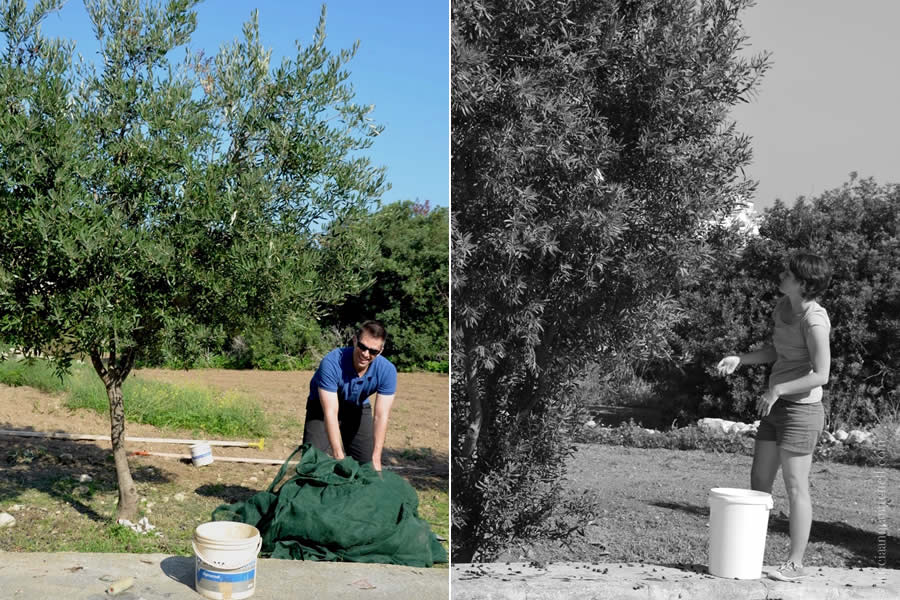
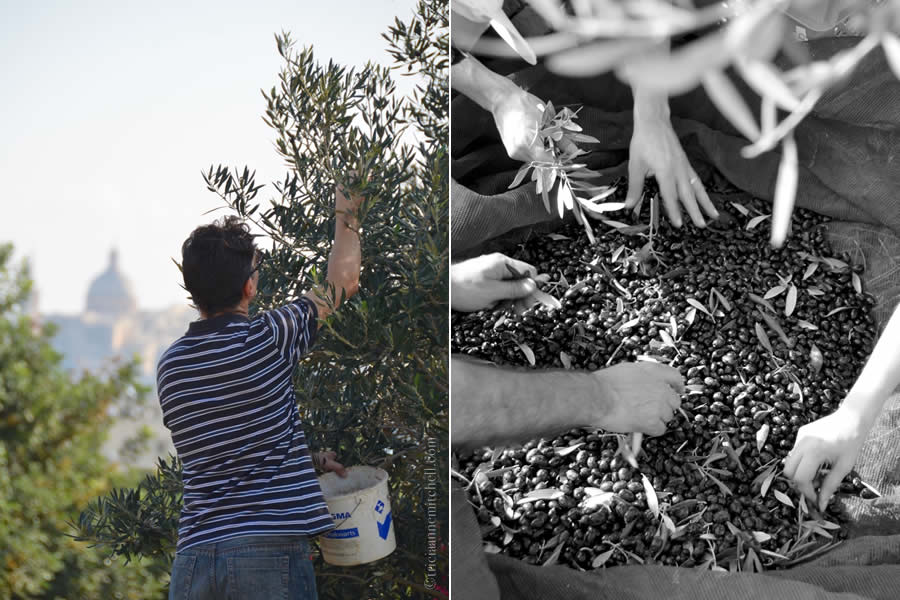
The olive picking process itself isn’t very complicated, but it can be hard work. You can harvest the fruit by hand, or with a short or long-handled rake. With the former method, you simply remove the olive from the branch, and toss the fruit into a bucket or basket; with the latter two approaches, you lay a tarp on the ground, comb the olives from the branches and be careful not to step upon them as they accumulate around your feet. Eventually, you consolidate a tarp’s contents into larger vessels, then take them to a facility where the oil can be extracted. Mechanical pickers exist too, but we did not use any.
The sooner the olives can be pressed the better, for that generally leads to lower acidity levels. Other factors, such as an olive’s variety, coupled with the production method used to press it, also determine an oil’s acidity level.
As we plucked olives from branches, the idea made me, Shawn and other participants ponder what additional organizations in Malta – or beyond – could benefit from such a project. From animal-welfare groups, to educational institutions, the opportunities really are endless.
In all, David’s initiative earned about 1,000 Euros for charity. Aside from the feelings of goodwill that were fostered, the olive oil itself is something to be savored! Shawn and I purchased a bottle last month, and have delusions that the bottle will never run dry. It’s simply that good!

If you find yourself inspired to facilitate a similar initiative, David was kind enough to answer my questions about the project. Hopefully his words might inspire you to harvest an otherwise-forgotten resource in your neck of the woods too!
Have you participated in a harvest of any sort? If so, what and where did you pick? How was it?

An Interview with David, the Project’s Founder
Tricia: How did you get the idea to harvest the olives on the University of Malta campus?
David: I used to see all these olive trees with olives unharvested on campus. I think that there are over 100 olive trees there. Some of the younger trees are 7-10 years of age, but others are at least 20 to 30 years old. Obviously, these older trees produce more olives.
I wrote to the Rector of the University, Prof. Juanito Camilleri, about this idea and he immediately agreed and gave me the green light to go ahead with it. University employees Amanda Ciantar and Ms. Maromia helped me to promote the project by sending e-mails to all University of Malta personnel.
Tricia: You mobilized approximately 30 volunteer olive pickers and then harvested olives together on two separate days. In all, roughly how many kilograms of olives did you pick? How many liters of olive oil were produced?
David: We harvested about 430 kilos of olives on both occasions, producing about 45 liters of olive oil.
Next came the pressing and bottling. There are only about 6-8 individuals offering this service in Malta. As soon as I told Bezzina Brothers (near Gianpula) our intention to sell the olive oil for charity, the company immediately offered to do the olive pressing for free. Otherwise, we would have had to pay more than 100 Euros for pressing fees. They were really kind to us.
The olive pressing was done on the same day of the olive harvest, because pressing olives on the same day as they were picked produces the best results for olive oil.
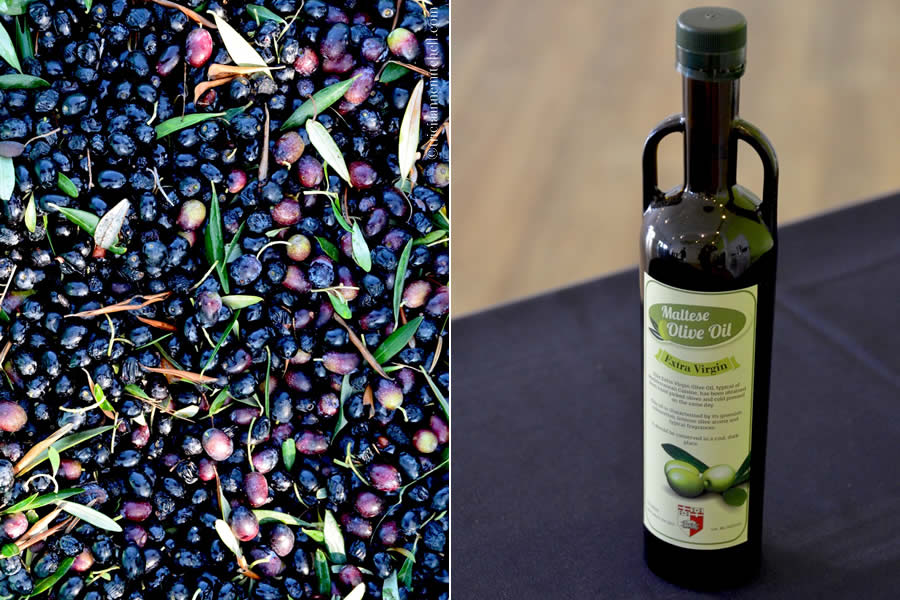
In all, we made about 1000 Euros from the sale of the olive oil. The university bought very nice bottles which can hold half a liter of this extra virgin olive oil and we sold the bottles for 12 Euros each. Daniel Spagnol, a graphic designer who is a great friend of mine, designed the label for free and the university printing press decided to print the labels at no cost.
Tricia: This is your first time facilitating a olive-picking project. What did you most enjoy about the experience?
David: I enjoyed all of it – meeting new people, finding the volunteers. Olive cultivation is a subject I like so much, so I tried to do something positive with what I learned.
Tricia: Doing something positive with what you learned – I like that! Are you planning a similar project for next year?
David: Yes, I hope to have the energy and enthusiasm to do this event next year. Many people want to participate now that they saw that it worked and now that they have tasted the excellent oil!




Our Video of This Experience:
Where in the World?
Planning Pointers:
- An olive harvest period varies based upon a given year’s growing conditions. In Malta, for example, 2015’s olives were harvested around October through the end of November. We participated in this harvest in mid-November.
- From all accounts, the University of Malta will pick more olives for charity next year too. If you’re a student at the university, watch for an official university email announcing the harvest days, or email Dr. David Mifsud. Visitors to Malta might also have luck checking in with Malta’s Tourism Authority to see if other similar opportunities exist.
- Need more inspiration? This link contains an index of all my posts from Malta.
Photography & text © Tricia A. Mitchell. All Rights Reserved.


Leave a reply to Tricia A. Mitchell Cancel reply