

I’d read about Provence’s unforgiving mistral wind. Now, I was battling it in the Ancient Roman Theater in Orange, France.
The sky was a clear, brilliant blue on this autumn day, but frigid gusts grew stronger the higher I climbed. Struggling to maintain my footing, I tried to channel lessons learned from years of doing balance poses on a yoga mat. I could taste a grit in my mouth, the dust of limestone ground down over the millennia.
When the wind got to be too much, I sat upon the chilly concrete seats and admired the splendor of my surroundings. The 2,000-year-old theater’s spectacular backdrop wall soaked up the day’s last hours of sunlight. Weathered columns and niches were still bathed in a golden light, but a statue of Roman Emperor Augustus had already fallen into shadows.
I’ve read that the mistral wind might make its appearance in Provence about 100 days a year! Realizing how much my hair had been tousled by the mistral in a few minutes’ time, I imagined how this fierce wind had impacted performers the last few thousand years. What props have succumbed to the strong gusts? And what did Roman performance-goers wear to protect themselves from the mistral’s inevitable chilling effect?
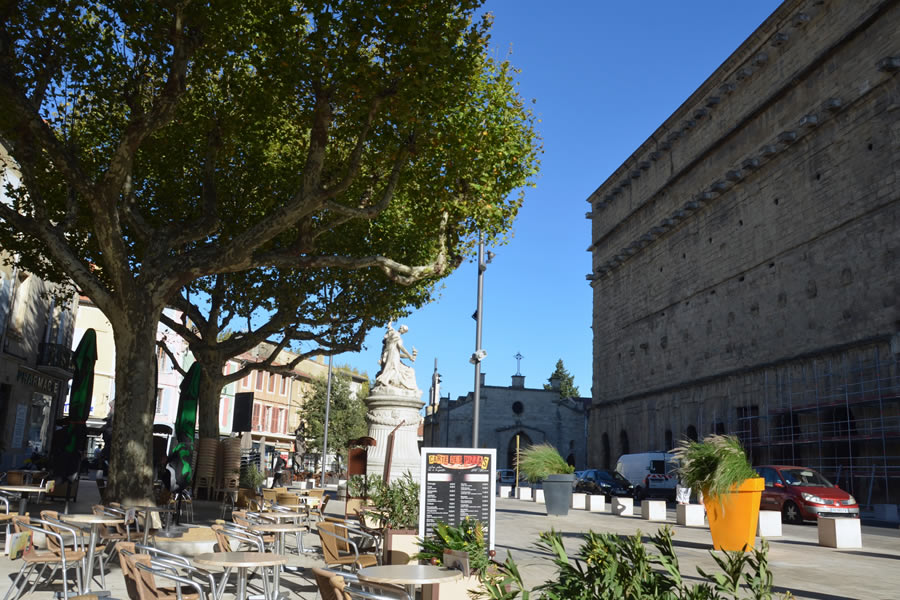
Realizing that we didn’t have enough outerwear to stay warm, Shawn, his parents, and I headed to a café just across from the theater. We wrapped our hands around hot cups of coffee, and looked at the theater’s exterior from our sheltered spot.
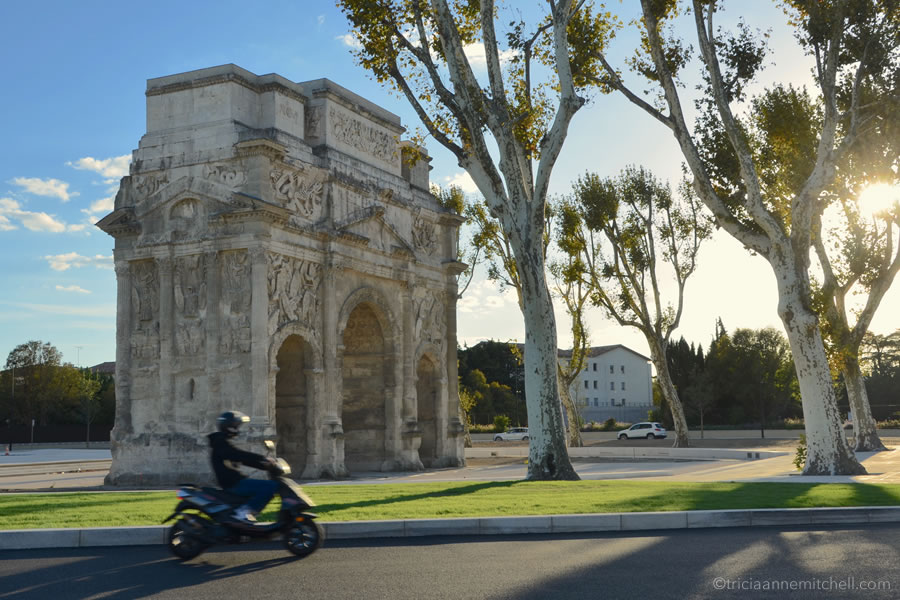
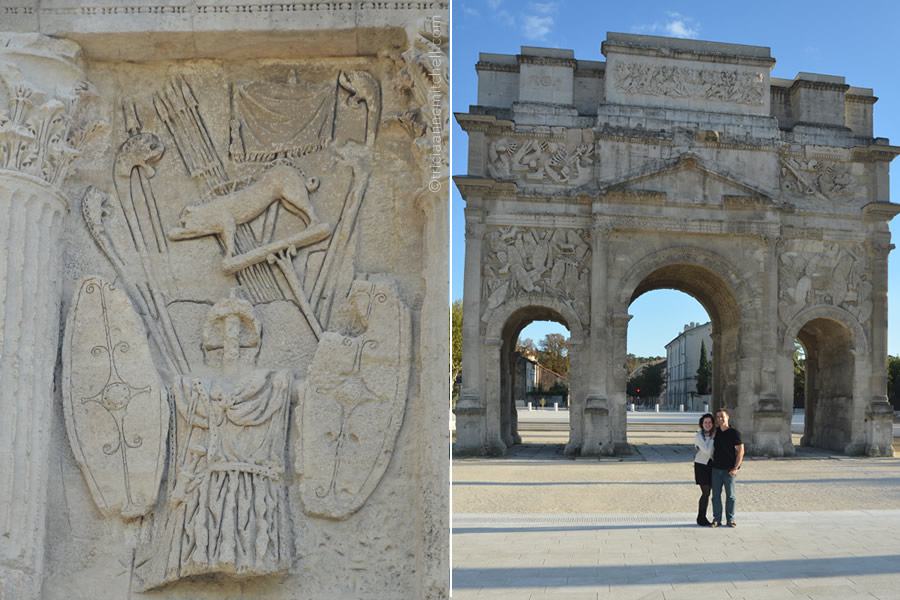
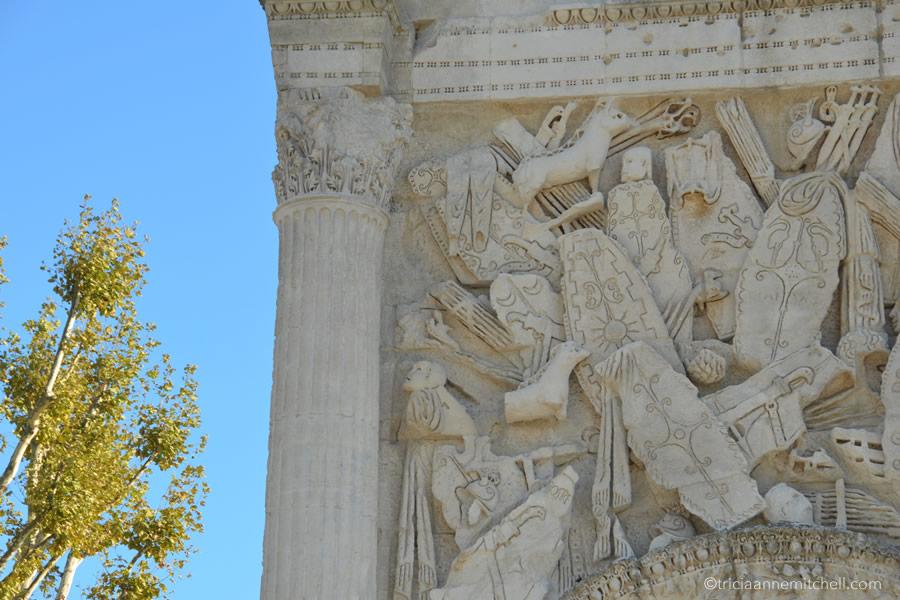
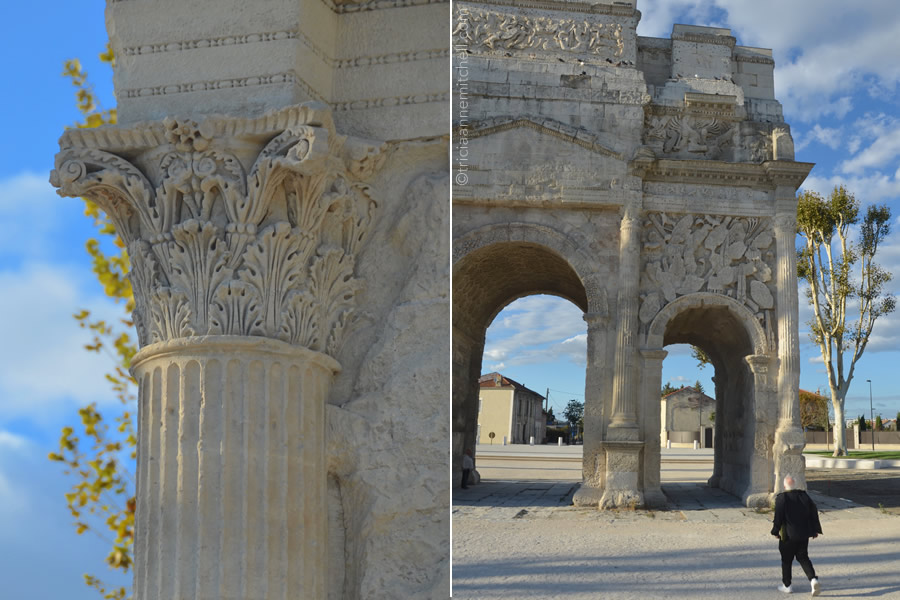
Once we’d gotten our second wind, we again braved the elements to visit the city’s triumphal arch, which was built around the same time as the theater.
As the branches of the nearby trees tossed in the wind, I marveled at how the arch’s carvings could look so intact despite being exposed to centuries of the mistral’s abuse.
A Bit About Roman Orange (Arausio)
Originally known as Arausio, Orange’s Roman chapter began in about 35 BCE, when a military colony was established there.
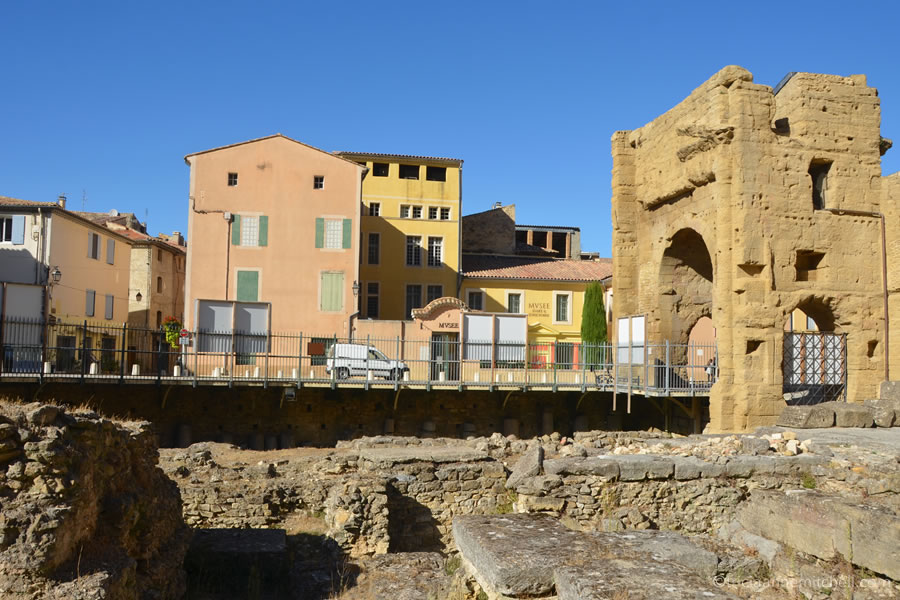
Like Rome, Orange had temples, baths, an arena, a theater, and an arch. Today, only Orange’s theater and arch survive. The theater is said to be one of Europe’s best preserved. (If you want to dive deeper into the theater’s history, the Orange Tourism Board’s website details Orange’s history from prehistoric to modern times.
Both the theater and Orange’s triumphal arch are UNESCO World Heritage Sites.
Recognized for its fine architecture long before the 1981 UNESCO inscription, Louis XIV supposedly declared the theater’s backdrop wall as “the most beautiful wall” in his kingdom.









Shawn’s Video:
Where in the World?
Planning Pointers:
- Orange is located in France’s Provence-Alpes-Côte d’Azur region, about 115 km (70 miles) northwest of Marseille. Here is a map of Orange, on the Orange Office of Tourism website.
- The Roman Theater (French: Théâtre antique d’Orange) is open for visits and the venue hosts performances, too. We did independent tours, and were given information-packed audioguides. See the Roman Theater’s official website for opening hours, prices, and upcoming events.
- There is no cost to access Orange’s Triumphal Arch.
- Here are more resources:
- Ville d’Orange (The city of Orange website, which is in French)
- Visit Orange, a City Steeped in History (Grand Avignon Tourist Office website)
- Do you need more inspiration as you plan your trip to France? My France guide contains an index of all my posts from France.
Photography & text © Tricia A. Mitchell. All Rights Reserved. My husband, Shawn, created the video.


Leave a reply to Ethan Anthony Cancel reply