
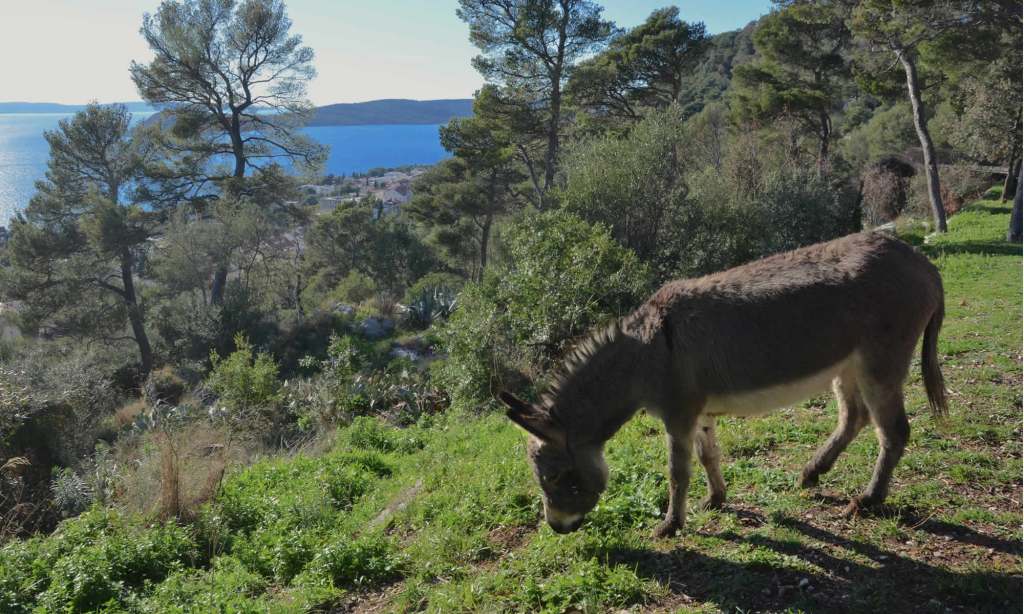
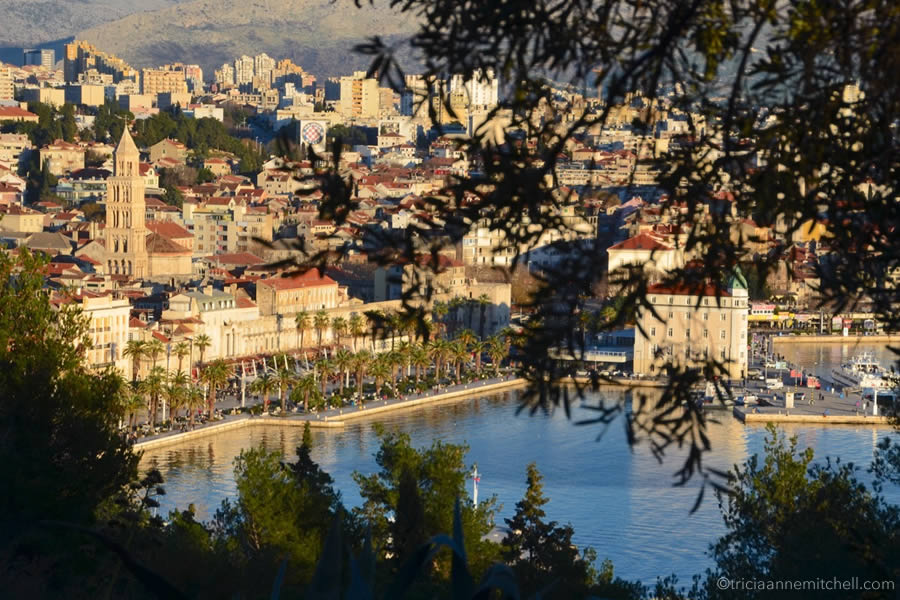
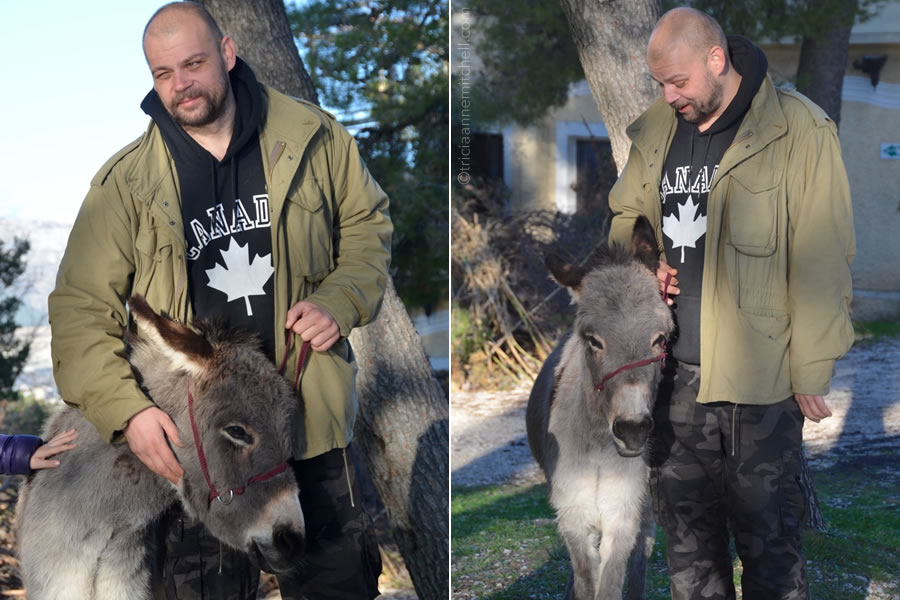
In a pine-shaded park overlooking the sea in Split, Croatia, a fuzzy donkey emerges among a cluster of joggers, dog-walkers, and families.
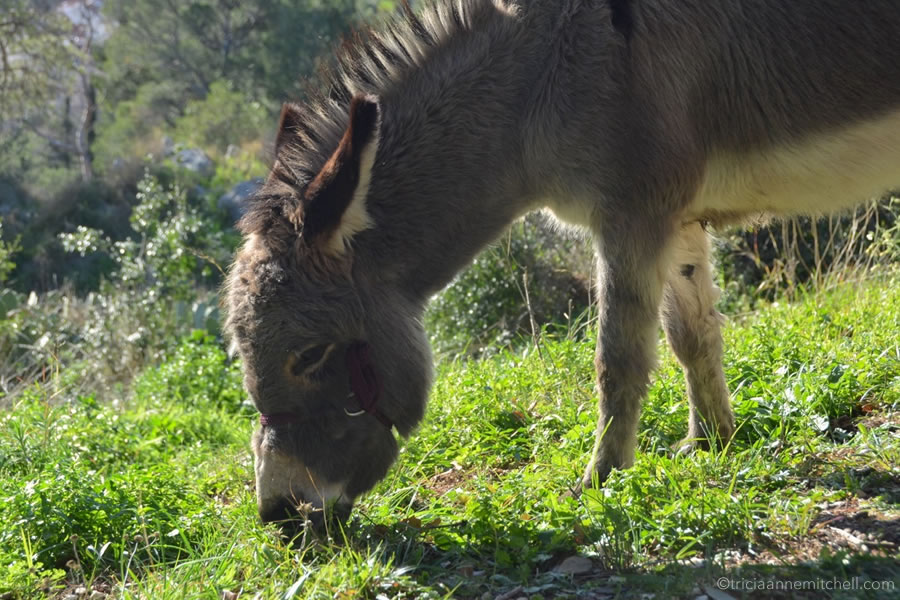
The passersby stop and smile, delighted to encounter such a creature in Croatia’s second-largest city. Some people snap photos of the grey donkey with their phones. A father and his young son ask the animal’s handler if they can stroke the animal’s muzzle. Eventually, the donkey wanders off, searching for the ideal patch of greenery to nibble upon. She seems content when she finds a grazing place. It has commanding views of the sparkling Adriatic Sea and neighboring islands.
With a short attention span, the donkey trots off again, stopping next to an abandoned phone booth. Seemingly unrelated at first, the juxtaposition of the two is symbolic in that both animal and booth were once considered essential in daily life. Today, in most parts of the world, they’ve both been rendered obsolete by technology.
Not long ago, donkeys were commonplace in the Mediterranean — beasts of burden that sometimes carried weight greater than their own. They toted water and food and helped to mill grain. But today, because of new forms of transport, the animals’ numbers have shrunk dramatically. By some accounts they are approaching extinction in their native environments.
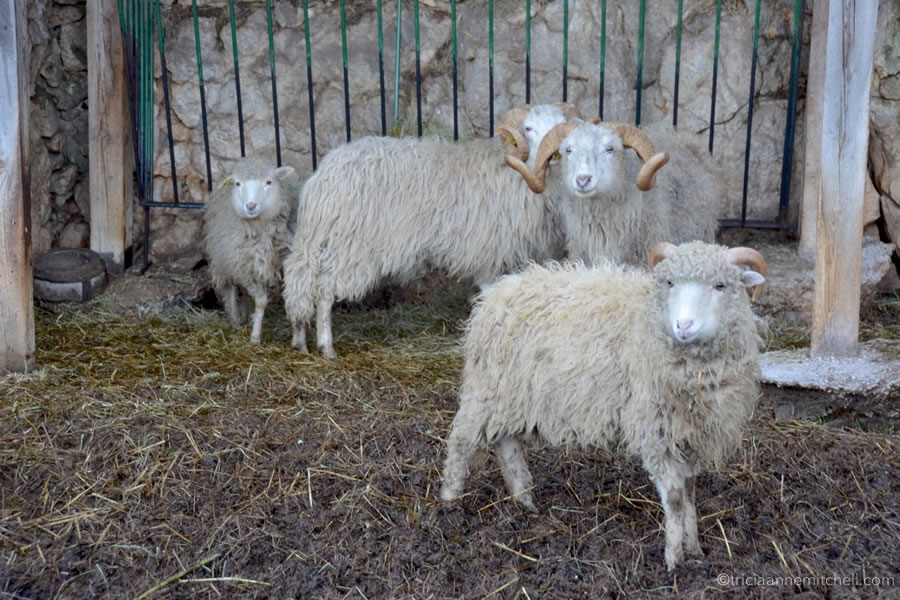
Marjan Park’s donkeys are descendants of animals that once called the Split Zoo home. The zoo closed a few years ago, and many of the animals were resettled. Today, 8 donkeys, 15 sheep, one goat, and two Shetland ponies still live there. Five employees help care for the animals.
Split resident and artist Hrvoje Cokarić is trying to find an innovative way to help the remaining animals still calling Split’s former zoo home. He has spearheaded a project called Toward Europe Split. The project’s aim is to ensure that Dalmatian donkeys are recognized as an important symbol of cultural heritage even though their role has changed in the 21st century.
“Why are [the donkeys] disappearing?” Hrvoje asked. “Because they lost their purpose. We must find a new purpose for them.”
Toward Europe has created a week-long artist’s residency program. Participants from Croatia and abroad have taken part, creating projects that incorporate the donkeys in some way. A local art gallery even offers free lodging to artists participating in the venture. The city of Split helps with vet expenses and basic food costs, with some funding from Croatia’s Ministry of Culture.
Hrvoje envisions the participating artists making short videos, classical paintings, even performances with the donkeys. Currently, Hrvoje and several others are making a documentary about the donkeys. More than ten artists have participated in the residential program so far, with each program generally lasting seven to ten days.
The Toward Europe team is also in the process of retrofitting saddles to hold solar panels that will harness renewable energy. Artists can then take the animals out into the park, and have a means to charge their telephones, cameras, and other electronic devices used to fulfill their artistic vision.
“Why are [the donkeys] disappearing? Because they lost their purpose. We must find a new purpose for them.”
– hrvoje Cokarić
As for the former zoo space itself, Hrvoje and other community partners envision transforming it into a less-institutional landscape where the animals can wander more freely and visitors can learn about what life was once like in Croatia. They’d like to create an educational center.
“We could have workshops for residents and tourists and show them how to milk the sheep, how to make cheese, and what do with the wool,” Hrvoje said. “This could also serve as a gene bank [for this type of donkey].”
The fledgling educational program is already a hit with community members. So far it’s involved high schoolers, young people from a youth correctional facility, and people with special needs.
In an age when some children don’t know what a donkey is (unless, Hrvoje joked, they’ve seen the movie Shrek), the initiative is an important one. Hrvoje elaborates on this theme in the Toward Europe brochure, writing:
“Young people don’t have a chance to meet donkeys anymore. They don’t feel their tenderness and warmth, they don’t gaze into their eye and they don’t laugh at the lurch of their ear. They don’t live with him and they don’t feel gratitude towards him for carrying their burden.”
Hrvoje descends from a long line of ‘donkey whispers.’
“My family was connected with donkeys,” he said. “My great-great grandfather was well known for his abilities to tame wild donkeys.”
Since Hrvoje’s donkey expert forefathers died before he could glean information from them, he has had to learn about donkey behavior and care independently.
“There are no books in Croatian to train with,” Hrvoje said. “However, I have been finding information in an American mini donkey association handbook.”
One of Toward Europe’s projects is to document how to raise donkeys.
“Perhaps only 30 people in Croatia have knowledge of donkey [rearing],” he said. “We’d like to profile older people and their donkeys and share the profiles on YouTube,” he added.
Marina and her donkey mates are a North African species of donkeys, hardy animals that would’ve once carried more than their own weight — perhaps upwards of 200 kg (440 pounds).
But if Hrvoje has his way, Marjan’s donkeys won’t carry more than 40 kg (88 pounds).
“They carried enough in history — let’s make a better future for them,” he said.







Shawn’s Video:
Where in the World?
Further Information:
- Visit the Toward Europe Facebook page to see more photographs of this project.
- Looking for more inspiration as you plan your trip to Croatia? See my Croatia guide and index.
Photography & text © Tricia A. Mitchell. All Rights Reserved. My husband, Shawn, created the video.




Leave a reply to Tricia A. Mitchell Cancel reply