
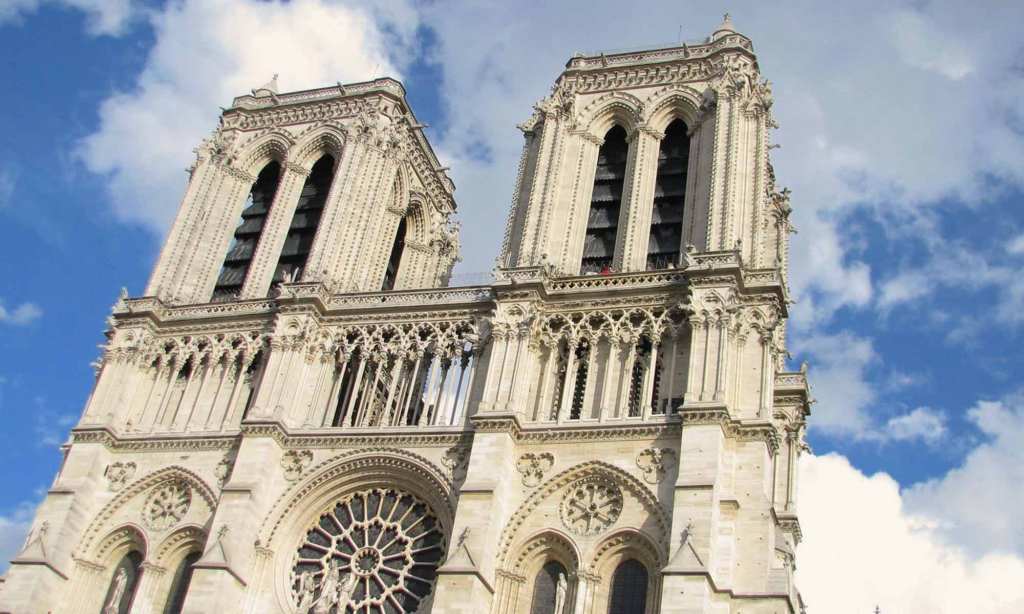
This autumn, I found my new favorite spot at the Notre Dame Cathedral — the observation deck.
During past visits to Paris, I’ve visited this Gothic masterpiece in varying seasons. Once, I rang in the new year on the edge of the Seine while the magnificent cathedral towered over revelers with her graceful silhouette.
On a chilly winter day, I strolled through her drafty interiors to see her chapels dressed up for Christmas.
During pleasant summer afternoons, I’ve also meandered past her towers as fluffy clouds glided by.

Until recently, my favorite Notre Dame memory was of the sun pouring through the jewel-toned Rose Window just as a musician dramatically tickled the ivories of the thunderous organ. Everything seemed perfectly choreographed as we passed through the immense front doors.

I now love the views from her observation deck the best, for it’s there that I can commune with Viollet-le-Duc’s gargoyles and grotesques and imagine the history that Notre Dame could share if only she could speak.
High above Paris’ rooftops, I think of all the chapters of history the magnificent cathedral has hosted – from the crowning of Napoléon, to numerous royal marriages, to dramatic and damaging attacks during the French Revolution.
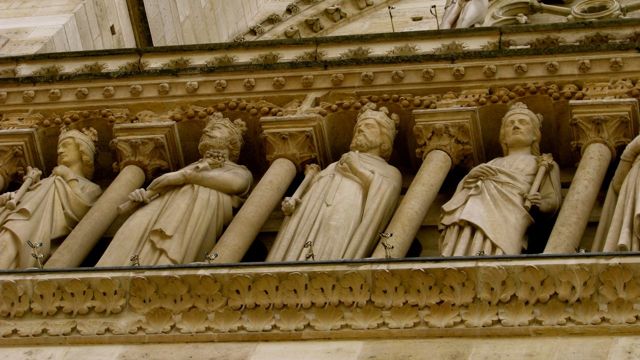


As the bells tolled on the hour during our autumn visit, I pondered how Paris’ skyline has changed throughout the centuries, with Sacré Coeur and La Tour Eiffel emerging from the landscape in the nineteenth-century, for example.
I also imagined what Notre Dame’s platform looked like before the extensive restoration, long before the gargoyles took up residence in the 1840s. At times, I thought Quasimodo might even make an appearance near the bell tower’s corner.
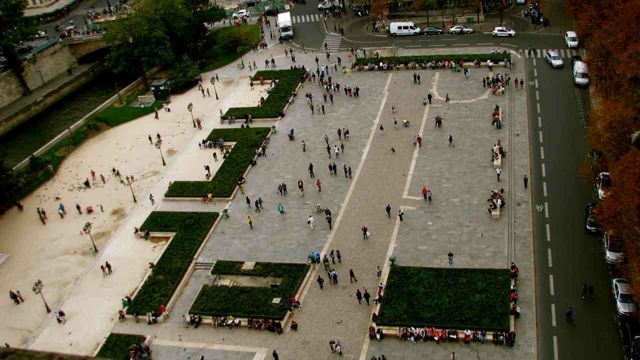
Many know Notre Dame largely because of her fictional tie to Victor Hugo’s Hunchback of Notre Dame, which was published in 1831.
It might come as a surprise, though, that the author is actually credited with helping garner support for Notre Dame’s restoration in the 1840s.

Thanks to the novel’s popularity, Parisians came to realize that the cathedral was very much in need of some restorative attention, which it eventually received over the course of two decades, starting in 1845.
Even today, some wonder if one of the chief architects, Eugène Viollet-le-Duc, somehow drew his gargoyle inspiration from Victor’s Hugo’s Quasimodo.
Regardless of the source of the architect’s motivation, Notre Dame’s restoration eventually motivated the French government to take more interest in its ailing monuments, which helped to preserve the nation’s rich architectural heritage.
“Great buildings, like great mountains, are the work of centuries.”
– Victor Hugo

In 1163, Bishop Maurice du Sully laid the first stone for the cathedral’s foundation. The construction would take almost 200 years to complete.
Once the 226-foot (69-meter) towers were in place, Notre Dame was crowned the largest religious building in Western Europe. It would hold this title until the mid-thirteenth-century.
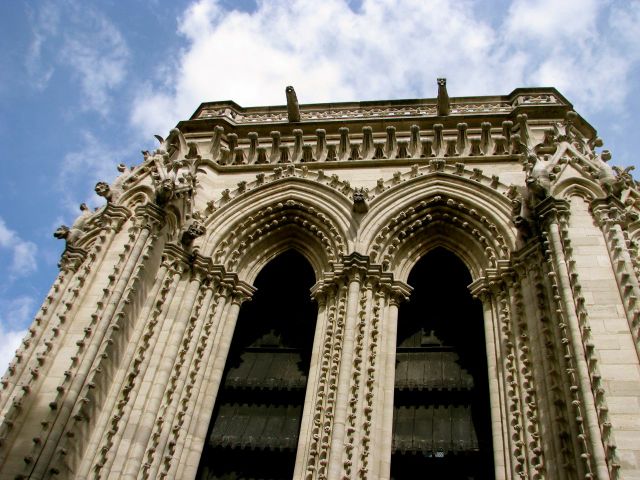
As I admired Notre Dame’s flying buttresses, imposing towers, and intricate details, I found my mind drifting towards some disappointing examples of modern architecture.
In the past, architects and craftsmen created structures that have stood the test of time, using basic scaffolding and rudimentary building tools.
However, many of today’s builders shoddily construct flimsy and characterless architecture, despite having access to sophisticated equipment.
Perhaps the latter could also gain some inspiration from a stroll atop Notre Dame’s platform.


Where in the World?
Photography & text © Tricia A. Mitchell. All Rights Reserved.


Leave a reply to KatiesCameraBlog Cancel reply