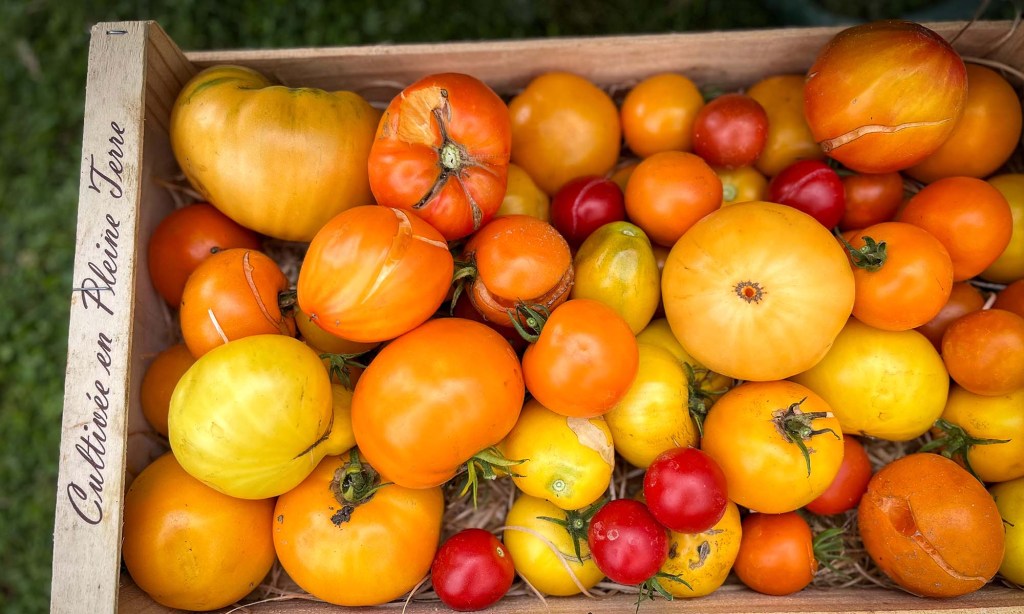
At a French tomato festival at the Château de la Bourdaisière, a wooden crate is filled with yellow, red, and orange tomatoes.

Last Updated:

You Say Tomato, They Say Tomate: A French Château Celebrates 785 Varieties

Posted by

·

, , ,

Imagine strolling the grounds of a French château, surrounded by a kaleidoscope of tomatoes in every color, shape, and size imaginable. This isn’t a fairy tale meets cooking show mashup. It’s the annual Tomato Festival at the Château de la Bourdaisière in France’s Loire Valley.

Since Shawn and I moved to France two years ago, we’ve been astounded by the fantastic variety of tomates on offer in French markets. Bland tomatoes were the norm at the big supermarkets when I was growing up in the United States. I ate those tomatoes, but not with great gusto. It turns out that Shawn’s opinion of tomatoes used to be less favorable than mine…

The first time I met Shawn in person, in fact, I thought we might be incompatible (food-wise at least), when he confessed that he detested tomatoes. He had made the bold decision to fly to Europe for one week to meet me in person. At the time, we were pioneers of online dating. I was living in Germany and Shawn was living in the US. We’d been corresponding for about three months by the time he flew across the Atlantic to meet for a whirlwind seven days.

Shortly after he arrived to my apartment in Heidelberg, Germany, I made a Caprese Salad, thinking mozzarella, basil, and tomatoes would be universally appreciated. And then Shawn diplomatically told me he was not a tomato fan. Pas du tout. Fortunately, the rest of our week proceeded much like a fairy tale, and we’ve now been together for 15 years. But I digress…

Once Shawn and I were living in France and exposed to the country’s flavorful tomatoes, he became a total tomato convert. When we heard about the Château de la Bourdaisière’s Tomato Festival and how it showcases a 785 staggering varieties, we were intrigued. We blocked the date on our calendars months in advance and readied our tastebuds.

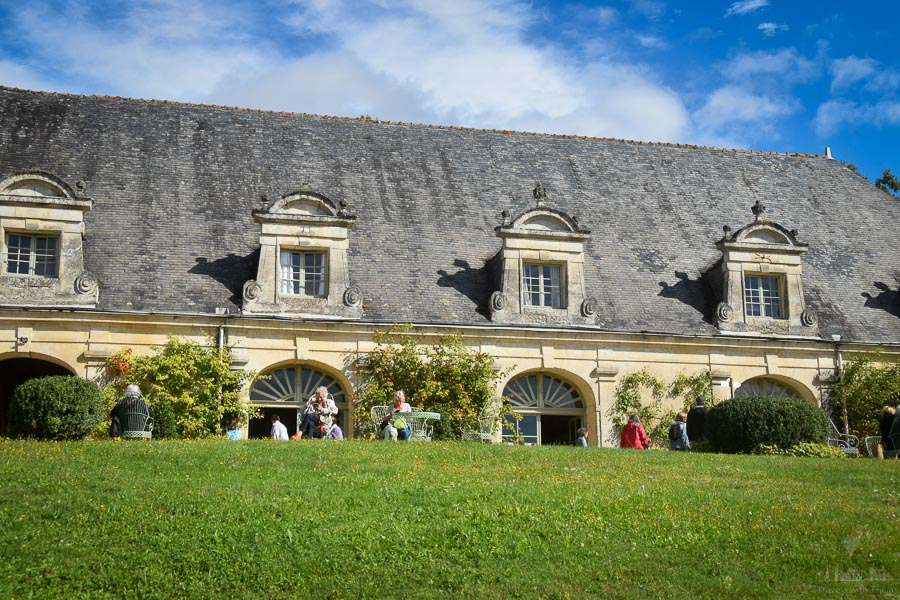
People walk the grounds of the Château de la Bourdaisière castle in France during the annual Tomato Festival. The castle's towers, dormer windows, and Renaissance architecture are visible under a grey sky and clouds.
The Château de la Bourdaisière has hosted the Tomato Festival (Festival de la Tomate et des Saveurs) for more than 25 years. The castle is located in Montlouis-sur-Loire, France.
People sit on the grounds of the Château de la Bourdaisière in France. The sky is blue overhead and there is a green lawn.

The Château de la Bourdaisière

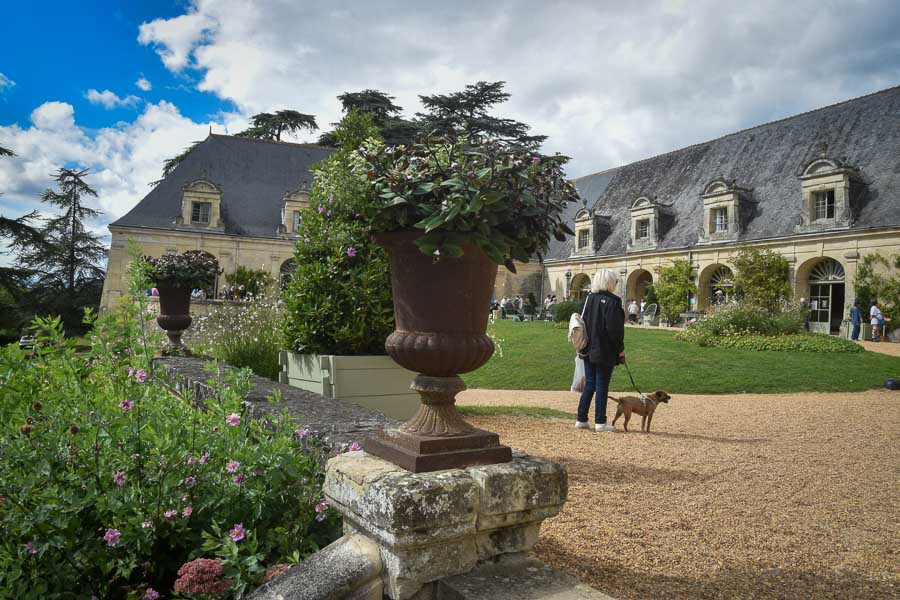
The Château de la Bourdaisière is the setting for the Tomato Festival. Originally built as a fortress in the 14th century, the château was later rebuilt in the Renaissance style during the 16th century by King François I. As you walk the castle’s grounds, you can feel the history in its graceful turrets and elegant façade, a backdrop that makes the festival feel even more special.

The National Tomato Conservatory

Today, the château serves as a private estate that opens its doors for special events and is dedicated to horticultural preservation. Its most famous attraction, the National Tomato Conservatory, is where history and horticulture come together.

At the heart of the festival is the National Tomato Conservatory (Conservatoire National de la Tomate), a living library of tomato diversity. Founded in 1998 by the château’s current owner, Prince Louis Albert de Broglie, this conservatory was created to preserve an astonishing variety of tomatoes from all over the world.

Today, you can explore a collection of 785 tomato varieties, which go beyond the standard red ones. Here, you’ll find everything from the Green Zebra to the plump Coeur de Boeuf Jaune (Yellow Beef Heart). At the festival, you can do more than just look; you can taste, learn, and even buy seeds for your own garden.
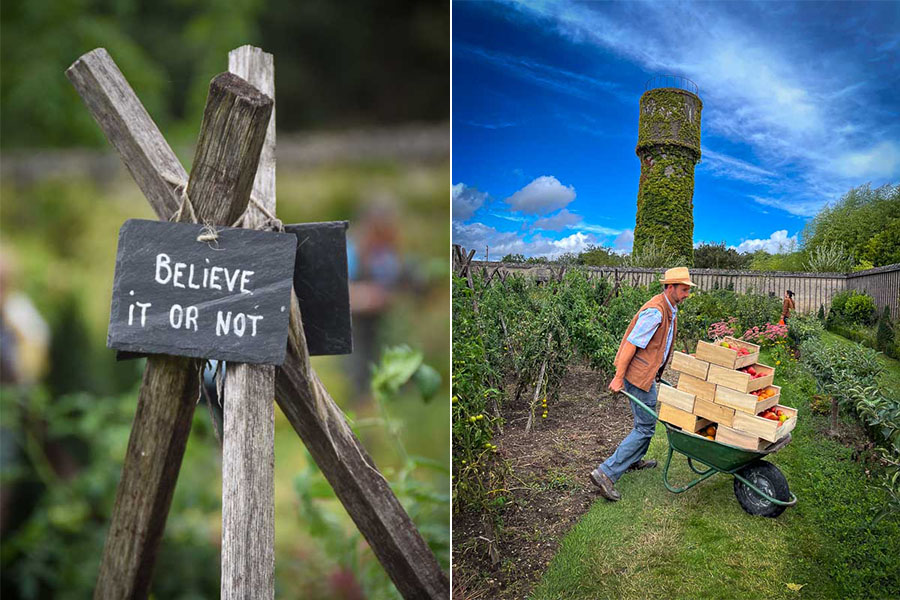
Left: A tomato variety called "Believe it or Not" is identified on a handwritten sign made of slate. Right: A man pushes a green wheelbarrow filled with 10 crates of red, yellow, and orange tomatoes at the National Tomato Conservatory in France..
Believe it or not, there are really 785 varieties of tomatoes growing in the gardens of the château, including the “Believe it or Not” variety. The castle is home to the National Tomato Conservatory.
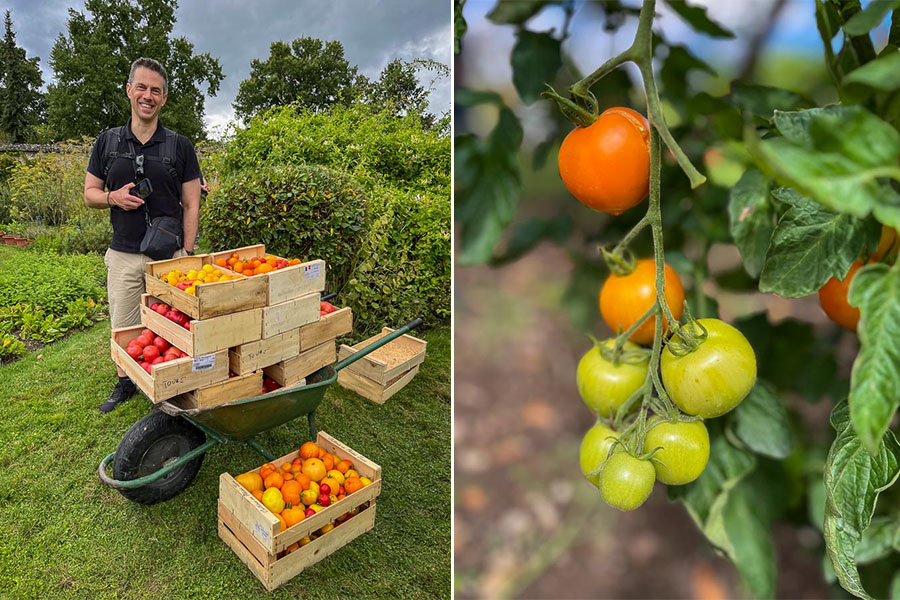
Left: A man stands next to a wheelbarrow filled with 9 crates of multicolored tomatoes in the National Tomato Conservatory on the grounds of the Château de la Bourdaisière in France. Right: Orange and green tomatoes hanging on a vine alongside leaves.
Shawn poses next to a wheelbarrow packed with crates of colorful tomatoes.
Left: A wooden tomato trellis features a slate sign handwritten with the words: "Reine de la Bourdaisière" Right, close-up of a window and ornamentation of the Château De La Bourdaisière in France.
Left: There’s a variety named after the château called the “Queen of the Bourdaisière” tomato (Reine de la Bourdaisière). Right: Detail of a window at the château.
Left: The Tiny Tim variety of tomato climbs a tomato trellis. Right: A couple poses alongside Tomato Plants at the Château de la Bourdaisière Tomato Festival.
Left: The Tiny Tim tomato variety, a nod to my dear dad, Tim. Right: Shawn and I, posing next to the Abraham Lincoln tomato. I’m originally from the state of Illinois, whose slogan is the “Land of Lincoln.”

Here are some of the most memorable tomato varieties I spotted at the Tomato Festival:

  • Abraham Lincoln
  • Apple Tree
  • Believe it or Not
  • Cavendish Banana
  • Coeur de Boeuf Jaune (Yellow Beef Heart)
  • Fuzzy
  • German Head
  • Green Sausage
  • Green Zebra
  • Lemon Tree
  • Moonglow
  • Mortgage Lifter
  • Monstreuse de Lyon (Lyon Monster)
  • Mustang
  • Northern Light
  • Red Dawn
  • Reine de la Boirdaisière (Boirdaisière Queen)
  • Sweetie
  • Tulip
  • Wading Deep
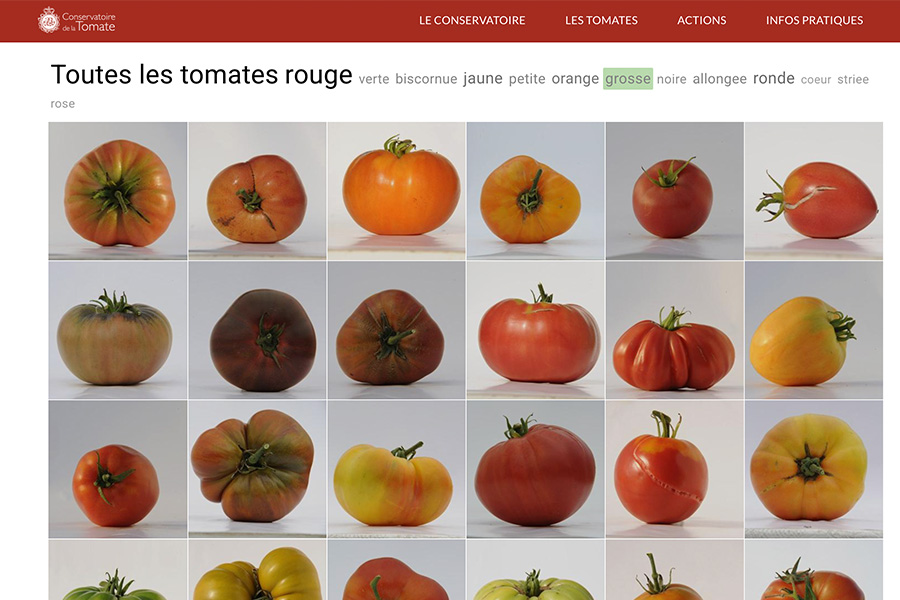
Definitely have a peek at the website of the National Tomato Conservatory (Le Conservatoire National de la Tomate), which categorizes the tomatoes based on color and shape.
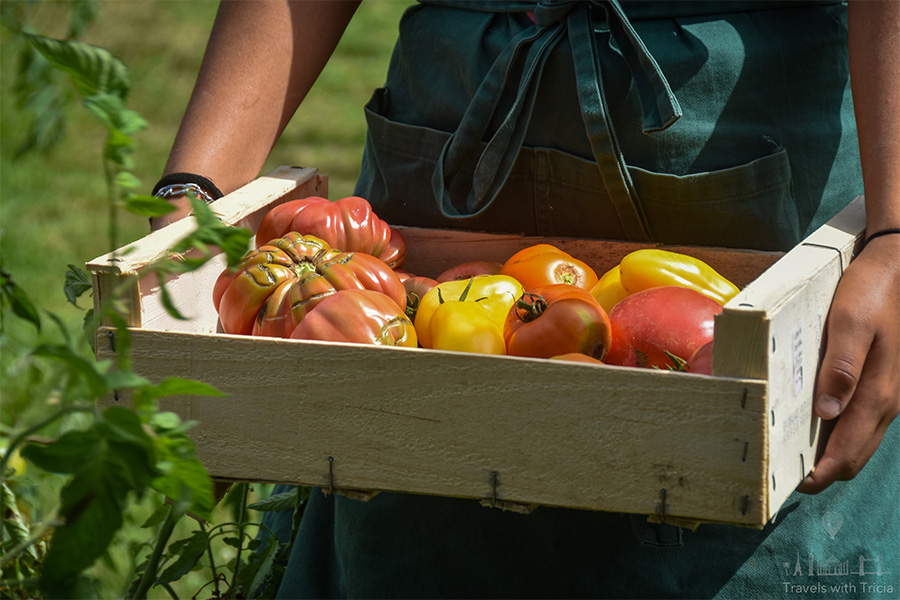
A woman, wearing a green apron, holds a wooden crate filled with red, yellow, and orange heritage tomatoes. Only her hands are visible.
A wheelbarrow filled with wooden crates sits among rows of tomatoes at the National Tomato Conservatory on the grounds of the Château de la Bourdaisière.
In the planting beds, the tomatoes are grouped by color and arranged in alphabetical order.
Left and Right: Heirloom tomatoes of a variety of shapes and colors cling to the vines at the Château de la Bourdaisière in France. Some tomatoes have recently been watered so there are water droplets.
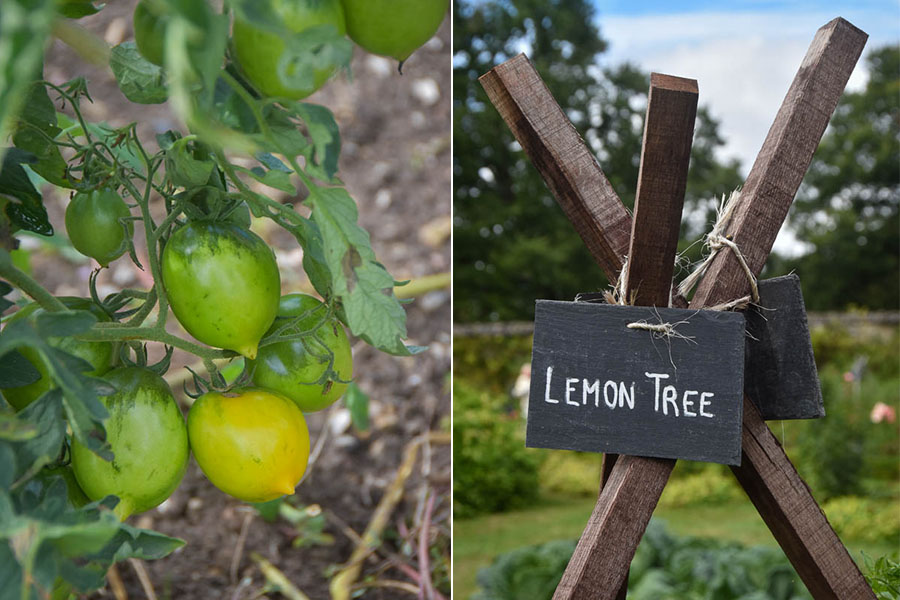
Right: A trellis for growing Lemon Tree tomatoes, identified with a grey slate sign. On the left: Green and yellow tomatoes resembling lemons grow on the vine.
The appropriately named “Lemon Tree” tomato variety.
Tomatoes growing on wooden trellises, are identified by signs written on slate. The tomato varieties include: Mortgage Lifter, Nepal, Monstreuse de Lyon (Monster of Lyon), Northern Light, and Miel de Mexique (Mexican Honey).
From left to right, a few unique tomato varieties: Mortgage Lifter, Nepal, Monstreuse de Lyon (Monster of Lyon), Northern Light, and Miel de Mexique (Mexican Honey).
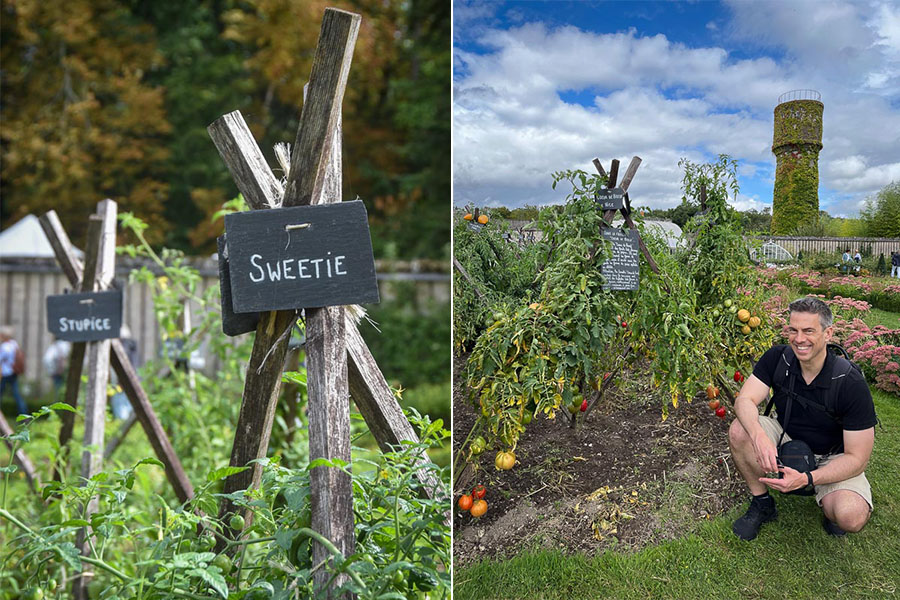
Left: A wooden tomato trellis identified with a black slate sign with the word "Sweetie" handwritten on it. Right: A man poses alongside a bed filled with several varieties of tomatoes at France's annual Tomato Festival.
Left: The Sweetie tomato. Right: My sweetie, Shawn.
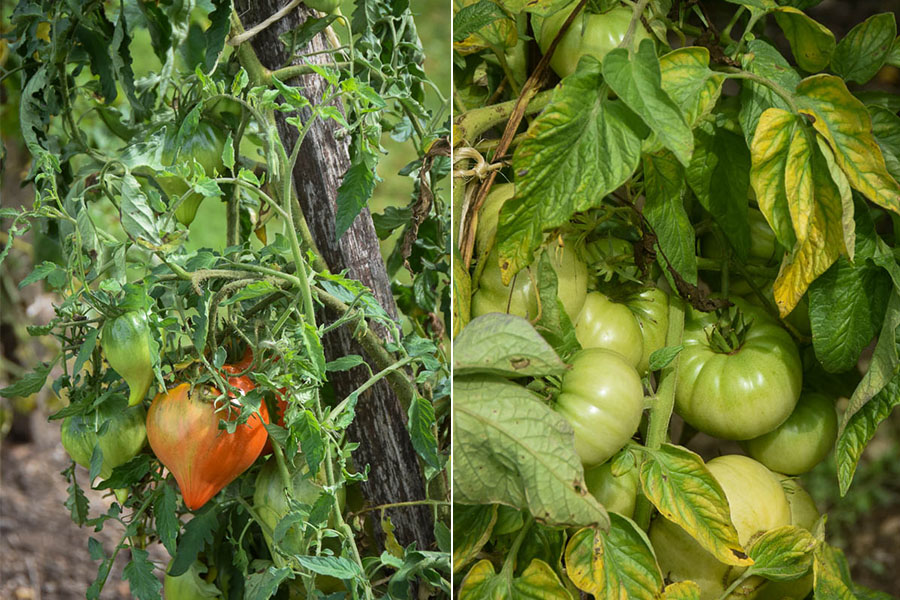
Left: A red, pointy tomato variety grows alongside the post of a wooden trellis. Right: Green tomatoes growing on the vine.
Orange, red, and green tomato varieties cling to the vines at the National Tomato Conservatory in France.
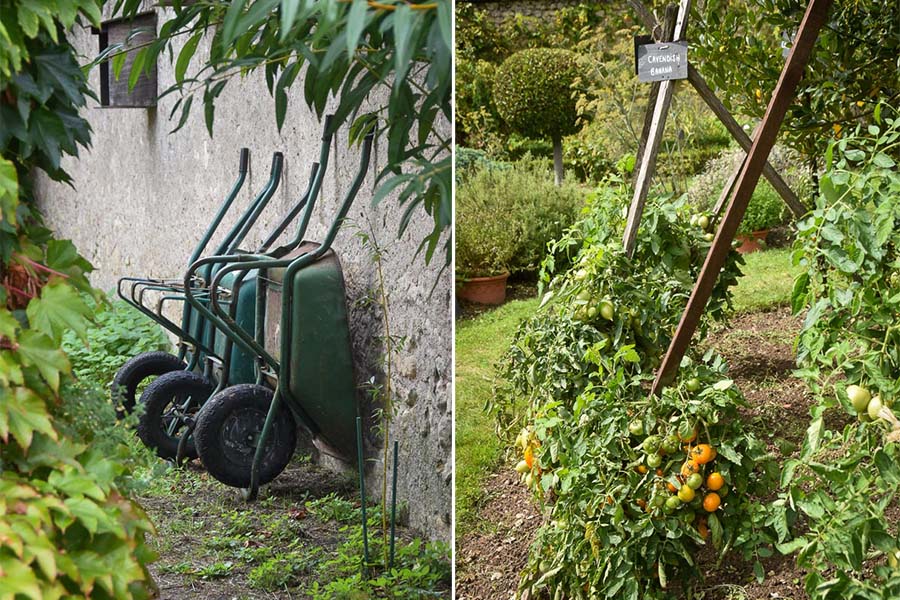
Left: Three wheelbarrows are stored alongside a stone wall at the Château de la Bourdaisière in France. Right: The Cavendish Banana variety of tomato climbs up a wooden trellis in the castle's gardens.
Left: Wheelbarrows (les brouettes). Right: The Cavendish Banana variety of tomato climbs a tomato trellis.
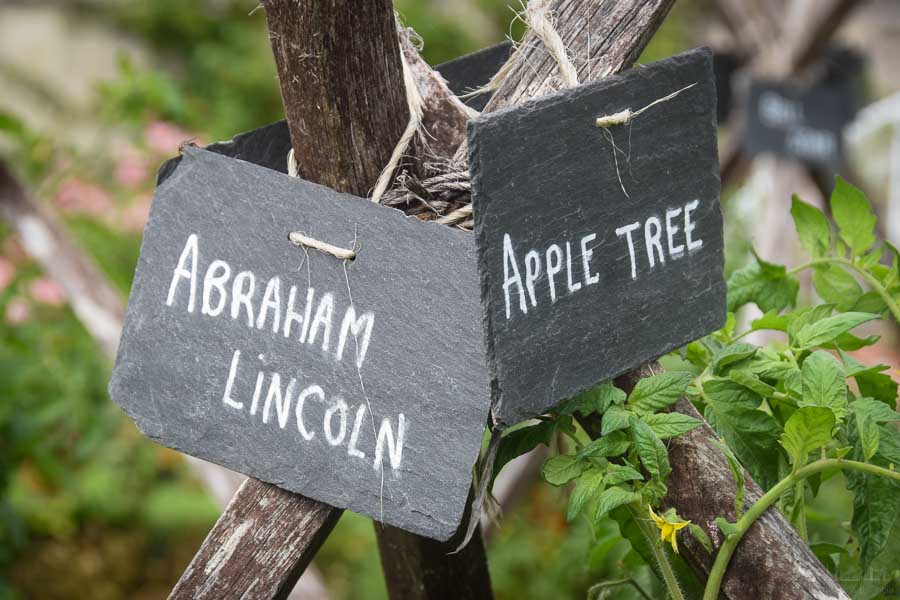
Slate signs attached to a wooden tomato trellis identify the Abraham Lincoln and Apple Tree varieties of tomatoes.
Abraham Lincoln and Apple Tree tomato varieties, side by side.
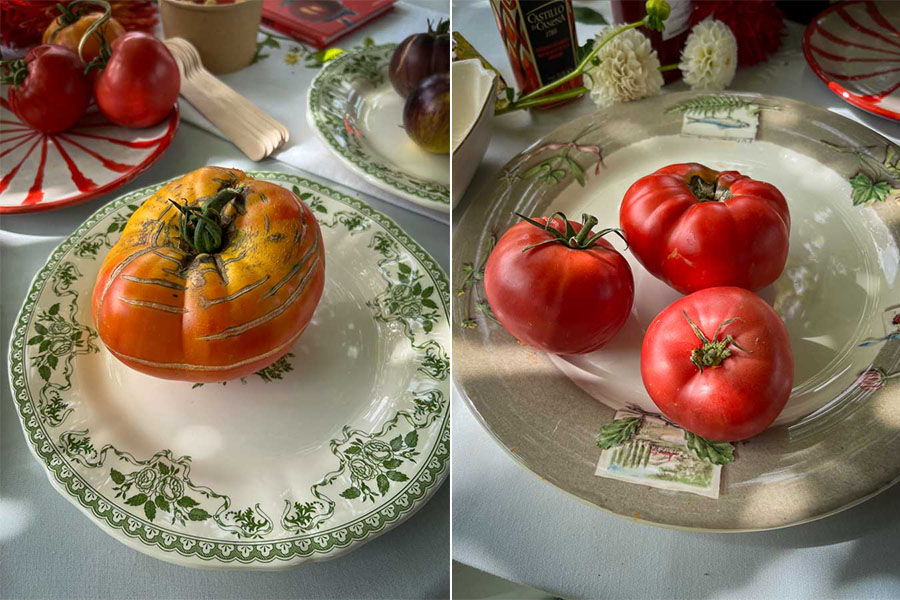
A round table, covered with a white tablecloth, is filled with vintage plates of multicolored tomatoes and dahlia flowers. Bottles and jars of tomato-related products are also displayed on the table.
An eye-catching table dressed with multicolored tomatoes and dahlia flowers.
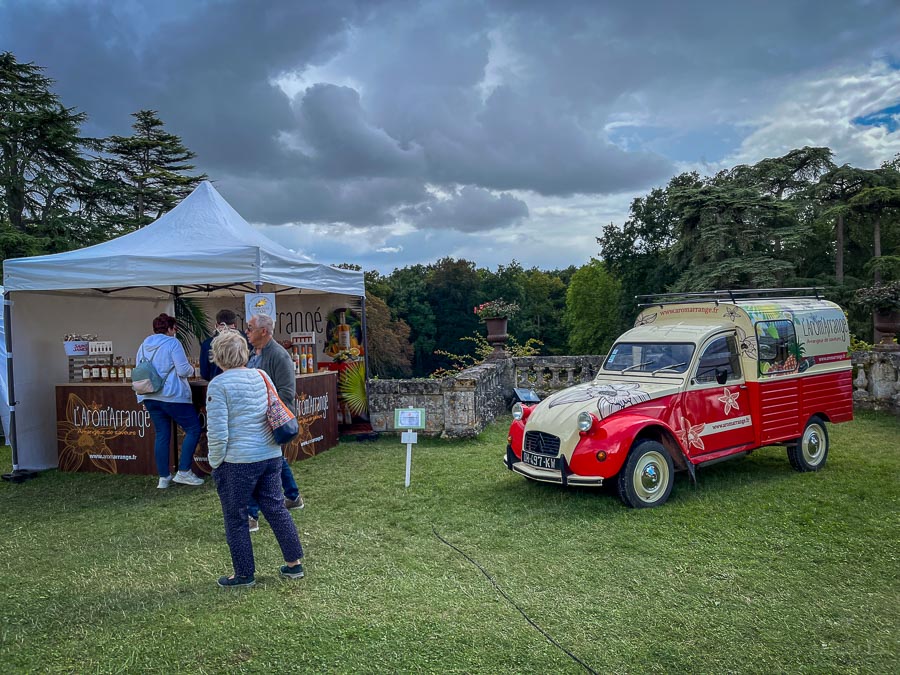
Leaving the Tomato Garden and heading closer to the castle, we found exhibitors cooking up delicious samples, as well as merchants selling seeds, plants, gourmet condiments made with tomatoes, and other products. We bought a delightful jar of honey infused with local saffron grown locally in the town of Montlouis-sur-Loire.
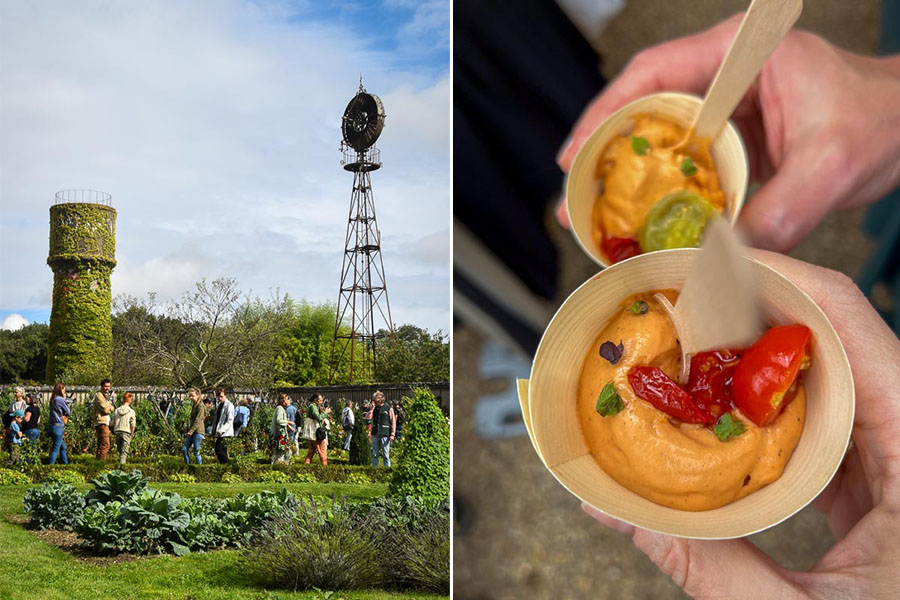
A local chef prepares a deliciously creamy concoction made with a blend of tomatoes, eggplant, and of course, cream (pictured below). It was divine!
Left: The château’s kitchen garden. Right: A fresh and flavorful treat served with a biodegradable spoon and cup.
Vendors sell seeds for everything from tomatoes to pumpkins. These seeds are marketed by the Château de la Bourdaisière itself. (You can order seed packets from the château directly and the’ll mail them to you.) Someday, I’d love to try the Pink Grapefruit tomato variety shown here.
Festival attendees peruse plants for sale.
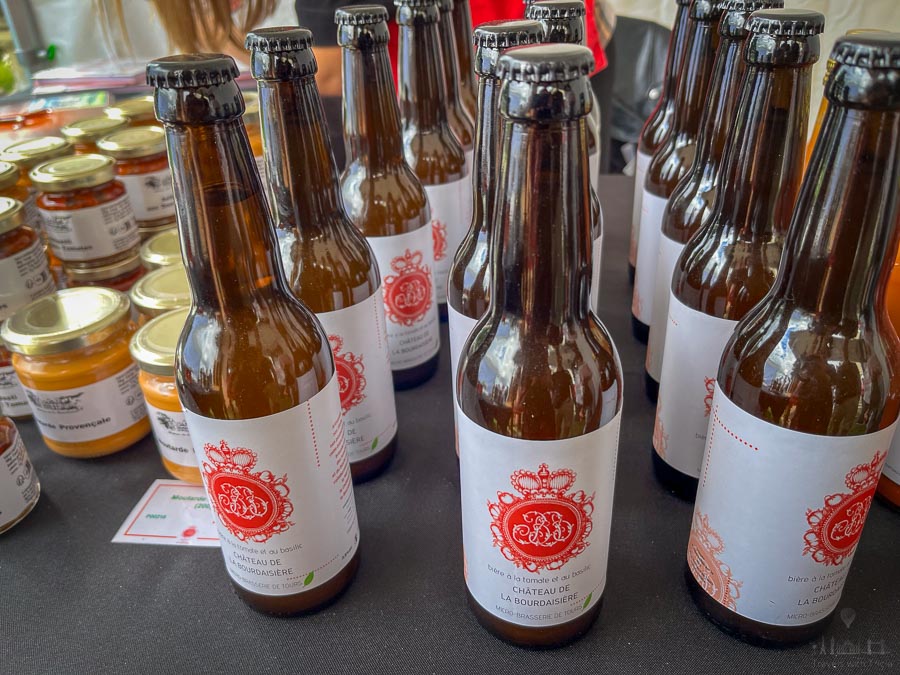
The château sells a few products with its own label, including these bottles of Château de la Bourdaisière Beer, infused with tomato and basil. Shawn’s verdict about the beer? He said it was quite refreshing! We also bought a jar of tomato jelly (une confiture de tomates), and a jar of moutarde Provençale (Provence-style mustard).
For a moment, it seemed like we might have been rained upon, but in the end, the sun prevailed.
I spotted a fair number of dogs in attendance at the Tomato Festival, including this irresistible puppy.
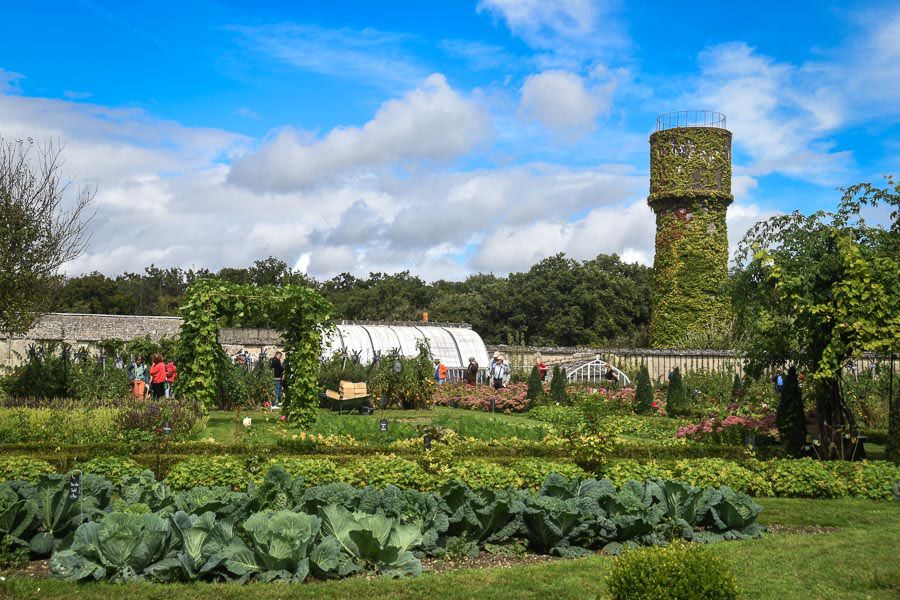
There’s more than tomatoes growing in the château’s potager (kitchen garden). Here are some beautiful heads of cabbage.
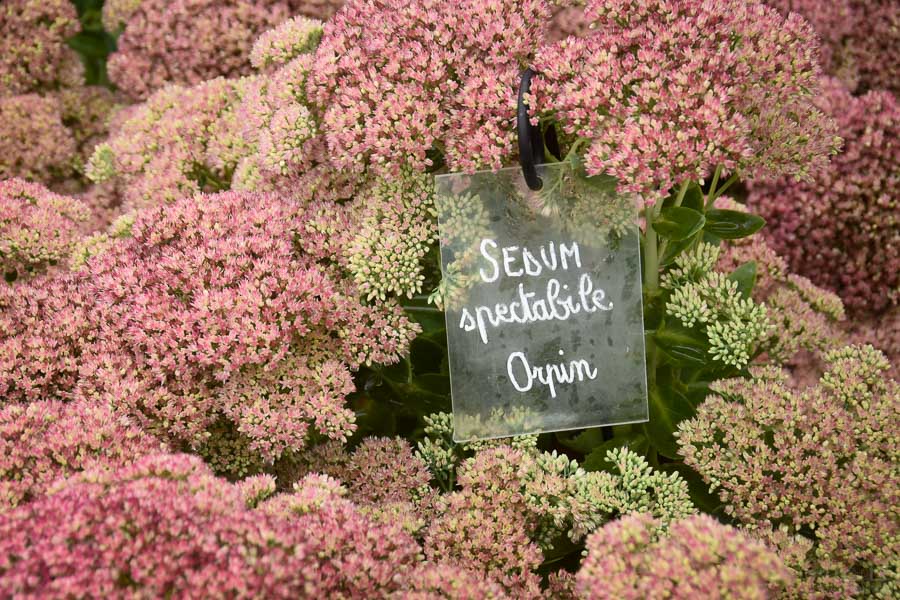
Flowers, such as this sedum, also adorn pockets of the castle grounds.
Left: An urn brimming with sedum. Right: Signs pointing to the Dahlia Garden (Conservatoire du Dahlia) and Tomato Bar (Bar à Tomates).
Left: Cabbage. Right: Apples, one of which proved irresistible, likely to a bird.
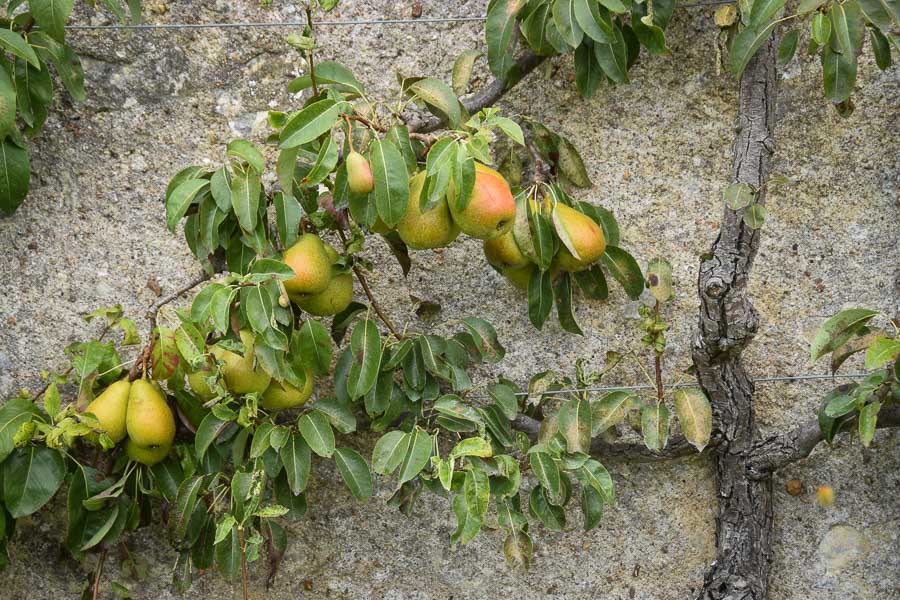
A pear tree, grown flush to a stone wall in the espalier technique, bears eight sizable pears, nearing harvest-time.
A pear tree, grown using the espalier technique, which saves space and also looks attractive.
The château’s Rose Garden.
A man walks along a grassy path alongside flowerbeds filled with multicolored dahlia flowers.
Shawn heads to the Dahlia Garden (Conservatoire du Dahlia).
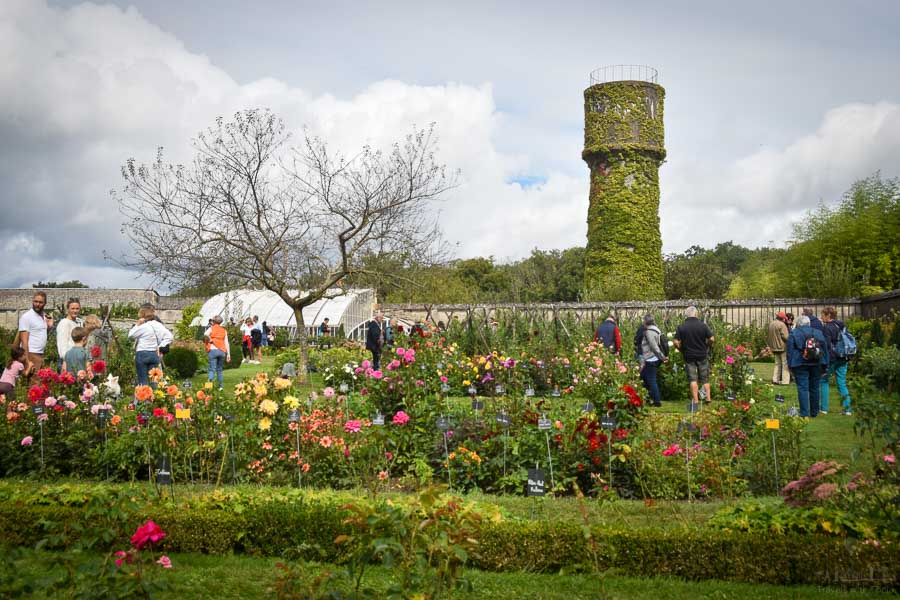
Flowerbeds filled with multicolored dahlias, greenhouses, and the Tomato Bar refreshment tents at the Tomato Festival in France.
Flowerbeds filled with dahlias, greenhouses, and the Tomato Bar refreshment tents where you can purchase food to enjoy on-site.
People attending the Tomato Festival walk on the lawn of the Château de la Bourdaisière in France's Loire Valley. White tents are set up alongside the stone castle, which features a tower and Renaissance style architecture.
A vintage black car is parked at the stone gates marking the entrance of the Château de la Bourdaisière in France. Tall trees and a green lawn are visible in the background.
A sign, handwritten on a slate panels, explains the tomato's journey to Europe. Green tomato vines, some with red tomatoes ready to harvest, climb up the trellis on which the slate sign is posted.
A sign, handwritten on a slate panel, explains the tomato’s journey to Europe in the 16th century.

From Poisonous Berry to Culinary Staple: The History of the Tomato

The tomato’s journey to becoming a global food staple is a fascinating story, full of surprising twists.

The tomato’s story begins in western South America, where it was first cultivated by the Aztecs and other Mesoamerican cultures. The word “tomato” itself comes from the Aztec word tomatl.

When the Spanish brought the tomato to Europe in the 16th century, it was not an instant hit. Because the tomato plant is related to the poisonous nightshade family (Solanaceae), people were immediately wary. The leaves and stems are toxic, and this connection, combined with the fact that acidic tomatoes would leach lead from the pewter plates used by the wealthy, led to a dangerous misconception. People who got sick from lead poisoning blamed the fruit, earning it the nickname “poison apple.”

For nearly 200 years, the tomato was considered an ornamental curiosity in Europe, admired in gardens but rarely eaten. It wasn’t until the late 18th century in Italy and Spain that it began to be embraced in cooking, eventually becoming a cornerstone of Mediterranean cuisine.

The tomato’s reputation took a while to recover in North America, too. Its fate was finally changed in 1820 by a man named Colonel Robert Gibbon Johnson, who famously ate tomatoes in front of a crowd in New Jersey to prove they were safe. This gesture, along with the rise of the canning industry, finally helped the tomato gain widespread acceptance.

The festival at Château de la Bourdaisière is a fun and delicious reminder of the tomato’s incredible journey and a true celebration of a fruit that has conquered the world, one bite at a time.
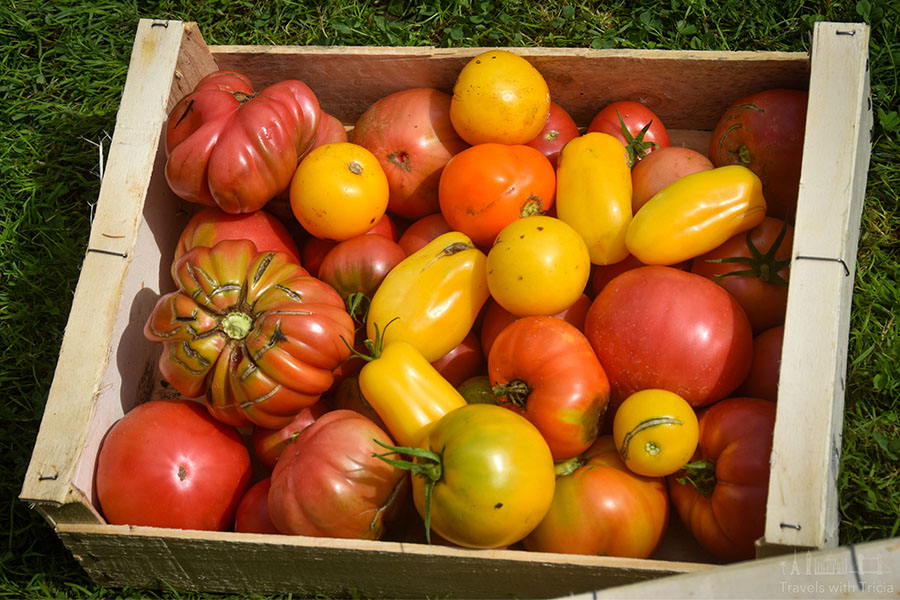
Red, yellow, and orange heritage tomatoes fill a crate at the Tomato Festival, held on the grounds of the Château de la Bourdaisière in France.

🍅🎵 Tomato-Themed Tunes:

🍅 More Tomato Resources:

Where in the World?

Planning Pointers:

  • The Tomato Festival takes place on a Saturday and Sunday in early September at the Château de la Bourdaisière in Montlouis-sur-Loire, France.
  • The city of Montlouis is located between Tours and Amboise, 9 km (about 5.5 miles) from the Saint-Pierre-des-Corps TGV station. (You can get from Paris to the Saint-Pierre-des-Corps TGV station in about one hour.)
  • Tomato Festival tickets cost 8€ / 6€ (full / reduced admission), as of 2025. Admission is free for children under the age of 10.
  • There is a Tomato Bar on-site, where you can buy tasty treats to be enjoyed on the grounds of the château. The menu varies based on what’s in season, but be on the lookout for appetizer boards filled with olives, cherry tomatoes, and rillettes de Tours. There are also tomato salads, savory tarts, and more.
  • To get to the Tomato Festival, you can also travel via regional train, but be prepared to do a bit of walking.
    • We traveled by train from Amboise to the Montlouis-sur-Loire train station. The walk from the train station to the château was about 4 kilometers (2.5 miles).
    • On the way back home, we took the train from the Veretz-Montlouis train station to Amboise. The distance is about 2 km (1.25 miles).
  • If you can’t make it to the château during the weekend of the Tomato Festival, you can still visit the gardens of the château and see the Rose Garden, Dahlia Conservatory, and Tomato Conservatory, which are open a few months out of the year. Here are ticket prices, dates, and opening hours. Note that you’ll usually see tomatoes from July to October. The château also hosts a Plant and Spring Festival in April.
  • Where to Stay: You can even spend the night at the Château De La Bourdaisière, which has rooms and apartments. The château is surrounded by an extraordinary park, and offers tennis courts, jogging trails, and an outdoor swimming pool, not to mention intimate access to the Tomato Conservatory. All rooms overlook the château’s park. At least one room is accessible.
  • Are you spending a few days in the Loire Valley and looking for inspiration? From hot-air balloon rides to Christmas festivities, see all of my posts from the Loire Valley.

Photography & text © Tricia A. Mitchell. All Rights Reserved.

Tricia A. Mitchell Avatar

About the author

Hi! My name is Tricia Mitchell. I delight in telling stories about my slow travels through more than 65 countries. Some of my highlights have included sharing meals with locals in Armenia, Cambodia, and Tunisia; sipping sparkling wine with French cousins in Alsace; milking goats in a sleepy Bulgarian village; and training with a Japanese mine-clearance team in Laos. My husband, Shawn, and I are based in France’s Loire Valley.

Leave a reply to HL fotoeins Cancel reply

This site uses Akismet to reduce spam. Learn how your comment data is processed.

19 responses to “You Say Tomato, They Say Tomate: A French Château Celebrates 785 Varieties”

  1. Annie Berger Avatar

    What a fun post, Tricia! I had no idea there were anything close to 475 tomato varieties. When we visited Iceland this summer, we were lucky to visit a huge farm that had masses of greenhouses and supplied most of the West coast daily tomato needs. I’d never seen so many tomatoes in one spot before.

    1. Tricia A. Mitchell Avatar

      Hi Annie, that’s fascinating that they are growing tomatoes on a large scale there, particularly given Iceland’s climate. I just looked this up, and it sounds like the greenhouses are heated with geothermal energy.

      Aside from a layover in Reykjavik when I was in 2nd grade (flying from Chicago to Frankfurt), I haven’t yet visited Iceland. How much time did you spend there?

      1. Annie Berger Avatar

        Tricia, We spent a little over two fantastic weeks exploring Iceland, touring the whole island except for the West Fjords. I wish we had given ourselves at least three or four more days, as we were too rushed on some of them.

        I sent your post to Denver friends who left for the Loire Valley last Tuesday. I just heard back that they attended the tomato festival on Saturday, so great timing! Here’s a link to the post I wrote about our visit to the tomato farm in Reykholt:

        https://bergersadventures8.blogspot.com/2025/07/71425-icelands-scenic-golden-circle-tour.html

      2. Tricia A. Mitchell Avatar

        Many thanks for sharing the link to your post about the Friðheimar Tomato Farm! It’s incredible that this family business grows about half of all tomatoes in Iceland. My parents had acquaintances/neighbors in the United States and in Germany who are harnessing the power of geothermal energy for their own homes’ energy needs. I just read that in Iceland, about 90% of houses are heated with geothermal.

        Here’s hoping your friends have a wonderful time in the Loire Valley. The Tomato Festival has been one of our favorite special events in the Loire Valley the last two years, so your friends timed their visit well. They’re welcome to reach out to us if they have any questions about the area.

      3. Annie Berger Avatar

        Tricia, It would be great to hope that many more places will have greater access to geothermal energy than the relatively few places that have it now. Thank you for the incredibly kind and generous offer of support to our friends now in your neck of the woods.

      4. Tricia A. Mitchell Avatar

        Bonjour again Annie. We’ve been treated so kindly during our travels throughout France and elsewhere; we’re happy to pass it along where possible.

  2. Marilyn Albright Avatar

    Hello Tricia,

    What a fantastic tomato story – your photos, history, explanations – everything! I wonder how many of the varieties you were able to taste! I shared the story with some gardening friends in Alaska, where as you can imagine, growing any tomato is a challenge. I know they will enjoy reading this too.

    Thanks so much from a long negligent friend,

    Marilyn

    1. Tricia A. Mitchell Avatar

      Hi Marilyn, how nice to hear from you! We didn’t get a chance to do much tasting at the Tomato Festival; instead we wandered the rows of vines, simply marveling at the wildly different tomatoes. We did observe some workshops where participants looked like they were sampling a few varieties, though.

      We’re also fortunate that we’re regularly able to find a dozen or so tomato varieties at the French supermarchés, as well as our weekly outdoor market. Some of our favorites are the Green Zebra (Zèbre vert – with a striped exterior that does bring to mind a zebra), and the tiny Pigeon Heart (Coeur de Pigeon), which has a subtle sweetness. Having that variety helps to elevate even the most humble of sandwiches.

      What favorite Mexican tomato varieties have you found in Oaxaca? Again, thanks for getting in touch, and hope you’re well and having wonderful adventures. :)

  3. mscorning Avatar

    When I read your tomato post, I had to run out and pick some of ours. I am currently making spaghetti sauce. We had a good crop of cherry tomatoes which are great for just tossing into a salad and we grew Early Birds. This is a nice sturdy tomato. It is hard to believe there are so many varieties. Loved all the pictures. Love, Mary Ann

    1. Tricia A. Mitchell Avatar

      Hi Mary Ann, I bet your spaghetti was tasty with the addition of those tomatoes grown in the abundant Nevada sunshine. It must be satisfying to enjoy something grown in your own garden. Shawn and I hope to have our own garden one of these days to grow tomatoes and herbs. It’s amazing what can be grown in a container garden, even in the smallest of courtyards.

  4. the eternal traveller Avatar

    There is such a big difference between store bought tomatoes and home grown ones. We always grow our own in summer and autumn, but nothing quite as fancy as some of these.

    1. Tricia A. Mitchell Avatar

      Hi Carol, how delightful that you have access to home-grown tomatoes for much of the year. What are some of your favorite varieties?

      And I remember reading that this château will mail tomato seed packets. However, I imagine it might be complicated getting seeds through Australian Customs.

      1. the eternal traveller Avatar

        We like the Roma varieties, both the larger size and the tiny ones. We can’t order seeds from overseas, it’s too hard to import plant matter. But we have plenty of choices here and many nurseries sell heritage tomato plants.

  5. Bama Avatar

    Oh, this looks fun — and delicious! What you said about the tomatoes you had growing up in the US reminds me how many of what we consume everyday today are mass produced, which in many cases result in the lack of flavor. I love how there is a festival in France focused on the tomato! The setting looks beautiful, and the varieties exciting. I’m curious about the Cavendish banana variety. Did the tomatoes really taste like that?

    1. Tricia A. Mitchell Avatar

      Hi Bama, it’s so true that the produce we often have access to in the supermarkets lacks flavor, having been grown in a monoculture system. That’s why I found the Tomato Conservatory’s mission of preserving biodiversity refreshing. It’s fascinating to think that the conservatory’s first seeds were brought back from India and Asia, and later there were contributions from around the world.

      As for the Cavendish banana tomato, we unfortunately didn’t get an opportunity to sample it. Perhaps I can visit the château’s garden another time and see if it’s possible.

      (And on a side note, what is your favorite banana species? When we were in Indonesia, and elsewhere in Southeast Asia, we were wowed by the variety of bananas. One of our favorite varieties had bananas that were considerably smaller than the Cavendish, with a taste and consistency that reminded us of marshmallows, but not overly sweet. Unfortunately, I don’t know the name of the species, though.)

      1. Bama Avatar

        Southeast Asia is indeed home to the ancestors of modern varieties of bananas. That’s why you can find so many types of this fruit in this part of the world. That banana you described sounds like what we call here in Indonesia pisang mas (“golden banana”) or pisang susu (“milk banana”). They happen to be my favorite varieties of banana as well.

      2. Tricia A. Mitchell Avatar

        I just researched the banana varieties you mentioned, and theey resemble the type we enjoyed so much. Thank you for identifying them, Bama. :) I sure wish we could find them more often here in Europe.

  6. HL fotoeins Avatar

    I love tomatoes: the beautifully red juicy versatile fruit. This was a wonderfully massive, colourful, and tasty post! Thanks for introducing another part of France!

    1. Tricia A. Mitchell Avatar

      Bonjour Henry, I’m glad you enjoyed this peek at one of France’s delightful food festivals. Tomato season will be winding down here in a few more weeks, so I’m savoring the heirloom tomatoes as much as possible. Do you have any overseas adventures planned?