Last Updated:

Foraging for Wild Asparagus in Croatia’s Dalmatian Countryside

Posted by

·

, , ,

When spring returns to Croatia, residents do what they’ve done for centuries: take to the fields and forests in search of wild asparagus, known in Croatian as šparoga.

The asparagus-hunting season has just begun here in central Dalmatia, and last weekend, we were lucky enough to be invited by Croatian friends to go foraging for it in the countryside, about a 40-minute drive from the historic town of Trogir.

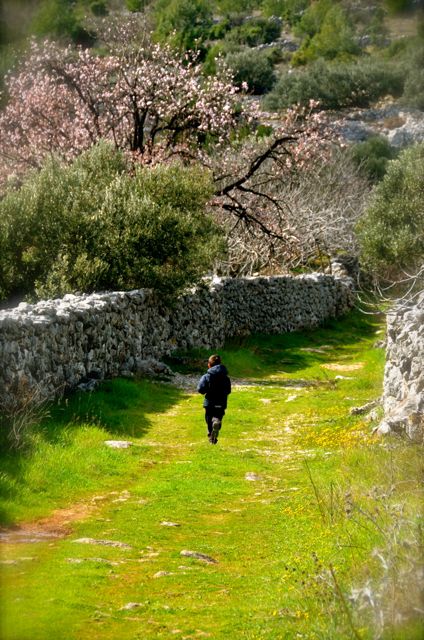
child running on grassy path
hunting for wild asparagus in croatia

Before we left to go on our hunting mission, several locals explained how difficult it is to find asparagus. Everyone kept telling us that you “must have a good eye.” But when they marveled at how delicious the asparagus was – in risotto, soup, or with hard-boiled eggs – we concluded that it was a challenge worth undertaking

Hyacinths.
lemons
Lemons from the family garden.
Turkish coffee and hyacinths

We piled into our friend’s car, heading first to the home of her brother and her mother, an accomplished asparagus huntress. Though there was a chill in the air, it was a beautiful, sunny Sunday, and we sat on Božana’s mother’s terrace enjoying splendid Turkish coffee, which is rich, sweet, and has a thick sludge of sediment swirling at the bottom.

We also sipped homemade Višnia, a local version of a cherry brandy. When Božana’s mother recognized our amazement that her garden had so much life in March, she generously snipped a bunch of hyacinths and rosemary for us, as well as a handful of lemons from a small tree. Božana’s young son also brought his mother a bouquet of wild hyacinths – something that can be found in the countryside.
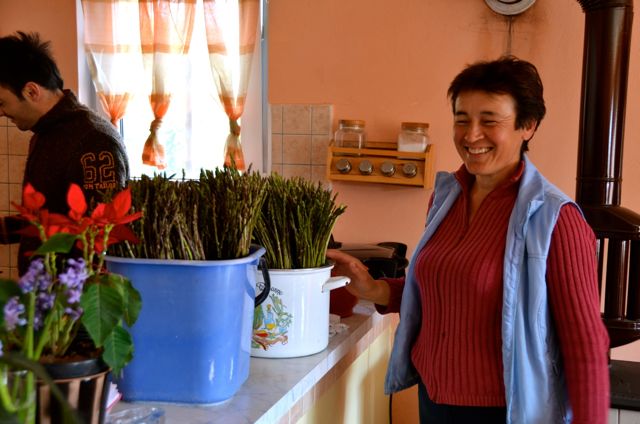
Buckets of wild asparagus. A bunch can sell for $4 or more.
Wild Asparagus in Croatia, Dalmatia07
Our new friends, before they took us into the countryside to show us how to forage for wild asparagus.

Božana’s brother explained that he’d once lived in Zagreb, Croatia’s capital city, but that when he was there during the grey winters, he found he missed the warmth of the coast.

“I need this daily dose of happiness,” he said, pointing to the rays of sunshine.

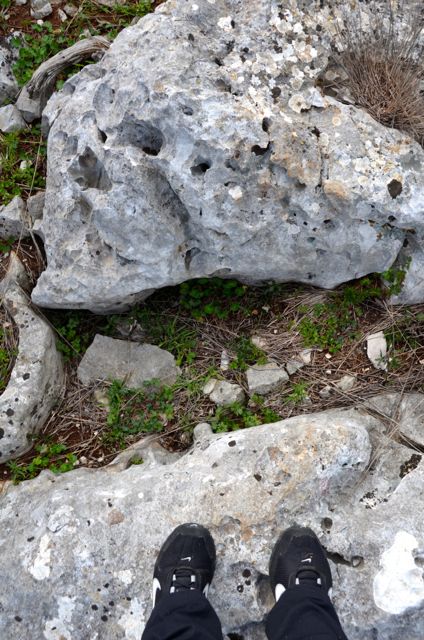
After a short drive to the rugged countryside, which looks otherworldly given the rocks and boulders that are strewn everywhere, we arrived at Božana’s charming country home.

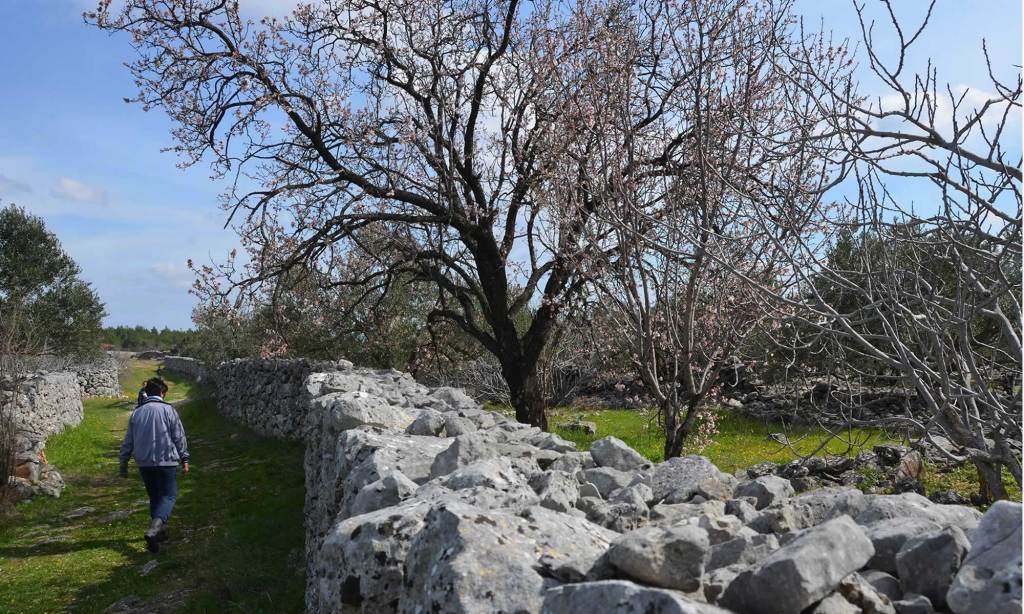
Dry stone walls delineated different owners’ plots of land. However, there were no other homes in sight, just modern windmills in the distance. Small fruit trees lining the inside of the walls bore delicate pink blossoms.

Božana and her mother told us that the atmospheric stone walls crisscrossing the land were probably constructed a hundred years ago. Farmers would have cleared the rocks from the landscape so that they could engage in agriculture. Croatians call these stone walls gromače or suhozid. As with drystack walls in other parts of the world, they’re made without using any mortar.

stone home in croatia
Our friend’s cottage.

The duo wasted no time in schooling us how to properly forage for wild asparagus. The instructions were short, but the mission proved to be challenging: scan the ground for the prickly, dead growth of years past, because stalks of asparagus often emerge in its vicinity.

foraging for wild asparagus in croati
Our friend’s son hunts for a spear of asparagus among the plant’s prickly bush (seen at the bottom of this photo).

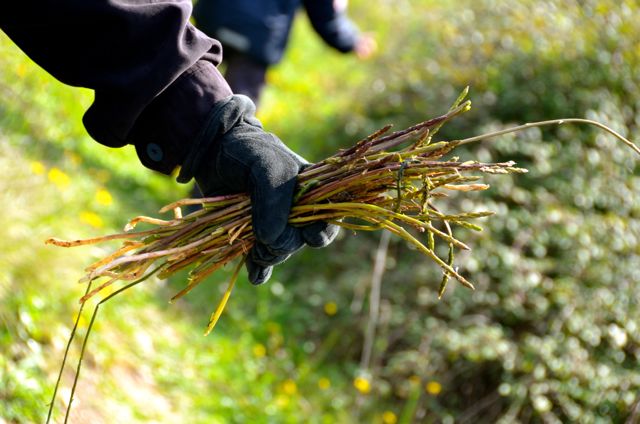
Quickly, the ladies had found their first prize. For about 40 minutes, I wandered the area, unable to spot any asparagus among the dead growth that I now easily recognized. When Božana found asparagus, she sometimes waited to harvest it, allowing me the pleasure of plucking it from the earth. As I tugged at the stubborn plant, I was glad that I’d worn gloves, since the bush’s dead growth is sharp and needle-like.
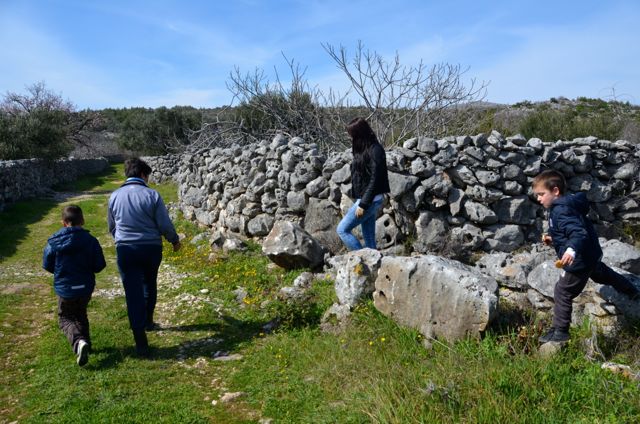
foraging for wild asparagus in croatia
Our friends walk among the dry stone walls in search of asparagus. In Croatia, these drystack walls are called gromače or suhozid. In 2018, UNESCO included Croatia’s art of dry stone walling on its Representative List of Intangible Cultural Heritage of Humanity.
wild asparagus in croatia
Shawn, slowly gathering an impressive bunch of asparagus. This variety is known as oštrolisna šparoga in Croatian.
picking asparagus in croatia
Left: The rocky terrain that’s so ubiquitous to Croatia.
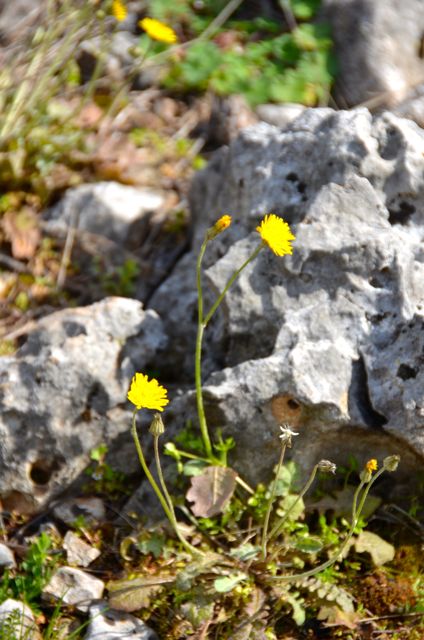
yellow flowers in countryside in croatia
Right: dandelion blooms among the rocks.

We foraged for asparagus among groves of olive trees and twisty grape vines, stopping briefly at a pond with small frogs. Božana’s sons and mother gathered branches to fill the wood-burning stove we’d be using to cook the meat we’d picked up at a butcher shop earlier in the day.

small pond in countryside
shepherd's stone shelter in croatian countryside
Shawn poses by a stone shelter that was designed to protect farmers and shepherds in the fields. Our friends said that this one was 100 years old, or perhaps even older.

Among the bushes and rocky landscape, we happened upon a stone structure that resembled an igloo. We asked Božana what it was and she explained that it was probably built 100 years before and that it was used as a shelter for shepherds and their flock during unpleasant weather.
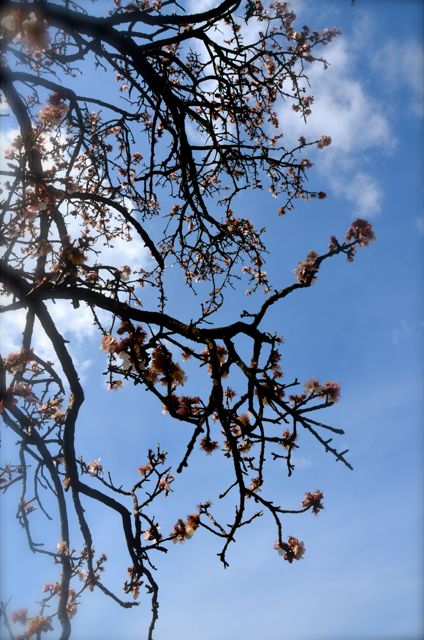
spring blossoms in Croatia
Left: Spring blooms.
wild asparagus growing in Croatia
Right: A spear of wild asparagus (Asparagus acutifolius).

Božana and I would continue hunting for asparagus for a while longer, while Shawn went off to play basketball with Božana’s two sons. Božana’s mother also went to get the fire started in the wood-burning barbecue. Unfortunately, Božana’s husband had developed a cold, so he’d been unable to join us.
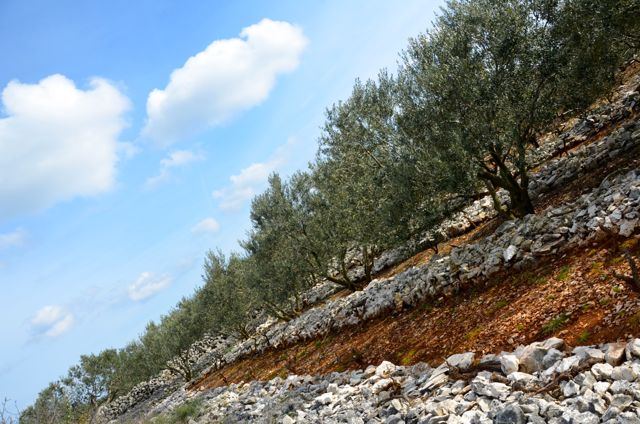
agriculture in Croatian countryside

Finally, I hit the asparagus jackpot – a tangled area in a corner, hugging a stone wall! I was happy to contribute to the meal that the ladies were working so hard to create.

Thirty minutes later, with small bunches of asparagus in hand, Božana and I headed back to her home. To get there, we wove through the family’s hundred or so olive trees whose fruit they harvest to make their own olive oil in the autumn months. Our quitting time couldn’t have been better timed, for just when we returned home the weather started to get dramatically cold. The brisk bura wind that we’d experienced the day before while sailing on the Adriatic, had returned.
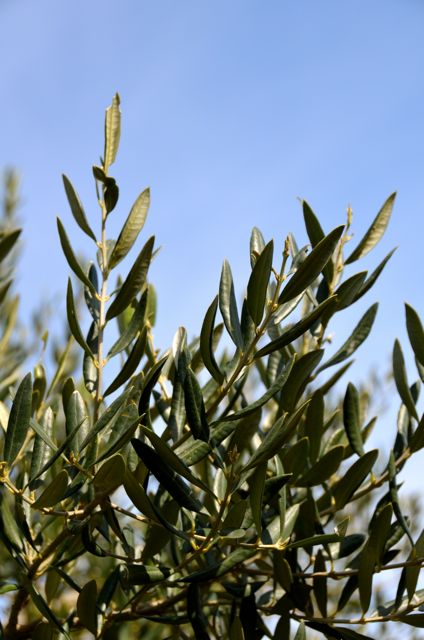
olive tree branch in croatia
Left: An olive tree.
foraging for wild asparagus in Croatia
Right: Me with my harvest. I later learned that I was actually picking it the wrong way. You can see here that I pulled the stalks from the soil. It’s preferable to simply snap the stalk at its natural breaking point. The bottom of the stalk tends to be woody, whereas the top is more tender. In reality,I didn’t pick all this – our friend gave me her share so I’d look like a master harvester. :)
an olive
An olive, left over from last year’s harvest.
prayer flags
Tibetan prayer flags, blowing in the breeze.
Wild Asparagus in Croatia, Dalmatia54
breaking wild asparagus in half
Snapping the wild asparagus in half, before steaming.

Inside the home, the ladies taught me how to make the traditional Dalmatian dish that we’d be enjoying shortly:

Croatian Wild Asparagus and Hard-Boiled Eggs Recipe

A traditional Dalmatian dish.

Ingredients:

  • bunch of wild asparagus
  • sea salt
  • olive oil
  • 6 to 8 hard-boiled eggs
  • vinegar
  • salt and pepper to taste

Preparation:

  1. Wash the asparagus. Break off the woody ends (the bottom portion of the stalk) by gently snapping the stalk just at the point where it easily bends. Discard the woody ends of the asparagus stalks. (Note that you can use the bottom of the stalk for making stock; I haven’t tried this yet.)
  2. Boil the top portions of the asparagus in a pot of lightly salted water. Add a bit of olive oil to the water. Cook until tender — about 6 minutes.
  3. Combine the asparagus with 6 to 8 hardboiled eggs. Toss them with a blend of olive oil and a splash of vinegar. Add salt and pepper to taste.

Dobar tek! (Enjoy your meal.)
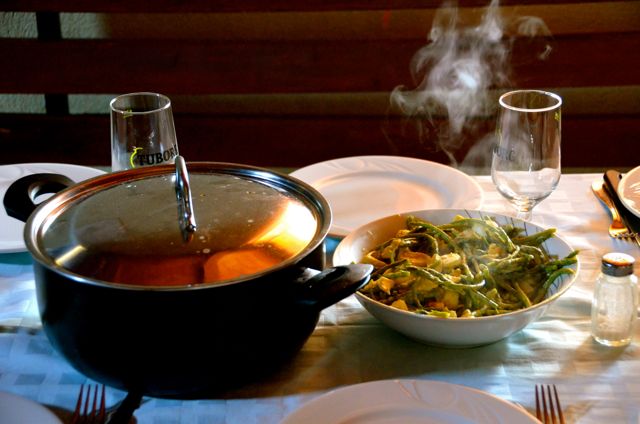
wild asparagus and hard boiled eggs in Croatia

When we set the hot bowl of the celebrated Dalmatian dish on the table, steam danced up into the chilled air.

Everyone quickly dove in. With many children averse to eating vegetables, I was impressed that the boys devoured them with such gusto. I guess their fervor illustrates how delicious the dish really was.

The wild asparagus had a more intense flavor than its farmed counterparts.

Simply put, it was delicate and divine.
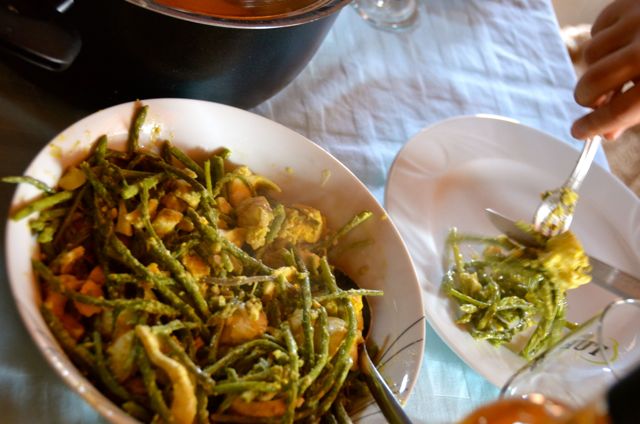
wild asparagus and eggs in Croatia

Our lunch was rounded off with a 2008 Pinot Bijeli (a semi-sweet white wine), roasted chicken and pork, crusty, fresh bread; and strong Croatian coffee.
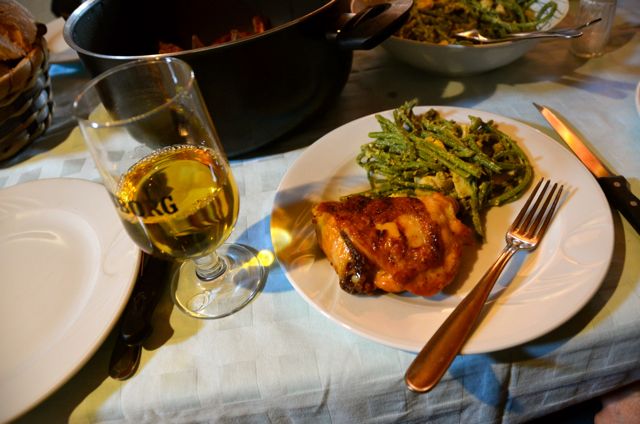
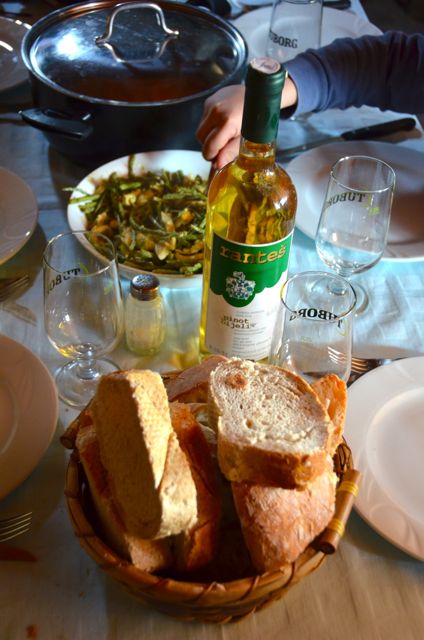
Croatian lunch: chicken and wild asparagus
Croatian lunch consisting of wild asparagus and eggs, bread, white wine and chicken and pork
croatian coffee in red bag
croatian coffee in cups

On the ride back to our home away from home in Trogir, we encountered a flock of sheep crossing the road. We briefly stopped at an overlook point to glimpse the dwarfed Trogir far below.

After a weekend of sailing and asparagus hunting — with such extraordinary food swirling in our bellies — we returned home utterly relaxed.

We felt grateful that our friends shared such a marvelous part of Croatian springtime culture with us.
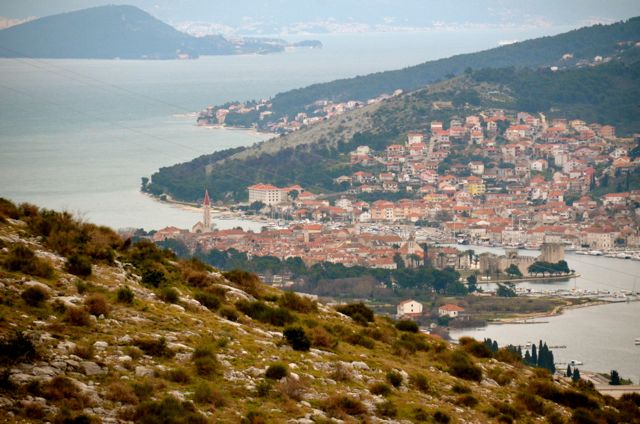
Trogir Croatia as seen from distance
A bird’s-eye view of Trogir.

Where in the World?

Planning Pointers:

Wild asparagus grows in Croatia’s Dalmatia and Istria regions. It also grows in other parts of the Mediterranean. After this experience, we encountered wild asparagus in Montenegro and Malta, too.

It’s possible to buy a bunch of asparagus at one of Croatia’s local “green markets.” However, if you get the chance, it’s much more fun harvesting your own.

Tips for harvesting wild asparagus in Croatia

When is Croatia’s wild asparagus harvest season?

Croatia’s wild asparagus can emerge at different times, depending upon how cold the winter was and how much rain there’s been. In general, you’ll find it in Dalmatia between March and mid-April.

The only certainty is that once it appears in the landscape, it’s quickly harvested by locals with eagle eyes!

How can you identify wild asparagus and harvest it?

Several different types of asparagus grow in Croatia. Oštrolisna šparoga or thorny-leaved asparagus — the type we harvested on our friends’ property — is common in coastal areas. Its Latin name is Asparagus acutifolius.

Oštrolisna šparoga isn’t a protected species. However, Croatia does protect other species of wild asparagus, so be certain you’re picking the unprotected variety. If in doubt, ask a local with expertise.

To find wild asparagus, scan the ground for the prickly, dead growth of past years, since stalks of asparagus often emerge in its vicinity. The asparagus bush can be thorny, so you might prefer to wear gloves when harvesting it. Often, you’ll find asparagus shoots emerging from rock walls.

Instead of pulling the asparagus shoot out with its root, simply find the point where the stalk naturally snaps. Gently break it there.

The upper part of the stalk is tender, whereas the bottom portion tends to be woody in texture. You can discard the bottom part, but I’ve also read that you can also use it for making stock.

Be wary of snakes and ticks, too.

Here’s a video showing how to find wild asparagus.

Looking for more Croatia trip-planning inspiration?

See all my posts from Croatia.

Photography & text © Tricia A. Mitchell. All Rights Reserved.

Tricia A. Mitchell Avatar

About the author

Hi! My name is Tricia Mitchell. I delight in telling stories about my slow travels through more than 65 countries. Some of my highlights have included sharing meals with locals in Armenia, Cambodia, and Tunisia; sipping sparkling wine with French cousins in Alsace; milking goats in a sleepy Bulgarian village; and training with a Japanese mine-clearance team in Laos. My husband, Shawn, and I are based in France’s Loire Valley.

Leave a reply to The Reasons for (Eating by) the Seasons | Prepper Podcast Radio Network Cancel reply

This site uses Akismet to reduce spam. Learn how your comment data is processed.

30 responses to “Foraging for Wild Asparagus in Croatia’s Dalmatian Countryside”

  1. gallivance.net Avatar

    Tricia, what a marvelous experience. Learning to hunt any wild plant is a challenge and a life skill requiring a practiced eye. As a child my uncle tried to teach me how to hunt wild morels – tricky, since there are many poisonous impostors! He would instruct me to look in a particular area – I saw nothing – he would come over and pick 10 in plain sight! Thus went the day. I’m so glad you found some asparagus. Did it taste any different than you expected? ~Terri

    1. Tricia A. Mitchell Avatar

      Terri, the wild morel hunting sounds as though it comes with some risk! In what part of the world did you do this?

      The wild asparagus definitely tasted different from what we’d purchased at a grocery store or market. It’s more tender, delicate and flavorful. In Germany, I’d also gotten accustomed to the white Spargel (asparagus) that’s so popular there during the spring months. I have to say that we were pretty spoiled by this tasty version in Croatia.

      Just got back from a walk, across the bridge from Trogir to one of nearby islands, and I kept hoping we might see some wild asparagus growing, but I think the area was too built-up, and the path too well-travelled. Hopefully we can make it out again before the season ends. I do love how so much of Europe embraces what is in season!

  2. Marilyn Albright Avatar
    1. Tricia A. Mitchell Avatar

      Glad you enjoyed it, Marilyn. Putting the post together this afternoon definitely got me in the mood for some more wild asparagus. We just went on a walk, and I must confess that I was scanning the other side of the sidewalk, hoping to see some wild asparagus growing there. No luck! Looks like we’ll have to take a jaunt out in the countryside again.

  3. ruthincolorado Avatar

    Asparagus is one of my favorites, and I would have greatly enjoyed hunting it in the Croatian countryside! Thanks for taking us along, Tricia. ;)

    1. Tricia A. Mitchell Avatar

      Ruth, perhaps when you return to Croatia next time, your trip will coincide with the šparoge season. :)

      It’s always fun finding new ways to prepare foods; do you have a favorite way of cooking up asparagus?

      1. ruthincolorado Avatar

        I love to brush them with olive oil and roast them…

      2. Tricia A. Mitchell Avatar

        Sounds perfect in its simplicity!

  4. belocchio Avatar

    What a wonderful adventure .. and the treat at the end – wild asparagus. Lucky you. Virginia

    1. Tricia A. Mitchell Avatar

      Virginia, it was! There’s something quite rewarding about foraging for your own food and then appreciating the flavor of it even more.

  5. elisaruland Avatar
    elisaruland

    Visiting your blog is always so uplifting. Thank you for sharing your beautiful part of the world with us.
    Take Care,
    Elisa

    1. Tricia A. Mitchell Avatar

      That’s really kind of you to say, Elisa; thank you.

      I wish this could be ‘our’ part of the world for a longer period of time, but I’m grateful for the adventures we’ve had. So many travelers only see Dubrovnik, which is of course, beautiful, but now very touristic. We’ve been lucky to get onto some quieter paths and meet some really wonderful locals.

  6. valeriedavies Avatar

    What a wonderful meal, it looks as good as it must have tasted…

    1. Tricia A. Mitchell Avatar

      It was, Valerie. I really appreciate how the locals we’ve met prefer to eat whole, natural foods, this meal being a great example.

  7. rigmover Avatar
    rigmover

    Another cool day out.

    1. Tricia A. Mitchell Avatar

      It was, Mark. So much fun to participate in an activity that people have been doing for centuries (and then eat our pickings).

  8. wanderoneday Avatar

    This sounds like such a fun day! Wild mustard grows like crazy along the river near our house, so last summer we went for a walk and picked enough for a big hearty salad for dinner. The leaves were tasty but the little yellow flowers really made the difference in the salad! There’s just something awesome and inspiring about wandering outside and coming back with dinner.

    1. Tricia A. Mitchell Avatar

      Jen, I don’t think I’ve ever had wild mustard before, but its flowers remind me of rapeseed flowers (the fields are plentiful with these yellow flowers in Germany, during the spring months).

      You’re absolutely right about the joy of wandering outside, collecting your own food, and then enjoying it for a meal. Perhaps it’s the joy of being in nature, connecting to our former hunting & gathering ways? :)

  9. Korcula Explorer Avatar

    Wonderful photos, really capturing the moment. The food looked delicious, my stomach is now grumbling!

    1. Tricia A. Mitchell Avatar

      Have you done any wild asparagus hunting on Korcula yet? We were hoping to make it there this spring, but it doesn’t seem it’s in the cards. Yet another reason to return to Croatia. So, you’ve lived there just over 2 years?

  10. marinachetner Avatar

    The series of photos are so beautiful in this post Tricia!

    1. Tricia A. Mitchell Avatar

      Happy you enjoyed them, Marina. It was a beautiful afternoon to go wandering with new friends! I keep hoping that we can go asparagus hunting one more time before we leave this part of Croatia, but time is zipping by so quickly.

  11. corneliaweberphotography Avatar

    What a wonderful down to earth experience , Tricia. That asparagus seems to be green, just the kind we have in the US. But I know from back in Germany the white Spargel Asparagus, they are quite different. I used to go with my father back in my childhood in Germany to hunt or pick fresh wild mushrooms in the forests, all different kinds, they tasted so delicious and so earthy. I remember that it was always an adventure to come home with a basket full of wild mushrooms.

    1. Tricia A. Mitchell Avatar

      Virginia, we are missing Spargel season soon, aren’t we? That’s something I always enjoyed about being in Baden-Württemberg during the spring months – Spargel everything!

      Did you find it difficult to differentiate between the poisonous mushrooms and the edible ones? How’d you prepare your pickings?

  12. Himani Gupta Avatar

    I loved the post. You’re lucky to visit such serene and wild places.

    1. Tricia A. Mitchell Avatar

      Indeed, we’re quite lucky, Himani – to not only see these places, but also meet wonderful locals. Without them, we never would’ve had this adventure. :)

  13. […] The Wild Asparagus of Croatia: A Foraging Trip & Lunch in the Dalmatian Countryside […]

  14. What to do in Croatia – don’t miss the local market | Our Adventure In Croatia Avatar

    […] Going to the local markets is also an opportunity to see some delightful local characters, stall vendors, and interesting old ladies selling all sorts of fresh vegetables which may be in season at the time of your visit, some of which are actually grown in their own yard and picked fresh that day, like oranges, lemons, or wild asparagus, which were in season during our last visit at Easter. Directly from the producer to the consumer! You can read an article about foraging for wild asparagus in Croatia, in this post by fellow blogger Tricia Mitchell. The wild asparagus of Croatia […]

  15. kost Avatar
    kost

    great story but you really do not need to take the plant’s roots
    next time leave it in the forest
    Greetings from Istria

    1. Tricia A. Mitchell Avatar

      Glad you enjoyed the piece, Kost, and good to know about the root too. Thanks for sharing.

      Did you forage for asparagus in Istria this spring?