

In Croatia’s Dalmatia region, the people are warm, engaging, and generous with invitations to share a shot of rakia, a plate of pršut (dry-cured ham) or a hearty peka meal. Our Dalmatian friends are no different, and in the past weeks they’ve been keeping us entertained with things to do in Split. Let’s just say that Croatian food and wine have been featuring prominently on the agenda.
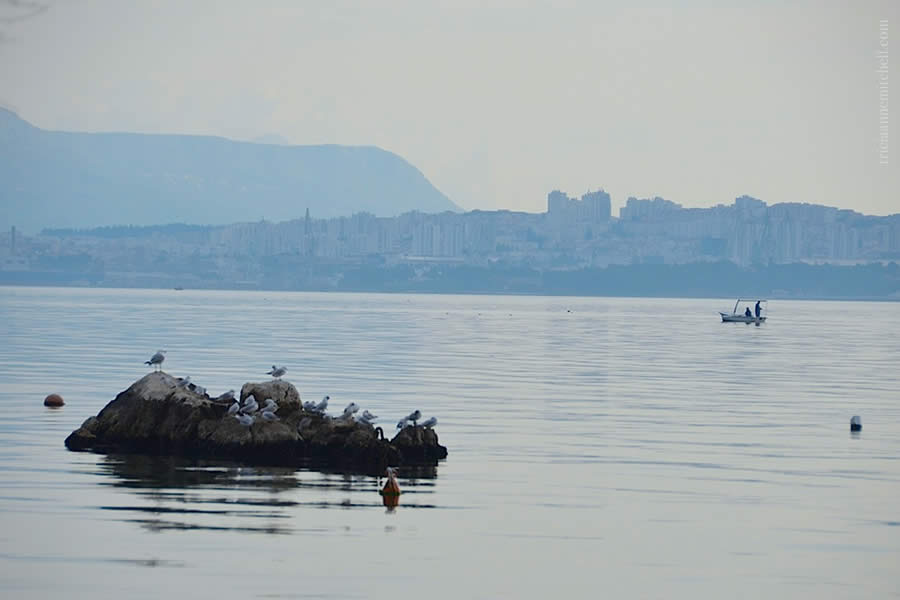
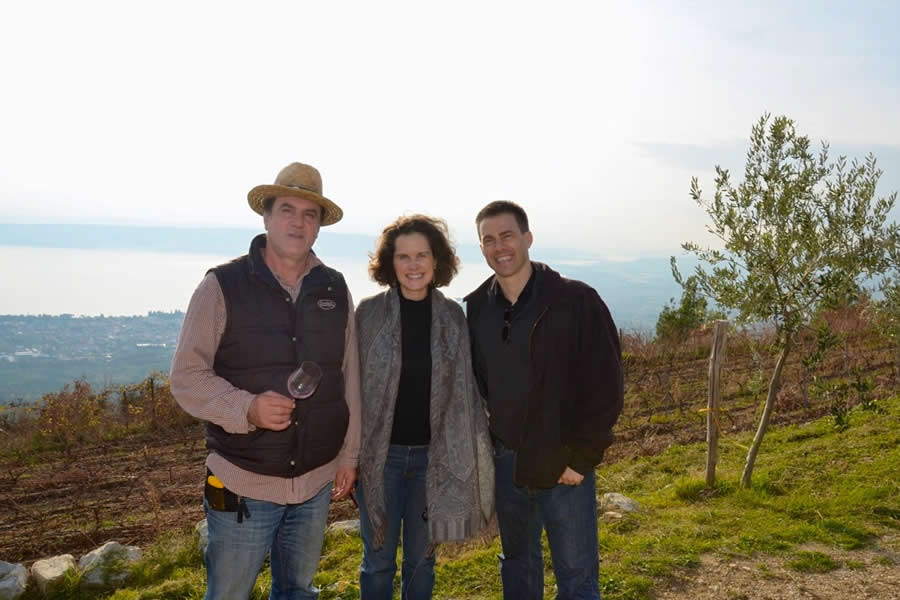
One Sunday afternoon, we met our friends, Srđan and Jakša, in a cluster of seven towns next to Split called Kaštela. Although it was late morning, a few fishermen were still out on the bay. Jakša’s friend had recently delivered a fresh catch of seafood to Jakša’s seaside home and business. We would grill the fish later in the afternoon at Jakša’s vineyard cottage, 400 meters above the steel-grey Adriatic Sea.
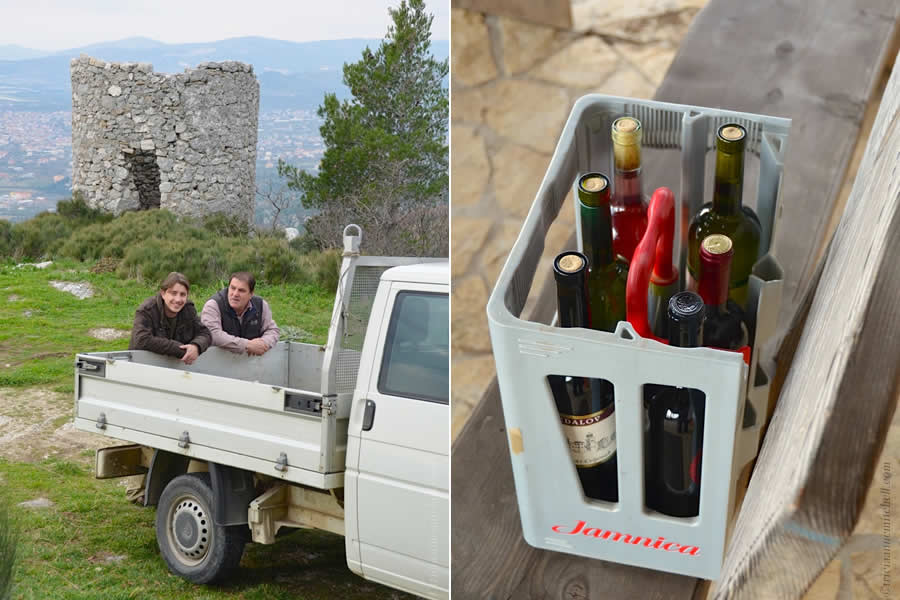
The four of us hopped into Jakša’s so-called ‘vineyard car’ and as soon as we hit the bumpy roads on the way up Kozjak Mountain, we knew why Jakša favored the heavy-duty truck. The crates of lunch and dinner provisions danced in their receptacles; wine bottles clinked against each other, and stray branches whipped against the windows of Jakša’s truck.
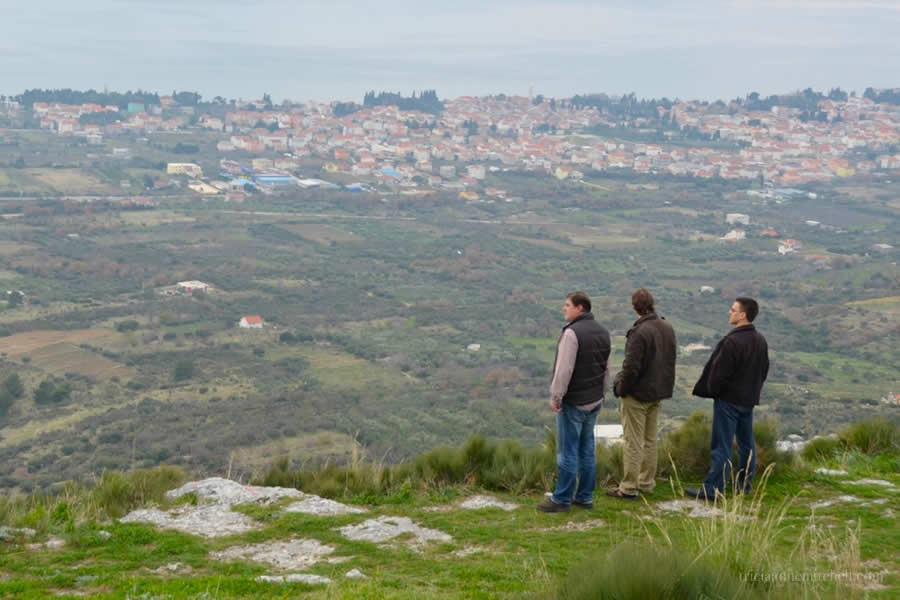
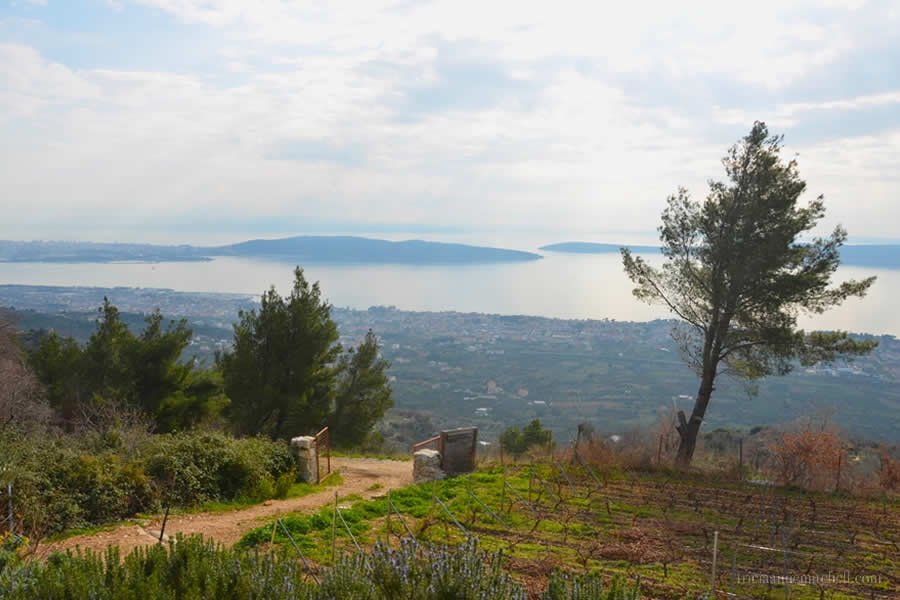
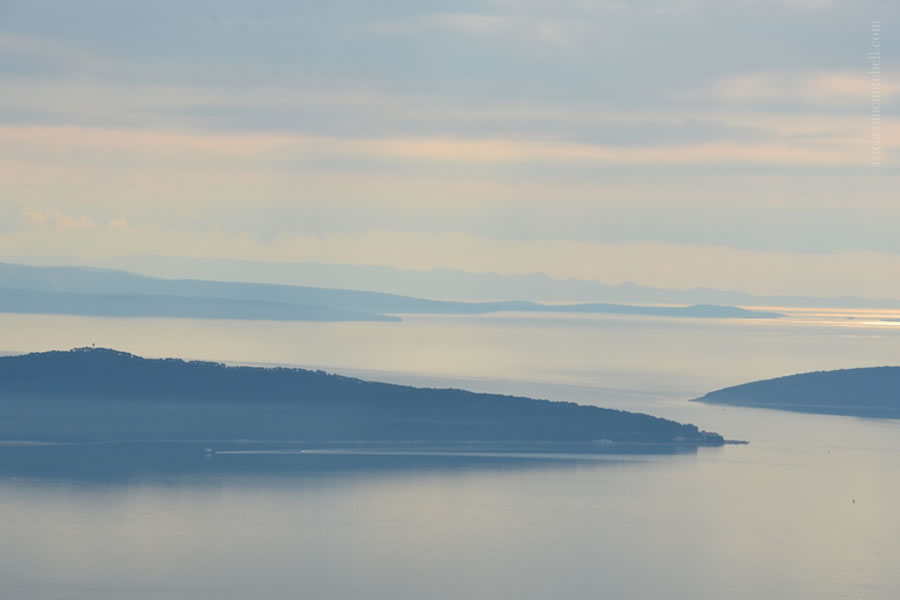
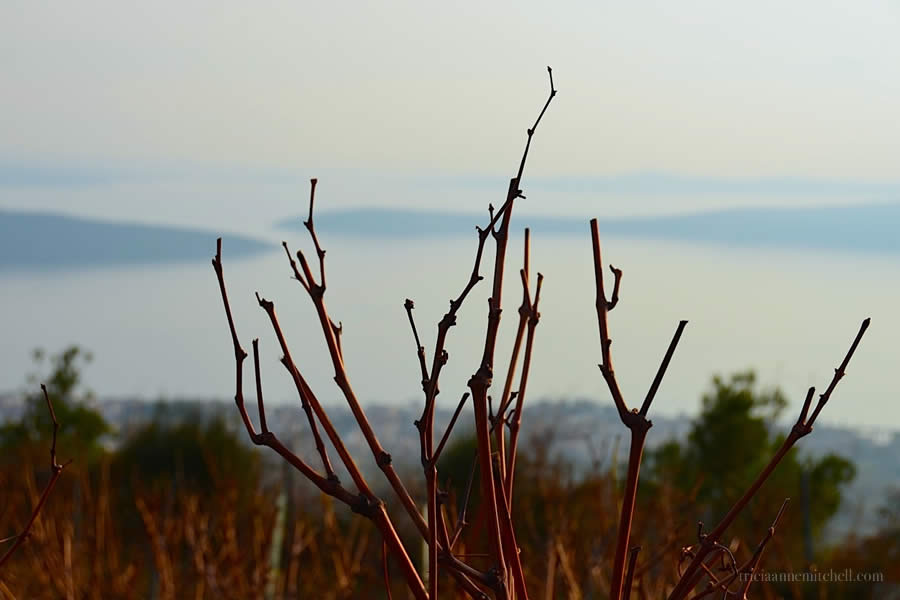
As we ascended the mountain, the views of the Croatian islands and Adriatic became increasingly phenomenal. Sensing Shawn’s and my enthusiasm at the sight of ruins and a tiny stone church, Jakša pulled off the rugged roads and allowed us to take in the sensational panorama. He and Srđan also encouraged me to ring the church’s bell. I felt incredibly mischievous as I pulled the long string, causing the sound of the bells to echo off the mountain and down into Kaštela.
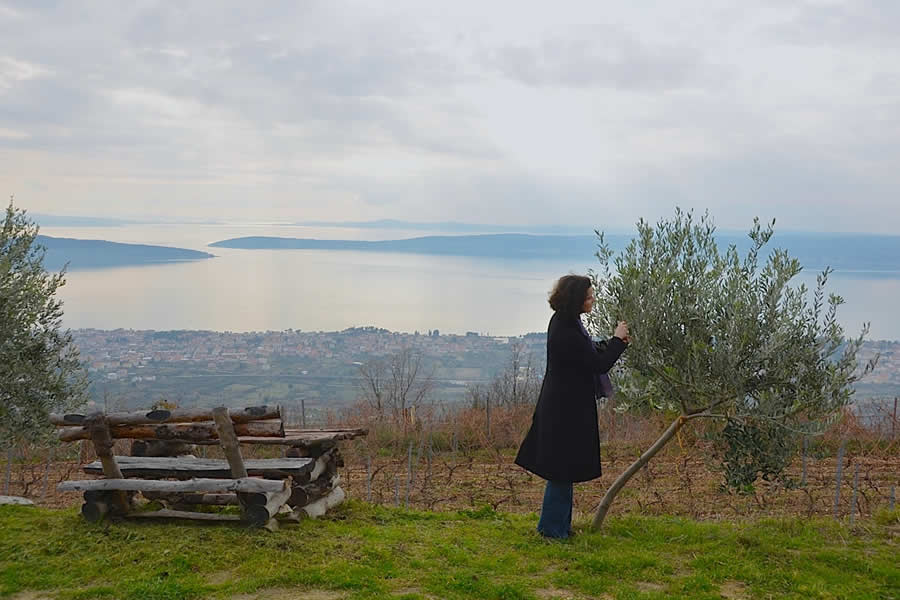
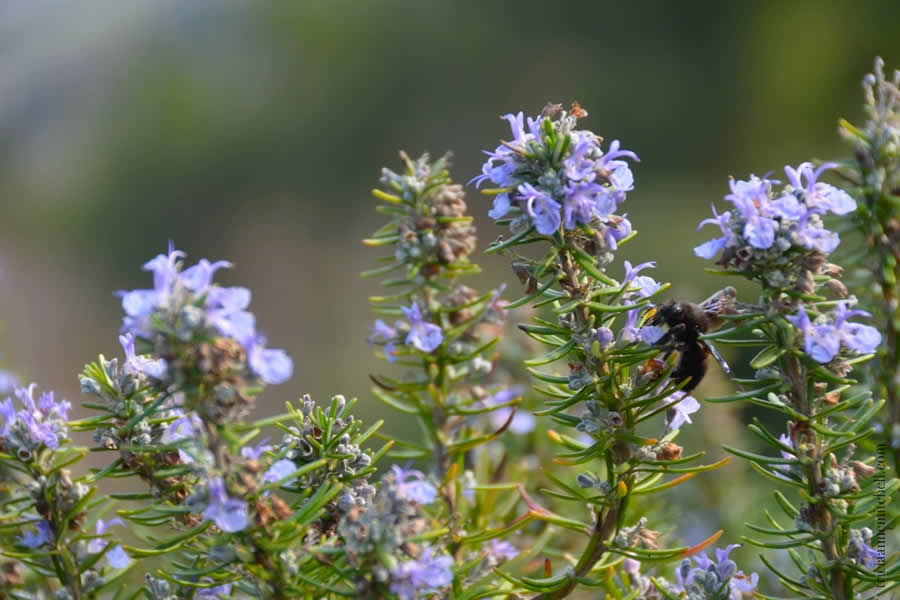
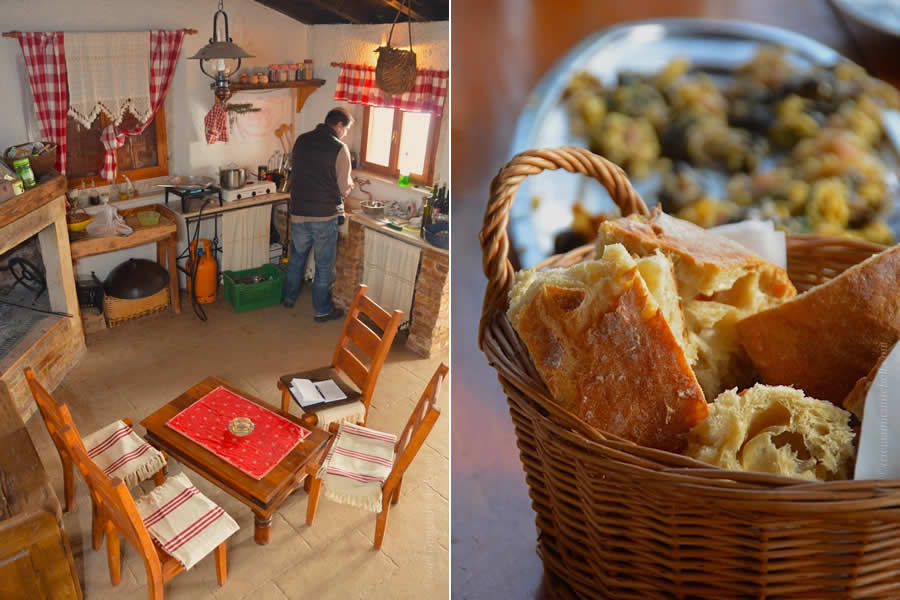
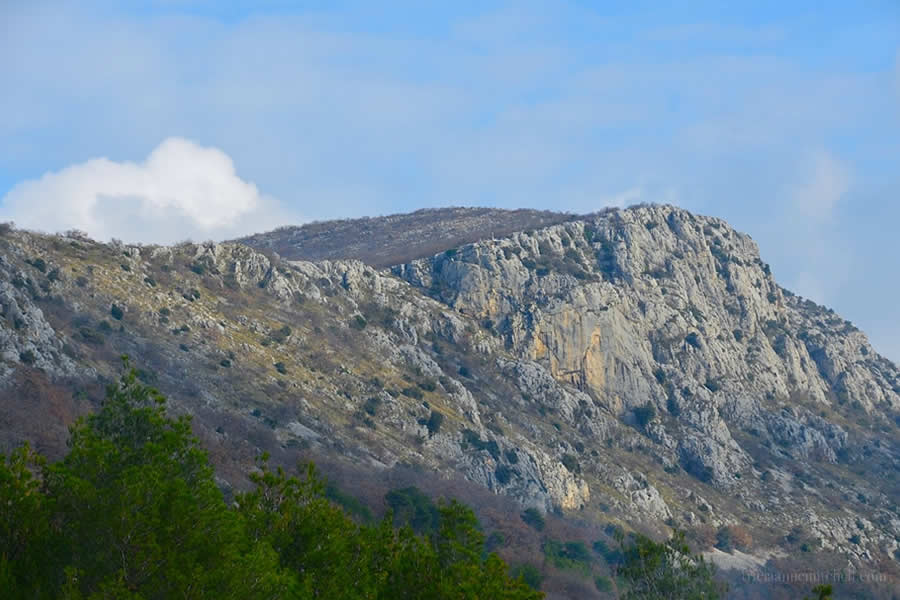
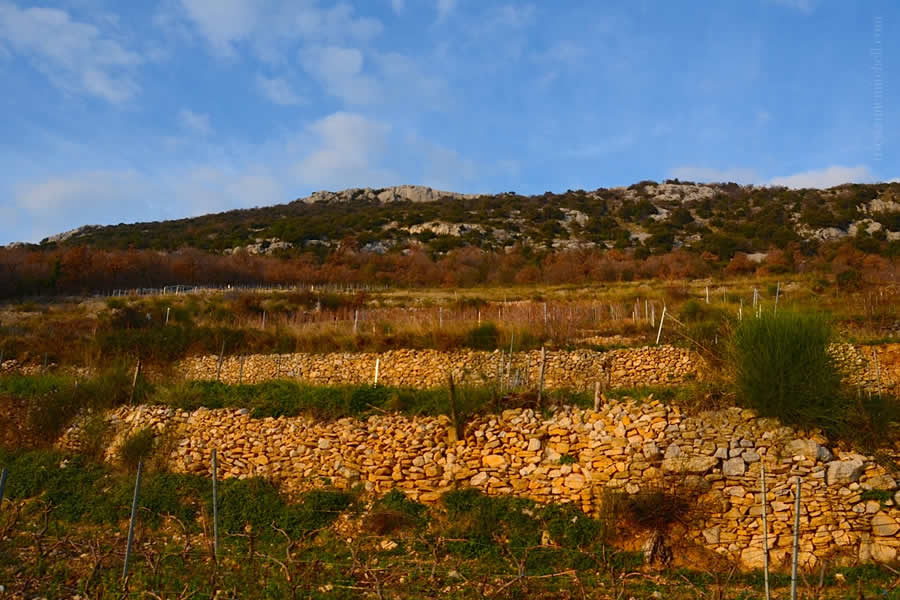
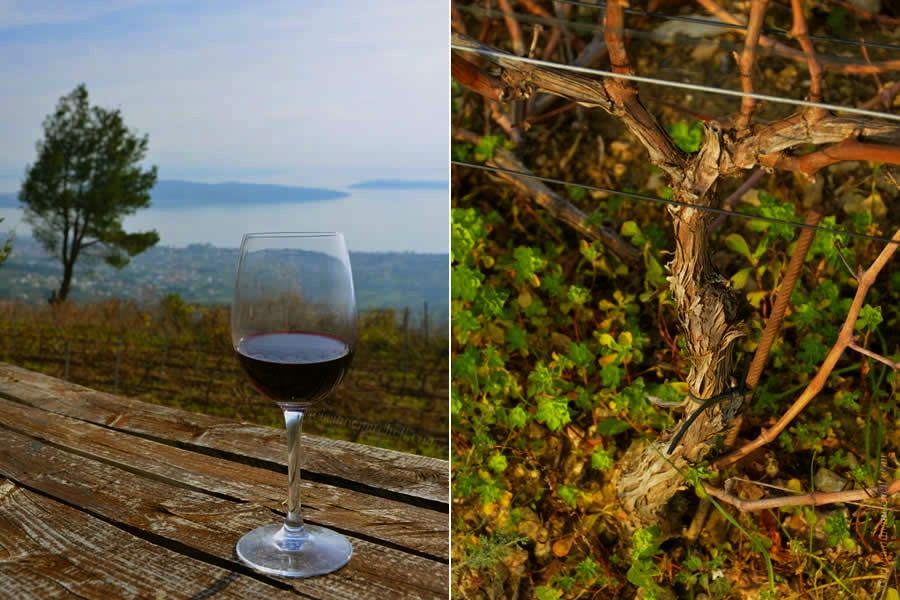
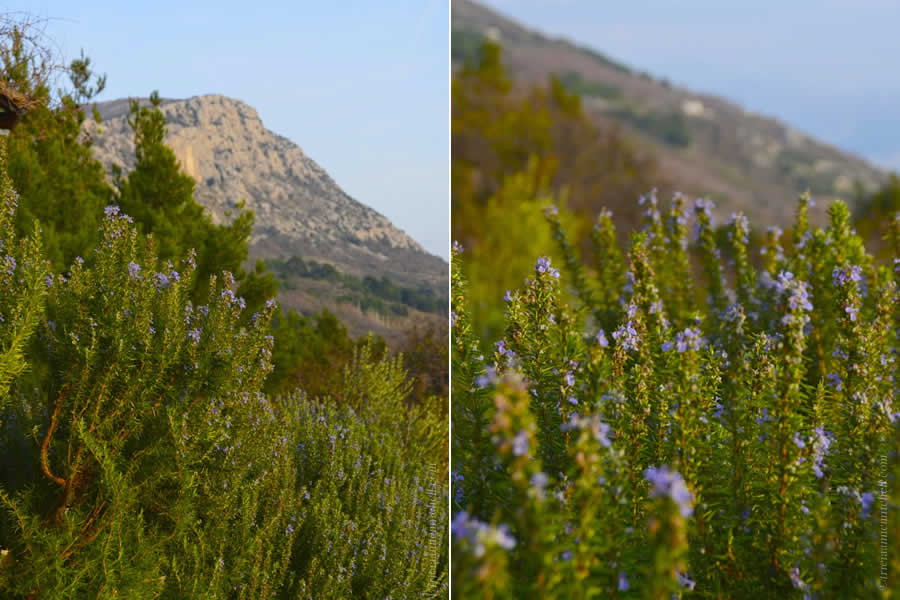
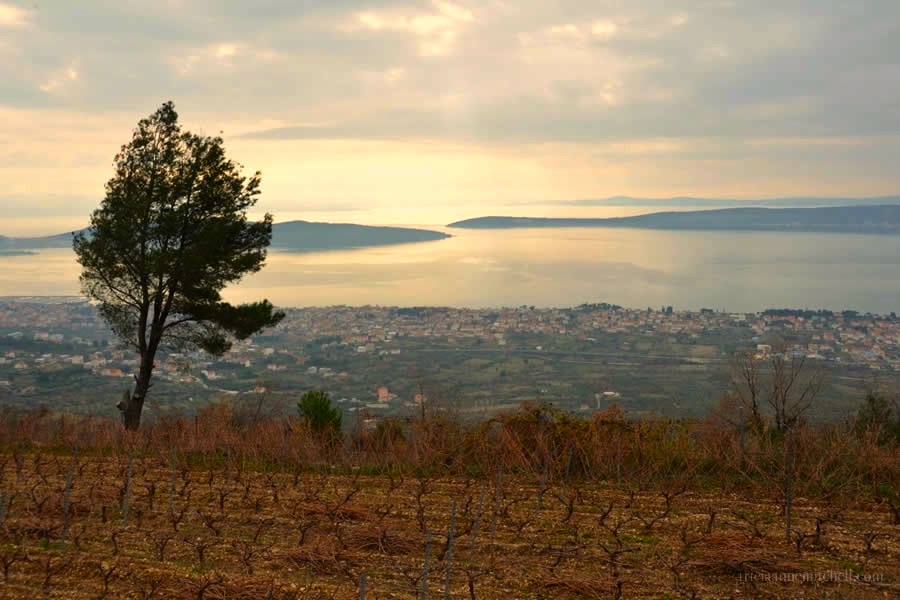
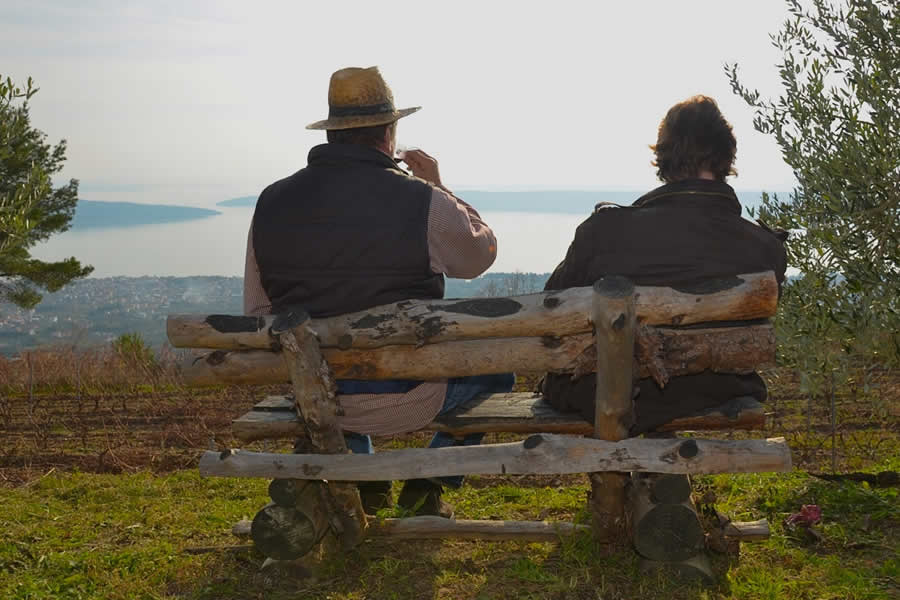
Arriving at Jakša’s vineyard cottage, which he built himself six years ago, the views took our breath away. Split and the surrounding area now looked miniature in scale. The islands of Brač, Hvar, and Šolta emerged from the sparkling water, and the rocky slopes of Kozjak Mountain dwarfed Jakša’s stone house. Our friends lamented that we weren’t seeing the grounds dressed in summer foliage, but we were wowed by the sight of massive rosemary bushes, olive trees, and wild green vegetation. Jakša’s three acres of vineyards had the cliché million-dollar view. Actually, it was more like two-million.
“If you really want to make a friend, go to someone’s house and eat with him… the people who give you their food give you their heart.”
– Cesar Chavez
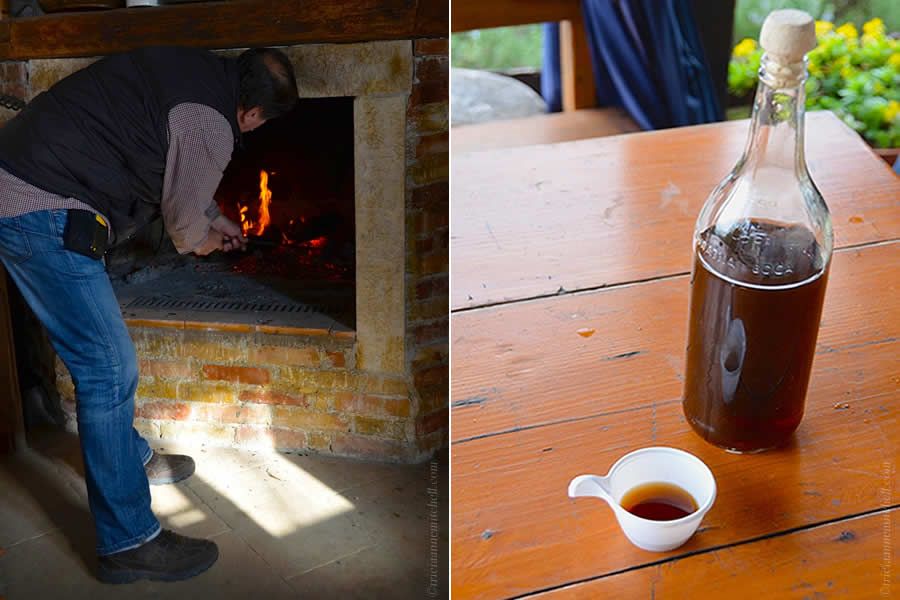
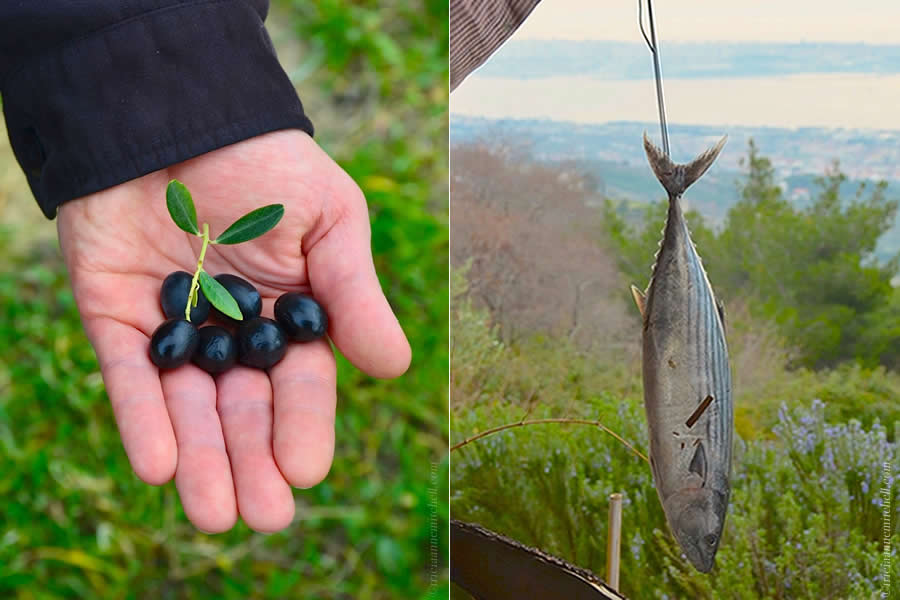
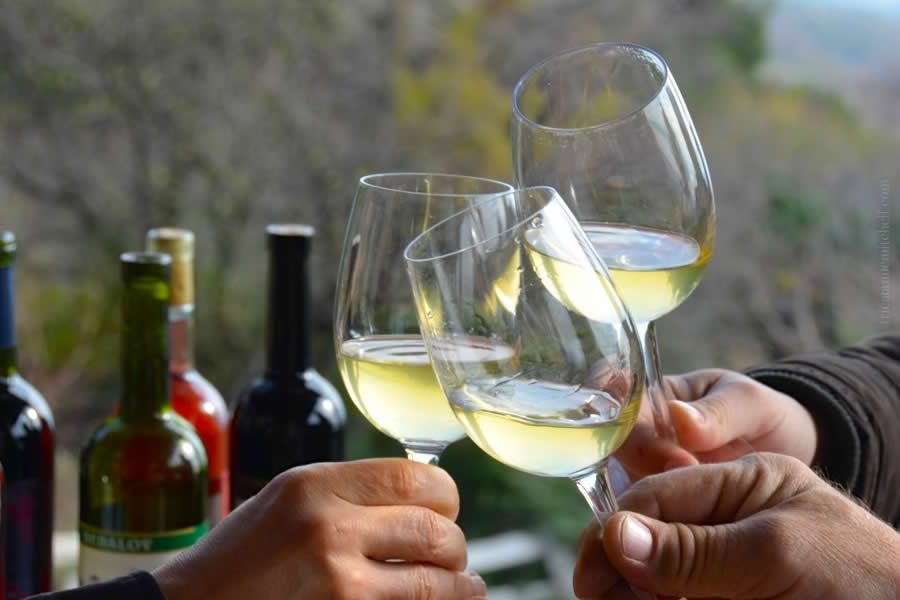
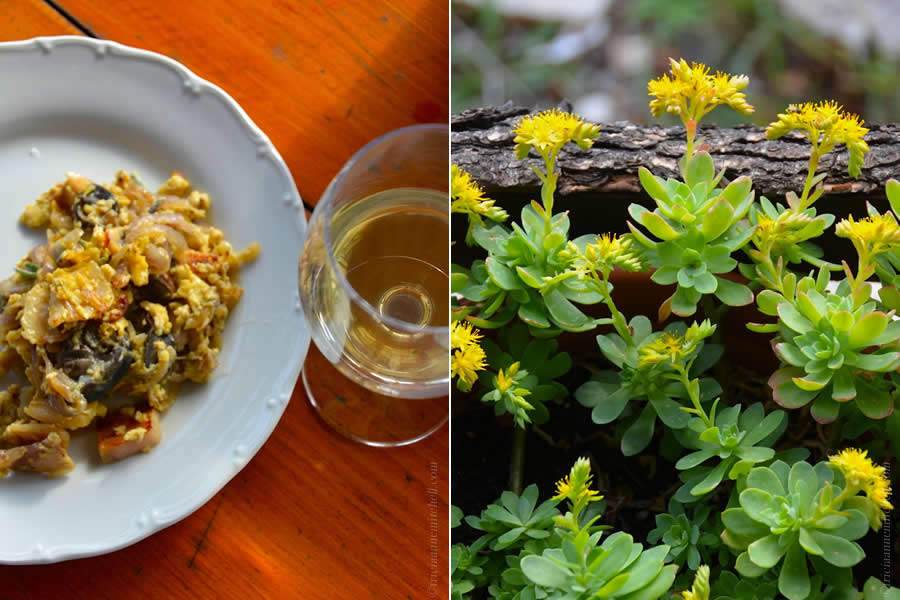
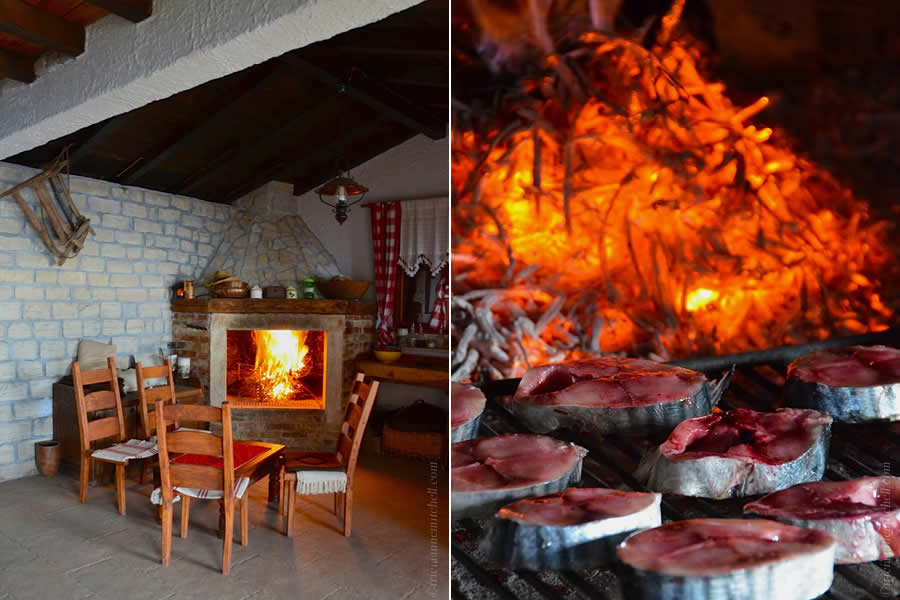
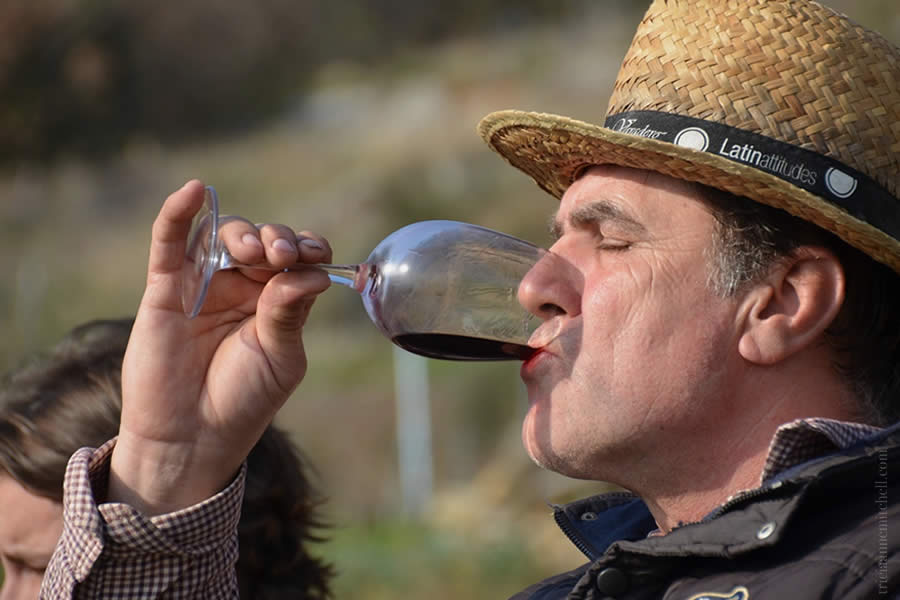
Jakša wasted no time in offering us a shot of walnut rakia, starting a fire in the stone fireplace, prepping a lunchtime omelette and the palamida (a beautiful mackerel-like fish known in English as Atlantic Bonito). As we would soon discover over a delightful glass of Jakša’s own 2011 Marastina white wine, the omelette was studded with other goodies, including onions sautéed in Jakša’s own olive oil, bacon, sage, and escargots. The snails had been gathered from the premises. While I abstained from eating the bacon and snails to suit my ‘selectarian’ diet, the gentlemen devoured them with great gusto.
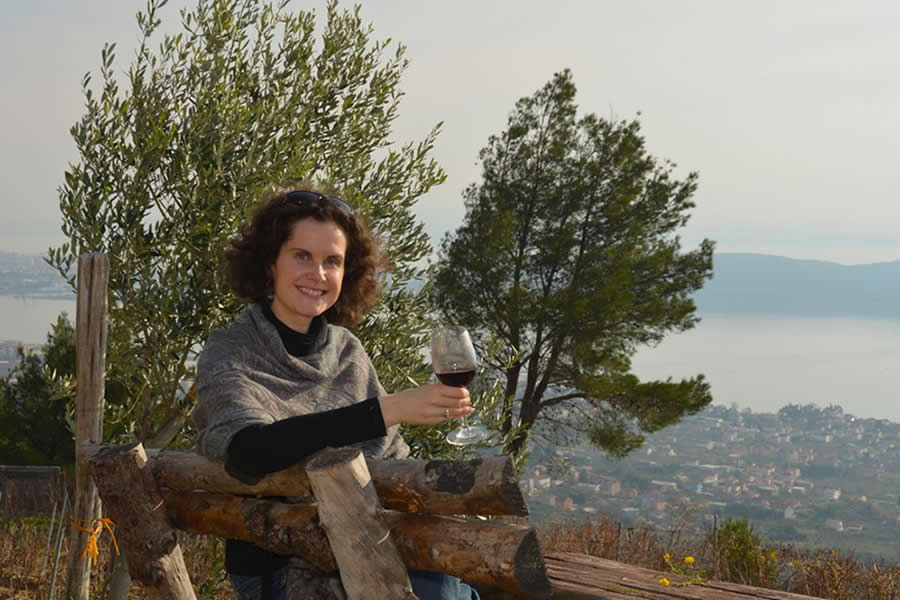
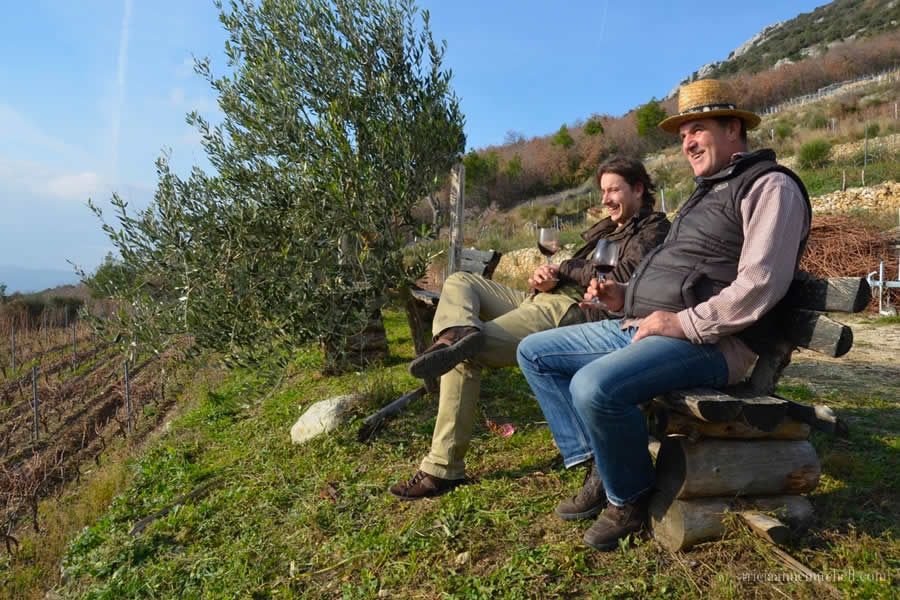
White wine gradually transitioned to a series of brilliant reds, including a 2011 Bedalov Zinfandel (Crljenak), a 2010 Kairos Zinfandel and a 2003 Stagnum Plavac. (Plavac is a blend between Zinfandel and Dobričić grapes.) Since we were in the ancestral home of Zinfandel, it seemed fitting to enjoy the exceptional bottles from Jakša’s vineyard, Kairos and Stagnum, while overlooking the surrounding hillsides on which Zinfandel wine has been grown for the past 1,000 years.
As Srđan, Shawn and I savored the 11 year-old Stagnum, Jakša tended to the fish grilling in the fireplace. Eventually, he brought out a stainless steel platter loaded with fish steaks, glimmering in olive oil perfection. He also presented a pot brimming with a mélange of 10 types of cooked, wild greens drizzled with olive oil. From fennel, to dandelion and wild onions, the simple combination was superb. Jakša would later marinate the remaining fish-steak in a marinade of olive oil, onions, red wine vinegar, and rosemary, creating leftovers that we would savor at our apartment in the following days.
“When I am creating these dishes, I am looking for flavors I grew up with. I am inspired by wine flavors my grandfather created, and the food flavors from my grandmother. As a result, they’re making their way into the future.”
– Jakša Bedalov
While relaxing on the terrace, we marveled at how natural and sustainable so much of the experience was. Jakša’s home was solar-powered and the food was sourced from his property or the nearby sea. And, he expressed a great passion for holding on to family traditions.
“When I am creating these dishes, I am looking for flavors I grew up with. I am inspired by wine flavors my grandfather created, and the food flavors from my grandmother. As a result, they’re making their way into the future,” he explained through Srđan, who acted as translator.
Srđan was quick to point out that such a practice is becoming increasingly uncommon, even in Croatia. Srđan himself runs the
Art of Wine, a small business dedicated to providing customized wine and culinary experiences to small groups of tourists. He partners with winemakers and chefs like Jakša.
“Jakša’s family eats just like this, and this is how he cooks for them. He also enjoys sharing his food and wine with others,” Srđan added.
Since Shawn and I have so far had a penchant for off-season-travel to Croatia, we asked Srđan what Dalmatian foods he might offer to guests who go on his summer tours.
“The menu usually includes smoked fish, mussels, oysters, peka, squid or cuttlefish. Young lamb and goat are exceptionally delicious in Croatia, and we slow cook them on a spit. We focus on local cuisine from local producers. Depending on the time of year, you’ll get what’s in season,” he said.
“I decided to dedicate time to telling stories of people like Jakša. People like him have stories that deserve to be told. We don’t want massive tourism to destroy this. Our experiences are for small numbers of people. We want people who will appreciate it.”
The sun had transitioned into a magnificent, orange hue. Since our Croatian friends had their backs to the sunset, I decided to draw their attention to it.
“Oooh,” Jakša said with awe, as if seeing it for the first time.
I find it refreshing that Jakša had seen so many of these sunsets, but yet he doesn’t take the beauty for granted.
It was a fitting way to end a splendid afternoon brimming with Croatian food, wine, and culture, from a Dalmatian vineyard 400 meters above the Adriatic. Hvala lijepa, friends!











Video of This Experience:
Where in the World?
Planning Pointers:
- You’re probably thinking that we’re lucky to count Srđan and Jakša among our circle of Croatian friends, and we are! If you’ll be in the Split area and also want to learn about Croatian food and wine, get in touch with them through Bedalov Winery or the Art of Wine. Be sure to give them at least one day’s notice.
- If you’ll be staying in Split for a few days, you might be interested in the Split Card, which gives you free entry to certain museums and galleries, and reduced rates to others.
- Need more ideas as you plan your Croatian holidays? This link contains an index of all my posts from Croatia.
Accommodation in the Split Area:
Shawn and I have spent a total of five winters and one summer in and around the city of Split, using it as a base to explore Croatia’s popular Central Dalmatia region. We’ve made it a habit to create new memories by staying in a different property each year. Over the years, we’ve had long-term stays in Split, Trogir, Solin, and Makarska. We would happily revisit all of the following apartments. (Please note that some are affiliate links.)
- Kaleta Apartments (Split) – These lovely apartments are located within Diocletian’s Palace (well, technically just a few meters from the Iron Gate). Our elegant studio apartment, called the “Diocletian’s Suite,” had lots of character — including Roman brickwork embedded into the wall. We had overhead views of life on Split’s Old Town streets, and we enjoyed chatting with the friendly owners, Novica and Negri. We spent about 2.5 months here.
- Guesthouse F (Split) – This cozy studio apartment is located in Split’s Varoš neighborhood, just a few minutes’ walk from Diocletian’s Palace. With its quirky narrow streets and stone homes decorated with hunter-green shutters and flower boxes, Varoš is charming. One of Guesthouse F’s apartments was originally a horseshoe maker’s workshop, owned by Anja’s grandfather. Shawn and I dubbed it the “horseshoe cottage.” Aside from our central location, we loved having a tiny terrace. We also appreciated the kindness of our hosts, Anja and Miro. In total, we spent about 2 months here.
- Viola Apartment (Split) – We spent roughly 3 months in this wonderful 2-bedroom apartment, which is also in the Varoš neighborhood of Split. The apartment also has a lovely sun porch and garden. It is in an old stone home, but the interior has recently been remodeled. We were in a perfect location for accessing Diocletian’s Palace and Marjan Forest Park, too. On foot, it takes about six minutes to reach Split’s most famous lookout point near the Caffe Bar Vidilica. The owner, Ljubica, lives upstairs. She is easygoing and helpful.
- Apartments Mirkec (Trogir) – We spent 7 wonderful weeks in this studio apartment, which is located in the heart of the town of Trogir. The apartment had good Wifi and a kitchen with all the basics. It was also perfectly situated in the heart of Trogir’s gorgeous Old Town, just a minute’s walk from the seaside walkway, the Riva. Trogir’s bus station was about a 5-minute walk from the Apartments Mirkec, making day trips using mass transportation easy. Note: As of 2025, I think this apartment has permanently closed. However, the owner’s popular restaurant (Pizzeria Mirkec), which is located underneath the apartment, is still cooking up delicious pizzas in their wood-fired pizza oven.
- Apartments Vesna (Makarska) – This 1-bedroom apartment was our home for about 12 months. The apartment is on the top floor and features skylights. A small balcony on the back of the apartment overlooks Makarska’s harbor — the views of Makarska’s dramatic mountains are wonderful! It takes about 8 minutes to reach Makarska’s bus station on foot. In a matter of minutes, you can also walk to Makarska’s Riva (seaside promenade), several grocery stores, restaurants, and cafés. The owners, Mise and Anna, are exceptionally friendly and helpful.
Photography & text © Tricia A. Mitchell. All Rights Reserved. My husband, Shawn, created the video.





Leave a reply to jalal michael sabbagh.http://gravatar.com/jmsabbagh86@gmail.com Cancel reply