
Lately, our Sunday afternoons have been overflowing with opportunities to learn about Croatian winemaking, thanks to our wine connoisseur friend, Srđan. Ever on the lookout for immersive travel opportunities, Shawn and I were introduced to a bottle of Zinfandel that had been aged under the Adriatic Sea for one year. How fitting given that Croatia is Zinfandel’s ancestral home and that these grapes, known locally as Crljenak Kaštelanski, have been grown in the area for more than 1,000 years!
Our host for the night, Jakša, was the winemaker who was eager to experiment with the wine’s aging process. Jakša is also a gourmand who partners with Srđan for wine and food tours in and around Split, Croatia’s second-largest city. We met him and Srđan on an ‘Original Zinfandel’ tour last winter, and have been in touch ever since. We asked Jakša what led him to age the wine in such an unconventional fashion.
“Everyone’s looking for optimal conditions to age wine. I thought… Why not ‘dig’ it into nature somewhere and see what happens?” he explained, with Srđan acting as translator.
Jakša’s friend, a diver, knew a small underwater cave in which to stash the bottles, 25 meters (roughly 80 feet) underneath the water’s surface. After he secured them inside the cave, he simply closed the cave off with rocks. With restraint befitting James Bond, Jakša didn’t hint at where this underwater site might be.
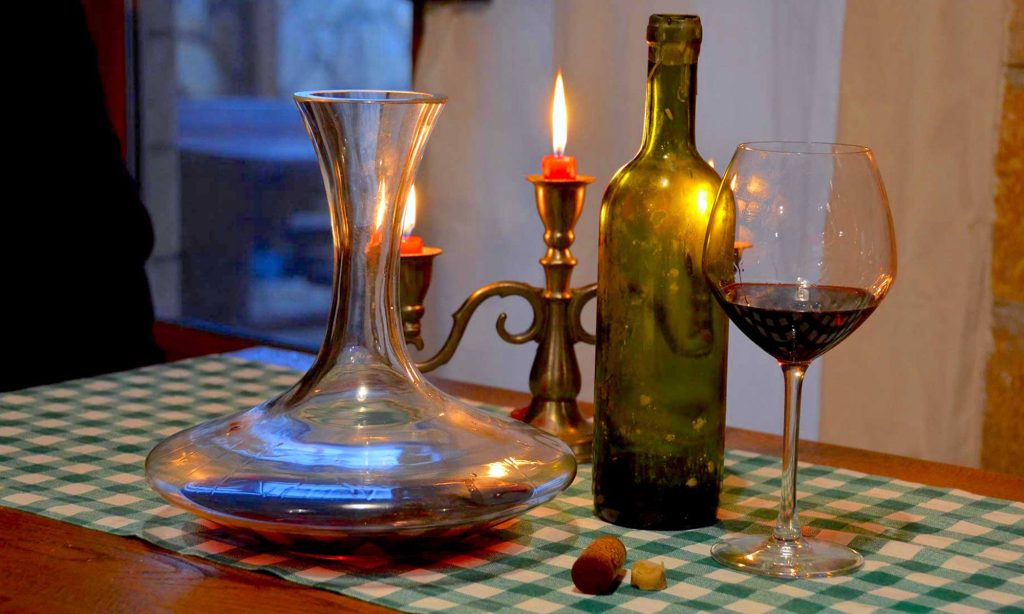
The green bottle sitting before us on the green and white checkered tablecloth had remnants of barnacles on its exterior. Its smoky exterior reminded me of the weathered pieces of glass I’d seen washing ashore on beaches near Lake Michigan, when I visited my grandparents as a child.
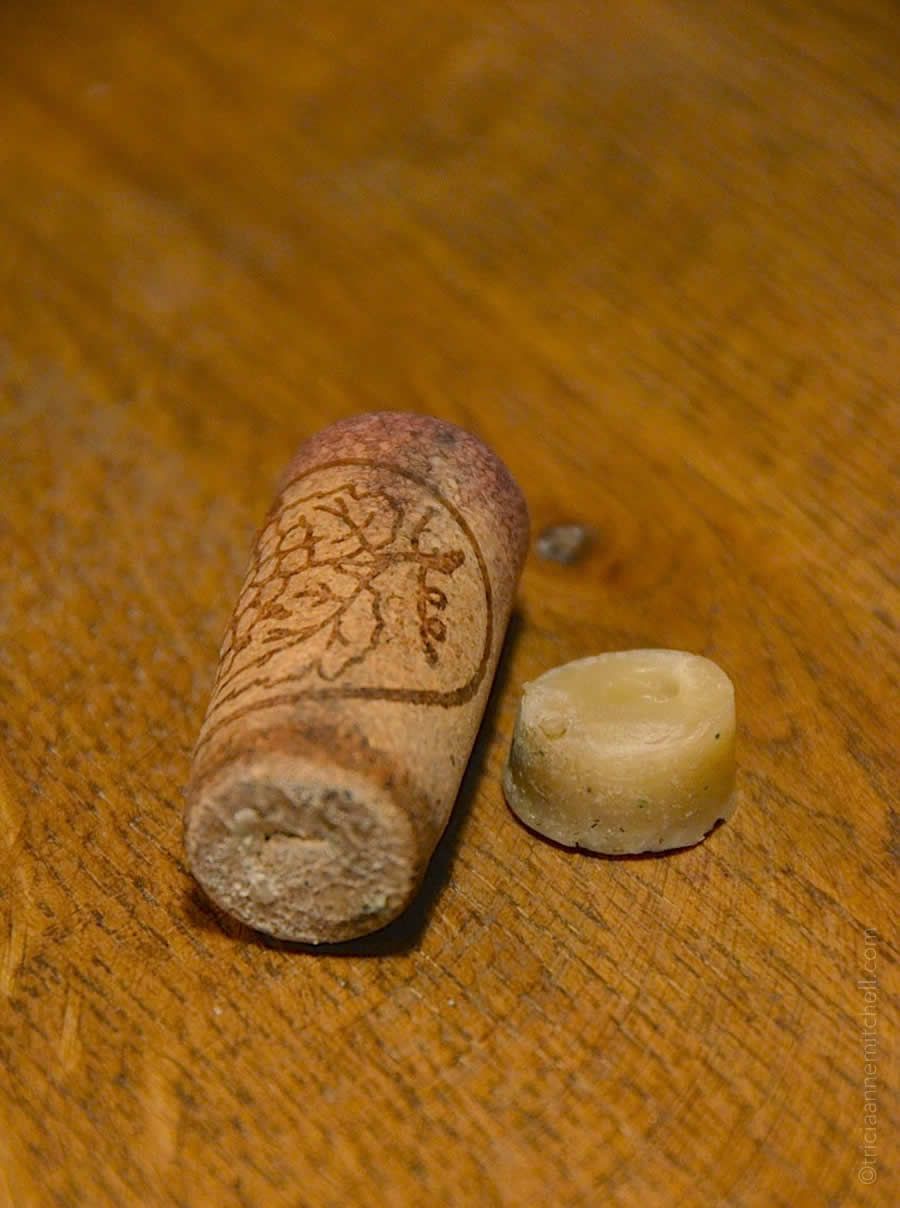
The outside of the bottle’s cork was sealed with wax, which Jakša carefully cut through before uncorking the wine and pouring it into a decanter. He explained that a screw cap would’ve offered a strong seal, but that seawater could’ve gotten through it in just six months. The cork and wax combination lasts longer.
“Everyone’s looking for optimal conditions to age wine. I thought… Why not ‘dig’ it into nature somewhere and see what happens?”
– Jakša Bedalov
Sitting next to a candelabra, studded with candles that had been burning down during the course of our afternoon together, Jakša was the first to swirl, sniff, and taste the wine.
“It smells like the sea, like cuttlefish,” he said, with a faint smile. Jakša guessed that the wine possibly had 14% alcohol content, but he wasn’t certain.
As I held up my glass of wine to the light, I noted its lovely garnet color, reminiscent of jewelry storefronts in the Czech Republic studded with the brilliant, deep-red precious stone. Shawn and I noted hints of blackberries and sour cherries. It had a light and smooth finish.
We reflected on how special the experience was. The grapes had grown in Jakša’s vineyard 400 meters above the Adriatic Sea, they were aged 25 meters underneath the sea, and then they were enjoyed with friends who live alongside it.
P.S. Before this experience, I’d never heard of wine being aged underwater. Is this a new concept to you too? Have you ever tasted wine aged under the sea?
For you foodies out there, I’ll be sharing details about our traditional Croatian cuisine cooking class this coming Sunday. The post will include the recipe for Jakša’s celebrated Zinfandel Risotto, which is delicious and rather easy to make.
Where in the World?
More Details & Planning Pointers:
- For more information on aging wine underwater, see these articles: Is Aging Wine Underwater a Fad? & Winemaking Takes a Plunge
- You’re probably thinking that we’re lucky to count Srđan and Jakša among our circle of Croatian friends, and indeed we are. If you’ll be in the Split area and also want to learn about Croatian food and wine, get in touch with them through Bedalov Winery or the Art of Wine to coordinate a customized experience.
- If you’ll be staying in Split for a few days, you might be interested in the Split Card, which gives you free entry to certain museums and galleries, and reduced rates to others.
- Would you like more ideas as you plan your Croatian holiday? This link contains an index of all my posts from Croatia.
Accommodation in the Split Area:
Shawn and I have spent a total of five winters and one summer in and around the city of Split, using it as a base to explore Croatia’s popular Central Dalmatia region. We’ve made it a habit to create new memories by staying in a different property each year. Over the years, we’ve had long-term stays in Split, Trogir, Solin, and Makarska. We would happily revisit all of the following apartments. (Please note that some are affiliate links.)
- Kaleta Apartments (Split) – These lovely apartments are located within Diocletian’s Palace (well, technically just a few meters from the Iron Gate). Our elegant studio apartment, called the “Diocletian’s Suite,” had lots of character — including Roman brickwork embedded into the wall. We had overhead views of life on Split’s Old Town streets, and we enjoyed chatting with the friendly owners, Novica and Negri. We spent about 2.5 months here.
- Guesthouse F (Split) – This cozy studio apartment is located in Split’s Varoš neighborhood, just a few minutes’ walk from Diocletian’s Palace. With its quirky narrow streets and stone homes decorated with hunter-green shutters and flower boxes, Varoš is charming. One of Guesthouse F’s apartments was originally a horseshoe maker’s workshop, owned by Anja’s grandfather. Shawn and I dubbed it the “horseshoe cottage.” Aside from our central location, we loved having a tiny terrace. We also appreciated the kindness of our hosts, Anja and Miro. In total, we spent about 2 months here.
- Viola Apartment (Split) – We spent roughly 3 months in this wonderful 2-bedroom apartment, which is also in the Varoš neighborhood of Split. The apartment also has a lovely sun porch and garden. It is in an old stone home, but the interior has recently been remodeled. We were in a perfect location for accessing Diocletian’s Palace and Marjan Forest Park, too. On foot, it takes about six minutes to reach Split’s most famous lookout point near the Caffe Bar Vidilica. The owner, Ljubica, lives upstairs. She is easygoing and helpful.
- Apartments Mirkec (Trogir) – We spent 7 wonderful weeks in this studio apartment, which is located in the heart of the town of Trogir. The apartment had good Wifi and a kitchen with all the basics. It was also perfectly situated in the heart of Trogir’s gorgeous Old Town, just a minute’s walk from the seaside walkway, the Riva. Trogir’s bus station was about a 5-minute walk from the Apartments Mirkec, making day trips using mass transportation easy. Note: As of 2025, I think this apartment has permanently closed. However, the owner’s popular restaurant (Pizzeria Mirkec), which is located underneath the apartment, is still cooking up delicious pizzas in their wood-fired pizza oven.
- Apartments Vesna (Makarska) – This 1-bedroom apartment was our home for about 12 months. The apartment is on the top floor and features skylights. A small balcony on the back of the apartment overlooks Makarska’s harbor — the views of Makarska’s dramatic mountains are wonderful! It takes about 8 minutes to reach Makarska’s bus station on foot. In a matter of minutes, you can also walk to Makarska’s Riva (seaside promenade), several grocery stores, restaurants, and cafés. The owners, Mise and Anna, are exceptionally friendly and helpful.
Photography & text © Tricia A. Mitchell. All Rights Reserved.


Leave a reply to Beauty Along the Road Cancel reply