Last Updated:

Delicious History: Zinfandel Wine & Octopus Peka in Kaštela, Croatia

Posted by

·

, , , ,

As our friend’s car propelled us up the jagged slopes of Kozjak Mountain in Croatia’s Dalmatia region, we struggled to steady our cameras enough to document the increasingly-magnificent view. Simultaneously fearing for the health of my friend’s tires which risked being ruptured on the rocky dirt road, I marveled at the panorama along this stretch of Croatia’s Dalmatian Coast. In the late-afternoon sunlight, the Adriatic Sea twinkled, and despite technically being wintertime, it called us to take a plunge.

The limestone hills overlooking seaside Split and Kaštela wore a blend of foliage. Some trees sported withering, rust-colored leaves from the past season, and others prematurely exhibited pastel blooms and berries. As our Croatian friends had been telling us for weeks, the winter had been unusually warm, raising concern that the flora would be adversely impacted should another cold snap roll in. Given that so many locals dabble in the Mediterranean tradition of winemaking and olive oil production, this did not come as a surprise.

On these hills overlooking Croatia’s Dalmatia region, we’d come to continue our search for Zinfandel’s genetic roots along with winemaker Anton Kovač and wine enthusiast and entrepreneur, Srđan Mitrović. A year earlier when we’d met the duo on a wine tour, they’d regaled us with tales of the hunt for Zinfandel’s roots, tossing out names like Crljenak Kaštelanski (the Zinfandel grape’s Croatian name) and Mike Grgich.

They had also piqued our curiosity when they pointed to a church off in the distance which once contained records that attested to Zinfandel having been grown in the area for at least 1,000 years. We wanted very much to visit that little church upon spotting it, but time did not allow during our first visit. On this day, we fulfilled our vow to return.

Once we’d started exploring the area on foot and arrived at the church, Srđan and Anton told us about the history of the area.

“In the 9th Century, the village of Putalj and the Saint George Church were built here. Over time, the boundary between the Venetian and Ottoman Empires crossed through here. In the 15th century, fearing for their security, the residents abandoned the area and moved closer to the sea, settling in present-day Kaštel Sućurac,” Anton explained.

Though he’d been to the picturesque spot many times, Anton still exuded enthusiasm during our maiden visit – perhaps not surprising since Anton’s winery, Putalj, acquired its name from the church, along with its logo of St. George slaying a dragon.

My family has worked with wine for several generations, and I studied it, but no one can teach you like your experience. Experience is the best teacher.”

– Anton Kovač

During our three months in Split, we’d have several weekend meet-ups with Anton at his Kaštel Sućurac winery, trying his fantastic wine straight from the barrels and tanks, and savoring a bottle while enjoying one of Dalmatia’s signature dishes known as peka. Though initially apprehensive about trying an octopus version of this dish, which is famously cooked under a bell-like lid in a wood-burning fire, I was rewarded for my culinary sense of adventure. Like all the vegetables cooked to melt-in-your-mouth perfection under the bell, the octopus was tender and buttery-flavored.

As we enjoyed that meal, we chatted about Anton’s passions, namely winemaking and even olive oil-production but also klapa, a kind of a cappella singing that’s incredibly popular in Dalmatia.

“I started singing when I was born,” Anton joked, as we swirled our glasses of garnet-colored Zinfandel. “Along with seven other men from my town we have klapa practice twice a week.”

With the subject inevitably turning to wine, I asked Anton how long his family had been making wine.

Anton mentioned that his grandfather had immigrated to California for a time, eventually recognizing that some of the same types of grapes as he’d known in Croatia were being grown across the ocean.

“He had a good wine business during prohibition times, but eventually returned to Croatia. My family has worked with wine for several generations, and I studied it, but no one can teach you like your experience. Experience is the best teacher.”

Croatian islands near Split
Croatian islands mingle in the Adriatic Sea.
Winemaker Kozjak Mountain
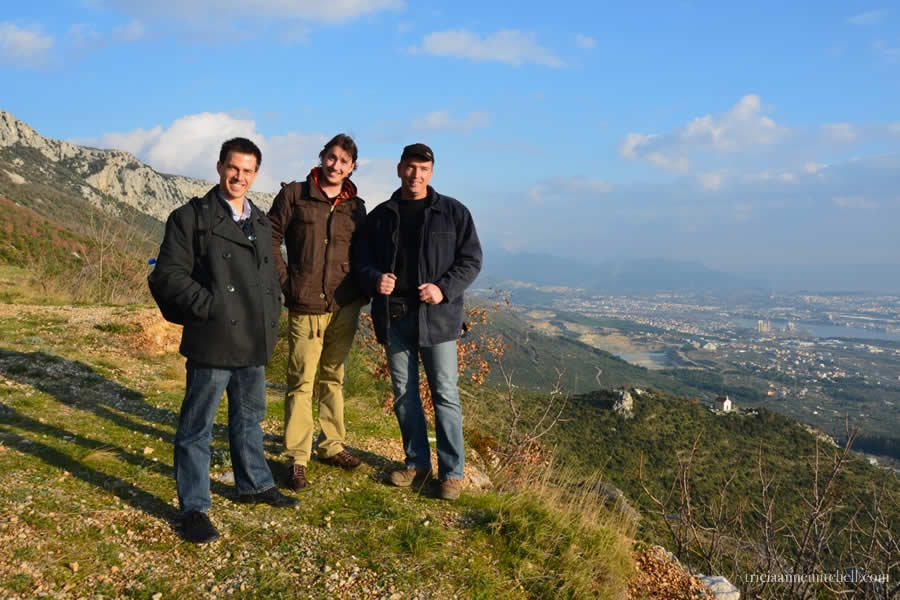
Winemaker Anton Kovač (far right), Shawn, and friend and wine enthusiast Srđan Mitrović pause on Kozjak Mountain, just before we begin our descent toward the tiny Church of St. George. Documents inside the church confirm that Zinfandel had been grown in the area for at least 1,000 years.
Kozjak Split Croatia
Shawn and me.
The Church of St. George (Sv. Jurga) overlooks the Split metropolitan area and the town of Kaštel Sućurac, which is situated along the Adriatic Sea. Kaštel Sućurac is one of seven settlements that cropped up around castles. Collectively today, the seven towns are referred to as Kaštela. In past centuries, the diminutive church overlooked a village named Putalj. Putalj was later abandoned and its residents moved closer to the sea, building present-day Kaštel Sućurac.
Split Croatia Winemaker Putalj
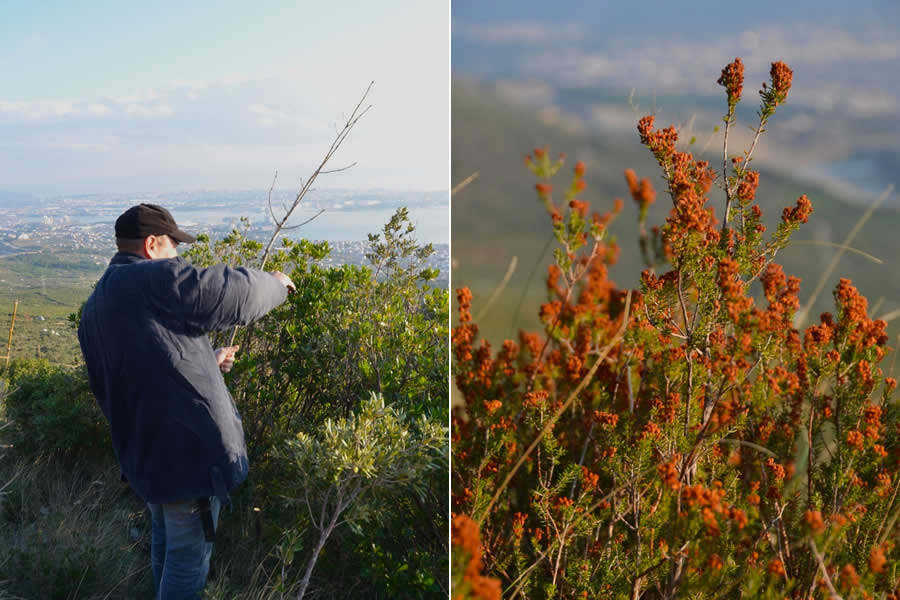
Using his vineyard clippers, Anton chivalrously snips off a branch for me to use as a hiking stick to traverse the rugged terrain.
Kastela Rocky Terrain Kozjak
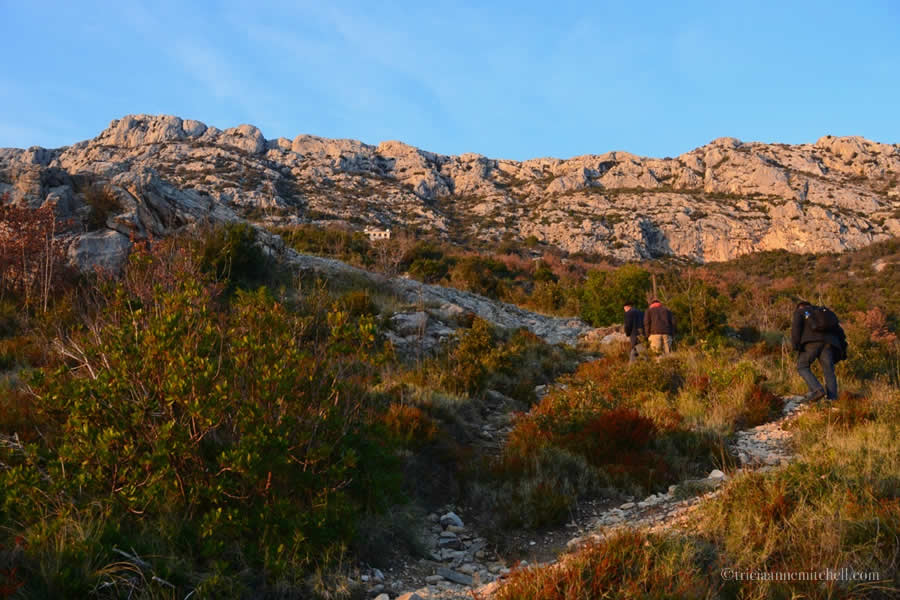
Shawn negotiates the rocky terrain (left) and large boulders (right).
Kozjak Mountain Putalj Wall Remants
Remnants of stone terraces. Fear of the encroaching Ottoman Empire caused these vineyards to be abandoned more than 500 years ago.
Kozjak Mountain Kastela Croatia
The Adriatic Sea and Split off in the distance.
Sv Jurga Church Kastela Croatia
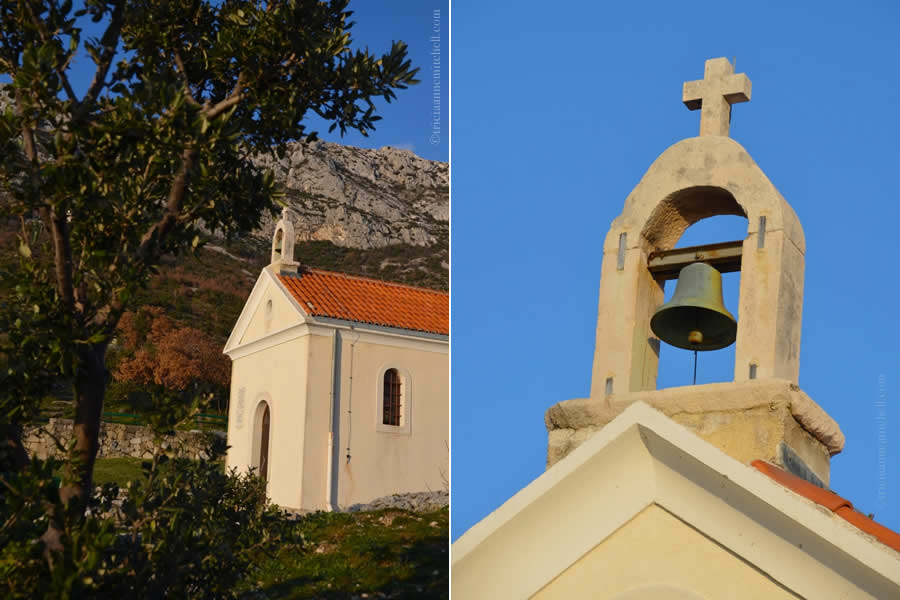
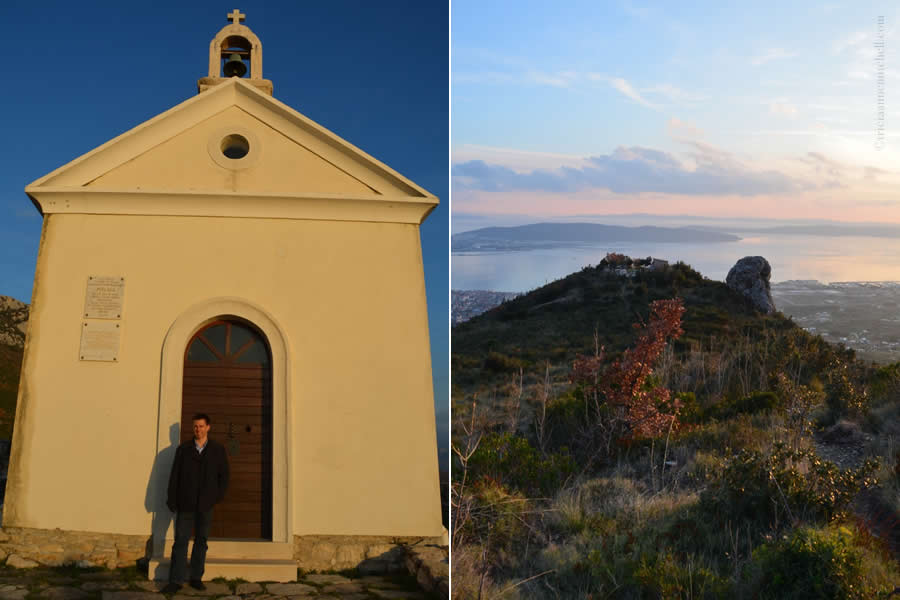
The Church of St. George.
Sv Jurga Church Putalj Kastela Croatia
The church was closed during our visit, but peeking through a peep hole in the wooden door, we were able to see the altar and gold-tinted artwork depicting the church’s namesake, St. George, slaying a dragon. Anton drew inspiration from this image of St. George and incorporated it into his wine label’s design. His Putalj Winery is also named after the village whose residents this little church once served.
Sv Jurga Church Putalj Kastela Croatia
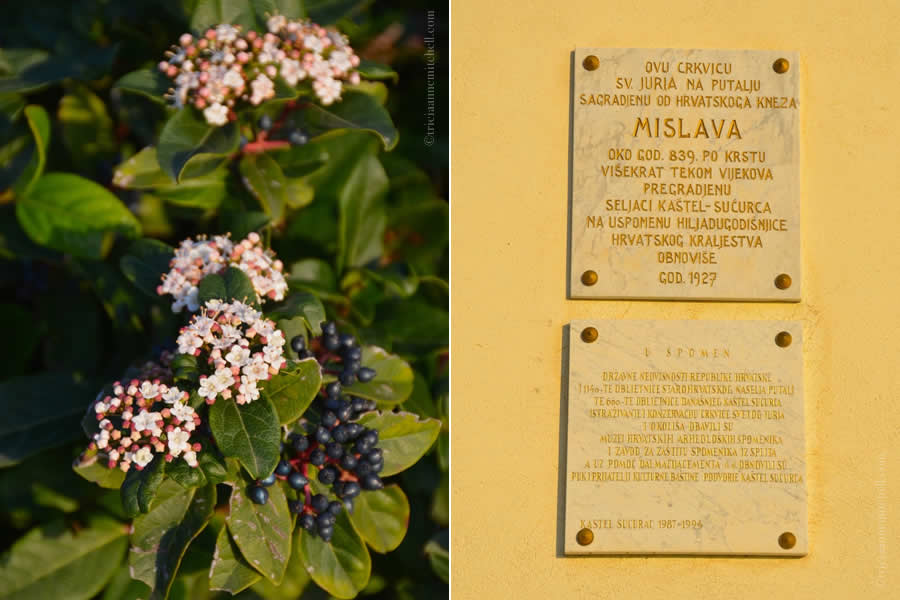
Spring blooms and berries, and plaques on the church making note that the church was built by Mislav of Croatia, a 9th-Century duke.
Putalj St. George Kastela Sucurac Croatia
Shawn, Srđan, and Anton.
Kozjak Mountain Split Croatia
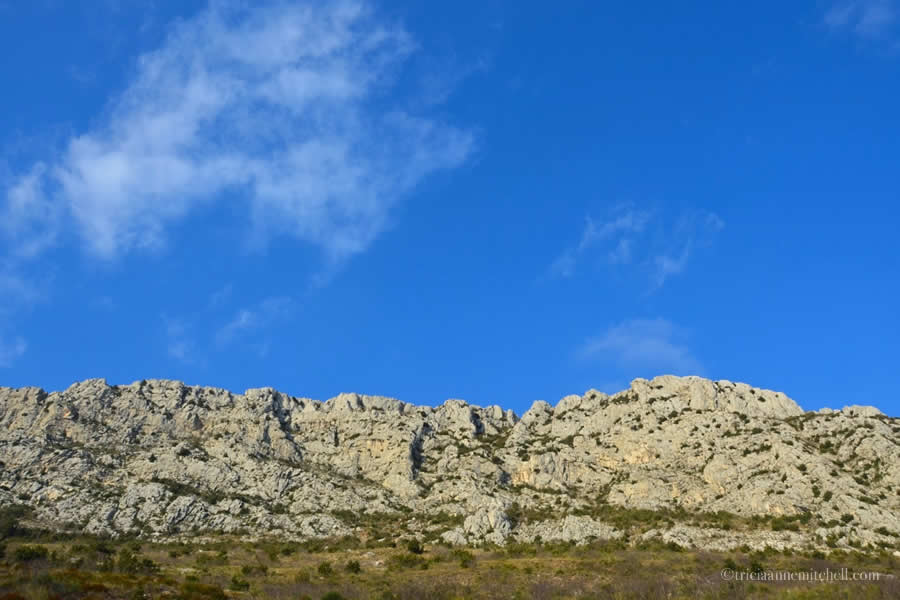
Kozjak Mountain’s rugged terrain contrasted by ethereal clouds.
Putalj St. George Church Kastela Sucurac Croatia
Remnants of the original 9th Century church structure were incorporated into the newer church’s construction.
Kozjak Split Mountain Goat Croatia
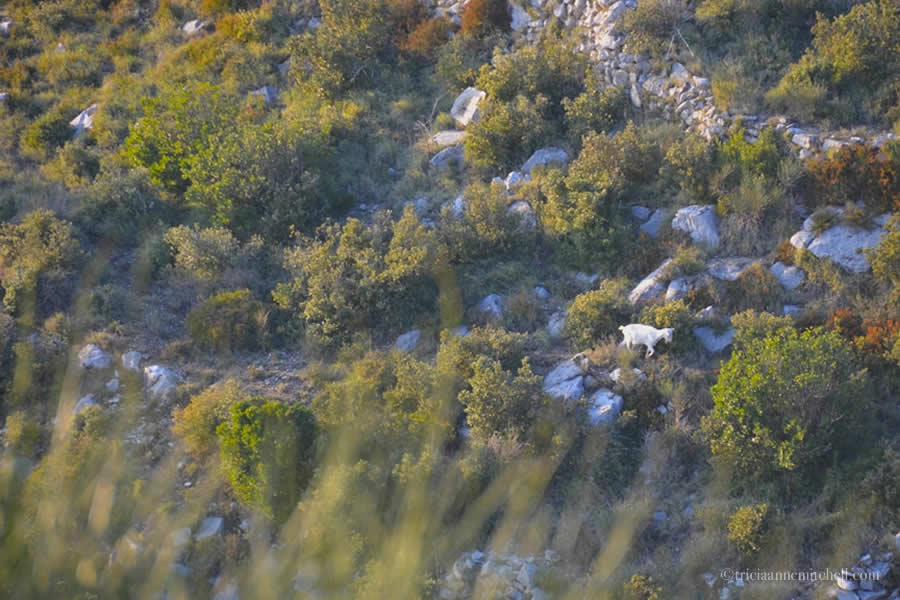
With the exception of a flock of goats and their shepherd passing by, all was quiet at our perch overlooking the Adriatic Sea.
Kastela Putalj St. George Church Kozjak
Shawn stands in front of the tiny church (left) and sunset views (right).
Putalj St. George Church Kastela Croatia

Kozjak Mountain Split Croatia Putalj
With the winter sun soon beginning its slumber, we head back to the cars so that we can descend via the rugged roads before darkness sets in.
Kozjak Mountain Croatia Adriatic Sunset
A parting sunset view from the mountain before we return to sea level.
Croatian Cheese and Zinfandel Rosé Wine
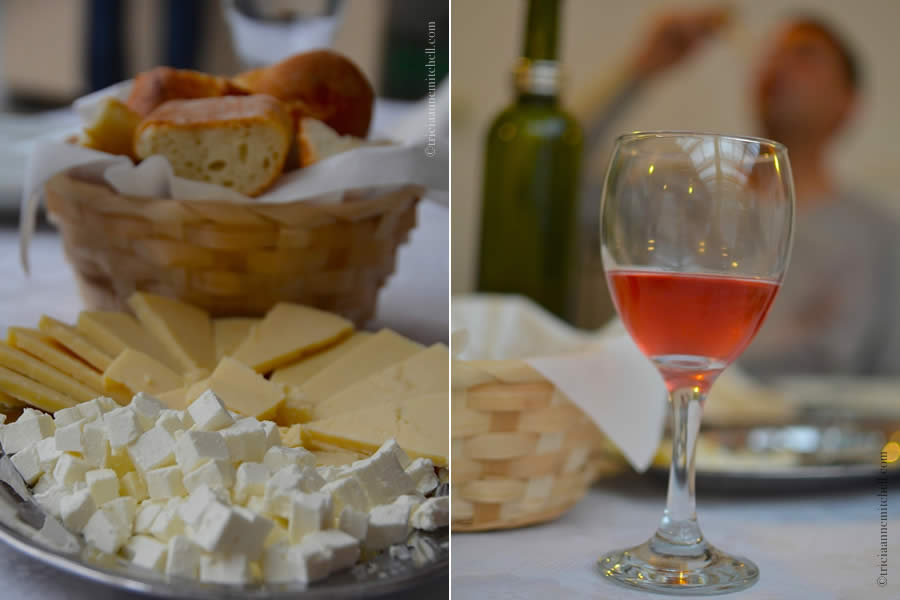
At Anton’s home we enjoyed two types of Dalmatian cheese from the hinterland (one made from aged cows’ milk and another made with sheep milk) and an impressive flight of wine. On the right is a glass of Anton’s Zinfandel Rosé.
Octopus Peka Croatia
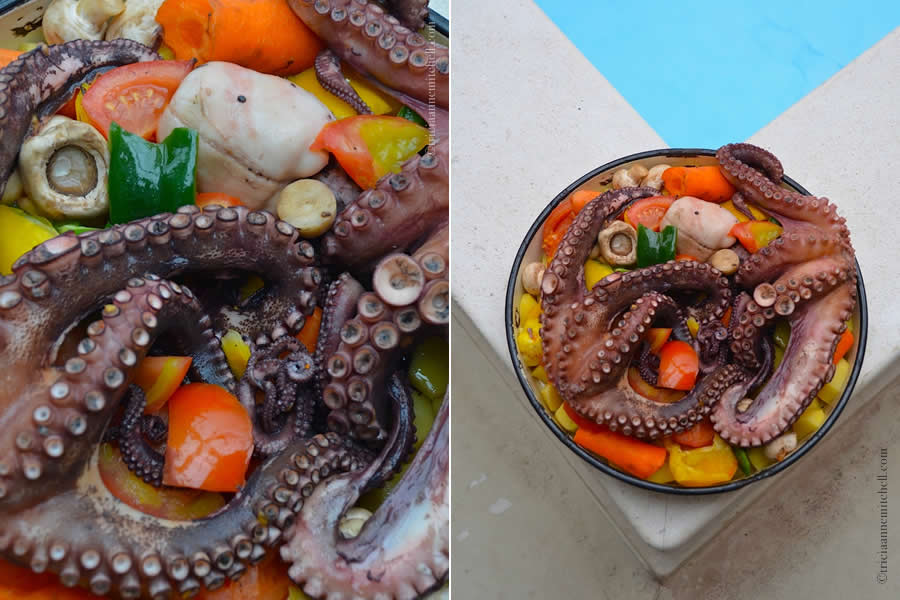
The peka before being popped into the wood-burning fire under a bell-like dome. Anton included octopus, known as hobotnica in Croatian, as well as sliced tomatoes, mushrooms, potatoes, carrots, peppers and copious amounts of olive oil.
Making Fire for Octopus Peka
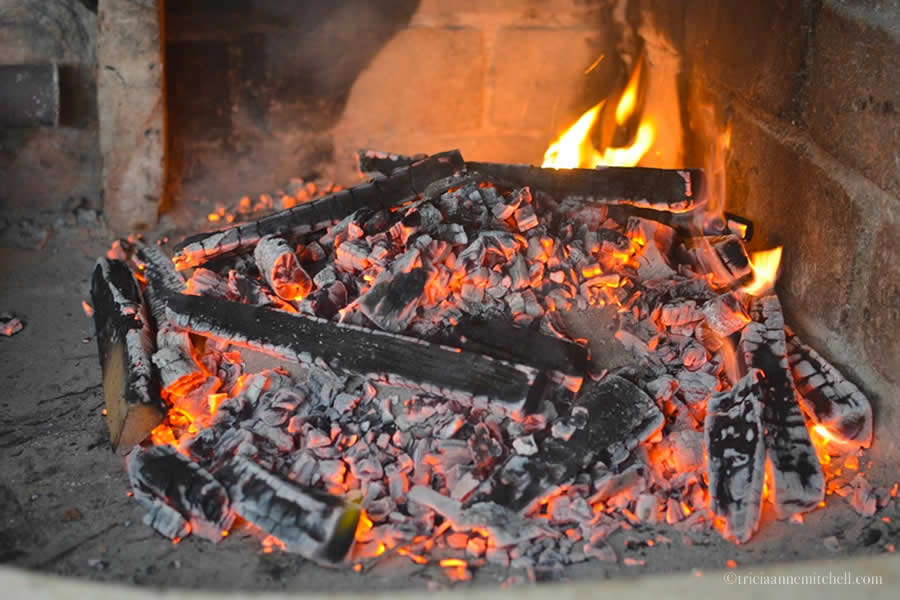
Anton readies the fire so that the burning wood can be placed over the bell to cook the peka.
Octopus peka hobotnica
Anton mentioned that peka is one of his favorite dishes and that he and his family usually have it twice a month. “I see history in the fire while making it,” he said.
Octopus peka hobotnica in fire
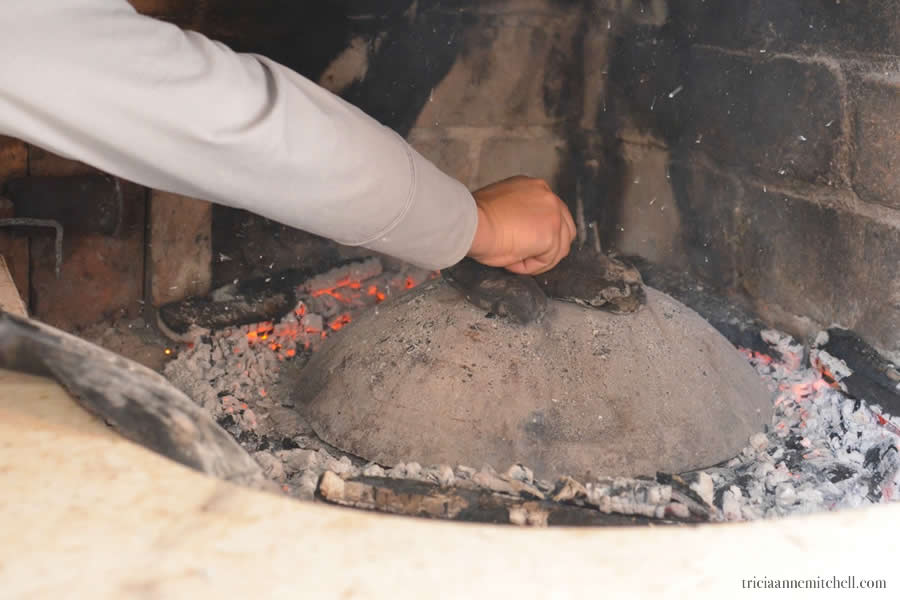
Anton brushes aside the embers as he prepares to remove the lid and unveil the peka.
Octopus Peka in Fire

Octopus Peka Croatia

Anton Kovacs Kastela winemaker Peka
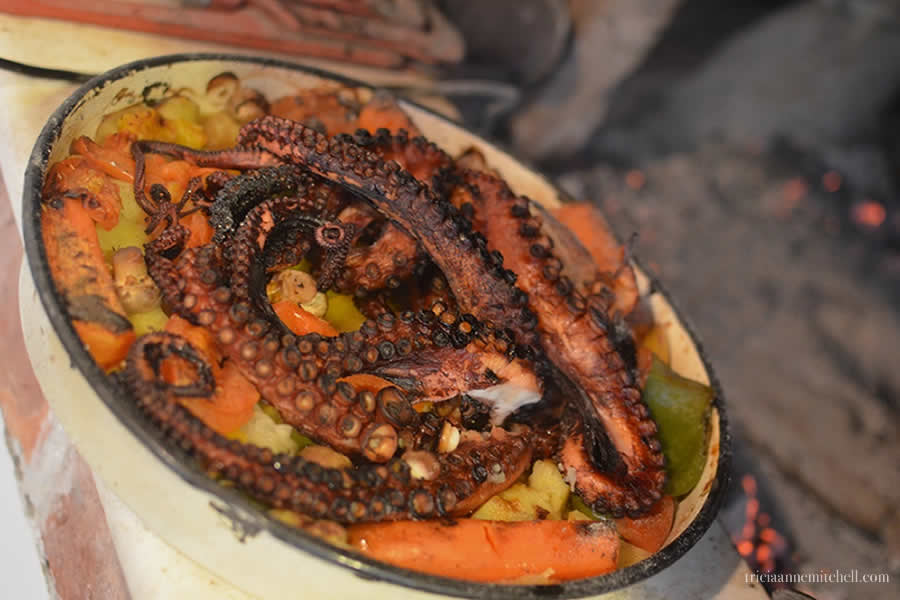
Anton shows off the dish of Octopus Peka, amidst walls adorned with paintings of Dalmatian maritime scenes.
Octopus Peka Croatia
I had to keep my fellow diners’ forks away long enough to capture this shot of the peka before it landed on their plates. :)
Crljenak Kastelanski Zinfandel Wine
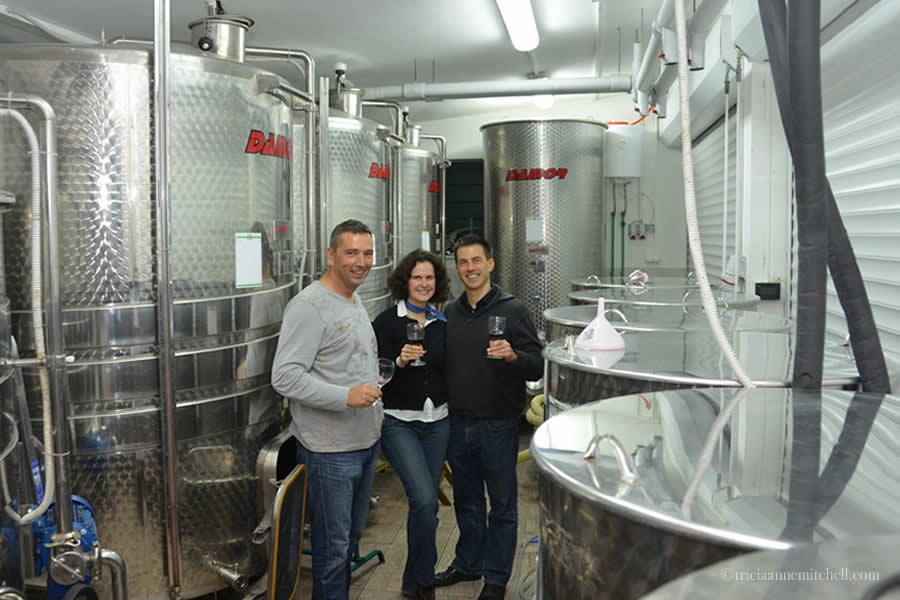
Anton pours ruby-red glasses of Crljenak Kaštelanski (Zinfandel) to taste directly from the fermentation tanks.
Split Wine Tasting Croatia

Split Wine Tasting Putalj Winery
Anton, me, and Shawn.
Wine Fermentation Room Temperature
Temperature controls in Anton’s fermentation room.
Anton Kovac Kastela winemaker
Split Wine Tasting Croatia Putalj Winery

Our Video of This Experience:

Where in the World?

Planning Pointers:

  • To schedule an individual or customized excursion like this one, touch base with Anton and the Art of Wine.
  • If you’ll be staying in Split for a few days, you might be interested in the Split Card, which gives you free entry to certain museums and galleries, and reduced rates to others.
  • Need more inspiration as you plan your excursions in Split and beyond? This link contains an index of all my posts from Croatia.

Accommodation in the Split Area:

Shawn and I have spent a total of five winters and one summer in and around the city of Split, using it as a base to explore Croatia’s popular Central Dalmatia region. We’ve made it a habit to create new memories by staying in a different property each year. Over the years, we’ve had long-term stays in Split, Trogir, Solin, and Makarska. We would happily revisit all of the following apartments. (Please note that some are affiliate links.)

  • Kaleta Apartments (Split) – These lovely apartments are located within Diocletian’s Palace (well, technically just a few meters from the Iron Gate). Our elegant studio apartment, called the “Diocletian’s Suite,” had lots of character — including Roman brickwork embedded into the wall. We had overhead views of life on Split’s Old Town streets, and we enjoyed chatting with the friendly owners, Novica and Negri. We spent about 2.5 months here.
  • Guesthouse F (Split) – This cozy studio apartment is located in Split’s Varoš neighborhood, just a few minutes’ walk from Diocletian’s Palace. With its quirky narrow streets and stone homes decorated with hunter-green shutters and flower boxes, Varoš is charming. One of Guesthouse F’s apartments was originally a horseshoe maker’s workshop, owned by Anja’s grandfather. Shawn and I dubbed it the “horseshoe cottage.” Aside from our central location, we loved having a tiny terrace. We also appreciated the kindness of our hosts, Anja and Miro. In total, we spent about 2 months here.
  • Viola Apartment (Split) – We spent roughly 3 months in this wonderful 2-bedroom apartment, which is also in the Varoš neighborhood of Split. The apartment also has a lovely sun porch and garden. It is in an old stone home, but the interior has recently been remodeled. We were in a perfect location for accessing Diocletian’s Palace and Marjan Forest Park, too. On foot, it takes about six minutes to reach Split’s most famous lookout point near the Caffe Bar Vidilica. The owner, Ljubica, lives upstairs. She is easygoing and helpful.
  • Apartments Mirkec (Trogir) – We spent 7 wonderful weeks in this studio apartment, which is located in the heart of the town of Trogir. The apartment had good Wifi and a kitchen with all the basics. It was also perfectly situated in the heart of Trogir’s gorgeous Old Town, just a minute’s walk from the seaside walkway, the Riva. Trogir’s bus station was about a 5-minute walk from the Apartments Mirkec, making day trips using mass transportation easy. Note: As of 2025, I think this apartment has permanently closed. However, the owner’s popular restaurant (Pizzeria Mirkec), which is located underneath the apartment, is still cooking up delicious pizzas in their wood-fired pizza oven.
  • Apartments Vesna (Makarska) – This 1-bedroom apartment was our home for about 12 months. The apartment is on the top floor and features skylights. A small balcony on the back of the apartment overlooks Makarska’s harbor — the views of Makarska’s dramatic mountains are wonderful! It takes about 8 minutes to reach Makarska’s bus station on foot. In a matter of minutes, you can also walk to Makarska’s Riva (seaside promenade), several grocery stores, restaurants, and cafés. The owners, Mise and Anna, are exceptionally friendly and helpful.

Photography & text © Tricia A. Mitchell. All Rights Reserved. My husband, Shawn, created the video.

Tricia A. Mitchell Avatar

About the author

Hi! My name is Tricia Mitchell. I delight in telling stories about my slow travels through more than 65 countries. Some of my highlights have included sharing meals with locals in Armenia, Cambodia, and Tunisia; sipping sparkling wine with French cousins in Alsace; milking goats in a sleepy Bulgarian village; and training with a Japanese mine-clearance team in Laos. My husband, Shawn, and I are based in France’s Loire Valley.

Leave a reply to Darlene Cancel reply

This site uses Akismet to reduce spam. Learn how your comment data is processed.

18 responses to “Delicious History: Zinfandel Wine & Octopus Peka in Kaštela, Croatia”

  1. inavukic Avatar

    Oh, the octopus looks so tasteeeeeeeee :D Had some last night on Good Friday but it wasn’t that good although the octopus salad I made was fingerlicking good : Happy and Blessed Easter, Tricia to you and your loved ones and to all who visit your blog!

    1. Tricia A. Mitchell Avatar

      Greetings Ina, is that an Easter weekend tradition for you, or which dishes are customary in Croatia for Easter?

      Thank you for the holiday greetings. Sending warm Easter wishes to you and your family as well! :) Sretan Uskrs!

  2. Dalo 2013 Avatar

    Your posts are pure magic…the opening photo was tremendous, what an incredible environment. An great video/voice, although I was expecting a little a cappella/klapa from you as well…especially with the wine :-) Have a great weekend.

    1. Tricia A. Mitchell Avatar

      Randall, “pure magic” – such flattering words. I’m humbled. Mother Nature had a hand in making this scenery look as utterly fantastic as it is though. :) I agree that those mountains (part of the Dinaric Alps) in the opening scene are dramatic, especially during the golden hour when their rugged beauty is highlighted. When we went to Italy’s Adriatic Coast a few weeks ago, we noted that the landscape is much flatter than Croatia’s coastline.

      As for the klapa, I have heard that there are female singers in Croatia; perhaps I can join a troupe when we next return. I did take voice lessons as a child, but my voice instructor would cringe now. :) Wish you a happy weekend as well – do you have any photography sessions planned?

  3. fotoeins Avatar

    You had me at three things: the scenery, the fresh cheese, and the fresh octupus! I already have a healthy appetite for food and scenery. Thanks for writing about this beautiful place in Croatia!

    1. Tricia A. Mitchell Avatar

      Henry, we’ve been to this stunning spot twice, and each time as I soaked up its beauty, I couldn’t help but think that I hope that the slopes won’t be developed someday. Growing indigenous grapes there could be fitting and aesthetically-pleasing, though – just no high-rise structures.

  4. Darlene Avatar

    Stunning scenery! The octopus peka looks delicious.

    1. Tricia A. Mitchell Avatar

      Darlene, I was initially concerned about what the texture would be like, but after cooking for nearly two hours, the octopus was tender and perfect. Fitting that on this chilly winter day, we warmed ourselves by the open fire, while enjoying great food, wine, and conversation.

  5. rigmover Avatar
    rigmover

    Now I’m hungry, great post Tricia.

    1. Tricia A. Mitchell Avatar

      Mission accomplished, Mark! :-) Here’s hoping you and your wife will get to Croatia sometime soon so that you can try this fantastic fare.

  6. Peri's Spice Ladle Avatar

    Stunning pictures and awesome views:) Isn’t it amazing how food always tastes much better when the air is fresh and the wine is good!

    1. Tricia A. Mitchell Avatar

      Peri, agreed! There’s something about al fresco dining that makes even the simplest meal extraordinary. On this particular afternoon, the weather on Croatia’s Dalmatian Coast unfortunately didn’t cooperate for an outside dining experience, but with a glass of wine in hand and a warm fire in the room, we had a wonderful afternoon.

      On a side note, your tempting Indian recipes remind me once again to share the tales from our Indian cooking class in Kerala. Thanks for reading and taking the time to comment. :)

      1. Peri's Spice Ladle Avatar

        One of the best parts of weather is it makes you live in the moment, glad you made the most of it:)

        Look forward to reading about the cooking class in Kerela, what fun!

      2. Tricia A. Mitchell Avatar

        Peri, if only we could get all those marvelous spices here in Germany! How I miss saunf, and Masala Chai in particular. Wish you a terrific Thursday. :)

  7. sf Avatar
    sf

    The bread and cheese looks really good!

    1. Tricia A. Mitchell Avatar

      SF, I had to abstain from the bread since I don’t consume gluten, but that didn’t stop me from savoring that cheese. It was pretty divine! Thanks for reading. :)

  8. Gerard McHugh Avatar

    That is very interesting. I never heard of cooking a meal by making a fire above it until now. That’s cool! Going into a winery and tasting wine from the tanks is a very interesting thing to do. I did that once on the North Fork of Long Island. It was very interesting and educational.

    1. Tricia A. Mitchell Avatar

      Gerard, I agree that it’s a dramatic cooking technique. The first time we saw it was elsewhere in Croatia when another friend cooked a similar dish in a massive fireplace that looked like it belonged in a Renaissance-era home. With its tender texture, peka’s the perfect dish for a chilly afternoon, something that we’re experiencing in Germany today. :)

      Do you recall what types of wine you sampled directly from the tanks on Long Island?