

With romantic castle ruins, cobbled riverside walkways, and a gorgeous setting between two leafy mountains, it’s no wonder that people often “lose their hearts” in Heidelberg, Germany. In fact, there’s even a famous German song called Ich hab’ mein Herz in Heidelberg verloren (I Lost My Heart in Heidelberg) that attests to Heidelberg’s many charms.
I called this fairy tale city home for ten years, so I’m often asked for advice about things to do in Heidelberg. In response, I created this guide for first-timers who want to explore this graceful city on the Neckar River.
I’ve covered everything from historic tidbits and tasty eateries to shopping spots and places to soak up the best views.
All recommendations are within walking distance of Heidelberg’s Old Town (Altstadt). The Hauptstrasse (Main Street) is the Old Town’s epicenter.
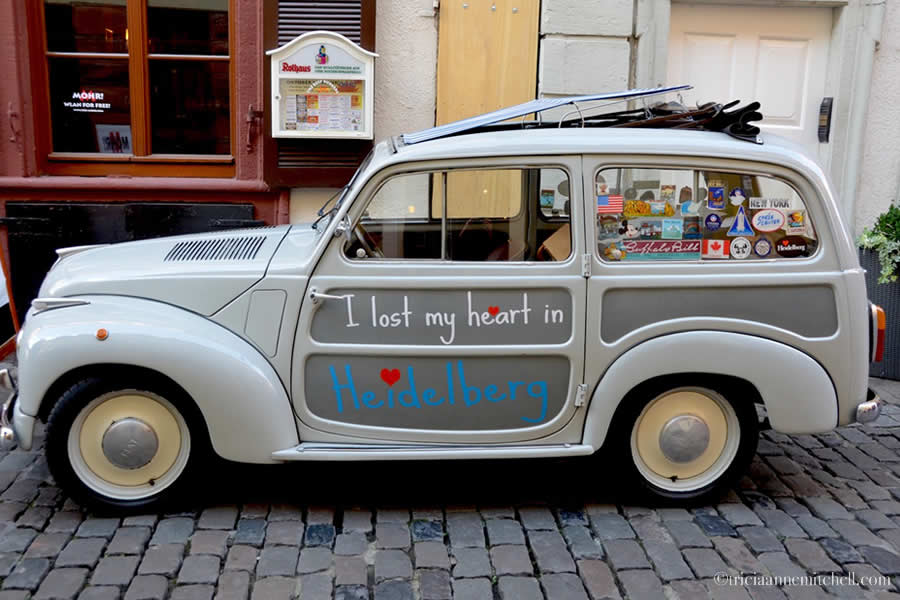
Table of Contents
General
Attractions
- Heidelberg Castle (Heidelberger Schloss)
- Holy Ghost Church (Heiliggeistkirche)
- Hotel zum Ritter
- Old Bridge (Alte Brücke)
- Old Bridge Monkey (Brückenaffe)
- Philosopher’s Walk
- Student Prison (Studentenkarzer)
- Thingstätte Amphitheater
Activities
- Hike
- Relax along the riverside
- Soak up Heidelberg’s architectural details
- Ride a boat along the Neckar River
Restaurants & Cafés
Harness some history
Heidelberg is home to one of Germany’s oldest universities, best-known castles and most well-preserved old towns. The city also has ties to interesting personalities such as the writer Mark Twain, General Eisenhower, and the poet Johann Wolfgang von Goethe.
Some even say that Twain overcame writer’s block during his three-month stay in Heidelberg and that the Neckar River Valley reminded him of Huckleberry Finn’s fictional landscape. Twain’s European adventures are chronicled in his book, A Tramp Abroad, and his essay, The Awful German Language is also a hilarious read for anyone who’s tried (or failed) to learn the intricacies of German grammar.
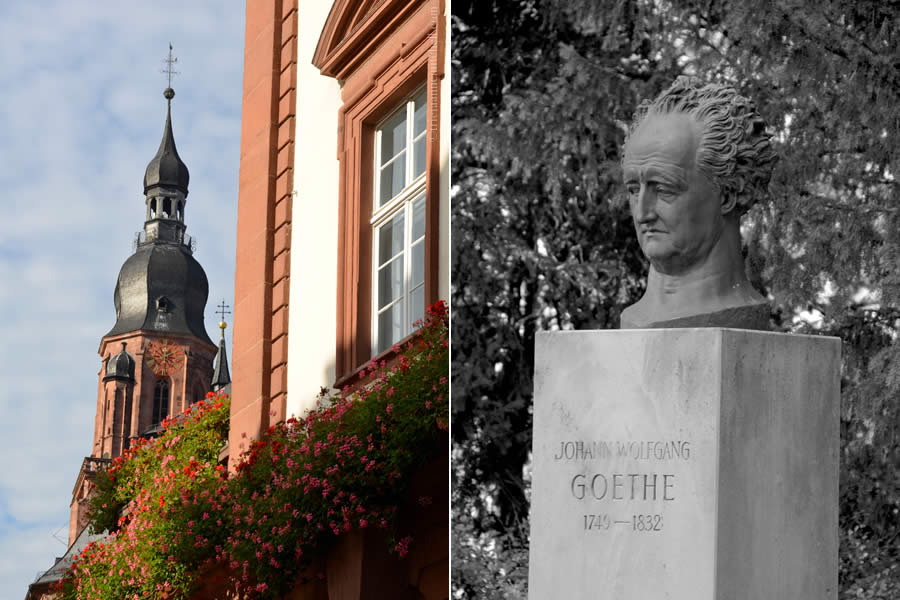
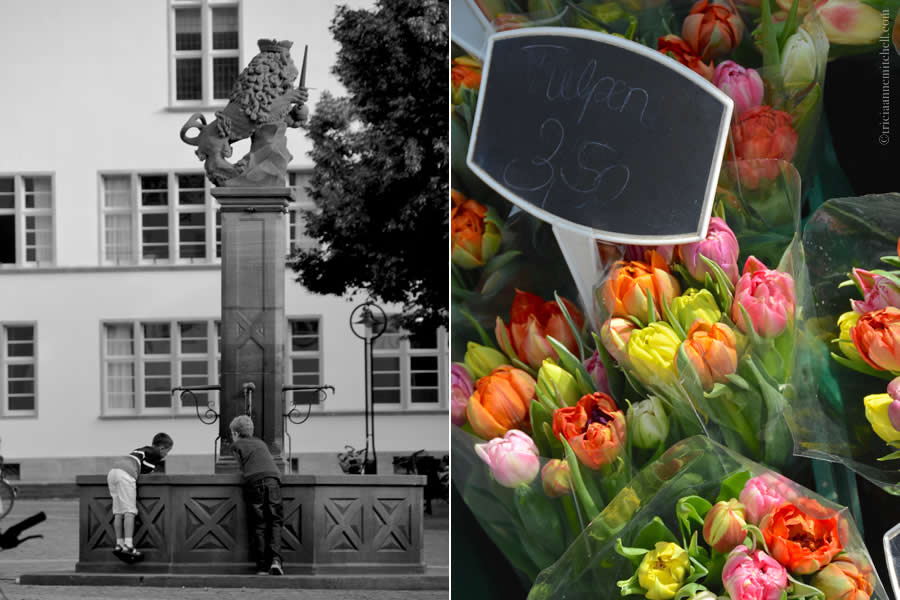
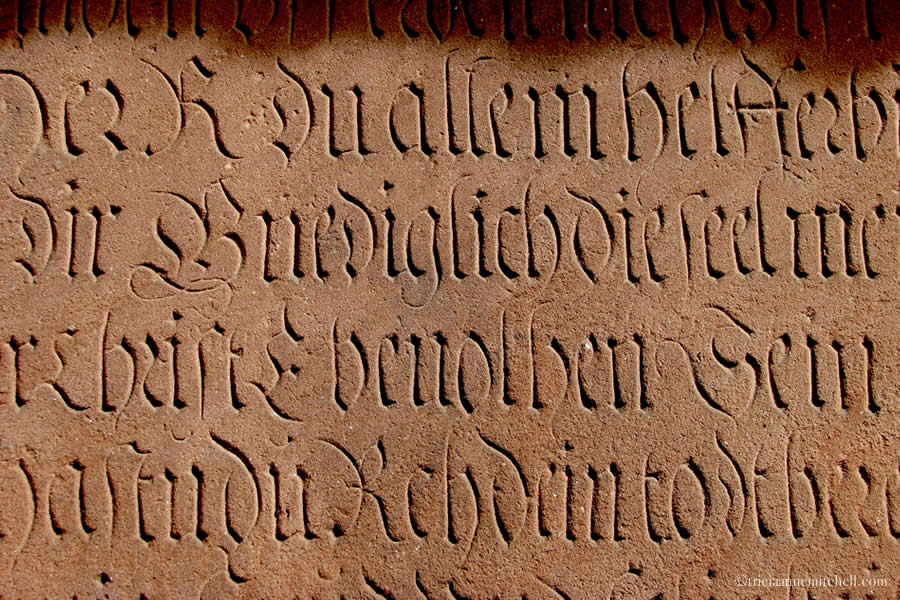
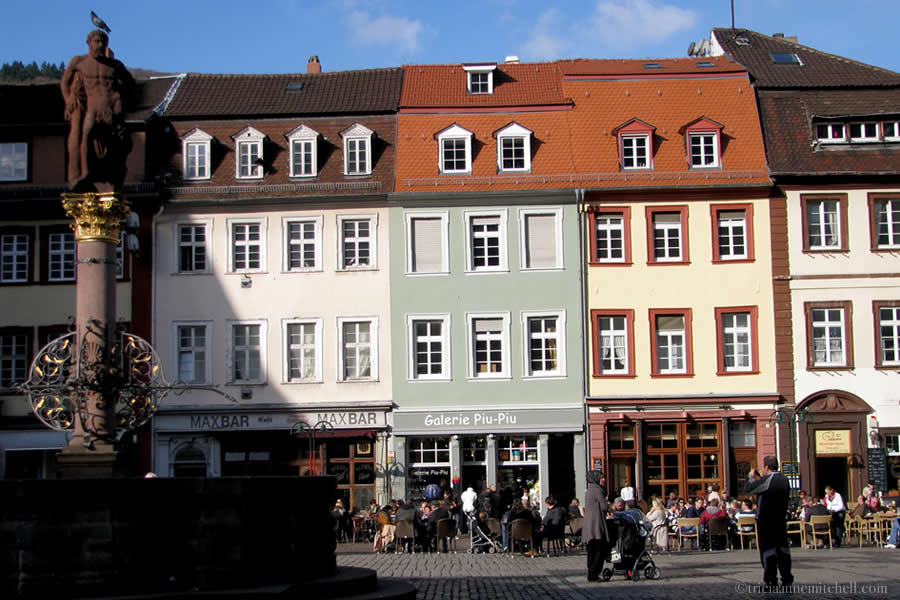
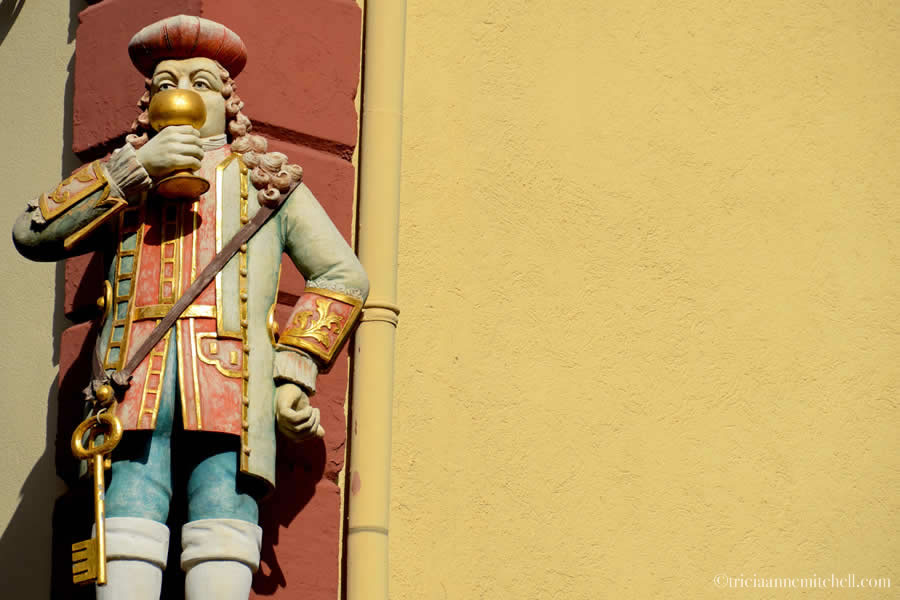
Toast to Perkeo
You’ll see images of Perkeo, Heidelberg’s infamous court jester, emblazoned all over the city. It’s said that someone of royal blood took a liking to the little guy (he was known as Pankert then) and imported him into the Heidelberg Castle to be the official entertainer. Once there, Pankert guzzled his way to local stardom. It’s believed that the diminutive dude drank five to eight gallons of wine a day! Today, he’s best-known as Perkeo, a play on the Italian phrase perché no (why not).
If you find yourself inspired to follow in Perkeo’s footsteps, head to Brauhaus Vetter, on the street perpendicular to the Old Bridge (Steingasse 9). Vetter’s is a lively brewery where Vetter 33 — one of the world’s strongest beers — is ever a flowin’. The restaurant also serves some German goodies, which are the perfect match for beer: bratwurst, pretzels, as well as hearty pork and chicken dishes.
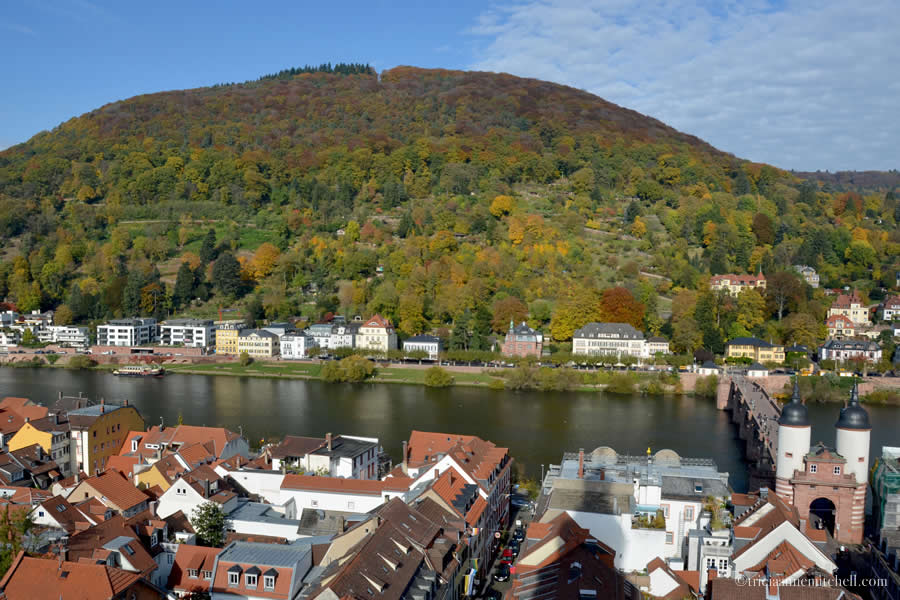
Relax along the riverside
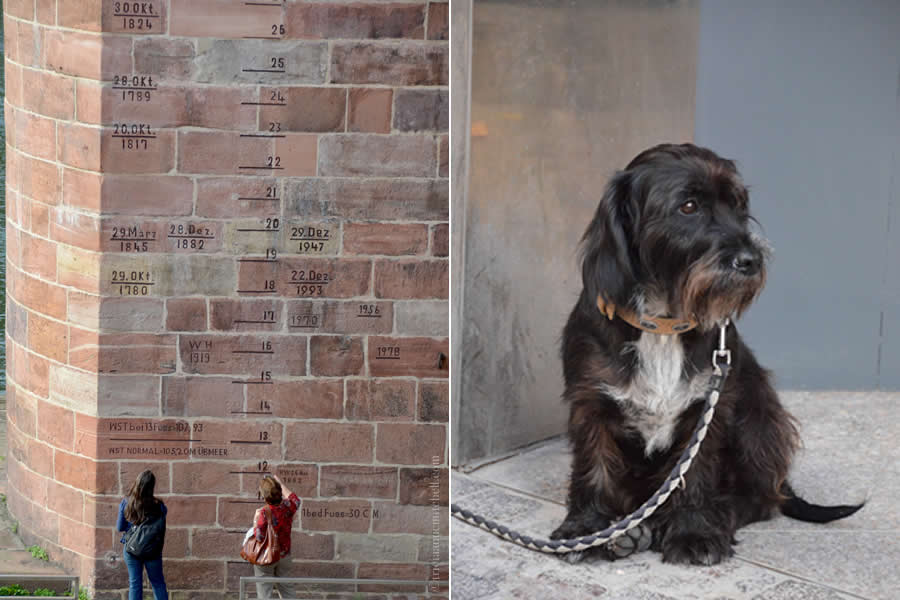
Neuenheim is one of the best places to take in Heidelberg’s superb views. From the Old Town, cross the cobbled lane of the Old Bridge (Alte Brücke) on foot, then take a left and head down the stairs to the Neckar River. You’ll easily find a spot to relax on the lawn overlooking the riverside. Bring a picnic lunch, a good read, or your camera, unless you wish to just bask in the sunshine, as most of the locals do.
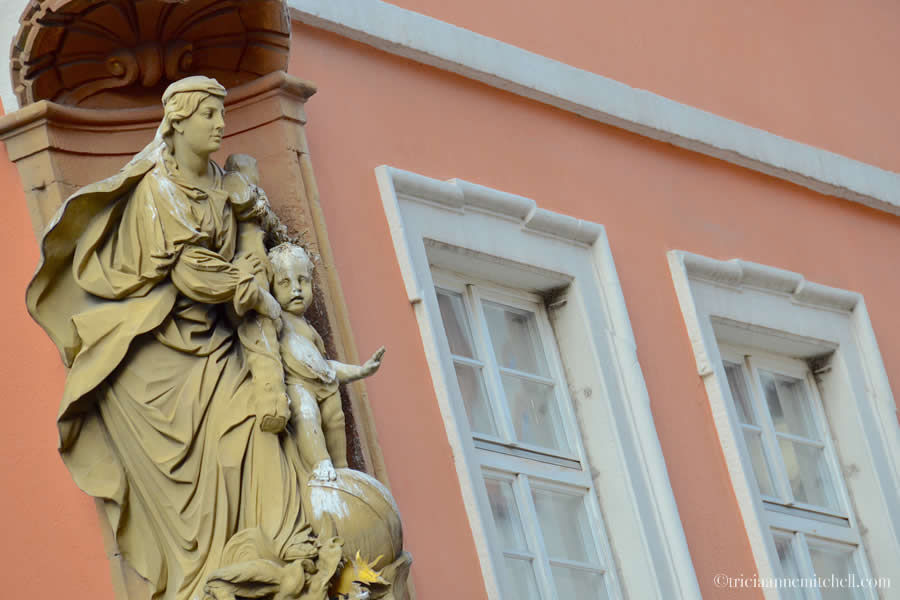
Devour the details
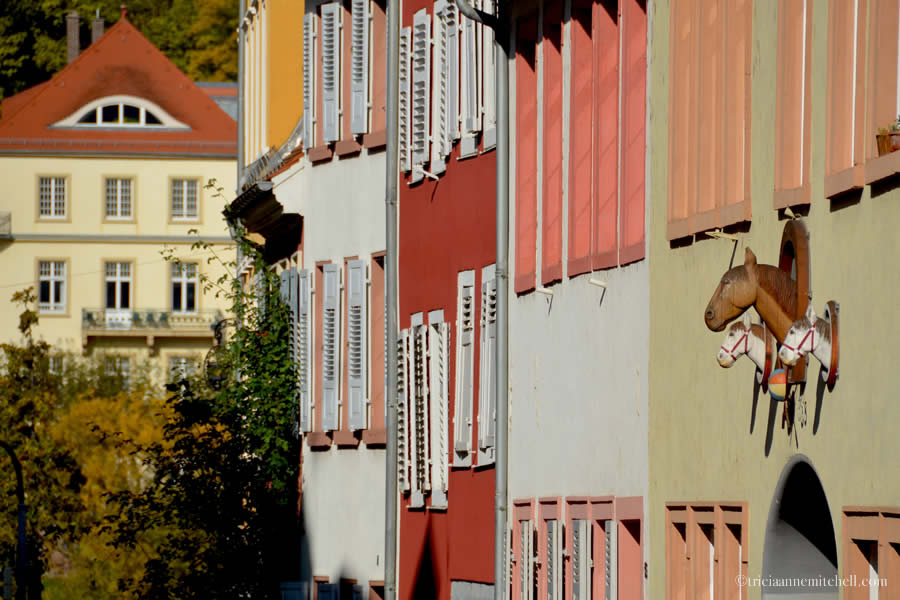
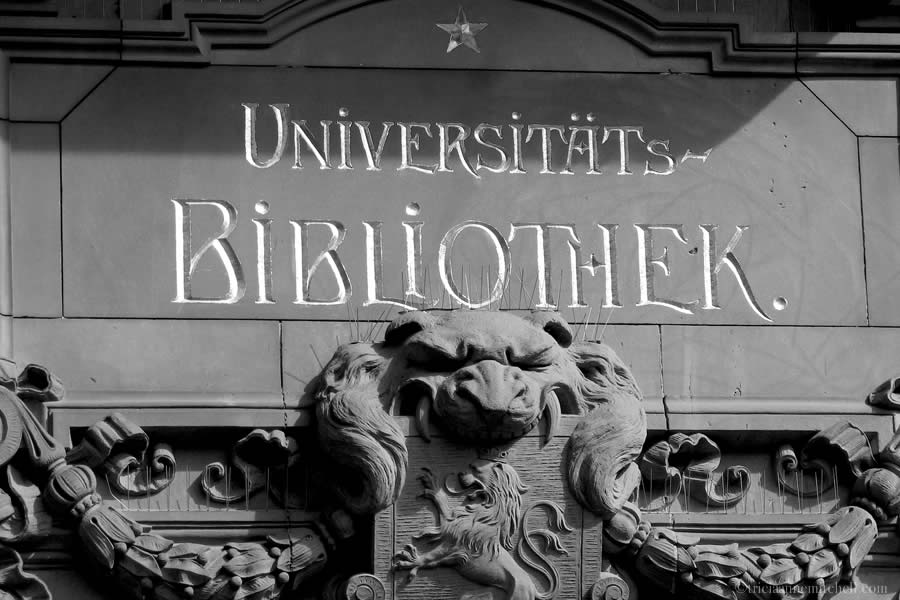
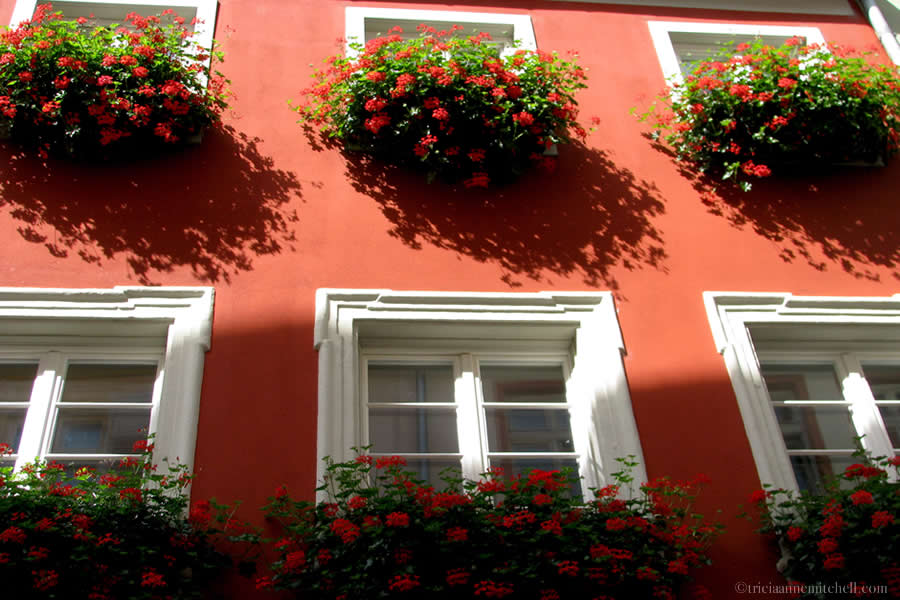
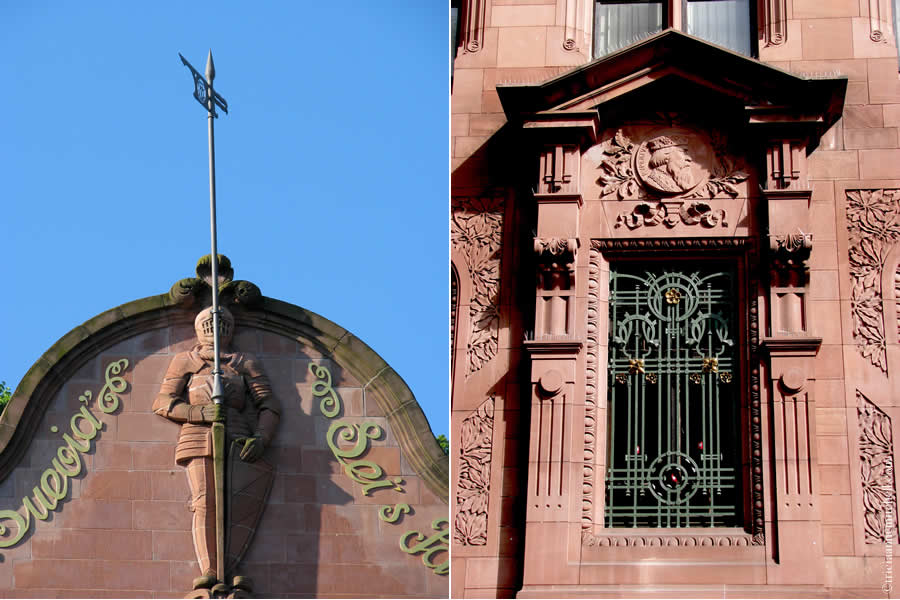
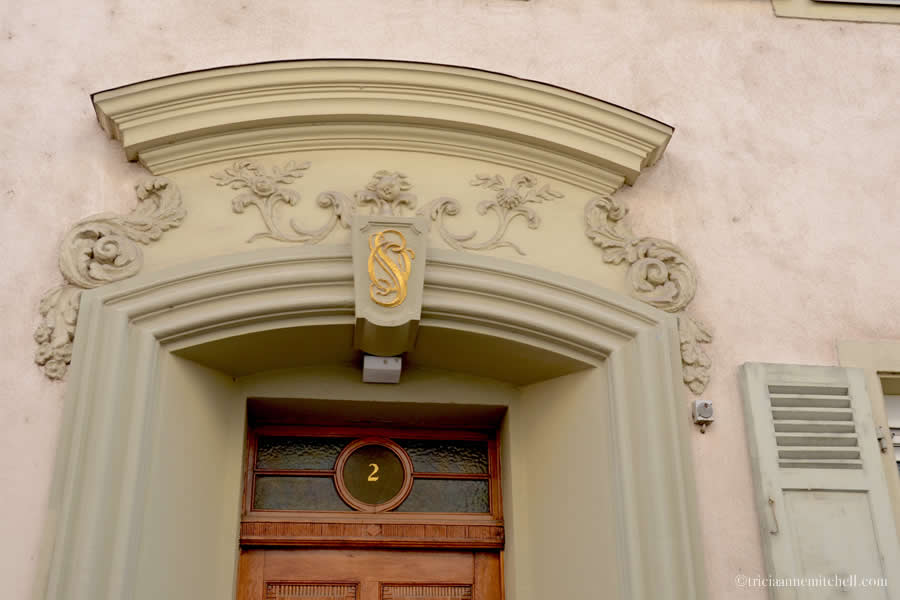
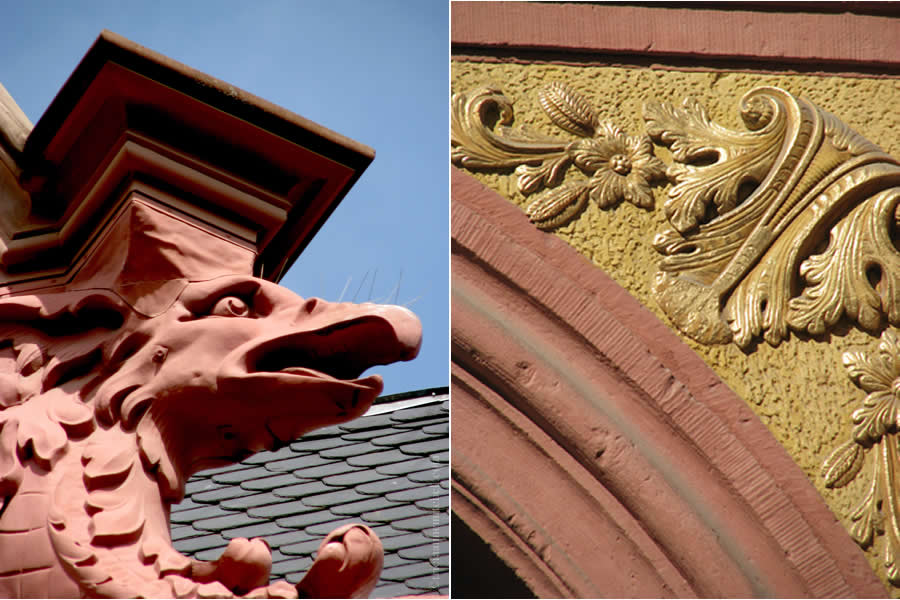
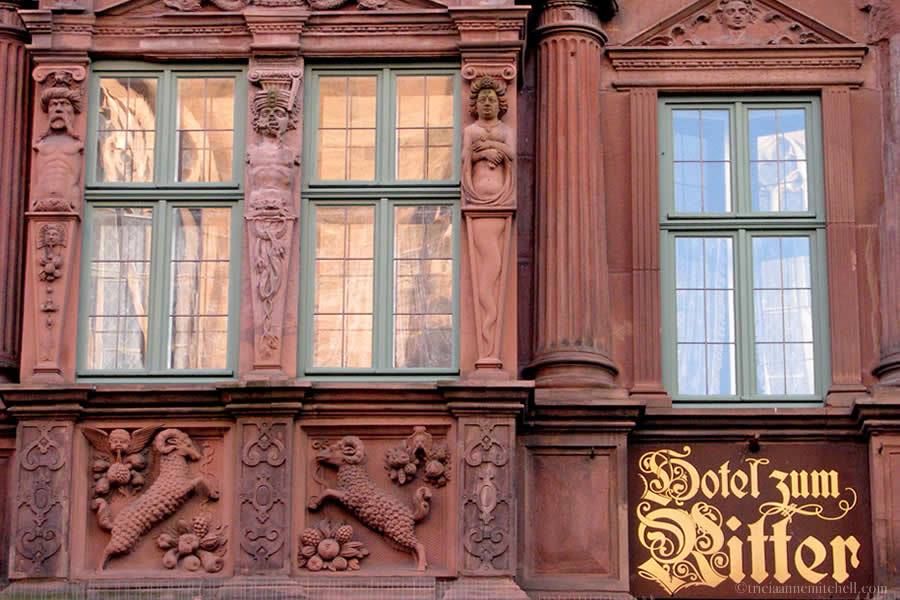
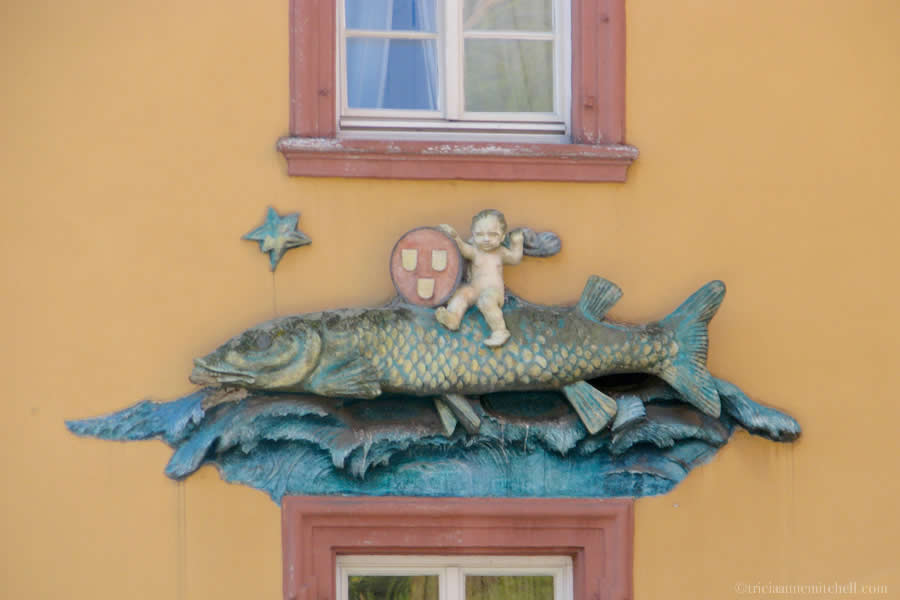
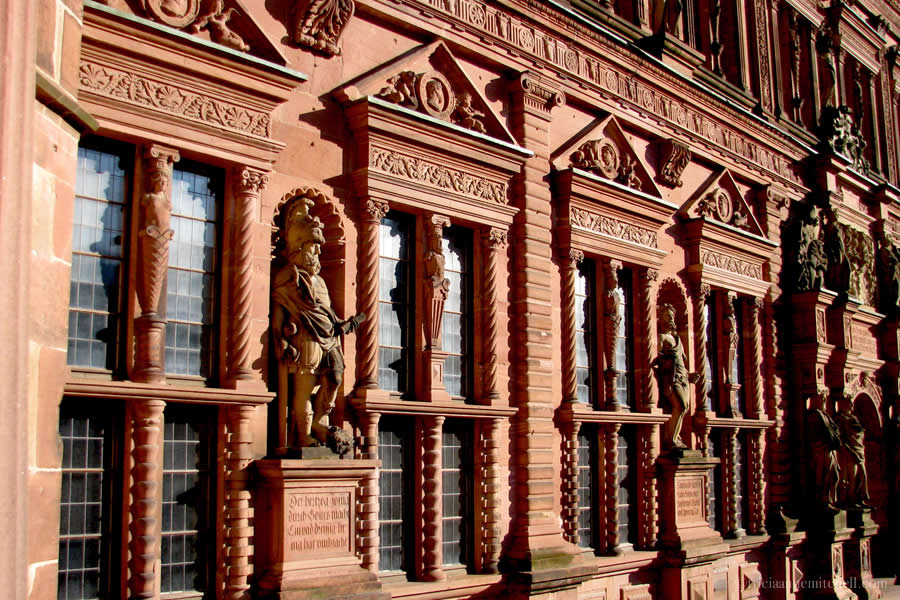
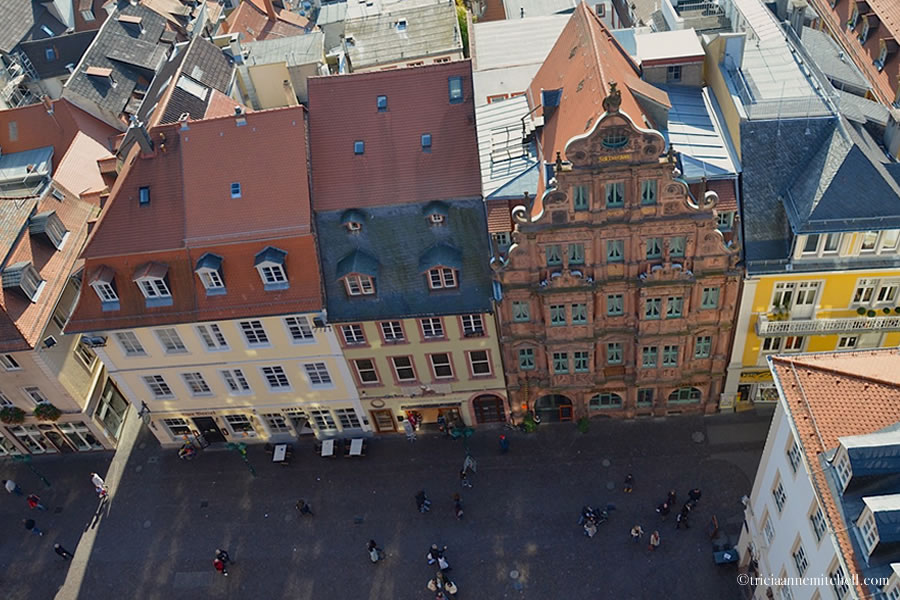
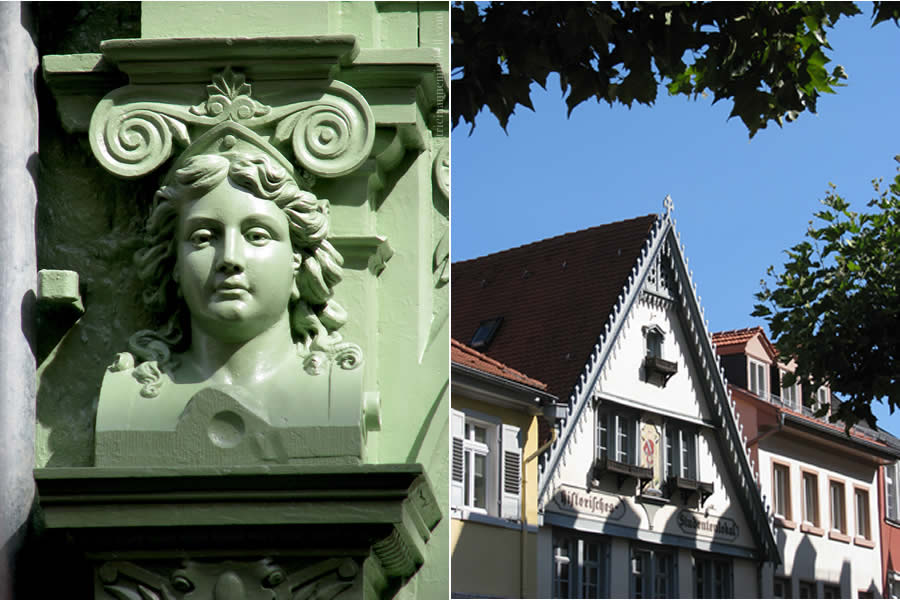
Heidelberg’s architecture is overwhelmingly baroque with lots of fun details. If you’re a photography enthusiast, don’t miss the dragon on the Dubliner Pub (Hauptstrasse 93), the Renaissance figures on Heidelberg’s famous Hotel zum Ritter (Hauptstrasse 178) or the University Library‘s Art Nouveau elements (Plöck 107).
There are countless other architectural flourishes that co-exist with modern flair. You’ll find them so long as you’re looking to the skyward sections of the buildings.
Mimic the monarchs
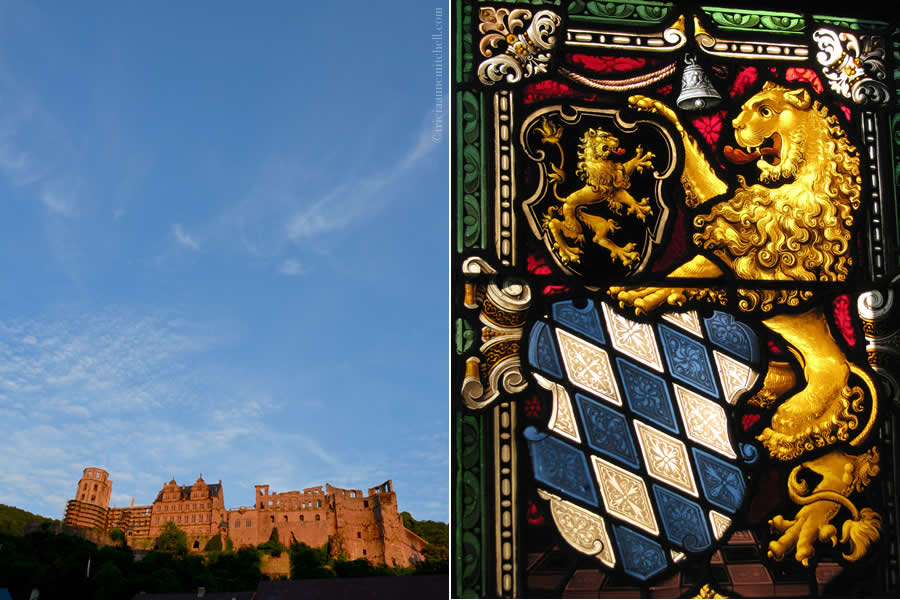
Famous for its partial-ruin status, the Heidelberg Castle is the city’s most famous landmark. You can reach the castle (Schloss) by funicular rail at Parkhaus 12 (P12), or you can hoof it yourself. A sign near the base of the stairs near P12 gives two self-climb options. The Fussweg zum Schloss has 314 steps, whereas the Kurzer Buckel is a scenic, inclined ramp. If you pursue the latter option in the early morning, before the ticket office opens, you can enter the castle courtyard for free.
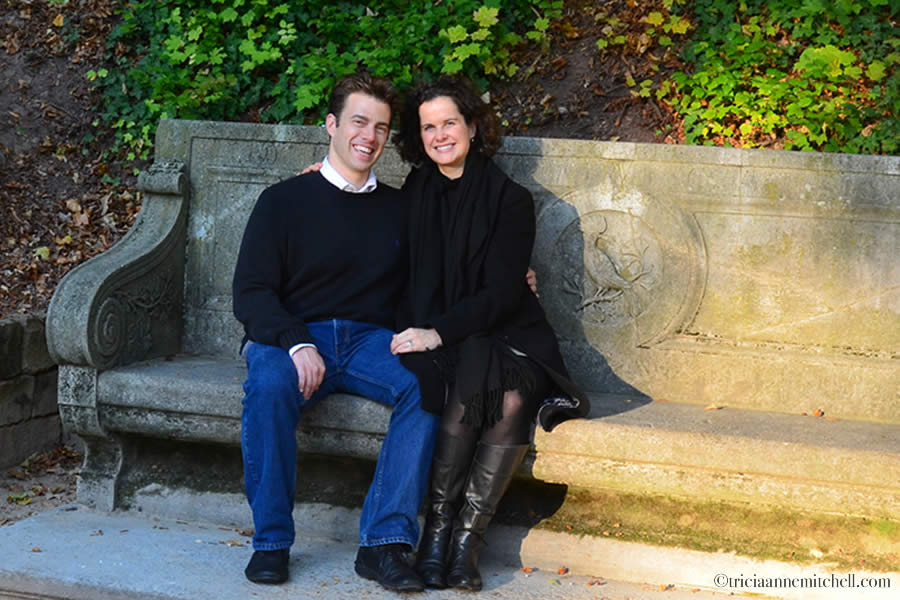
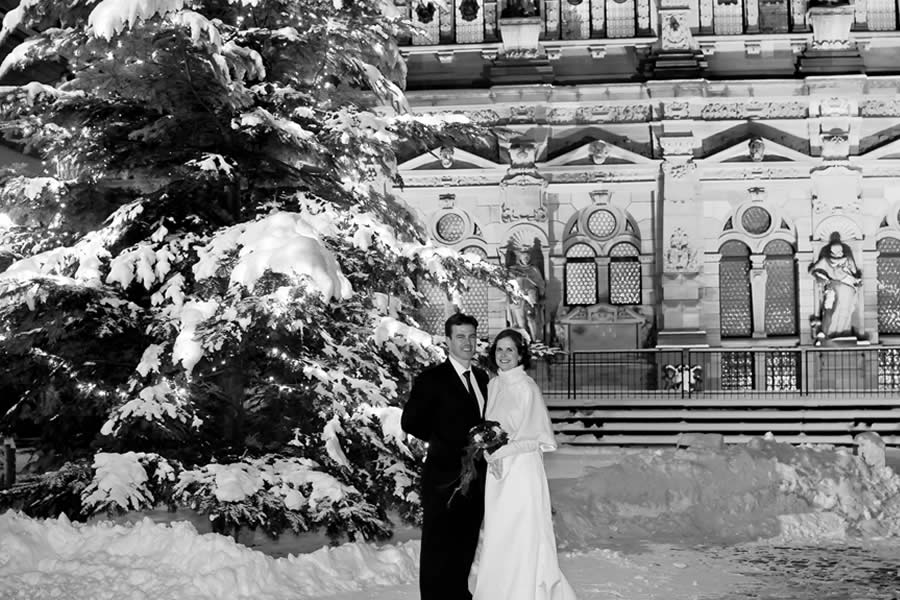
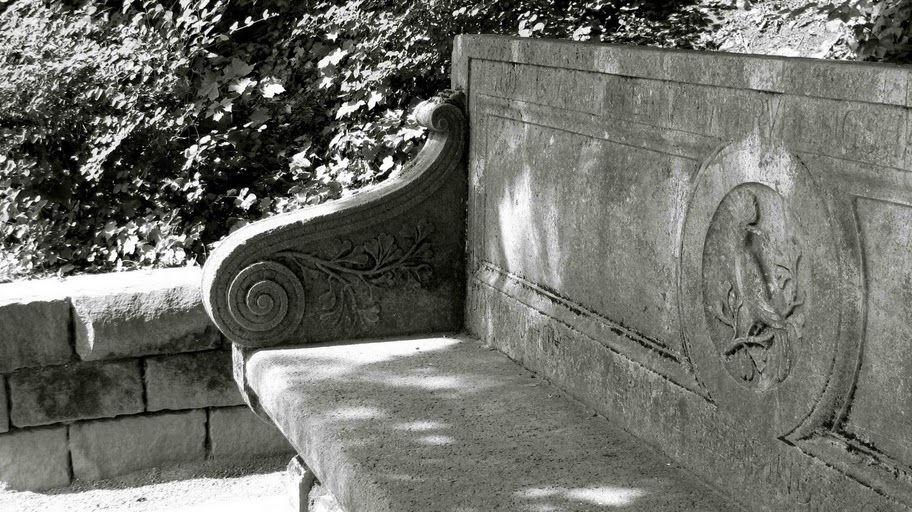
If you want to see the world’s largest wine vat, as well as a sleepy Apotheken Museum (Pharmacy Museum), purchase an entry ticket at the Kasse (cashier). If you’d rather take in the splendor independently and forgo an entry fee, bring along a bottle of wine and some treats and lounge on the grassy grounds near the Vater Rhein water fountain. There are also numerous stone benches nearby; in fact, Shawn proposed to me on one of most handsome ones. We were also married in the Heidelberg Castle Chapel on a frosty, but magical winter evening.
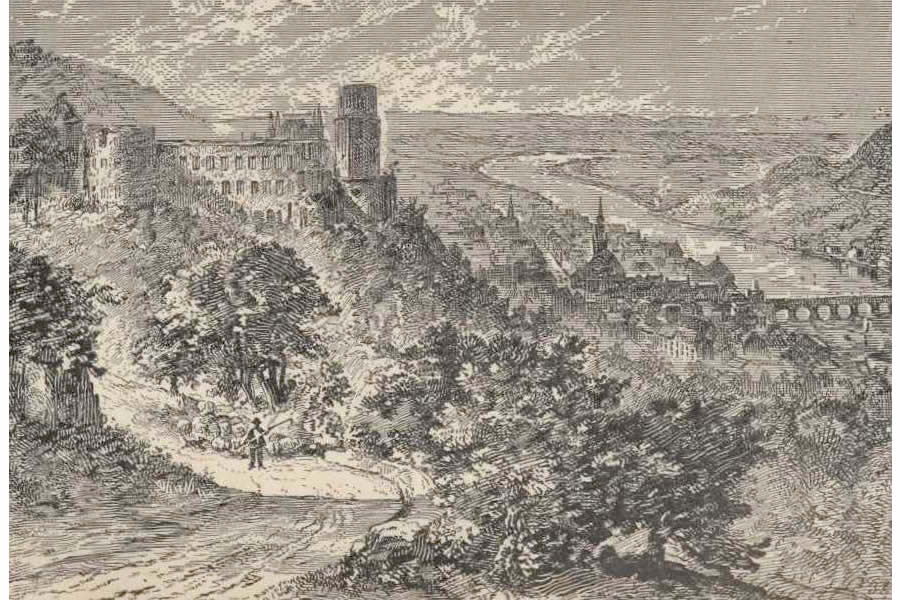
Though it’s not apparent now, Heidelberg’s grounds once contained elaborate gardens known as the Hortus Palatinus. Started in the early 1600s, the gardens were designed in the Italian Renaissance style, and at the time, were known as the ‘Eighth Wonder of the World.’ During the Thirty Years’ War, the gardens were largely destroyed. To journey back in time, see this 17th-century book of Hortus Palatinus engravings, courtesy of the Heidelberg University Library.
One of the best views of the castle and the Old Town’s terracotta rooftops can be had from the Scheffelterrasse, which is located here.
Philosophize
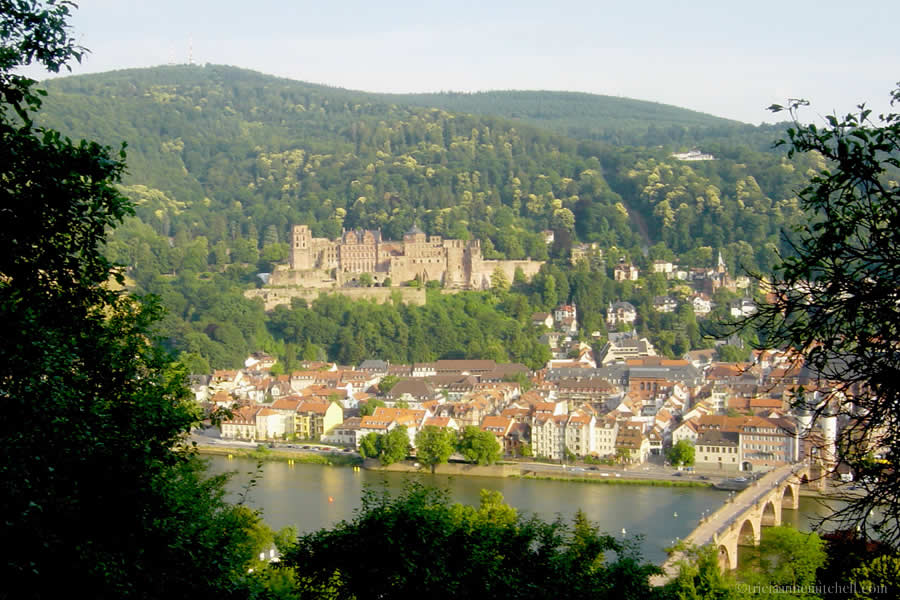
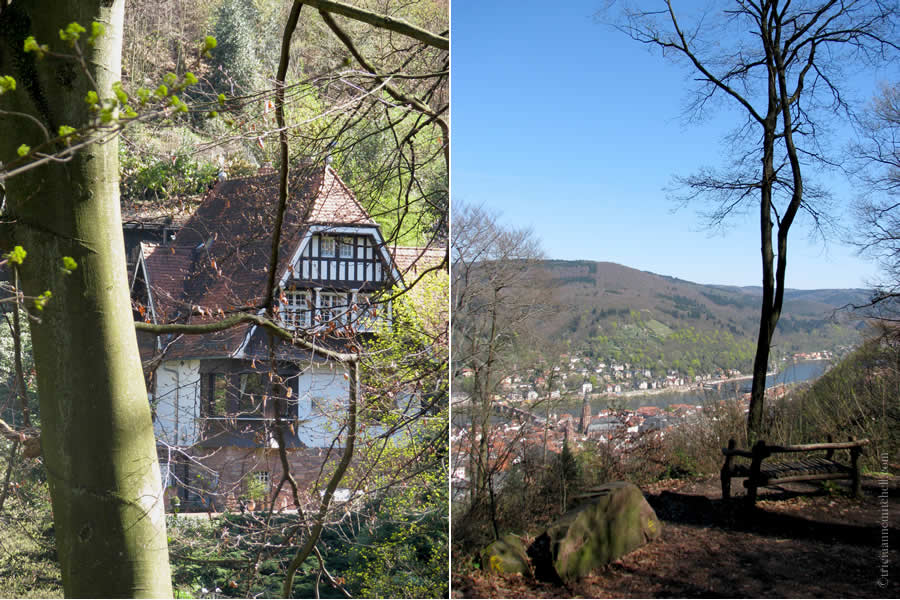
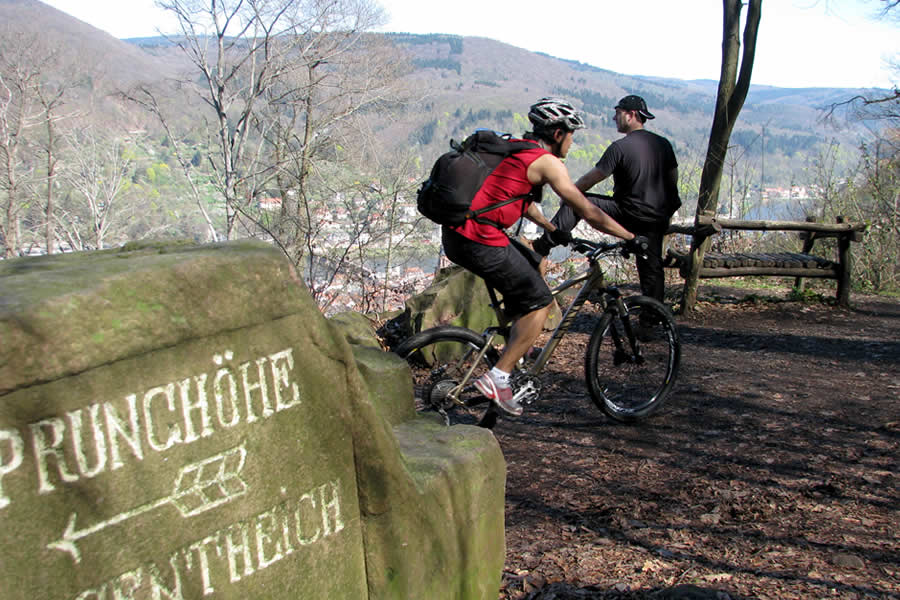
In past centuries, Heidelberg professors and philosophers strolled the Philosophers’ Walk (Philosophenweg), a scenic one-mile lane, that overlooks the castle, Old Town and Neckar River.
The most atmospheric way to access the walk is by ascending a steep, cobbled path that criss-crosses the Heiligenberg hill. Cross over the Neckar River via the Old Bridge (Alte Brücke) then cross the street at the traffic light. Look for the ivy-covered lane where you’ll begin your climb.
There are several rest stops mid-way through the walk that offer great views of the city. Wear comfortable shoes and bring water as the hike to the Philosophenweg can be tiring. Consider going just before sunset, as the view of the twinkling Old Town below is a sight to see. If you return the way you came, be sure to have a flashlight, as the path could otherwise be dangerous at night. Also consider going as far west as you can on the Philosopher’s Walk. There you’ll reach a paved road to Neuenheim, with easy Old Town access too.
Usher in spring
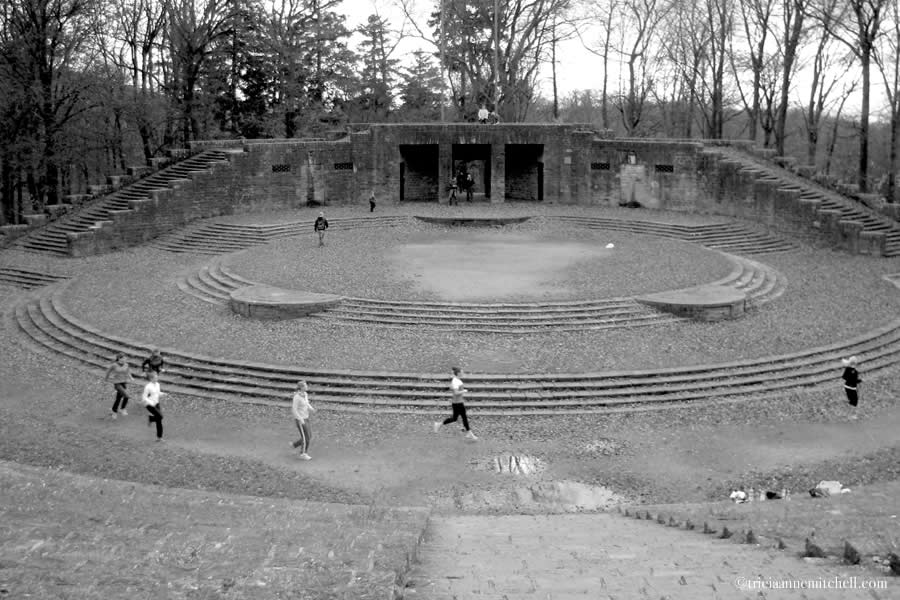
During the pre-World War II war era, this amphitheater (known locally as the Thingstätte) was built by the Nazis so that citizens could gather to hear propaganda presentations and watch theatrical productions. Forty structures like this one were built in Germany in the 1930s.
The Thingstätte is located at the top of the Heiligenberg (Holy Mountain) on the north side of the Neckar River. You can access the Thingstätte by foot, though be advised that the hike takes you farther above the Philosophers’ Walk.
Today, the Thingstätte serves as a venue for concerts and other gatherings. Every year, on the eve of May 1st, thousands of locals gather here to participate in the Walpurgis celebration, which heralds spring’s arrival. Revelers carry flame-lit torches and light bonfires, casting an eerie glow on the hillside.
Engage in monkey business
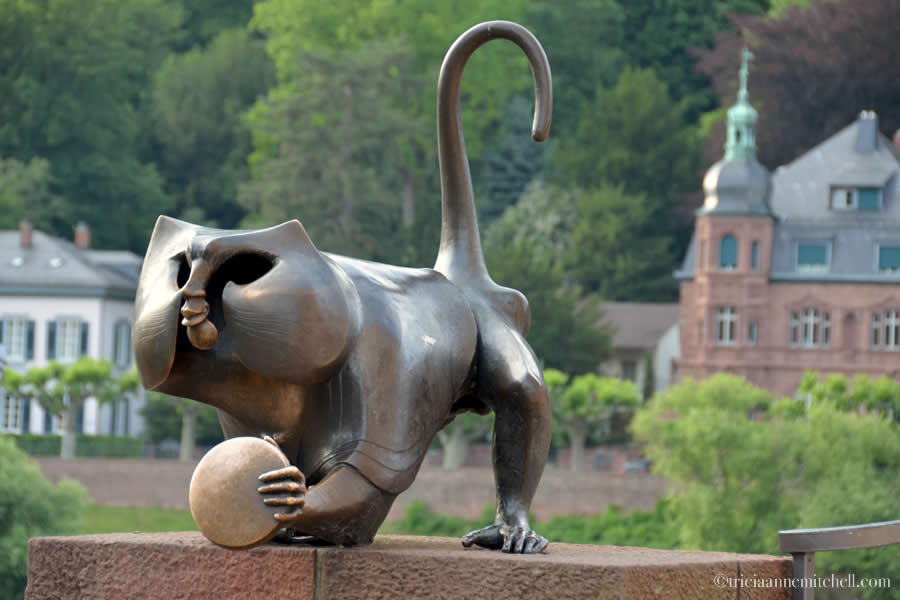
All day long, tourists put themselves into contorted positions so they can pose under the mask of the Old Bridge Monkey (Brückenaffe).
If you want to ensure your return to Heidelberg, touch the primate’s fingers. If you’re seeking wealth, touch his mirror. If you’re hoping to up your fertility levels, touch the brass mice near the monkey. If you want a silly photo opportunity (yes, I’m guilty of having done this), ride side- saddle on the primate’s back. A bridge monkey has been here since the 15th century. Incredible — since I’ve seen him endure such abuse over the years! This fellow only dates back to the late 1970s though.
Mingle on the Neckar
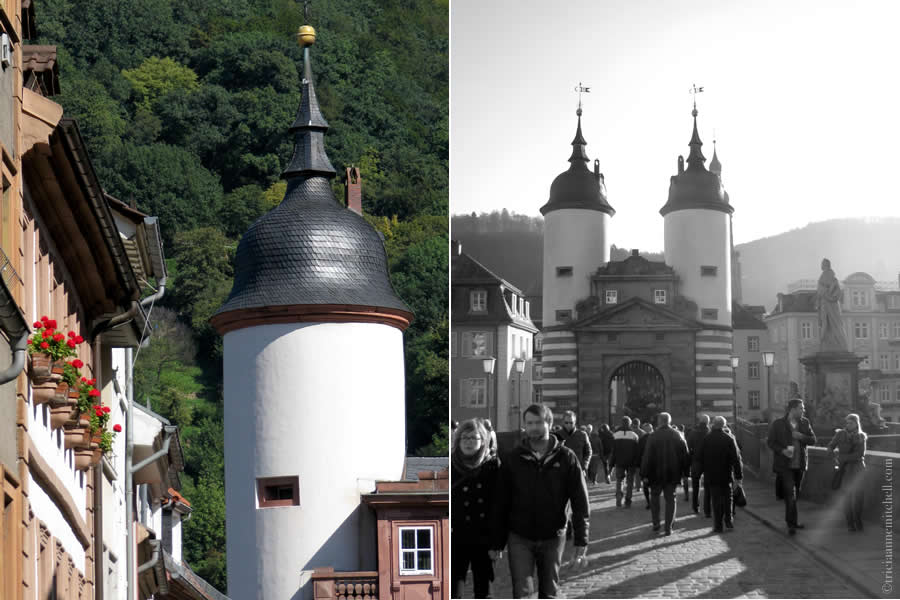
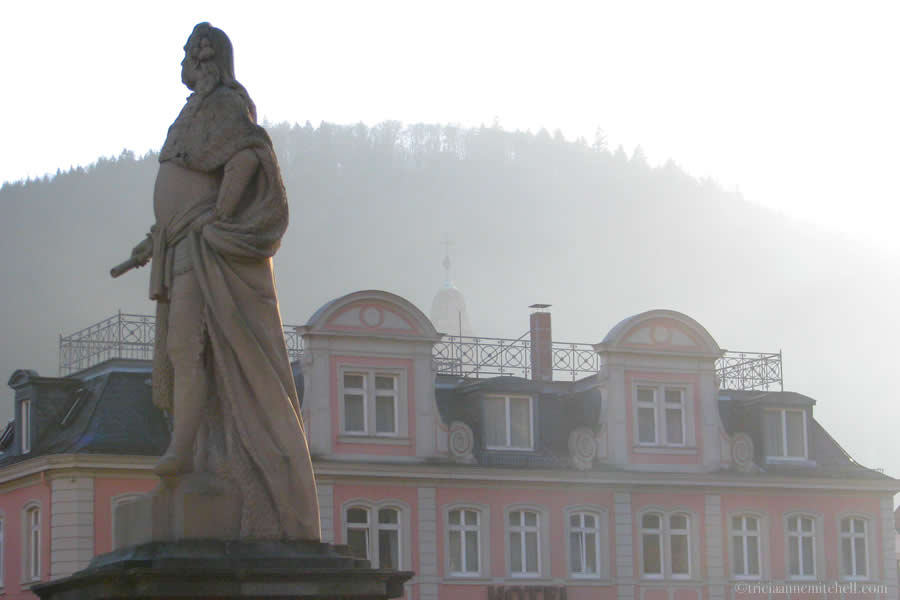
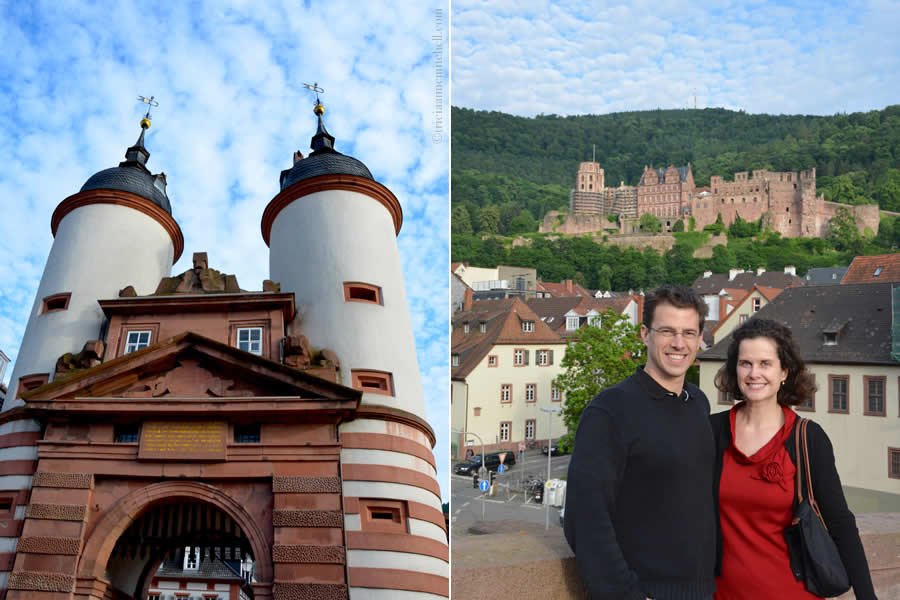
The Karl Theodor Bridge, or Old Bridge (Alte Brücke) to which it’s most often referred, is one of Heidelberg’s most famous landmarks, and also one of its newest. In past centuries it was made of wood, and had to be rebuilt several times. The bridge was finally constructed in stone in the late 1700’s, but it wasn’t destined to last. In the last days of World War II, German soldiers used explosives to destroy the bridge. It was rebuilt in 1946, thanks to the donations of Heidelberg city residents. Today, it’s a swell spot to pose with the castle overhead.
Claim a kebab
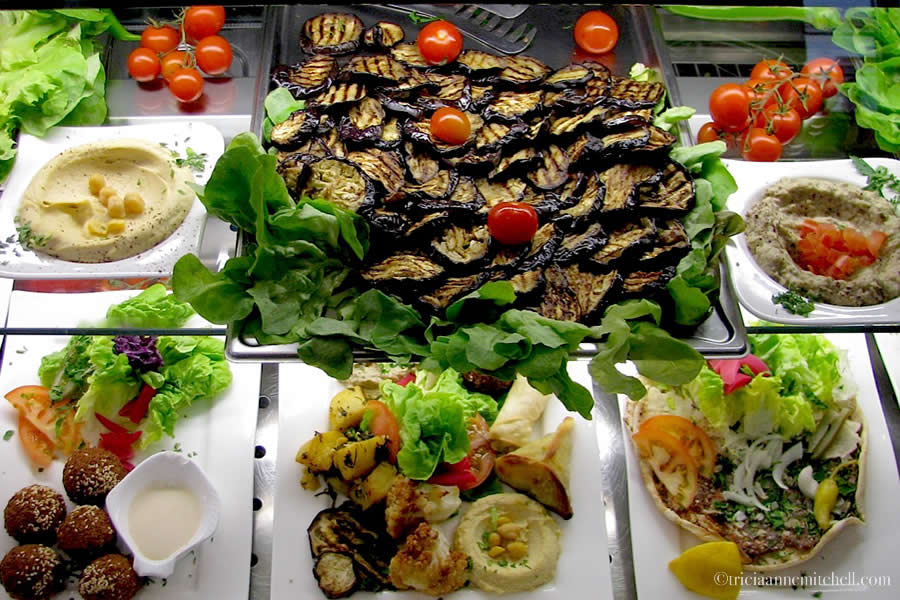
Heidelberg is an elegant city that can cause sticker-shock due to its inflated restaurant prices. One savior for the budget-conscious traveler: the Döner kebab.
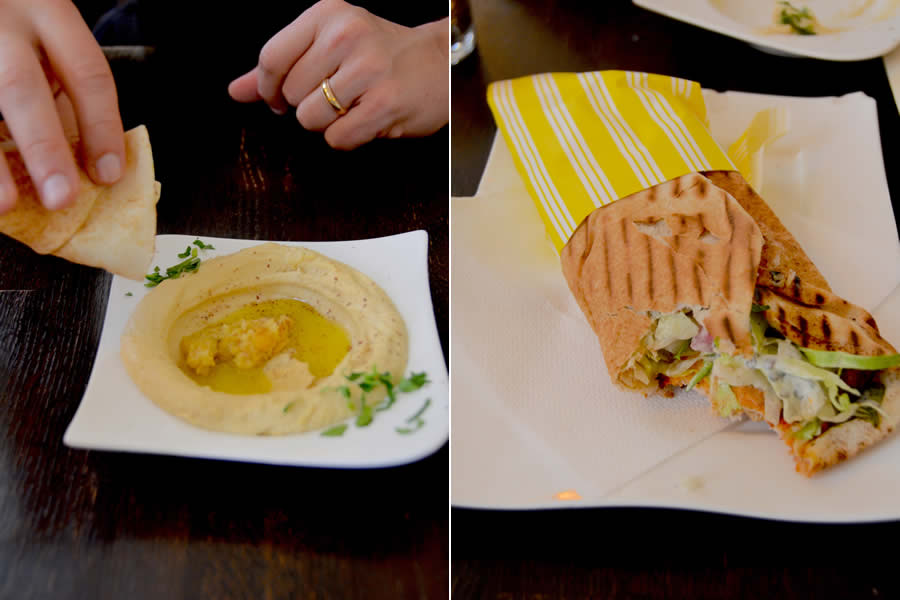
When we lived in Heidelberg, Shawn and I had a Friday night tradition: sample a kebab (flat-bread wrap stuffed with grilled meat, vegetables and yogurt sauce) from a different Altstadt establishment every week. We quickly racked up our list of favorite chicken wraps, all with prices hovering around €5-6. Which take-out restaurants made our cut?
Sahara (Hauptstrasse 167), Mahmoud’s —previously known as Falafel restaurant (Heugasse 3), Yufka’s (Hauptstrasse 182) and Gino’s (Hauptstrasse 113). Mahmoud’s, which is a few seconds away from the Hauptstrasse (near the Jesuit Church) even throws in a glass of free tea. Whichever place you choose, be sure to snag a few napkins, as these flavor-packed wraps can be messy.
Be indecisive
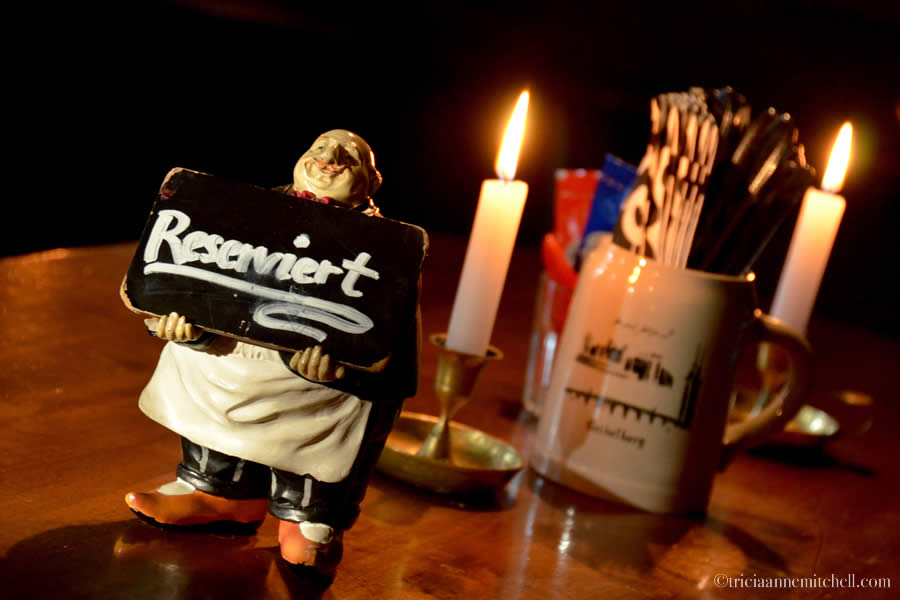
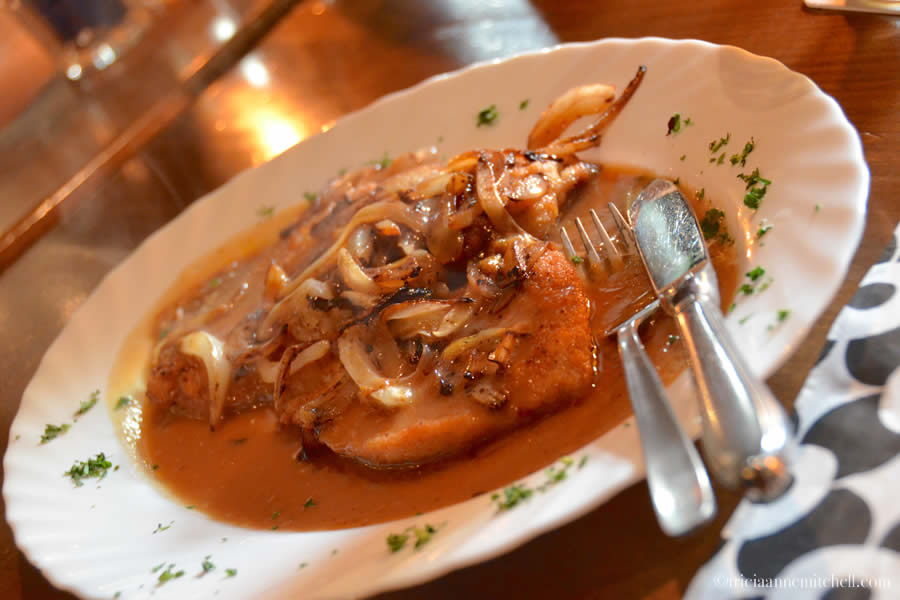
Some say that too much choice is a bad thing. When it comes to schnitzel, I have to disagree. Head to the Schnitzel Haus Alte Münz to decide for yourself. The menu at this cozy restaurant boasts more than 100 variations of schnitzel, a tender, boneless cut of meat (usually pork, but you can also substitute chicken). There’s the traditional Deutsche Art (dressed in gravy and mashed potatoes), the Los Amigos (spicy and oozing cheddar cheese and jalapeños) and the Mole Negro (think drizzled chocolate sauce). Most entrées are also accompanied by a traditional German salad, and either french fries or Spätzle (egg noodles smothered in cheese or fried onions). Portions are generous.
The restaurant is located at Neckarmünzgasse 10, less than a 5-minute walk from the castle end of the Hauptstrasse. It’s situated on a parallel road that faces the river. When you enter, be sure to greet the bust of a stuffed wild boar decked out in old-fashioned glasses.

Get a bird’s eye view
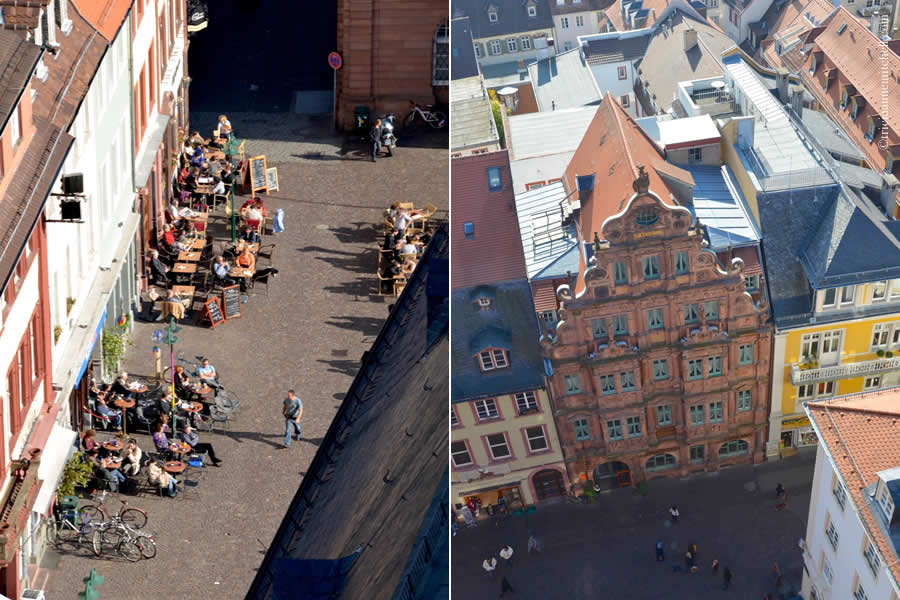
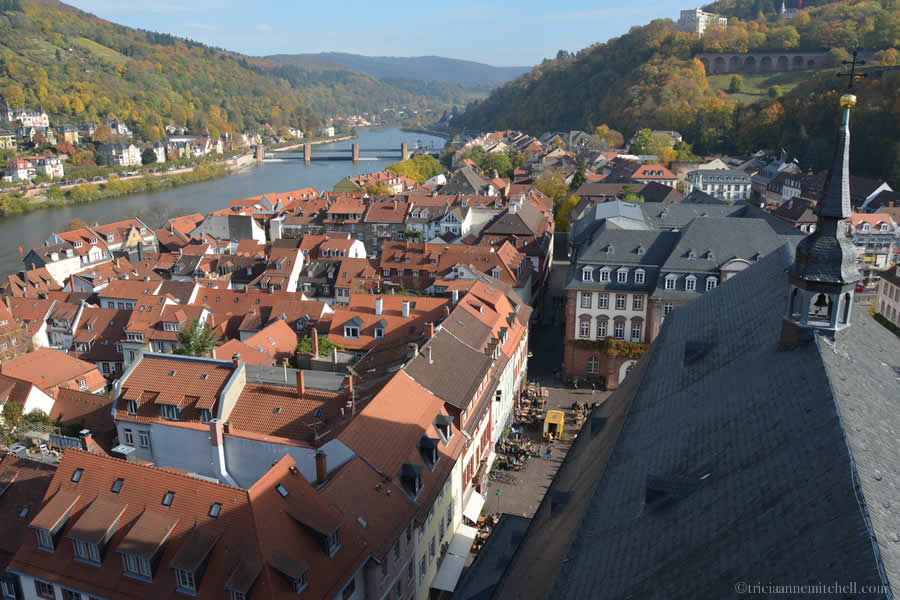
For a small fee, you can climb the tower of the Holy Ghost Church (Heiliggeistkirche) for some amazing views of the Neckar River valley, red-roofed Old Town and graceful castle. I’ve taken some of my favorite Heidelberg pictures from this perch and it’s fun to get a different perspective of the city from this more unique spot.
Hit the trails
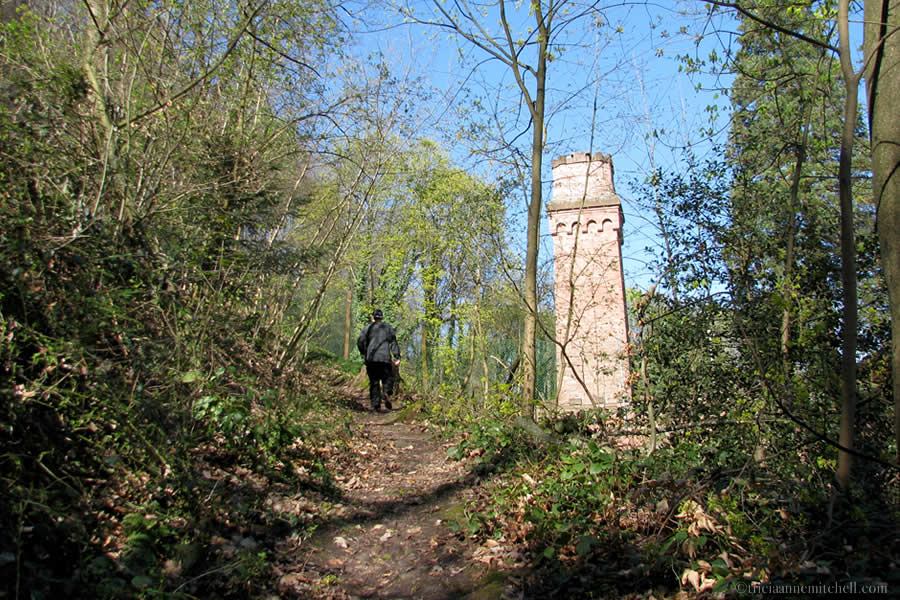
More than 135 years ago, Heidelberg’s Forest Society members planted saplings from around the world in an arboretum on the Königstuhl, the hill on the south side of the Neckar River. It takes about 45 minutes to hike to Arboretum One from the Altstadt. On your way there, you’ll reach the Gaisbergturm, a spiral tower built in 1876. The tower drew its inspiration from the famous Lighthouse of Alexandria. Ascend its 85 stairs for a beautiful view of Heidelberg.
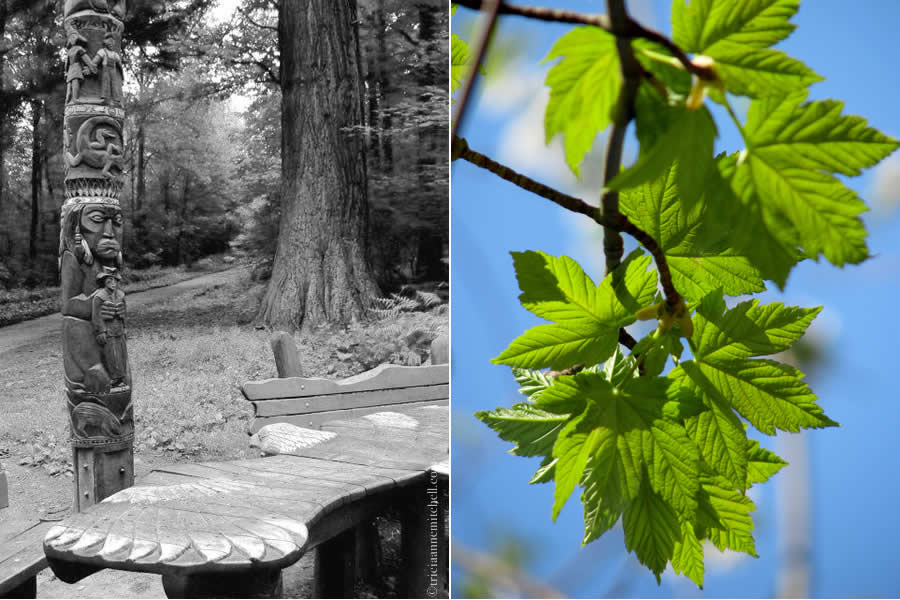
If you keep climbing up the trails, you’ll eventually reach the gallery of trees, the most prominent of which are the redwoods. A totem pole and Native American-style benches embellish the natural beauty of the area. Be wary of ticks since they are rampant in German forests. Should you end up off the main trails, don’t be worried, because there are large boulders, as well as tree trunk markers to explicitly guide even the most navigationally-challenged hiker. Also, pack snacks and water.
Caffeinate
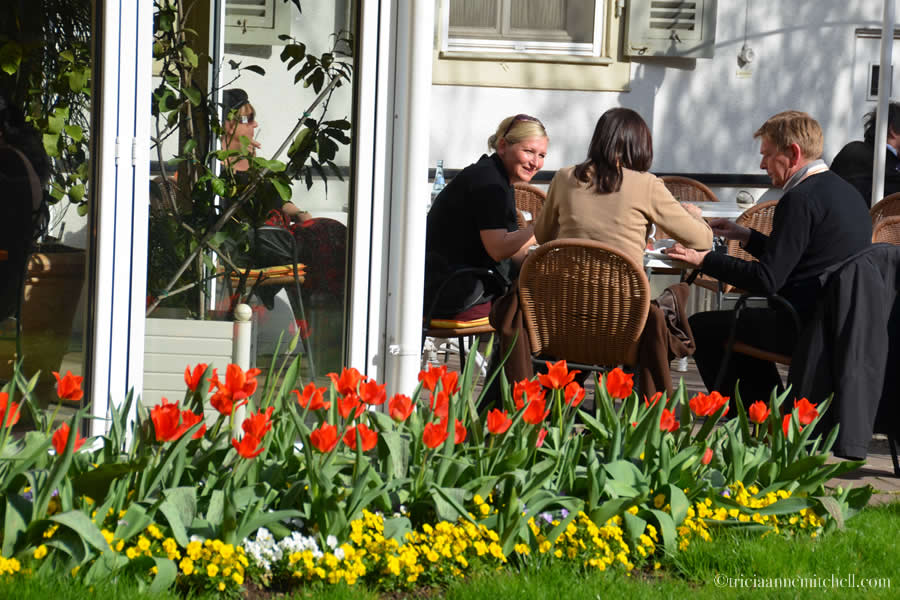
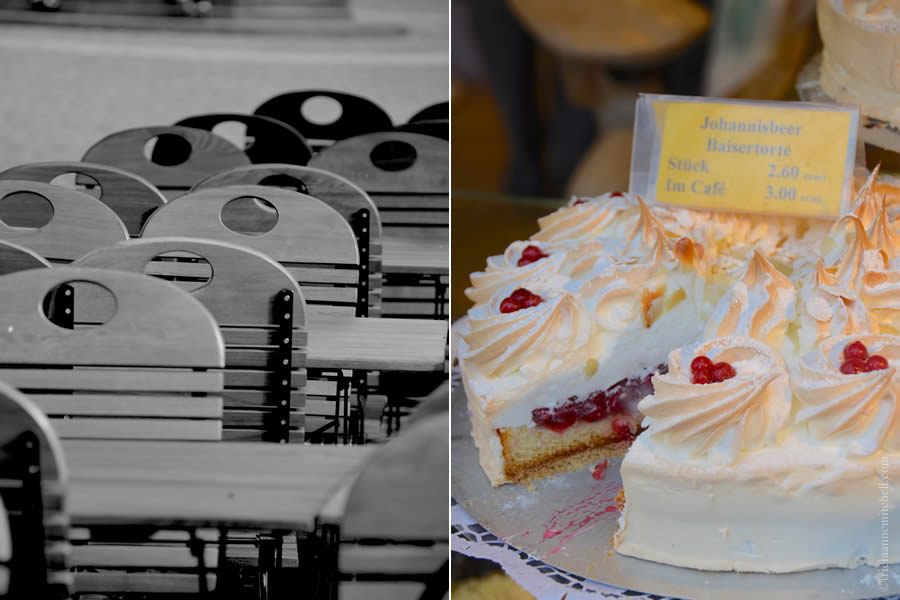
Frequent the cafés on Heidelberg’s two most popular squares (Marktplatz and Theaterplatz) or on a more quiet side street. While you sip a tantalizing latte macchiato and feast upon Apfelstrudel pastry, you’ll see street musicians doing their thing at Strassenkunst Standorts (designated performance spots). An afternoon spent lazing at the cafés also makes for great people watching.
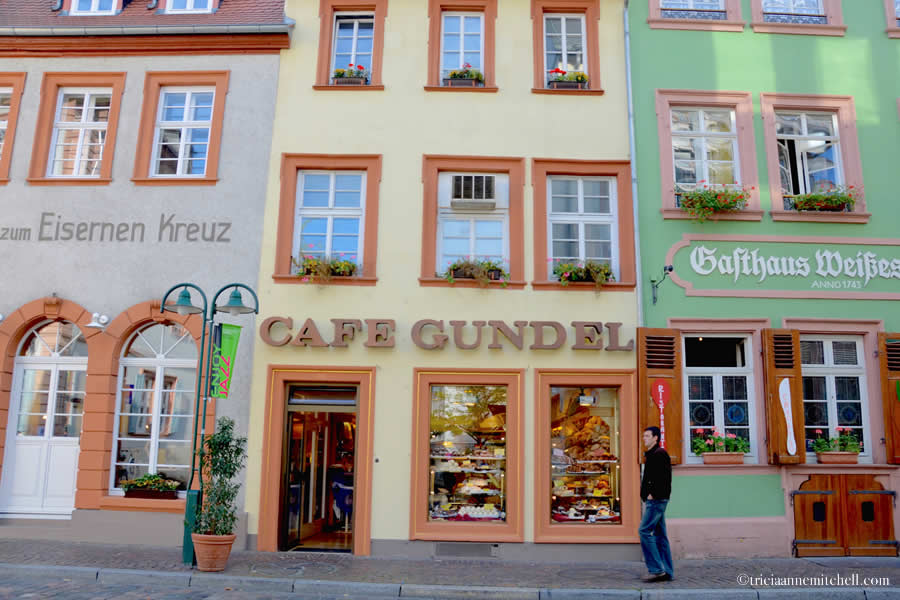
If you’d like some gluten or lactose-free pastry while in Heidelberg, try Schiller’s Café. Other nice spots: Café Gundel, Café Schafheutle, Café Knösel, and Café Burkardt.
Get your shopping on
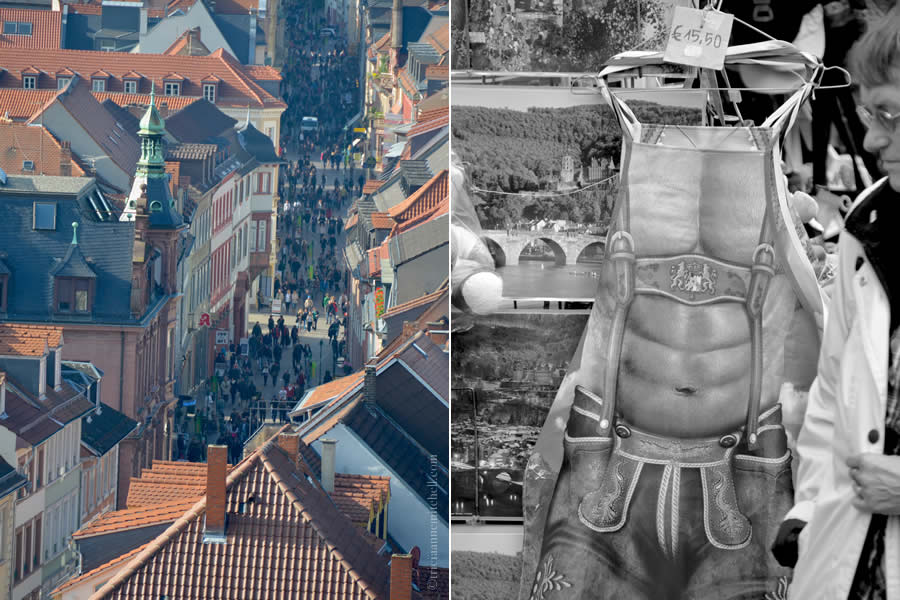
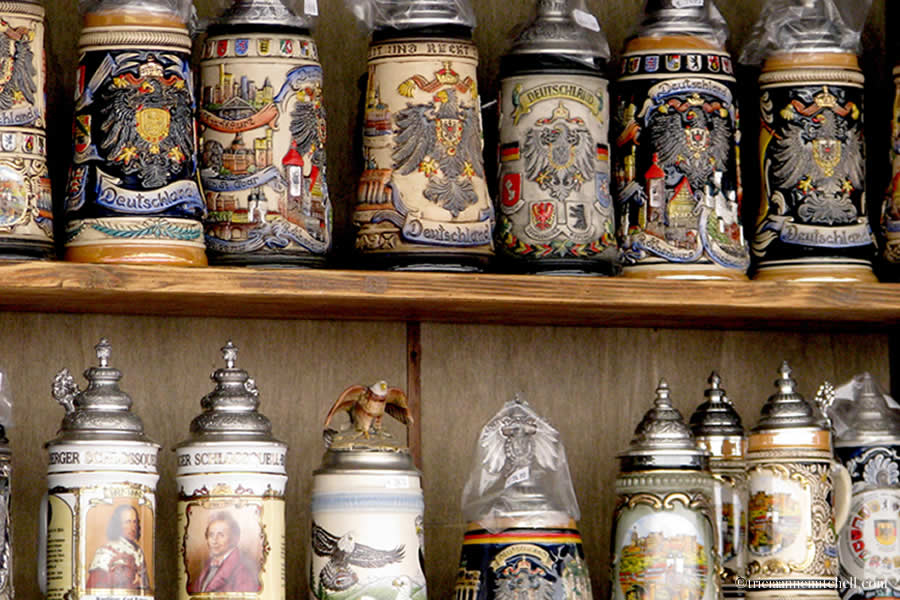
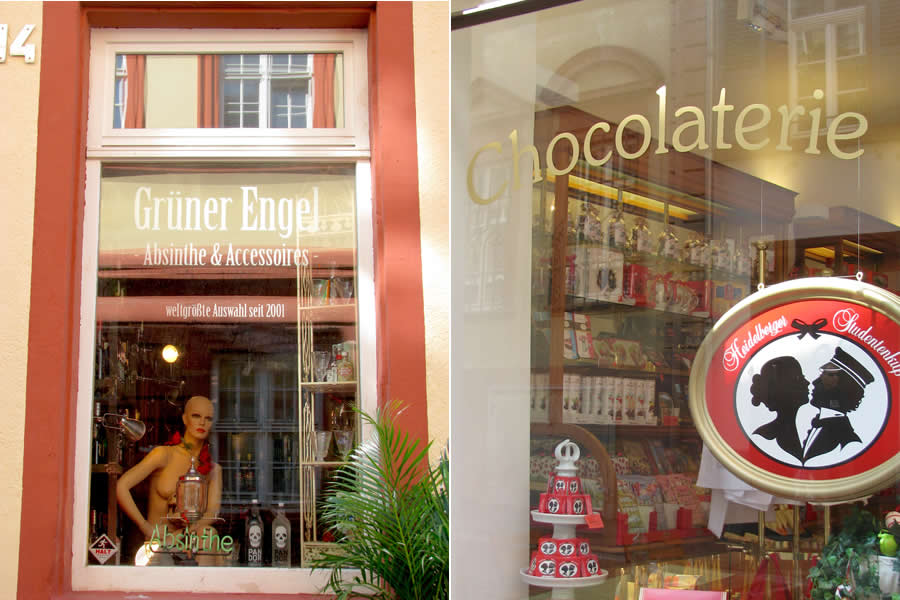
Heidelberg’s Old Town (Altstadt) boasts one of Germany’s longest, pedestrian-only shopping streets. Department and chain-clothing stores, restaurants and cafés dot this one-mile stretch on the Hauptstrasse.
If you’re looking for more bohemian boutiques, exit the Hauptstrasse by turning left at the Starbucks closest to the University Square (Uniplatz). You’ll then reach the Untere Strasse where it’s easy to find quirky specialty shops, bakeries and cafés. At night, this quaint street comes alive, thanks to its numerous pubs and bars.
Rest, then fest
Three times each year, the Heidelberg Castle ruins are lit with flares to commemorate the French sacking of the city in 1689. Afterwards, fireworks erupt over the Old Town, making the castle illuminations a popular time to visit.
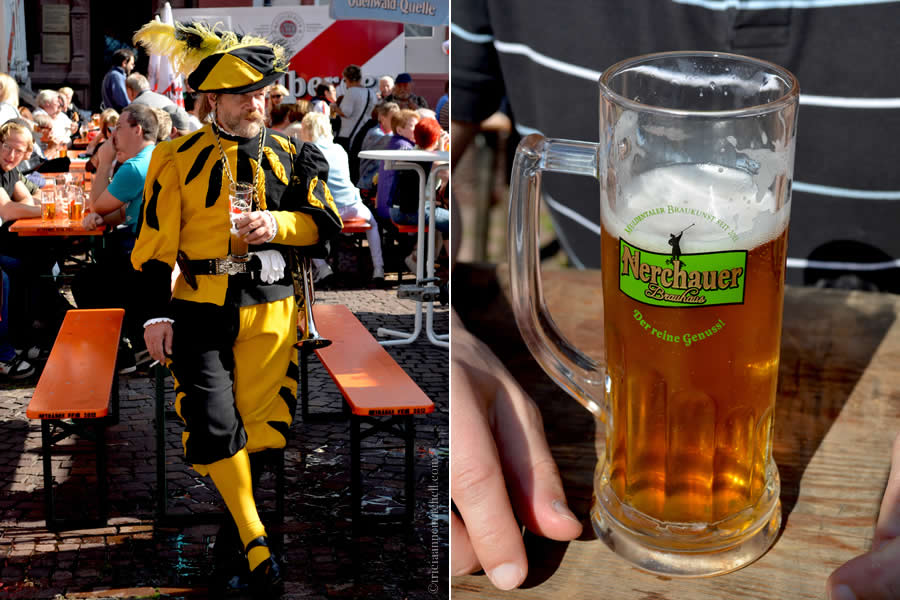
If you prefer beer and tunes over fireworks, hit up the city during the Heidelberger Herbstfest, when the Hauptstrasse is filled with live music performances, beer stands, fest food and an antique flea market.
During the spring months, Heidelberg’s hosts a lively Fasching celebration (Germany’s Carnival), and colorful Sommertagszug (Summer Procession) event filled with pretzels and a parade of children carrying sticks they have decorated.
The Christmas Market closes out the year with people mingling over Glühwein (hot, spicy red wine), shopping for Christmas gifts, and ice-skating. Check out Visit Heidelberg for more fest details.
Make waves
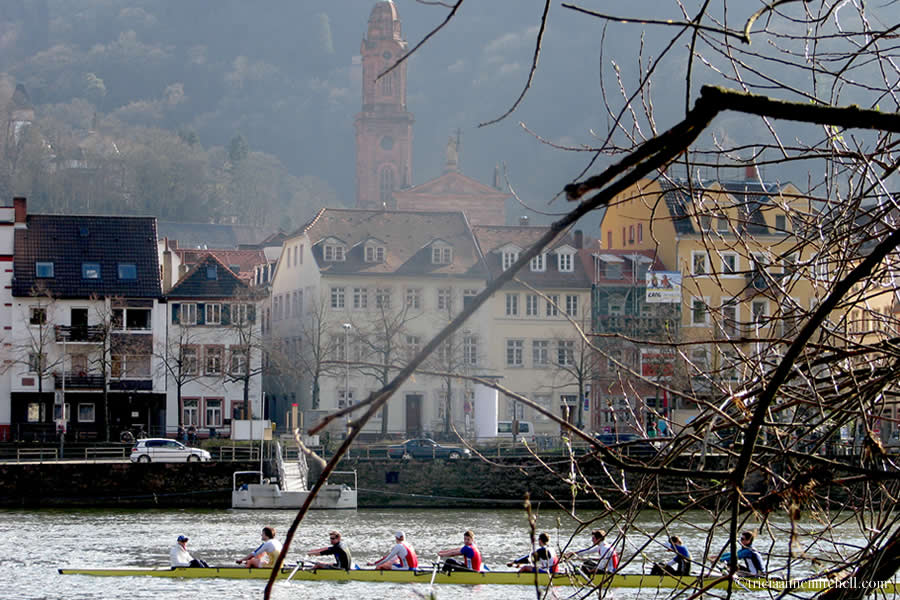
On Heidelberg’s Neckar River, it’s common to see rowboats gliding by as an overly-enthusiastic captain chants orders to the grunts to power harder. If the skies are sunny, get out on the water to spy Heidelberg’s Old Town from a different perspective.
You can hop aboard any of the tourist boats docked on the southern banks of the Neckar. One of these sightseeing boats, the Solarschiff, has a glass top. It’s powered by the sun and offers 50-minute trips upriver. From March to October, you’ll find it docked near the Old Bridge (Alte Brücke).
If you’d prefer to power yourself, rent a paddle boat from the Neuenheim side of town. Cross the Old Bridge and take a right. You can’t miss the Boote zum vermieten sign (boats for rent).
Remember
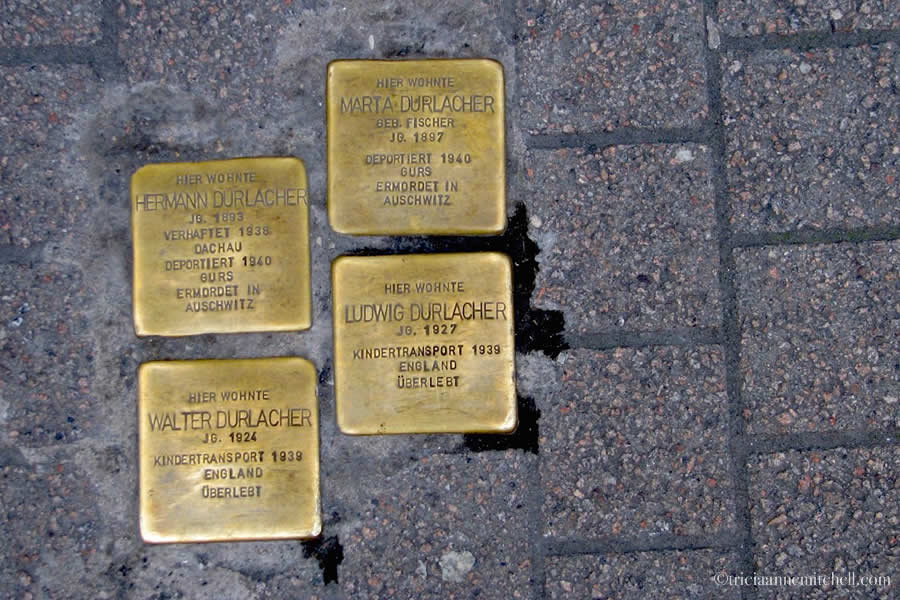
Just because Heidelberg exudes romanticism and an idyllic persona doesn’t mean it’s always escaped tragedy. Occasionally, you’ll see remnants of the Holocaust. These brass plates (Stolpersteine, literally ‘stumbling blocks’) at Hauptstrasse 121 honor the Durlachers, a Jewish family deported during the war. The parents did not survive, but their two children did.
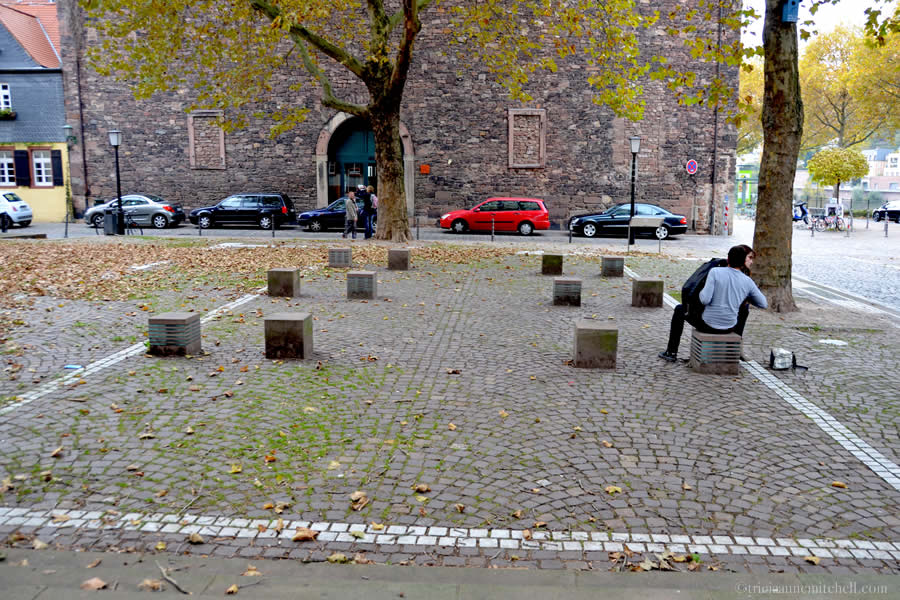
A few blocks away at Synagogue Square, a simple white marble border shows where the Heidelberg Synagogue once stood. In 1938, it was torched on Kristallnacht (the Night of Broken Glass) when Jewish homes and businesses were targeted across Germany. You can find the square on the corner where Grosse Mantelgasse and Lauerstrasse meet.
Sadly, there are even more Stolpersteine in Heidelberg.
Do time behind bars
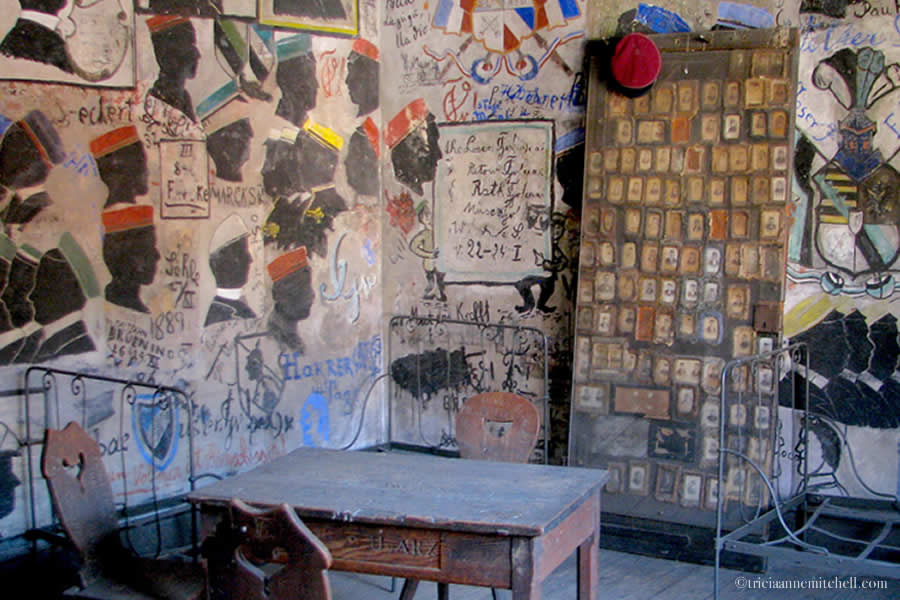
As a student, if you were caught overindulging on German beer more than a hundred years ago, you would’ve spent time behind the bars of the Student Prison (Studentenkarzer). Heidelberg’s university administration also punished rowdy students for extinguishing street lamps and chasing residents’ pigs down city alleyways. Today, you can gain entrance through a few Euro fee; in order to leave, you don’t have to finish out the once customary two-week prison sentence.
There’s not much to see inside, but the silhouette renditions of jailed students as well as the poetry and protests left on the walls by jailed fraternity members are amusing. The prison is easy to access from the Altstadt. If you’re on the Hauptstrasse heading towards the castle, take a right on Augustinergasse. You’ll know you’ve found the prison when you see the sign featuring a golden-winged angel with a bare bum. It was inspired by student artwork inside the prison.
Satisfy your sweet tooth
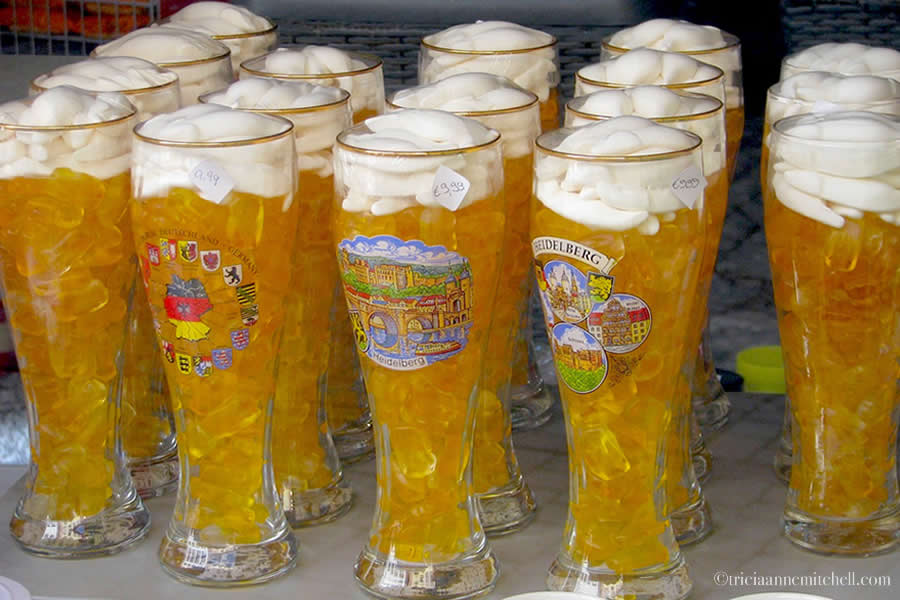
Two Hauptstrasse gummy bear shops sell Hefeweizen souvenir glasses that overflow not with freshly brewed beer, but beer-inspired gummy bear candies. Marshmallow gummies placed on the top complete this sweet illusion, resembling the frothy foam of a beer. In addition to selling beer look-alikes, Bären Company, at Hauptstrasse 150, even markets mosaic-like pizzas and birthday cakes fashioned out of Germany’s famous rubbery bears.
If you have a sweet tooth but aren’t a gummy bear fan, head to Gelato Go, an ice cream shop with delicious, organic ice cream. Find it at Hauptstrasse 100. The Heidelberger Zuckerladen (Plöck 52) is another local favorite for all things sugary.
Where in the World?
Planning Pointers:
- For more information about Heidelberg, peruse Heidelberg’s Tourist Information Center.
- Because of its charming atmosphere and proximity to Heidelberg’s best-known attractions, I recommend choosing a hotel in, or near Heidelberg’s Old Town-core: either the Altstadt (Heidelberg’s Old Town), Bergheim district, or Neuenheim district. Restaurants, cafés and shops are nearby, and you can even go hiking in the hills in a matter of minutes. I lived in an Altstadt apartment for 10 years, and I loved being among all the action. Since I was a resident of Heidelberg, I have limited experience staying in hotels in Heidelberg. However, here are some hotels we would revisit the next time we come to Heidelberg. (Some affiliate links follow.)
- Hotel Goldener Hecht – After our furniture was boxed up and we were preparing to leave Heidelberg, Shawn and I spent a few nights at the Goldener Hecht. We loved the central location! Heidelberg’s famous Old Bridge was just a few footsteps away, and the Heidelberg Castle was only about half a kilometer’s walk. Our room was clean, quiet, and pleasant, too.
- Hotel zum Ritter – When Shawn and I were married in the Heidelberg Castle, some of our family and friends stayed at the Hotel zum Ritter, one of Heidelberg’s most famous buildings. The elegant Hotel Ritter is situated on the pedestrianized Hauptstrasse (Main Street), just across from the Heiliggeistkirche (Church of the Holy Spirit). Even if you don’t stay there, the hotel’s gorgeous Renaissance exterior will likely catch your eye as you stroll down the Hauptstrasse.
- Are you looking for more ideas as you plan your trip to Germany? My Germany guide offers more tips, including posts about Bavarian horse-blessing ceremonies, and German folk dancing, plus workshops with the country’s Old World artisans.
Photography & text © Tricia A. Mitchell. All Rights Reserved.


Leave a reply to Tricia A. Mitchell Cancel reply